



















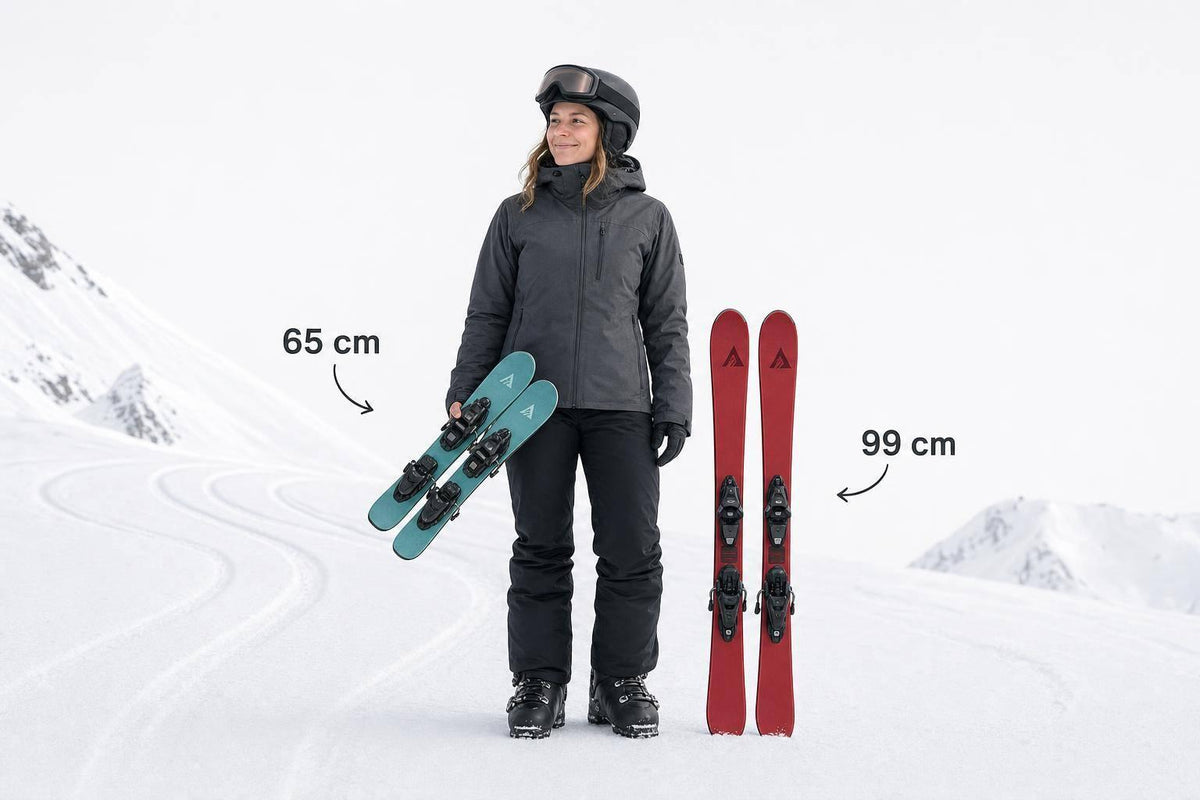
If long skis freak you out, go shorter. That’s the whole story in one line.
From what I see, 44 cm to 120 cm skis are easier to turn, easier to stop, and less work to carry than 150 cm+ skis. That matters a lot if you’re new, tense, older, or coming from a snowboard. The trade-off is simple: long skis do better at high speed and deep powder, while short skis feel calmer for first runs on groomed green and blue trails.
Here’s the quick answer:
- 44 cm Skiskates: least scary, lightest feel, best for very nervous first-timers
- 65 cm Skiblades: best for easy turns with a bit more calm underfoot
- 99 cm Skiblades: best middle ground for most adults
- 120 cm Short Skis: closest feel to regular skis, but still less intimidating
- Long skis (150 cm+): better once you want more speed, steeper terrain, and powder
- Salomon Snowblades: fun, but boot and binding fit takes more checking
- Figl short skis: more of a soft-snow niche pick than an all-winter resort tool
If you want the short version of the short version: most nervous riders should start with 65 cm or 99 cm. They hit the sweet spot between easy control and enough calm on snow. The 44 cm option is great if fear is your main problem. The 120 cm option fits people who want something closer to a normal ski without jumping straight to full length.
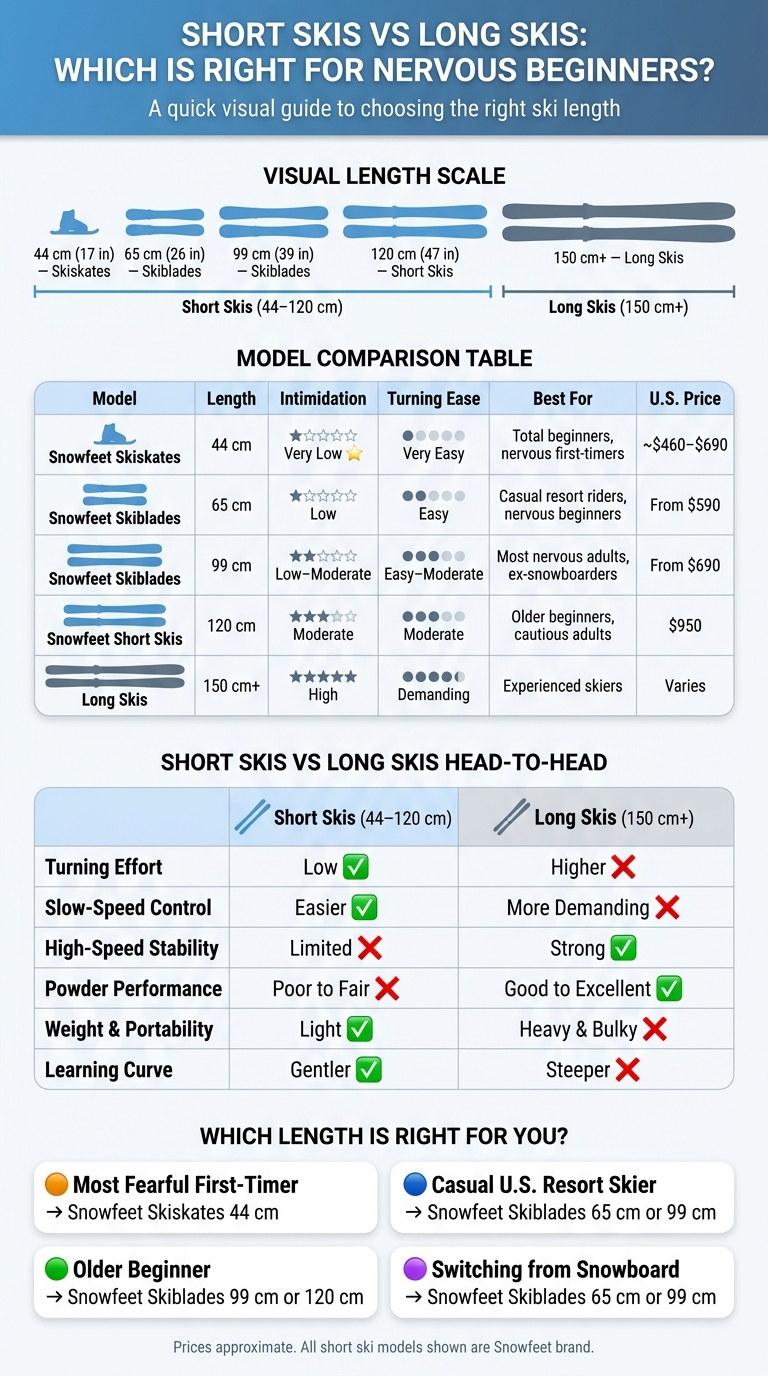
Short Skis vs Long Skis: Which Is Right for Nervous Beginners?
Short Skis vs. Long Skis
Quick Comparison
| Option | Best For | Main Upside | Main Downside | Price |
|---|---|---|---|---|
| Snowfeet* Skiskates 44 cm | First-timers, scared beginners | Super easy to turn and carry | Can feel twitchy as speed builds | About $460–$690 |
| Snowfeet* Skiblades 65 cm | Casual resort riders | Fun, easy control | Not great for deep snow or fast runs | From $590 |
| Snowfeet* Skiblades 99 cm | Most nervous adults | Best mix of control and calm | Less float than long skis | From $690 |
| Snowfeet* Short Skis 120 cm | Cautious adults, returning skiers | More ski-like feel | Less nimble than shorter picks | $950 |
| Long Skis 150 cm+ | Skiers who want speed and powder | Better stability at speed | Harder for beginners to handle | Varies |
| Salomon Snowblades | Buyers open to used gear | Tight turns, resort fun | Binding/boot fit can be a hassle | Varies |
| Figl Short Skis | Soft spring snow fans | Short and playful | Weak grip on hardpack | About $375–$430 for some models |
A few numbers jump out fast:
- 44 cm = 17 in
- 65 cm = 26 in
- 99 cm = 39 in
- 120 cm = 47 in
- Long skis usually start around 150 cm+
- Snowfeet* 44 cm weighs about 3.5 lb (1.6 kg) per pair
My take? If you ski groomers at U.S. resorts and want less stress, short skis make a lot of sense. They won’t turn you into a powder hero overnight :) but they can make day one feel a lot less like wrestling yard tools on ice.
If you want a good visual on how short skis ride, these types of videos can help before you buy:
So, if your main goal is less fear and more control, short skis win for most beginners. And among them, 65 cm and 99 cm stand out as the best picks for most people.
1. Snowfeet* Skiskates 44 cm
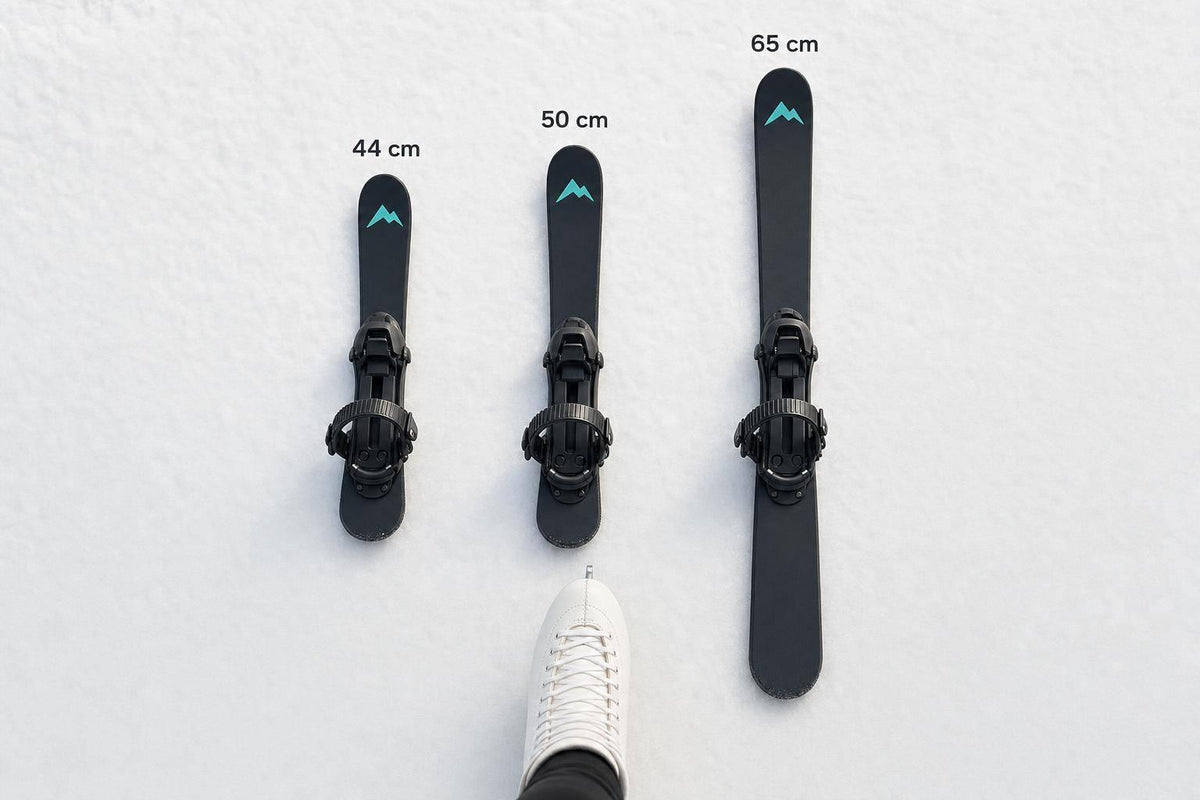
At 44 cm (about 17 in), Snowfeet* Skiskates are the easiest option in the lineup for nervous beginners. They’re ultra-compact, light, and quick. On snow, they feel closer to skating than skiing, which makes them less scary and easier to steer right away.
They do best on groomed green runs and easy blue runs. Push them to higher speeds, though, and they can start to feel a bit twitchy. Snowfeet says they’re best for groomed slopes and light powder up to about 4 inches. Once the snow gets deeper than that, the 99 cm or 120 cm models make more sense.
Boot compatibility helps keep things simple. They fit ski boots in US sizes 4.5–14.5 and snowboard boots in roughly US sizes 6–14.5. That means a lot of people can use boots they already have. If you’re a snowboarder trying skis for the first time, that’s a nice bonus. You can keep your familiar snowboard boots instead of changing everything at once. A pair weighs about 3.5 lb (1.6 kg), so they’re easy to carry from the parking lot to the lift. Small gear, less hassle. Hard to hate that.
Centered stance matters with skis this short. If you lean back, they’ll call you out fast. These short skis punish back-seated balance more than longer skis do. Leaning back makes it harder to hold an edge and causes the short tails to wash out. Stay centered; leaning back reduces edge grip.
These are a good fit for:
- fearful first-timers
- casual resort riders
- older beginners
- snowboarders who want a lower-stress way to get on snow
If you want more confidence once speed picks up, the 65 cm option is the more balanced choice in this lineup. And if you like the easy-learning feel here but want a bit more stability, the 65 cm Skiblades are the next step.
2. Snowfeet* Skiblades 65 cm
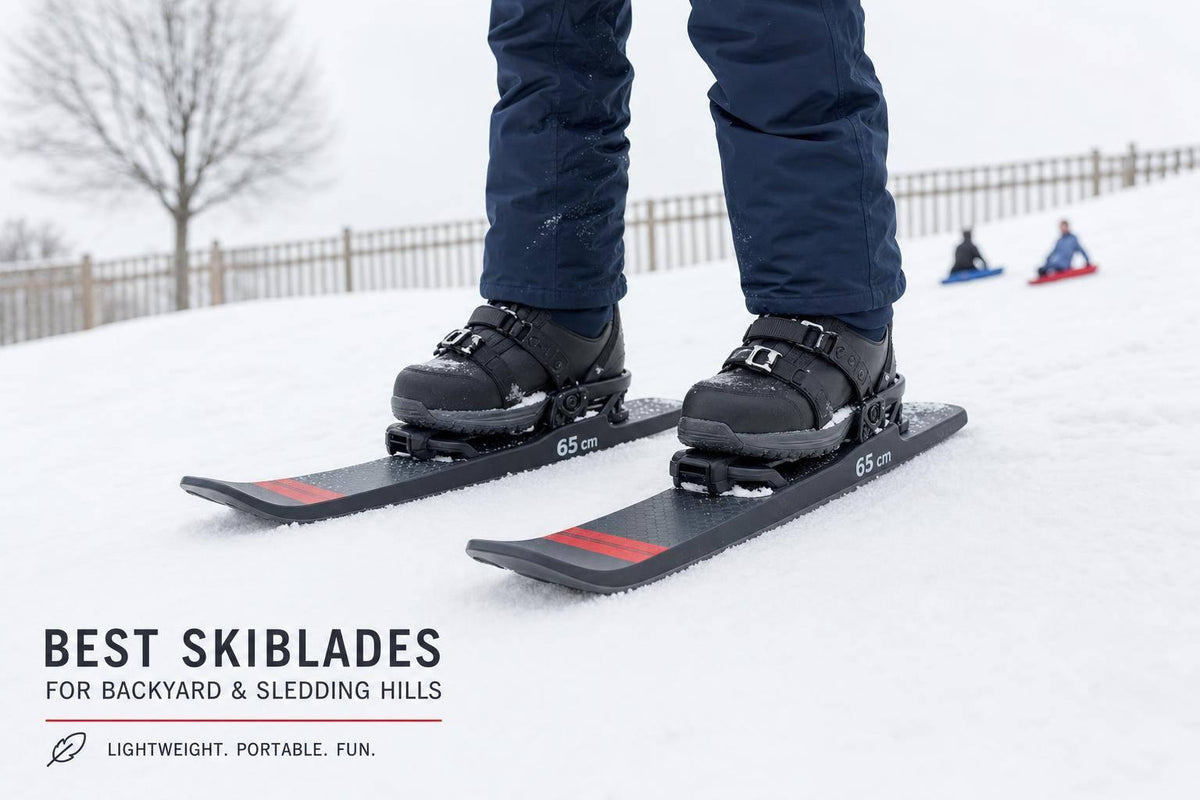
If the 44 cm Skiskates feel a bit too twitchy, the 65 cm Snowfeet* Skiblades hit a nice middle ground. At 65 cm (about 26 in), they give you more stability without giving up that easy, playful feel.
These Skiblades use a wood core and a real ski base, which helps with stability and edge hold compared with the 44 cm model. The 11–9.5–11 cm shape keeps turns quick, but they don’t feel nervous underfoot.
They fit most adult ski boots.
This model works well for riders who want:
- Quick turns
- More stability than 44 cm skis
- Less intimidation than long skis
That said, they’re not built for top-end speed or deep powder. If you want a ride that feels a bit more like a regular ski, with added stability, the 99 cm model is the next move.
3. Snowfeet* Skiblades 99 cm
If 65 cm feels too short, 99 cm (about 39 in) is the next step that makes sense. Snowfeet* Skiblades 99 cm feel the most like skis in the short-ski lineup, but without the jump to full-length skis.
They use a wood core, cap construction, metal edges, a graphite base, and a deep sidecut for easier carving and switch riding. In plain English: they feel stiffer and more steady in turns.
Because they come with ski bindings and metal edges, they work well on groomed resort slopes. That makes them a good match for returning adult skiers, older beginners, and snowboarders who want more control without dealing with long skis right away.
So, if 65 cm feels a bit too playful, 99 cm gives you more stability and control while still being much easier than long skis. And if you want more glide plus a feel that’s even closer to regular skis, the 120 cm model is the next move.
4. Snowfeet* Short Skis 120 cm
At 120 cm (47 in), this is the longest pick in the Snowfeet* short-ski lineup. It feels closer to standard skiing, but it’s still smaller and more forgiving than full-length skis.
The build is made for control. You get a wood core, cap construction, metal edges, and a graphite base. Put that together with an 8 m turn radius, and carving feels smooth and easy. It also uses camber with tip and tail rocker, which helps with control and makes the ride feel smoother in mixed snow.
Boot fit is broad too. It works with standard ski boots from US 4.5–14.5 (EU 36–49 / 22.5–32.5 MP), and some setups also work with snowboard boots. That’s a nice bonus if you’re coming from snowboarding and don’t want to buy a whole new boot setup right away.
This model makes sense for riders who want the most ski-like feel in the lineup. It works well as a middle step for nervous riders who are ready to move toward steeper terrain or a bit more speed. If low-speed pivoting is your top goal, the 65 cm and 99 cm models are still easier to handle. The 120 cm sits right in that sweet spot between short skis and full-length skis, so it’s the closest match before making that jump.
sbb-itb-17ade95
5. Long Skis
Compared with the shorter models above, full-length skis give you more stability at speed. The trade-off? They’re less easy to control.
For nervous skiers, the big issue is turning. Longer skis don’t like fast direction changes. Slowing down or pivoting takes more effort than most beginners expect. That lag in response is a big reason long skis can feel a little intimidating on green and blue runs, where stop-and-go skiing happens all the time.
Their stiff boots and bindings pass power well, but they can feel less forgiving and tougher for beginners to handle.
Long skis make sense for intermediate to expert skiers who want speed and solid edge hold. But they’re built for performance, not the easiest start. If you’re not at ease with both, going shorter usually helps build confidence faster. Next, compare that trade-off with short-ski options that keep control high without the intimidation.
6. Salomon Snowblades
Salomon Snowblades are compact, user-friendly short skis. They give nervous riders a quick, easy turning feel without the long length of full skis. So, if full-size skis feel like too much, Snowblades can seem a lot less intimidating.
That said, fit and binding match matter more here than with Snowfeet*. And that’s the part that can trip people up.
They also feel less stable than longer skis once speed picks up. So they work best on controlled resort runs, not aggressive skiing or off-piste terrain.
For cautious buyers, the main downside is setup. You need to check that the boot and binding codes match exactly. Stock bindings fit up to 30 Mondopoint, and a wire-bail replacement kit can extend that to 34 Mondopoint. If you have larger boots, check the exact binding model before you buy. That puts Snowblades in the middle: easy to ride, but not as flexible as Snowfeet*.
Used Snowblades can also be a lower-cost way to try short skis without spending a ton.
Compared with Snowfeet*, Snowblades depend more on alpine boots, while Snowfeet* keeps things simpler for casual riders. Next is Figl, another short-ski option with a different setup and feel.
7. Figl Short Skis
Figl are ultra-short, wide short skis, about 26 inches long. That puts them in the same size range as Snowfeet Skiblades 65 cm. They look simple and playful. And in the right snow, they can be.
But there’s a catch: their use case is pretty narrow.
Figl rely more on body position than edge control. Lean forward to go faster. Shift back to slow down. That can work fine in soft spring snow, where the surface feels forgiving. On hardpack, though, it’s a different story. Figl do well in soft spring snow, but they offer minimal edge grip on hardpack or mixed snow.
Some models come with simple strap-on bindings that work with boots or even shoes. Others, like the Kästle Figl, use alpine bindings and cost about $375–$430. So, while Figl can be simple on paper, some versions end up being less practical than short skis made for regular resort use.
That’s the big point here: Figl are a niche spring-snow product, not a full-season tool for building confidence. If you’re a nervous resort skier, the main question isn’t whether Figl are fun on soft spring days. It’s whether they work across the runs and snow most people deal with all winter. And, uh, that’s where the case gets pretty thin.
Side-by-Side: What Matters Most When You Fear Long Skis
For anxious skiers, the big question is pretty simple: which setup turns with less effort, stops with less drama, and feels less scary on groomed runs?
Short Skis vs. Long Skis at a Glance
| Criteria | Short Skis (44–120 cm) | Traditional Long Skis (150 cm+) |
|---|---|---|
| Turning effort | Low | Higher |
| Slow-speed control | Easier | More demanding |
| High-speed stability | Limited | Strong |
| Powder performance | Poor to fair | Good to excellent |
| Weight | Light and portable | Heavier and bulkier |
| Learning curve | Gentler | Steeper |
With that in mind, here’s how the two setups compare.
Main Options Compared
| Model | Length | Feel | Boot Options | Best Terrain | Best Rider | U.S. Price |
|---|---|---|---|---|---|---|
| Snowfeet* Skiskates | 44 cm | Playful, skate-like | Ski or snowboard boots | Groomed, gentle slopes | Total beginners, nervous first-timers | About $460–$690 |
| Snowfeet* Skiblades | 65 cm | Nimble, fun | Ski or snowboard boots | Groomed runs | Nervous first-timers, casual riders | From $590 |
| Snowfeet* Skiblades | 99 cm | Balanced, versatile | Ski or snowboard boots | Groomed runs | Casual resort riders, ex-snowboarders | From $690 |
| Snowfeet* Short Skis | 120 cm | Confidence-building | Ski boots | Most groomed terrain | Older beginners, cautious adults | $950 |
| Traditional Long Skis | 150 cm+ | Powerful, demanding | Ski boots | All-mountain, powder, steeps | Experienced skiers | Varies widely |
1. Length and Control
Shorter skis react fast. That means small mistakes are easier to fix, which can be a huge relief when you’re tense. At 44 cm, Skiskates feel almost instant underfoot. Step up to 99 cm or 120 cm, and you get more ski on the snow, which helps them feel calmer and more planted on longer groomed runs.
2. Stability and Speed Comfort
This is where the trade-off shows up. Short skis are easier to manage at low speed, but they do have limits. Long skis do better once the pace climbs. They feel steadier on fast runs, steep terrain, and spots where speed starts to build.
That said, short skis can feel so easy that they hide how fast you’re going. Kind of like a small car that feels fine until you glance at the speedometer and go, “Oh.” So stick to mellow terrain until your comfort level catches up.
3. Boot Compatibility
Most Snowfeet* models work with ski or snowboard boots. That’s a nice plus. It cuts down on rental hassle and lets you pick the setup that feels less intimidating from the start.
4. Best Terrain and Rider Type
For nervous resort riders, the 65 cm and 99 cm Snowfeet* models hit the sweet spot. They’re easier to handle without feeling too tiny. The 120 cm version feels closest to a standard ski, so it may suit cautious adults who want something more familiar without jumping straight to 150 cm+ skis.
Next: the pros and cons break down each model more clearly.
Pros and Cons by Model
Here’s the quick, model-by-model breakdown. If you want the fast read, this chart shows fear level, control, and portability side by side.
| Model | Intimidation Level | Turning Ease | Stopping Ease | Portability | Speed Stability | Best Trade-Off Note |
|---|---|---|---|---|---|---|
| Snowfeet* Skiskates 44 cm | Very low | Very easy; pivots instantly | High on gentle slopes; hockey stops feel natural | Very high - fits in a large backpack | Low to moderate; best on green terrain | Best for maximum ease, not speed |
| Snowfeet* Skiblades 65 cm | Low | Easy; quick, compact turns | High | High - fits most car trunks easily | Moderate at low speeds on greens | Best bridge from skates to skis |
| Snowfeet* Skiblades 99 cm | Low to moderate | Easy to moderate | High once basic technique clicks | High - compact and easy to carry | Stable at low to moderate speeds on greens and easy blues | Best balance of confidence and skill-building |
| Snowfeet* Short Skis 120 cm | Moderate | Moderate; closer to a traditional ski feel | High on groomed runs once snowplow is learned | Moderate - shorter than long skis, still manageable | Stable on longer groomed runs | Most ski-like Snowfeet option |
| Traditional Long Skis (150 cm+) | High | More demanding | Limited for true beginners | Low - bulky, harder to carry and store | Excellent at moderate to high speeds | Best speed stability, weakest beginner ease |
| Salomon Snowblades (~80–99 cm) | Moderate | Easy to moderate; tight turn radius | Moderate to high | Moderate | Stable at resort cruising speeds on smooth groomers | Fun alternative; check binding type before buying |
| Figl Short Skis (≤66 cm) | Low | Easy; compact, skate-like movements | Moderate | High - ultra-short and lightweight | Low | Built for soft spring snow; limited at typical U.S. resorts |
A simple way to read this: the shorter the ski, the less scary it tends to feel. That’s a big deal for nervous riders. You give up some calm at higher speed, sure, but you gain easier turns, simpler stops, and gear that doesn’t feel like you’re hauling fence posts to the lift.
With the comparisons clear, the final section picks the best short skis for most nervous riders.
Conclusion
When you stack up length, control, and stability, the right pick comes down to one thing: how much confidence you want on day one.
For nervous skiers, short skis fix the stuff that matters most right away:
- turning
- stopping
- carrying less weight
- feeling more in control
That’s a big deal. Short skis make skiing feel simpler, lighter, and way less intimidating.
Here’s the shortest path to the right Snowfeet* length:
- Most fearful first-timer → Snowfeet* Skiskates 44 cm
- Casual U.S. resort skier → Snowfeet* Skiblades 65 cm or 99 cm
- Older beginner → Snowfeet* Skiblades 99 cm or 120 cm
- Switching from snowboard → Snowfeet* Skiblades 65 cm or 99 cm
Long skis still have the edge for speed, powder, and technical terrain. But if fear is the main issue, Snowfeet* does a better job than long skis. Less gear. More control. More confidence.
For most skiers who feel intimidated, Snowfeet* is the easier way to get on snow and stay in control.
FAQs
How do I choose between 65 cm and 99 cm?
Choose 65 cm if you want the most agile feel. It’s a great pick for beginners, park riders, and anyone who likes quick, easy turns on groomed runs. It’s also the easiest option to carry around and stash in the car.
Choose 99 cm if you want more balance and a steadier ride. It gives you better edge grip, feels smoother in mixed snow, and is the best all-around pick for most adults.
Are short skis easier than regular skis for beginners?
Yes. Short skis are usually easier for beginners than old-school long skis.
Their smaller size, like the Snowfeet* range, makes them easier to turn, stop, and balance on. That matters a lot when you're new and just trying to stay upright without feeling like your skis have a mind of their own :)
They also feel less intimidating. And they can help you avoid common beginner mistakes, like crossing your ski tips.
Traditional long skis still have their place. They tend to feel more stable at higher speeds and in deep powder. But for most new riders, Snowfeet* gear can make learning on groomed runs feel easier and less tiring, which helps build confidence faster.
Can I use snowboard boots with Snowfeet*?
Yes. Many Snowfeet* models work with snowboard boots and sturdy winter boots, which gives you more ways to ride.
Snowboard boots are a solid pick for beginners. They feel softer and more comfy than standard ski boots, so the learning curve often feels less harsh. They work especially well with the 44 cm Skiskates and the 65 cm or 99 cm Skiblades.
Just make sure your Snowfeet* model has the right binding setup for your boots. That part matters more than people think :)











Laisser un commentaire
Ce site est protégé par hCaptcha, et la Politique de confidentialité et les Conditions de service de hCaptcha s’appliquent.