



















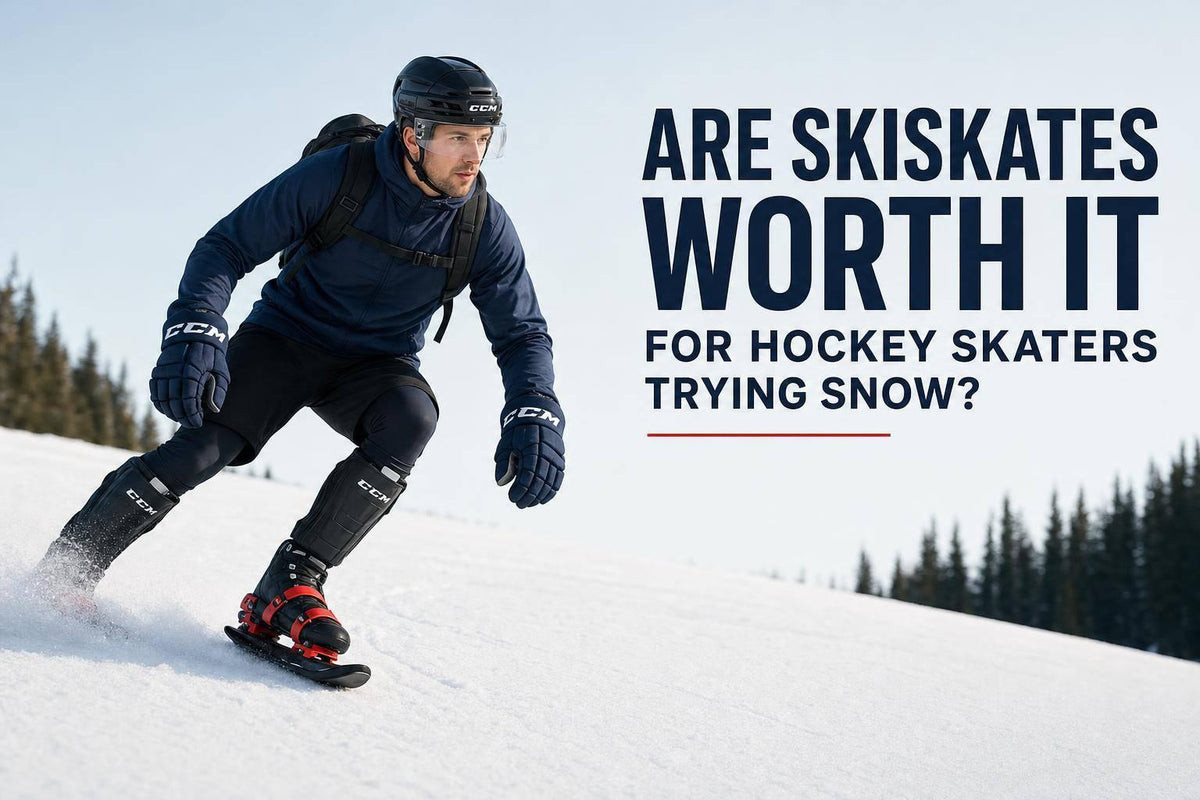
Yes - if you play hockey and want a simple first snow setup, skiskates make a lot of sense. From what I see, the 44 cm Skiskates are the best middle pick for most adult hockey players: they keep that skate-like feel, work well on green runs and small hills, and cost about $460, which is often less than a full ski setup once boots and other gear get added.
Here’s the short version:
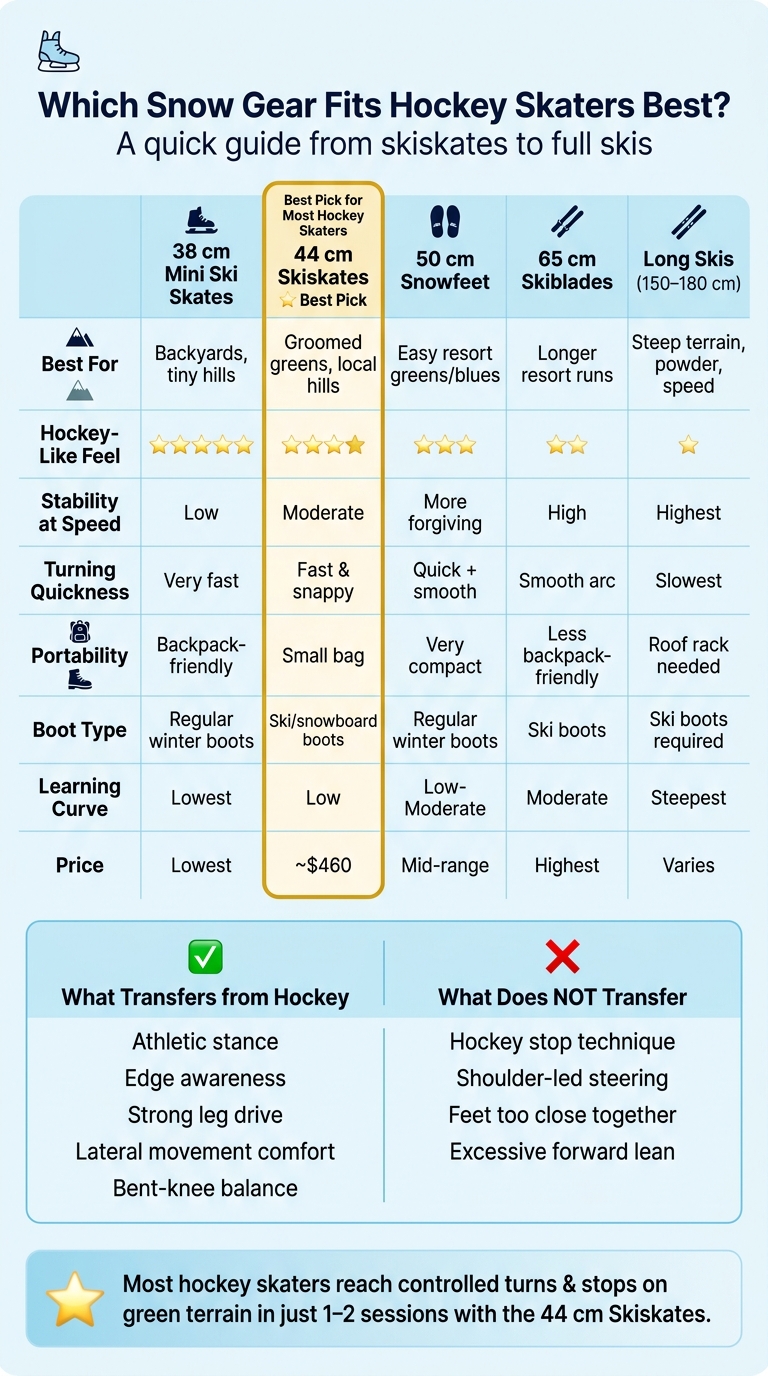
- 44 cm Skiskates: best all-around pick for most hockey skaters
- 38 cm Mini Ski Skates: closest feel to hockey, best for slow-speed fun
- 50 cm model: a bit more calm underfoot on rougher snow
- 65 cm Skiblades: better if you want longer resort runs and more speed
- Long skis: still the better pick for steep terrain, deep snow, and high speed
A few key takeaways stood out to me:
- Hockey skills like edge control, balance, and low stance do carry over
- The hockey stop does not transfer cleanly to long skis
- Short snow gear in the 38 to 65 cm range feels less awkward than skis in the 150 to 180 cm range
- Most hockey skaters can get to basic turns and controlled stops in 1 to 2 sessions
If you want the plain answer: for casual laps, local hills, and a low-fuss way to try snow, skiskates are worth it. If you want all-day resort carving, uh, go with longer gear.
Quick Comparison
| Model | Best For | Feel | Main Trade-Off |
|---|---|---|---|
| 38 cm | Backyards, tiny hills, playful laps | Most like hockey | Less steady as speed builds |
| 44 cm | Most adult hockey skaters | Fast, snappy, familiar | Not built for steep or messy snow |
| 50 cm | Easy resort runs, mixed snow | Similar feel with more support | Slightly less skate-like |
| 65 cm | Longer runs, more resort use | More ski-like | Needs more technique |
| Long skis | Speed, powder, steeper slopes | Least like hockey | Bigger learning jump |
So, if I were helping a hockey player at the shop counter, I’d say this: start with the 44 cm if you want fun right away. It’s the sweet spot between control, learning curve, and portability. :)
For a quick look at how short ski gear feels on snow, these YouTube searches can help:
Skiskates vs. Skiblades for Hockey Players: Which Model Fits You?
Hockey Player Tries Snowfeet* Skiskates | See What He Thinks | Skiboards | Short Ski | Mini Ski
Why Traditional Skis Often Feel Awkward for Hockey Skaters
If you come from hockey and jump onto snow for the first time, regular skis can feel awkward right away. They’re longer, less snappy, and slower to answer when you move. That doesn’t mean you’re doing a bad job. It usually means the gear doesn’t match what your body already knows.
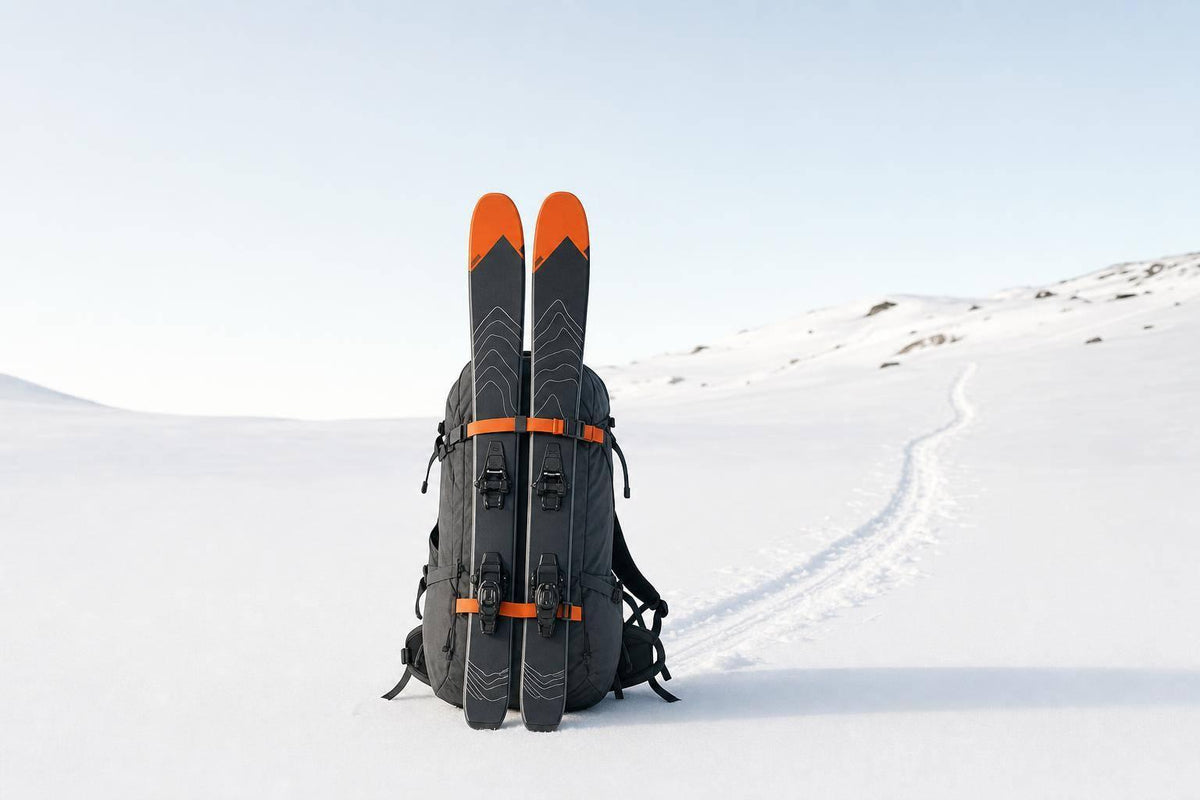
Adult skis are often 150–180 cm long. That’s about 5 to 6 times the length of a hockey blade. That extra length helps with stability, but it also slows down how fast a turn starts. So when a hockey skater tries a quick pivot, the tails can dig in and block the turn from finishing. By the time the edge starts to bite, the turn can already feel late.
Stopping is often the most annoying part. The hockey stop doesn’t carry over in a clean way. On long skis, trying it can make the skis cross or catch an edge. Then you get pushed toward the wedge stop, which is slower and feels strange if you’ve spent years stopping hard on ice. That’s the point where short skiskates start to make a lot more sense.
What Transfers from Hockey and What Does Not
Some parts of hockey move over well. That’s the good news.
- Athletic stance
- Edge awareness
- Strong leg drive
- Comfort with lateral movement
A hockey player already knows how to stay with bent knees, low hips, and centered weight. That gives you a strong base on snow.
What tends to cause problems is a bit different. Shoulder-led steering, feet too close together, and too much forward lean don’t transfer as well. Hockey players often start direction changes by twisting the shoulders. On skis, that move can lead to over-rotation and push the hips uphill, which hurts edge grip. Shorter gear helps because it cuts down the mismatch between hockey movement and snow movement.
Why Short Skis and Skiskates Help Close That Gap
Short gear, usually 38 to 65 cm, turns faster and is easier to fix when something feels off. The shorter length gives you a smaller turning radius, faster edge-to-edge response, and less front-to-back leverage. Put simply: little balance mistakes that can wreck a turn on long skis are much less punishing here.
For hockey skaters, that means:
- Quicker edge response
- Easier balance fixes
- Less trouble when stopping
That’s why the 44 cm Skiskates stand out as the most relevant option here.
How Snowfeet* Skiskates 44 cm Actually Feel for Hockey Skaters
For hockey skaters, the 44 cm Skiskates keep a lot of that skating feel, then shift it onto snow. Each foot still works on its own, which is a big deal. That compact length helps the stance feel quick and familiar, not long and awkward like full skis can at first.
So the big thing isn’t just “Are they fun?” It’s how they stack up against the smaller 38/50 cm options and the longer 65 cm Skiblades.
Where the 44 cm Skiskates Feel Natural
The biggest plus for hockey skaters is independent foot movement. You still get that edge-to-edge rhythm your body already knows from ice. Because of that, the learning curve often feels smaller than switching to full skis.
On groomed runs and small local hills, that setup tends to feel pretty natural. You’re not fighting a long ski. You’re making quick moves, making small corrections, and staying active over your feet.
The short platform also makes turns feel fast and direct. For hockey players who are used to quick edge changes, that snap can feel much more familiar than riding long skis.
Where the 44 cm Skiskates Do Not Feel Like Hockey
Here’s the trade-off: you give up some stability at higher speeds and on steeper terrain. That makes them a better fit for casual laps, playful riding, and shorter sessions than full-on downhill charging.
They also get tougher in messy snow. Chopped-up snow, slush, and other mixed conditions ask more from you than smooth groomers do. Powder is another weak spot. A short ski like this won’t float the way a longer, wider ski will.
There’s also a small body-position adjustment. On snow, your fore-aft balance isn’t quite the same as it is on ice, so standing on a slope can take a bit of getting used to.
That’s where the next choice comes in: go with the smaller 38/50 cm models if you want max nimbleness, or move to the 65 cm Skiblades if you want more speed and a steadier ride.
sbb-itb-17ade95
Which Snowfeet* Model Fits a Hockey Skater Best
For hockey skaters, this choice comes down to three things: speed, stability, and feel.
You want something that still lets you use edge control and quick stops without forcing you to learn full-on ski technique. That’s the sweet spot.
Snowfeet* 38/50 cm vs. 44 cm vs. 65 cm
For hockey skaters:
| 38 cm Mini Ski Skates | 44 cm Skiskates | 50 cm Snowfeet* model | 65 cm Skiblades | |
|---|---|---|---|---|
| Best use | Small local hills, backyards, beginner runs | Groomed resort greens, short local hills | Groomed resort greens and easy blues | Groomed resort greens and blues, longer runs |
| Stopping feel | Closest to a hockey stop; easy to smear and slow down | Smearing and sideways braking feel natural | Blend of smearing stops and basic parallel ski stops | Parallel ski-style stops; more technique needed |
| Turning quickness | Very fast, almost immediate | Fast and snappy | Quick, with a little more smoothness | Smooth arc, less twitchy |
| Stability | Lowest at speed; best kept slow | Moderate; comfortable at casual speeds | More forgiving on uneven snow | Highest of the group; best for longer runs |
| Portability | Fits in a small bag or backpack | Fits in a small bag; easy trunk carry | Still very compact and easy to transport | More packable than full skis, but less backpack-friendly |
| Boot compatibility | Regular winter boots | Ski or snowboard boots | Regular winter boots | Ski boots |
| Price position | Lowest entry price | Higher | Mid-range | Highest |
| Ideal hockey skater | Youth players, beginners, low-speed fun | Adult rec and beer-league players wanting the most skate-like feel | Adult rec and beer-league players wanting a little more stability | Confident skaters ready for longer resort runs |
The table lays out the trade-offs. Here’s the plain-English version.
The 38 cm model feels closest to hockey. It’s super quick, easy to throw sideways, and its heel brake makes slowing down easier. If you’re new to snow, that matters a lot. The downside? It gets less steady once you start pushing speed.
The 44 cm Skiskates hit a fun middle zone for a lot of adult rec and beer-league players. They still feel skate-like, but they give you a bit more room to settle in than the tiny 38 cm option.
The 50 cm model is the “I want a little more calm under my feet” pick. You keep that nimble feel, but gain a bit more stability, which helps on rougher snow or easy blue runs.
The 65 cm Skiblades shift farther toward a ski ride. They’re more stable, smoother on longer runs, and a better match if you want more control at the resort. But yeah, they ask more from your technique, especially when stopping.
How Snowfeet* Compares to Traditional Skis and Other Short-Ski Brands
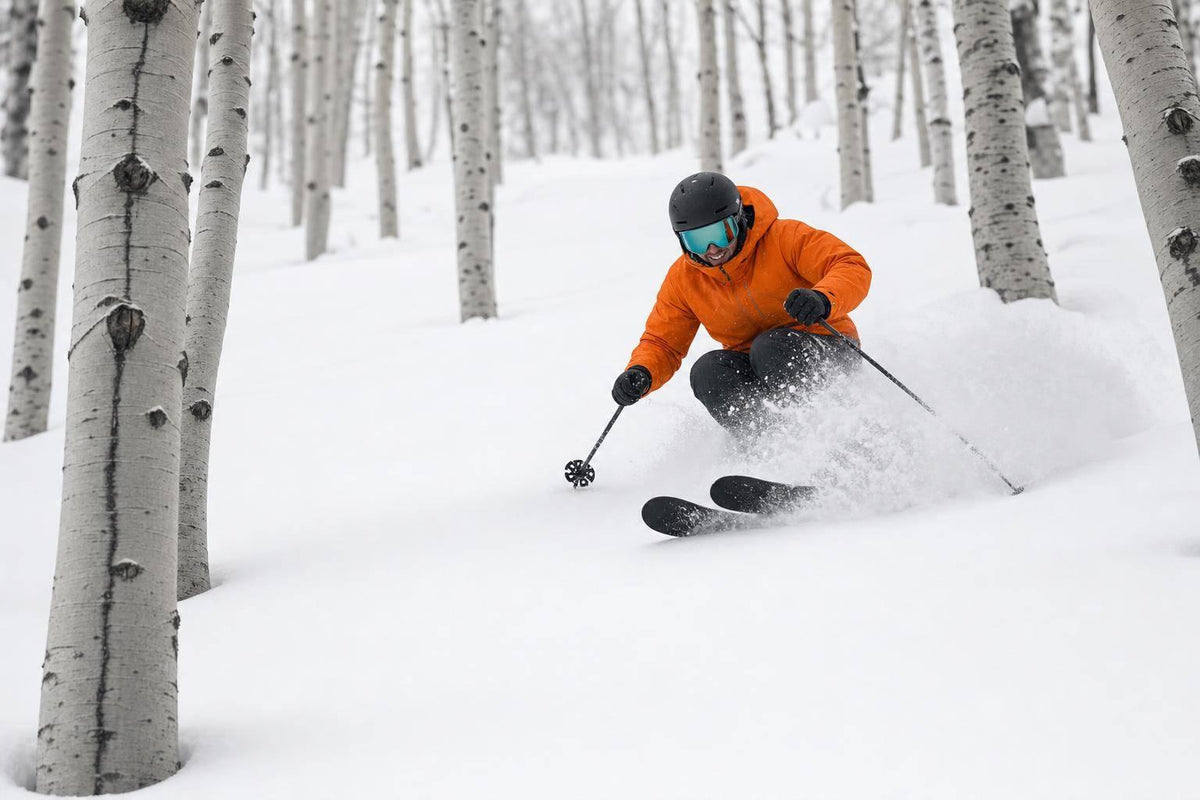
Traditional long skis - around 150–180 cm - still win when speed gets high, the snow gets deep, or the terrain gets steep. No surprise there.
Other short skis can also work. The catch is that most of them still need ski boots, which makes them less easy to grab and go for hockey skaters. And that’s a big deal. If you’re used to showing up, lacing up, and moving fast, extra gear can feel like a whole production.
| Snowfeet* (38–65 cm) | Traditional Long Skis (150–180 cm) | Other Short Skis | |
|---|---|---|---|
| Boot requirement | 38/50 cm models work with regular winter boots; 44 cm and 65 cm are more binding-specific | Ski boots required | Ski boots required for most models |
| Learning curve for hockey skaters | Low - shorter lever arms feel closer to skating and reduce the chance of crossing tips or catching tails | Steeper - different body position and more ski-specific technique | Moderate - shorter than full skis, but still more ski-centric |
| Portability | Fits in a bag or car backseat | Requires roof rack or a large ski bag | Shorter than full skis, but still bulkier than Snowfeet* |
| Best use case | Local hills, resort greens/blues, quick sessions | Full resort days, steep terrain, powder | Resort use, terrain parks |
| High-speed carving | Limited, especially under 50 cm | Excellent | Good to very good |
| Powder performance | Weak across all lengths | Strong with the right ski | Moderate |
| Skate-like feel for hockey players | High, especially 38/44 cm | Low | Low to moderate |
For quick sessions, local hills, and easy transport, Snowfeet* makes the most sense for hockey skaters. The next step is simple: figure out whether the 44 cm Skiskates are the right call for your skating style.
Conclusion: When Skiskates 44 cm Are Worth It for Hockey Skaters
After looking at feel, control, stopping, and portability, the 44 cm Skiskates are the best pick for most hockey skaters trying snow.
For most intermediate to advanced hockey skaters, they strike the right balance between hockey-like feel, easy transport, and smooth first sessions on snow. You keep a lot of the edge control and quick-stop habits you already know, but you also get enough platform for small to medium terrain. In plain English: they feel familiar without feeling too limited.
Most hockey skaters can get to controlled turns and stops on green terrain in one or two sessions.
That said, they’re not the right tool for every kind of riding. If you want high-speed carving on long groomers, traditional skis are still the better match. The 38 cm model works best for tricks and tight turns on short hills. The 50 cm gives you a bit more stability. And the 65 cm Skiblades bring a more stable, ski-like feel for longer or steeper runs.
For casual use at a local hill, the 44 cm Skiskates land in the sweet spot. They keep that hockey feel while adding just enough platform for small to medium terrain.
Best-Fit Buyer Profiles at a Glance
Use this quick guide to match your riding style to the right Snowfeet* model.
| Rider Type | Best Fit | Why |
|---|---|---|
| Casual local-hill rider | 44 cm Skiskates | Skate-like feel and easy transport |
| Resort rider wanting hockey-style control | 44 cm or 50 cm Snowfeet* | Quick turns on greens and easy blues |
| Freestyle/park-focused rider | 38 cm Snowfeet* | Fastest, most playful option |
| Progression-focused rider needing stability | 50 cm Snowfeet*, 65 cm Skiblades, or traditional skis | More stability for longer, steeper runs |
If you’re trying to decide fast, ask yourself three things:
- Do you care more about casual fun or technical progression?
- Will you ride mostly local hills or large resorts?
- Do you want a short, skate-like feel or a more stable, ski-like feel?
For hockey skaters who want quick, low-commitment fun on snow, those answers usually point straight to the 44 cm Skiskates.
FAQs
Can beginners use skiskates?
Yes. Skiskates are often easier for beginners than full-length skis. They’re short, nimble, and tend to feel a lot like ice skates on snow.
For many first-timers, that means less of the awkward “giant planks on my feet” feeling and more confidence early on. A lot of people can start gliding on groomed runs within a few hours.
Snowfeet skiskates also put you in a more natural, forward-facing stance, which helps the learning curve feel less steep. And because they work with standard winter boots or snowboard boots, you can skip the stiff rental boots that, let’s be honest, nobody enjoys wearing :)
Do I need ski boots for Snowfeet* skiskates?
No. Snowfeet* skiskates work with footwear you may already own, including regular waterproof winter boots and snowboard boots.
Want more edge control and a steadier feel? Alpine ski boots are an option.
That said, many riders like snowboard boots best because they give you a nice mix of comfort, flex, and support. If you're just cruising at low speeds, winter boots can work too. The trade-off is less ankle support.
Are 44 cm skiskates enough for resort runs?
Yes - 44 cm skiskates work well for resort runs if you stick to groomed green and blue terrain. Their short length makes quick turns, pivots, and stops feel natural, which is a big plus for hockey players.
That said, they’re less stable than 65 cm or 99 cm skiblades or full-length skis once you get above about 25 mph. They’re also not made for steep black runs or deep powder.











Hinterlassen Sie einen Kommentar
Diese Website ist durch hCaptcha geschützt und es gelten die allgemeinen Geschäftsbedingungen und Datenschutzbestimmungen von hCaptcha.