




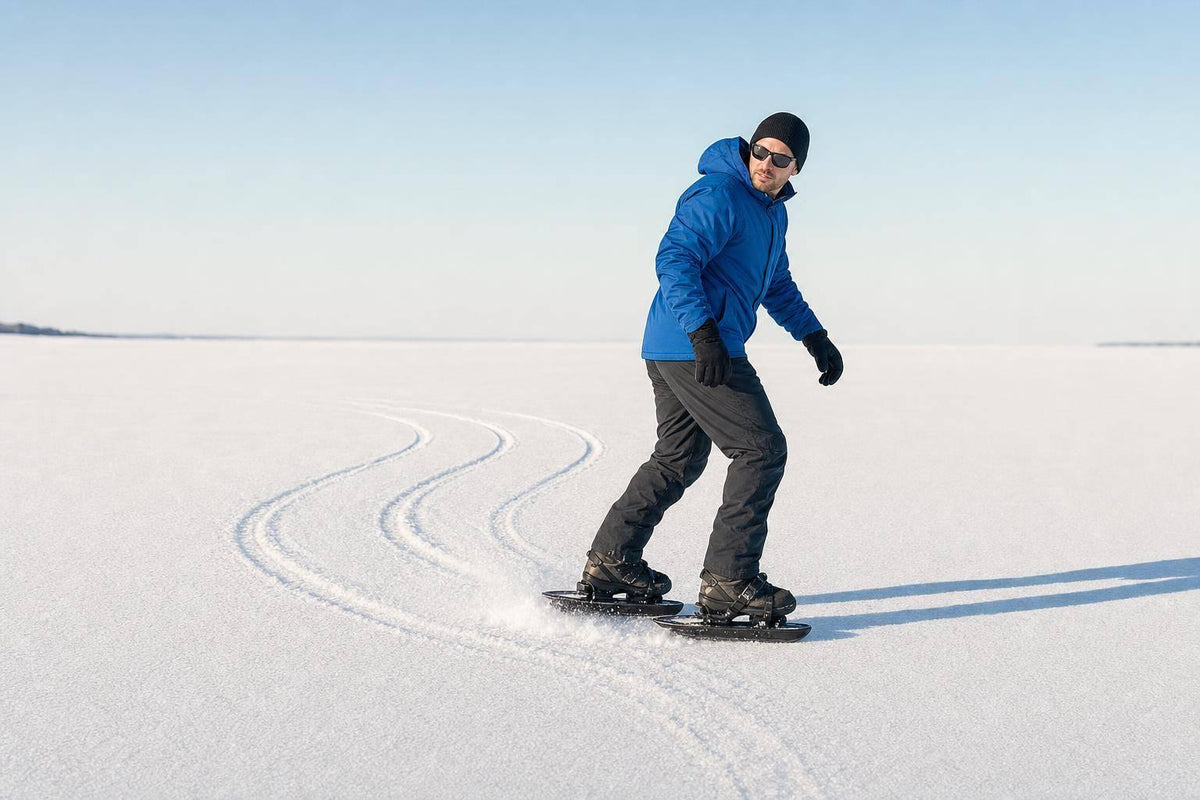
Yes - you can go backward on Icefeet-style Snowfeet* gear, but only in short, controlled glides. It’s not like skating backward on rink ice, and it works best on firm, groomed snow, in an open flat area, and only after you can already stop, turn, and balance going forward.
Here’s the short version:
- Best pick for backward gliding: 44 cm Skiskates at $460
- Most stable option: 50 cm Snowfeet PRO at $299
- Hardest to control backward: 38 cm mini skis
- Best terrain: flat snow or a very gentle slope
- Best users: skaters, snowboarders, and riders with solid balance
- Main safety rule: keep it slow, check behind you, and don’t try this in traffic
I’d put it this way: yes, it works, but think “a few feet of backward glide” - not a full hockey clinic on snow :). The gear can do it. Your balance is the bigger limit.
Quick comparison
| Model | Length | Price | Backward glide feel | Best for |
|---|---|---|---|---|
| Skiskates | 44 cm | $460 | Best mix of control and support | Riders who want the easiest backward practice |
| Snowfeet PRO | 50 cm | $299 | More steady underfoot | Casual riders who want more platform |
| Mini Skis | 38 cm | - | Most twitchy | Skilled riders on smooth snow |
A few numbers jump out. The 44 cm model sits right in the middle, which helps with control. The 50 cm model gives you about 6 cm more length than the 44 cm version, so you get a bit more room for error. The 38 cm model is about 24% shorter than 50 cm, and, yep, you feel that when snow gets bumpy.
If I were giving shop-floor advice, I’d say this:
- Start with short glides
- Use firm snow
- Keep your weight toward your toes
- Stop and reset after every try
- Wear a helmet
- Don’t do this on steep, icy, or chopped-up runs
If your goal is clean backward movement on snow, the answer is yes - with limits. If your goal is rink-style backward skating, uh, that’s still a job for ice skates.
For a quick look at Snowfeet* in action, these video pages can help:
- Snowfeet* official videos
- Skiskates videos
- Snowfeet PRO videos
So, if you keep it slow, stay on smooth snow, and pick the right model, backward gliding is very doable.
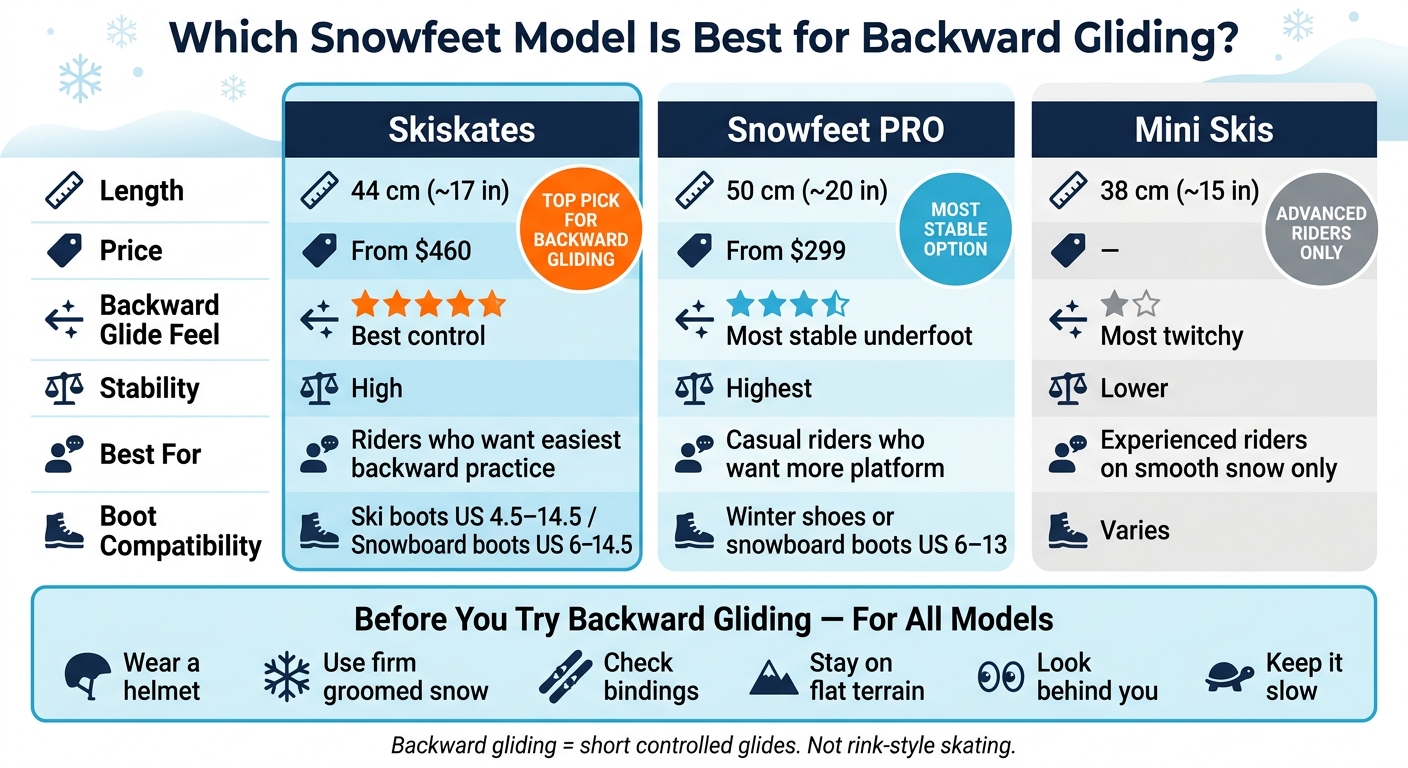
Snowfeet Models for Backward Gliding: Side-by-Side Comparison
World's most versatile ski skates - Snowfeet* PRO
Which Snowfeet* Models Work Best for Backward Gliding
Backward gliding is easiest on the shorter, steadier Snowfeet* models. The best pick comes down to one thing: do you want more control, or more stability?
Skiskates 44 cm: the best choice for control
The 44 cm Skiskates (about 17 inches) are the top pick for backward gliding in the Snowfeet* lineup. They give you more stability under your feet during slow backward glides, but they’re still short enough to pivot and steer with less effort than regular skis.
That mix matters. When you’re moving backward, small balance mistakes show up fast. A bit more length helps settle things down without making the ride feel clunky.
These are made for ski boots (US sizes 4.5–14.5) or snowboard boots (US sizes 6–14.5), with adjustable bindings based on the binding version. That snug connection helps a lot when you’re gliding backward and need the gear to respond right away. Pricing starts at $460.
Mini skis 50 cm vs. 38 cm: which size fits you
The 50 cm Snowfeet PRO (about 20 inches) is the steadiest option in the mini-ski range. The longer platform gives you a bit more room for error when your weight shifts off-center, which is helpful during slow backward glides on uneven snow. It works with many winter shoes or snowboard boots in about U.S. sizes 6–13, and it starts at $299.
The 38 cm model is the quickest and most nimble of the three, but it’s also the least forgiving. On chopped-up, soft, or uneven snow, that shorter platform can feel twitchy. And, yep, that gets harder when you’re going backward. It’s a better fit for skilled riders on smooth snow than for beginners trying to dial in backward balance.
| Model | Length | Starting Price | Best For |
|---|---|---|---|
| Skiskates | 44 cm | From $460 | Control, maneuverability, backward glides |
| Snowfeet PRO | 50 cm | From $299 | Stability, accessibility, casual riding |
| Mini Skis | 38 cm | - | Experienced riders, agility, smooth snow |
So, if you want the simplest path to backward gliding, the 44 cm Skiskates and 50 cm Snowfeet PRO are the two that make the most sense. Just don’t expect miracles on slushy, bumpy snow - even good gear likes firm snow and enough room to stay under control.
When Backward Riding Is Realistic and Safe
Best snow and terrain conditions
The short answer: firm, groomed snow on flat ground or a very gentle open slope.
That’s the sweet spot. Short skis don’t give you much front-to-back stability, so they react fast to bumps, grooves, and uneven snow. Fun when you’re in control. Not so fun when the snow starts making choices for you.
Tracked-up snow, ruts, and icy patches are a different deal. Powder can bury the short platform and slow one foot more than the other. Ice cuts down edge grip. Ruts can catch a tip and kick you sideways before you have time to fix it. And steeper terrain? That just adds speed before you’ve built the control to deal with it.
The safest setup is a flat, open area with plenty of room to stop. You want a place where you can slide a few feet, stop, reset, and go again without stressing about what’s behind you.
Skill level, footwear, and safety checks
Even with good snow, control comes first. You should already be able to stop and turn on the same gear with consistency before you try riding backward.
As the Snowfeet Team puts it:
"If you ski backwards, place your weight over your toes to keep the heels a bit above the ground." - Snowfeet Team
That shift sounds small, but it can feel awkward at first. If you’re still working on forward balance, backward balance will feel like patting your head and rubbing your stomach at the same time.
Footwear fit matters too. Check both bindings before every attempt. The 44 cm Skiskates use adjustable bindings sized for ski boots from approximately US 4.5–14.5 and snowboard boots from approximately US 6–14.5. Make sure your boots are centered, the straps are fully closed, and nothing feels loose. Packed snow stuck in the binding can mess with the fit, so clear it out before you start.
Once you’re moving, look over one shoulder in the direction of travel and keep checking behind you. Don’t trust peripheral vision alone. Give other riders, trees, fences, and blind rollovers lots of space.
If you start to pick up speed, drift apart, or cross your skis, switch back to a forward stance or stop. Think of backward gliding as a short control drill, not a full trick run. When that feels steady, try a few feet of backward glide on flat snow.
sbb-itb-17ade95
How to Try a Simple Backward Glide
Basic stance and first push
Once backward balance starts to feel steady, try this short drill. If you can already stand, glide forward, turn, and stop on Snowfeet*, begin on flat, firm snow with plenty of open space. The 44 cm Skiskates are the easiest Snowfeet* model for this drill.
Set up in a simple, athletic stance:
- Feet hip-width apart
- Knees bent
- Arms relaxed
- Chest a little forward
Keep the idea simple: short glide, stop, reset.
From there, shift your weight lightly and make short backward diagonal pushes, one foot and then the other. After two or three pushes, glide a few feet, stop, and reset. Do that a few times before you add more distance. Nice and easy. No need to gun it on day one :)
Turning, stopping, and common mistakes
To steer, use light edge pressure and a small hip turn. Keep your knees soft so both Snowfeet* stay in contact with the snow. Practice shallow arcs in a wide, flat area.
After each short glide, work on stopping. At low speed on flat ground, slowly bring both mini skis across your line of travel and apply even pressure to both edges. Snowfeet recommends distributing weight evenly over both feet during a stop. If the terrain gives you a flat run-out, use it. Let yourself coast into a controlled stop instead of forcing a hard edge set.
Most falls come from the same handful of mistakes:
- Leaning too far back, so the tails catch and you drop hard
- Locking your knees, which kills absorption and control
- Spreading your feet too wide, which makes edging tough
- Pushing too hard and building speed before you can brake
Check behind you before each push. A good first session can be very modest: a few controlled glides, each only a few feet long, all on flat ground, all ending with a planned stop.
That basic control is what makes Snowfeet* workable for backward riding at all.
Icefeet vs. Ice Skates and Long Skis
How mini ski skates differ from ice skates
This comparison matters because backward riding on Snowfeet* only makes sense if you compare it to actual ice-skate technique. Snowfeet* does feel a bit like skating. But on snow, it’s slower and less exact than skating on ice.
On ice, skaters get a smooth, low-friction glide and sharp control from the inside and outside edges of the blades. On snow, there’s more drag, and the surface can change fast. One patch may feel smooth and packed. A few feet later, it can turn rutted, chopped up, or loose. Snowfeet* recommends keeping your weight over your toes so your heels stay light. That tip says a lot. The technique is not the same.
You can see the gap pretty fast when you put them side by side.
| Feature | Snowfeet* Skiskates / mini skis | Ice skates |
|---|---|---|
| Surface | Works best on firm, groomed snow | Smooth, hard ice |
| Glide | Short, playful sliding movement with more snow resistance | Longer, cleaner glide with less resistance |
| Control | More forgiving on firm snow; more affected by soft snow | More precise on ice |
| Backward movement | Slow, playful backward glide after practicing balance | A fundamental skating skill with refined backward-blade control |
| Stopping | Turning across the slope, snow-plow-style pressure, or controlled edging | Hockey stop, T-stop, snow-plow, and other blade-based techniques |
| Best use | Casual snow play, short slopes, small terrain features, spins, and experimentation | Rink skating, hockey, figure skating, backward technique, and precise edge work |
The plain takeaway is simple: if your main goal is clean backward gliding, sharp blade edges, or hockey-style stops, ice skates on an ice rink are the right tool. Snowfeet* is fun on snow, no doubt. It’s just a different ride.
Where long skis do better and why Snowfeet* still wins for most casual riders
Long skis and snowboards do a better job with speed, powder, stability, and long descents. Their longer shape tracks more predictably at speed and handles steep runs, big turns, and long carving sessions much better than any short ski.
Still, most casual riders aren’t chasing huge mountain lines all day. They want gear that’s shorter, easier to carry, and fun to mess around with. That’s where Snowfeet* stands out. The 44 cm Skiskates weigh about 3.5 lbs (1.6 kg) for the pair and fit in a backpack. That’s a lot easier to haul around than a full ski setup.
The learning curve is shorter too, mainly for people with a skating background. The hockey-style push carries over in a natural way, which makes those first sessions feel less awkward. So if your goal is playful backward glides on snow, not all-out downhill power, Snowfeet* hits a sweet spot.
Final Verdict: Yes, but Keep It Slow and Controlled
Bottom line: yes - but keep it to a short, controlled backward glide on firm, groomed snow. This is not ice-rink-style skating.
Here’s the plain-English version: control matters more than speed.
The 44 cm Skiskates give you the most control. The 50 cm Snowfeet PRO adds a bit more stability. And the 38 cm mini skis are better suited to experienced riders. So if you’re thinking about riding backward, don’t chase speed. Chase balance.
The main limit isn’t the gear. It’s your skill.
Only try backward riding after you can do these things with confidence while moving forward:
- Balance well
- Turn with control
- Slow down
- Stop cleanly
A few simple safety checks go a long way:
- Wear a helmet
- Use snug boots
- Check your bindings before you start
- Stay on wide, groomed runs
- Avoid icy, rutted, or steep terrain
Used this way, Snowfeet* can make backward riding realistic, safe, and fun for casual riders.
FAQs
Can beginners try backward gliding on Snowfeet*?
Yes. Beginners can try backward gliding on Snowfeet* because the short, light build makes them easier to turn and control than long skis.
Start on flat, groomed snow or an easy green run. Keep your knees bent and your weight a bit over your toes. That stance helps you stay balanced and in control while you glide backward.
What snow conditions are safest for riding backward?
The safest place to ride backward on Snowfeet is on groomed slopes and packed snow. Why? Because these surfaces give you a steady, predictable base. That makes balance easier and helps you keep better edge control.
Stick to:
- Packed snow
- Light powder up to 4 inches deep
Try to avoid deep powder, moguls, and very icy patches. Those conditions can get sketchy fast.
Start on flat, groomed terrain first. Once that feels smooth and under control, move to gentle slopes.
Which Snowfeet* model is easiest for backward practice?
For practicing backward skating, the 65 cm Skiblades are the best pick for beginners.
They hit a nice middle ground between stability and agility, which makes backward gliding easier to learn. And because they’re shorter than full-length skis, they feel less awkward and easier to control. That means a smoother, less intimidating start when you’re working on your first backward moves.











Hinterlassen Sie einen Kommentar
Diese Website ist durch hCaptcha geschützt und es gelten die allgemeinen Geschäftsbedingungen und Datenschutzbestimmungen von hCaptcha.