




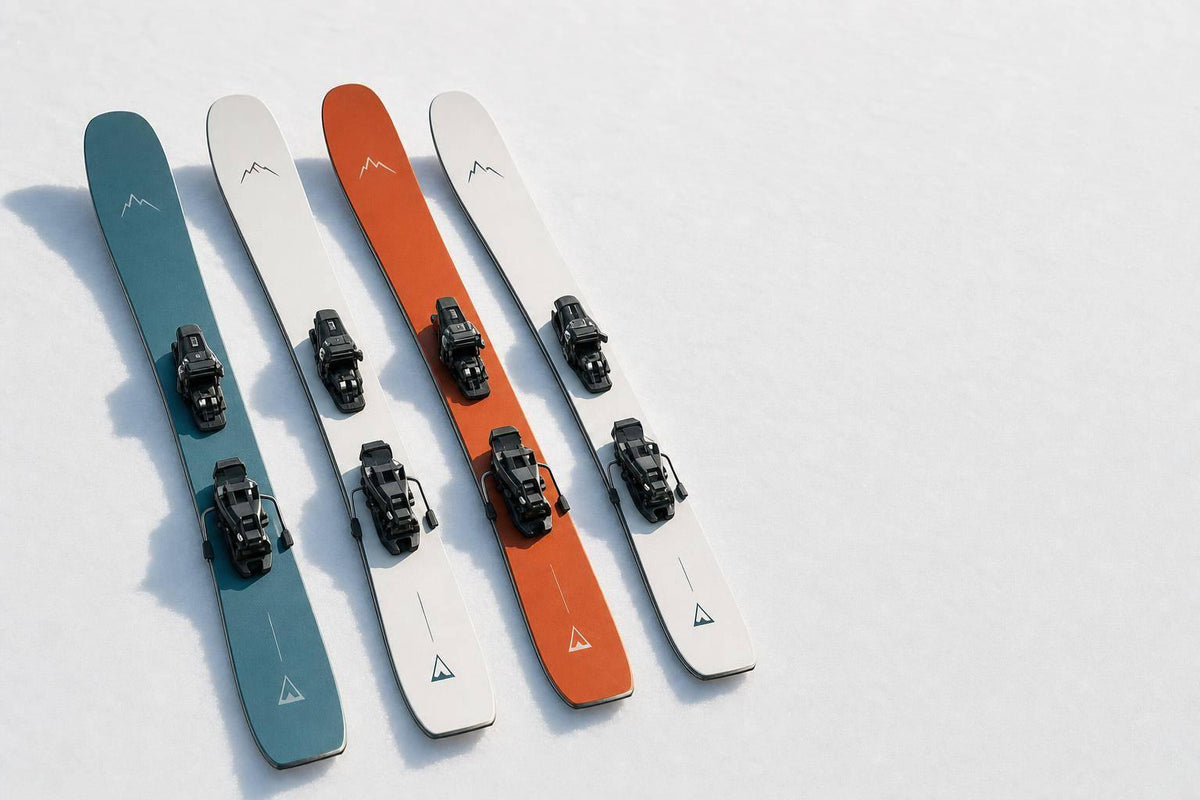
If I wanted one compact setup for short backcountry laps, I’d pick the WALKSKI 100 cm. It’s the only option here built with walk mode, two climb modes, and removable skins, which makes it the best fit for short uphill travel and mellow descents.
Here’s the short version:
- Best all-around backcountry pick: WALKSKI 100 cm
- Best for travel and packed trails: NORDIC 90 cm
- Best for fun downhill laps: Skiblades 99 cm
- Best for the most stable descent: Short Skis 120 cm
And here’s the big catch: none of these are a full touring setup. They’re lighter, smaller, and cost less than a standard rig that can run about $2,200. But they also give you less float, less stability at speed, and less support in deep snow.
So, if your day looks like rolling terrain, short climbs, packed snow, or a few laps before lunch, these options make a lot of sense. If you’re heading into deep powder, steep lines, or long tours, full touring skis still win.
Snowfeet WALKSKI | Backcountry Skiing in Georgia
Quick Comparison
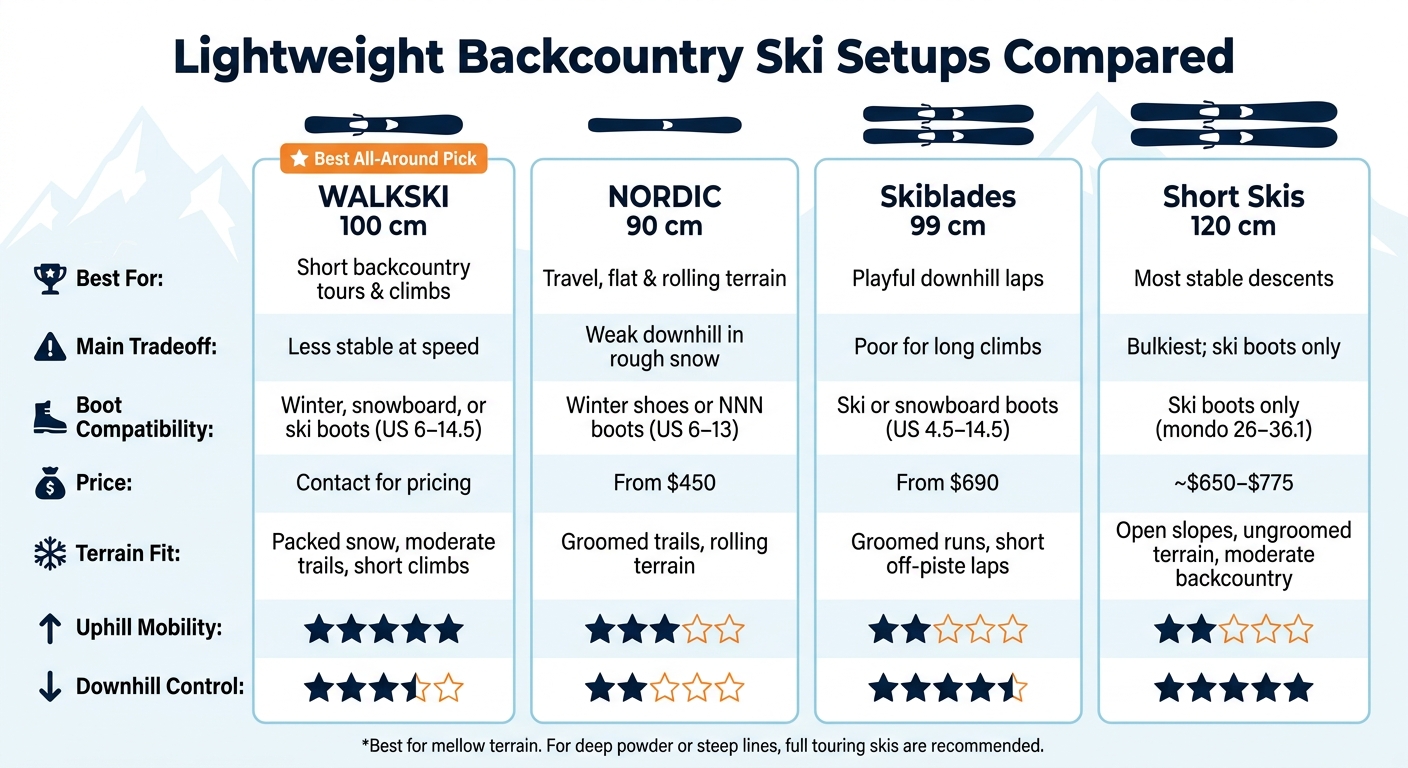
Lightweight Backcountry Ski Setups Compared: Which One Is Right for You?
| Setup | Best Use | Main Tradeoff | Boot Options | Price |
|---|---|---|---|---|
| WALKSKI 100 cm | Short tours and short climbs | Less stable at speed | Winter boots, snowboard boots, ski boots | - |
| NORDIC 90 cm | Travel, flat trails, easy outings | Weak downhill in rough snow | Winter shoes or NNN boots | From $450 |
| Skiblades 99 cm | Playful downhill laps | Poor for long climbs | Ski boots or snowboard boots | From $690 |
| Short Skis 120 cm | More stable descents | Less pack-friendly; ski boots only | Ski boots only | About $650–$775 |
What matters most is simple: uphill ease, downhill feel, pack size, and which boots you already own. That’s the whole game here :)
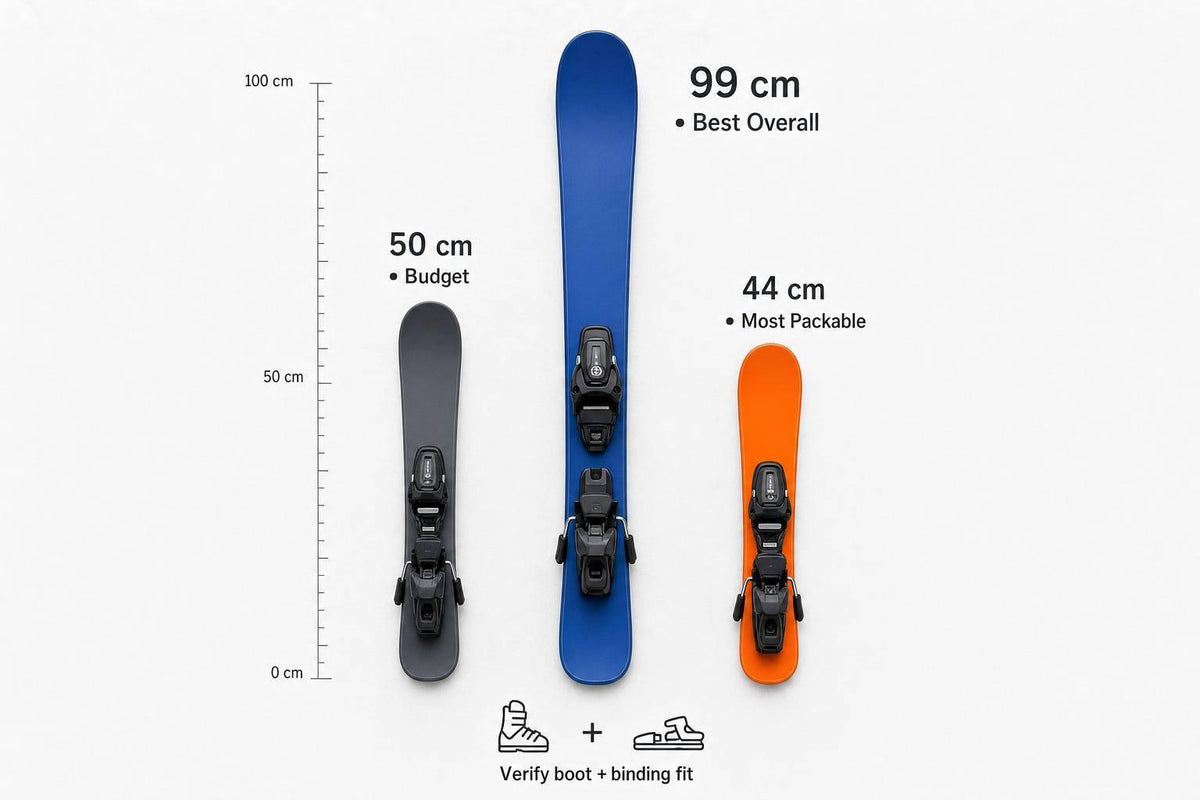
If you want a quick visual before you buy, these can help:
My short take: for lightweight backcountry days, I’d start with the WALKSKI 100 cm. It gives me the best mix of climbing help, compact size, and simple setup without dragging full touring gear into a short outing.
1. Snowfeet* WALKSKI Backcountry Touring 100 cm
Uphill mobility
The four-mode binding gives you Walk, Ski, Climb 1, and Climb 2, so you can move across flats, head downhill, and deal with steeper skin tracks without much fuss. Removable skins help with grip on mixed snow. And at 100 cm, these skis are easy to steer through trees and tight approach lines.
That short length does come with a catch. You get less skin contact and less glide than you would on full-length touring skis. So, WALKSKI makes more sense for short laps, forest approaches, and mellow terrain than long tours with long skin tracks.
Downhill control
At 100 cm, the WALKSKI lands in a nice middle ground between easy handling and decent stability. It likes quick turns, and the short platform feels forgiving if you're not out there trying to bomb every run.
Still, the limit shows up where you'd expect. In chopped-up snow or at higher speeds, you'll feel that shorter platform. A standard touring ski has more edge and more mass, so it tends to feel steadier when conditions get messy. This setup works best for casual descents, not steep or technical terrain.
Packability
The wood-core pair weighs 6.9 lb (3,116 g). At 100 cm, it's easy to strap to a pack and simple to toss in a car or travel bag. That's a big plus for quick laps and travel days.
It’s less of an all-day touring tool and more of a grab-and-go setup. Kind of like the difference between a trail snack and a full dinner - both have their place.
Boot compatibility
The universal binding works with snowboard boots, winter boots, and ski boots in US sizes 6–14.5. So no, you don’t need dedicated AT boots to use it.
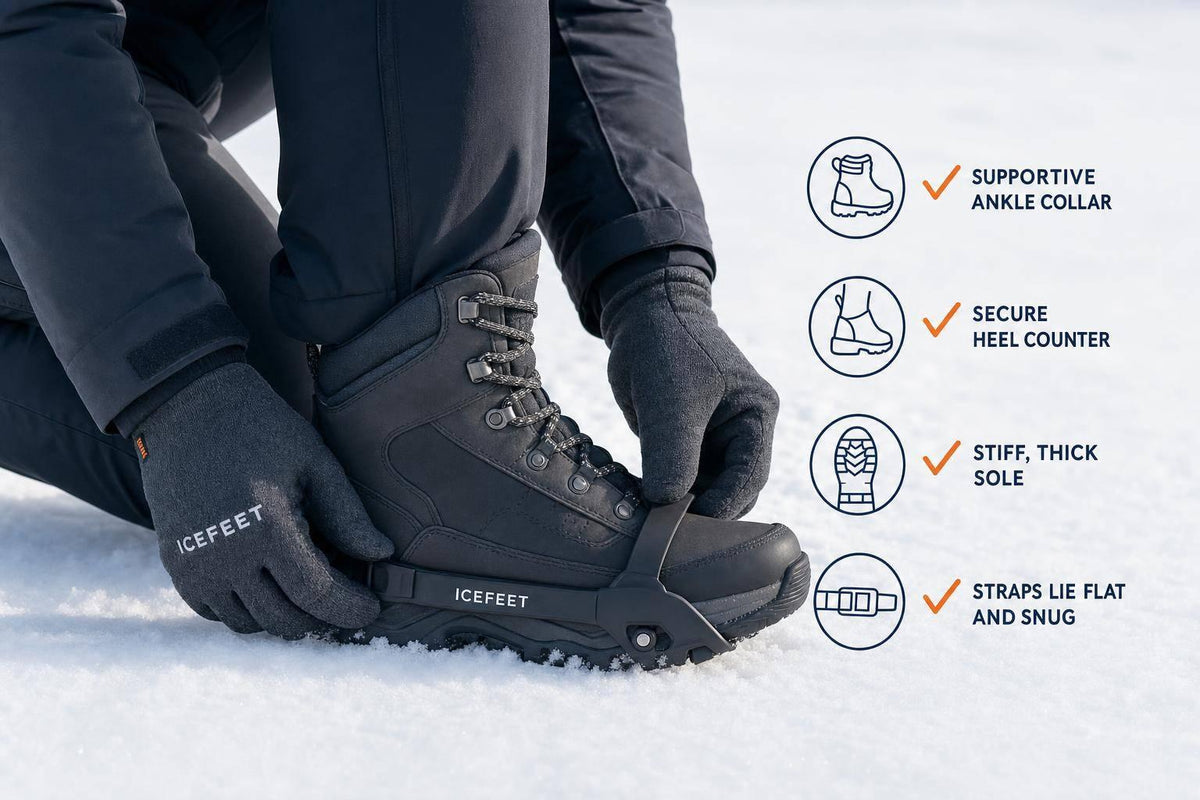
Here’s the practical part: a soft hiking boot won’t put power into the edges like a stiff ski boot will. For casual touring and mellow descents, everyday winter boots can do the job just fine. If you want better downhill control, go with a snowboard or ski boot.
If you'd like a lighter setup with more glide, the NORDIC 90 cm is the next trade-off.
2. Snowfeet* NORDIC Cross-country 90 cm
Uphill mobility
At 90 cm, or about 35 inches, the NORDIC is made for short, easy laps on packed snow. It’s not built for long tours or steep climbs. Where it does well is pretty clear: narrow trails, firm snow, and quick changes in direction.
The waxless fish-scale base helps with grip, so you don’t need kick wax. That keeps things simple and low-fuss, which is nice when you just want to get out there without turning your day into a gear project.
So if your goal is a short, low-effort outing, this setup makes a lot of sense. It leans toward simplicity over glide.
Downhill control
On mellow slopes, the short platform feels easy to handle. Turns come fast, and control feels straightforward. If you already own cross-country boots that work with Rottefella NNN, the optional NNN binding can give you more control.
Its limits show up where you’d expect. Deep powder, more speed, steep terrain, and rough alpine snow are a lot to ask from a 90 cm cross-country ski. This setup puts ease of use and portability first, not full touring performance. And compared with the WALKSKI, that tradeoff is even more clear.
The upside? That same short shape makes it the easiest one here to carry around.
Packability
At 90 cm, it packs smaller than the other options in this lineup.
Boot compatibility
You’ve got two paths here:
- Pick the winter-shoe binding if you want the simplest setup.
- Pick the Pro XC/NNN version if you already have cross-country boots that match.
The winter-shoe version fits US men’s sizes 6–13.
The NORDIC starts at $450, which makes it the easiest entry point for riders who want to tour without buying a second pair of ski boots.
If you want more downhill stability but still want something easy to carry, the 99 cm Skiblades are the next move.
sbb-itb-17ade95
3. Snowfeet* Skiblades 99 cm
If you want more downhill fun than the NORDIC, but you’re not ready to jump to a full touring ski, the 99 cm Skiblades sit in a nice middle spot.
Uphill mobility
The 99 cm Skiblades aren’t made for long touring days. They work best for short, mellow approaches, resort sidecountry, or walk-in, ride-out laps.
They’re a good match for short hikes and playful descents, not long climbs. So if your day starts with a bit of walking and ends with a fun ride down, they make sense. If you’re planning to spend hours on a skin track, not so much.
Downhill control
This is where the 99 cm Skiblades stand out. Their roughly 6 m turning radius and cambered shape make quick turns and easy carving feel natural.
That short length comes with a tradeoff, though. They give up float and edge grip on steep, icy, or heavily tracked snow.
Packability
At about 4.94 lb per pair with ski bindings or 5.60 lb with snowboard bindings, the Skiblades are easy to carry, stash, and store.
That’s part of the appeal. They don’t feel like a lot to lug around, which is nice when you’re tossing gear in the car or hiking a short access line.
Boot compatibility
They’re a good fit for riders who already own ski or snowboard boots. Ski bindings fit about US sizes 4.5–14.5, and snowboard bindings fit about US sizes 6–14.5.
Pricing starts at about $690.
For riders who want more length and a bit more stability, the 120 cm option gets closer to the feel of a standard ski.
4. Snowfeet* Short Skis 120 cm
At 120 cm, this is the most stable Snowfeet option in this group and the one that feels closest to a standard ski. If the 99 cm Skiblades seem a bit too twitchy, the 120 cm version brings more calm to the ride. It lands in that nice middle zone for short tours, local hills, and travel days - part playful short ski, part light touring option.
Downhill control
The 8 m turn radius and shape - 10.9 cm tip, 7.8 cm waist, and 9.9 cm tail - help the 120 cm model feel steadier than the shorter versions on groomers, packed powder, and mixed snow. You get more confidence at speed and less of that quick, darty feel.
That said, there’s still a ceiling here. In light powder, it does fine. In deep, loose snow, it starts to run out of steam. So yes, it’s the most stable pick in this lineup, but it’s still built for lighter use.
Uphill mobility
These skis can handle short boot-packs and quick laps on a skin track. But for longer climbs, they don’t match the WALKSKI. That’s because they don’t have the free-heel touring setup or skins that make uphill travel less of a slog.
Boot compatibility
The product listing shows Pro Ski Boot Bindings in mondo 26–36.1. Snowfeet’s broader size chart shows a wider ski-boot fit range, so it’s smart to double-check the exact binding setup at checkout.
Pricing usually falls around $650–$775, depending on the retailer.
Where Each Setup Wins and Falls Short
Here’s the quick version: each Snowfeet* setup does a different job well.
If you care most about climbing, start with the WALKSKI. If you want the easiest setup to toss in a bag, go with NORDIC. If your day is all about playful turns, pick Skiblades. And if you want the steadiest short ski on the way down, the 120 cm setup is the one to look at.
Each one leans toward a different strength: uphill travel, downhill feel, pack size, or boot setup. So, it helps to match the gear to the kind of day you like most.
Uphill mobility: WALKSKI 100 cm is the strongest climber here, thanks to its four-mode binding and skins. NORDIC 90 cm is the easiest glide-first pick, which makes it a good match for flat or rolling terrain. Skiblades 99 cm and Short Skis 120 cm can handle short approaches, but they’re not made for long, efficient climbing.
Then the story changes once you point downhill.
Downhill control: Short Skis 120 cm give you the most stable ride on descents. Skiblades 99 cm are the fastest-turning option and the most fun for carving laps. WALKSKI and NORDIC can handle mellow descents, but neither one is built for speed.
Packability: NORDIC 90 cm is the smallest and easiest to travel with. WALKSKI 100 cm and Skiblades 99 cm are close behind. 120 cm is still short by ski standards, but it’s the least travel-friendly option in this group.
Boot compatibility: NORDIC is the simplest pick if you want to use winter shoes. WALKSKI works with the widest range of boots. Skiblades offer the most binding options. Short Skis 120 cm use ski bindings only.
Use the chart below if you want the shortest side-by-side view.
| Setup | Best For | Limits | Terrain Fit |
|---|---|---|---|
| WALKSKI 100 cm | Short backcountry laps, best all-around backcountry pick | Less stable at speed than full-length touring skis | Packed snow, moderate trails, short climbs |
| NORDIC 90 cm | Beginners, travel, flat-to-rolling glide | Weaker downhill in deep or uneven snow | Groomed trails, rolling terrain |
| Skiblades 99 cm | Playful descents, quick side-country laps | Not built for long uphill; confirm binding type | Groomed runs, short off-piste laps |
| Short Skis 120 cm | Riders who want more downhill stability | Bulkier than 90–100 cm options; ski bindings only | Open slopes, ungroomed terrain, moderate backcountry |
Pros, Cons, and Final Pick
After looking at uphill use, downhill feel, pack size, and boot setup, the pick is pretty clear:
| Setup | Pros | Cons |
|---|---|---|
| WALKSKI 100 cm | Best uphill tool; walk mode and skins | Still shorter than full touring skis |
| NORDIC 90 cm | Best travel pick | Least glide and stability |
| Skiblades 99 cm | Most playful turns; compact | Weakest climbing efficiency |
| Short Skis 120 cm | Most stable on the descent | Bulkiest here; ski bindings only |
Best overall for lightweight backcountry days: WALKSKI 100 cm. It’s the only setup here with a free-heel walk mode, removable climbing skins, and two climbing positions built in. That makes it a legit choice for short uphill laps, not just easy descents.
That said, your best pick depends on the day you’re planning. Go with the NORDIC 90 cm if you want to travel light on packed or firm terrain. Pick the Skiblades 99 cm if fun turns matter more than climbing. Choose the 120 cm if you want the most planted feel on the way down.
These setups work best on mellow terrain. For deep snow, steep routes, and more technical descents, full touring skis are still the better call.
If you go with one of these compact setups, keep your pre-ride check simple:
- Poles: Use adjustable poles with snow baskets. Lengthen them for climbing and shorten them for descents.
- Skins or traction: Check whether your setup takes skins. If it doesn’t, stick to packed or firm snow.
- Boots: Test the fit at home first. A loose boot makes climbing and turning harder, and yeah, less safe.
- Avalanche terrain: If you’re heading into avalanche terrain, carry a transceiver, probe, and shovel, and know how to use them.
FAQs
Can I use these on powder days?
Yes - Snowfeet setups can work on powder days, but it depends on the model.
The WALKSKI 100 cm and Skiblades 99 cm POWDER do well in light powder, especially in snow up to 4 inches deep. They feel playful, a bit surfy, and turn with very little fuss.
Once the powder gets deep or heavy, things change. These setups don’t float like long touring skis, so you’ll need better balance and a bit more effort to stay on top of the snow.
For casual, mellow backcountry laps, though, they’re a fun, nimble pick :)
Which setup is easiest for beginners?
For beginners, Snowfeet NORDIC 90 cm and WALKSKI 100 cm are both great picks. They feel far less intimidating than long, standard skis, which is a big deal when you're just getting started.
The NORDIC 90 cm is the easiest option for groomed, flat, or rolling trails. If you want to head onto mixed terrain or try light backcountry touring, WALKSKI 100 cm is the best all-around pick. It gives you more stability and range, while still being much easier to handle than standard touring gear.
Do I need special boots or skins?
No special boots needed here. Snowfeet WALKSKI and NORDIC both work with boots you may already have, including:
- winter boots
- snowboard boots
- ski boots
For the best feel on snow, go with boots that have firm ankle support. That extra support helps a lot, especially when the surface gets uneven.
WALKSKI 100 cm comes with climbing skins, which help with traction on rolling terrain or mixed backcountry snow. Think of them as a grip boost when the trail stops playing nice.
NORDIC 90 cm doesn’t use skins. It’s built for groomed or packed snow, where a smooth glide matters more than extra grip.











Hinterlassen Sie einen Kommentar
Diese Website ist durch hCaptcha geschützt und es gelten die allgemeinen Geschäftsbedingungen und Datenschutzbestimmungen von hCaptcha.