


















Quick Summary:
Ski dimensions tell you everything you need to know about how a pair will perform, but forget the myth that length must match your height—choose based on your preferred style and feel instead. Length determines maneuverability, ranging from ultra-agile 44 cm ski skates to stable 123 cm skiboards. Waist width dictates terrain, where narrower profiles excel on hard-packed groomers and wider waists float through deep powder. Sidecut controls your turning radius, and the flex rating balances forgiving control for beginners against high-speed responsiveness for experts. Finally, match your setup with basic, snowboard boot, or safety-release pro ski bindings to complete the ideal rig for your riding style.
Skiing is a sport that requires a lot of specialized equipment, and one of the most important pieces of equipment is your skis. Skis come in a variety of shapes and sizes, and understanding the numbers and terminology that go along with them can be confusing.
Shorter length = more fun!

Length
The first number you'll see on a pair of skis is the length. This is the distance from the tip of the ski to the tail, and is usually measured in centimeters. Skis come in a range of lengths, from mini skis that are around 40 cm, to longer skiboards with length usually between 65 to 120 cm, to long skis that can be over 200 cm for advanced skiers. However, skis this long are usually only for Olympic skiers - you would find them terribly clunky.

Choosing length based on your height - the myth debunked
The traditional ski industry claims that the length of your skis should be based on your height. Though it maybe true in some cases, this opinion provides only a limited number of possibilities to choose from.
The truth is that you don't need to choose skis based on how tall you are: you can choose your skis based on what feels the best.
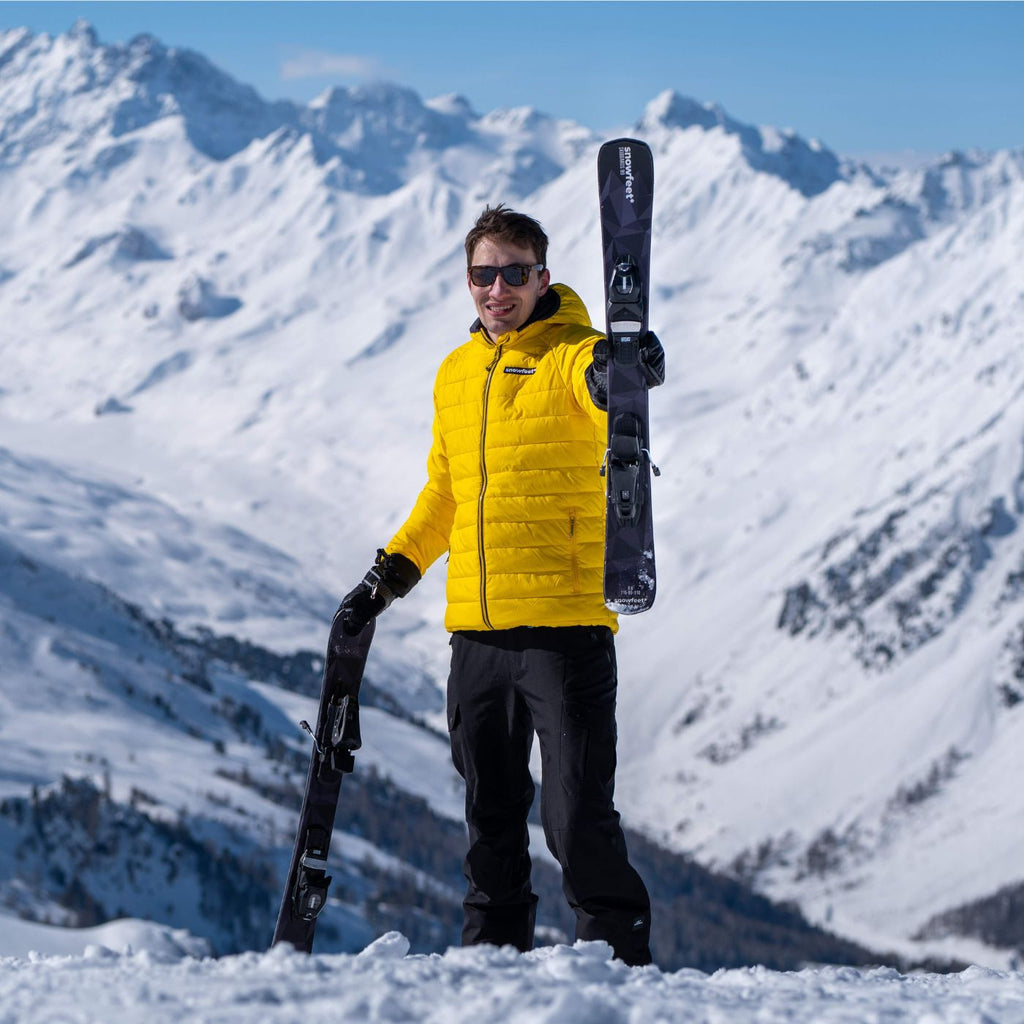
Skiboards do not actually correspond with anybody's height but they bring many benefits to skiers of all proficiency levels, plus you can choose exactly the length that fits you, regardless how tall you are.
Choosing the right skiboard length
Snowblades come in various lengths ranging from 65 cm to 123 cm, offering a wide array of options to suit different preferences. Whether you’re a beginner seeking easier maneuverability or an experienced skier looking for high-speed stability and peak performance in deep snow, there’s a size for every style!
Starting with the shortest, the 65 cm skiboards offer a sensation akin to skating on snow. These are highly maneuverable, though they require a keen sense of balance between the front and back.

On the other end of the spectrum, 123 cm skiboards provide a feel similar to traditional long skis but are easier to handle when it comes to turns, stops, and even transportation to the slopes. If you're venturing into the realm of short skis but hesitant about going too short, the 123 cm skiboards are an excellent choice.
Choose length that suits you best


For those who find both the 65 cm and 123 cm skiboards not quite fitting, the 99 cm skiboards strike a perfect balance. They allow for free skiing yet offer sufficient support for tackling moguls, teaching skiing, or enjoying time in snow parks. They represent the ideal middle ground for versatile skiing experiences.
Feeling adventurous? You can try skis as short as 44 cm!
Width
The second number you'll see on a pair of skis is the width. This is the measurement of the ski at its widest point, which is usually in the middle or waist of the ski. The width of the ski is important because it affects how the ski performs in different conditions. More about that later.
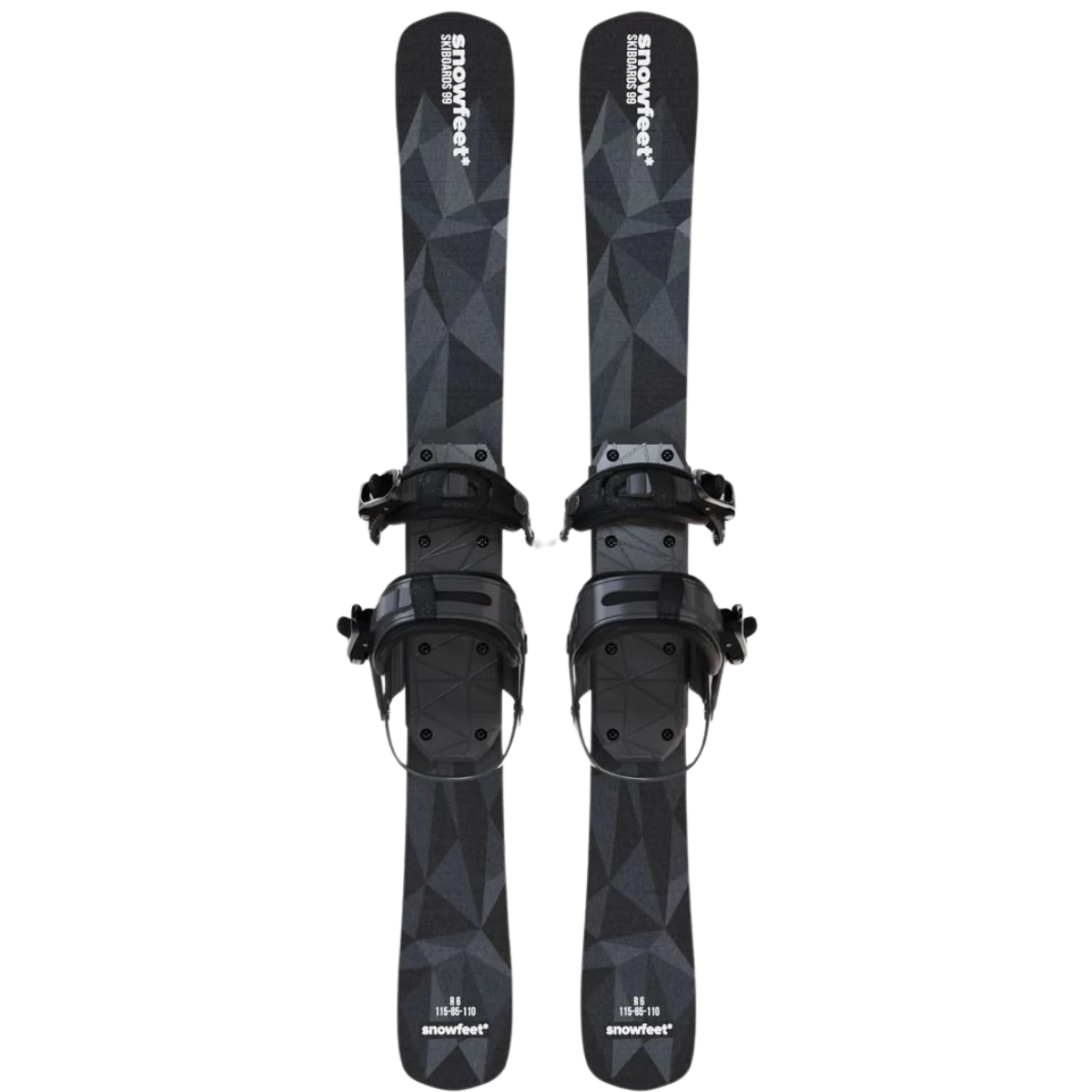
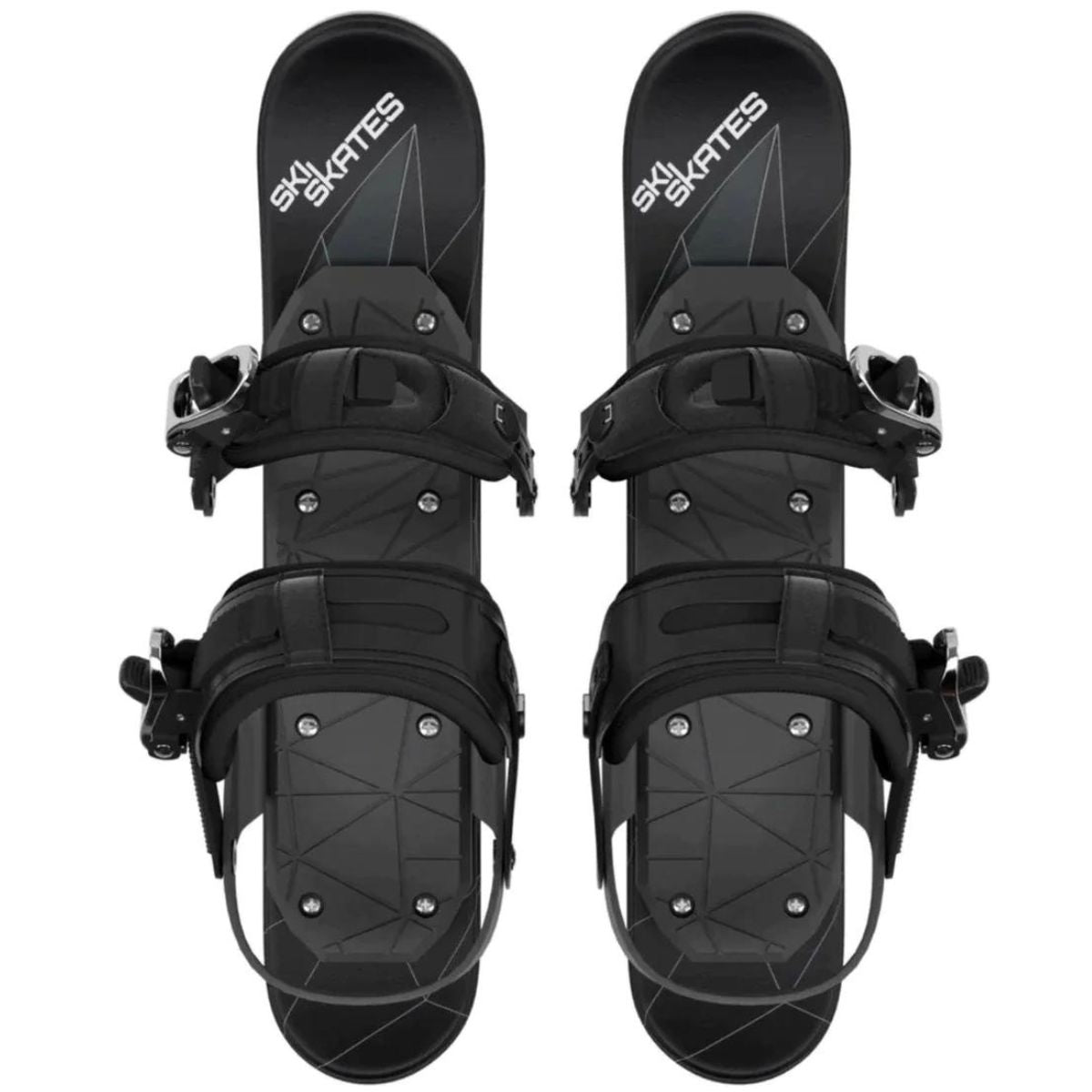
Snowfeet skiboards mention 3 numbers: width of tip, waist, and tail. At the picture you can see the numbers as follows: tip of 115 mm, waist of 85 mm, and finally tail of 100 mm.

Narrower skiboards, around 70-85 mm at waist, are better for groomed runs and hard-packed snow, as they are more maneuverable and easier to control. If you spend the majority of your winter time on the slopes, go for narrower skiboards.
Wider skiboards, around 90-110 mm at waist, are better for deep powder and off-piste terrain, as they provide more float and stability. Some skiers claim that skiboards tend to sink in deep powder, which is of course not true. In case you are a big powder fan, you can opt for powder skiboards that are wider at their waist than regular skiboards.

Sidecut
The third number you'll see on a pair of skis is the sidecut. This is the measurement of the difference between the width of the ski at the tip and the width of the ski at the waist.
A ski with a larger sidecut will have a shorter turning radius and be more maneuverable, while a ski with a smaller sidecut will have a longer turning radius and be more stable at high speeds.

At Snowfeet skis you can find width of tip, waist and tail written in one line at the bottom of your ski.
Flex
The final number you'll see on a pair of skis is the flex rating. This is a measurement of how stiff the ski is, and is usually rated on a scale from 1-10. Skis with a lower flex rating are softer and more forgiving, making them easier for beginners to control. Skis with a higher flex rating are stiffer and more responsive, making them better for advanced skiers who like to ski at high speeds and tackle difficult terrain.
In addition to these numbers, there are a few other terms you may see when shopping for skis.
"Camber" refers to the curve of the ski, with traditional camber skis having a slight arch underfoot.
"Rocker" refers to a ski with an upturned tip or tail, which helps with float in deep powder.
And "bindings" are the part of the ski that attaches your boot to the ski. Bindings are equally important feature to consider before buying skis because they will affect your skiing experience immensely.

Bindings
Though many skiers know only the standard release ski bindings, skiboards offer wider variety of bindings to choose from.
Try something new












2 comments
Snowfeet Team
Hello Anne-Marie !
On paper, going from a 170cm ski to a 65cm skiblade drops your turn radius from ~16m down to a tiny ~4m.
Do those numbers actually matter? Yes and no:
For Carving (Yes): That deep ~4m sidecut lets you lay down razor-sharp, effortless arcs on groomers without leaning over at extreme speeds.
For Mountain Riding (No): In trees, parks, and moguls, sidecut geometry takes a backseat. You don’t have to wait for the edge shape to turn you—you simply pivot your ankles and rotate on a dime, exactly like ice skating.
Long skis need sidecut specs because steering 170cm takes work. On 65cm gear, you’re in total control—carve a tight arc when you want to, or spin on your feet whenever you feel like it! 🎿⚡
Karolina from Snowfeet Team
Anne-Marie Doherty
This breakdown of ski dimensions (tip-waist-tail) is super helpful, but how do sidecut radius numbers translate when you go ultra-short? If a 170cm ski has a 16m turn radius, what is the effective turn radius on a 65cm skiblade—and do those numbers even matter when you can pivot on a dime just using your ankles?
Leave a comment
This site is protected by hCaptcha and the hCaptcha Privacy Policy and Terms of Service apply.