



















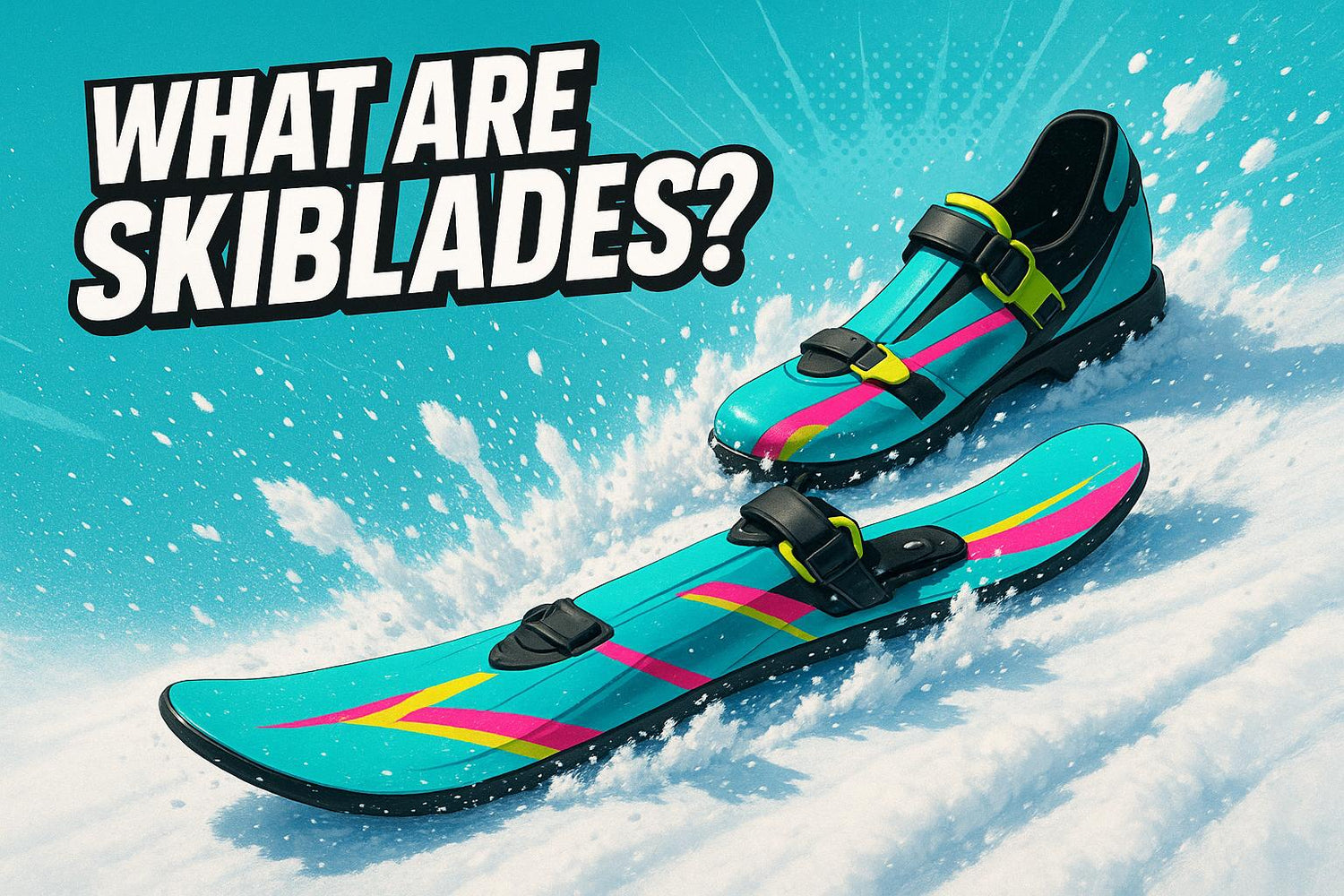
Skiblades, also called snowblades, skiboards, or mini skis, are short skis under 120 cm designed for easy maneuverability and fun on the slopes. Think of them as a cross between skiing and skating. They’re compact, lightweight, and great for beginners or experienced riders looking for something playful. If you’ve ever tried rollerblading or ice skating, you’ll feel right at home with skiblades. Plus, they’re easier on your knees and can fit in a backpack - no bulky gear required.
Snowfeet*, a top skiblade brand, offers models ranging from 38 cm to 120 cm, with prices from $250 to $775. Their skiblades are made with durable wood cores, fiberglass reinforcement, and metal edges, ensuring smooth performance. You can pair them with various bindings, whether you prefer ski boots, snowboard boots, or even sturdy winter shoes.
Why choose skiblades? They’re easy to learn, portable, and versatile. Use them on groomed runs, powder, terrain parks, or even backyard slopes. Whether you’re carving turns or trying tricks, skiblades offer a fun alternative to traditional skis or snowboards. Ready to give them a shot? Let’s dive into the details.
Skiblade Features and Design
Skiblade Sizes & Categories
Skiblades come in a range of lengths to suit different riding styles. If you're into tricks, quick turns, or park riding, models under 100 cm are perfect - they're super nimble and easy to maneuver. On the other hand, skiblades between 100 and 120 cm provide more stability at higher speeds while still being easy to control.
Snowfeet* offers six skiblade options, each tailored to different needs:
- 38 cm Mini Ski Skates – Starting at $250
- 44 cm Skiskates – Starting at $575
- 50 cm Snowfeet PRO – $275
- 65 cm Skiblades – Starting at $635
- 99 cm Skiblades – Starting at $675
- 120 cm Short Skis – $775
This lineup ensures there's something for everyone, whether you're looking for a compact option for spontaneous fun or a longer, more stable setup for carving smooth turns on groomed slopes. Snowfeet* fills a niche that traditional ski brands often miss, catering to riders who value agility and versatility.
Materials and Build Quality
Snowfeet* skiblades are crafted with a focus on durability and performance, starting with certified sustainable wood cores. These cores provide the right mix of flexibility and strength. As Snowfeet* puts it:
"To ensure the highest lasting quality, Skiblades are handmade from certified sustainable wood in the mountains in the heart of Europe. Cap construction, metal edges for easy control, graphite bases for great speed, and reinforcing layers for durability." - Snowfeet*
The design includes cap construction, metal edges for precise control, and graphite bases to maximize speed. A deep parabolic side cut and narrow waist make carving effortless, while asymmetrical high twin tips allow you to smoothly switch between forward and reverse riding. Every detail is carefully crafted in Europe, showcasing years of ski-making expertise.
These thoughtful design elements work seamlessly with Snowfeet*'s binding systems, ensuring a smooth ride every time.
Binding Systems and Boot Compatibility
Snowfeet* offers three binding systems, each designed for specific riding preferences:
- Non-release Bindings: Lightweight and tool-free, these bindings keep your feet securely in place without a release mechanism. They come with safety leashes and are best suited for shorter, more agile models.
- Release Bindings: Similar to traditional ski bindings, these are designed to release during hard falls, reducing the risk of injury. They pair perfectly with standard ski boots.
- Snowboard Boot Bindings: These adjustable bindings feature an anti-slip surface for better grip. They work with ski boots, snowboard boots, and even winter shoes, offering a versatile option that outperforms conventional bindings.
With these binding choices, Snowfeet* ensures that no matter your boot preference or riding style, you'll find a setup that works seamlessly.
Snowboarder tries Snowfeet* | Which Snowfeet* Short Ski is the Best? | Snowblades 44, 65, 99 Review
Skiblades vs Traditional Skis and Snowboards
Skiblades vs Traditional Skis vs Snowboards Comparison Chart
Performance Differences
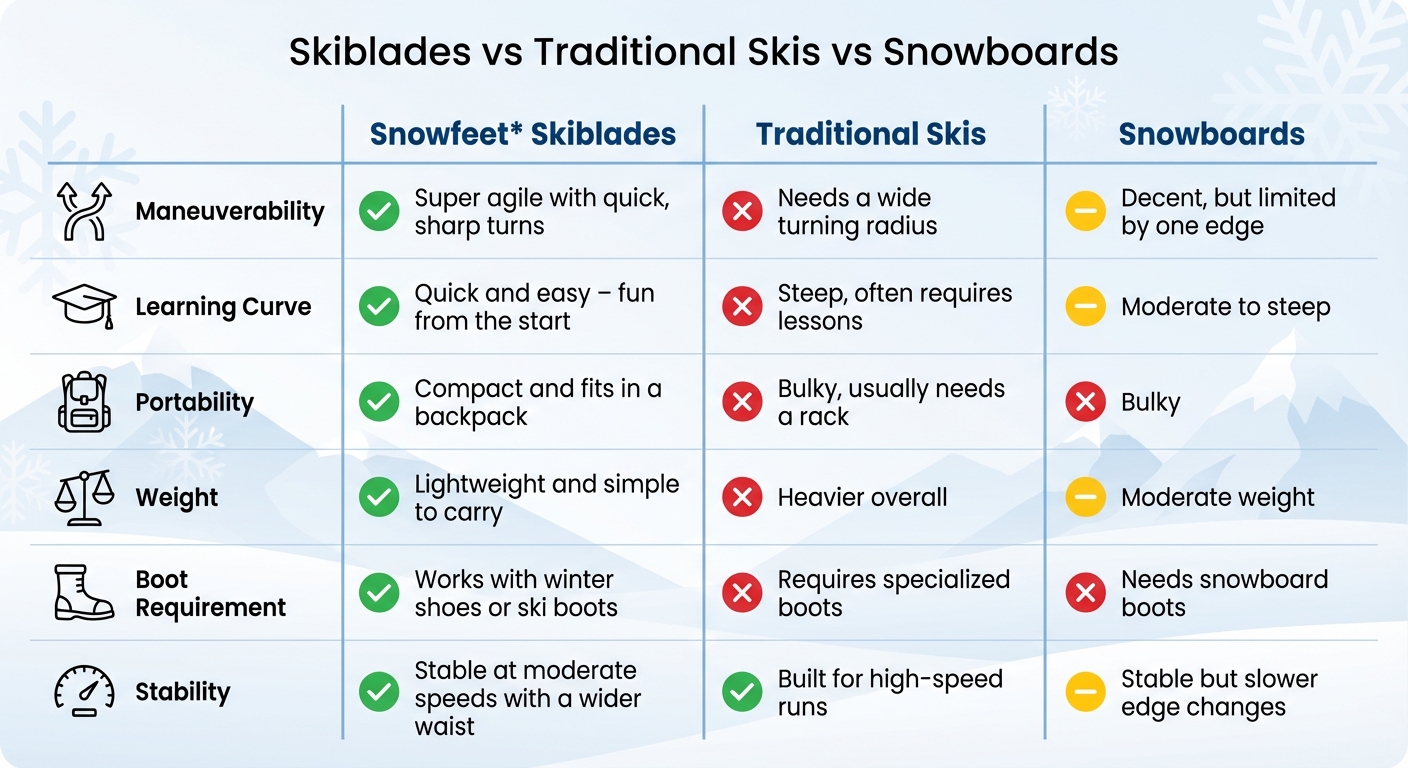
Snowfeet* skiblades offer a completely different vibe compared to traditional skis or snowboards. Their shorter length - ranging from 38 cm to 120 cm - makes them incredibly easy to handle. Tight turns? No problem. Quick stops? A breeze. Unlike long skis that need more space to maneuver, skiblades let you pivot on a dime, making them perfect for crowded slopes or weaving through tricky terrain.
| Feature | Snowfeet* Skiblades | Traditional Skis | Snowboards |
|---|---|---|---|
| Maneuverability | Super agile with quick, sharp turns | Needs a wide turning radius | Decent, but limited by one edge |
| Learning Curve | Quick and easy – fun from the start | Steep, often requires lessons | Moderate to steep |
| Portability | Compact and fits in a backpack | Bulky, usually needs a rack | Bulky |
| Weight | Lightweight and simple to carry | Heavier overall | Moderate weight |
| Boot Requirement | Works with winter shoes or ski boots | Requires specialized boots | Needs snowboard boots |
| Stability | Stable at moderate speeds with a wider waist | Built for high-speed runs | Stable but slower edge changes |
While traditional skis are all about speed and performance on wide, groomed slopes, Snowfeet* skiblades focus on versatility and ease of use. They’re especially handy in tight spaces, terrain parks, or anywhere that calls for quick, precise control. Plus, their agility means beginners can pick them up faster, skipping the steep learning curve of traditional skis or snowboards.
Easier Learning for Beginners
One of the coolest things about Snowfeet* skiblades? They make learning a whole lot easier. Because they’re compact, you’re not wrestling with long, unwieldy gear while trying to figure out the basics. Their lightweight design means less effort, so you can focus on building confidence instead of battling exhaustion.
The soft, forgiving flex of these skiblades makes turns feel natural, cutting down on those frustrating edge catches that trip up so many beginners. Add in the wider waist for extra balance, and you’ve got a setup that feels stable and secure right from the first run. It’s a thoughtful design that prioritizes ease of use without sacrificing performance.
"Getting on and off the chairlift with SnowFeet was simple and stress-free - way easier than snowboarding or skiing." – Chan Saelee, Verified User
By comparison, traditional skis often come with a steep learning curve and usually require lessons to get the hang of. Snowboards? They can take even longer. But with Snowfeet* skiblades, riders of all ages can hit the slopes and have fun almost instantly.
Portability Benefits
Beyond performance and beginner-friendly design, Snowfeet* skiblades shine when it comes to portability. Their compact size means you can toss them into a regular backpack - no need for bulky racks or special storage. Whether you’re hopping on public transportation or squeezing gear into your car trunk, these skiblades make it easy.
"Why lug heavy ski gear when you can choose Snowfeet*? These attach to your winter shoes or snowboard boots, giving you the freedom to ski anywhere without bulky equipment." – Snowfeet Store
Their lightweight build also makes them perfect for spontaneous adventures. Forget the hassle of lugging around heavy skis or snowboards - just grab your skiblades and go. They’re ideal for exploring spots that traditional skiers might not even consider.
"They are fast and agile, convenient and light, and great for shreddage. 100% recommend!" – Logan @xskyskaterx, Verified User
sbb-itb-17ade95
How to Choose the Right Skiblades
Matching Length to Your Skiing Style
When it comes to skiblades, size matters - both for how you like to ride and the terrain you're tackling. Snowfeet* offers three main lengths - 65 cm, 99 cm, and 120 cm - each tailored for a specific style of skiing.
The 65 cm Mini Ski Skates ($635) are all about agility and precision. These are ideal for beginners and park riders who thrive on groomed runs, packed snow, moguls, or weaving through tight tree lines. Their short length gives you a skate-like feel, making quick, sharp turns effortless.
Looking for a balance? The 99 cm POWDER skiblades (starting at $675) blend stability with maneuverability. They're great for carving on groomers, handling moderate powder, and even throwing in some tricks at the park. Plus, you can pair them with different binding types, so you’re not locked into one type of footwear.
For those who want more stability at higher speeds, the 120 cm Short Skis ($775) are the way to go. These are perfect for open groomed runs, light to moderate powder, and even some off-piste adventures. If you're transitioning from traditional skis, these offer a familiar feel while keeping the nimbleness that makes skiblades so fun. This model comes exclusively with release ski bindings for added safety at higher speeds.
"Having a ski that allows you to play best where you ski and how you like to ski can turn a regular or frustrating day on the snow to a fantastic one. You can forget about the gear and just flow." – Lisa Chandler, Senior Action Sports Specialist, REI
Your weight and skill level also play a role in choosing the right length. Lighter or less experienced riders often do better with the 65 cm skiblades, while taller or more advanced skiers may prefer the stability of the 99 cm or 120 cm options.
Once you’ve picked your length, it’s time to think about bindings and boots.
Selecting Boots and Bindings
One of the great things about Snowfeet* skiblades is their versatility. You don’t need specialized boots - they’re compatible with winter shoes, snowboard boots, and ski boots.
For the 65 cm and 99 cm models, non-release bindings work well with sturdy winter boots, making these skiblades easy to use for casual riders. If you’re a snowboarder, they’ve got you covered with snowboard boot bindings, so you can stick with the gear you already have. Prefer the precision of ski boots? The 99 cm model also offers release bindings for that option.
The 120 cm Short Skis, on the other hand, are only available with release ski bindings. This setup ensures safety, especially for higher speeds and more aggressive skiing.
Think about where you’ll be riding most when deciding on your setup. For groomed runs and park sessions, non-release bindings paired with winter boots keep things simple and fun. For more demanding terrain, ski boots with release bindings provide the control and safety you’ll need. Snowfeet* makes it easy to customize your setup to match your style and the terrain.
Best Skiblades for Different Terrain
From icy East Coast slopes to the deep powder of Colorado, U.S. ski resorts offer a little bit of everything. Picking the right Snowfeet* skiblades for the conditions you’ll encounter can make all the difference.
- On groomed runs and packed snow, the 65 cm Mini Ski Skates excel with their quick transitions, while the 99 cm and 120 cm models add stability at higher speeds.
- For powder days, the 99 cm POWDER skiblades handle moderate powder with ease, offering excellent maneuverability. The 120 cm Short Skis, with their extra surface area, also perform well in light to moderate powder while keeping things playful and nimble.
"A longer ski in powder yields floatability, yet a shorter ski provides more control and maneuverability. Everyone is different, and we cannot predict the weather!" – Lisa Chandler, Senior Action Sports Specialist, REI
- If you’re into terrain parks and freestyle riding, the 65 cm skiblades are your best bet. Their lightweight design makes tricks, spins, and jumps feel effortless. The 99 cm skiblades are a solid choice for bigger jumps, offering added stability without sacrificing too much agility.
- On icy East Coast slopes, both the 65 cm and 99 cm models shine, allowing quick adjustments to maintain control. For moguls and tree runs, the 65 cm skiblades are perfect for navigating tight spaces, while the 99 cm option adds a bit more stability when needed.
Riding and Maintaining Your Skiblades
Riding Techniques for Skiblades
Getting the hang of skiblades starts with mastering edge control and stopping - these are your bread and butter on the slopes. Thanks to their shorter length, Snowfeet* skiblades make the learning curve a little smoother. You won’t have to worry about ski overlap, which means quicker turns and more freedom.
Your stance plays a huge role in how well you ride. Keep your weight centered or slightly forward. If you feel pressure on your heels, push your shins forward to correct it. Bend your knees and ankles so they align naturally over your toes, and make sure your shoulders, hips, and skiblades are in sync. Engaging your core helps stabilize your upper body and cuts down on unnecessary movement.
Start with J-turns to get a feel for turning: glide straight, shift your weight to the front foot, and flex your ankles and knees while moving your hips over the edge to turn uphill. Once you’re comfortable, progress to parallel turns. Lean forward and shift your weight to the inside edge of your downhill skiblade. Let the skiblades slide sideways to control speed - this is especially handy on steeper runs.
If you’re looking to try park tricks, the lightweight 65 cm skiblades are a great choice. For carving at higher speeds, the 99 cm and 120 cm models offer better stability. Once you’ve got the basics down, practice on flat terrain to build confidence before tackling more challenging slopes.
Learning Path for New and Transitioning Riders
When starting out, stick to flat terrain. This gives you a safe space to practice your balance, stance, and basic movements without worrying about speed or slopes. Once you’re comfortable, move to gentle slopes and work on basic turns. Focus on shifting your weight and getting on edge rather than forcing the turn.
As you improve, start linking your turns for smoother, continuous control. This is where skiblades really shine compared to traditional skis - their shorter length makes it easier to transition between turns. If you’re switching from traditional skis or snowboards, you’ll notice how quickly you can adapt to changing terrain.
For maintenance, casual riders should wax their skiblades 1–2 times per season. If you’re hitting the slopes weekly, aim to wax every 4–6 outings. For those chasing performance or racing, waxing after every session ensures your skiblades are always ready to glide.
Skiblade Maintenance and Care
Taking care of your Snowfeet* skiblades is key to keeping them in top shape. Regular waxing reduces friction, improves glide, and protects the base. If you notice dry or white patches on the base, sluggish performance on flat terrain, or rough turning, it’s time for a wax.
"Waxing your skis regularly is crucial for maintaining their performance and extending their lifespan during winter activities." - Treetops Blog
Edge tuning is another must. Use a diamond stone to clean up rust and sharpen the edges, and a gummy stone for smoothing out small burrs. Minor base scrapes can be fixed at home using P-Tex candles and a metal scraper. For bigger damage that exposes the core, take them to a ski shop for professional repair.
At the end of the season, give your skiblades some TLC. Clean and dry them thoroughly to prevent rust and delamination. Apply a coat of wax before storing them to protect the base until next season. Don’t forget to check the bindings regularly - tighten any loose screws to keep everything secure.
Conclusion: Why Snowfeet* Skiblades Are the Best Choice
Snowfeet* skiblades combine convenience and performance in a way that’s hard to beat. Whether you go for the 65 cm model that fits in a backpack, the 99 cm option for a smooth, balanced ride, or the 120 cm version built for carving at high speeds, you’re getting gear that’s easy to carry and store. This compact design makes life simpler, both on and off the slopes.
For beginners, the shorter length, softer flex, and wider waist make learning a breeze - turning and stopping feel natural right from the start. Advanced riders, on the other hand, get the freedom to push boundaries, whether they’re hitting terrain parks or carving up groomed trails. These skiblades are built to handle different terrains and skill levels with ease. The 99 cm and 120 cm options offer the stability needed for speed, while the 65 cm version is perfect for tricks and quick, precise turns.
Another bonus? Maintenance is simple, and you won’t need a pile of specialized gear to adapt to different conditions. Snowfeet* skiblades pack versatility into one compact package.
Whether you’re a traveler, a beginner, or a seasoned pro, Snowfeet* skiblades make a smart choice. They challenge the idea that longer skis are always better, showing that smaller, lighter gear can offer more freedom and fun on the slopes. Snowfeet* isn’t just about short skis - it’s about rethinking what winter sports equipment can be.
FAQs
Are skiblades easier to learn than traditional skis?
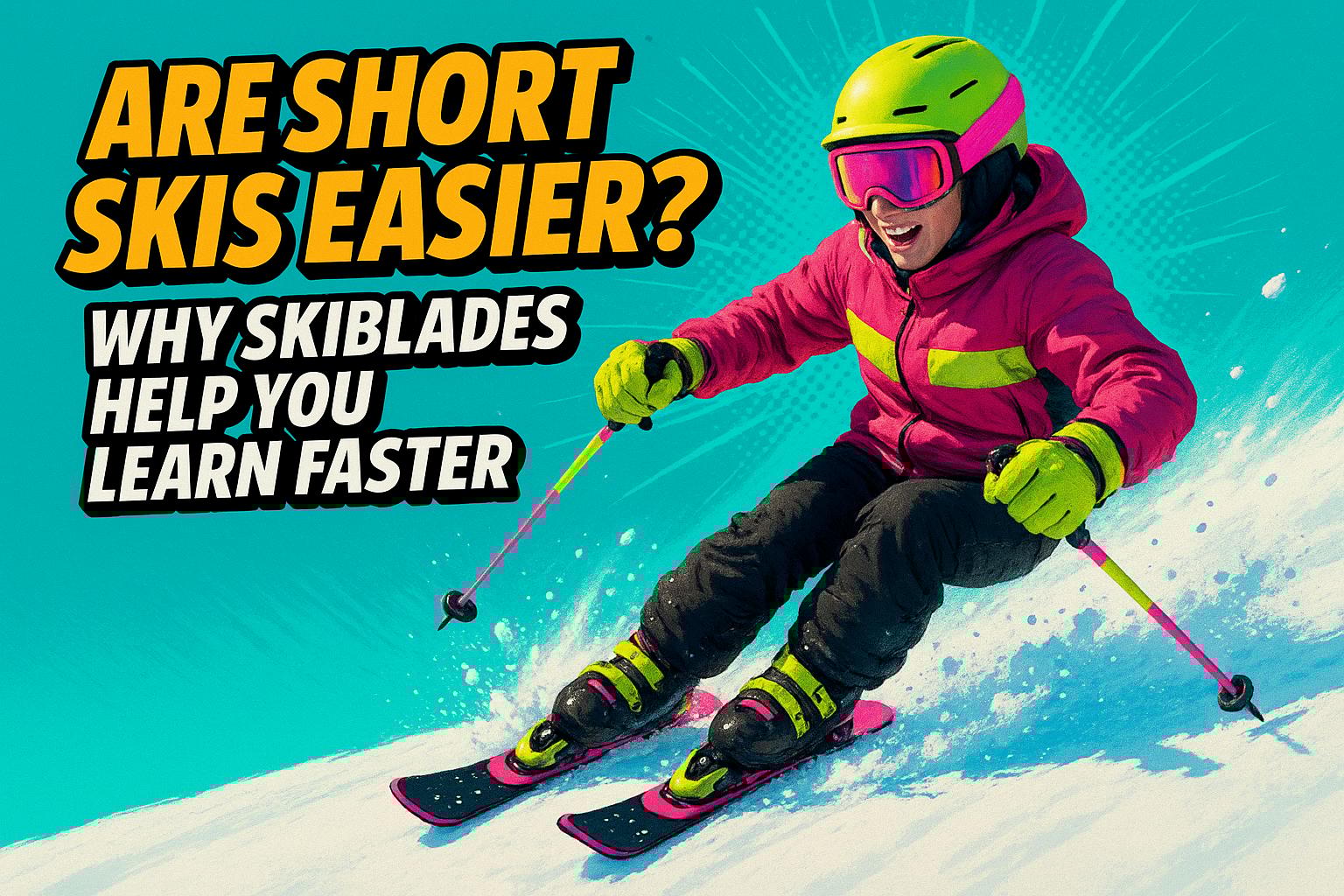
Yes, skiblades are easier to pick up than traditional skis. Their shorter length and lighter weight make them super intuitive, so most beginners can get the hang of them after just a run or two. Traditional skis, on the other hand, often require more time and practice to master because of their longer length and more technical demands.
Skiblades are a great choice if you want a fun and fast way to enjoy the slopes without dealing with the steep learning curve that comes with traditional skiing. They’re a solid option for both first-timers and seasoned skiers!
How do I choose the right skiblade length for my needs?
When picking the right skiblade length, think about your skill level, the terrain you enjoy, and your skiing style. Shorter skiblades (around 65 cm) are a solid choice for beginners, freestyle tricks, or anyone who loves quick, sharp turns. They’re super agile and easy to control. On the other hand, longer skiblades (like 99 cm or 120 cm) offer more stability, making them great for carving, higher speeds, or a more classic skiing vibe.
Snowfeet’s 65 cm skiblades are ideal for playful, freestyle skiers who want maximum agility. The 99 cm skiblades strike a nice balance between control and maneuverability, while the 120 cm ones are perfect for a smooth, stable ride on groomed slopes. With their mix of portability, versatility, and performance, Snowfeet skiblades are a fantastic alternative to traditional skis for many skiers.
Can skiblades be used with different types of winter boots?
Yes, skiblades can pair up with a range of winter footwear. Depending on the bindings, you can use them with regular ski boots, snowboard boots, or even bindings designed specifically for skiblades. The important thing is making sure the bindings match the boots you're planning to wear. Take Snowfeet's skiblades, for instance - they're super flexible and work well with most standard ski or snowboard boots, making them a practical and easy-to-use option.












Leave a comment
This site is protected by hCaptcha and the hCaptcha Privacy Policy and Terms of Service apply.