



















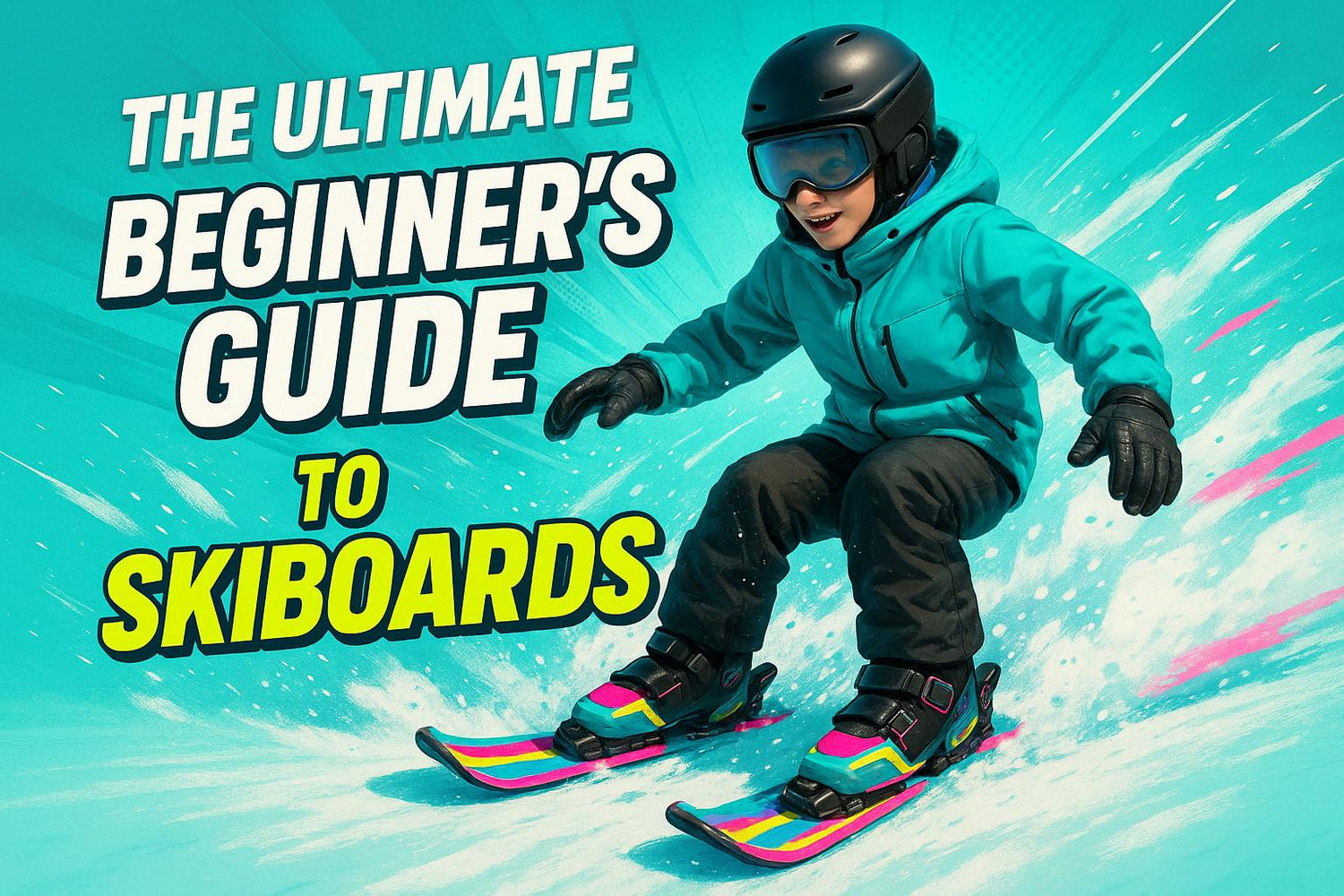
Skiboards are a great way to get into winter sports without the hassle of traditional skis or snowboards. They’re short, lightweight, and easy to control, making them perfect for beginners. With sizes ranging from 15 to 47 inches, skiboards are less intimidating and more portable than other gear. Plus, many models work with your regular winter boots, saving you money.
Here’s why skiboards are worth considering:
- Easier to Learn: Quick turns and stopping are simple, even for first-timers.
- Cost-Effective: Entry-level models start at $250, far cheaper than full ski or snowboard setups.
- Versatile: Great for groomed runs, tree trails, and even snowy backyards.
- Portable: Small enough to fit in your car trunk or backpack.
Brands like Snowfeet are leading the charge with beginner-friendly options like Mini Ski Skates (15 inches) and Short Skis (47 inches). Whether you’re tackling icy East Coast slopes or powdery trails in the Rockies, skiboards make hitting the slopes fun and accessible. Ready to give them a try? Let’s dive into the details!
Main Benefits of Skiboards and How They Compare
Benefits of Skiboards for Beginners
Skiboards offer a fun alternative to traditional skis or snowboards, especially for beginners. While standard skis can be 5 to 6 feet long, skiboards are much shorter - usually between 26 and 47 inches. This smaller size makes them super responsive to weight shifts, helping newcomers stay balanced and get the hang of basic movements without feeling overwhelmed by bulky gear.
One of their standout perks is how easy they make turning. Unlike traditional skis, which require strong legs and precise technique, skiboards let you glide into turns with less effort. Their compact design also makes them less intimidating and easier to carry around, which can be a big confidence booster for first-timers.
Skiboards also bring a playful vibe to the slopes. Many models feature a twin-tip design, perfect for trying out backward riding, spins, or even small jumps. They handle groomed runs, tight tree trails at places like Steamboat or Sugarbush, and even snowy backyards with ease. Plus, their portability means you can toss them in your car trunk and head out for a spontaneous mountain adventure whenever the mood strikes.
Now, let’s see how skiboards measure up against traditional skis and snowboards.
Comparison: Skiboards vs Traditional Skis vs Snowboards
To understand why skiboards are gaining popularity, it helps to compare them directly with traditional skis and snowboards. Here’s a quick breakdown:
| Factor | Skiboards | Traditional Skis | Snowboards |
|---|---|---|---|
| Learning Curve | Easy – beginners gain confidence quickly | Moderate to challenging – takes several days | Steep – expect more falls and a longer learning phase |
| Required Gear | Works with regular winter boots or ski boots; bindings included | Requires ski boots ($200–$600), bindings ($150–$400), and poles ($30–$100) | Needs snowboard boots ($150–$400) and bindings ($150–$350) |
| Maneuverability | Great for tight spaces and quick turns | Best for wide-open runs; tricky in confined areas | Moderate – needs more room for turns |
| Cost (Entry-Level) | Around $250–$775 for a full setup | Typically $400–$1,200+ including boots, bindings, and poles | Usually $500–$1,000+ for a starter package |
| Portability | Compact enough for a car trunk or backpack | Often requires a roof rack or extra space | Manageable but often needs backseat or roof rack space |
| Chairlift Experience | Relaxed stance with both feet free | Comfortable with both feet free | Can feel awkward with one foot strapped in |
It’s clear that skiboards offer a lot of perks: they’re easier to learn, cost less, and are more portable. Snowfeet* users especially appreciate how quickly they can get started and how much less hassle the gear involves - more time on the slopes, less time wrestling with equipment.
Why Snowfeet* Stands Out
With all these benefits in mind, it’s easy to see why Snowfeet* is leading the charge in the skiboard market. Unlike brands that stick to traditional designs, Snowfeet* focuses on simplicity and accessibility. Their gear is all about making winter sports fun and easy, rather than prioritizing extreme speed or technical precision.
Snowfeet* offers a range of options to suit different styles. Most of their skiboards fall between 26 and 47 inches in length (65 to 120 cm), but they also have ultra-compact models like the Mini Ski Skates, which are just 15 inches (38 cm) long. Whether you want something that’s super portable or closer to the feel of traditional skiing, there’s a model for you.
Another huge plus is compatibility. Snowfeet* designs work with regular insulated winter boots or snowboard boots, so there’s no need to shell out for expensive ski boots. This approach saves beginners both money and hassle, making it easier to dive into the sport.
But Snowfeet* isn’t just about selling gear - they’re creating a movement. They’ve got big dreams, like turning skiskating into a recognized sport and maybe even getting it into the Olympics someday. By challenging the idea that longer, heavier equipment is always better, Snowfeet* is opening the slopes to a whole new group of people. Whether you’re carving your first turns at Breckenridge or exploring snowy trails in Vermont, Snowfeet* gear promises an experience that’s as fun as it is accessible.
Skiboard Tips for Beginners! | Summit Skiboards

How to Choose the Right Skiboards
Picking the right skiboards comes down to your height, skill level, and where you plan to ride. While skiboards are generally forgiving, understanding how different sizes and features affect performance can make all the difference in finding a setup that feels just right for you.
Skiboard Sizes and Features Explained
Skiboards range in length from 15 inches (38 cm) to 47 inches (120 cm), and each size offers a unique riding experience. Here’s a quick breakdown:
- Ultra-compact models (38–44 cm): These are perfect for quick spins and tricks. They’re super nimble but can feel unstable at higher speeds and aren’t the best choice for deep powder or carving aggressively.
- Short skiboards (65 cm): At about 26 inches, these strike a balance between maneuverability and stability. They’re great for groomed runs, terrain parks, and light powder, making them a favorite for many riders across U.S. resorts.
- Mid-length skiboards (99 cm): Roughly 39 inches long, these offer better float in powder and more stability at speed. They’re ideal for riders looking to venture off groomed trails.
- Longer skiboards (120 cm): At 47 inches, these provide excellent stability and speed while still being more portable and easier to control than traditional skis. They’re a great choice if you want a skiing experience with the convenience of shorter gear.
Now that you’ve got the basics, let’s check out some top picks from Snowfeet*.
Snowfeet* Product Recommendations
Snowfeet* has a lineup designed to cater to every type of rider, from first-timers to seasoned pros.
- Snowfeet* Mini Ski Skates (38 cm, $250): These are compact, lightweight, and easy to use. They’re perfect for beginners and work with regular winter boots.
- Snowfeet* PRO (50 cm, $275): A step up in durability and edge control, these come with adjustable bindings while staying compact and easy to handle.
- Skiskates (44 cm, $575+): Built with a wood core, these are made for carving and tackling more challenging terrain.
- Skiblades (65 cm, $635+): At 26 inches, these versatile boards handle carving and snowparks with ease. They also come in various designs for different terrains.
- Snowfeet* POWDER (99 cm, $675): Designed for powder days, these offer extra surface area for better float while staying responsive.
- Skiblades (99 cm, $675+): Another solid 39-inch option for advanced riders who want versatility and performance.
- Snowfeet* Short Skis (120 cm, $775): These deliver high performance similar to traditional skis but with the added benefits of a more compact design - perfect for all-mountain adventures.
All Snowfeet* products include bindings and are compatible with regular winter or snowboard boots, saving you from spending extra on specialized footwear.
Budgeting for Skiboards in USD
Skiboards are a more wallet-friendly way to hit the slopes compared to traditional ski setups. A full traditional setup (skis, bindings, boots, and poles) can cost anywhere from $800 to $2,000 or more. In contrast, entry-level skiboards like the Snowfeet* Mini Ski Skates start at just $250, and they’re ready to go with your existing winter boots.
- Mid-range options ($575–$675): These include advanced materials and features for better performance.
- High-end skiboards ($775): Models like the Snowfeet* Short Skis deliver top-tier performance for less than most traditional setups.
Plus, skiboards cut costs by eliminating the need for poles (which can cost $30–$100) and reducing maintenance expenses. Accessories like wax and replacement straps start at just $6, making upkeep affordable. With Snowfeet* products, owning your gear is often cheaper than renting traditional skis, which typically cost $40–$70 per day.
Getting Started with Skiboards on the Slopes
Your first day on skiboards will feel quite different from skiing or snowboarding. But here’s the upside: skiboards are known for their quick learning curve. Many beginners find themselves cruising down the slopes with confidence by the end of their first day. Let’s make sure you’re geared up and ready to hit the snow.
Gear and Clothing for Beginners
When it comes to what to wear, the basics for skiboarding are pretty much the same as skiing or snowboarding. One advantage of Snowfeet* products is that you can use your regular winter boots or snowboard boots - no need to splurge on pricey ski boots.
Here’s a quick rundown of what you’ll need:
- Layers are key: Start with a moisture-wicking base layer (think wool, synthetic, or silk - but skip cotton), add an insulating mid-layer (like fleece or down), and top it off with a waterproof outer shell (aim for at least a 5,000 mm rating, though 10,000 mm or more is even better).
- Helmet: A snug, well-fitting helmet, ideally with MIPS technology, is a must. It’s worth noting that wearing a helmet makes you seven times less likely to suffer a head injury.
- Goggles: Protect your eyes from wind, snow, and glare. Choose lenses based on the weather: 60–90% VLT for cloudy days and 5–20% VLT for bright sunshine.
- Extra protection: For beginners, wrist guards, knee pads, and padded shorts can save you from bruises during those inevitable tumbles. Since skiboards keep you closer to the snow and encourage a playful style, these extras are especially handy.
If you’re trying to keep costs down, consider renting jackets, pants, helmets, and goggles. Invest in personal base layers and socks - they’re affordable and worth owning. Accessories like gloves and socks are budget-friendly, and you can experiment with what works best for you before spending on higher-end gear.
Once you’re suited up, it’s time to learn the basics of skiboarding.
Basic Techniques and First Runs
Skiboards are light, wide, and designed for an upright stance, making them feel surprisingly natural for beginners. Thanks to Snowfeet*’s design, you’ll find that turning, stopping, and balancing come quickly - especially if you’ve tried skating or rollerblading before.
Start with your stance. Bend your knees slightly and keep your weight centered over the middle of your skiboards. Avoid leaning too far forward or backward. If you’re struggling to find your balance, try resting your palms on your knees for a moment to center yourself.
Getting moving is easy. Push off sideways with your legs to glide forward - no poles needed, which is one of the perks of Snowfeet* gear. Many people find this movement intuitive, especially if they’ve ice skated before.
Control your speed by using the wedge technique. Point the tips of your skiboards toward each other and press on the inside edges to slow down. When it’s time to turn, shift your weight to the opposite leg: for a right turn, press into your left leg, and for a left turn, lean into your right. Once you’re comfortable, you can straighten out your skiboards to pick up speed.
Stopping is all about the hockey stop. Turn sharply to one side with both skiboards to come to a controlled stop. Take time to practice this and get a feel for edge control - it’ll make your runs much smoother.
The best way to learn? Head to a beginner-friendly hill with a gentle slope and start experimenting. You’ll likely progress faster than you would on traditional skis. If you’ve got some experience with snow sports, formal lessons might not be necessary, but a quick session with a friend or instructor can help you avoid bad habits early on.
Now that you’ve got the basics down, let’s tackle some common mistakes and how to correct them.
Common Mistakes and How to Fix Them
Stay centered and use your edges. Leaning too far back makes it harder to steer and control your edges. If you catch yourself doing this, shift your weight forward. Make sure to engage the full edge of your skiboards during turns - this keeps you stable and in control, especially on steeper terrain.
Don’t lock your legs. Stiff legs make it tough to absorb bumps or make smooth turns. Think of your legs as shock absorbers - keep them bent and ready to respond to changes in the terrain. A slight bounce in your stance can help keep things loose and fluid.
Look ahead, not down. Fixating on your skiboards throws off your balance and makes it harder to react to upcoming terrain. Instead, focus on where you want to go, and your body will naturally follow.
Take it slow at first. Trying to go too fast too soon is a recipe for panic and spills. Resist the urge to race down the hill on your first run. Master the wedge technique, get comfortable with basic turns, and build your confidence gradually. The responsive design of Snowfeet* skiboards will help you feel in control as you gain speed.
With these tips in mind, you’ll be carving up the slopes in no time. Skiboards make it easy to learn and enjoy the ride, even for first-timers. Have fun out there!
sbb-itb-17ade95
Snowfeet* vs Traditional Ski and Snowboard Brands
Let’s take a closer look at how Snowfeet* stacks up against traditional ski and snowboard gear. For decades, brands like Rossignol, K2, Burton, and Salomon have been the go-to for winter sports enthusiasts. Their gear, while iconic, often involves multiple pieces of specialized equipment. For beginners, this can mean a hefty price tag and a steep learning curve.
How Snowfeet* Shakes Things Up
Snowfeet* is changing the game with gear that’s compact, lightweight, and easy to use. Unlike traditional setups, Snowfeet* works with regular winter or snowboard boots, so there’s no need to invest in specialized footwear. Pricing is straightforward: Mini Ski Skates (38 cm) are $250, Skiblades (65 cm) are $635, and Short Skis (120 cm) come in at $775.
The shorter lengths (ranging from 38 cm to 120 cm) give users a lower center of gravity, making it easier for beginners to build confidence and learn faster. While traditional skis and snowboards are often designed for specific terrains, Snowfeet* gear is versatile enough for a variety of conditions. Whether you’re carving down a groomed slope, exploring backcountry powder, or just playing in your backyard, Snowfeet* adapts to the moment.
These differences set the stage for a direct side-by-side comparison with traditional gear.
Comparison: Snowfeet* vs. Traditional Entry-Level Gear
Here’s a quick breakdown of how Snowfeet* compares to traditional ski and snowboard setups:
| Feature | Snowfeet* Products | Traditional Skis & Snowboards |
|---|---|---|
| Learning Curve | Beginner-friendly, intuitive design | Takes days to master balance and turns |
| Equipment Cost | Budget-friendly - no need for extra boots or bindings | Requires investing in multiple pieces of gear |
| Portability | Compact - fits in a backpack | Bulky - needs a roof rack or large bag |
| Boot Compatibility | Works with standard winter or snowboard boots | Requires specialized boots |
| Weight | Lightweight and easy to manage | Heavier and more cumbersome |
| Terrain Versatility | Handles various conditions with ease | Designed for specific terrain types |
| Maintenance | Low-maintenance - simple waxing | Regular tuning, edge sharpening, and waxing needed |
Why Snowfeet* Fits U.S. Slopes Perfectly
The United States offers a wide range of skiing conditions, and Snowfeet* is built to handle them all. Here’s how it performs across different regions:
- East Coast Resorts: Places like Killington (Vermont), Hunter Mountain (New York), and Whitetail (Pennsylvania) are known for icy, hard-packed slopes. Snowfeet* Skiblades (65 cm or 99 cm) excel here, offering quick edge-to-edge transitions and better control - perfect for navigating slick surfaces.
- Midwest Groomers: On crowded slopes in the Midwest, the compact design of Snowfeet* gear makes it easy to weave through tight spaces. Quick stops and sharp turns? No problem.
- Western Powder: In the deep, soft snow of the Rockies or Sierra Nevada, Snowfeet* POWDER models provide the float and responsiveness you need for a smooth ride, all while helping reduce fatigue.
No matter where you’re skiing in the U.S., Snowfeet* combines versatility and simplicity, making it a solid choice for anyone ready to dive into winter sports with ease.
Maintenance and Safety Tips for Skiboards
Keeping your skiboards in top shape doesn’t have to be complicated. A little regular upkeep can go a long way in ensuring your Snowfeet* gear performs smoothly, while a few safety checks can help you stay confident and secure on the slopes.
Caring for Your Skiboards
A little TLC can make a big difference. Here’s how to keep your skiboards in great condition:
- Wax the base regularly: Use liquid wax to maintain a smooth glide.
- Tune the edges: Sharpen the metal edges with an edge tuner, and don’t worry if a bit of plastic gets shaved off - it won’t affect performance.
- Dry thoroughly after use: Prevent rust by drying the edges and applying a light oil if you’re storing them for a while.
These simple steps will help extend the life of your gear and keep it ready for action.
Safety Basics for Beginners
Snowfeet* gear is designed with ease and safety in mind, but proper setup is key to a worry-free experience. Here are a couple of tips to keep in mind:
- Use release ski bindings for longer models: If your Snowfeet* are 100 cm or longer, release bindings are a must. They’re designed to detach during a fall, reducing the risk of injury.
- Go with ski boots for better support: For longer skiboards, ski boots provide the ankle support needed for better control and safety.
A little preparation goes a long way in helping you enjoy the slopes with peace of mind.
When to Upgrade Your Snowfeet* Gear
As you gain confidence and refine your skills, you might notice your current gear isn’t keeping up. Here’s a quick guide to upgrading your Snowfeet* setup:
- Beginners: Start with the Snowfeet* Mini Ski Skates (38 cm), priced at $250. They’re perfect for learning the basics.
- Intermediate riders: Once you’re comfortable, consider the Skiblades (65 cm) at $635. They offer more stability and better edge grip for higher speeds.
- Advanced skiers: For those ready to tackle serious terrain, the 99 cm models (from $675) are a great choice. Pick the POWDER version if you’re planning to explore deeper snow.
- Experts: The 120 cm Short Skis, priced at $775, deliver maximum stability and speed for seasoned riders.
If you feel like your current setup is holding you back - whether it’s stability, control, or tackling steeper slopes - it’s probably time to invest in an upgrade. Better gear can open up a whole new level of adventure!
Conclusion: Start Your Skiboard Journey
Skiboards bring a level of fun that traditional skis and snowboards just can’t match. As Doc Roberts, President of Skiboards.com, famously says:
"Pure Fun from Day One!"
This isn’t just a catchy slogan - it’s the truth. Skiboards are shorter, lighter, and designed to make winter sports easier and more enjoyable for everyone. They’re a game-changer, especially for beginners.
Because skiboards have a shorter learning curve than traditional skis, you’ll feel confident and in control much faster, giving you more time to actually enjoy the slopes. Their compact size and low center of gravity make them stable and easy to maneuver, even on your very first run.
Snowfeet* offers options for every skill level, proving that shorter skis can deliver freedom and a better experience on the snow. Unlike traditional ski brands that push longer equipment, Snowfeet* flips the script, showing that sometimes smaller really is better.
Getting started is simple. For beginners, 65 cm Skiblades are a great choice - they provide excellent control and agility. Start by keeping a stable stance with your knees slightly bent, practice the snowplow to stop, and stick to gentle slopes at first. Poles can help when you’re starting out, but once you’re comfortable, you might not even need them.
What makes skiboards so special is how they take the intimidation out of winter sports. You’re not battling your gear - you’re working with it. Turning becomes second nature with a simple weight shift, and stopping is as easy as a sharp turn. It’s all about making winter sports accessible, fun, and focused on what really matters: having an amazing time on the mountain.
FAQs
How are skiboards different from traditional skis or snowboards, especially for beginners?
Skiboards are a fantastic option for beginners because their shorter length and easy handling make them much simpler to control than traditional skis or snowboards. Whether you're making turns or coming to a stop, the compact design takes away a lot of the intimidation that can come with longer skis or a snowboard. Plus, their smaller size means you'll pick up the basics faster, giving you the confidence to enjoy the slopes in no time.
Another big perk? Skiboards ditch the need for bulky gear like ski poles or stiff boots with heavy bindings. They're lightweight, easy to manage, and all about fun - no complicated setup required. If you're new to winter sports and want something approachable, skiboards, especially those from Snowfeet, are a great choice for hassle-free adventures on the slopes.
How do I pick the right size and type of skiboards for my skill level and the terrain I want to explore?
Choosing the right skiboards comes down to your skill level and the kind of terrain you want to explore. Here’s a quick breakdown:
- Shorter skiboards (65–99 cm): These are a dream for beginners or anyone who wants maximum control and easy, quick turns. They’re also perfect for relaxed, casual rides where fun is the main goal.
- Medium-length skiboards (95–110 cm): These hit the sweet spot for versatility. They’re great for all-mountain adventures and pulling off freestyle tricks.
- Longer skiboards (110–135 cm): If you’re an experienced rider chasing speed and stability, this is your go-to option.
Snowfeet* skiboards bring a lot to the table with their lightweight build and top-notch materials. They’re designed to give you smooth maneuverability and solid performance, whether you’re just starting out or ready to level up your skills. Snowfeet* makes every ride more fun and memorable!
What are the best tips for maintaining and safely using skiboards?
To keep your skiboarding adventures smooth and safe, a little regular upkeep goes a long way. Before you head to the slopes, give your skiboards a quick once-over. Look for any signs of wear or damage - better to catch it early than deal with issues mid-run. Keep the bases waxed for a smoother glide and sharpen those edges to stay in control, especially when you're tackling icy patches. And don’t forget to check your bindings - they should be snug and working like a charm.
Safety is just as important as maintenance. Make sure your gear is adjusted to fit your size and skill level - it can make all the difference. Always wear protective gear like a helmet and wrist guards, and stay alert to what’s happening around you on the slopes. With these simple habits, you’ll not only boost your performance but also make your skiboarding experience way more fun.











Leave a comment
This site is protected by hCaptcha and the hCaptcha Privacy Policy and Terms of Service apply.