



















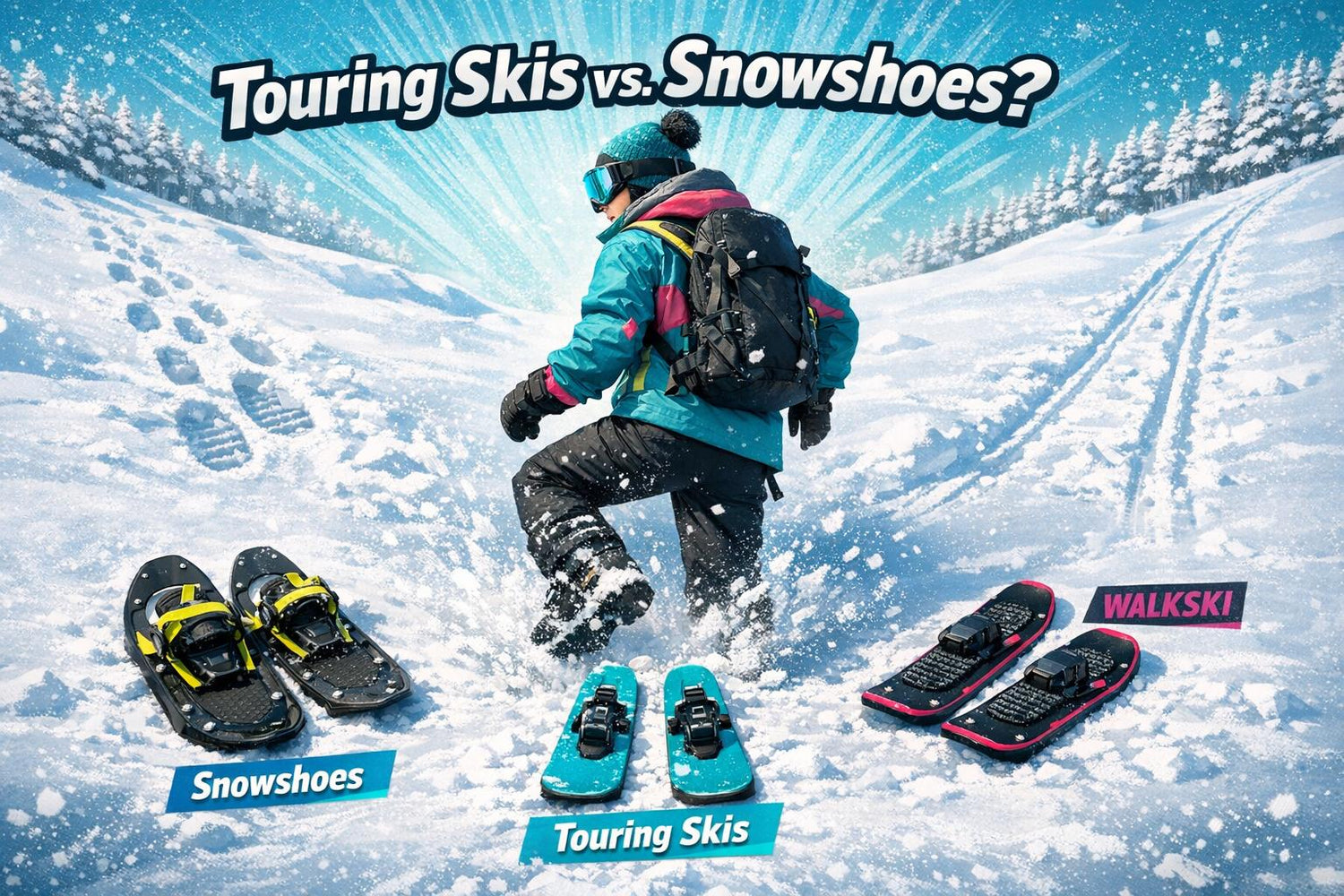
When deciding between touring skis and snowshoes, the choice depends on your terrain and adventure goals. Here’s the quick takeaway:
- Snowshoes: Easy to use, great for dense forests and tight spaces. Perfect if you’re walking in deep snow or rocky trails. But they’re slow, tiring over long distances, and bulky to carry. Prices range from $50 to $390.
- Touring Skis: Built for speed and efficiency on open terrain, slopes, and frozen lakes. They save energy with a gliding motion but require skill and a pricey setup (~$2,200).
- Snowfeet WALKSKI: A hybrid option combining the simplicity of snowshoes with the glide of skis. Lightweight (6.9 lbs), beginner-friendly (5-minute learning curve), and works with regular winter boots. Costs $690–$750 - much cheaper than full ski setups.
Quick Comparison
| Feature | Snowshoes | Touring Skis | Snowfeet WALKSKI |
|---|---|---|---|
| Speed | Slow | Fast | Moderate/Fast |
| Learning Curve | None | High | 5 Minutes |
| Weight | Heavy/Bulky | 10+ lbs | 6.9–8.8 lbs |
| Terrain | Tight spaces, forests | Open terrain, slopes | Mixed terrain |
| Price | $50–$390 | ~$2,200 | $690–$750 |
Snowfeet WALKSKI offers a middle ground - versatile, portable, and budget-friendly. It’s a fun, efficient way to handle mixed terrain while saving energy and adding downhill thrills.
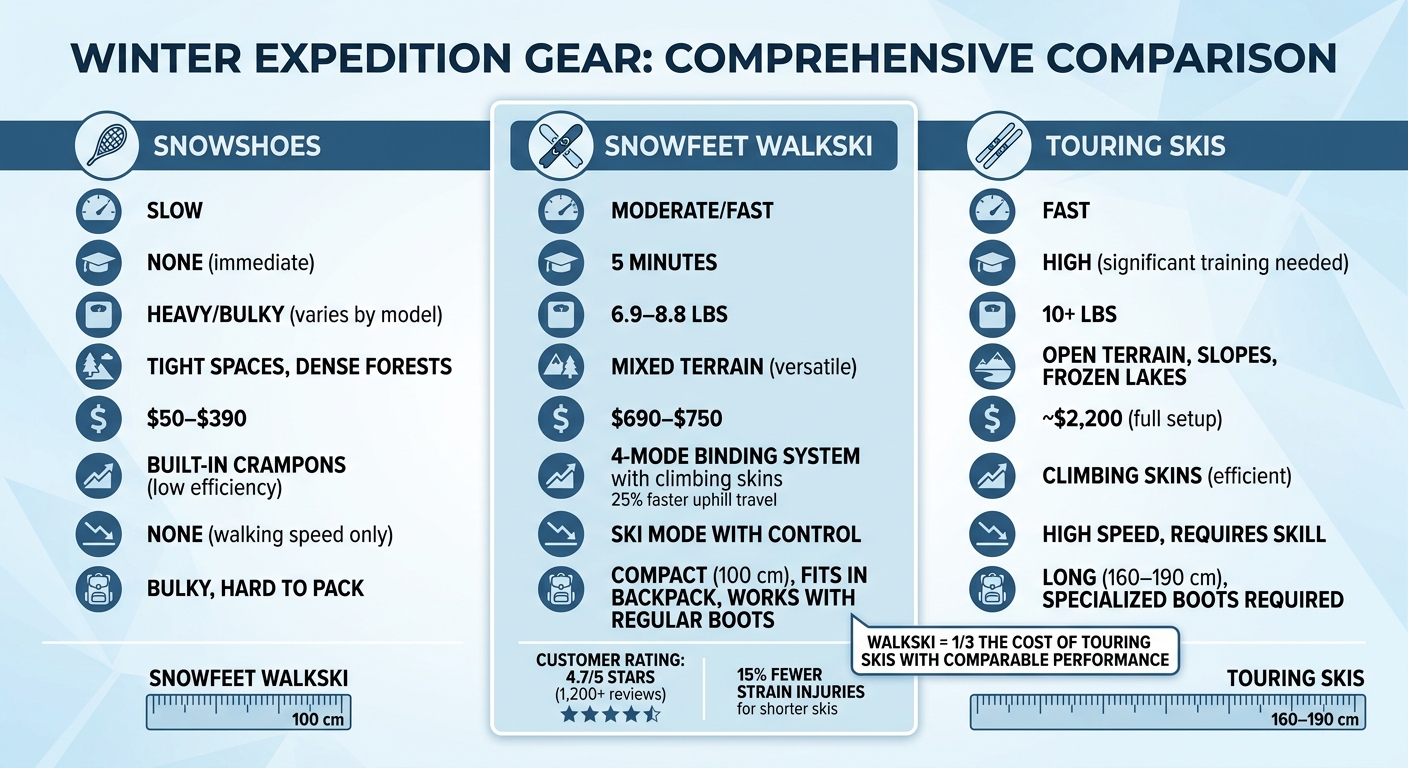
Snowshoes vs Touring Skis vs WALKSKI Comparison Chart
Skis vs Snowshoes: The gear - why & when to use one or the other
What Are Snowfeet* WALKSKI Backcountry Touring Skis?
Snowfeet* WALKSKI are compact, 100 cm touring skis designed to work with regular winter boots. Thanks to their patented binding system, they offer Walk, Ski, and two Climb modes, allowing you to hike, climb, and ski downhill - all without needing to switch gear.
These skis are incredibly lightweight, coming in at just 6.9 lbs for the wood-core version or 8.8 lbs for the fiberglass option. That’s significantly lighter than traditional setups, which often weigh over 10 lbs. Plus, they’re super portable - measuring about 20×8×4 inches when packed, they fit easily into a backpack. The bindings accommodate boot sole lengths from 24 cm to 38 cm (US sizes 6–14.5), so you can use them with winter hiking boots, snowboard boots, or ski boots.
Here’s a closer look at what makes Snowfeet* WALKSKI stand out.
Main Features of Snowfeet* WALKSKI
Snowfeet* WALKSKI come equipped with removable climbing skins for excellent uphill traction. Built to last, they feature a reinforced nylon deck, aluminum edges, and an ABS frame that can handle temperatures as low as –30°F and up to 10,000 uses. Setting them up is a breeze; the quick-release buckles mean you’re ready to go in under 30 seconds. Plus, they’re beginner-friendly, with a learning curve of just about 5 minutes - much shorter than the time it takes to master traditional long skis.
"These ski blades are a blast to use. Super easy to control, quick to turn, and way more forgiving than traditional skis... they're lightweight and much easier to carry around than full-size skis." – Brad Tolin
In terms of cost, WALKSKI is a budget-friendly option. Priced between $690 and $750 depending on the core material, they’re about one-third the cost of a traditional touring ski setup, which averages around $2,200 for skis, bindings, boots, and skins. With a 4.7/5 rating from over 1,200 reviews, users frequently highlight their portability and ease of use.
How Snowfeet* WALKSKI Compares to Traditional Long Skis
Traditional backcountry skis are usually 160–190 cm long and require specialized touring boots. At just 100 cm, the WALKSKI is 40–50% shorter, making it much easier to maneuver through tight trees and narrow trails. While traditional long skis might offer more stability at high speeds, the WALKSKI shines in mixed terrain where agility and quick turns are key.
The compact design also means they’re 60–80% lighter than traditional setups, which helps cut down on fatigue during long treks. A 2024 Backcountry Access study even found that shorter skis result in 15% fewer strain injuries from falls. Plus, users reported 25% faster uphill travel thanks to the reduced swing weight. Another big win? You can wear the same insulated boots you’d use for winter hiking, so there’s no need for a time-consuming boot swap. This keeps your feet warm and makes the whole experience more seamless.
With their lightweight build and versatile performance, Snowfeet* WALKSKI is a game-changer for navigating diverse terrain.
What Are Traditional Snowshoes?
Snowshoes are like your personal snow flotation devices. They spread your weight across a larger surface area, so you don’t sink into deep snow. Unlike touring skis, which focus on glide and efficiency, snowshoes are all about walking. They’re built with a sturdy plastic or aluminum frame and a flexible decking material, such as TPU-coated nylon or polypropylene, to keep you on top of the snow.
Bindings on snowshoes are designed to secure regular winter boots. They typically use ratchet straps, pull webbing, or BOA laces and allow your foot to pivot naturally as you walk. To tackle icy or steep terrain, snowshoes are equipped with steel crampons under the toe and heel, along with serrated traction rails along the sides. Some models even come with heel risers - flip-up bars that reduce calf strain during uphill climbs.
"Snowshoes can give you access to places that are not otherwise within reach by foot, or even on skis with skins." – Natasha Buffo
Snowshoe sizes range from compact 21-inch models for packed trails to larger 36-inch options for deep powder. If you’re planning overnight trips or carrying heavy gear, you’ll need to factor in an additional 30–60 pounds when choosing your size. Heavy-duty backcountry models, like the Tubbs Mountaineer, can weigh nearly 5 pounds per pair, so keep that in mind.
Main Features of Snowshoes
Snowshoes are designed for more than just staying afloat. Their construction also helps with maneuverability in deep snow. The flexible decking spreads your weight evenly, preventing you from sinking step after step. Bindings are made to fit a variety of winter boots and are easy to adjust - even with gloves on.
When it comes to traction, snowshoes don’t mess around. Steel crampons dig into icy or firm snow, while serrated side rails keep you steady on traverses. Take the MSR Lightning Ascent, for example - it’s rated 9.8/10 for traction thanks to its 360-degree aluminum frame. Heel risers are another standout feature. They flip up for steep ascents, leveling your foot and easing the strain on your calves.
"Trying to snowshoe uphill without heel risers will result in immediate calf fatigue." – Natasha Buffo
Snowshoe prices vary widely. Budget-friendly options like the XtremPro Outdoors or Retrospec Drifter range from $50 to $140. Mid-tier models such as the Tubbs Flex RDG or MSR Revo Explore fall between $200 and $280. If you’re looking for top-of-the-line backcountry snowshoes, the MSR Lightning Ascent costs around $390.
Drawbacks of Snowshoes
Snowshoes are great for keeping you afloat in deep snow, but they’re not without their flaws. The biggest downside? They’re slow. Unlike skis, snowshoes don’t glide, so you’re stuck at walking speed even on flat or downhill terrain.
Another issue is their bulkiness. When you’re not using them, they’re awkward to carry and can snag on branches or rocks. Unlike compact touring skis that fit neatly into a backpack, snowshoes are cumbersome to strap onto your pack. On packed or groomed trails, their clunky design can feel awkward, with a noticeable “clomping” sound as you walk.
"Snowshoes have advantages over skis in bushy terrain off trail (where long skis become super cumbersome) or rugged terrain." – cbeleites, Stack Exchange Contributor
Snowshoes are also pretty one-dimensional. They’re made for walking - period. You can’t ski downhill, carve turns, or enjoy the dynamic movement that makes winter sports so fun. Plus, walking in snowshoes forces a wider gait, which can cause inner leg tendon inflammation for beginners. While they’re simple to use (if you can walk, you can snowshoe), they lack the versatility of touring skis or hybrid options like Snowfeet* WALKSKI, which combine walking ease with downhill skiing capabilities.
Up next, we’ll dive into how touring skis and snowshoes perform across different terrains, with a closer look at the glide and flexibility of Snowfeet* WALKSKI.
Performance: Touring Skis vs. Snowshoes
When it comes to winter adventures, touring skis clearly outpace snowshoes in terms of speed and efficiency. Instead of the repetitive lifting motion required with snowshoes, touring skis let you glide effortlessly across the snow. This not only saves energy but also allows you to move faster.
The Snowfeet* WALKSKI (100 cm) offers a clever middle ground between traditional long skis and snowshoes. Thanks to its shorter length, it provides excellent maneuverability and glide - something snowshoes just can’t match. Plus, its patented binding system offers four distinct modes:
- Walk: Free-heel mode for flat terrain.
- Ski: Locked heel for controlled downhill runs.
- Climb 1: Low riser for moderate slopes.
- Climb 2: High riser for steeper ascents.
This flexibility lets you adapt to changing conditions without constantly swapping gear.
For uphill travel, snowshoes typically rely on built-in crampons for grip. WALKSKI, on the other hand, uses removable climbing skins and heel risers, making ascents far more efficient. And here’s the kicker: WALKSKI delivers performance comparable to high-end $2,200 ski setups, but at a fraction of the price - just $499–$690. Weighing only 6.9 lbs, it’s also lighter and more portable than traditional setups or clunky snowshoes. This makes it an excellent choice for anyone looking for versatile and efficient gear.
Deep Snow and Mixed Terrain Performance
WALKSKI’s thoughtful design shines in challenging and varied terrain. While snowshoes excel at flotation in deep snow, WALKSKI achieves a similar effect by distributing your weight evenly across its 100 cm base. What’s more, it provides the added benefit of glide, which snowshoes simply can’t offer.
In mixed terrain - where you might encounter everything from packed trails to powder or icy patches - WALKSKI proves its worth. You’re not stuck trudging along; instead, you can quickly switch to ski mode for faster and smoother descents.
| Feature | Snowfeet* WALKSKI (100 cm) | Traditional Snowshoes |
|---|---|---|
| Flotation Area | Moderate to High | High |
| Uphill Efficiency | High | Low |
| Downhill Speed | High | None |
| Pack Weight | Compact & Lightweight | Bulky |
This versatility ensures you’re ready for anything, whether it’s climbing uphill, gliding through powder, or speeding downhill with control. WALKSKI makes every winter expedition more dynamic and enjoyable.
sbb-itb-17ade95
Portability and Learning Curve
Snowfeet* WALKSKI stand out not just for their performance but also for their portability and ease of use.
When it comes to winter adventures, having lightweight and easy-to-carry gear is a game-changer. Snowfeet* WALKSKI weigh just 6.9 lbs for the wood-core version and 8.8 lbs for the fiberglass option. Thanks to their compact 100 cm design, they fit neatly inside or on a backpack - something traditional snowshoes can’t match due to their bulkier build.
And here's the kicker: WALKSKI takes only about 5 minutes to get the hang of, making them perfect for beginners. While snowshoes do mimic the natural walking motion, they require a wider step, which can quickly become tiring over long distances.
Weight and Pack Size Comparison
| Feature | Snowfeet* WALKSKI | Traditional Snowshoes |
|---|---|---|
| Weight Per Pair | 6.9 lbs (wood) / 8.8 lbs (fiberglass) | Heavier and bulkier |
| Packability | Compact 100 cm design; backpack-friendly | Bulky and harder to pack |
| Time to Proficiency | ~5 minutes | Immediate walking but more tiring |
The compact design of WALKSKI doesn’t just make them easy to carry - it also allows for quick adaptation to various terrains. Plus, their universal binding system works with standard winter boots, snowboard boots, and ski boots, so you don’t need to invest in specialized footwear.
These features make Snowfeet* WALKSKI a more practical and versatile choice for winter expeditions compared to traditional snowshoes. They simplify travel and make exploring snowy landscapes less of a hassle.
Which Works Better for Different Terrains?
When it comes to navigating various terrains, Snowfeet* WALKSKI stands out compared to traditional snowshoes.
Handling Uphill, Downhill, and Flat Terrain
On uphill climbs, WALKSKI’s patented binding system shines. It features both low and high riser modes, along with removable climbing skins, to give you excellent traction. Compare that to traditional snowshoes, which rely on built-in crampons and require you to lift their full weight with every step - a far more tiring approach.
Once you’ve reached level ground, WALKSKI offers even more advantages. It switches into "Walk" mode, which allows for a natural, gliding stride thanks to its free-heel design. This is a huge improvement over the wide-step shuffle that snowshoes force you into, which can quickly wear out your legs.
Heading downhill? WALKSKI locks into "Ski" mode, giving you a smooth, controlled, and speedy descent. In contrast, snowshoes keep you stuck in a slow and cumbersome pace, making descents far less enjoyable.
Another bonus: WALKSKI’s compact 100 cm length makes it perfect for navigating tight spaces, like dense forests or narrow trails. It offers a level of maneuverability that traditional long skis simply can’t match.
All in all, Snowfeet* WALKSKI provides a more dynamic and efficient way to tackle winter terrains, whether you’re climbing, gliding, or zipping downhill.
Why Choose Snowfeet* WALKSKI Over Snowshoes
When it comes to winter adventures, Snowfeet* WALKSKI offers a game-changing alternative to traditional snowshoes. These compact skis combine the climbing ease of snowshoes with the added bonus of gliding downhill, cutting down on fatigue and adding a fun, dynamic element to your trek. The secret lies in their patented four-mode binding system, which makes WALKSKI truly stand out.
Here’s how it works: In Walk mode, you can move naturally with ease. Switch to Ski mode to lock your heel for smooth, controlled descents. For uphill climbs, there are two Climb modes - low and high risers - designed to handle different inclines effortlessly. Plus, WALKSKI is compatible with your regular winter boots, snowboard boots, or ski boots, so there’s no need to splurge on expensive, specialized footwear.
The price? A full WALKSKI setup runs between $690 and $750. That’s a fraction of the cost of most traditional touring setups, but with comparable performance. It’s a budget-friendly way to hit the backcountry trails with confidence.
A More Dynamic Winter Experience
Beyond its technical features, WALKSKI adds a whole new level of excitement to your winter adventures. Unlike snowshoes, which require a tiring step-by-step motion, WALKSKI lets you glide forward effortlessly, blending the smoothness of skating with the thrill of skiing.
"I'm new to skiing but enjoy snowshoeing so the Snowfeet Backcountry Touring Skis were a no-brainer for me. Very versatile and a lot of fun!"
- Patrick Brosseau, Customer
While snowshoers often struggle to descend slopes, WALKSKI users can glide, carve, and ski with impressive speed and control. With a perfect 5.0/5 customer rating and feedback calling them "tons of fun" and "way more forgiving than traditional skis", WALKSKI turns backcountry exploration into an adventure packed with freedom and excitement.
Conclusion
After comparing terrain adaptability and performance, it’s easy to see how the choice between touring skis and snowshoes depends on your priorities. Traditional snowshoes are great for straightforward walking and climbing but fall short when it comes to downhill glide. Enter the Snowfeet* WALKSKI - a game-changer that blends the climbing ease of snowshoes with the speed and glide of touring skis. And at $690, it’s a fraction of the cost of traditional setups that can run over $2,200.
With a compact 100 cm length and a lightweight 6.9 lb wood-core build, the WALKSKI delivers incredible maneuverability compared to traditional skis and far more energy than snowshoes. Its patented four-mode binding system - offering Walk, Ski, Climb 1, and Climb 2 modes - gives you full control across all kinds of terrain. Whether you're cruising across flat stretches, powering up steep inclines, or gliding down powdery slopes, this system has you covered. Plus, it works with your regular winter, snowboard, or ski boots, so there’s no need to invest in expensive, specialized footwear.
With a flawless 5.0/5 customer rating and glowing reviews, the WALKSKI promises a whole new level of freedom, speed, and fun for your winter adventures.
If you’re ready to ditch the limits of snowshoes and embrace a more dynamic way to explore the snow, Snowfeet* WALKSKI is your answer.
FAQs
Do I need special boots for Snowfeet* WALKSKI?
You don’t need any special boots for Snowfeet WALKSKI*. They’re made to attach to regular winter boots, so there’s no need to invest in extra gear. Simple and convenient!
Are Snowfeet* WALKSKI good in deep powder?
Snowfeet* WALKSKI touring skis are designed with lightweight portability in mind, making them a great choice for backcountry adventures and mixed terrain. At just 100 cm long, they’re much shorter than traditional skis, which makes them incredibly easy to carry and maneuver. However, this shorter length, combined with their fiberglass-reinforced build, means they don’t perform as well in deep powder, where more flotation is needed. That said, their agility and compact design shine in situations where versatility and easy transport matter most, making them a solid pick for varied winter outings.
What safety gear should I bring for winter tours?
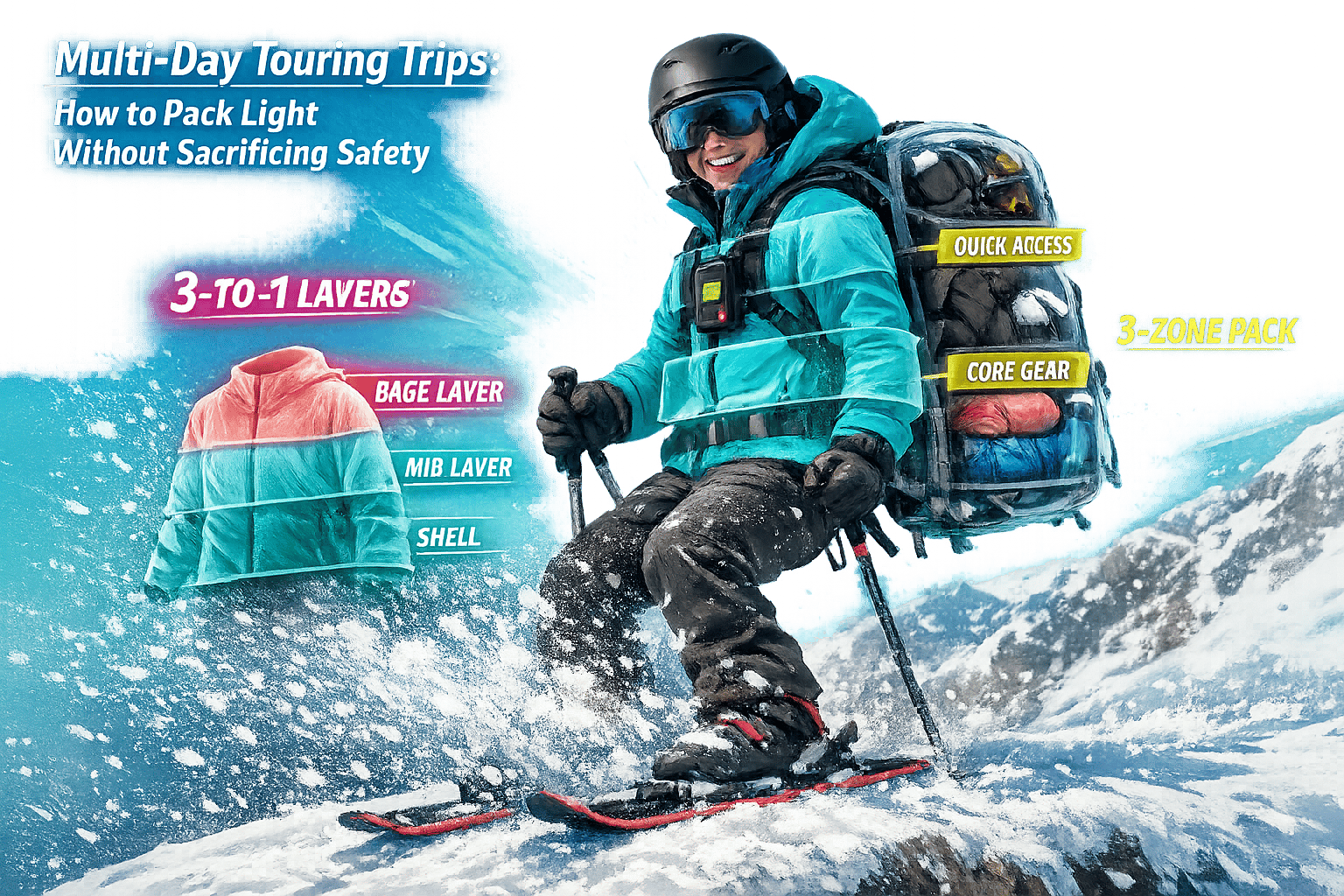
For winter adventures, having the right safety gear is non-negotiable. Essentials include avalanche transceivers, probes, and shovels - critical tools for avalanche safety. You'll also need navigation tools to stay on course, a first aid kit for emergencies, and layered clothing to adapt to changing weather.
Preparation is key. Plan your route carefully and always be ready for sudden shifts in weather or unexpected situations. Stay safe out there! 🏔️











Leave a comment
This site is protected by hCaptcha and the hCaptcha Privacy Policy and Terms of Service apply.