
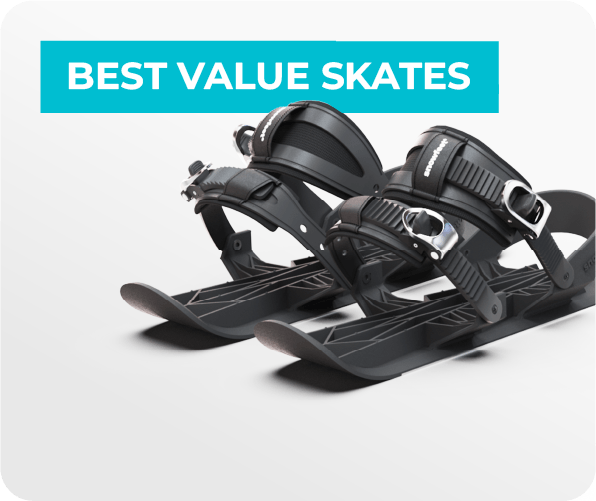
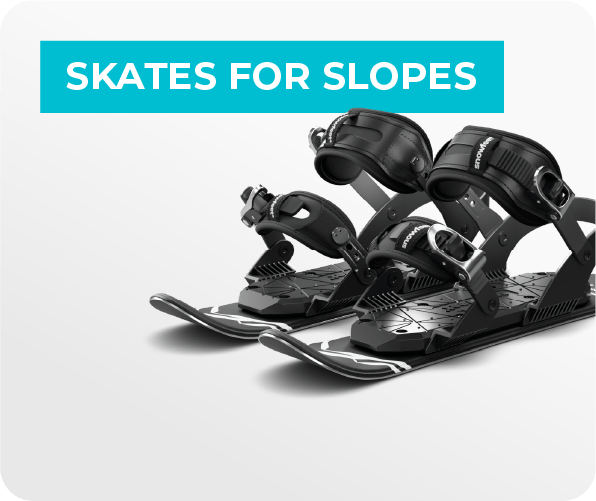
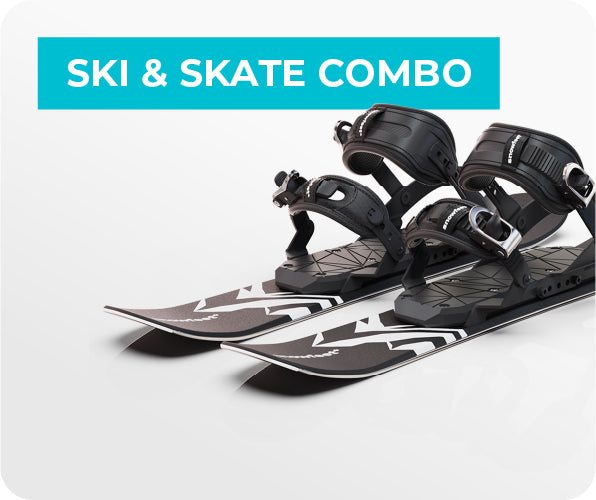
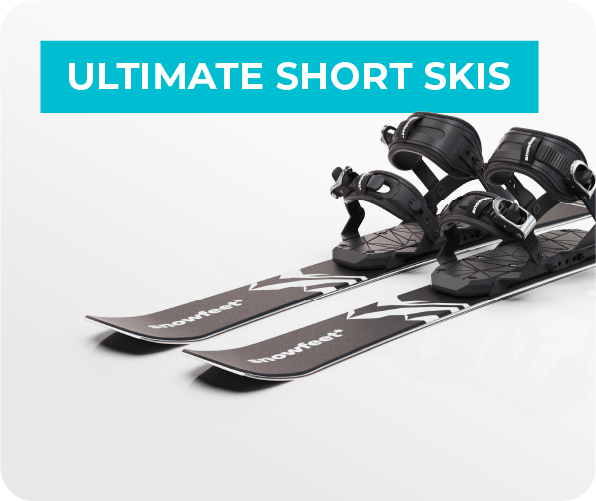
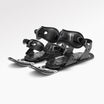
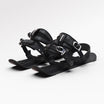
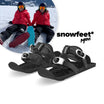
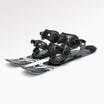
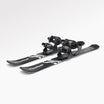
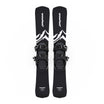
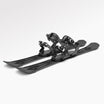
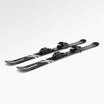
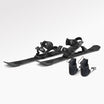
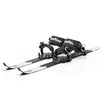
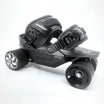
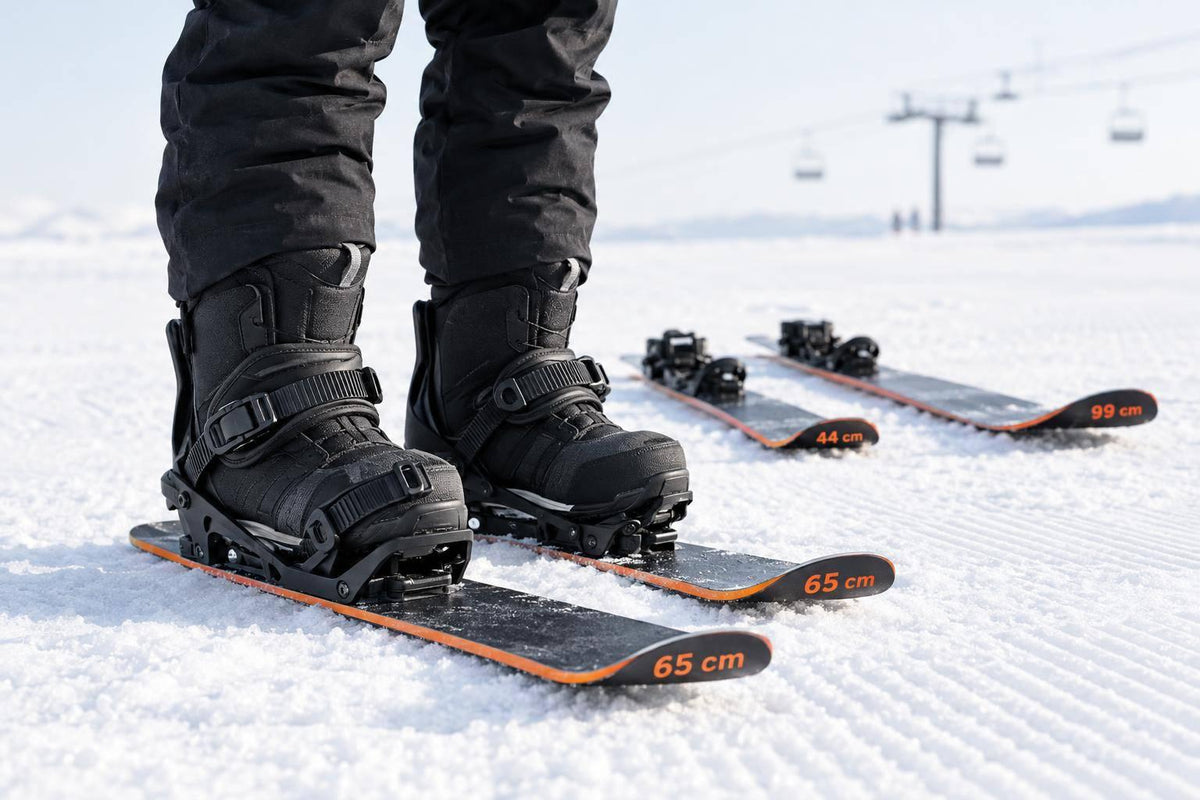
Yes - you can use soft splitboard boots on short skis, but only with bindings that accept your boot type, size, and shape. My first check: the exact binding listing, not just the size on your boot. Snowfeet* lists many snowboard-boot options for U.S. men’s 6–14.5, though some 44 cm versions list 6–13.
Here’s how I’d choose among the three setups:
Quick Comparison
| Model | Length | Main draw | Main limit |
|---|---|---|---|
| Snowfeet* Skiskates | 17.3 in (44 cm) | Easy to carry; tight pivots | Least front-to-back support |
| Snowfeet* Skiblades | 25.6 in (65 cm) | Balance of agility and support | Less stable than the 99 cm model |
| Snowfeet* Skiblades | 39 in (99 cm) | Most stable and ski-like of the three | Bulkiest to carry |
The catch? All three snowboard-boot setups are non-releasable. A snug boot won’t make the binding release in a fall. Touring hardboots need a separate, approved binding system.
Before riding, I’d check for heel lift, side play, strap fit, and loose hardware. Then I’d start on a gentle groomer. Think casual resort laps, <u>not uphill touring or backcountry travel</u> - and check your resort’s leash rules before you go.
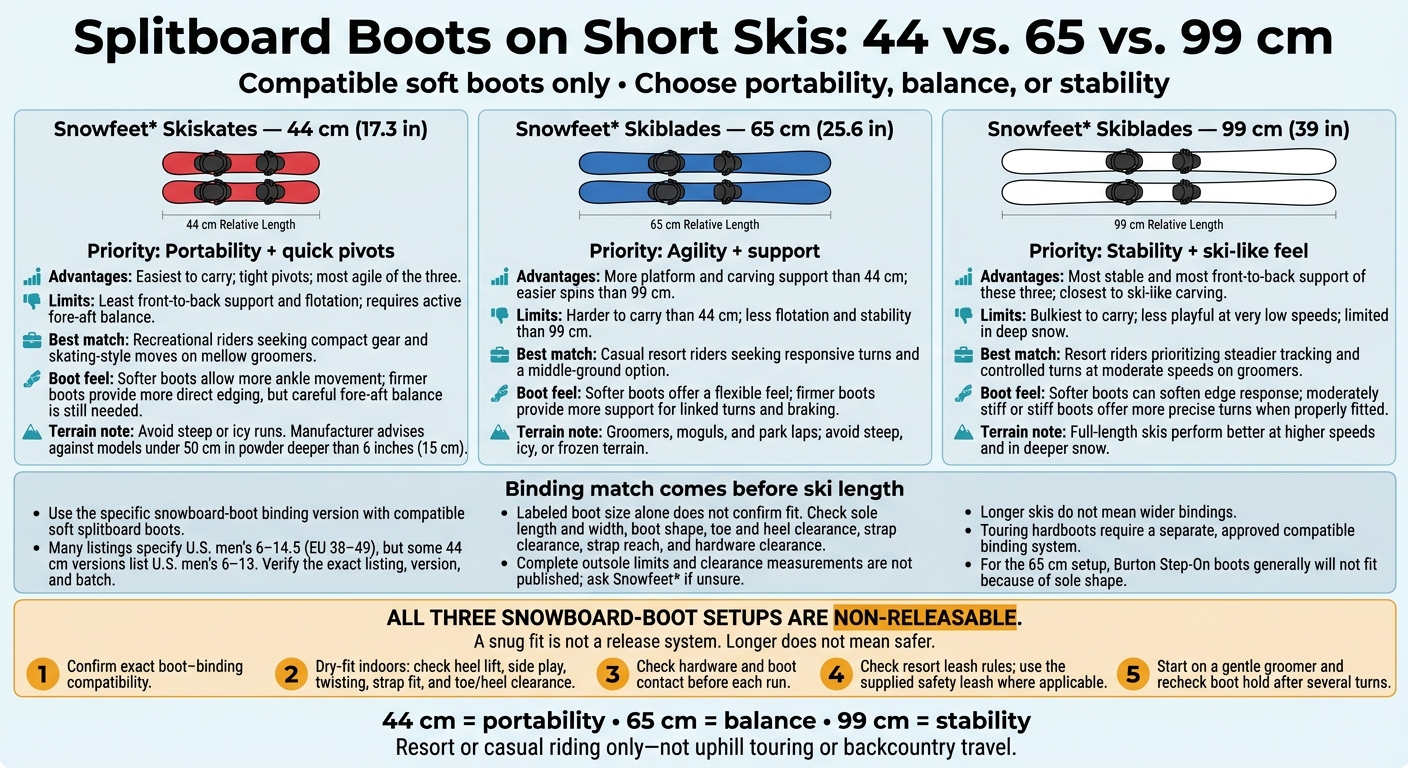
Splitboard Boots on Short Skis: 44 vs. 65 vs. 99 cm
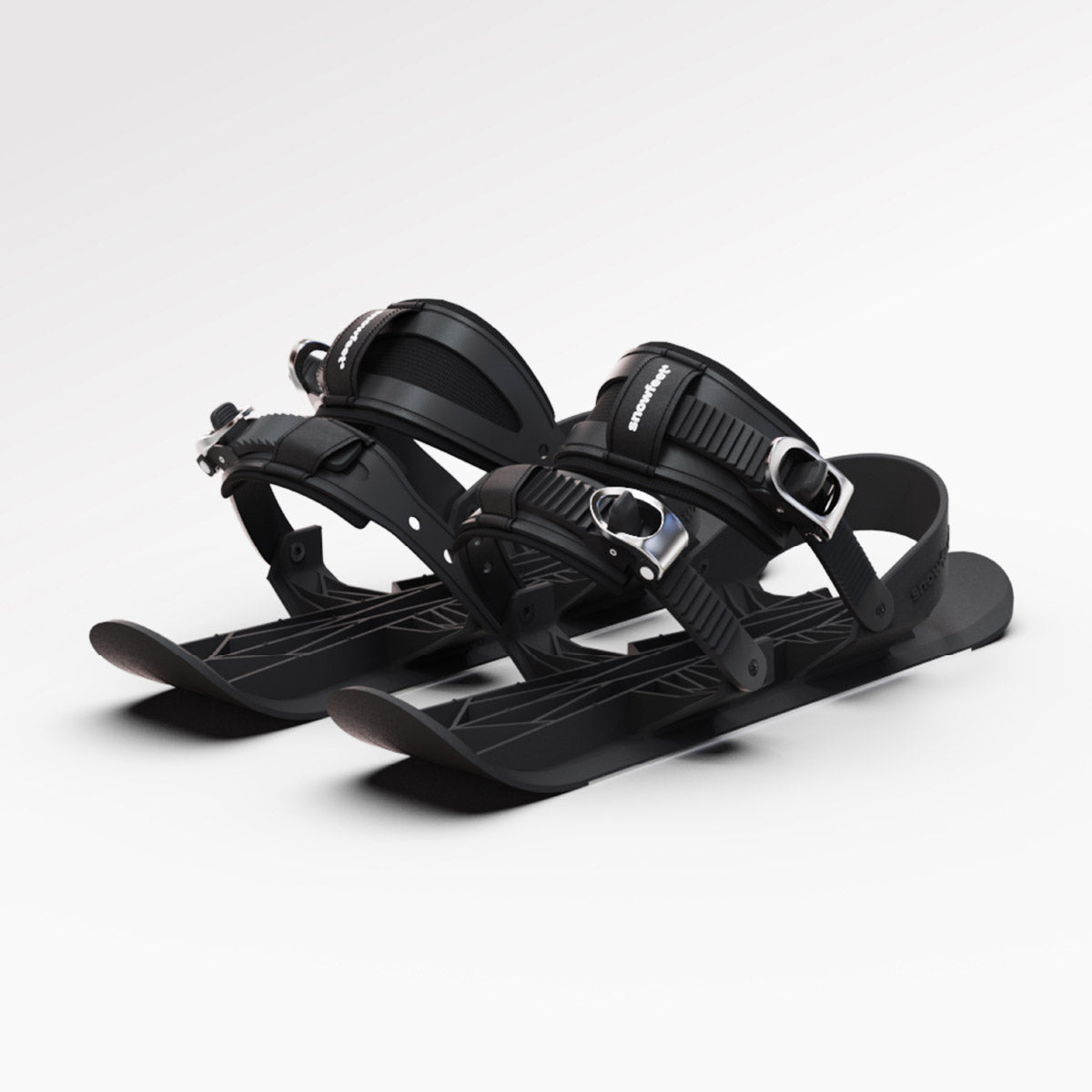
1. Snowfeet* Skiskates 44 cm With Snowboard-Boot Bindings
Approved Boot Compatibility
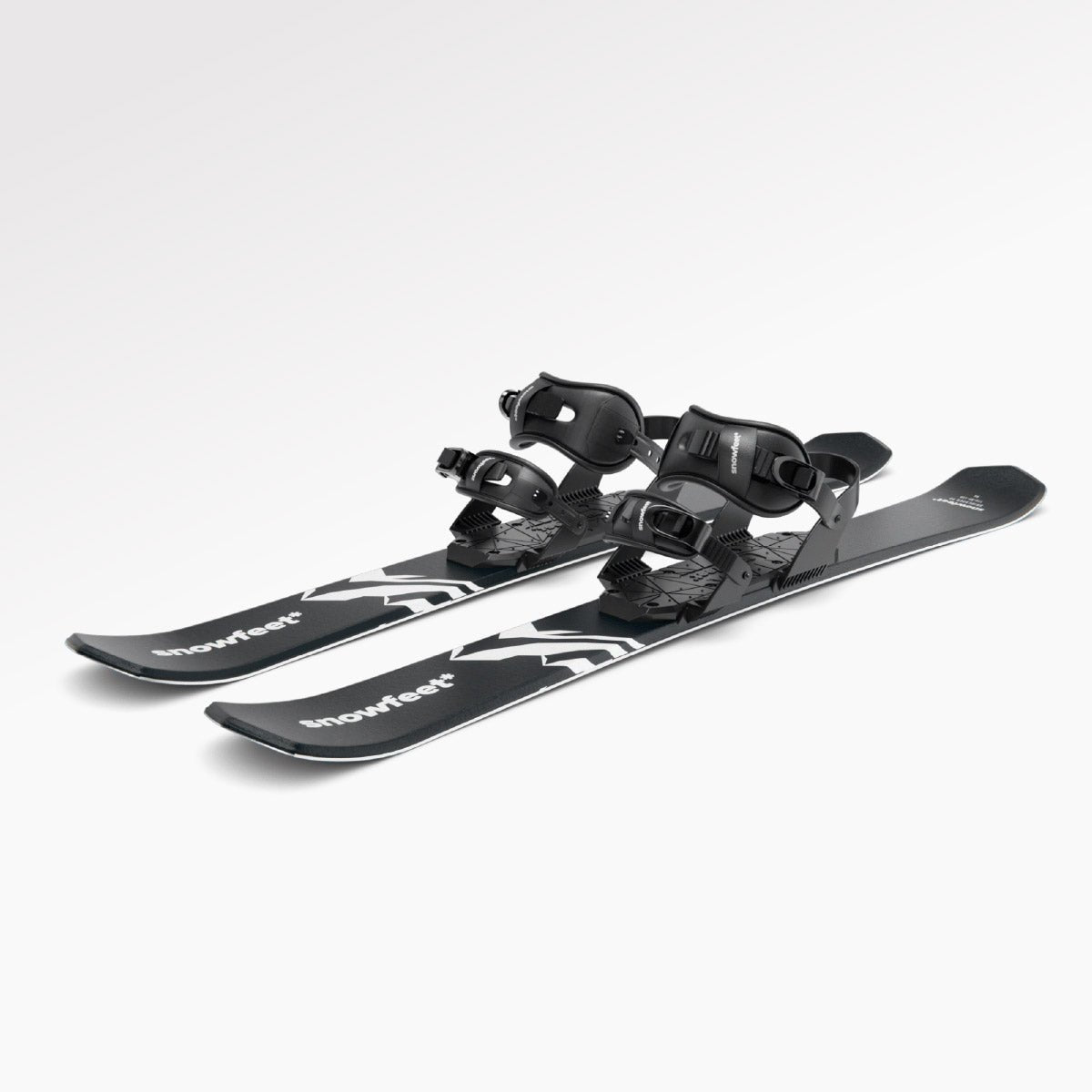
Use only the snowboard-boot binding for this setup on the 44 cm Skiskates. This version lists a fit range of U.S. men’s 6–14.5 (EU 38–49). Check the exact listing and batch before you order.
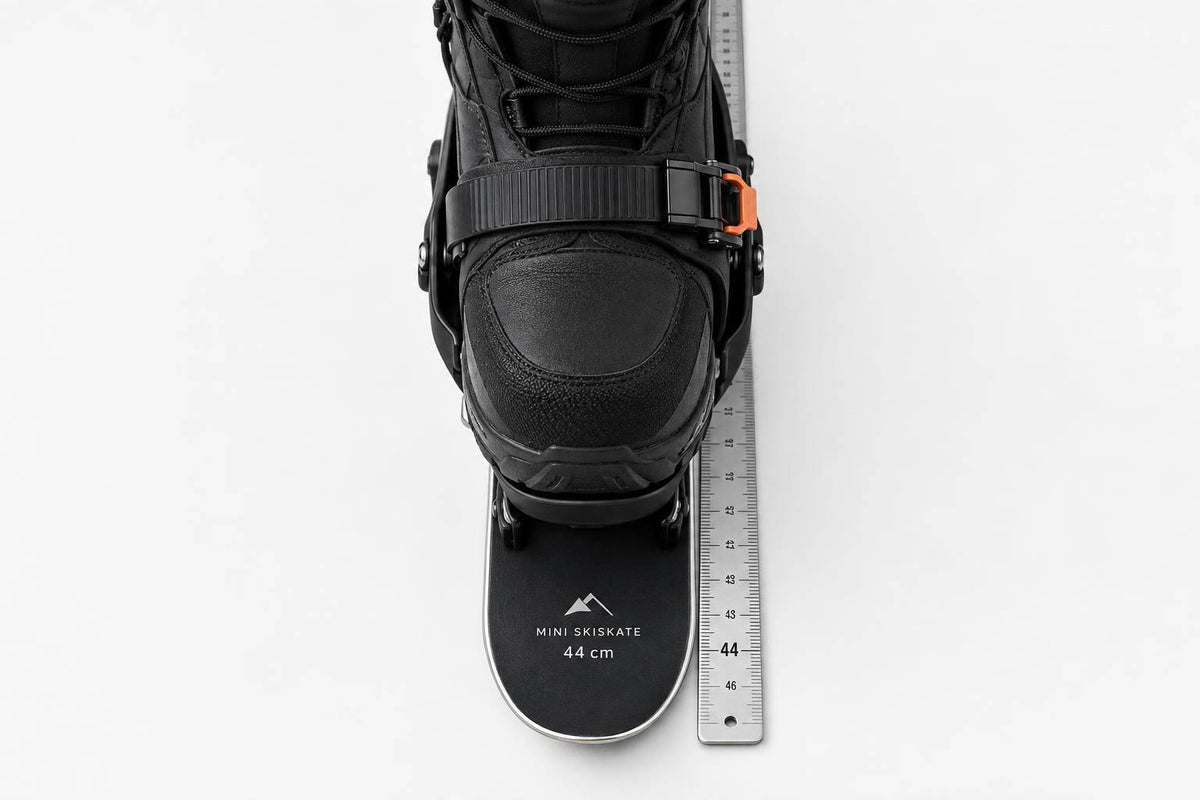
A soft splitboard boot in that range works only if it stays snug, with no heel lift or side play. On such a short platform, fit matters. For bulky or non-standard boots, including hardboot shells, ask Snowfeet* to confirm shell shape, toe and heel clearance, and strap fit.
Retention and Release
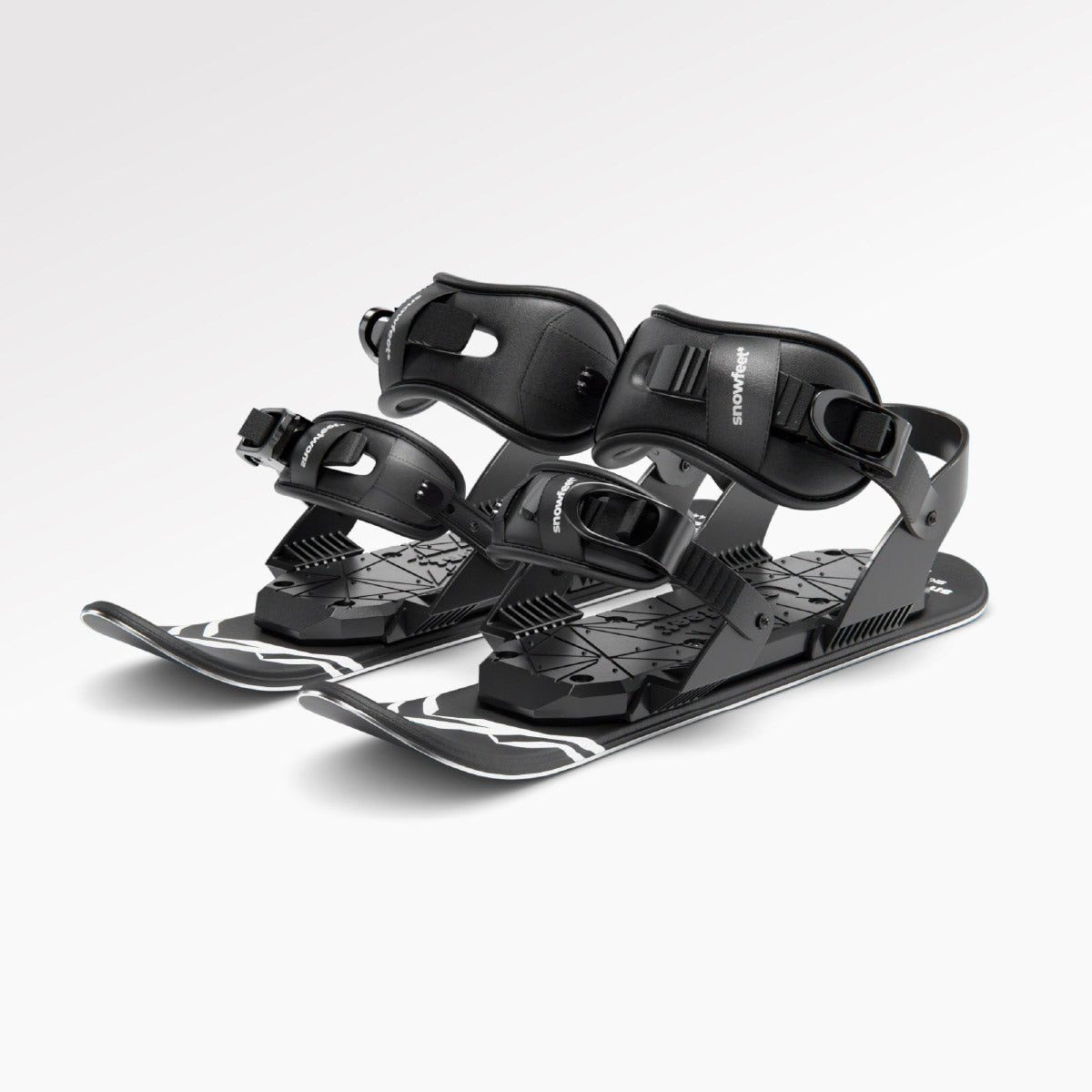
The binding adjusts without tools and has an anti-slip surface and safety leash. Center your boot, tighten every contact point, and check the hardware before each run. This binding does not release, so don’t expect it to release like an alpine binding during a fall.
Flex and Edge Control
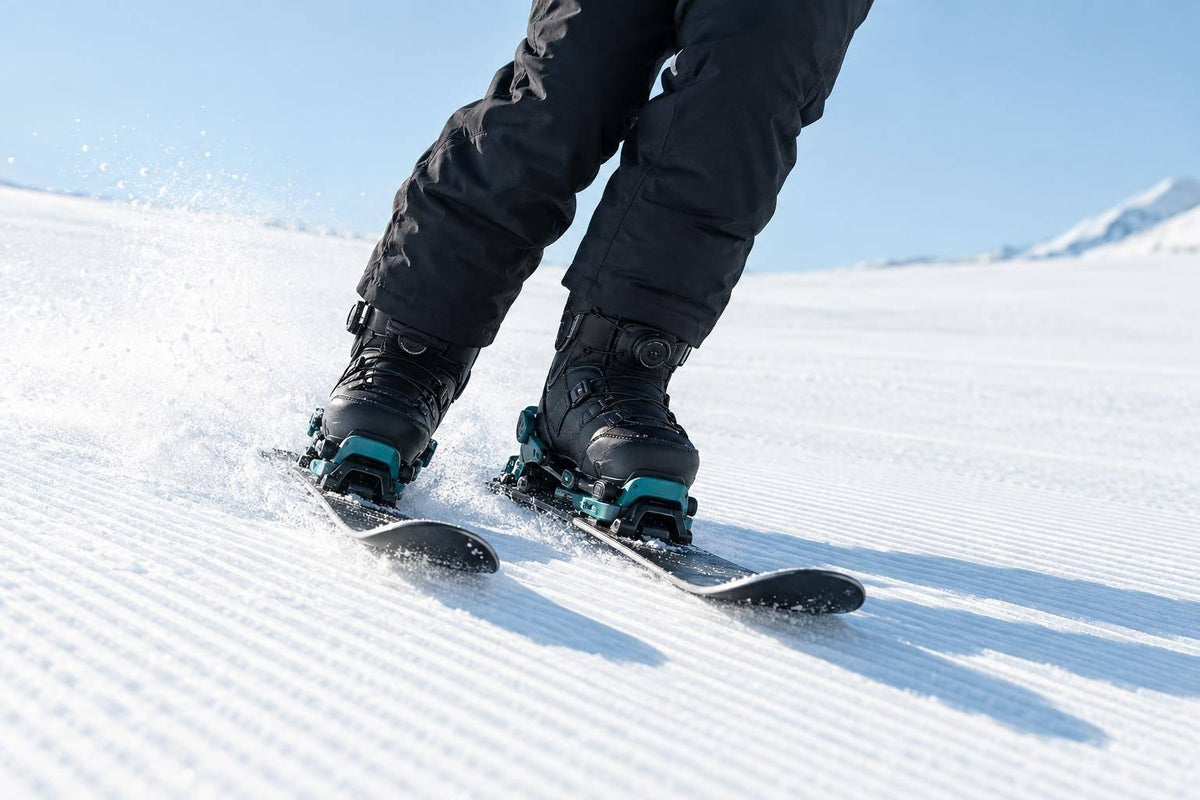
The 44 cm Skiskates have a wood core and full metal steel edges. Soft snowboard-style boots let your ankles move more, so expect slower edge response than you’d get with rigid ski boots. Keep your weight centered, stick to moderate speeds, and ease into edge pressure.
Stability and Intended Terrain
Stick to mellow groomers with plenty of room to stop. The 44 cm platform takes active front-to-back balance and isn’t a good fit for steep or icy runs. Snowfeet* advises against using models under 50 cm in powder deeper than 6 inches (15 cm). For more stability and room underfoot, the 65 cm Skiblades are the next step up.
2. Snowfeet* Skiblades 65 cm With Snowboard-Boot Bindings
Approved Boot Compatibility
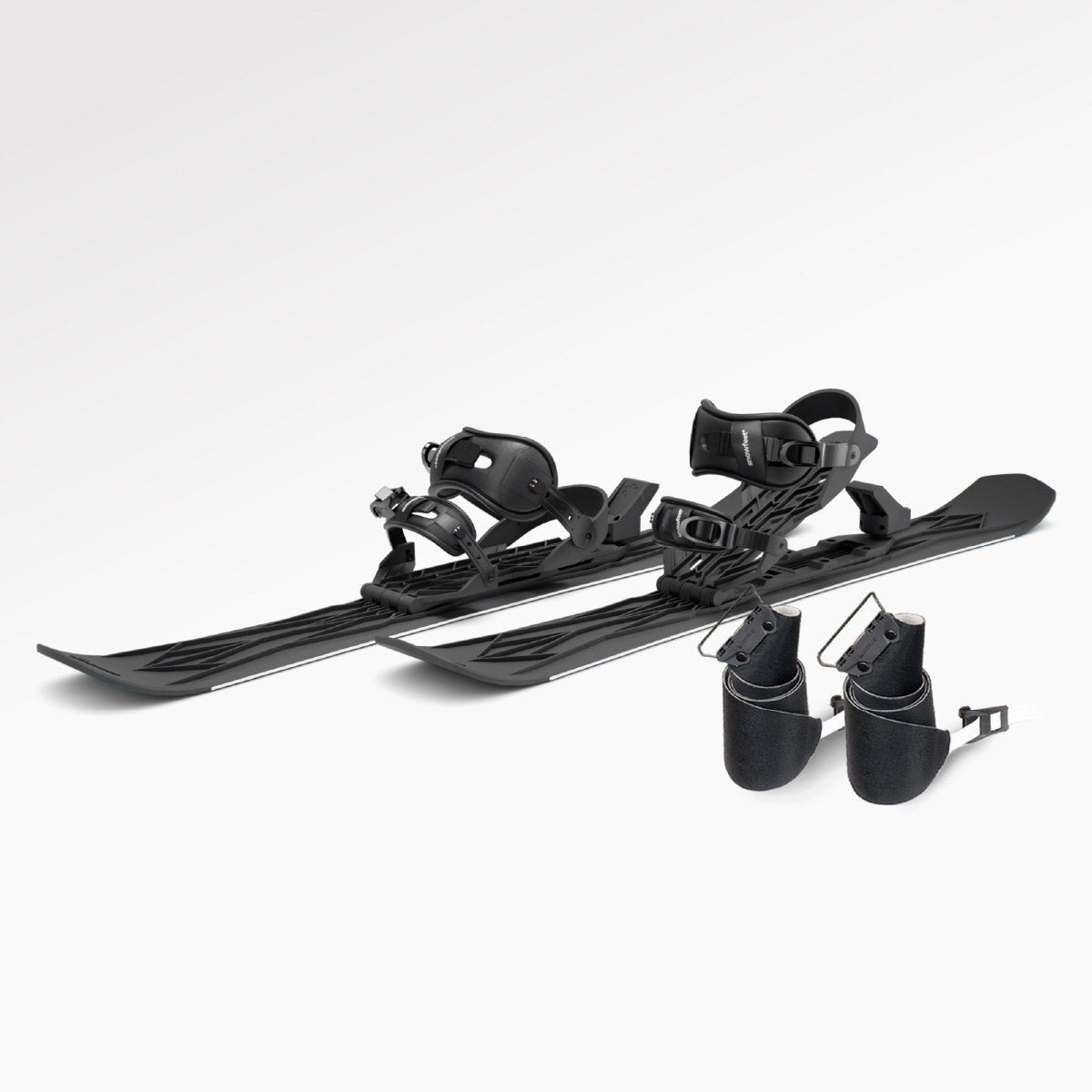
The 65 cm Skiblades use Snowfeet*’s snowboard-boot binding, which fits soft splitboard boots in U.S. men’s sizes 6–14.5 (EU 38–49). You get more platform than the 44 cm setup without switching to ski boots. The binding adjusts without tools and has an anti-slip surface for grip. Burton Step-On boots generally won’t fit because of their sole shape. Hardboot touring setups need different bindings.
Retention and Release
Fasten the binding firmly and check for wobble before every run. This binding is non-releasable: it will not release in a fall. A snug fit helps you stay in control, but the fixed design has no safety release.
Flex and Edge Control
The 65 cm length sits between the most agile option, the 44 cm model, and the most stable, the 99 cm version. It offers more carving grip than the 44 cm and easier spins than the 99 cm. Snowboard boots add flex for freestyle moves. That balance makes it a middle-ground choice for casual resort riding.
Stability and Intended Terrain
These skiblades work best on groomers, moguls, and park laps. They support backward riding, spins, and jumps in compatible soft splitboard boots. Avoid steep, icy, or frozen terrain. This is a resort setup, not touring gear. If you want more ski-like stability, the 99 cm version offers that with the same boot setup.
Snowboarder tries Snowfeet* | Which Snowfeet* Short Ski is the Best? | Snowblades 44, 65, 99 Review
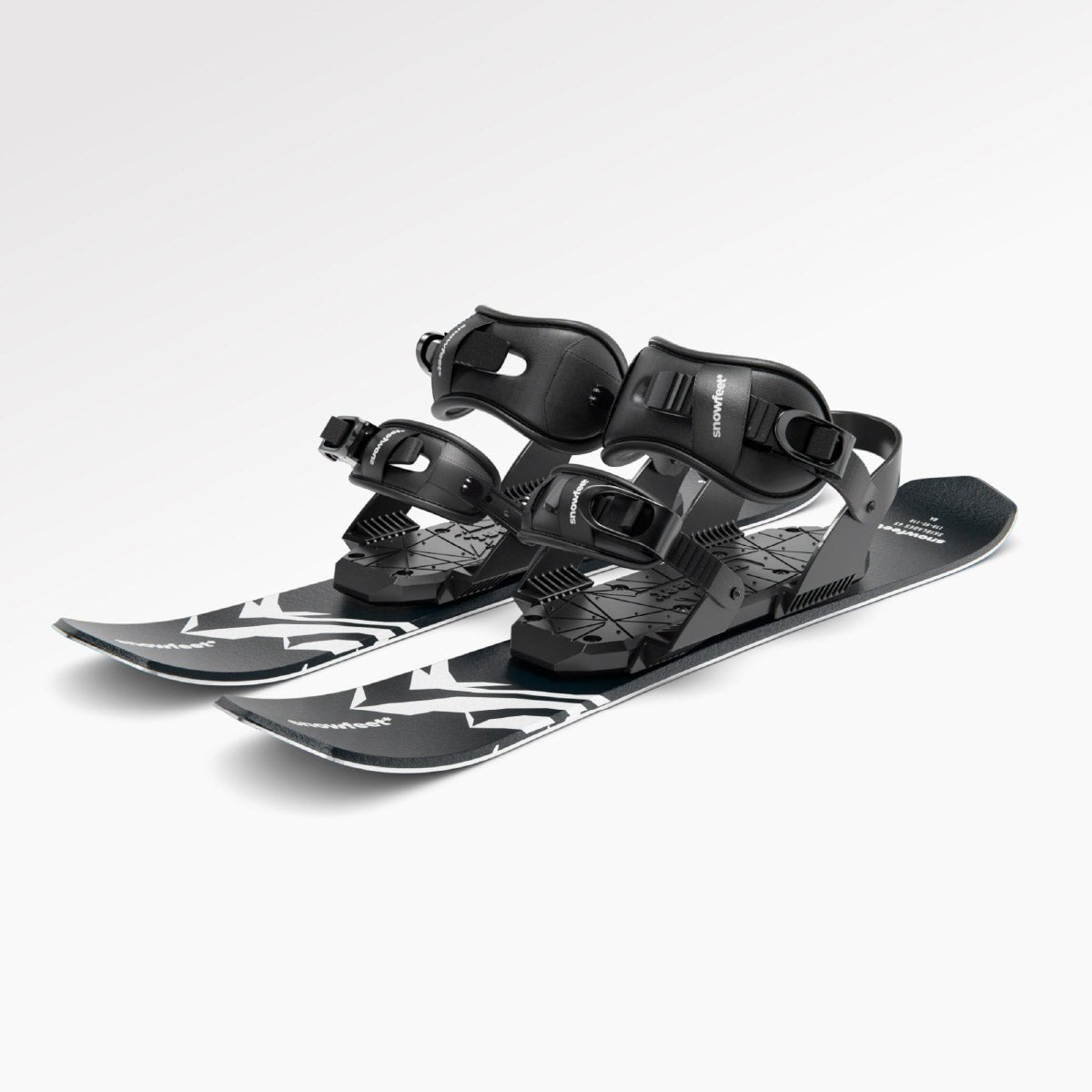
3. Snowfeet* Skiblades 99 cm With Snowboard-Boot Bindings
The 65 cm model sits in the middle, while the 99 cm version offers the most stability of these three Snowfeet* options. It suits splitboarders who want to keep using their snowboard boots.
Approved Boot Compatibility
Use the snowboard-boot binding only. This 99 cm setup fits soft splitboard boots in U.S. men’s sizes 6–14.5 (EU 38–49), as long as the boot size and sole shape fit the binding’s range. Hardboots need a separate binding system. Check the exact boot and binding match before buying.
Retention and Release
The larger platform is easier to stand on, but your boots still need a secure hold. Adjustable straps, a highback, and a non-slip contact surface help keep them in place.
Before your first run, check for heel lift, twisting, and front-to-back movement. These bindings are non-releasable, so check the hardware before each ride and tighten it as needed.
Flex and Edge Control
At 99 cm (about 39 inches), these Skiblades provide the most front-to-back support and the closest feel to carving on skis among the three models. A moderately stiff or stiff snowboard boot is the better choice for precise turns - as long as it fits snugly. Focus on fit and how well the binding holds your boot when comparing setups.
Stability and Intended Terrain
For controlled turns at moderate speeds on groomed resort runs, the 99 cm model is the best match of these three options. Full-length skis still perform better at higher speeds and in deeper snow.
Start on a gentle groomer, then check the boot hold again after several turns. This is a resort-only setup; it has no skinning or uphill function.
sbb-itb-17ade95
How Boot Fit, Retention, and Control Compare
The binding model - not your labeled boot size - determines fit. Splitboarders can use their boots only if the specific Snowfeet* snowboard-binding version fits their boot’s shape and dimensions. Check sole length, width, and hardware clearance against the exact listing. After fit, the main difference is how much boot movement each length allows and how much control it offers on resort snow.
| Snowfeet* model | Fit checks |
|---|---|
| Skiskates 44 cm (17.3 in) | Measure sole length and width. Check clearance around the toe, heel, and adjustment parts. |
| Skiblades 65 cm (25.6 in) | Check the current binding version, platform contact, strap reach, and ratchet clearance. |
| Skiblades 99 cm (39 in) | Check heel shape and hardware clearance. Longer skis don’t mean wider bindings. |
Two boots with the same labeled size can have different outer dimensions. Complete outsole limits and clearance measurements aren’t published, so check with Snowfeet* before buying if you’re unsure about fit.
All three snowboard-boot bindings are non-releasable. A snug fit isn’t a release system. Don’t expect them to release during a twisting fall, collision, or entanglement. Check screw connections before every ride.
| Model | Retention features | Movement under load |
|---|---|---|
| 44 cm | Adjustable straps, ratchets, non-slip surface, and heel support; safety leashes listed | Check for heel lift and twisting on this shortest platform. |
| 65 cm | Adjustable straps, ratchets, non-slip baseplate, and heel support | Check that ankle flex doesn’t cause heel lift or sideways play. |
| 99 cm | Adjustable straps, ratchets, non-slip baseplate, and heel support | Check that the boot stays seated as you shift pressure from edge to edge. |
Once the fit is right, boot stiffness and platform length shape how precise the ride feels.
| Model | With a softer splitboard boot | With a firmer snowboard boot |
|---|---|---|
| 44 cm | More ankle movement on the most agile platform | More direct edging, but you still need careful fore-aft balance |
| 65 cm | A flexible feel for skating-style movements | More support for linked turns and braking; the best middle ground |
| 99 cm | Boot flex can soften edge response | The most stable platform and the most ski-like carving feel of the three |
Binding support and edge condition affect control, too. A touring hardboot isn’t an automatic upgrade: its hardware may interfere with snowboard bindings.
The same boot feels different on a longer platform. For casual groomers, choose 44 cm for agility, 65 cm for balance, or 99 cm for more stability.
Use the checklist below to match your boot, binding, and riding style before you buy.
Pros and Cons for Resort Riders
For resort riding, the main trade-off is portability versus stability, not just boot type. Snowfeet* lists compatible snowboard-boot bindings for about U.S. men’s sizes 6–14.5 (EU 38–49). Check the exact model before buying. For splitboarders, the next step is choosing a length that balances easy carrying, control, and resort feel.
Here’s how the three Snowfeet* lengths compare on snow - not just on paper.
| Model | Advantages | Limits | Best-matched rider |
|---|---|---|---|
| Skiskates 44 cm (17.3 in) | Easiest to carry; quick pivots | Least flotation and fore-aft stability; least stable at higher speeds | Recreational riders who want compact gear and skating-style moves |
| Skiblades 65 cm (25.6 in) | Agile handling with more support in short turns | Harder to carry than 44 cm; less flotation and stability than 99 cm | Groomer riders who want responsive turns and a middle-ground option |
| Skiblades 99 cm (39 in) | Most stable and ski-like of the three | Bulkiest; less playful at very low speeds; limited in deep snow | Riders who put steadier tracking first |
All three require a compatible snowboard-boot binding and a confirmed boot-size match.
Longer doesn’t mean safer. Non-releasable retention still has no release function.
For groomers and casual resort laps, compact Snowfeet* options put easy carrying and maneuverability first. Use them only for resort or casual riding - not splitboard touring or backcountry travel. Before each run, check straps, buckles, and boot contact points. Use the supplied safety leash where applicable.
Next, use the checklist to check boot shape, binding fit, and retention before buying.
Boot Compatibility Checklist and Buying Guide
After comparing the three lengths, check the binding match - not just the boot label - before you buy.
Confirm the exact Snowfeet* model and binding before ordering. Snowboard-boot bindings fit U.S. men’s sizes 6–14.5 (EU 38–49). Hardboots need a separate compatible binding.
Dry-fit your boots indoors before riding. Check how your heel sits, strap travel, toe and heel clearance, and heel lift.
These bindings do not release. An indoor fit check confirms hold and comfort only. Before buying, check your resort’s rules for leashes or retention devices.
Once your boots and bindings match, pick a length based on your main riding priority: 44 cm for portability, 65 cm for balance, or 99 cm for stability. Choose full-length skis for speed, deep snow, or certified release.
Treat these as resort or casual-riding setups only.
FAQs
What boot measurements should I send Snowfeet* to confirm compatibility?
You don’t need specific boot measurements. Snowfeet*’s one-size-fits-most snowboard-boot bindings adjust without tools and fit US sizes 6–14.5 (EU 38–49).
Between sizes, wearing very large boots (US 12–13), or unsure about your setup? Email your exact boot size to contact@snowfeetstore.com to confirm the fit before you buy.
Burton Step-On boots are generally not compatible because of their sole shape.
How can I tell if my boots are too soft for short skis?
Snowboard-style boots give compatible Snowfeet* setups a relaxed, forgiving flex. Choose boots with firm ankle support for a secure, stable ride. Check that they work with your specific binding - a good boot fit alone isn’t enough.
For maximum edge control and power transfer when riding hard, ski boots are the better choice. If you prefer comfort, easier walking, and a playful feel, go with compatible snowboard boots.
How should non-releasable bindings affect my choice?
Non-releasable bindings don’t release during a fall. These bindings come standard on Snowfeet* models under 100 cm (about 39 inches), so your skis stay attached to your boots if you crash.
Always use the included safety leashes to prevent runaway skis. Before every ride, check that your boots are firmly secured in the bindings. This helps you stay in control and reduces the risk of injury.


Leave a comment
This site is protected by hCaptcha and the hCaptcha Privacy Policy and Terms of Service apply.