



















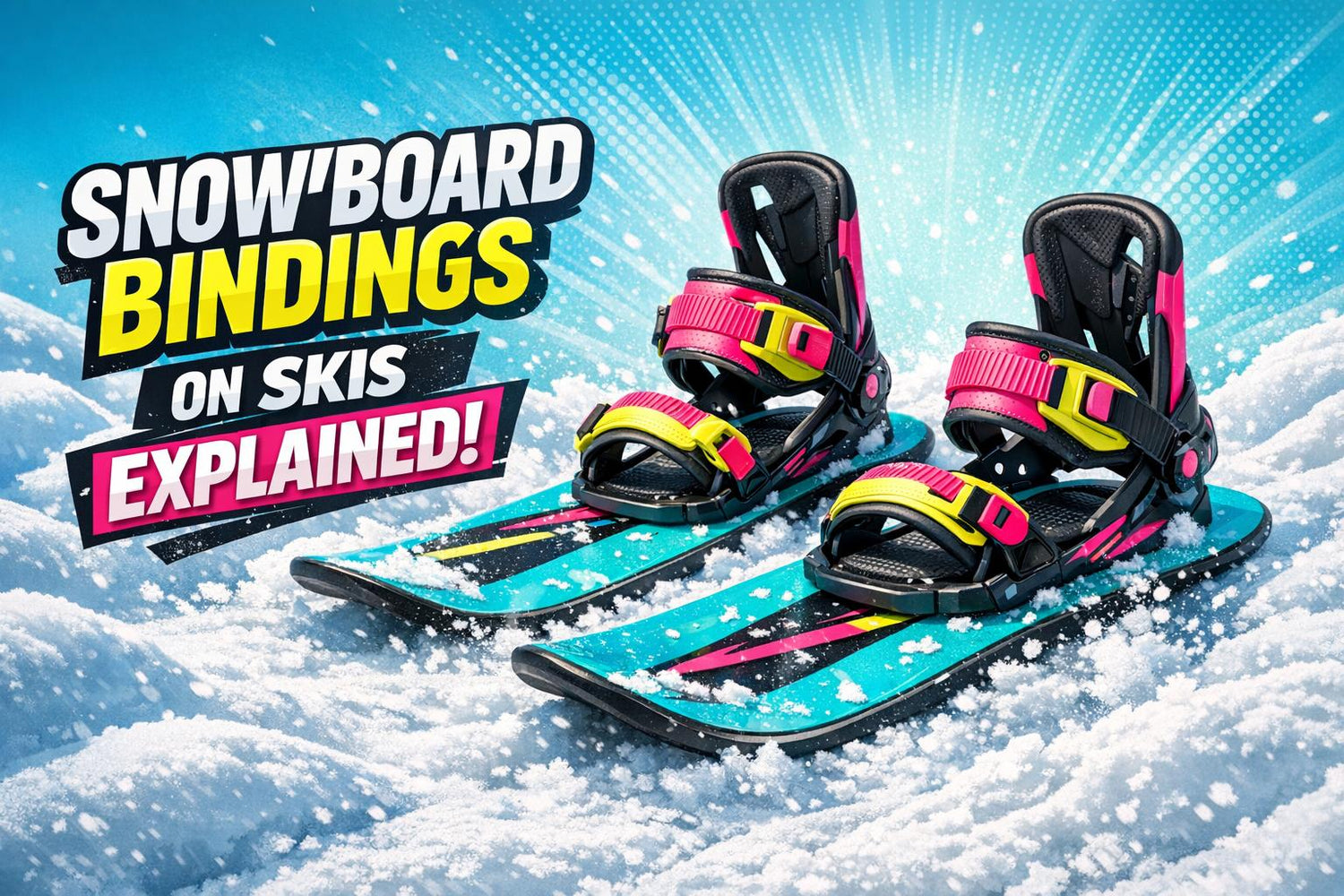
If you’ve ever wished skiing was less of a hassle, here’s the good news: you can skip the stiff boots and heavy gear. By mounting snowboard bindings on short skis like Snowfeet* Skiblades, you get a lightweight, easy-to-use setup that’s perfect for beginners. It’s simpler to learn, more comfortable (hello, walkable snowboard boots), and fits in a backpack.
Here’s the quick rundown:
- Short skis (38–99 cm) are easier to control than long ones.
- Snowboard bindings offer flexibility and work with soft, comfy boots.
- Setup is lightweight (2–4 lbs per ski) and portable.
- Most people learn the basics in about 5 minutes.
- Ideal for groomed slopes, light powder, and even backyard hills.
Whether you’re tired of clunky ski boots or just looking for a compact winter sport option, this setup makes skiing accessible and fun. Let’s break down how it works and why it’s getting so popular.
Snowfeet vs Traditional Skis and Snowboards Comparison Chart
Benefits of Using Snowboard Bindings on Snowfeet* Short Skis
Better Control and Stability
Using snowboard bindings on Snowfeet* short skis gives you an edge - literally. These bindings are designed specifically for short skis, offering a secure sideways grip that makes turning and carving feel smooth and intuitive, even if you're just starting out. Unlike traditional ski bindings that focus on forward pressure, snowboard bindings provide the stability you need for quick direction changes without feeling shaky.
The anti-slip surface keeps your boots locked in place during maneuvers. Plus, Snowfeet* bindings are narrower than standard snowboard bindings, so they won’t catch the snow when you're making tight turns. The result? A setup that's not only nimble but also super portable.
Lightweight and Easy to Carry
Portability is where Snowfeet* really shines. The entire setup - short skis with snowboard bindings - fits neatly into a standard 20–30 L backpack. Each ski weighs just 2–4 lbs, making them light enough to carry around without breaking a sweat. Whether you’re hopping on public transit, walking in snowboard boots, or packing for a flight, this compact design makes life easier. And bonus: you won’t have to worry about extra baggage fees.
Faster Learning for New Riders
Snowfeet* short skis aren’t just fun - they’re beginner-friendly too. Their design helps new riders pick up the basics faster than with traditional skis or snowboards. The sideways control feels familiar to anyone with experience in skateboarding or inline skating, making the transition to short skis a breeze.
"Short skis are the answer to all beginners struggling to learn skiing." - Snowfeet Team
The shorter length (under 100 cm) and relaxed feel of snowboard boots make turns less intimidating and more responsive, helping you build confidence quickly. Plus, their forgiving design reduces fatigue, so you can practice longer without feeling worn out. It’s no wonder Snowfeet* is becoming a go-to choice for beginners looking to dive into winter sports.
| Feature | Snowfeet* with Snowboard Bindings | Traditional Long Skis | Traditional Snowboards |
|---|---|---|---|
| Weight per ski | 2–4 lbs | 8–12 lbs | 6–10 lbs (board only) |
| Length | 38–99 cm | 160–180 cm | 140–165 cm |
| Transport | Fits in a backpack | Requires a roof rack or large bag | Bulky and hard to carry |
| Learning Curve | Hours to basic proficiency | Days to weeks | Days to weeks |
| Boot Comfort | Comfortable, walkable snowboard boots | Stiff, less comfortable ski boots | Comfortable boots |
How to Install Snowboard Bindings on Snowfeet* Products
What You'll Need
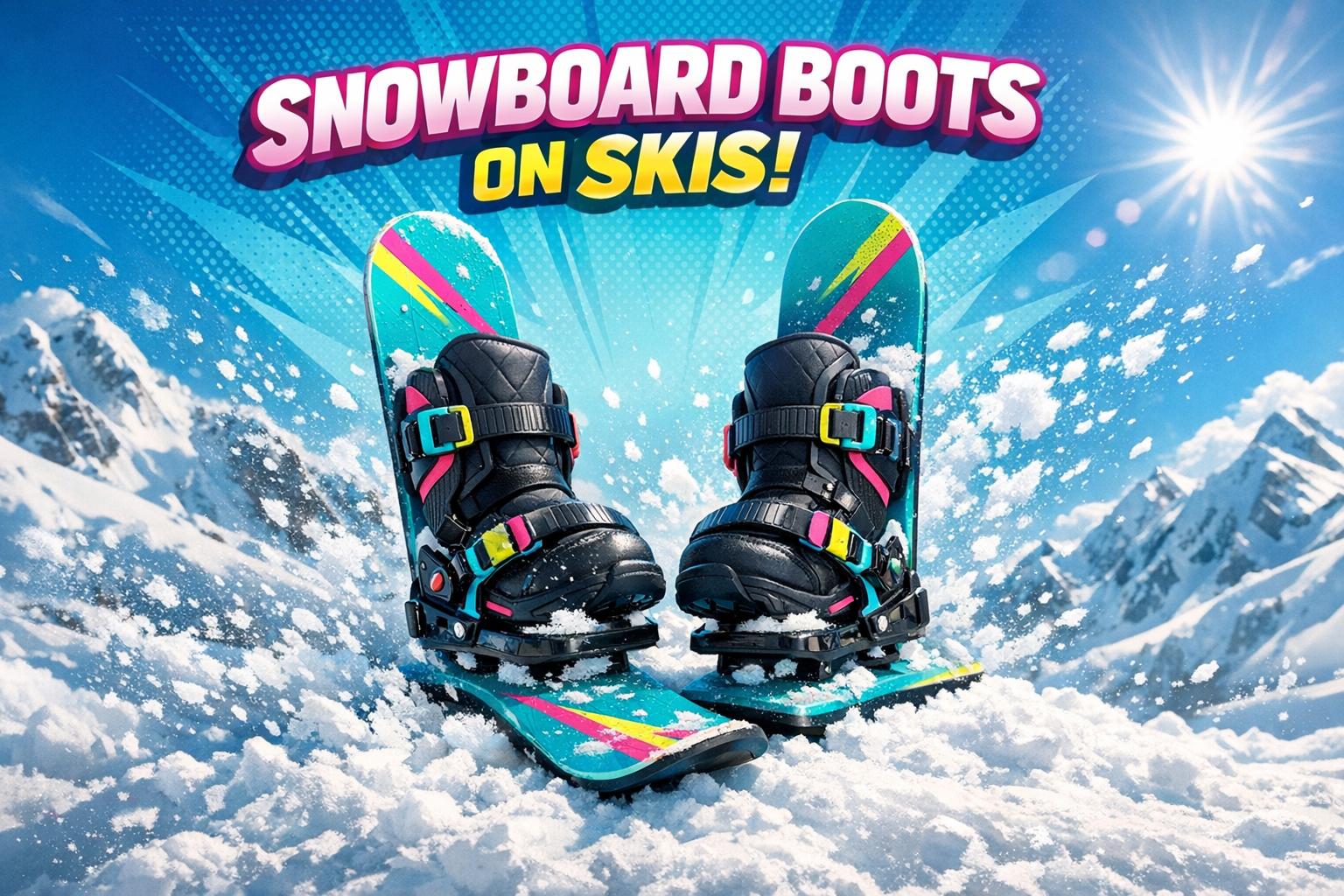
Getting your Snowfeet* gear ready is simple and hassle-free. Here’s what you’ll need: your Snowfeet* product (like the PRO 50 cm model starting at $250 or the 44 cm Skiskates priced from $490), the specially designed snowboard bindings by Snowfeet*, and compatible snowboard boots (sizes 6–14.5 US / 38–49 EU).
"At Snowfeet we developed unique snowboard bindings specifically designed for skiboards. They are affordable, easily adjustable to snowboard boots of any size, with an anti-slippery surface for perfect shoe grip." - Snowfeet Team
For the best experience, the Snowfeet* team suggests using waterproof snowboard boots with solid ankle support. Unlike traditional ski setups requiring stiff and bulky ski boots, Snowfeet* works with regular snowboard boots - comfortable enough for walking around.
Installation Steps
Once you’ve got all your equipment, installing the bindings is quick and straightforward. Here’s how to do it:
- Prepare at Home: Adjust your bindings indoors, where it’s warm and comfortable, instead of fumbling with them in the cold.
- Secure the Binding: Place the binding onto the Snowfeet* base and use a screwdriver to tighten it in place.
- Adjust the Straps: Use the screwdriver to fine-tune the binding straps. If your boots are on the larger side, use the extra straps provided for a better fit.
"To avoid any hassle on the slopes, take your time and adjust the bindings at home, using a screwdriver and a boot you are going to wear with Snowfeet or Skiskates on the mountain." - Snowfeet Team
- Step In and Tighten: Once the bindings are secured, step into them. Tighten the ankle strap first, followed by the toe strap. This sequence helps ensure your boot stays locked in place during sharp turns or tricks.
Testing and Making Adjustments
Before heading out, it’s important to test your setup. Wiggle your boot side to side. If you notice any wobbling, loosen the brackets slightly, adjust the strap length, and re-tighten. The binding should feel like a natural extension of your foot, with no unnecessary movement.
Check for a secure yet comfortable fit. If you’re planning freestyle moves, you might prefer a slightly looser setting. For steeper terrain, tighter bindings offer better control. Always test your setup on a flat, stable surface before hitting the slopes. And don’t forget to occasionally check your bindings throughout the day, especially after falls or intense rides.
Snowfeet* vs. Traditional Skis and Snowboards
Why Snowfeet* is More Portable and Fun
Let’s face it - traditional skis and snowboards can be a hassle to lug around. They’re heavy, bulky, and often require roof racks or oversized gear bags just to get them to the mountain. Snowfeet*, on the other hand, is a breath of fresh air. These compact skiblades are small enough to fit right into your backpack, making them a dream for anyone who values convenience.
If you’re a beginner, Snowfeet* might be your best friend. Unlike traditional skiing, which often demands lessons and hours of practice, Snowfeet* has a much gentler learning curve. If you’ve ever ice skated or inline skated, the movement will feel second nature.
"These skiblades are so much fun and easy to control. Never going back to regular skis." - Andrew B., Verified User
Another big win for Snowfeet*? Comfort. Traditional ski boots are notorious for being stiff and, well, kind of miserable to walk in. In contrast, Snowfeet* works with regular snowboard boots or even winter shoes, so you can walk around comfortably between runs.
Snowfeet* also shines when it comes to versatility. Long skis can be a nightmare on narrow hiking trails or forest paths, but Snowfeet* thrives in these spots. Whether it’s sledding hills, backyard slopes, or tight trails, Snowfeet* lets you explore places that traditional skis just can’t reach.
Now, let’s break it all down with a feature comparison.
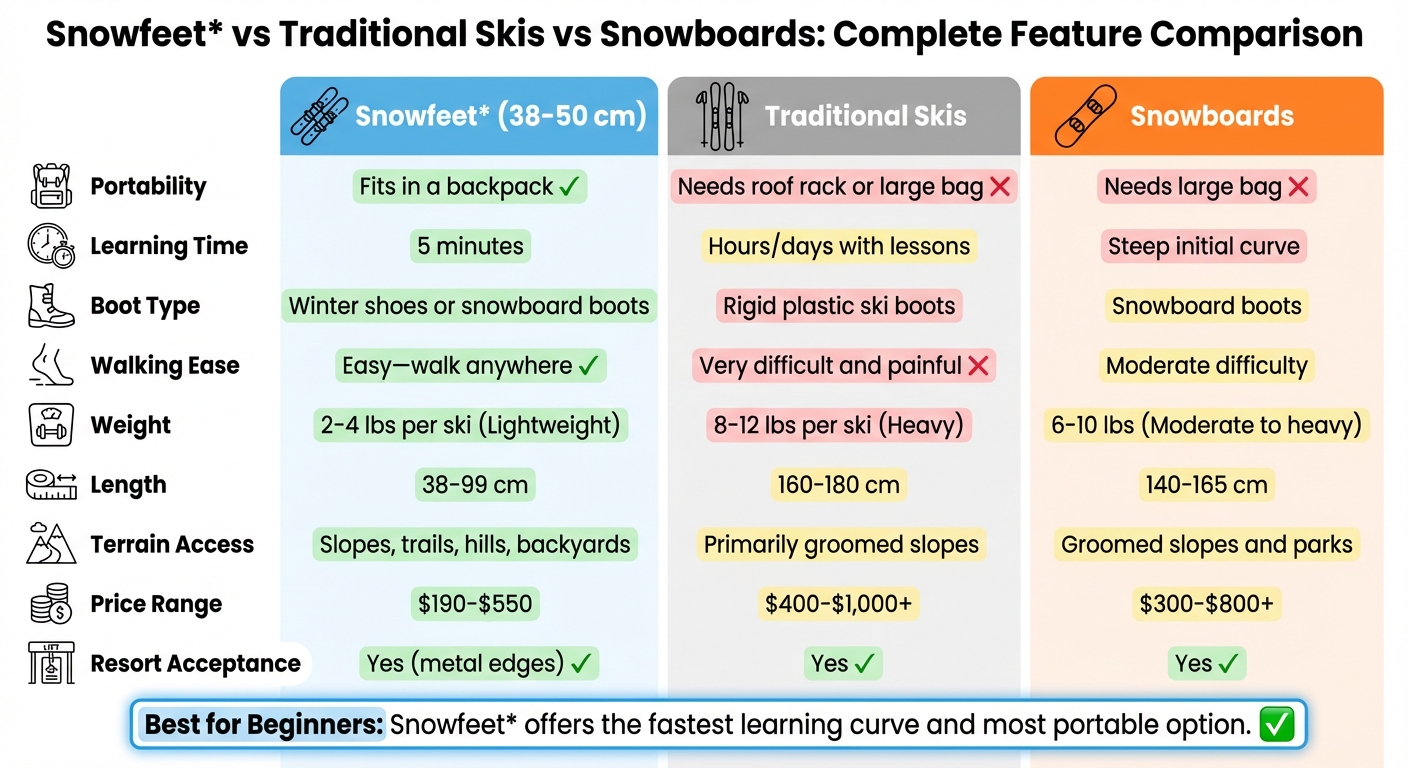
Feature Comparison Table
Here’s a quick look at how Snowfeet* stacks up against traditional skis and snowboards:
| Feature | Snowfeet* (38–50 cm) | Traditional Skis | Snowboards |
|---|---|---|---|
| Portability | Fits in a backpack | Needs a roof rack or large bag | Needs a large bag |
| Learning Time | 5 minutes | Hours/days with lessons | Steep initial curve |
| Boot Type | Winter shoes or snowboard boots | Rigid plastic ski boots | Snowboard boots |
| Walking Ease | Easy - walk anywhere | Very difficult and painful | Moderate difficulty |
| Weight | Lightweight | Heavy and cumbersome | Moderate to heavy |
| Terrain Access | Slopes, trails, hills, backyards | Primarily groomed slopes | Groomed slopes and parks |
| Price Range | $190–$550 | $400–$1,000+ | $300–$800+ |
| Resort Acceptance | Yes (metal edges) | Yes | Yes |
It’s clear that Snowfeet* offers a fresh take on winter fun, combining portability, ease of use, and versatility in a way that traditional skis and snowboards just can’t match.
sbb-itb-17ade95
Short Skis with Snowboard Bindings | Must-Have of This Winter
Tips for Beginners Using Snowfeet*
Once you've got your Snowfeet* properly set up, the next step is nailing your stance, keeping your gear in good shape, and picking the right spots to practice. Let's break it down.
Getting Your Stance and Balance Right
Start with a solid, balanced stance: feet shoulder-width apart, one foot slightly ahead of the other, and your weight centered over both feet. It’s similar to how you'd position yourself for ice skating or hockey. If you find yourself leaning back too much, shift your weight forward to keep your heels off the ground.
Here’s a quick tip to figure out your natural binding angle: jump in place and notice how your feet land comfortably. Use this as a guide to pre-adjust your bindings at home. Grab a screwdriver and set them up in advance to save time on the slopes.
How to Maintain Your Snowfeet*
Taking care of your Snowfeet* is key to keeping them in top shape. Apply liquid wax, like the Snowfeet* Wax (starting at $6), to keep the base smooth and fast. After each use, dry the metal edges and give them a light coat of oil before storing to prevent rust. Don’t forget to check and tighten your binding screws regularly. If you’re using larger snowboard boots, consider adding extra-long toe straps for a secure fit.
The Snowfeet Team emphasizes the importance of waxing:
"We recommend waxing the base regularly to make Snowfeet* and Skiskates even faster and prevent snow from sticking to the base."
A little maintenance goes a long way in improving your experience.
Picking the Right Terrain
When you're starting out, stick to beginner-friendly areas like groomed slopes, snow parks, or even local sledding hills. Steer clear of steep or bumpy ungroomed terrain until you’ve built up confidence. Standard Snowfeet* work best on packed snow and light powder (up to 4 inches or 10 cm). For deeper snow or off-piste adventures, go for the Snowfeet* Powder (99 cm), which offers more stability.
The Snowfeet Team suggests:
"Snowfeet* handle light powder up to 10 cm, but for real powder riding go with Snowfeet* Skiblades 99, 120, or 99 Powder."
When it’s time to stop, try a hockey stop by turning your edges and evenly distributing your weight. You can also use the built-in heel brake. Before tackling steeper terrain, practice your skating motion on flat ground until it feels natural.
With the right stance, gear care, and terrain, you'll be gliding confidently in no time!
Conclusion
Snowfeet* brings a fresh twist to winter sports by offering a compact and easy-to-use alternative to traditional skis and snowboards. With their lightweight design, enhanced control, and unmatched portability, these short skis make it simpler than ever to dive into snowy adventures - without the hassle of bulky gear or stiff boots.
The best part? They’re quick to pick up. If you’ve ever tried ice skating or inline skating, you’ll likely get the hang of Snowfeet* in no time. That ease of learning, combined with their unique design, is what sets Snowfeet* apart from the usual winter gear.
There’s a model for every budget, and customers rave about how fun and straightforward they are to use. You can take them just about anywhere - groomed slopes, snow parks, hiking trails, or even your neighborhood sledding hill.
As Snowfeet Store puts it best:
"In fact, I believe most skiers would enjoy skiing with 100 cm short skis much more than with long ones because it's easier, less restricting, and much more fun."
Crafted in Europe with durable, high-quality materials, Snowfeet* prioritizes both safety and performance. They’ve reimagined winter sports, making them more approachable and enjoyable for everyone.
So, if you’re after a portable, playful way to hit the snow - whether you’re a total beginner or a seasoned skier looking for something different - Snowfeet* might just be your new favorite gear. Give them a shot and see how they transform your time on the slopes!
FAQs
Can I use Snowfeet on all types of snow terrain?
Snowfeet are built to handle a range of snow surfaces, from groomed trails to local hills and even cross-country paths. That said, they’re not meant for steep alpine slopes or high-speed downhill runs.
These small, portable snow skates are ideal for casual winter activities, giving you solid control and easy transport for most everyday snow conditions.
Are my snowboard boots compatible with Snowfeet bindings?
Yes, your snowboard boots will work with Snowfeet bindings, provided you choose a Snowfeet model that’s designed to fit standard snowboard-boot soles. Snowfeet’s short skis come with built-in bindings made to work smoothly with snowboard boots, ski boots, and even durable winter shoes.
To get the most out of your Snowfeet, take a moment to check the specifications of your chosen model to ensure it’s compatible with your boots. Snowfeet gear is designed to be versatile, offering a lightweight and easy-to-use option for winter sports lovers who want to try something a little different.
How are Snowfeet different from traditional skis?
Snowfeet* are a cool twist on mini-skis, designed to be lightweight, portable, and super easy to use. Unlike traditional skis that need separate bindings and special ski boots, Snowfeet come with built-in bindings. These work with snowboard boots, ski boots, or even just your regular winter shoes. That means no extra gear or complicated setup - just strap in and go.
Traditional skis can feel like a hassle. They’re bulky, heavy, and require professional setup - not to mention the storage space they take up. Snowfeet, on the other hand, are compact enough to toss in a backpack and light enough to carry anywhere. Whether you’re heading out for a quick trip or just want to carve up the slopes in a new way, these mini-skis deliver. They’re stable, easy to control, and perfect for beginners or anyone looking to add a fresh, surf-like vibe to their time on the snow.












Leave a comment
This site is protected by hCaptcha and the hCaptcha Privacy Policy and Terms of Service apply.