



















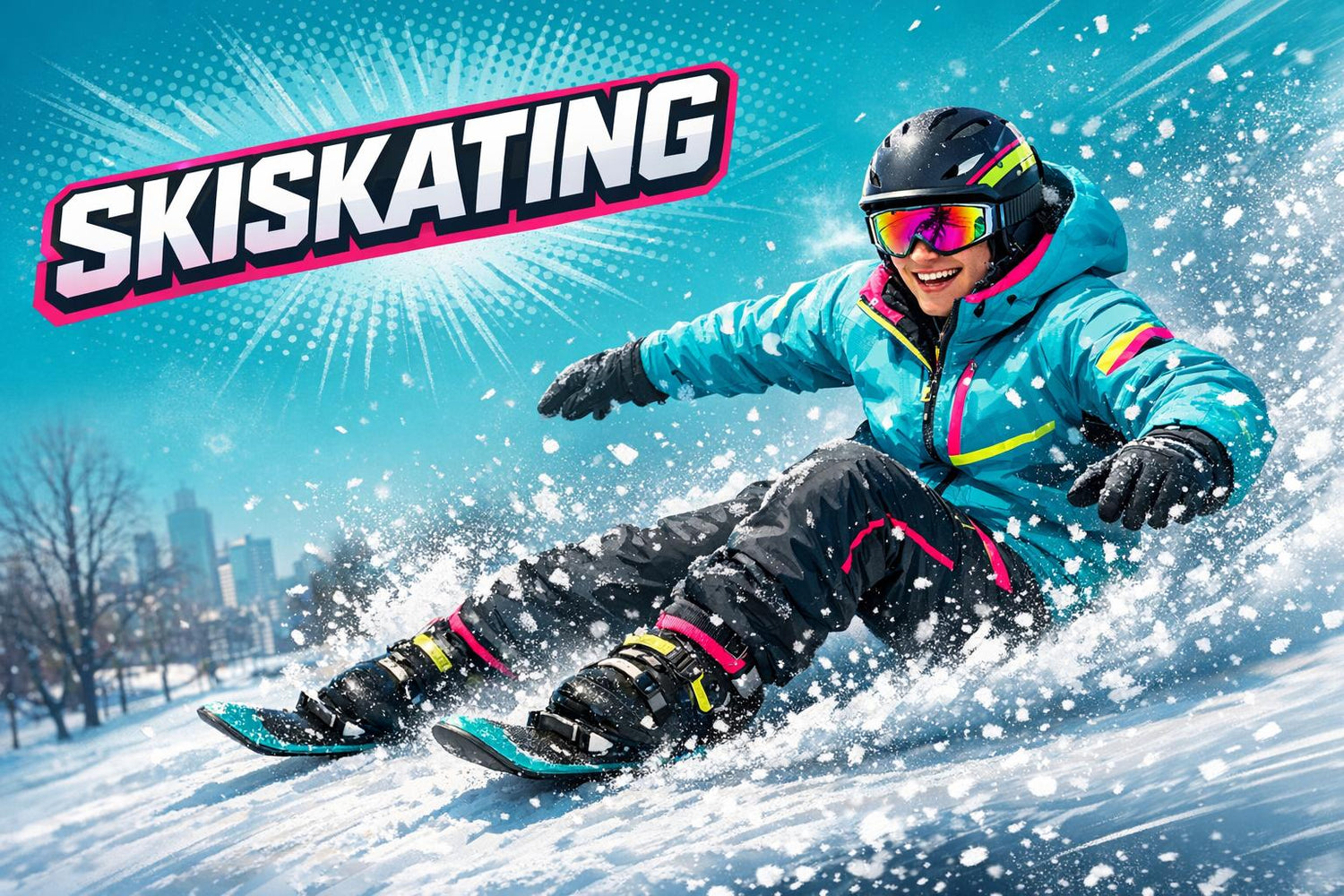
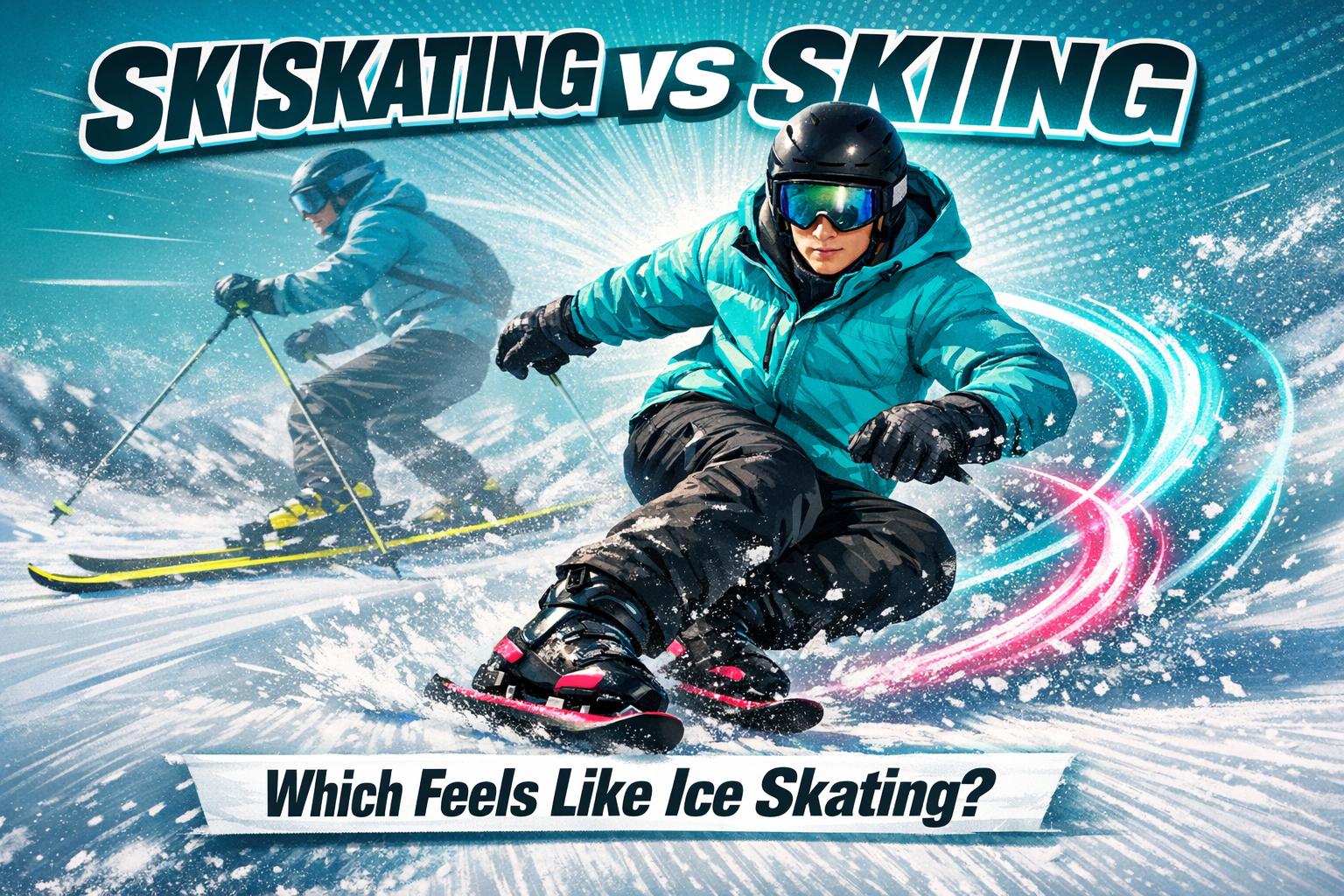
Skiskating is the perfect mix of ice skating and skiing. Using short skis (under 20 inches), you glide on snow with a sideways stride, similar to ice skating but designed for slopes, parks, and even backyard hills. It's easy to learn, affordable, and works with regular winter boots. Snowfeet's skiskating gear has gained popularity for being lightweight, portable, and fun for all ages, with options starting at $190.
Here’s why skiskating is worth trying:
- Quick to Learn: Most people get the hang of it in minutes.
- Portable Gear: Fits in a backpack - no bulky skis or snowboards.
- Affordable: Costs much less than traditional ski equipment.
- Versatile: Works on groomed runs, sledding hills, and even light powder.
Whether you’re a beginner or an experienced skier, skiskating offers a fresh and fun way to enjoy winter. Grab a pair of Snowfeet, hit the snow, and see why over 50,000 riders worldwide are loving this new sport!
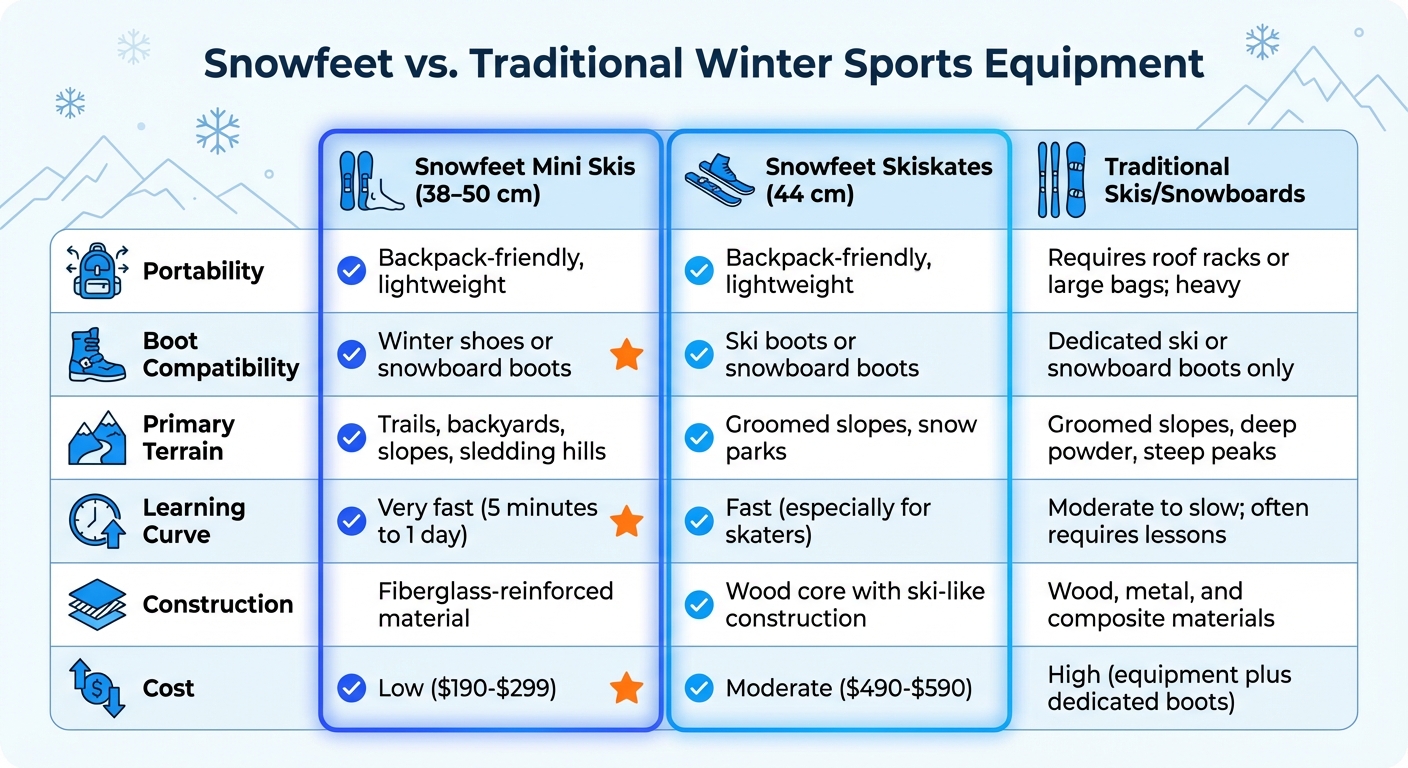
Snowfeet vs Traditional Skis and Snowboards Comparison
Snowfeet* Skiskates and Mini Skis: The Right Gear for Skiskating
What Makes Snowfeet* Skiskates Different
Snowfeet* has three main models in three sizes, each catering to different needs. The 38 cm (15-inch) Mini Skis are compact and easy to carry, perfect for those who want something lightweight and portable. The 50 cm (20-inch) Mini Skis offer a longer base for added stability while still being travel-friendly. Then there's the 44 cm (17-inch) Skiskates, designed for high-performance skiing. These come with a durable wood core, cap construction, and a sintered base - features you'd typically find in traditional skis.
All models include metal ski edges, making sharp turns and hockey stops a breeze. The Mini Skis are compatible with regular winter or snowboard boots, thanks to their built-in heel brakes. Meanwhile, the Skiskates are made to work with ski or snowboard boots, depending on the binding type.
"In my opinion, Skiskates is the best product for slopes we developed so far. I love how easy they are to ski and skate and how many different kinds of tricks I can perform." - Zbyněk, Founder, Snowfeet*
The 38 cm and 50 cm Mini Skis are built with a fiberglass-reinforced polyamide core, keeping them lightweight and durable. On the other hand, the 44 cm Skiskates feature a wood core and sintered base, giving them excellent edge control and speed on groomed trails. Plus, their compact design makes them easy to carry - whether you're hopping on public transit, tossing them in your car, or taking them on a hike. These thoughtful details ensure smooth performance across a variety of terrains.
Using Snowfeet* Mini Skis on Different Terrains
Let’s talk about where these little powerhouses shine. Snowfeet* Mini Skis are incredibly versatile, performing well on groomed slopes, snow parks, backyards, and even hiking trails. The 38 cm model is perfect for quick, tight turns, making it a great choice for forest paths or small hills. The 50 cm version, with its added length, offers more stability on steeper slopes while still being portable. Both models thrive on packed or groomed snow and can handle light powder up to about 4 inches deep.
The 44 cm Skiskates are built for ski resorts and snow parks. With their wood core construction, they deliver a performance that rivals traditional skis but in a shorter, more agile form. Most ski resorts allow Snowfeet* products since they meet the requirement of having metal ski edges. Whether you’re carving groomed trails, hitting jumps, or practicing tricks in the park, these deliver consistent, fun performance.
Here’s a tip: Regularly waxing the base can help prevent snow from sticking and keep you gliding smoothly - especially important for the fiberglass models. Also, you can adjust the bindings at home with just a screwdriver to ensure a snug fit for your boots.
Snowfeet* vs. Traditional Skis and Snowboards
When it comes to portability and ease of use, Snowfeet* beats traditional skis and snowboards hands down. Traditional skis are long - usually 5 to 6 feet - and require specialized ski boots, not to mention roof racks or large bags for transport. Snowboards, while slightly shorter, still need dedicated boots and bindings and can be bulky to carry around. Snowfeet* products, on the other hand, are compact (15–20 inches), lightweight, and fit easily into a backpack. Plus, they’re much more budget-friendly, with prices ranging from $190 to $590 depending on the model.
Learning to use Snowfeet* is also much quicker. While traditional skiing often involves lessons and days of practice, most people can pick up the basics of Snowfeet* in just five minutes to a day - especially if they’ve tried ice skating or inline skating before. That means you can dive straight into spins, jumps, and quick direction changes that would be tough to pull off with longer skis.
| Feature | Snowfeet* Mini Skis (38–50 cm) | Snowfeet* Skiskates (44 cm) | Traditional Skis / Snowboards |
|---|---|---|---|
| Portability | Backpack-friendly, lightweight | Backpack-friendly, lightweight | Requires roof racks or large bags; heavy |
| Boot Compatibility | Winter shoes or snowboard boots | Ski boots or snowboard boots | Dedicated ski or snowboard boots only |
| Primary Terrain | Trails, backyards, slopes, sledding hills | Groomed slopes, snow parks | Groomed slopes, deep powder, steep peaks |
| Learning Curve | Very fast (5 minutes to 1 day) | Fast (especially for skaters) | Moderate to slow; often requires lessons |
| Construction | Fiberglass-reinforced material | Wood core with ski-like construction | Wood, metal, and composite materials |
| Cost | Low ($190–$299) | Moderate ($490–$590) | High (equipment plus dedicated boots) |
While traditional skis are still the go-to for deep powder and high-speed descents on steep terrain, Snowfeet* products are all about convenience and fun. They’re perfect for groomed runs, snow parks, and everyday adventures, offering unmatched maneuverability without the heavy gear. Users love how easy they are to carry and use - something traditional skis and snowboards just can’t compete with.
The Benefits of Skiskating with Snowfeet*
Easy to Carry and Store
Say goodbye to lugging around heavy skis or bulky snowboards. Snowfeet* gear is compact and lightweight - so much so that the 38 cm (15 in) model weighs just a few pounds and fits neatly into a backpack. It’s about the size of a pair of shoes, making it a breeze to take on public transit, stash in your car, or bring along on a hike.
What’s even better? You don’t need to invest in stiff, pricey ski boots. Snowfeet* are compatible with everyday waterproof boots. Adjust the bindings at home with a screwdriver, and you’re good to go. Over 50,000 riders around the world love how convenient and portable this setup is. It’s a game-changer for hitting the snow anytime, anywhere.
Use Them on Multiple Types of Snow Terrain
Snowfeet* shine on all kinds of snowy landscapes. The 38 cm (15 in) Mini Skis are perfect for weaving through forest trails, sliding down backyard hills, or tackling sledding spots. Need something for steeper slopes? The 50 cm (20 in) version handles groomed runs like a pro. And if you’re heading to a ski resort or snow park, the 44 cm (17 in) Skiskates are your best bet for quick turns and packed runs.
These aren’t just for resorts, though. Snowfeet* let you enjoy the snow closer to home - local trails, neighborhood hills, or even a snowy backyard. They easily navigate tight spaces and narrow trails where traditional skis just can’t go. It’s versatility that adds both fun and value to your winter adventures.
Lower Cost Than Traditional Ski Equipment
Aside from being portable and versatile, Snowfeet* also save you serious cash. A traditional ski setup - complete with skis, bindings, and those clunky boots - can cost anywhere from $800 to $1,500 or more. Snowfeet* Mini Skis, on the other hand, start at just $190, and the premium 44 cm Skiskates with wood core construction are priced from $490. That’s a fraction of the cost of conventional gear.
Plus, most Snowfeet* models fit US sizes 6–13 (EU 38–47), meaning one pair can be shared among family members or even grow with your kids. Forget about pricey ski lessons - most people learn to use Snowfeet* in just 5 minutes. You can also skip expensive lift tickets by sticking to local hills and trails. With a 4.9/5 rating from over 5,500 verified reviews, it’s clear that riders are thrilled with the value and performance. Snowfeet* make winter fun more affordable and accessible for everyone.
How to Skiskate: Basic and Advanced Techniques with Snowfeet*
Starting Out: Stance and Balance
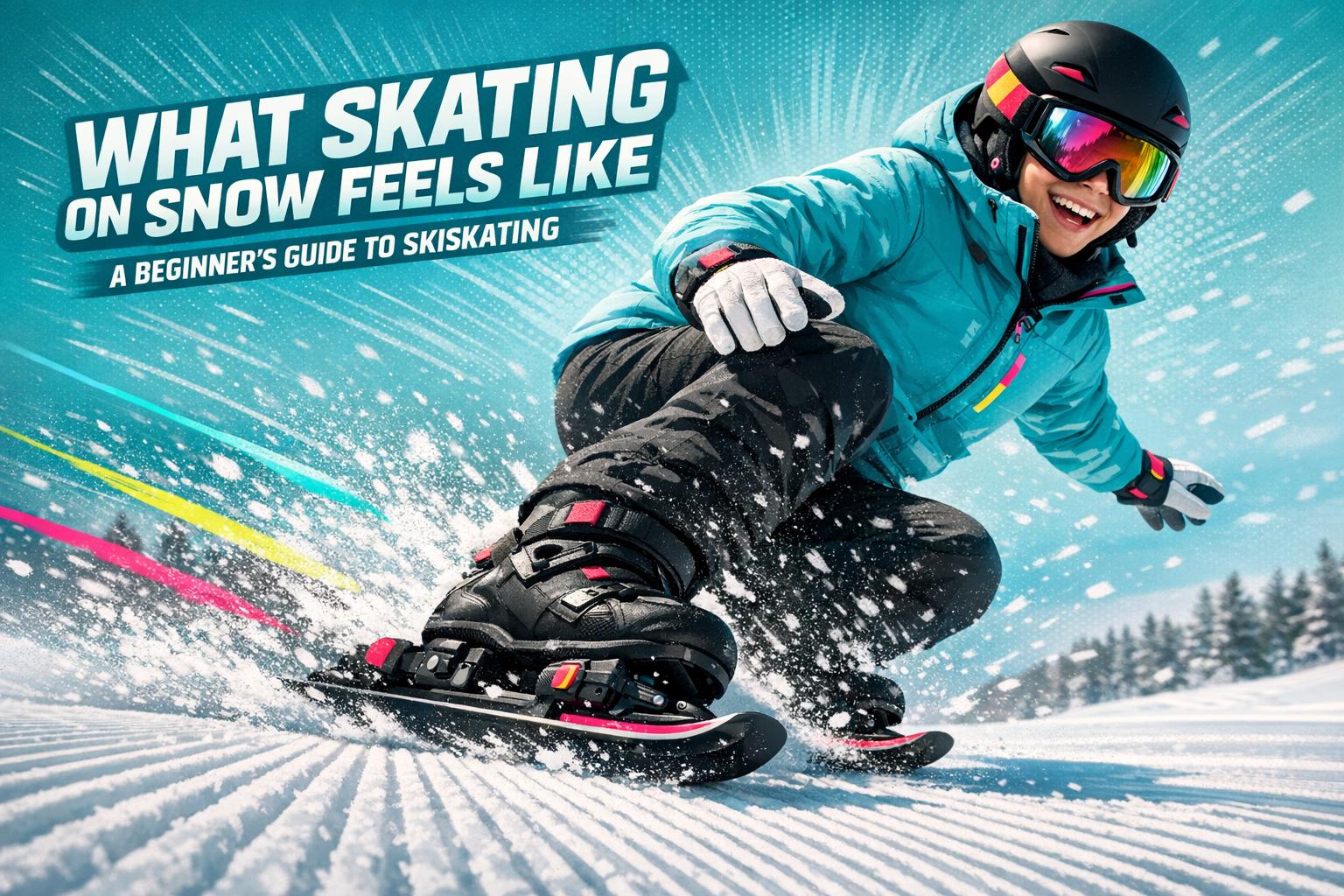
To get started, stand with your feet about shoulder-width apart and bend your knees slightly - around 20–30 degrees. Keep your weight centered over the middle or back of your feet, and position one foot a little ahead of the other for added stability.
Begin on flat, groomed snow to practice. Step in place to get comfortable shifting your weight from one foot to the other. Lean forward just a bit with your upper body, and if you start to wobble, extend your arms to steady yourself. Since Snowfeet* are compact (less than 20 inches long), it’s crucial to keep your weight balanced - unlike traditional skis, they don’t have the extra length to help you out.
Basic Skating: Push-Offs and Turns
For basic movement, think like a hockey player. Push off diagonally in a V-shape, gliding on one foot at a time. This method, called V1 skating, works well on different types of terrain, including uphill sections. Use poles for extra power - plant one on the opposite side of your glide, pull it forward, and push as your hands pass your knees.
Turning is all about using the edges of your Snowfeet*. Tilt them slightly and shift your body in the direction you want to go. Keep your hands forward while your hips and legs guide the turn - this separation between upper and lower body helps with precision. To stop, you can try a hockey stop by pushing both edges sideways and evenly distributing your weight. For a slower, more controlled stop, use the built-in heel brake.
Once you’ve got these basics down, you’ll be ready to tackle more advanced techniques for speed and control.
Advanced Skills: Using Poles and Carving Techniques
When you’re confident with the basics, it’s time to level up with advanced techniques to make the most of your Snowfeet* gear.
To pick up speed, try double-pole thrusts. Swing both poles forward, plant them at a sharp angle, and push through while syncing the motion with your leg drive. For even more momentum, go for V2 alternate skating - this involves planting your poles with every second leg push.
Carving tight, precise turns is another skill to master. Engage the edges of your Snowfeet*, rotate your lower body, and adjust the angle of the edges as needed. On steeper terrain, compact hip rotations and quick edge rolls will help you stay in control. Thanks to the lightweight and nimble design of Snowfeet* (just 17 inches long), carving becomes much easier - perfect for weaving through narrow chutes or tackling moguls. Start with gentle slopes to get the hang of it, then gradually work your way up to more challenging runs as your confidence grows.
sbb-itb-17ade95
Why Choose Snowfeet* for Skiskating
Affordable Options for Every Skill Level
Snowfeet* makes skiskating accessible, offering products that cater to all skill levels without breaking the bank. The Snowfeet 50 CM model starts at $207 (regularly $250), while the 44 CM wood core Skiskates are priced from $490, giving beginners and seasoned skaters solid options. Unlike traditional skiing - which demands a hefty investment in specialized ski boots, long skis, bindings, and poles - Snowfeet* simplifies things. You can use your regular winter or snowboard boots, saving money and adding convenience. Plus, learning is a breeze - most users pick up the basics in minutes, as reflected in over 5,500 reviews averaging an impressive 4.9 stars.
And it’s not just about affordability; these products are built to handle the rigors of winter sports.
Durable, Lightweight, and Ready for Adventure
Snowfeet* products are built to last, combining a premium wood core and metal ski edges typically found in professional-grade skis. For instance, the 44 CM Skiskates come pre-waxed, ready to carve up groomed slopes, while the fiberglass-reinforced models offer excellent durability at a lower price point.
Compact and practical, these skiskates are under 20 inches long, making them easy to stash in a standard backpack. But don’t let their size fool you - they’re tough enough for moguls, snow parks, and icy terrain. Manufactured in the Czech Republic, known for its rich ski-making tradition, Snowfeet* combines time-tested craftsmanship with modern techniques. Caring for them is simple, too - just dry the metal edges after use and give them a quick wipe with oil before storage to prevent rust.
"Snowfeet hit it out of the park with this brilliant solution. It's light and tough, easy to carry."
– Heather Ogilvie
Be Part of a Thriving Skiskating Community
Snowfeet* isn’t just about the gear - it’s about the community. With over 50,000 riders worldwide, skiskating is quickly becoming a movement that’s reshaping winter sports. Recognized as an innovation finalist at ISPO, the world’s largest sports equipment trade fair, and awarded the A’design honor, Snowfeet* has made a significant impact. Designed for everyone from kids as young as 5 to adults well into their golden years, it proves that skiskating is for all ages. Whether you’re carving slopes, exploring backcountry trails, or just playing around in your backyard, you’re joining a growing sport that challenges the old “longer skis are better” mindset.
As Mashable and others have pointed out, skiskating might just be the next big thing in winter sports.
"Far more portable and affordable than traditional skis or snowboards."
– Uncrate
Snowfeet* & Skiskates Complete Guide | All you need to know about Skiskating
Conclusion
Skiskating with Snowfeet* offers a fresh twist on winter sports - easy to learn, affordable, and portable. Whether you're new to winter activities and can pick up the basics in minutes or a seasoned skier looking for something different, these compact skiskates let you explore groomed slopes, snow parks, hiking trails, or even your own backyard. At less than 20 inches long, they easily fit in your backpack - no bulky gear, no roof racks, no hassle. It’s a straightforward way to enjoy the snow without the typical complications.
With over 50,000 riders worldwide and consistently high ratings, Snowfeet* is more than just gear - it’s a growing community redefining winter fun.
Starting at $207 for the 50 CM model and $490 for the premium 44 CM wood core Skiskates, Snowfeet* eliminates the need for pricey ski boots, long lessons, or heavy equipment. Plus, the simple techniques make it easy to progress from mastering balance to carving like a pro, giving you that rewarding feeling of learning something fresh - without the usual hurdles.
Skate on snow and feel the thrill. Grab a pair of Snowfeet*, hit your nearest slope or trail, and discover why skiskating might just become your go-to winter sport.
FAQs
How is skiskating different from traditional skiing and snowboarding?
Skiskating blends the graceful glide of ice skating with the excitement of skiing, offering a lightweight and portable twist on winter sports. Using Snowfeet Skiskates - compact mini skis under 20 inches long - it’s easier to pick up than traditional skiing, especially for beginners. The skating-like stance feels natural, and the gear is refreshingly simple compared to the bulky equipment required for other snow activities.
Think about traditional skiing: you’ve got skis that are 5–6 feet long, poles, and heavy boots. It’s a lot to lug around, and you’re mostly limited to groomed slopes or areas with ski lifts. Snowboarding, while fun, has its own challenges. The sideways stance can feel awkward for some and isn’t ideal for narrow trails. Skiskating, on the other hand, offers a lot more freedom. With Snowfeet, you can tackle forest paths, park features, or smaller hills - all without the hassle of oversized gear.
Thanks to Snowfeet’s lightweight design and a straightforward heel-brake system, skiskating makes it easy to enjoy the snow in a whole new way. It’s a dynamic and hassle-free winter adventure that’s perfect for anyone ready to try something different.
What kind of terrain works best for Snowfeet skiskates?
Snowfeet skiskates are a great choice for exploring groomed ski slopes, trails, parks, or even your neighborhood hills and hiking paths. Thanks to their compact design, they adapt well to different winter terrains, offering a fun and flexible way to enjoy the snow.
That said, they’re not the best option for tackling steep slopes or deep powder. In those cases, traditional skis or snowboards are still the way to go. To get the most out of Snowfeet skiskates, stick to smoother surfaces and moderate inclines. This is where they really shine, blending the thrill of skiing with the agility of skating.
How easy is it for beginners to learn skiskating?
Skiskating is surprisingly easy to learn, even if you're new to winter sports. Snowfeet skiskates are designed to feel natural, especially if you’ve ever tried skiing or ice skating. Most people get the hang of the basics - like finding the right stance and gliding smoothly - within just a few practice sessions.
What makes them so beginner-friendly? Their compact size (about 17 inches) and lightweight design make them much easier to manage than traditional skis or snowboards. There are no bulky bindings to fuss with, so you can dive right into practicing turns, stops, and balance. Many first-timers feel at ease on groomed slopes after just a few runs, making skiskating a fun and approachable way to enjoy the snow.











Leave a comment
This site is protected by hCaptcha and the hCaptcha Privacy Policy and Terms of Service apply.