



















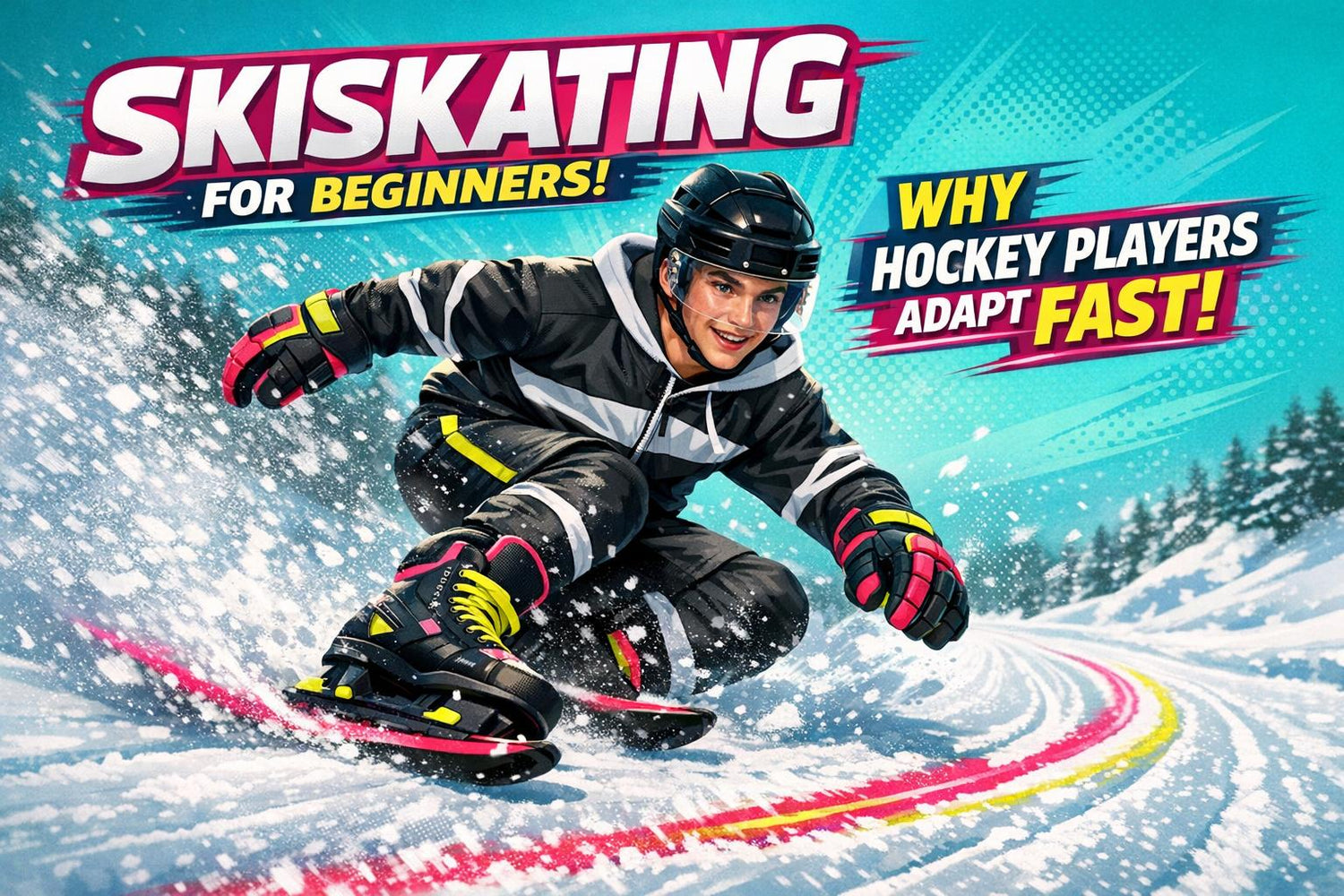
Skiskating is the new winter sport that combines ice skating and skiing, and hockey players are loving it. Using Snowfeet Skiskates - compact, 17-inch skates you strap to your winter boots - you can glide over snow with a skating motion instead of traditional skiing techniques. Here’s why hockey players are picking it up so quickly:
- Hockey Skills Transfer Easily: Moves like hockey stops, edge control, and quick direction changes feel natural on Snowfeet skates.
- No Special Gear Needed: Use your regular winter or snowboard boots. No bulky ski gear required.
- Portable and Simple: At just 44 cm long, they fit in a backpack and take minutes to learn.
If you’ve skated before, you’ll feel right at home. Snowfeet lets you skip the steep learning curve of skiing and start having fun immediately. Whether you’re on slopes, trails, or even your backyard, it’s an easy way to turn winter into your playground.
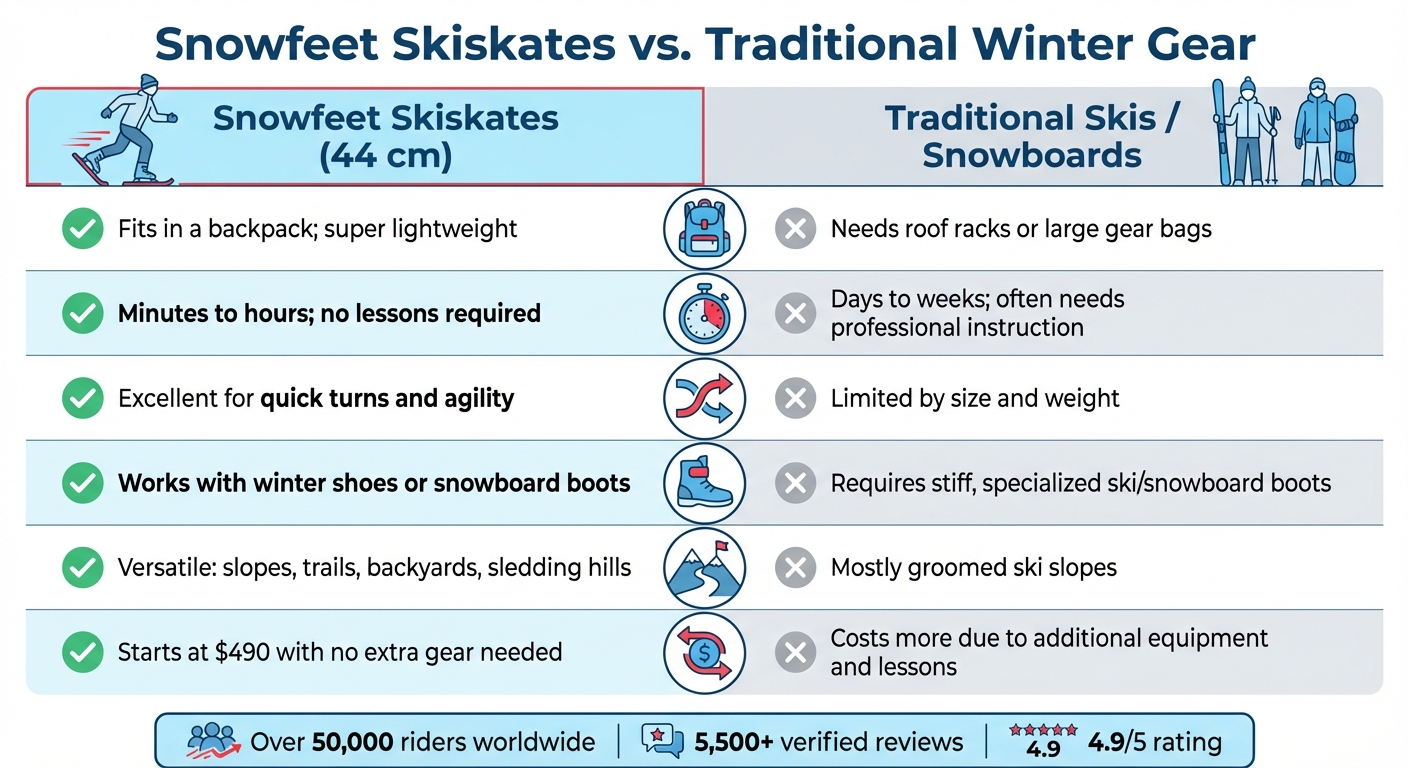
Snowfeet Skiskates vs Traditional Skis and Snowboards Comparison
Hockey Skills That Transfer to Skiskating
Edge Control: Making Sharp Turns and Stops
Hockey players have a knack for digging their blade edges into the ice to carve tight turns and stop on a dime. That same skill translates seamlessly to Snowfeet* Skiskates, which are equipped with the same metal ski edges you'd find on traditional skis. With their compact size (38–50 cm), these skiskates feel a lot like a skate blade, making hockey stops a natural transition. As the Snowfeet Team explains:
"You stop just like on skis or skates - with a hockey stop or heel brake."
To perfect your stop, focus on distributing your weight evenly. And don’t forget to keep those edges sharp - either with a sharpening stone or by visiting a pro ski service. Mastering edge control not only helps with stopping but also sets you up for smooth balance and quick, agile movements.
Balance and Agility: Low Stance and Quick Movements
Hockey players are all about balance and agility, and that low, athletic stance they use? It’s a game-changer for skiskating. Years of hockey training teach players to bend their knees, keep their weight low, and maintain a solid center of gravity - this "power stance" (feet shoulder-width apart, knees over toes) is exactly what you need for skiskating. With Snowfeet* Skiskates measuring just 44 cm, precise balance becomes even more critical. But for hockey players, that’s second nature. As one user, Falk, shared:
"I never skied before but I Inline-skate my whole life. So I hoped for something similar in snow and this absolutely nailed it."
For added stability, keep your legs shoulder-width apart, position one foot slightly ahead of the other, and center your weight. This stance not only helps you absorb bumps in the terrain but also gives you better control on downhill runs.
Quick Direction Changes: Using Crossover Techniques
Hockey players excel at quick direction changes, thanks to their mastery of lateral pushes and edge transitions during crossovers. These same techniques are perfect for skiskating. Snowfeet* Skiskates, being lighter and more agile than traditional skis, let you move with an ice skate-like flow. To get started, use a hockey-style stride to build momentum. As the Snowfeet Team suggests:
"The best way to start your ride is to skate like a hockey player."
On ice, hockey players can hit speeds of about 20 mph by keeping a low center of gravity and using explosive leg power. The same mechanics apply on snow - bend those knees, lean slightly forward, and let your muscle memory do the rest. With practice, you’ll be zipping down slopes like a pro.
Snowfeet* Skiskates vs. Traditional Skis and Snowboards
Comparison Table: Snowfeet* vs. Traditional Equipment
If you're used to hockey, you probably know how annoying it is to haul around bulky gear. Traditional skis are typically between 150 cm and 200 cm long, and snowboards aren’t much better. Compare that to Snowfeet* Skiskates, which are just 44 cm (about 17 inches). They’re compact enough to toss in a backpack, making them a breeze to carry to the slopes.
| Feature | Snowfeet* Skiskates (44 cm) | Traditional Skis / Snowboards |
|---|---|---|
| Portability | Fits in a backpack; super lightweight | Needs roof racks or large gear bags |
| Learning Time | Minutes to hours; no lessons required | Days to weeks; often needs professional instruction |
| Maneuverability | Excellent for quick turns and agility | Limited by size and weight |
| Boot Requirement | Works with winter shoes or snowboard boots | Requires stiff, specialized ski/snowboard boots |
| Terrain | Versatile: slopes, trails, backyards, sledding hills | Mostly groomed ski slopes |
| Price | Starts at $490 with no extra gear needed | Costs more due to additional equipment and lessons |
Over 50,000 riders worldwide have already made the switch to Snowfeet*. With over 5,500 verified reviews and a glowing 4.9 out of 5 rating, it’s clear they’re doing something right. This setup offers an easy, no-fuss way for beginners to dive into skiskating.
Why Snowfeet* Works Better for Beginners
Snowfeet* doesn’t just look good on paper - it makes learning skiskating a breeze, especially for hockey players. If you’ve already mastered skating, Snowfeet* takes that muscle memory and turns it into instant progress. Thanks to its compact 44 cm design, you’ll feel right at home in no time. As Uncrate puts it:
"Far more portable and affordable than traditional skis or snowboards." – Uncrate
Traditional skis demand days (or even weeks) of practice to get the hang of weight transfers and parallel techniques. Snowfeet* skips the steep learning curve entirely, letting you rely on the same skating motion you’re already familiar with. Plus, they’re safer - no long, heavy equipment to twist your legs awkwardly.
Snowfeet* isn’t just limited to ski slopes either. You can use them on hiking trails, sledding hills, or even in your backyard. Designed to be intuitive, Snowfeet* offers a “learn in 5 minutes” experience, making it an ideal winter sport for hockey players or anyone looking to try something fun and different.
How to Start Skiskating: A Beginner's Guide
Step 1: Attach Your Snowfeet* Skiskates
Start by adjusting your Snowfeet* bindings at home with a screwdriver. These bindings are designed to fit US shoe sizes 6–13 (38–47 EU). Use the screwdriver to align the toe and ankle straps with the correct holes based on your boot size. If you’re using snowboard boots, you’ll get a snugger fit, which is ideal for ski slopes. For those with smaller shoe sizes, snowboard boots are especially recommended. If the straps are too long, trim the excess for a cleaner setup.
Step 2: Practice Gliding and Lateral Pushes
Once your bindings are secure, find some flat terrain to practice. Start by gliding and pushing your legs sideways, similar to how hockey players skate on ice. Keep your legs shoulder-width apart, knees slightly bent, and one foot slightly ahead of the other. Avoid leaning too far forward onto your toes, as this can cause tip drag and lead to falls. Focus on keeping your weight centered or slightly back. If you feel unsteady, extend your arms and shift forward to regain balance.
Step 3: Learn to Carve Turns Using Your Edges
Once you’re comfortable gliding, it’s time to learn how to turn. Turning on Snowfeet* is similar to performing a hockey stop on ice. Shift your weight and tilt the skiskates onto their metal edges in the direction you want to go. Thanks to their short 44 cm length, edge control feels natural, especially if you’re used to skating. To stop, push the edges sideways to create friction, just like stopping on ice skates. For smoother carving on groomed slopes, keep the metal edges sharp with a sharpening stone or by taking them to a ski service shop.
Step 4: Build Speed with Crossovers
After nailing your turns, focus on picking up speed. The compact 44 cm design makes crossovers much easier than with traditional skis, letting you move your feet quickly without bulky gear getting in the way. Stay low and flexible as you transition from pushing to gliding. Start practicing on gentle slopes to build confidence, then gradually tackle steeper inclines. These techniques will help you adapt to a variety of riding conditions.
Step 5: Try Different Terrain and Basic Tricks
Once you’ve mastered the basics, it’s time to explore new terrain and experiment with tricks. Snowfeet* aren’t just for ski slopes - try them on hiking trails, terrain parks, or even sledding hills. Their compact size makes them super portable, so you can stash them in your backpack and access spots that traditional skiers might miss. Start small with tricks like little jumps or riding switch (backward). Thanks to their lightweight design and short length, trying new moves feels less intimidating than with longer skis. With over 5,500 verified reviews and an average rating of 4.9/5, riders often say Snowfeet* are “easy to handle and control”.
sbb-itb-17ade95
Why Snowfeet* Skiskates Beat Traditional Winter Gear
Easy to Carry Anywhere
Let’s face it: traditional skis are a hassle to lug around. At 5–6 feet long, they demand roof racks, oversized bags, and a lot of patience. Snowfeet* Skiskates, on the other hand, measure just 44 cm (about 17 inches) and can easily slip into your backpack. Yep, no need for extra gear or complicated logistics. Whether you’re taking public transit, hiking to a remote snowy spot, or tossing them in your trunk for a quick trip, their compact size makes it all so much simpler. This portability opens the door to more spontaneous adventures - wherever the snow takes you.
Works on Multiple Types of Terrain
Most traditional winter gear is built for specific terrains. But Snowfeet* Skiskates? They’re a jack-of-all-trades. Thanks to their short length and durable metal edges, these little guys are ready for anything. From groomed ski slopes to hiking trails, terrain parks, sledding hills, or even your backyard, they adapt to it all. No need to invest in separate gear for downhill or cross-country fun - Snowfeet* handles it all in one compact package. Plus, they’re quick to master, making them a perfect pick for anyone looking to mix up their winter activities.
Learn in Hours, Not Days
If you’ve ever played hockey, you’re already ahead of the game. Hockey players tend to have excellent edge control and quick directional skills, which makes picking up Snowfeet* Skiskates a breeze. The skating motion you use to get started on Snowfeet* feels super familiar - it’s just like what you’ve practiced on the ice. Within your first session, you’ll likely be carving turns like a pro. And stopping? It’s just as intuitive. That trusty hockey stop you’ve perfected on the rink works here too - just push the edges sideways to create friction. Instead of spending days in ski lessons, you’ll be building on skills you already have, getting you straight into the action.
Snowfeet* & Skiskates Tutorial - How to Become a PRO Skiskater
Conclusion: Start Skiskating with Snowfeet*
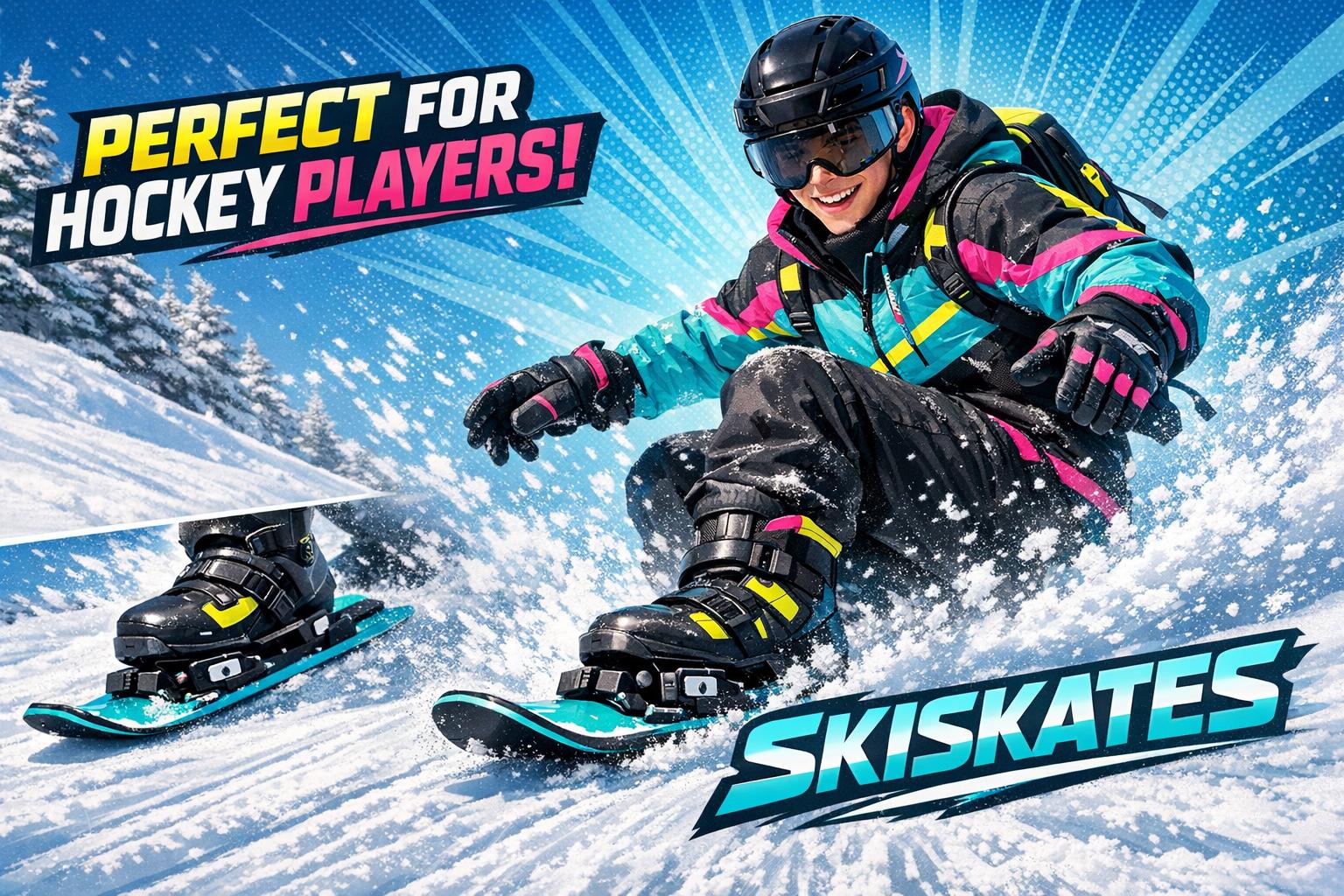
If you’ve got hockey skills, you’re already ahead of the game with Snowfeet* Skiskates. Your balance, edge control, and agility on the ice translate perfectly to skiskating. Instead of spending days learning how to handle traditional skis, you’ll be carving turns and pulling off hockey stops right from your first session. It’s like bringing your rink moves straight to the slopes.
What’s even better? Snowfeet* Skiskates pair with your winter or snowboard boots, so you can skip the bulky ski gear and long lessons. Their compact design feels as liberating as ice skates but gives you the control you need on snow.
And it’s not just talk - people all over the world are loving Snowfeet*. Skaters, hockey players, and anyone looking for something different have embraced them as a fun and effective alternative to traditional winter equipment.
Snowfeet* lets you turn any slope into your personal playground. Whether you’re hiking up with them in your backpack, cruising down groomed trails, hitting terrain parks, or just playing around in your backyard, they offer a level of freedom and versatility that skis just can’t match.
So, why stick with clunky skis? Grab a pair of Snowfeet* Skiskates and let your hockey skills shine in a whole new way. The slopes are calling - time to answer.
FAQs
How are Snowfeet Skiskates different from traditional skis and snowboards?
Snowfeet Skiskates are shaking things up in the world of winter sports. Forget lugging around heavy skis or snowboards - these compact skates are just 17 inches long and clip right onto your regular winter boots. That’s right, no need for special boots or oversized equipment. This makes them super easy to carry, store, and strap on, whether you're heading out for a quick ride or a full day on the slopes.
But convenience doesn’t mean cutting corners on performance. Made with fiberglass-reinforced plastic, metal edges, and adjustable bindings, Snowfeet deliver solid edge control and durability that rivals traditional skis. Their lightweight design also lets you move with a skate-like agility that’s hard to achieve with bulkier gear. And here’s the kicker: starting at around $150, they’re a much more wallet-friendly option compared to the usual pricey ski setups.
What hockey skills help players pick up skiskating faster?
Hockey players often find skiskating to be a natural fit, thanks to their mastery of edge control, balance, and agility. These are the same skills they’ve honed on the ice, and they translate smoothly to the movements needed for skiskating. Quick, precise turns? Check. Staying steady in dynamic conditions? Absolutely. It’s like they’ve been training for this all along.
Snowfeet* Skiskates make this transition even easier. With their compact design and emphasis on edge work, they let beginners mimic hockey-style strides and moves without the steep learning curve of traditional skis or snowboards. For hockey players wanting to take their skills from the rink to the slopes, Snowfeet* offers a fun and approachable way to dive into a new winter adventure.
Can you use Snowfeet Skiskates on different types of snow and terrain?
Snowfeet Skiskates are built to tackle all kinds of winter terrain. From cross-country trails and sledding hills to backyard snow and groomed slopes, these skiskates are ready for action. Thanks to their fiberglass-reinforced construction and metal edges, they offer solid performance and precise control. They’re even a great fit for narrow hiking paths or snow parks, making them a fun choice for everything from laid-back outings to more daring winter adventures.
Another cool feature? Snowfeet Skiskates work with most winter shoes and snowboard boots. This means you can easily switch things up depending on the conditions. Plus, their compact design makes them a fresh alternative to bulky skis or snowboards - perfect for anyone who wants to shake up their winter routine!












Leave a comment
This site is protected by hCaptcha and the hCaptcha Privacy Policy and Terms of Service apply.