



















Quick Summary:
Discover how skis with snowboard bindings—compact hybrid skiboards ranging from 18 to 39 inches—are transforming winter sports by swapping stiff, heavy ski boots for comfortable snowboard boots or winter shoes. In this article, you will learn how these lightweight, backpack-friendly mini-skis work, why their quick 5-minute learning curve makes them effortless for beginners, how they compare to traditional gear in comfort and price, and which Snowfeet* model best fits your riding style—whether you want agile tricks in the snowpark or smooth carving down groomed slopes.
Skis with snowboard bindings are shaking up winter sports. Imagine skiing without stiff boots or bulky gear - just compact, lightweight skis you can carry in a backpack. These short skis (17–39 inches) pair with snowboard boots or even winter shoes, making them easy to use and super fun. Most people master the basics in just five minutes, and they’re perfect for carving, quick turns, or even tricks in the snow park.
Here’s why they’re a hit:
- Comfort: Use snowboard boots or regular winter shoes - no hard ski boots.
- Portability: Small enough to fit in a backpack, no need for roof racks.
- Easy Learning: Beginners can start riding in minutes.
- Versatility: Great for slopes, parks, and even backcountry trails.
Snowfeet*, a leader in this space, offers models ranging from beginner-friendly Skiskates to advanced Skiblades. Prices start at $299, and they fit most boot sizes (US 5–14). Whether you’re new to snow sports or a seasoned rider, these skis are a game-changer for fun and flexibility on the slopes.
What Are Skis With Snowboard Bindings?
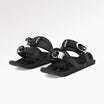
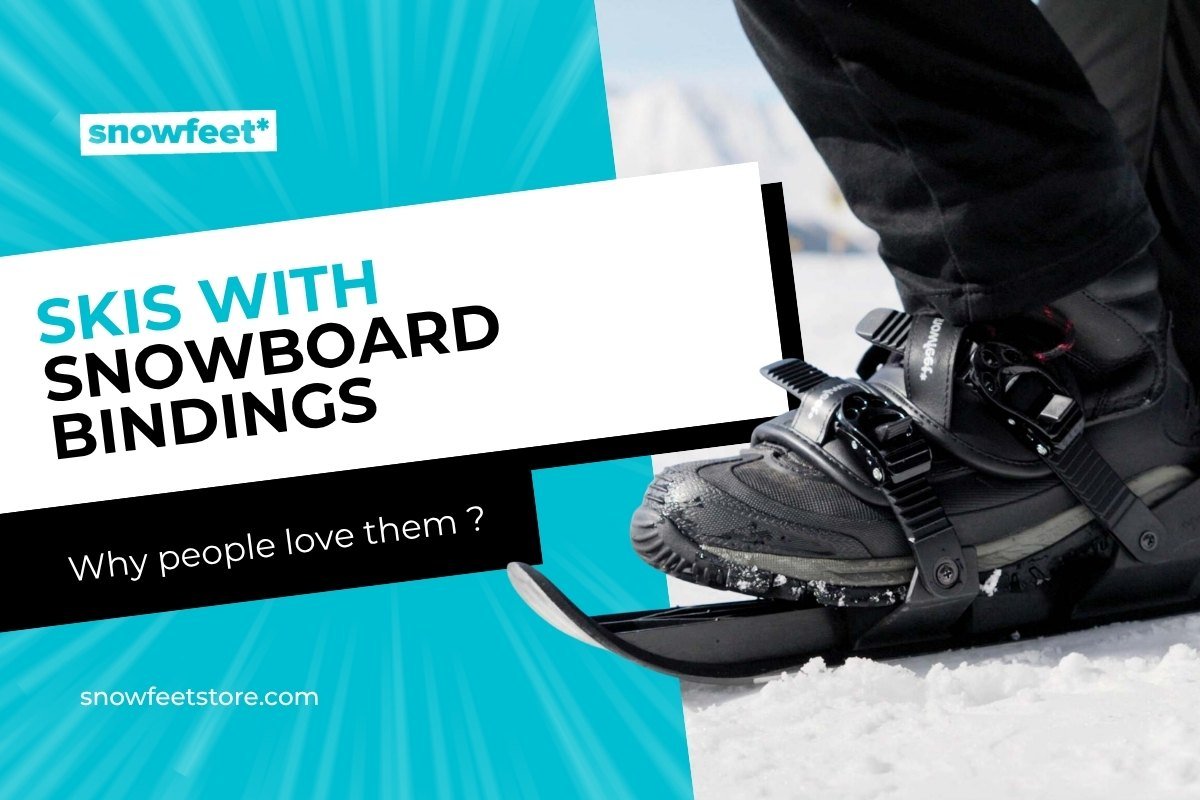
Skis with snowboard bindings - often called skiblades, skiboards, or skiskates - are a fun twist on traditional winter sports gear. These hybrids let you trade in stiff, uncomfortable ski boots for something much more user-friendly, like snowboard boots or even waterproof winter shoes. The skis themselves are shorter than the usual ones, measuring between 17 inches (44 cm) and 39 inches (99 cm). They come with a unique binding system that includes a baseplate, highback, and straps to hold your boots securely in place.
This setup creates a riding experience that feels more like ice skating or rollerblading on snow than traditional skiing. The added ankle flexibility means you’re no longer stuck in that forward-leaning ski stance. Instead, you can twist, spin, and move in ways that would be awkward - or downright impossible - on longer skis.
Another big plus? Portability. These compact skis are lightweight and small enough to fit in a backpack, so you can skip the hassle of roof racks or lugging around heavy gear. And if you’re intimidated by the learning curve of skiing, this setup is a game-changer. Many people pick it up in one day, and some even claim they’re riding comfortably within just five minutes. With all these perks, it’s easy to see why these hybrids are making waves in the winter sports world.
Key Features of Skis With Snowboard Bindings
What makes these skis stand out? It’s all in the design. At just 18 to 39 inches long, they’re much shorter than traditional skis, which typically range from 59 to 71 inches. Despite their small size, they pack a punch with wood or fiberglass cores and metal edges for precise turns. But the real game-changer? They’re compatible with snowboard boots. The bindings use a standard 4-hole insert pattern (40mm x 40mm), so you can mount them just like you would on a snowboard. This means you can ditch the stiff, rigid ski boots for soft, flexible snowboard boots - or even sturdy winter boots, depending on the model.
The binding system is another highlight. It uses a non-release mechanism with secure straps and a highback to support your ankle while allowing natural movement. Unlike traditional ski bindings, these stay attached during falls, which is why resorts often require safety leashes. The trade-off? You get more flexibility for tricks, easier walking between runs, and none of the awkward shuffling that comes with regular ski boots.
How They Compare to Traditional Winter Sports Gear
When you stack them up against traditional gear, the benefits really shine. Alpine skis lock you into rigid, plastic boots that restrict ankle movement and make even walking a struggle. In contrast, these hybrids are all about comfort and ease of use.
Learning to ski with traditional gear can take multiple lessons, but these shorter skis are much more beginner-friendly. Most people can get the hang of them within minutes. They’re also incredibly maneuverable. While traditional skis are great for speed and stability on long runs, they can feel clunky in tight spaces. Shorter skis with snowboard bindings are nimble, perfect for quick turns, spins, and even riding backward. Plus, they’re less likely to cross-tip - a common issue for beginners using longer skis. The downside? They’re not the best choice for deep powder (over 4 inches) unless you go for wide-body models designed for that kind of terrain.
"Snowboard bindings give you more flexibility while performing all kinds of tricks, they're super comfortable and you can walk with them anywhere without a problem." - Snowfeet Store
 Product Link: Snowfeet* 50 CM | Ski Skates
Why Snowfeet* Products Are the Best in This Category
Snowfeet* has completely rethought winter sports gear, creating their own snowboard bindings specifically for skiboards. These bindings combine the quick convenience of rear-entry systems with the snug fit of traditional straps. Plus, they’re adjustable to handle a variety of terrains.
Their models are packed with features like metal edges for sharp, precise stops, built-in heel brakes for better speed control, and durable cores made from high-quality wood and fiberglass-reinforced polyamide. These details helped Snowfeet* earn a finalist spot at ISPO and recognition from the A'Design Award. It’s not just gear - it’s a new way to experience winter sports.
Snowfeet* also makes winter sports more accessible. You don’t need pricey, stiff ski boots to enjoy their products. They’re compatible with snowboard boots or even regular winter shoes, letting users get the hang of it in just minutes.
Comparison: Snowfeet* vs Traditional Skis and Snowboards
Snowfeet* stands out when compared to traditional setups. For starters, traditional skis from big-name brands can cost anywhere from $500 to over $1,000 - and that’s just for the skis. Add in the specialized bindings and boots, and the price climbs even higher. Snowfeet*, on the other hand, offers a complete setup for $299–$850, and you can use your current boots.
| Feature | Snowfeet* | Traditional Skis | Traditional Snowboards |
|---|---|---|---|
| Portability | Ultra-compact (18–39 inches), fits in a backpack | Long (59–71 inches), bulky, often requires roof racks | Medium length (55–65 inches), includes separate boots and bindings |
| Ease of Use | Quick strap-in, easy to learn in 5 minutes | Requires ski boots and lessons to master | Step-in options exist but less versatile overall |
| Control | Highly responsive with secure lockdown and multiple contact points | Good edge control but limited lateral support | Great for carving but with a wider turn radius |
| Versatility | Works on groomed slopes, parks, backcountry, and hiking trails | Best on groomed runs and powder, less suited for parks | Suitable for all-mountain/freestyle but not ideal for uphill travel |
| Pricing (USD) | $299–$850 complete setup | $500–$1,000+ (skis plus bindings) | $400–$800 (board plus bindings) |
One big safety advantage of Snowfeet* is their snowboard-style bindings. Unlike traditional ski bindings, these securely lock your boot in place, reducing the risk of accidental releases. And because the equipment is shorter, there’s no “lever effect” that could twist your limbs during a fall. This makes wipeouts less risky.
"At Snowfeet we developed a unique snowboard bindings specifically designed for skiboards... You won't find such snowboard bindings anywhere else." - Snowfeet*
Which Snowfeet* Model Is Right for You?
Snowfeet* offers four models, each crafted to suit different riding styles and preferences. The main differences lie in their length and core materials. Longer skis provide better stability for carving, while shorter ones excel in agility and tricks. As for the core, wood delivers high performance, while fiberglass reinforcement adds durability.
So, what’s your mountain vibe? If you’re all about smooth carving and stability, go for the longer Skiblades. But if tricks, spins, and that fun skating feel in snowparks are more your thing, the shorter Skiskates or similar models are the way to go. Plus, all Snowfeet* models are designed to work with snowboard boots or winter shoes - no need to deal with clunky ski boots.
Here’s a breakdown of the models to help you decide.
Snowfeet* 99 CM Skiblades: Long Short Skis for Advanced Riders
The 99 cm Skiblades are perfect for seasoned riders who want the best of both worlds: the stability of traditional skis and the maneuverability of shorter ones. These skis are built for carving, park jumps, and even light powder days. With a wood core and a length of nearly 39 inches, they offer a stable ride and plenty of surface area for aggressive turns. They’re also super portable compared to regular skis.
Customers love them, giving them a 5.0/5 rating. Prices range from $690 to $850, making them a premium choice for advanced riders.
Looking for something more compact? Check out the Snowfeet* (50 CM).
 Product Link: Snowfeet* 99 CM | Skiblades | Snowblades Skiboards Short Skis
Snowfeet* (50 CM): Compact Performance Skis
The 50 cm model strikes a great balance between portability and stability. At 50 cm, it’s long enough to provide control but short enough to fit in your backpack. Its fiberglass-reinforced core keeps it durable and budget-friendly, with prices around $299–$350. This model is a hit for groomed slopes, hiking trails, and even sledding hills, earning a solid 4.9/5 customer rating.
"If you are a blader or rollerskater get [Snowfeet PRO]... if you are normally a skier get the SKISKATES."
If tricks and agility are your thing, take a look at the Skiskates (44 CM).
Skiskates (44 CM): The Hybrid for Fun and Freedom
For those craving ultimate agility, the 44 cm Skiskates are the go-to choice. These are the shortest wood-core model Snowfeet* offers, designed for inline-style moves on snow. They’re made for groomed slopes and snowparks, where spins, jumps, and even backward riding come naturally. Riders with inline skating or hockey experience particularly love these for their freedom and trick potential.
With a 5.0/5 rating and a price range of $550 to $690, Skiskates deliver a fun, freestyle experience.
"Using a snowboard boot gives me great comfortable ankle support... I can rip all of my inline tricks on these! Boxes and jumps and spins are all fresh and new."
Need something versatile? Check out the 65 CM Skiblades.
 Product Link: Snowfeet* 44 CM | Skiskates | Snowblades Skiboards Mini Skis
Snowfeet* 65 CM Skiblades: Intermediate Skis for All-Round Use
If you’re looking for something versatile, the 65 cm Skiblades are a fantastic option. They’re long enough for carving but short enough to handle quick turns and playful tricks. Designed for intermediate riders, they perform well on groomed slopes and in snowparks. Built with a high-performance wood core, these skis are priced between $590 and $750.
Whether you’re carving, spinning, or mixing it up, this model offers a balanced ride for most terrains.
sbb-itb-17ade95
Why Snowfeet* Works on Any Terrain
Snowfeet* are designed to handle a variety of terrains, making them a go-to choice for everything from resort slopes to backcountry trails. Their versatility sets them apart from traditional skis and snowboards, making winter adventures easier and more enjoyable.
Performance on Groomed Slopes and Snowparks
On groomed slopes, Snowfeet* shine with their metal edges, which make carving and stopping a breeze. The 50 cm model, with its narrower base and raised platform, allows for quick, sharp turns - perfect for those who love the agility of inline skating. Unlike traditional skis that require wide, sweeping turns, these let you maneuver with precision.
In snowparks, their shorter length is a game-changer for tricks like spins, jumps, and even riding backward. These moves can be tough to pull off with standard skis, but Snowfeet* make it feel natural. They perform best on groomed snow and light powder (up to about 4 inches). For deeper snow or steeper slopes, longer skis often have the edge - unless you opt for the 99 cm Skiblades, which are built to float better in deeper conditions.
And the benefits don’t stop at the slopes.
Use in Backcountry and on Hiking Trails
While they’re built for groomed runs and parks, Snowfeet* also excel off the beaten path. Their lightweight, compact design is perfect for backcountry adventures, eliminating the hassle of lugging around heavy, bulky gear. Plus, they work with your regular waterproof winter boots, so there’s no need for special footwear.
"My favorite part about these is that hills are not an issue anymore. I hate getting stuck on a hill in skis because they're so long and bulky. Since these are shorter, you can just skate right up." - Sophia Kane
On narrow hiking trails or forest paths, their short length makes navigating tight spaces a breeze. For packed snow and trails, the 38 cm and 50 cm models are ideal. If you’re heading into deeper snow, the 99 cm Skiblades are your best bet.
One tip for backcountry trips: wax the base daily. This prevents snow from sticking and keeps your speed consistent, especially when dealing with changes in snow temperature.
 Product Link: Snowfeet* 44 CM | Skiskates | Snowblades Skiboards Mini Skis
Pricing and Sizing Guide for Snowfeet* Products
Snowfeet* keeps things simple with its pricing. Here's the breakdown:
- Skiskates (44 cm / 17.3 inches): $690 USD
- Snowfeet* 65 CM Skiblades (25.6 inches): $750 USD
- Snowfeet* PRO (50 cm / 19.7 inches): $299 USD
- Snowfeet* 99 CM Skiblades (39 inches): $850 USD
Each model comes equipped with snowboard-style bindings, so you're ready to hit the slopes right out of the box.
When you compare it to a traditional ski day - factoring in rentals, lift tickets, and lessons that can easily top $200 USD - Snowfeet* gear is a one-time investment that quickly pays off. Most users get 3–5 seasons of use, which works out to just about $0.10 per riding hour versus $0.25 for traditional gear. Pretty compelling, right?
Sizing made easy. All Snowfeet* models feature universal sizing, designed to fit boot sizes US 5–14 (EU 38–47). Adjustable snowboard bindings with ratchet straps make it a breeze to secure your fit. No need for complex charts or weight restrictions - the bindings can handle riders up to 220 lbs (100 kg). For beginners or lighter riders (under 150 lbs / 68 kg), the shorter Skiskates are easier to control. On the other hand, heavier or more experienced riders often lean toward the longer 99 cm model for added stability.
Snowfeet* products are built to last, offering a 2-year warranty against manufacturing defects. With minimal upkeep - like occasional waxing - they’re ready to tackle multiple seasons. Plus, their portability, compatibility with regular boots, and versatility for backcountry adventures make them an excellent option.
Here’s a quick comparison to help you choose:
| Model | Length | Price (USD) | Best For | Boot Size Range |
|---|---|---|---|---|
| Skiskates | 44 cm / 17.3" | $690 | Beginners, freestyle fun | US 5–14 / EU 38–47 |
| Snowfeet* 65 CM | 65 cm / 25.6" | $750 | All-around intermediate use | US 5–14 / EU 38–47 |
| Snowfeet* 50 CM Skiskates | 50 cm / 19.7" | $299 | Compact performance | US 5–14 / EU 38–47 |
| Snowfeet* 99 CM | 99 cm / 39" | $850 | Advanced riders, deeper snow | US 5–14 / EU 38–47 |
Snowfeet* combines affordability, durability, and ease of use, making it a fantastic choice for riders of all levels.
Conclusion: The Future of Winter Sports With Snowfeet*
Snowfeet* is shaking up the world of winter sports. With over 50,000 riders globally and an impressive 4.9/5 star rating from 5,800+ verified reviews, it’s clear that this brand is onto something special. Their approach? Shorter skis that pack a punch when it comes to fun, freedom, and flexibility.
These mini skis combine snowboard bindings with a sleek, compact design, ditching bulky ski boots for a more agile and comfortable experience. Whether you're cruising down groomed slopes, hitting the park, or exploring backcountry trails, Snowfeet* delivers. As Mashable aptly put it:
"Watch out skiers! Could this be the new winter sport?"
Snowfeet* merges the best of skiing and snowboarding into one portable, easy-to-use package. Toss them in your backpack, and you're ready for adventure - no need for oversized gear. They even excel in terrain where traditional skis just don’t work.
The industry has taken notice, too. Snowfeet* has snagged accolades like being an ISPO finalist and an A'design award winner. Riders of all skill levels are jumping on board. Beginners love the quick learning curve, while seasoned pros are pushing boundaries in snow parks and beyond. It’s not just a product - it’s a growing community redefining how we experience winter.
Ready to join the skiskating revolution? Pick your pair of Snowfeet* and leave the old-school gear behind. Winter sports just got shorter, lighter, and way more fun!
FAQs
How is the learning experience with skis that use snowboard bindings different from traditional skis?
Skis with snowboard-style bindings, such as Snowfeet Ski Skates, are designed to be super easy to use, especially for beginners. Their compact, lightweight design lets you strap in with your regular winter boots - no need for special gear. This makes them perfect for anyone looking to start gliding around with almost no practice. The setup is simple, and the learning curve is practically non-existent.
On the flip side, traditional skis come with a lot more to figure out. You’ve got longer blades, poles, and ski-specific bindings, all of which take time and effort to master. This makes traditional skiing a bit more challenging, especially for first-timers. That’s why Snowfeet is a great pick if you’re after a fun, easy, and low-maintenance way to enjoy the slopes.
:::
Can you use Snowfeet products in deep powder snow?
Snowfeet products, such as Skiblades and Skiskates, are all about having fun and keeping things versatile on packed snow, groomed trails, and even light powder. That said, they’re not built for deep powder - it’s where traditional skis or snowboards take the lead. To get the most out of your Snowfeet gear, stick to compact snow or mixed terrain where they perform at their best.
 Product Link: Snowfeet* POWDER | 99 CM | Skiboards Skiblades Snowblades Short Skis
What kind of boots can you use with Snowfeet skis?
Snowfeet skis are made to pair seamlessly with most winter boots and snowboard boots, offering plenty of flexibility. They generally accommodate US shoe sizes 6–13 (EU sizes 38–47), so there’s no need to go out and buy specialized footwear - just use what you already have.
For the best ride, it’s a good idea to stick with sturdy winter boots or snowboard boots. They’ll give you the comfort and control you need to enjoy the slopes to the fullest.
Editor: Karolina R.
Last Update: July 22, 2026











2 comments
Karolina
Hey Cyril!
As an ice hockey player, your edge control and muscle memory are going to transfer naturally, but here is how to decide between the two setups:
Start with the 44 cm Skiskates if you want 100% true skate feel:
How they feel: They mimic a hockey stride on snow better than anything else. You stop, cross over, and pivot exactly like you’re on ice. Boot perk: You can run them with comfortable, supportive snowboard boots—no stiff plastic ski boots required. The tradeoff: At 44 cm, they excel at trick-skating, quick hockey stops, and agile maneuvers, but top-end speed on steep, icy groomers requires extreme balance control.
Go straight to the 99 cm Skiblades if fast carving is your top priority:
How they feel: The extra length and effective edge length give you rock-solid stability at high speeds and let you lay down deep, aggressive carving arcs on morning corduroy. Boot perk: We offer 99 cm models with snowboard boot bindings too, so you still get to ditch rigid ski boots! The tradeoff: They feel more like snappy, ultra-short skis than literal hockey skates, though your hockey balance will still make them feel ridiculously easy to turn.
Bottom line: If you want to ride fast and lay down hard carving turns right out of the gate while ditching stiff boots, go with the 99 cm Skiblades. If you want pure hockey freedom and playful skating on the mountain, get the 44 cm Skiskates! 🏒❄️
Links: https://www.snowfeetstore.com/products/skiskates-skiblades-snowblades-44-cm
https://www.snowfeetstore.com/products/skiblades-99-cm-by-snowfeet-skiboards-snowblades-short-little-skis-39-inch
Have fun!
Karolina from Snowfeet Team
Cyril
I’m an avid ice hockey player who hates stiff ski boots, but I love speed. If I want to hit the groomed slopes for fast carving without sacrificing that familiar ‘skate feel,’ should I jump straight to the 99 cm Skiblades or start with the 44 cm Skiskates? Thank you.
Leave a comment
This site is protected by hCaptcha and the hCaptcha Privacy Policy and Terms of Service apply.