




















Skiing can be pricey, but it doesn’t have to drain your wallet. Between lift tickets, gear, lessons, and food, a single day on the slopes can cost over $200 for beginners. However, there’s a budget-friendly solution: Snowfeet. These mini ski skates start at just $190 and attach to your regular winter boots, cutting out the need for expensive skis, boots, or lessons. They’re portable, easy to learn, and perfect for local hills.
Why Snowfeet?
- Affordable: Starting at $190, compared to $600–$1,200+ for traditional skis.
- Convenient: Fits in a backpack, no roof racks or extra storage needed.
- Beginner-Friendly: Learn to use them in 5 minutes, no lessons required.
- Versatile: Works with your existing winter boots or snowboard boots.
If you’re looking for a simple, low-cost way to enjoy the slopes without the hassle of bulky gear or sky-high expenses, Snowfeet might be your perfect match.
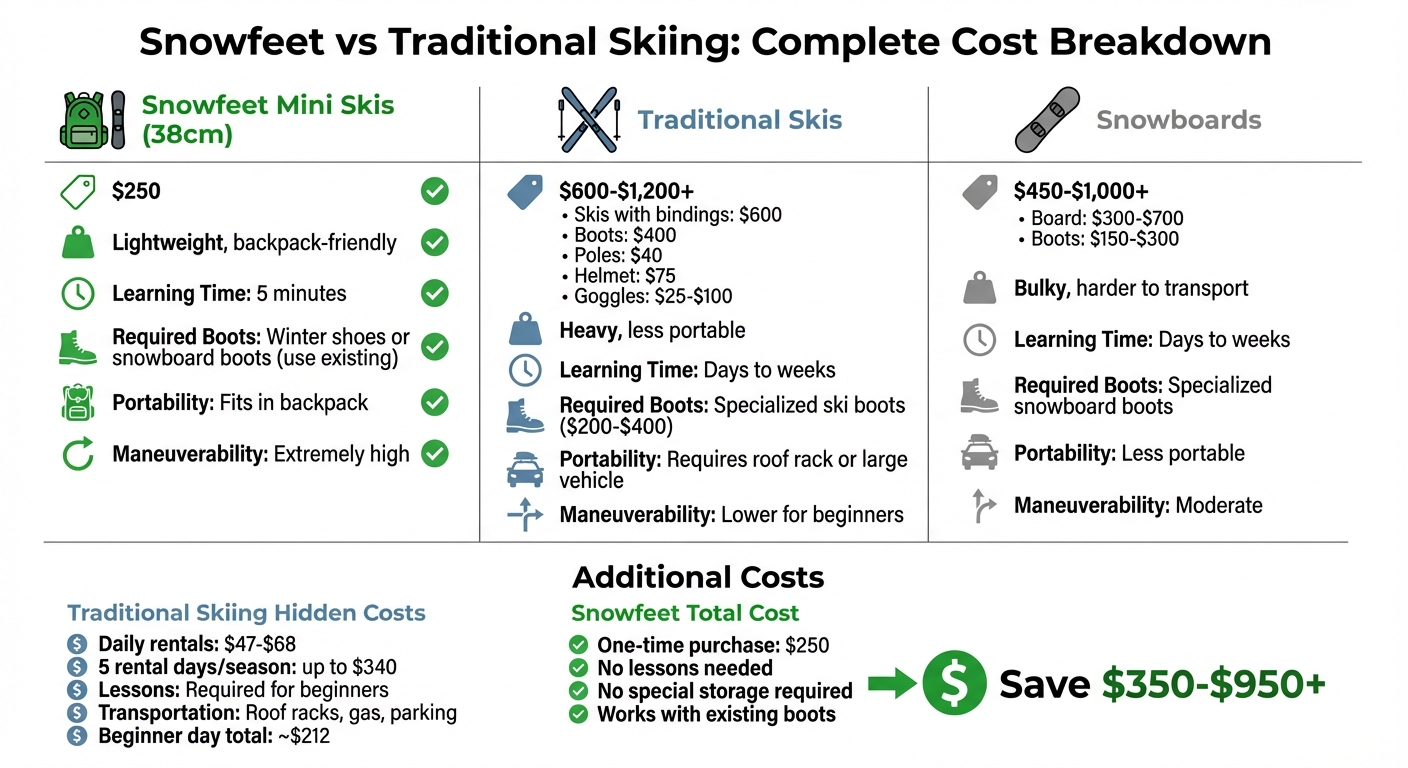
Snowfeet vs Traditional Skiing: Cost Comparison Breakdown
What Skiing Normally Costs
Traditional Ski Equipment Prices
Owning your own ski gear can feel like a big financial leap. A full set of traditional ski equipment generally lands somewhere between $600 and $1,300. If you're aiming for something a bit more advanced, an intermediate setup averages around $1,790. Here's a quick breakdown of what you’re looking at:
- Mid-range skis with bindings: About $600
- Boots: Around $400
- Poles: Roughly $40
- Helmet: Close to $75
- Goggles: Anywhere from $25 to $100
If you're eyeing high-performance skis, prices can climb to $1,500, with bindings adding another $500. Toss in clothing costs, which range from $205 to $570, and the total starts to stack up.
Ryan Craig, Editor at Great Lakes Bike Ski Boat, doesn’t sugarcoat it:
"Skiing is expensive. There really is no way around it. ... Because of the equipment required and lift ticket prices, skiing will never be a really cheap hobby or sport".
It’s an investment, no doubt, and the high price tag often pushes people to explore other options.
Rentals, Lessons, and Transportation Costs
Even if you skip buying gear, the costs don’t exactly disappear. Renting equipment still adds up fast. In the U.S., renting skis, boots, and poles for a day runs between $47 and $68. Hit the slopes five times in a season, and you’re looking at up to $340 just for rentals. For beginners, a single day of skiing - including rentals, lift tickets, and food - averages around $212.
And then there’s the hassle of traditional skis. They’re bulky, heavy, and clunky. Transporting them often requires roof racks or a spacious trunk, which adds costs for gas, parking, and possibly even lodging if you’re traveling far. On top of that, most first-timers need lessons to get started, which means additional expenses every time you hit the mountain.
All these costs can make skiing feel like more of a luxury than a casual weekend activity.
How Snowfeet* Cuts Costs
Why Snowfeet* Costs Less
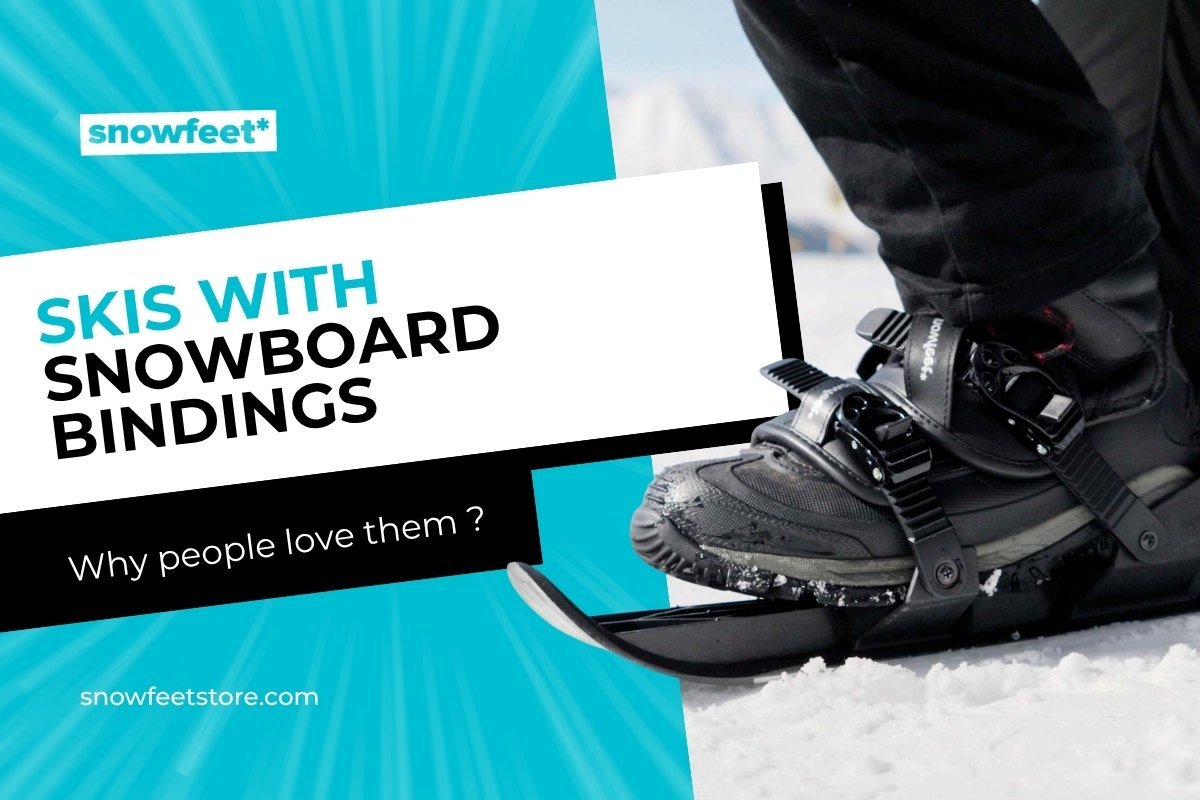
Snowfeet* offers a full setup for under $300. The starting prices are $190 for the 38 CM Mini Ski Skates and $250 for the 50 CM Ski Skates. Here’s the kicker: you don’t need to shell out for specialized bindings. Snowfeet* works with the winter or snowboard boots you already own. If you’ve got winter boots, goggles, and a helmet lying around, you’re basically set to hit the slopes with just your Snowfeet*.
And it’s not just about saving money - it’s also about convenience.
Easy to Carry and Store
Let’s face it, traditional skis can be a hassle. They’re big, heavy, and usually require roof racks or extra trunk space. That can lead to sneaky costs, like higher gas expenses, parking fees, or even checked baggage charges if you’re flying.
Snowfeet* solves this problem with their compact size. They’re small enough to fit in a regular backpack. You can toss them in your car’s backseat or carry them on your back - no need for roof racks or extra storage. This portability cuts down on all those hidden costs and makes last-minute mountain trips a breeze.
But that’s not all - Snowfeet* also makes learning way easier.
Quick to Learn
Traditional skiing often comes with a steep learning curve (and pricey lessons to match). Snowfeet*, on the other hand, is designed to get you riding in just five minutes. If you’ve ever ice skated or inline skated, you’ll feel right at home. The shorter length gives you better control, and you can even pull off a hockey stop with ease. This means you can skip the expensive lessons and start enjoying the slopes right away.
Snowfeet* vs. Traditional Skis and Snowboards
Side-by-Side Comparison
Let’s break down how Snowfeet* stacks up against traditional skis and snowboards in terms of design, cost, and practicality.
| Feature | Snowfeet* Mini Skis (38 cm) | Snowfeet* Skiblades (65 cm) | Traditional Skis | Snowboards |
|---|---|---|---|---|
| Price | From $250 | From $635 | $400–$800+ (plus $200–$400 boots) | $300–$700+ (plus $150–$300 boots) |
| Weight | Lightweight; fits in a backpack | Lightweight and highly portable | Heavier and less portable | Bulky and harder to transport |
| Learning Time | About 5 minutes | About 5 minutes | Days to weeks | Days to weeks |
| Required Boots | Winter shoes or snowboard boots | Ski or snowboard boots | Specialized ski boots | Specialized snowboard boots |
| Portability | Backpack-friendly | Easy to carry | Often requires a roof rack or large vehicle | Less portable |
| Maneuverability | Extremely high | High, especially for carving | Lower for beginners | Moderate |
Snowfeet* shines when it comes to cost, portability, and ease of use. While traditional ski setups can set you back $600–$1,200 (and that’s just to start), Snowfeet* offers a much more budget-friendly option, starting at under $300. Plus, you won’t need to lug around bulky equipment or invest in gear that might only see the slopes a few times a year.
But let’s not stop there - performance on the slopes is just as important.
Why Short Skis Work Better
Saving money is great, but how do Snowfeet* perform? Here’s the thing: the idea that longer skis automatically mean better performance is a bit of a myth. Shorter skis, like Snowfeet*, give you more control, which is especially helpful if you’re still learning. Let’s face it - wrestling with two long planks while trying to master turns and stops is no fun.
Snowfeet* products mimic movements similar to ice skating or inline skating, making them feel natural right out of the gate. Their compact design also reduces the risk of injuries, which is a win for anyone who’s ever had a wipeout on the slopes.
"These skiblades are so much fun and easy to control. Never going back to regular skis." - Andrew B.
Another huge perk? Uphill maneuverability. Long skis can leave you stuck on flat terrain, forcing you into awkward shuffling - or worse, making you take them off entirely. With Snowfeet*, you can skate right up those tricky spots.
"I hate getting stuck on a hill in skis because they're so long and bulky. Since these are shorter, you can just skate right up." - Sophia Kane.
With over 50,000 riders worldwide and an impressive 4.9/5 rating from more than 5,500 verified reviews, Snowfeet* proves that shorter skis aren’t a downgrade - they’re an upgrade. They make the mountain more fun and way less frustrating.
sbb-itb-17ade95
How to Start with Snowfeet*
Choosing the Right Snowfeet* Model
Snowfeet* are not only affordable, but they also come in different models to match your style and needs. If you’re just starting out, the Snowfeet* Basic Carbon Fiber Edition is a great pick at $250. It’s designed to give beginners a smooth, controlled ride. Most models fit adult shoe sizes 6–13 (US). If your feet are smaller, the Snowfeet* MINI ($199) is perfect, accommodating sizes from 10 Kids to 6 Adult.
Now, let’s talk about the ride you're after. If you’re looking for that "skating on snow" vibe, go for the 38 cm or 50 cm models. They work with your regular winter boots or snowboard boots and are super easy to use. For a skiing-like experience, check out the Skiblades. These come in two lengths - 65 cm (starting at $635) and 99 cm ($675). The longer ones are ideal for extra stability, especially in powdery snow.
Once you’ve picked your model, it’s time to master the basics!
Learning the Basics
You can get the hang of Snowfeet* in just five minutes. The key is to keep a front-to-back balance, similar to ice skating. To slow down, use the built-in heel brake or try a hockey stop by balancing your weight evenly across both feet. Turning is flexible - you can carve, slide, or skate. Just go with whatever feels most natural to you.
One of the coolest perks? Snowfeet* are compact, so they handle flat terrain with ease - something bulky skis can’t match.
Keeping Your Snowfeet* in Top Shape
A little maintenance goes a long way in keeping your Snowfeet* ready for action. During your ski trip, wax the base daily to prevent snow from sticking and to keep your speed up. Liquid wax is a quick and easy option. After each session, dry the metal edges and give them a light coat of oil before storing them for the season.
If the straps wear out or need adjusting, no worries - replacement parts start at just $6, and all you need is a screwdriver to swap them out. These simple steps take just a few minutes but will keep your Snowfeet* performing like new for years to come.
Snowboarder tries Snowfeet* | Which Snowfeet* Short Ski is the Best? | Snowblades 44, 65, 99 Review
Conclusion
Snowfeet* makes skiing simpler and easier on your wallet by cutting out the need for expensive gear, lessons, and bulky equipment. Starting at just $190 and with a learning curve of only five minutes, it’s a fresh take on winter sports.
But it’s not just about saving money. Snowfeet* changes the way you enjoy the slopes. Its compact design means you can toss it in a backpack, use it with your regular winter boots, and skip the hassle of lugging around heavy equipment. Plus, it delivers performance that rivals traditional skiing - without the resort price tag. With over 50,000 riders worldwide and an impressive 4.9-star rating from 5,500+ verified reviews, it’s clear this community loves what Snowfeet* brings to the table.
As Uncrate puts it:
"Far more portable and affordable than traditional skis or snowboards".
And the savings don’t stop at the purchase price - you’ll also cut down on rentals, lessons, and transportation expenses.
You can choose the Basic Carbon Fiber Edition for $250, or go with the Skiblades if you prefer a more traditional skiing experience. Both options are built to last and require minimal upkeep.
If you’re ready to enjoy the slopes without blowing your budget, Snowfeet* is your answer. It’s time to rethink winter sports - affordable, portable, and fun. Try Snowfeet* today and see the difference for yourself!
FAQs
How do Snowfeet compare to traditional skis for beginners and casual skiers?
Snowfeet’s compact design makes them a fantastic option for beginners and casual skiers looking for an easy and affordable way to hit the slopes. Measuring just 15–47 inches in length, they’re much shorter and lighter than traditional skis. This makes them easier to handle and quicker to pick up, especially for those new to skiing. Their lightweight build also means smooth turns and carving require minimal effort - ideal for groomed trails and park rides. And here’s the best part: you can use them with your regular winter boots, skipping the hassle (and discomfort) of stiff ski boots.
Now, while traditional skis do offer better stability at higher speeds and in deep powder, Snowfeet excel in everyday recreational use. They’re small enough to toss in a backpack, have a gentler learning curve, and make skiing more accessible - without losing the fun factor. For most riders, Snowfeet provide a simple, enjoyable, and budget-friendly alternative to traditional skis.
Can I use Snowfeet on different types of snow terrain?
Snowfeet are made to handle a mix of snowy terrains, making them a great option for both newbies and experienced skiers. You can use them on groomed slopes, park trails, mild off-piste spots, or even right in your backyard. Thanks to their small size and clever design, they let you explore various snow conditions without lugging around bulky, traditional ski gear.
Whether you're zipping down a slope or cruising through fresh powder, Snowfeet offer a fun, easy-to-pick-up, and budget-friendly way to dive into winter sports.
How do I maintain my Snowfeet to keep them in great shape?
To keep your Snowfeet in top shape, here’s what you need to do:
- Wax the base regularly: This keeps them gliding smoothly and helps protect the material from wear.
- Sharpen the metal edges occasionally: Sharp edges mean better control when you're out carving up the slopes.
- Check and adjust the bindings: Make sure they fit snugly and securely for both comfort and safety.
After each adventure, take a moment to wipe off any snow or debris. Then, store your Snowfeet in a cool, dry spot to avoid rust or damage. Follow these easy steps, and your Snowfeet will be ready for plenty more fun on the slopes!












Leave a comment
This site is protected by hCaptcha and the hCaptcha Privacy Policy and Terms of Service apply.