



















Looking to hit the slopes but not sure whether to go with skiblades or traditional skis? Here’s the deal: skiblades are short, easy-to-use skis that are perfect for beginners and freestyle enthusiasts. Traditional skis, on the other hand, are better for speed and stability on long runs but come with a steeper learning curve.
Here’s a quick breakdown of the key differences:
- Skiblades: Short (26–47 inches), lightweight, easy to learn, great for tricks, tight turns, and urban or freestyle use. Models like Snowfeet’s 65 cm, 99 cm, and 120 cm options offer flexibility for various terrains and skill levels.
- Traditional Skis: Long (59–79 inches), built for speed and stability, ideal for advanced skiers on groomed trails or powder. Require more technique and physical effort to master.
Quick Comparison
| Feature | Skiblades (Snowfeet Models) | Traditional Skis |
|---|---|---|
| Length | 26–47 inches | 59–79 inches |
| Learning Curve | 1 day | Several weeks |
| Turn Radius | Tight | Wide to moderate |
| Portability | Fits in a backpack | Bulky, requires ski bag |
| Best For | Tricks, urban, freestyle | Speed, long downhill runs |
| Price Range | ~$635 | Varies widely |
If you’re after a fun, low-effort way to enjoy the snow, skiblades are worth considering. But if you’re chasing high speeds and deep powder, traditional skis might be your go-to. Keep reading for a deeper dive into what makes each option tick!
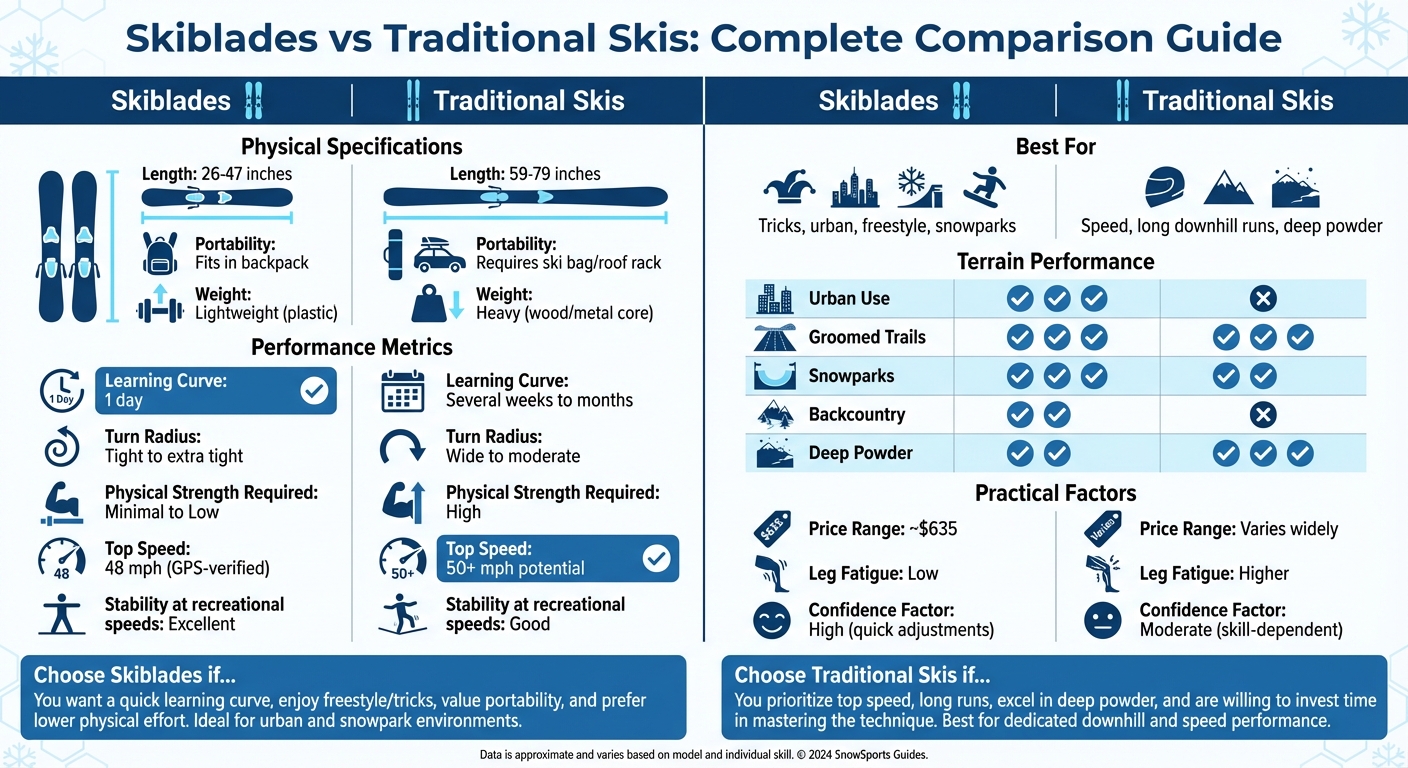
Skiblades vs Traditional Skis Comparison Chart
Snowfeet* Snowblades | Skiboards | Skiblades | Short Skis - All you need to know
Snowfeet* Skiblades Overview
Snowfeet* has carved out a name for itself by rethinking how we experience winter sports. Unlike traditional ski brands like Rossignol and Salomon, which focus on long and heavy gear, Snowfeet* takes a different approach. Their skiblades are all about fun, freedom, and accessibility. And here’s the kicker: shorter skis don’t mean you’re giving up performance - they actually make the ride more exciting.
Key Snowfeet* Skiblade Models
Snowfeet* offers three skiblade options, each designed for different riding styles:
- 65 cm model: This compact, skate-inspired design is perfect for urban adventures or snowpark fun. It’s small enough to fit in a standard backpack, making it easy to switch from city streets to snowy slopes in no time.
- 99 cm model: A great all-rounder, this length balances playfulness with performance. Built with a wood core and premium cap construction, it feels like a scaled-down version of full-length skis. The wider base ensures stability, while the pronounced sidecuts make carving and quick turns almost effortless.
- 120 cm model: The longest option in the lineup, this one’s for advanced riders who crave stability at higher speeds without losing maneuverability. Like the others, it has a twin-tip design, making switch riding a breeze. Plus, all models work with ski boots, snowboard boots, or even regular winter shoes, making them more versatile than traditional skis.
Why Choose Snowfeet* Skiblades?
One of the biggest perks of Snowfeet* skiblades is how easy they are to learn. Most people get the hang of them in just one day. Their shorter length makes turning feel natural and responsive, so you don’t need to master the forward-leaning stance or perfect balance required for longer skis.
Control is another standout feature. The compact design allows for quick stops, much like ice skating, which builds confidence for beginners and opens up trick potential for seasoned riders. For those recovering from knee injuries, the 65 cm model is a gentler option, reducing strain. And for advanced skiers, these skiblades offer a playful way to explore varied terrain. With less physical effort required, you can enjoy longer sessions without the fatigue that comes with traditional skis.
How Snowfeet* Redefines Winter Sports
Snowfeet* doesn’t just tweak the skiing experience - it changes the game entirely. Traditional skis come with the hassle of bulky gear and storage. Snowfeet* skiblades, on the other hand, are compact enough to strap to a daypack or slip into a backpack. This portability means you can go from urban skating to alpine runs or freestyle parks without missing a beat.
Their versatility is unmatched. The 65 cm model shines in snowparks and urban settings, the 99 cm is perfect for groomed trails and moguls, and the 120 cm handles powder and backcountry terrain like a pro. No matter where you ride, Snowfeet* brings an "instant fun" factor that appeals to both casual riders and experts. If you’re looking for freedom, flexibility, and pure enjoyment on the slopes, Snowfeet* is hard to beat.
Skiblades vs Traditional Skis: Direct Comparison
Maneuverability and Learning Curve
Snowfeet* skiblades are known for their ease of use and precise control, making them a go-to option for everyday skiers. Compared to traditional skis from brands like Rossignol or Salomon, which demand more strength and refined technique, skiblades - especially Snowfeet* models - are much more forgiving. They require less effort to carve turns, which is great news if you're not in peak physical shape.
Most people can get the hang of skiblades within just a few tries or even on their first day. Traditional long skis, on the other hand, often take weeks - or even a whole season - to feel comfortable. The shorter length and pronounced sidecuts of Snowfeet* skiblades allow for tighter, quicker turns, making them highly responsive.
| Feature | Snowfeet* 65 cm | Snowfeet* 99 cm | Snowfeet* 120 cm | Traditional Skis (160–205 cm) |
|---|---|---|---|---|
| Turn Radius | Extra tight | Tight to moderate | Moderate | Wide to moderate |
| Learning Time | Few hours to 1 day | 1 day | 1–2 days | Several weeks to months |
| Physical Strength Required | Minimal | Low | Low to moderate | High |
| Control Rating | Excellent (beginner-friendly) | Excellent (all-rounder) | Very good (advanced) | Good (skill-dependent) |
This ease of maneuverability makes skiblades a strong contender, but how do they stack up in terms of stability and speed? Let’s take a closer look.
Stability and Speed: Debunking Common Myths
Traditional skis are often praised for their stability, but this holds true mostly at extreme speeds (over 50 mph). For the vast majority of recreational skiers who don't hit such speeds, skiblades offer all the stability you could need.
Snowfeet* skiblades have a wider base and a lower center of gravity, thanks to their shorter length. This design allows for quick, precise adjustments on the fly. For example, one skier clocked a GPS-verified top speed of 48 mph on skiblades - nearly matching the performance of full-length skis while maintaining better control in tight situations. While skiblades may experience slight wobbling at extreme speeds, this is unlikely to impact recreational skiers.
| Performance Factor | Snowfeet* Skiblades | Traditional Long Skis |
|---|---|---|
| Stability (recreational speeds) | Excellent - wider base, responsive control | Good - requires proper technique |
| Stability (50+ mph) | Good - some wobble possible | Excellent - designed for high speed |
| Top Speed (recorded) | 48 mph (GPS-verified) | 50+ mph potential |
| Leg Fatigue | Low - less tiring on legs | Higher - more physical demand |
| Confidence Factor | High - quick adjustments make for extra confidence | Moderate - skill-dependent |
While speed and stability are key factors, portability is another area where skiblades stand out.
Portability and Multi-Terrain Use
When it comes to portability, Snowfeet* skiblades take the win. Traditional skis, and even some snowboards, are bulky and heavy. A typical pair of skis can measure up to 205 cm, making them a hassle to transport. Snowfeet* skiblades, however, range from just 65 cm to 120 cm, making them compact and easy to carry.
You can strap them to a daypack, stash them in your car trunk, or even take them on public transit without breaking a sweat. Their lightweight design also makes them perfect for bootpacking in backcountry terrain. Unlike traditional skis, which can get tangled at the tips and tails, skiblades allow for smoother kick turns and easier navigation through tight spots.
Snowfeet* skiblades also shine in their versatility. They perform well across a variety of terrains, from groomed trails to backcountry routes. You can even skate on snow right up to your doorstep - something you just can't do with traditional skis. The 65 cm model is ideal for snowparks, the 99 cm version handles moguls and mixed terrain beautifully, and the 120 cm skiblades are great for powder and backcountry adventures.
| Aspect | Snowfeet* 65 cm | Snowfeet* 99 cm | Snowfeet* 120 cm | Traditional Skis |
|---|---|---|---|---|
| Weight | Lightweight (plastic) | Lightweight (plastic) | Lightweight (plastic) | Heavy (wood/metal core) |
| Pack Size | Fits in a backpack | Compact carry | Compact carry | Requires ski bag/roof rack |
| Urban Use | Excellent | Good | Moderate | Poor - too long |
| Groomed Trails | Very good | Excellent | Excellent | Excellent |
| Snowparks | Excellent | Excellent | Very good | Good |
| Backcountry Access | Good - easy scrambling | Very good | Very good | Poor - tips/tails can tangle |
| Deep Powder | Limited flotation | Moderate flotation | Good flotation | Excellent flotation |
sbb-itb-17ade95
Performance Across Different Terrains
On Slopes and Groomed Trails
Snowfeet* skiblades shine when it comes to carving on groomed trails, often outperforming traditional skis. The 99 cm and 120 cm models, built with pronounced sidecuts and sturdy wooden cores, make smooth turns feel effortless.
Many recreational skiers find themselves carving confidently from the start with Snowfeet* skiblades. In contrast, intermediate riders often struggle with the steeper pitches when using longer skis. Thanks to their wider base, these skiblades offer solid edge grip on hardpack and icy surfaces. Their shorter length also means quicker, more controlled turns without the challenge of managing the momentum of traditional skis. This balance of control and agility opens the door for dynamic freestyle experiences.
In Snowparks and Urban Environments
Snowfeet* skiblades are a game changer in freestyle and urban settings. Their compact size and twin-tip design make the 65 cm and 99 cm models perfect for tricks, jumps, and rails - maneuvers that are tough to pull off with full-length skis. Riders can seamlessly ride forwards or backwards, pop off features with ease, and land tricks more stably, thanks to the lower center of gravity.
Outside the parks, these skiblades bring a whole new level of fun to urban snow adventures. Their lightweight, compact build allows for quick, agile maneuvers in settings where traditional skis just don’t work. Conventional skis are typically designed for downhill use, which limits their versatility in varied terrain or urban environments.
In Powder and Backcountry
Snowfeet* skiblades don’t just dominate groomed and urban terrains - they hold their own in powder and backcountry too. The Snowfeet* POWDER (99 cm) model is specifically designed with a wider profile to improve flotation in deep snow. While longer skis naturally provide more surface area for floating, the POWDER model stands out for its responsiveness and ease of turning, even in tricky conditions.
In the backcountry, Snowfeet* skiblades prove their worth during bootpacking and scrambling. Their compact size eliminates the awkwardness of traditional skis, making them easier to handle. The 120 cm model is particularly effective on uneven terrain and in deep powder, offering intuitive control and reducing the physical strain that often comes with managing conventional skis on challenging routes. This makes exploring remote areas less exhausting and more enjoyable, showcasing Snowfeet* as a versatile choice for winter adventurers.
Why Snowfeet* Skiblades Beat Traditional Skis
Snowfeet* as the Future of Winter Sports
Snowfeet* skiblades are shaking up the winter sports scene. Unlike brands like Rossignol, Salomon, and K2 that have stuck with the traditional long-ski design, Snowfeet* is introducing a whole new way to hit the slopes. They’re leading the charge in skiskating - a fresh, dynamic sport they hope will one day make it to the Olympics.
The idea is straightforward: shorter skis mean more fun and flexibility. Skiblades are gaining traction because they bring a playful, freestyle vibe to skiing. They let you move with ease, offering a level of creativity that long skis just can’t match.
This fresh take on skiing isn’t just about fun - it comes with some real, everyday perks.
Practical Benefits for Everyday Skiers
For anyone who loves winter sports, Snowfeet* skiblades bring some serious advantages. Their compact size (ranging from 25.6″ to 47.2″) makes them way easier to handle than the bulky 6–7.5 ft traditional skis.
Here’s the kicker: most people can pick up the basics in just one day. They require less strength and stamina, so you can enjoy longer sessions without wearing yourself out. Beginners will find them approachable, intermediates can use them to sharpen their skills, and advanced skiers can finally nail those tricks that might’ve seemed impossible with traditional skis. Plus, their lightweight design is easier on the knees, making them a great option for older skiers who want control without the strain of heavier equipment.
Final Thoughts
Snowfeet* skiblades don’t just offer convenience - they provide exceptional control and responsiveness. They work across various skiing styles, whether you’re into alpine, carving, moguls, freestyle, or even skiskating. They’re not just some niche gadget - they’re a versatile tool for all kinds of skiers.
Starting at $635, Snowfeet* skiblades combine fun and functionality across different terrains. Whether you’re eyeing the 65 cm model for tricks, the 99 cm version for powder, or the 120 cm option for carving, there’s a model that fits your style. Check out the Snowfeet* store and see why these skiblades are changing the game for winter sports enthusiasts everywhere.
FAQs
Are skiblades allowed at most U.S. ski resorts?
It’s not entirely clear if skiblades are allowed at most U.S. ski resorts. Policies can vary widely, so your best bet is to contact the resort you’re planning to visit and ask directly about their rules.
What bindings and boots do Snowfeet* skiblades work with?
Snowfeet* skiblades work with adjustable ski or snowboard boot bindings, making them compatible with most standard snowboard boots. This means you can use the boots you already own - no need to invest in specialized gear like you would with traditional skis. The adjustable bindings are simple to secure and come with some great perks: they’re compact, easy to carry, and super maneuverable.
How do I choose between 65 cm, 99 cm, and 120 cm Snowfeet* skiblades?
Choosing the right Snowfeet* skiblades - whether 65 cm, 99 cm, or 120 cm - comes down to your experience, how you plan to use them, and what balance you want between agility and stability.
- 65 cm skiblades: A great pick for beginners. They’re super easy to control, making them perfect for learning the ropes.
- 99 cm skiblades: Designed for intermediate riders. They offer a mix of versatility and speed, giving you the best of both worlds.
- 120 cm skiblades: Made for advanced users. These deliver more speed and glide, blending the feel of traditional skis with Snowfeet’s lightweight and portable design.
Each size brings something different to the table, so think about your goals before deciding!











Leave a comment
This site is protected by hCaptcha and the hCaptcha Privacy Policy and Terms of Service apply.