



















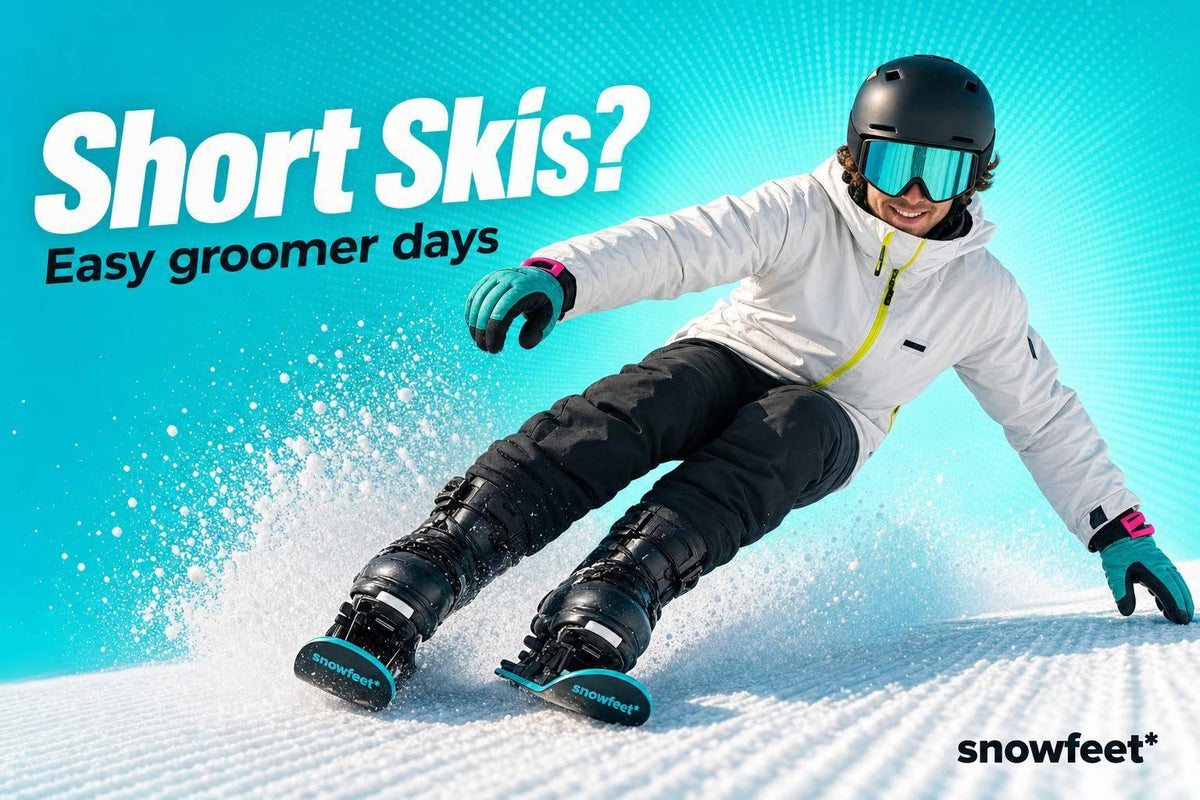
Yes - if your ski trip is mostly groomers, easy laps, and less hassle, short skis can be worth buying even if you only ski once a year. If you want speed, powder, or steep terrain, renting long skis still makes more sense.
Here’s the short answer:
- Rent long skis if you want better stability at higher speed, more float in powder, or you’re still not sure skiing is for you.
- Buy short skis if you want a setup that’s easier to carry, easier to store, and less awkward when you’re rusty.
- Cost can work out: rentals often run $40–$70 a day in the U.S., while short skis can cost about $150–$400 on the low end and may spread out over 5–7 seasons.
- Best fit: beginners, casual skiers, families, and once-a-year riders who stay on green and blue groomed runs.
My take? If you ski one weekend a year and just want to have fun without the rental line circus, short skis are a solid buy. If your dream day is bombing steep groomers or chasing a powder storm, keep renting the long stuff.
| Option | Best for | Main upside | Main downside |
|---|---|---|---|
| Rent long skis | Fast skiing, powder, steep runs | More stable and better all-mountain feel | Rental lines, bulkier gear |
| Buy short skis | Casual resort days, groomers, travel | Easy to turn, pack, and store | Less stable at speed |
| Buy long skis | People who ski more often | Familiar full-ski feel | Higher cost, more space, more travel hassle |
So, this isn’t about which ski is “better.” It’s about which one makes your one trip a year more fun :)
2. What short skis do better than long skis for casual riders
Easier turns, faster confidence, less intimidation
Short skis have a shorter effective edge. In plain English, that means they pivot faster and start turns with less effort.
On a 44 cm (17 in) Snowfeet* Skiskate or 65 cm (26 in) Snowfeet* Skiblade, that usually translates to quicker control on green and blue runs. You can make short turns and stop with less hassle, even if you don’t have polished carving skills. That’s a big deal when you’re rusty and want control NOW, not after half a day of wobbling around.
If you ski once a year, this can mean less time relearning and more time just having fun. And honestly, that’s the whole point.
Side-to-side movement is quicker too. There’s less length and mass to swing around, so small reactive moves feel easier. You can adjust around other skiers, get through flat connector trails, and deal with uneven snow without making big, committed turns. That tends to help nervous beginners, kids, and snowboarders trying skis get the hang of things faster.
Easier to pack, store, and travel with across the U.S.
At 44–65 cm (17–26 in), Snowfeet* models are easy to live with off the mountain too. They fit in a closet, under a bed, or in a car trunk. On a road trip, they can slide onto a back seat without eating up the whole car.
Flying is easier as well. They can often fit inside standard checked luggage or a smaller sports bag, which may help you avoid oversize ski-bag fees. For casual skiers, that’s no small thing. If you only ski once a year, you may not want to rent every time, wrestle with full-length skis, or find a place to store them for the other 11 months.
For a lot of people, that simple convenience matters just as much as on-snow feel.
Where short skis fall short
Short skis give up some high-speed stability in exchange for easier movement. On wide groomers at higher speeds, they can feel twitchier and less planted. Small bumps can knock them off line more easily too, since there’s less length to smooth out uneven snow.
In deep powder, they have less surface area, so they sink more and don’t stay on top of the snow as well. On long, steep carving descents, they also can’t match the edge hold or steady platform that longer skis offer.
That trade-off shows up most when you compare buying short skis versus renting long ones.
| Factor | Short skis (44–99 cm) | Long skis (160–180 cm) |
|---|---|---|
| Maneuverability | Excellent on groomed runs | Better at speed, less nimble |
| Speed stability | Limited above moderate speeds | Strong at high speeds |
| Travel convenience | Fits in a standard checked bag or small sports bag | Requires oversize ski bag |
| Powder performance | Weak - sinks more easily | Better float and control |
| Best use case | Groomed greens/blues, casual resort days | All-mountain, speed, long carving runs |
Short Skis vs. Long Skis
3. Renting long skis vs buying short skis: the real once-a-year decision
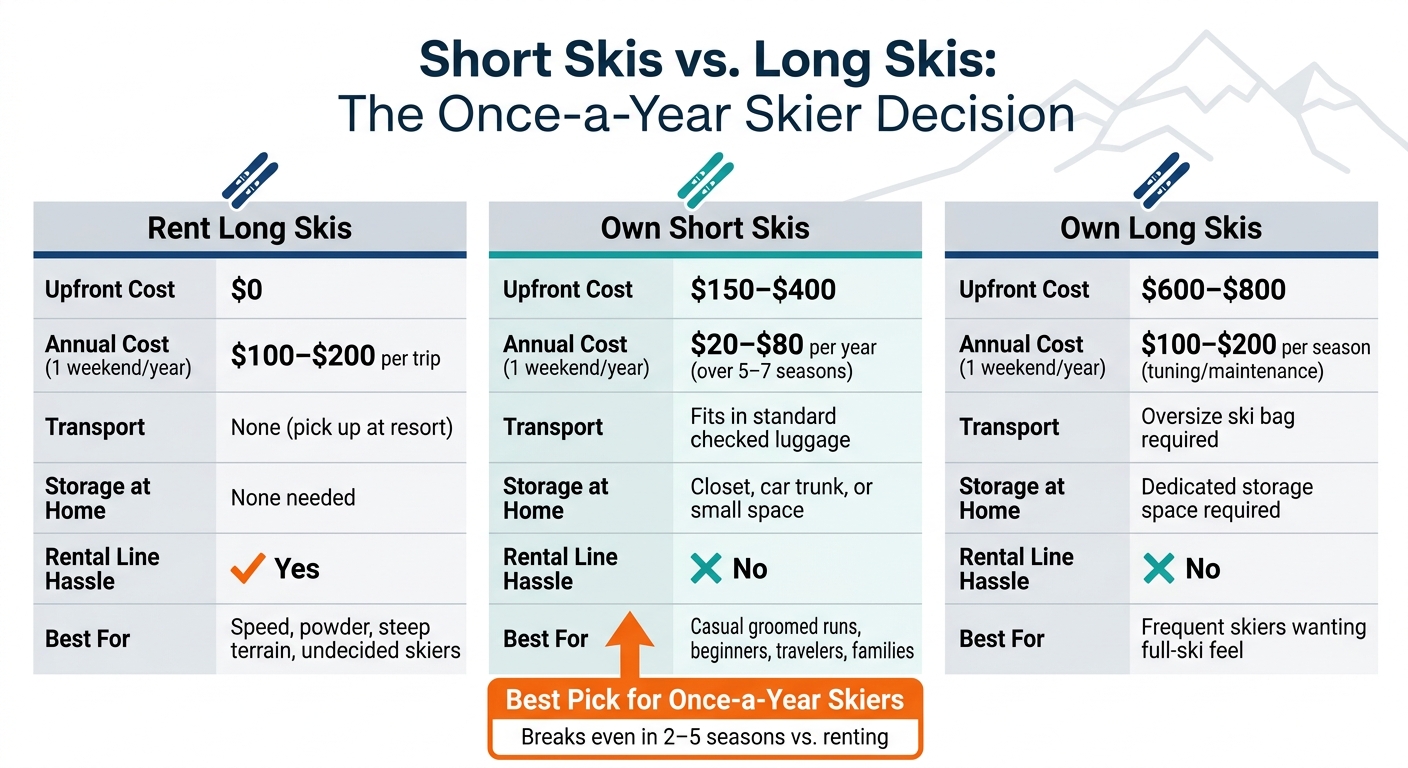
Short Skis vs. Long Skis: Cost & Convenience for Once-a-Year Skiers
If you ski once a year, you’re probably not chasing peak performance. You want less hassle, a fair price, and more time on snow. That’s the heart of this choice.
When renting still makes more sense
If you only ski once a year and you’re still not sure you’ll stick with it, renting is the smarter move. You’re not tied to one setup, you avoid the upfront spend, and the shop takes care of the annoying stuff for you: boot fitting, binding adjustments, and tuning.
At U.S. resorts, rental prices usually run about $40–$70 per day for a standard adult package. A weekend trip often lands in the $100–$200 range. So if you try skiing and think, “Yep, not my thing,” you’re not stuck with gear gathering dust in a closet.
Renting also works well if you like trying different setups from season to season.
When buying short skis can still pay off
The numbers change if you know you’ll keep skiing, even if it’s just one trip each year. Short skis from Snowfeet* sell for about $150 to $400, based on the model. Spread that over 5–7 seasons, and the cost can drop to about $20–$80 per year, plus the odd tune-up.
And cost isn’t the only part of it. Owning your own gear means no rental line. That’s a big deal when you’ve only got a short trip and don’t want to burn half the morning waiting around. Short skis are also easy to travel with, which helps a lot if you fly or toss your gear in the car for a weekend run.
That’s the trade-off in plain English: pay once for ease, or pay each season to rent.
Cost and convenience: a side-by-side comparison
| Factor | Renting long skis | Owning long skis | Owning short skis |
|---|---|---|---|
| Upfront cost | $0 | about $600–$800 for a beginner setup | about $150–$400 |
| Annual cost for 1 weekend per year | about $100–$200 per trip | about $100–$200 per season in tuning and maintenance | about $20–$80 per year over 5–7 seasons |
| Transport burden | None - pick up at the resort | Oversize ski bag required | Fits in standard checked luggage or a compact gear bag |
| Storage at home | None | Requires dedicated space | Fits in a closet, car trunk, or small storage space |
| Rental line hassle | Yes | No | No |
If buying still makes sense, the next move is picking the Snowfeet* model that matches how often you ski and how hard you like to ride.
sbb-itb-17ade95
4. Best Snowfeet* options for once-a-year skiers
If you ski once a year, go with the model that makes the first hour less awkward and the trip less of a hassle. If you're still thinking about buying, here's how the Snowfeet* lineup stacks up for that kind of skier.
Snowfeet* Skiskates 44 cm and Snowfeet PRO 50 cm
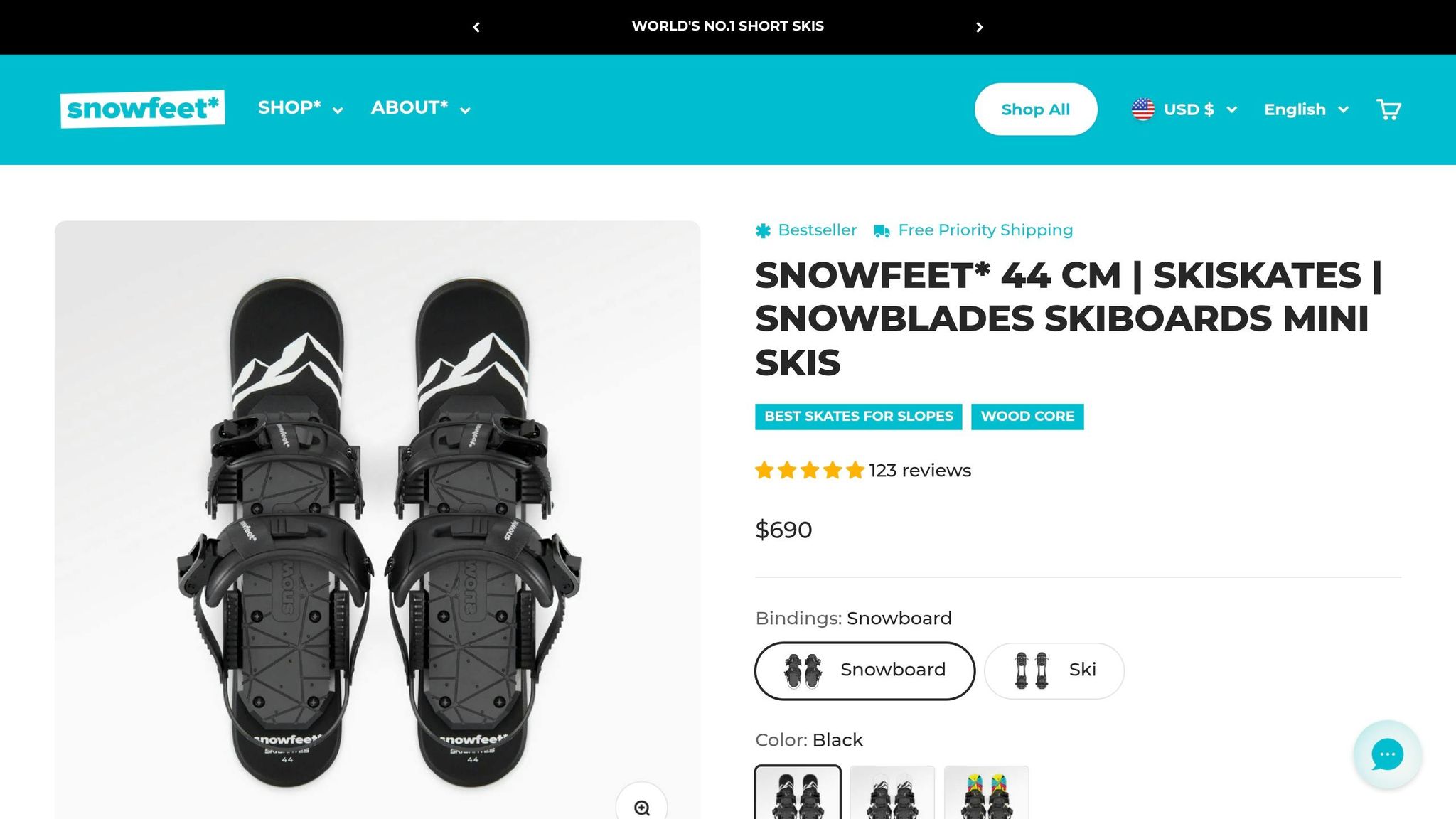
The Skiskates 44 cm (from $460) are the smallest option in the lineup. They use a wood-core build and feel more like skates than skis. That makes them fun for short groomed laps and playful turns, but they’re not made for long runs or high-speed descents.
The Snowfeet PRO 50 cm (from $299) is the lower-cost way in and a smart first pick if you're new to short skis. It gives you a bit more stability than the Skiskates while still being easy to toss in a bag. Both models work best on groomed resort runs for laid-back ski days. Before you buy, check boot fit. Some setups need boots that match the binding.
Snowfeet* Skiblades 65 cm and 99 cm
The Skiblades 65 cm (from $590) are the easiest all-around choice for once-a-year riders. They’re a nice fit for short, easy laps at the resort on groomed runs. If you want something simple and forgiving, this is the one that makes the most sense for a lot of people.
The Skiblades 99 cm (from $690) give you more stability at moderate speeds. If you’ve skied before and want a bit more confidence on steeper groomers, the added length helps. Think of them as the “I want a calmer ride” option.
Which Snowfeet* model fits your use case
Use this chart to match the model to how you ski and how comfortable you feel on snow.
| Model | Length | Price | Best for | Best terrain | Portability |
|---|---|---|---|---|---|
| Snowfeet PRO | 50 cm (~20 in) | From $299 | First-timers, budget buyers | Groomed resort runs | Excellent - very easy to pack |
| Skiskates | 44 cm (~17 in) | From $460 | Riders who want a skates-on-snow feel | Short groomed laps | Excellent - ultra-compact |
| Skiblades | 65 cm (~26 in) | From $590 | Casual riders, easiest all-around control | Groomed resort runs | Very good - easy to travel with |
| Skiblades | 99 cm (~39 in) | From $690 | Riders wanting more stability | Groomed runs at moderate speeds | Good - travel-friendly |
Every model here lines up with the once-a-year skier setup: easier learning, less intimidation, and less hassle than long skis on groomed resort runs. Next up, we sort out who should buy and who’s better off renting.
5. Final verdict: who should buy short skis and who should keep renting
Short skis are worth it if you want easy and fun
After looking at rentals, cost, and how they feel on snow, the call is pretty simple: if your one ski day each year is about easy, fun laps on groomed green and blue runs, short skis make a lot of sense.
They’re a good fit for beginners, casual skiers, families, travelers, and snowboarders who want to try skiing without a big learning curve. For people who ski now and then, the main problem often isn’t just the rental bill. It’s showing up rusty, feeling clunky in big gear, and burning half the day just trying to feel normal again. That’s where short skis help. Options like the Snowfeet* Skiblades 65 cm or Snowfeet* PRO 50 cm make the whole day feel less like work and more like, well, skiing :)
Rent long skis if speed or specialized performance is your goal
Rent long skis when performance matters more than convenience. That’s still where they do best. Long rentals give you better edge hold, more stability at speed, and more float in powder. So if your once-a-year trip includes steep terrain, long fast carving runs, or a powder day, and you like to ski hard, rent the long skis.
The same goes if you’re still not sure skiing will become a habit. No need to spend money on gear before you know what kind of skier you want to be.
Key points to check before you buy
Be honest with yourself before you pull the trigger:
- How often do you ski? Once a year points to short skis.
- What terrain do you ride? Groomed runs point to short skis. Steep powder points to rentals.
- Does rental hassle bug you? If yes, compact gear is a smart move.
- Do you need portability? Look at the 44 cm Skiskates or 50 cm Snowfeet* PRO.
- How confident are you? Go with the shortest model only if you want the easiest ride.
FAQs
Do short skis work for complete beginners?
Yes - short skis like Snowfeet* can be a great pick for complete beginners.
Their small size, usually 15 to 47 inches, makes them easier to turn and control than standard 150 cm beginner skis. That shorter length can help new riders feel less awkward right away, which is a big deal on your first day out.
A lot of beginners can learn basic turning and stopping within just a few runs. They also work with regular winter boots or snowboard boots, so the setup feels simpler and a lot less intimidating.
Can I use my regular ski boots with Snowfeet*?
Yes. Most Snowfeet* models work with regular winter boots. Some also fit snowboard boots or ski boots.
The exact fit depends on the model. But in general, Snowfeet* are easier to use than a standard ski setup because you don’t need as much gear.
For the best support, go with waterproof boots that hold your ankle firmly.
How many trips make short skis worth buying?
If you ski only once a year, short skis can pay for themselves after just a few trips. Snowfeet models start at $150, so buying a pair can cost less than renting again and again.
Owning your own pair also cuts out a lot of rental hassle. And travel gets way easier too, since the gear fits in a standard backpack.











Leave a comment
This site is protected by hCaptcha and the hCaptcha Privacy Policy and Terms of Service apply.