



















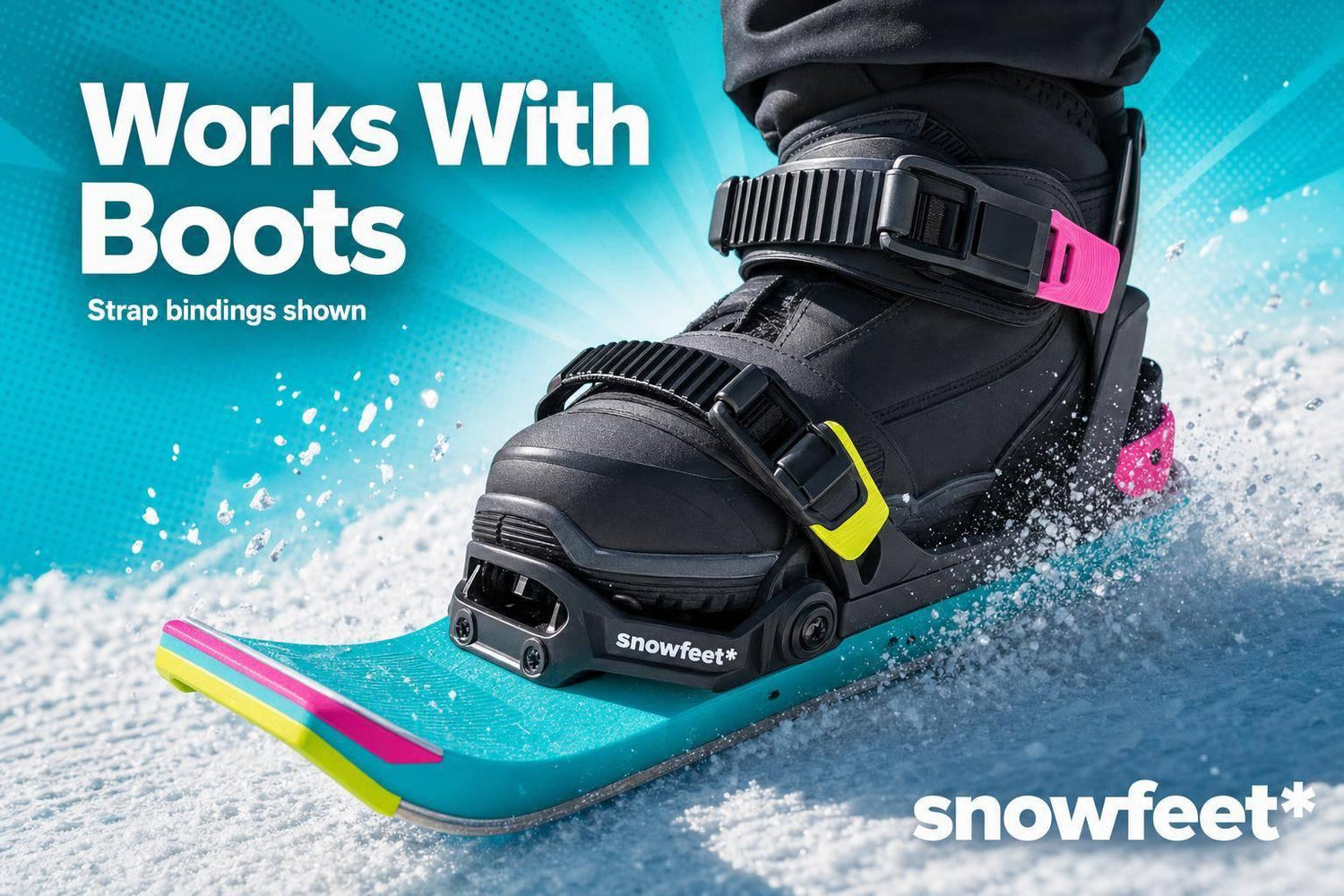
Yes - some short skis do work with snowboard boots, but only if they use the right binding. Standard alpine ski bindings won’t hold soft snowboard boots the right way, so the safe picks are short skis with strap bindings or snowboard-boot-specific bindings.
If I had to boil the whole thing down fast, here’s the answer:
- Works with snowboard boots: Snowfeet Mini Ski Skates, PRO 50 cm, Skiskates 44 cm, and Skiblades 65 cm, 99 cm, and 120 cm
- What matters most: the binding, not the ski length
- Best starter pick: PRO 50 cm
- Best for tricks and park laps: Skiskates 44 cm
- Best for groomers and more speed: Skiblades 99 cm or 120 cm
- Typical boot fit range: US 6 to 14.5 on the snowboard-boot binding options
- Price range: about $190 to $950
So, if you want to keep your snowboard boots and skip the clunky ski-boot shuffle, you’ve got a few clear options. The tradeoff is simple: snowboard boots feel nicer; ski boots give more edge control. That’s the whole game.
Snowboarder tries Snowfeet* | Which Snowfeet* Short Ski is the Best? | Snowblades 44, 65, 99 Review
Quick Comparison
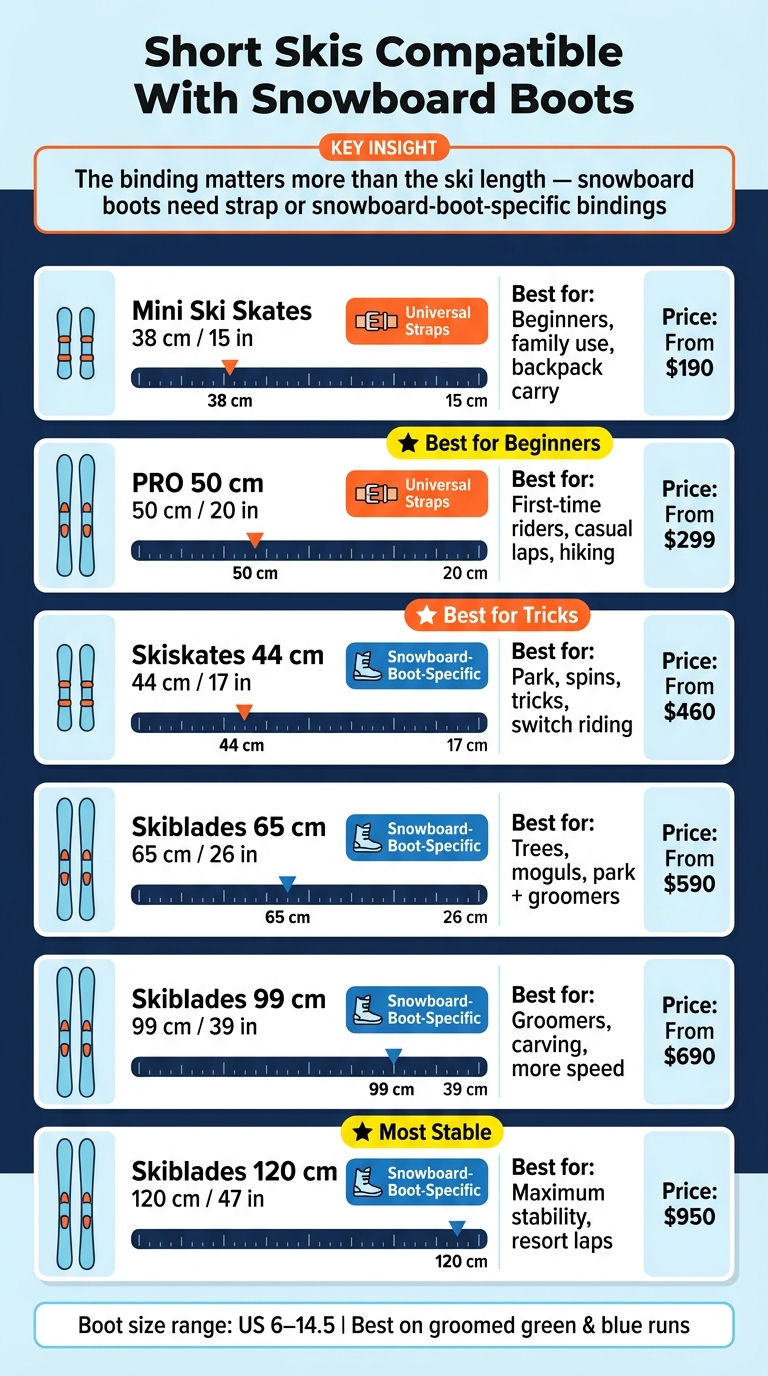
Short Skis That Work With Snowboard Boots: Full Model Comparison
| Model | Length | Binding that fits snowboard boots | Best for | Starting price |
|---|---|---|---|---|
| Mini Ski Skates | 15 in / 38 cm | Universal straps | Beginners, family use, backpack carry | $190 |
| PRO 50 cm | 20 in / 50 cm | Universal straps | First-time riders, casual laps, hiking | $299 |
| Skiskates 44 cm | 17 in / 44 cm | Snowboard-boot-specific | Park, spins, switch, playful feel | $460 |
| Skiblades 65 cm | 26 in / 65 cm | Snowboard-boot-specific | Trees, moguls, park + groomers | $590 |
| Skiblades 99 cm | 39 in / 99 cm | Snowboard-boot-specific | Groomers, carving, more speed | $690 |
| Skiblades 120 cm | 47 in / 120 cm | Snowboard-boot-specific | Most stable ride in the lineup | $950 |
A few fast tips before you buy:
- If a product page doesn’t clearly say it fits snowboard boots, assume it doesn’t.
- Bigger boots can be an issue on strap systems, so double-check sizing if you wear US 12–13.
- Shorter models feel more playful. Longer models feel more ski-like and steady.
- These setups are best on groomed green and blue runs, not steep icy black runs or deep powder.
If you want, I can also turn this into a buyer’s guide, a comparison chart, or a SEO-friendly intro for publishing.
Snowfeet* Models Compared For Snowboard Boot Riders
Here’s a clean side-by-side look at the Snowfeet* lineup for snowboard boot riders. The main things to look at are binding type, length, and how you plan to ride.
| Model | Length | Binding Type | Best Use | Starting Price (USD) |
|---|---|---|---|---|
| Mini Ski Skates | 38 cm / 15 in | Universal straps | Family sharing, beginners | From $190 |
| Snowfeet PRO 50 cm | 50 cm / 20 in | Universal straps | Beginners, families, hiking | From $299 |
| Skiskates 44 cm | 44 cm / 17 in | Snowboard-boot-specific bindings | Park, tricks, skating feel | From $460 |
| Skiblades 65 cm | 65 cm / 26 in | Snowboard-boot-specific bindings | Moguls, trees, park combos | From $590 |
| Skiblades 99 cm | 99 cm / 39 in | Snowboard-boot-specific bindings | Groomers, carving, speed | From $690 |
| Skiblades 120 cm | 120 cm / 47 in | Snowboard-boot-specific bindings | Max stability, resort laps | $950 |
Mini Ski Skates And PRO 50 cm: The Simplest Option For Snowboard Boots
If you want the easiest way in, start here. The Snowfeet PRO 50 cm is the simplest strap-on pick for snowboard boots. The Mini Ski Skates are even smaller, which makes them super easy to toss in a backpack and bring along.
There is one thing to watch for. If you wear US size 12–13 snowboard boots, check that your boots aren’t too bulky for the standard straps.
Skiskates 44 cm Vs Skiblades 65 cm, 99 cm, And 120 cm
The other Snowfeet* models use snowboard-boot-specific bindings, which means a tighter fit and better edge control. These bindings fit US sizes 6 to 14.5, so larger snowboard boots are covered too.
The Skiskates 44 cm are the most nimble option in the bunch. If you like spins, jumps, and switch riding, this is where things get fun. They have the most skate-like feel on snow - fast to turn, quick underfoot, and made for tricks. The downside? They don’t build speed as well on mellow terrain, and they feel less planted once you start pushing high speed.
The Skiblades 65 cm land right in the sweet spot. They’re quick enough for moguls and trees, but still steady for small jumps. With snowboard-boot bindings, the setup stays snug and comfortable.
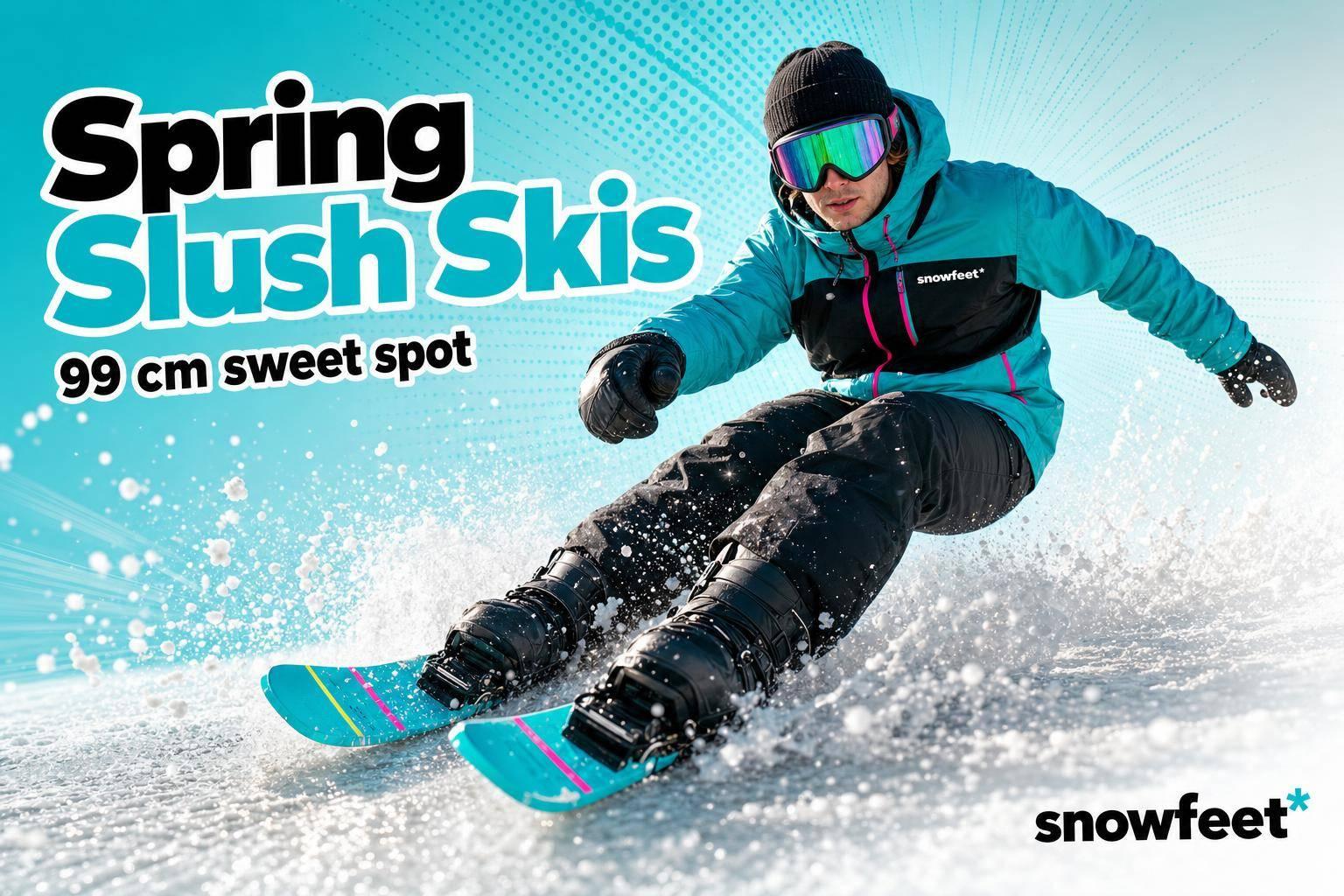
Move up to the 99 cm or 120 cm, and the ride starts to feel more like skiing. You get more edge hold, more confidence when the pace picks up, and better carving on groomed runs.
Next, compare Snowfeet* with classic snowblades and other short skis to see where the boot-friendly options come out ahead.
sbb-itb-17ade95
Snowfeet* Vs Traditional Snowblades And Other Short Skis
Why Most Classic Snowblades Do Not Work With Snowboard Boots
Classic snowblades use alpine ski bindings built for rigid ski boots. So, snowboard boots don’t fit them in a safe way. That’s the big issue if you already ride in snowboard boots and want to keep your setup simple.
If you already own ski boots and want the best edge hold on hardpack, or more control at higher speeds, a ski-boot setup still has an edge. Rigid boots send power to the ski more directly, which helps on steep groomers and icy snow. For that kind of rider, old-school snowblades can still make sense.
For most other riders, though, the extra boot swap is a pain. It’s more gear, more hassle, and less comfort.
How Snowfeet* Fits More Riding Styles Than Competing Short Skis
A lot of short skis that work with soft boots stay very short. That’s fun at mellow speeds, but it can box you in as you improve. Snowfeet* gives you more room to choose, from compact skiskates to full-length skiblades, all with binding options that work with snowboard boots. So you can start with something small, then move up later without changing boots.
Here’s the side-by-side view for snowboard-boot riders:
| Aspect | Snowfeet* (with Snowboard Boots) | Traditional Snowblades (with Ski Boots) |
|---|---|---|
| Boot compatibility | Works with snowboard boots and many winter boots | Requires alpine ski boots; incompatible with snowboard boots |
| Portability | Compact; shorter models fit in a backpack; one-boot travel | Skis plus separate ski boots add significant bulk |
| Learning curve | Very short; familiar boot feel helps beginners and snowboarders | Steeper for beginners due to stiff boots and precise edge response |
| Terrain use | Groomed green/blue runs, park features, casual resort laps | Better for steeper terrain, icy conditions, and high-speed carving |
| Convenience | High; comfortable all day, simple strap-in, no extra boot purchase | Lower; requires changing into ski boots and managing more gear |
So the next step is pretty simple: pick the length that fits how and where you ride. From there, it gets easier to narrow things down by terrain, like park laps, groomers, or mellow resort cruising.
How To Pick The Right Setup For Resort, Park, Or Casual Use
Now that the compatible models are clear, here’s how to choose the right one. The main things to look at are your skill level, where you ride, and how you want the setup to feel underfoot - more skate-like and playful, or more ski-like and planted.
Snowfeet* works best on groomed green and blue runs. Powder and steep, icy black runs aren’t where it shines.
Best Pick For Beginners, Snowboarders, And Families
Start with the Snowfeet* PRO 50 cm. It fits snowboard boots, and many beginners get comfortable on it fast. That extra length compared with the 44 cm Skiskates gives you more platform under your feet, which helps with balance while you learn.
If, later on, you want more stability or smoother carving, move up from there. The Skiblades 65 cm are a strong next step. They give you more support on landings and cleaner turns on groomed runs.
Best Pick For Park Riders And Groomer Laps
If park riding is your main thing, go with the Skiskates 44 cm. Their parabolic shape makes spins and jumps feel natural and quick.
If you want a mix of park time and groomer laps in the same session, the 65 cm Skiblades hit a nice middle ground. You get more stable landings and cleaner turns without giving up much agility. Want more control at higher speeds? That’s when it makes sense to jump to 99 cm or 120 cm.
When To Step Up To 99 cm Or 120 cm
The 99 cm and 120 cm Skiblades are made for riders who want more edge grip and more confidence at speed on groomed runs. The nice part: they still use snowboard-boot-compatible bindings, so you don’t need to change your boot setup.
Choose 99 cm or 120 cm if speed stability matters more to you than super quick turns.
Conclusion: The Best Short Skis For Snowboard Boots
After looking at the options side by side, the answer is pretty simple. What matters is the binding, not the ski length. Snowboard boots do not fit safely in alpine bindings.
If you ride in snowboard boots, the Snowfeet* models that fit the job are Skiskates 44 cm, PRO 50 cm, and Skiblades 65 cm, 99 cm, and 120 cm.
Here’s the best fit by rider type:
- Beginners and families: PRO 50 cm is the easiest place to start. If you want a bit more stability, move up to Skiblades 65 cm.
- Park riders and crossover snowboarders: Skiskates 44 cm works best for spins, tricks, and that skate-like feel.
- Casual groomer and resort riders: Skiblades 99 cm or 120 cm give you smoother carving and more edge hold when you pick up speed.
Longer skis with ski boots still do better for hard charging on hardpack or icy steeps. But for most casual U.S. resort riders, Snowfeet* makes more sense. You can keep your snowboard boots and skip extra gear, which is a nice little win :)
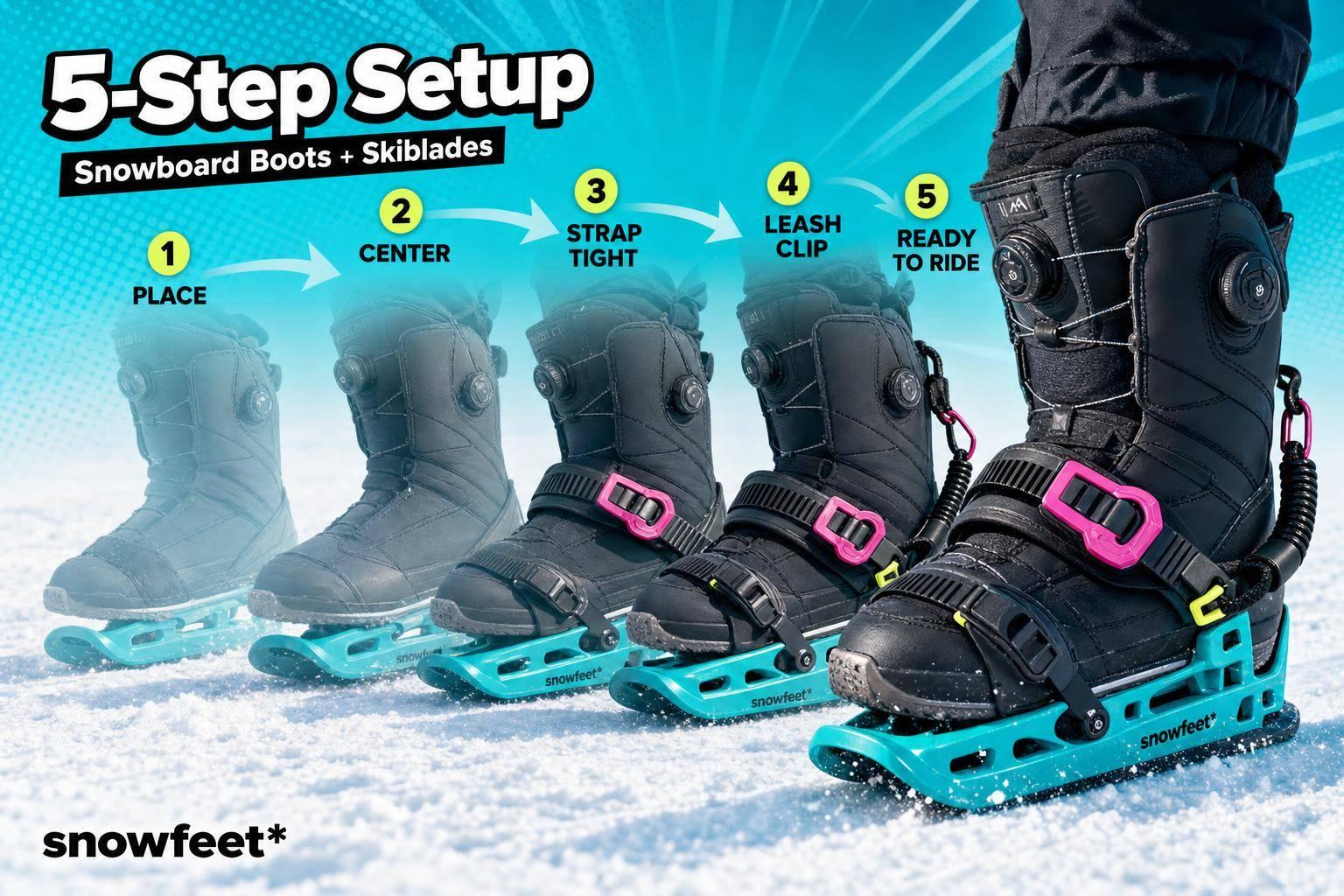
Once you pick the length, the setup matters most. Make sure your boot size is in the 6–14.5 US (EU 38–49) range, mount the boot in the center of the ski, and tighten every strap well. Stay on groomed runs and moderate terrain. For most casual riders, Snowfeet* models are the best short skis for snowboard boots.
FAQs
Are snowboard boots as safe as ski boots on short skis?
Snowboard boots aren’t as precise as ski boots, but they can still be safe when you pair them with the right gear.
The big issue shows up when people use snowboard boots with standard release bindings. Those bindings are built for stiff ski boots, so they may not release the way they should during a fall. And yeah, that’s where things can get sketchy.
On Snowfeet* models with specialized non-release, snowboard-style bindings, snowboard boots can feel secure and comfortable. You get more ankle flex and a bit less edge control, but the setup stays stable for casual resort riding as long as the boots fit well and the straps are tightened the right way.
How do I know if my snowboard boots will fit the bindings?
First, make sure your boots fall within the model’s size range, which is usually US 6–14.5. Then place the boot in the center of the binding platform and tighten the straps.
A good fit should feel snug and steady, with no side-to-side movement and no heel lift. If the boot slides around or feels shaky, the binding is too loose. And if you’re using bulky boots or wear around US 12–13, take a second to check that the straps close all the way around the shell.
Which Snowfeet* model feels most like regular skiing?
The 120 cm Skiblades feel the closest to regular skiing. In the Snowfeet* lineup, they give you the most directional stability and handle steeper terrain the best.
The 99 cm model also feels stable and works well across the mountain. But if you want the option that comes nearest to standard skis, the 120 cm version is the clear pick.











Leave a comment
This site is protected by hCaptcha and the hCaptcha Privacy Policy and Terms of Service apply.