




















I wouldn’t judge short skis by price alone. Before you pay, I’d check the seller, match the skis to the official product page, and get the return terms in writing.
For Snowfeet* models, here’s my short checklist:
- Match the setup: Check the 65 cm, 99 cm, or 120 cm length - about 26, 39, or 47 inches - plus bindings, boot fit, and included parts.
- Check the seller: Ask Snowfeet* through its official website to confirm any claim that a seller is authorized.
- Check photos and cost: Request photos of the actual pair. Compare the same setup in USD, including shipping, tax, and fees.
- Protect your payment: Read the warranty and return rules. Use a credit card or marketplace checkout with dispute protection, and save your records.
Another brand or a used pair isn’t counterfeit just because it costs less. But if the brand claim, parts, or seller details don’t line up, I’d <u>pause before buying</u>. If the skis arrive with safety defects, don’t use them - keep the packaging and seek a refund.
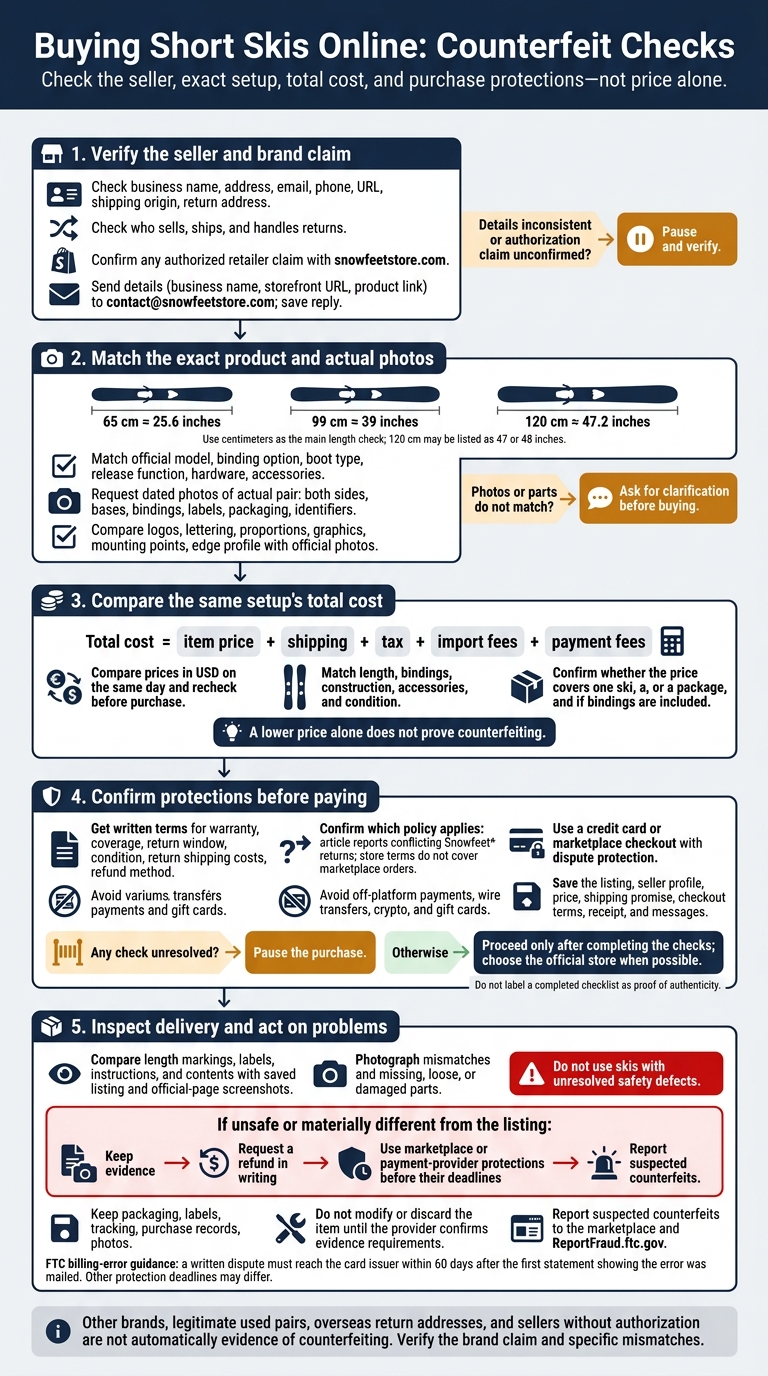
Buying Short Skis Online: Counterfeit Checks
1. Check the Seller and Brand Claims
Confirm Seller Details and Authorized Retailer Status
Open the seller profile, not just the product page. Note the business name, address, email, phone number, storefront URL, shipping origin, and return address. Check who sells the skis, who ships them, and where you’ll send returns.
Pause if you spot a missing address, a disposable email, company names that don’t match, or an unrelated return address. An overseas return address doesn’t prove fraud. But if the listing promises U.S. fulfillment, ask the seller to explain it.
Search the business name and website domain for reviews, complaints, and scam reports. Check Snowfeet* contact details on its official website. Don’t rely on logos or lookalike domains.
Confirm authorized retailer status directly. Email contact@snowfeetstore.com with the seller’s exact business name, storefront URL, and product link. Ask whether the seller is authorized. Save the reply and screenshots of the listing before checkout.
If seller details don’t line up, stop and verify the listing before moving on.
Separate Other Brands From Counterfeits
Product category names don’t prove a connection to Snowfeet*.
Bigfoot, Figl, Salomon, and ODR products sold under their own names are competing products, not automatically counterfeit.
Look for brand-name conflicts. If a Snowfeet* label appears on another maker’s product, ask for an explanation before buying. A similar shape alone isn’t evidence of counterfeiting.
Once you’ve checked the seller and brand claim, compare the listing’s exact model, length, photos, logos, and hardware with the official product page.
2. Compare Product Details and Photos
Compare the 65 cm, 99 cm, and 120 cm Models
Open the official Snowfeet* short-skis collection. Match the seller’s listing to the exact official length and binding setup, then save a screenshot of that setup before you buy.
| Official model and link | Length | Riding focus | Configuration checks |
|---|---|---|---|
| Snowfeet* Skiblades 65 cm | 65 cm | Compact carving, quick turns, and park use. | Check the exact binding type, which footwear fits, and included hardware. |
| Snowfeet* Skiblades 99 cm | 99 cm | More stability and a broader range of uses. | Match the exact binding option, which boots fit, and included items. |
| Snowfeet* Short Skis 120 cm | 120 cm | Most ski-like feel. | Verify the binding option, which ski boots fit, wood-core build, and included hardware. |
Use centimeters as your main length check. It’s normal to see a 120 cm model listed as 47 or 48 inches.
Check the binding model, supported boot type, and release function against the official setup. Once the model and bindings match, take a closer look at the photos and hardware.
Check Logos, Hardware, and Packaging
Compare the seller’s photos with current official photos. Check logo placement, lettering, ski proportions, top-sheet graphics, bindings, mounting points, edge profile, and accessories.
Ask for dated close-ups of the actual skis - not just stock images. These should show both sides, bases, bindings, labels, packaging, and any product identifiers. Watch for blurry shots, the same stock photos used for different lengths, or a seller who won’t share photos of the actual item. If the photos or parts still don’t match, move on to price, warranty, and return checks.
After delivery, compare the package’s length markings, labels, instructions, and contents with your saved screenshots. Photograph any differences, and inspect the bindings, edges, and bases for missing, loose, or damaged parts. Send photos of any mismatches to Snowfeet* for clarification. Don’t use skis with unresolved safety defects.
All you need to know - Snowfeet* | Skiskates | Skiboards | Snowblades | Skiblades FAQ
sbb-itb-17ade95
3. Check Prices, Warranties, and Returns
Once the model, photos, and hardware match, check the price and policy terms for any last red flags.
Compare Current Prices for the Same Configuration
Compare the exact setup - not just the headline price. Match the model, length, bindings, construction, accessories, and condition against the official Snowfeet* setup. Record both prices in USD on the same day. Include shipping, tax, import fees, and payment fees. Check the live page again right before buying; an old price may no longer apply.
| Model / offer | Configuration | Price (USD) | Condition and seller | Warranty provider | Return terms |
|---|---|---|---|---|---|
| Listing you’re reviewing | Match the selected official setup and included parts | Record the listing price and date | Record condition and seller’s identity | Get the provider’s name | Record the window, fees, and who pays shipping |
Check whether the price covers one ski, a pair, or a package - and whether it includes bindings. A discount may come from a bundle, clearance sale, used condition, missing parts, or a regional promotion.
Even if the price checks out, the warranty and return terms still need to match what the seller promises.
Read Warranty and Buyer Protection Terms
Get these details in writing: who provides the warranty, what it covers, marketplace eligibility, the return window, shipping costs, and the refund method.
Snowfeet* says its warranty applies only to products with no signs of use, modification, or damage. Customers pay return shipping for warranty claims. Its materials list conflicting return windows, so ask which policy applies to your purchase and save the seller’s written answer.
The Snowfeet* FAQ requires items to be brand-new and in their original packaging. It excludes used-item returns and makes the customer responsible for return shipping. Store terms don’t automatically cover marketplace orders. If the seller’s terms differ without an explanation, ask for one before checkout.
Pay by credit card or use a marketplace payment method with dispute protection. Avoid off-platform payments, wire transfers, crypto, and gift cards. Save the listing, checkout terms, delivery estimate, receipt, and messages.
Contact your card issuer promptly if there’s a problem. The FTC says a written billing-error dispute must reach the issuer within 60 days after the first statement showing the error was mailed.
4. Complete Your Checks and Address Warning Signs
Use the Pre-Purchase Checklist
Once you’ve checked the seller, product, price, and policies, make one last pass before you pay.
- ☐ The seller lists its legal or trading name, location, contact details, and marketplace profile.
- ☐ You’ve confirmed any claim of Snowfeet* authorization through Snowfeet*’s official contact channel.
- ☐ The listing names the exact model and length: 65 cm, 99 cm, or 120 cm (about 25.6, 39, or 47.2 inches).
- ☐ The bindings, hardware, and accessories match your chosen setup.
- ☐ Photos are current, consistent, and show the actual item - not just stock images.
- ☐ You’ve compared the price with the same model and included equipment on the official site.
- ☐ Written warranty and return terms explain coverage, deadlines, required item condition, return shipping, and who’s responsible.
- ☐ The payment method is traceable and offers buyer protection.
- ☐ You’ve saved copies of the listing, seller profile, price, shipping promise, and messages.
A seller without authorization isn’t automatically selling counterfeits. Check the listing’s details, supporting proof, and purchase terms.
If any box stays unchecked, pause the purchase and follow the steps below.
Handle a Suspicious Listing or Delivery
Ask the seller to explain any mismatch in writing. Request a dated photo that shows the length marking, bindings, and product labels. Contact Snowfeet* through its official website - not contact details supplied by the seller. If the seller won’t answer basic questions, skip the purchase.
If delivered skis seem unsafe or differ materially from the listing, stop using them. Keep photos, packaging, labels, tracking details, and purchase records. Request a refund in writing. Then use the marketplace’s or payment provider’s buyer protections before their deadlines expire.
Don’t modify or discard the item until the marketplace or payment provider confirms which evidence it needs.
Report suspected counterfeits to the marketplace and ReportFraud.ftc.gov. Explain the disputed Snowfeet* claim and the exact mismatch. A competing brand or a legitimate used pair isn’t automatically counterfeit.
Conclusion: Choose a Verified Snowfeet* Seller
If the listing passes every check, buy only from a verified Snowfeet* seller or the official store. Choose the official store when possible. Use its 65 cm, 99 cm, and 120 cm product pages and short-skis collection to check your purchase. The seller’s identity matters more than price alone.
FAQs
How can I verify older Snowfeet* models?
Match the model name, length, and binding type to the official Snowfeet* specs. Check the branding, and contact Snowfeet* to verify any serial numbers or product codes.
Ask for dated photos of the bases, edges, topsheets, and binding mounts. Find out how old the gear is and whether the bindings have been mounted more than once. Confirm that the bindings can still be serviced and fit your boot sole length.
If any details remain unclear, skip the listing and buy directly from the official store.
What should I check before buying used short skis?
Before buying used short skis, check the seller’s identity, return policy, and warranty terms. Secondhand sales often don’t include return or warranty coverage.
Inspect the skis for core shots, delamination (layers pulling apart), and cracked edges. Check the bindings for damage and corrosion, too. They may also be too old for a ski shop to service.
Make sure the binding type and adjustment range work with your boots. A poor fit can make injury much more likely.
Can I get a refund if a seller denies selling counterfeits?
Your refund options depend on the seller’s return policy and the platform’s buyer protections. Marketplace sellers may offer little help, while secondhand sales usually have no formal return policy.
The official Snowfeet store allows returns of unused items within 30 days. Third-party sellers may not offer refunds under their own terms. Check the return terms in writing before you buy.











Leave a comment
This site is protected by hCaptcha and the hCaptcha Privacy Policy and Terms of Service apply.