







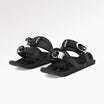












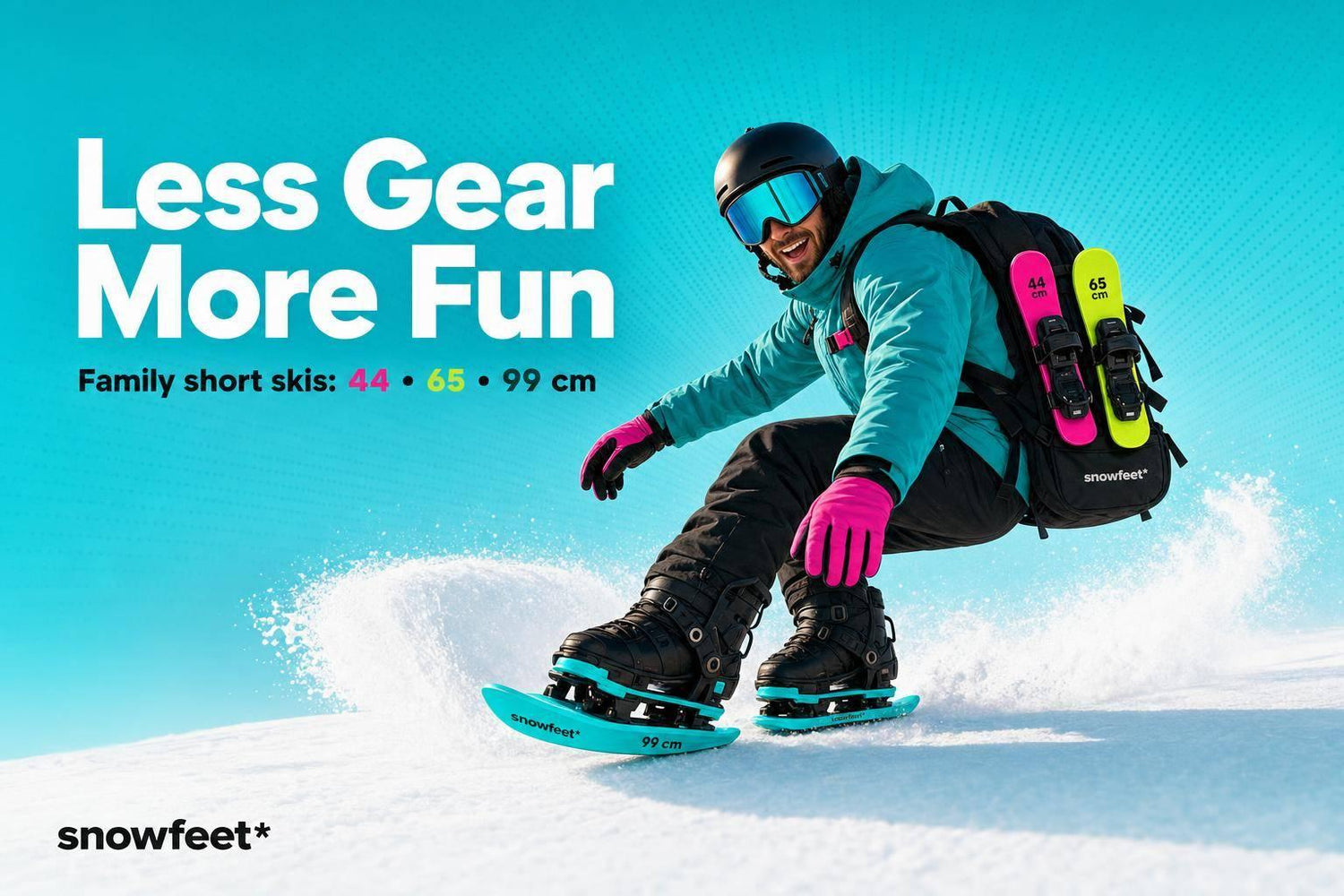
If your family wants less stuff to carry and an easier first run, short skis make more sense than long skis. Based on this lineup, I’d keep it simple: MINI KIDS for little beginners, Skiskates 44 cm for max portability, Skiblades 65 cm for easy learning on groomers, and Skiblades 99 cm for adults who want more stability without hauling full-size gear.
Here’s the short version:
- Best for very young kids: Snowfeet* MINI KIDS - works for first slides on flat snow and gentle hills
- Best for travel and small cars: Skiskates 44 cm - at 44 cm, they can fit in a backpack
- Best middle step for families: Skiblades 65 cm - more steady than skiskates, still small and easy to carry
- Best for parents who want more control: Skiblades 99 cm - more planted on green and blue runs
- Best for steep terrain, powder, and high speed: long skis - but they take more room, more setup, and more effort
For most family ski days, the tradeoff is plain: short skis are easier to pack, easier to share, and less intimidating for new riders. Long skis still win in deep powder, icy runs, and faster skiing.
Snowboarder tries Snowfeet* | Which Snowfeet* Short Ski is the Best? | Snowblades 44, 65, 99 Review
Quick Comparison
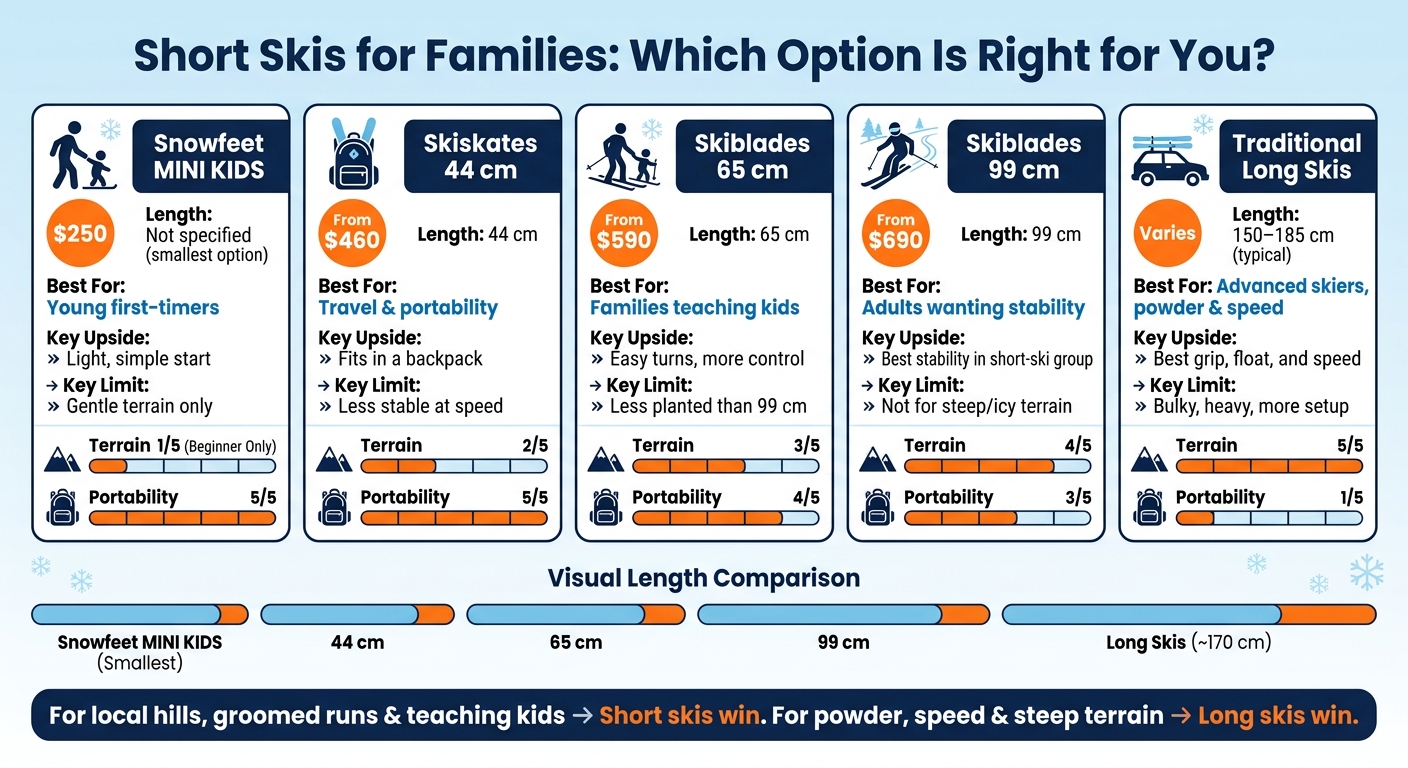
Short Skis vs Long Skis: Family Ski Gear Comparison Guide
| Option | Price | Best For | Main Upside | Main Limit |
|---|---|---|---|---|
| Snowfeet* MINI KIDS | $250 | Young first-timers | Light, simple start | Only for gentle terrain |
| Skiskates 44 cm | From $460 | Parents, older kids, travel | Fits in a backpack | Less stable at higher speed |
| Skiblades 65 cm | From $590 | Families teaching kids | Easy turns, more control | Less planted than 99 cm |
| Skiblades 99 cm | From $690 | Adults who want short skis with more support | Best stability in the short-ski group | Still not made for steep, icy charging |
| Long skis | Varies | Strong skiers on big terrain | Best grip, float, and speed | Bulky, heavier, more setup |
A few numbers tell the story fast: 44 cm can go in a backpack, 65 cm hits a nice middle ground, and 99 cm gives more underfoot support while staying much shorter than standard skis. So if your goal is less gear shuffle and more family laps, short skis are the clear fit :)
If you want a quick visual before you buy, these video searches can help:
- Snowfeet Skiskates videos on YouTube
- Snowfeet Skiblades videos on YouTube
- Short skis vs long skis videos on YouTube
Bottom line: for local hills, groomed runs, and teaching kids, I’d pick short skis every time. For powder days and steep lines, long skis still have the edge.
1. Snowfeet* MINI KIDS
Price: $250 | Best for: Young children taking their first steps on snow
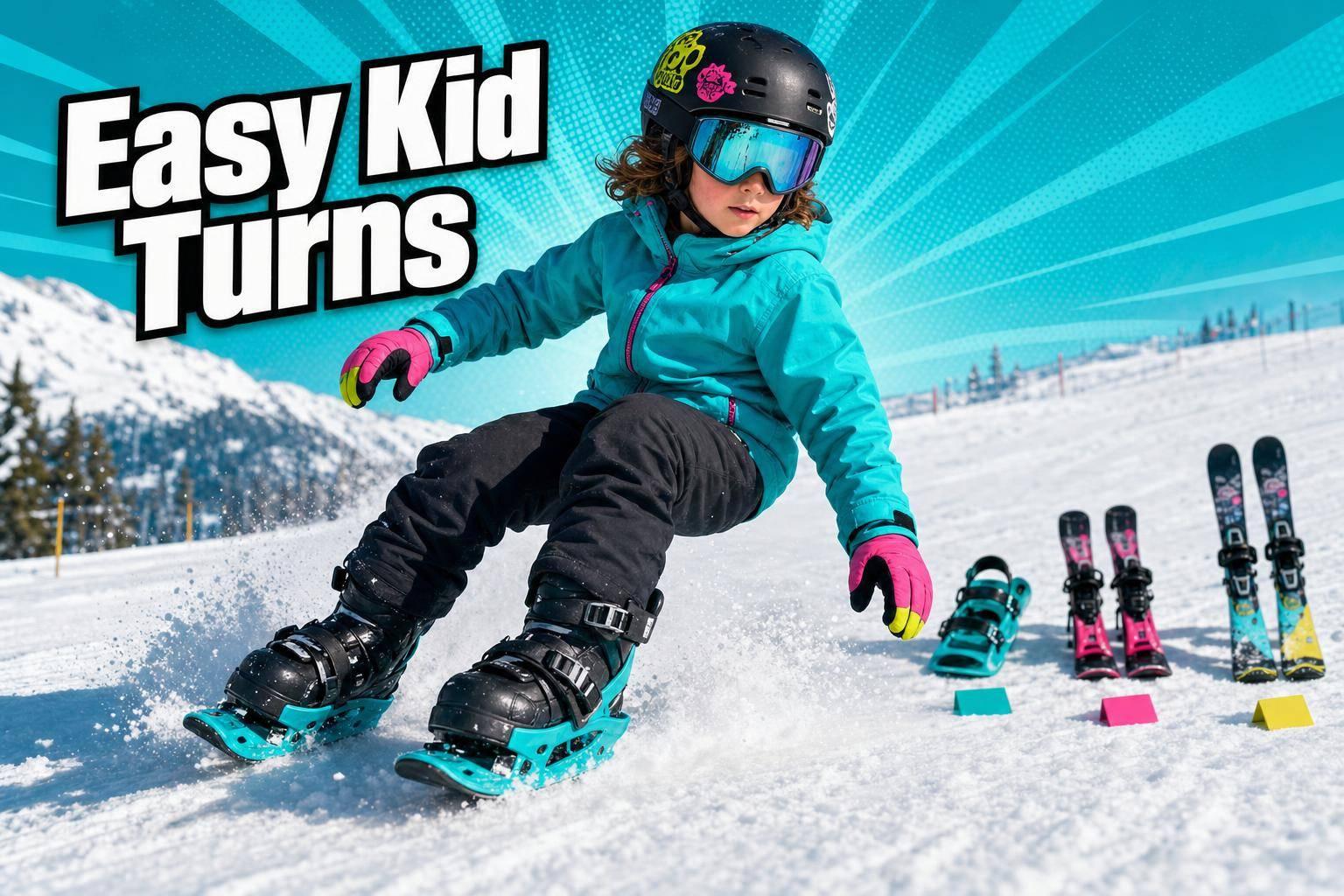
The Snowfeet* MINI KIDS is the smallest option in the lineup, and it’s built with little kids in mind. It’s made for very young riders, often with a US shoe size under 6, who are just starting out on snow in a backyard, on a small local hill, or in a mellow resort zone. For parents, that means less gear to haul around, fit, and pack before the first run. And, honestly, that alone can feel like a win :)
Portability
Its compact size fits in a backpack or a small trunk, which makes quick trips a lot easier. That lighter load helps even more when the whole plan is simple: get outside, have a fun first session, and avoid turning the outing into a full-on gear mission.
Boot Compatibility
The bindings are tool-free and adjustable, so setup is simple when you’re trying to get a bundled-up kid ready in the cold. It can also cut down on the need for ski boots, which helps lower cost and saves time.
Beginner Learning Curve
Short gear feels less intimidating for small kids. A child standing on a compact platform has less to deal with than one clipped into long skis, so that first slide tends to feel easier and less awkward. Snowfeet says kids can learn the basics in about 5 minutes on flat ground before moving to a gentle slope. That’s a pretty nice starting point.
Kids still need close supervision, of course. But MINI KIDS makes that first try feel more doable. After that, families can move up to a longer short-ski model for more control.
Terrain and Stability
It works best on groomed beginner slopes and packed snow. The short length makes it easier for a small child to steer, but there’s a trade-off: less glide and less speed than longer skis. So this is a better fit for first runs and casual snow play, not steep terrain or powder.
If a child starts wanting a bit more speed and control, the next step is Skiskates 44 cm.
2. Snowfeet* Skiskates 44 cm
Price: From $460 | Best for: Parents and casual adult riders who want easy-to-carry fun on groomed slopes and local hills
At 44 cm, these are easy to toss in a trunk or backpack. For family ski days, that matters more than people think. You spend less time hauling gear, less time packing, and less time standing around before the first run. For families moving up from kid-sized gear, this is a simple compact setup that can work for more than one rider.
Portability
If your family flies to ski trips, Skiskates can often fit in a standard checked bag instead of a ski bag. That can help cut baggage fees. Nice little win there. One setup can also work for parents and older kids, so you don’t need to pack extra duplicate gear.
Boot Compatibility
The adjustable bindings work with ski boots or snowboard boots. Size ranges are about US 4.5–14.5 for ski boot versions and US 6–14.5 for snowboard boot versions. So, one pair can fit most adults and older kids without much fuss.
Beginner Learning Curve
On groomed runs, short skis tend to feel easier to handle than full-length skis. Turns come easier at slow speeds, and shifting your weight feels more natural. That’s the appeal here. This is the shared-family take on short skis: simple, compact, and easy to pass from one rider to another. It has that playful MINI KIDS feel, but with enough control for adults too.
Terrain and Stability
The Skiskates 44 cm work best on groomed beginner runs, low-intermediate slopes, small local hills, and green runs. They feel quick and responsive at moderate speeds, which makes them fun for short laps and playful turns.
Here’s the tradeoff:
- You get agility, control, and convenience
- You give up some powder performance and edge hold
That makes them a smart pick for low-hassle family skiing.
If you want more stability but still want the short-ski feel, the next size up is Skiblades 65 cm.
3. Snowfeet* Skiblades 65 cm
Price: From $590 | Best for: Parents teaching kids, families sharing one pair across riders with similar boot sizes, and anyone who wants a more ski-like feel without full-length gear
The 65 cm Skiblades hit a nice middle ground between the super-short Skiskates and full skis. You get more stability than Skiskates, but they’re still way easier to manage than standard skis. On family ski days, that tradeoff can be a big win. Less gear drama, more time on snow :)
Portability
At 65 cm, these blades are much easier to move around than standard adult skis. They can fit sideways in most car trunks, under SUV cargo covers, or in large suitcases. That makes packing for a family trip a lot less annoying. At home, they’re easy to stash in a closet or mudroom, so you don’t need a ski rack.
Boot Compatibility
The bindings are tool-free and adjustable, so one pair can work for parents and older kids with close boot sizes. That’s handy if your family wants to share gear and keep the pile of stuff a bit smaller.
Beginner Learning Curve
The shorter length feels less intimidating than full skis. Riders can stand in a more natural position, feel the edges sooner, and often move from wedge turns to parallel turns faster. For parents teaching kids, that helps a lot. You can stay close, help with balance, and avoid shooting way ahead. That same sense of control also makes them easier to handle on groomed runs.
Terrain and Stability
On groomed green and blue runs, the 65 cm length gives you quick, responsive carving that feels fun but still steady. It’s more stable than the 44 cm Skiskates at moderate speeds, while staying more nimble than long skis on busy learning slopes. The metal edges and graphite base also help with grip and control on hardpack.
For families who want a bit more stability and glide, the 99 cm Skiblades are the next step.
sbb-itb-17ade95
4. Snowfeet* Skiblades 99 cm
Price: From $690 | Best for: Parents who want more stability than shorter blades offer, without hauling full-size ski gear
The 99 cm Skiblades sit right in the middle. They feel more steady than the 44 cm and 65 cm models, but they’re still much easier to manage than full-length skis. For families who’ve moved past ultra-short blades and want less bulk than standard skis, this size makes a lot of sense.
You get more confidence underfoot without giving up the easy-carry, easy-store appeal. That’s the sweet spot here.
Portability
At 99 cm, these are still easy to travel with. They’re compact enough to fit in a car trunk, closet, or checked bag without needing a ski rack or oversized cargo box.
Boot Compatibility
The 99 cm Skiblades come in two versions: one for standard ski boots (US sizes 4.5–14.5) and one for snowboard boots (US sizes 6–14.5). That gives families more room to share one pair across different adults without much fuss.
Beginner Learning Curve
This is where the 99 cm length starts to shine. Turns are easier to begin, mistakes are easier to fix, and the ride feels steadier than shorter blades. At the same time, they stay more forgiving than full skis.
"These ski blades are a blast to use. Super easy to control, quick to turn, and way more forgiving than traditional skis." - Brad Tolin
Terrain and Stability
The 99 cm length gives you a 6-meter sidecut radius, which means turns come around fast without needing hard, aggressive input. That makes them a strong match for green runs, many blue runs, and other family-friendly groomed terrain.
The wood core, steel edges, and graphite base help with durability and control. Still, there’s a tradeoff. Once speeds climb or the slope gets steep and icy, longer skis tend to feel more planted. That’s where this size starts to show its limit compared with full-length skis.
Next comes the full-size ski option, where speed and stability start to matter more than portability.
5. Traditional Long Skis
Best for: Confident adult skiers who want speed, edge hold, and all-mountain performance
Traditional long skis are built for confident adults who want speed, strong edge hold, and solid all-mountain use. Ski guides point out that longer skis take more skill and work best for wide turns at higher speeds. So, they’re a very different tool from the compact, family-friendly picks above.
Portability
For families, this is the biggest downside. Traditional long skis are bulky and heavy, and most families need roof racks or ski bags to haul them around. They’re much less easy to pack than compact short skis like Snowfeet*.
Boot Compatibility
Traditional skis fit standard ski boots, which makes rentals and shop setup pretty simple. The catch is that bindings still need professional adjustment, so there’s more setup and planning than with Snowfeet*’s tool-free adjustable bindings.
Beginner Learning Curve
Long skis add more length, more weight, and more edge to control. That can slow down first-time learning. For kids or new adult skiers, that extra hassle can make early sessions tougher than they need to be.
Terrain and Stability
Long skis do well on fast, groomed runs and all-mountain terrain. They hold an edge at speed and deal with mixed conditions with a steady feel. But there’s a trade-off: they’re less forgiving when technique slips, and leaning back can make them hard to control. That’s why long skis tend to suit advanced skiers more than casual family laps.
The real question for families is where those trade-offs show up most in day-to-day use.
Where Families Feel the Difference Most
Once you look at both options side by side, the gap shows up fast in two places: packing and how they feel on snow.
Packing and Transport
This is where many families notice it right away. Short skis are much easier to move around than long skis.
They slide into cars without the usual gear shuffle. Long skis, on the other hand, often mean a roof rack, folded seats, or a big ski bag that feels like one more thing to wrestle with before sunrise.
Flying is a big one too. Traditional long skis often need an oversized ski bag, which can mean extra cost and more hassle at the airport. Short skis fit in a standard checked bag, which can help you skip oversized baggage fees on trips to Colorado or Utah resorts.
And then there’s the parking lot test. You’ve got kids, boots, helmets, snacks, maybe a stroller, and somehow everyone’s gloves are missing. In that moment, lighter and shorter gear just makes life easier :)
| Scenario | Snowfeet* Short Skis | Traditional Long Skis |
|---|---|---|
| Local day trip in a sedan | Fits in trunk with room to spare | Requires roof rack or folding seats |
| Weekend trip in an SUV | Trunk space free for stroller/cooler | Bulky; may need roof box |
| Flying with checked bags | Fits in a standard checked bag | Oversized ski bag; extra fees likely |
| Walk from the parking lot to the lodge with kids | Kids can carry short skis more easily | Heavy; parents carry everything |
Terrain Trade-Offs
On easy groomers and mellow family laps, short skis tend to be more fun right away. The 65 cm Skiblades make tight turns, which helps beginners keep speed under control on gentle slopes.
That’s a big deal for new skiers. Less ski to manage often means less stress and more time spent, you know, actually skiing.
Still, long skis have the edge in tougher conditions. On steeper terrain, hardpack, and deep powder, they do a better job. That’s where grip and float matter more than easy turning.
| Terrain / Situation | Short Skis | Traditional Long Skis |
|---|---|---|
| Bunny hill / first-timers | Best - easy turns, low intimidation | Too much length to manage |
| Groomed green/blue runs | Great for fun, casual laps | Stable and fast for confident skiers |
| Crowded slopes | Easy to dodge and adjust quickly | Harder to react in tight spaces |
| Steep blue/black runs | Limited - less traction at speed | Better - designed for this terrain |
| Icy conditions | Less stable; requires slower speeds | Better traction and tracking |
| Deep powder | Not recommended - tips tend to sink | Much better float and stability |
So the trade-off is pretty clear: easier family fun on one side, and stronger mountain performance on the other.
Pros and Cons
This table gives you the quick read on how each option fits day-to-day family use. If you want the fast answer, this is it: shorter gear is easier to carry, easier to learn on, and easier to deal with in the parking lot too :) But you give up some range once the terrain gets steeper, faster, or deeper.
| Option | Pros | Cons | Best For |
|---|---|---|---|
| Snowfeet* MINI KIDS ($250) | Quick confidence for first turns; works with regular winter shoes | Limited to gentle slopes; not for speed or deep snow | Little beginners taking their first steps on snow |
| Skiskates 44 cm (from $460) | Fits in a backpack; works with snowboard boots | Less stable at higher speeds; not for steep or icy terrain | Families who want ultra-portable, spontaneous snow fun on after-school local hills |
| Skiblades 65 cm (from $590) | Maneuverable on groomed runs; lighter than traditional skis | Less stable than 99 cm at speed; not ideal for powder | Older kids and teens who want fun, easy-turning skis at the resort |
| Skiblades 99 cm (from $690) | Most stable of the short-ski lineup | Still less stable than long skis at top speeds | Parents and casual adults wanting compact versatility on groomed resort days |
| Traditional Long Skis | Best edge hold at speed; better in powder and varied terrain | Heavy and bulky; roof racks or oversized bags required; longer learning curve for kids | Families with advanced skiers who prioritize speed and powder |
Here’s the big theme across the three pain points that matter most to families: hauling gear, dealing with boots, and helping beginners get comfortable. The shorter the ski, the easier the setup and the easier the first day feels. That’s the good part.
The tradeoff? Your terrain options get tighter. Gentle hills and groomers feel fun and simple. Big speed, deep powder, and rougher conditions are where longer skis still have the edge.
So the choice comes down to one plain thing: how much convenience your family wants versus how much mountain performance it needs.
Conclusion
For most U.S. families, the biggest roadblock is gear, not the mountain itself. Full-length skis can feel like a whole extra chore. Snowfeet* short skis cut down the bulk and make the day a lot easier.
Here’s the simple way to pick the right model. Match it to the rider and the kind of day you want:
- Young kids and first-timers: Start with Snowfeet* MINI KIDS. They’re made for smaller feet, so the learning process feels lighter and less scary.
- Quick local hill trips: Snowfeet* Skiskates 44 cm are the most compact pick. They fit in a backpack, which is pretty great for quick outings and travel.
- Older kids and teens on groomed runs: Snowfeet* Skiblades 65 cm are easy to turn and more forgiving, so new riders can build confidence fast.
- Parents who want more stability without the bulk: Snowfeet* Skiblades 99 cm offer more stability and carving, without dragging around full-length skis.
Less gear. Easier transport. Faster learning. That’s why Snowfeet* works so well for most family snow days.
Simple decision rule: For short runs, local hills, teaching kids, or casual weekend trips, go with Snowfeet* short skis. For high-speed, advanced skiing on big-mountain terrain, stick with traditional long skis. For most families, Snowfeet* short skis are the simpler pick.
FAQs
Are short skis good for complete beginners?
Yes. Short skis are a great pick for complete beginners because they feel less intimidating and are easier to control than long skis.
Snowfeet products also make those first runs feel less awkward. They help stop crossed tips, feel more natural and responsive, and work with comfy winter boots or snowboard boots instead of stiff ski boots. For most families, that makes the basics easier to learn and a lot less scary.
Which short ski size is best for my family?
It depends on age, skill level, and where you plan to ride.
- Ages 3–8: 38 cm (15 in.) Mini Kids
- Ages 5+: 44 cm (17 in.) Skiskates for backyard fun or beginner slopes
- Parents and teens: 65 cm (26 in.) Skiblades if you want a nice mix of agility and stability
- Intermediate trails or more carving control: 99 cm (39 in.) or 120 cm (47 in.)
Can we use regular winter boots with Snowfeet*?
Yes. Most Snowfeet* models work with regular winter boots or snowboard boots. So you can use what you already have instead of dealing with bulky ski boots.
There is one main exception: some models, like the 99 cm Skiblades, are made for standard alpine ski boots.
Most of the lineup, though, including Skiskates and smaller Skiblades, comes with adjustable, tool-free bindings. That makes setup simple and keeps things pretty low-hassle :)











Leave a comment
This site is protected by hCaptcha and the hCaptcha Privacy Policy and Terms of Service apply.