




















If you’re a hockey player, you’ve already got the skills to dominate on the ice. But what if you could take those same moves to the snow? Enter Snowfeet - compact skis that let you skate on snow. They’re lightweight, easy to carry, and feel just like ice skating. No bulky gear, no steep learning curve. Just strap them onto your winter or snowboard boots and go. You can pull off hockey stops, sharp turns, and quick maneuvers in minutes.
Why Hockey Players Love Snowfeet:
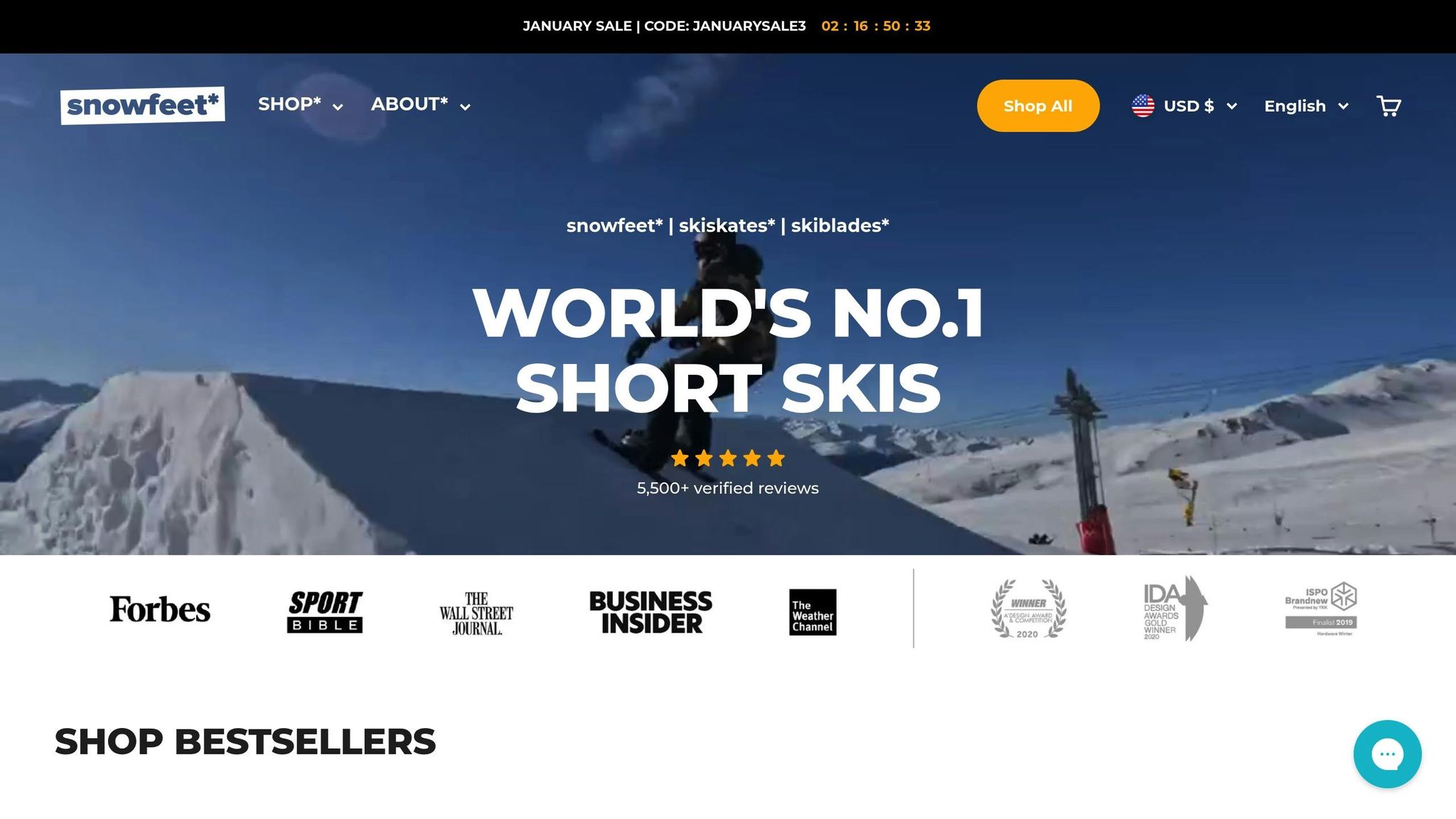
- Feels like skating: Same balance and edge control you use on ice.
- Portable: Fits in a backpack (only 15-17 inches long).
- Easy setup: Works with regular winter or snowboard boots.
- Affordable: Starts at $190, way less than ski or snowboard setups.
- Quick to learn: Most skaters feel comfortable in 5 minutes.
Whether you’re cruising slopes, hitting snow parks, or hiking trails, Snowfeet are a fun, hassle-free way to bring your skating skills to the snow. Ready to try it out?
Snowboarder tries Snowfeet* | Which Snowfeet* Short Ski is the Best? | Snowblades 44, 65, 99 Review
How Hockey Skills Work on Snowfeet
If you've got a hockey skating background, you're already ahead of the game when it comes to Snowfeet. The edge control you use to carve sharp turns on the ice? It works just as well on snow. Snowfeet come equipped with metal ski edges, letting you dig in and turn just like you’re used to on the rink. Plus, with their compact size - Skiskates are only about 17.3 inches long (44 cm) - you can forget about lugging around bulky gear. They’re lightweight, easy to handle, and let you move as freely as you do on ice.
Your balance skills transfer over too. The front-to-back weight distribution on Snowfeet is similar to ice skates, so you can maintain your natural stance. Unlike traditional skiing, there’s no need to lean forward awkwardly. This familiarity makes it easy to adapt and even nail some of your favorite hockey moves on snow.
Hockey Techniques That Transfer to Snowfeet
Thanks to your edge control, the classic hockey stop feels just as smooth on Snowfeet. By angling the metal edges and balancing your weight on both feet, you can stop quickly and with precision. Even your skating stride carries over - using a staggered stance for stability helps you accelerate just like on ice. In fact, many skaters report feeling comfortable on Snowfeet in as little as five minutes. It’s like muscle memory kicking in.
What Hockey Players Say About Snowfeet
Hockey players who’ve tried Snowfeet often rave about how natural they feel. Ingrid, a verified user, shared her experience:
"I love them. They are very easy to handle and control especially if you have experience on roller skates or ice skates."
Max H. echoed this sentiment:
"Since I do like ice skating and inline skating, this was the right choice! Easier to handle and turn..."
The verdict? If you can skate, you’ve already got what it takes to master Snowfeet.
Snowfeet vs. Traditional Skis and Snowboards
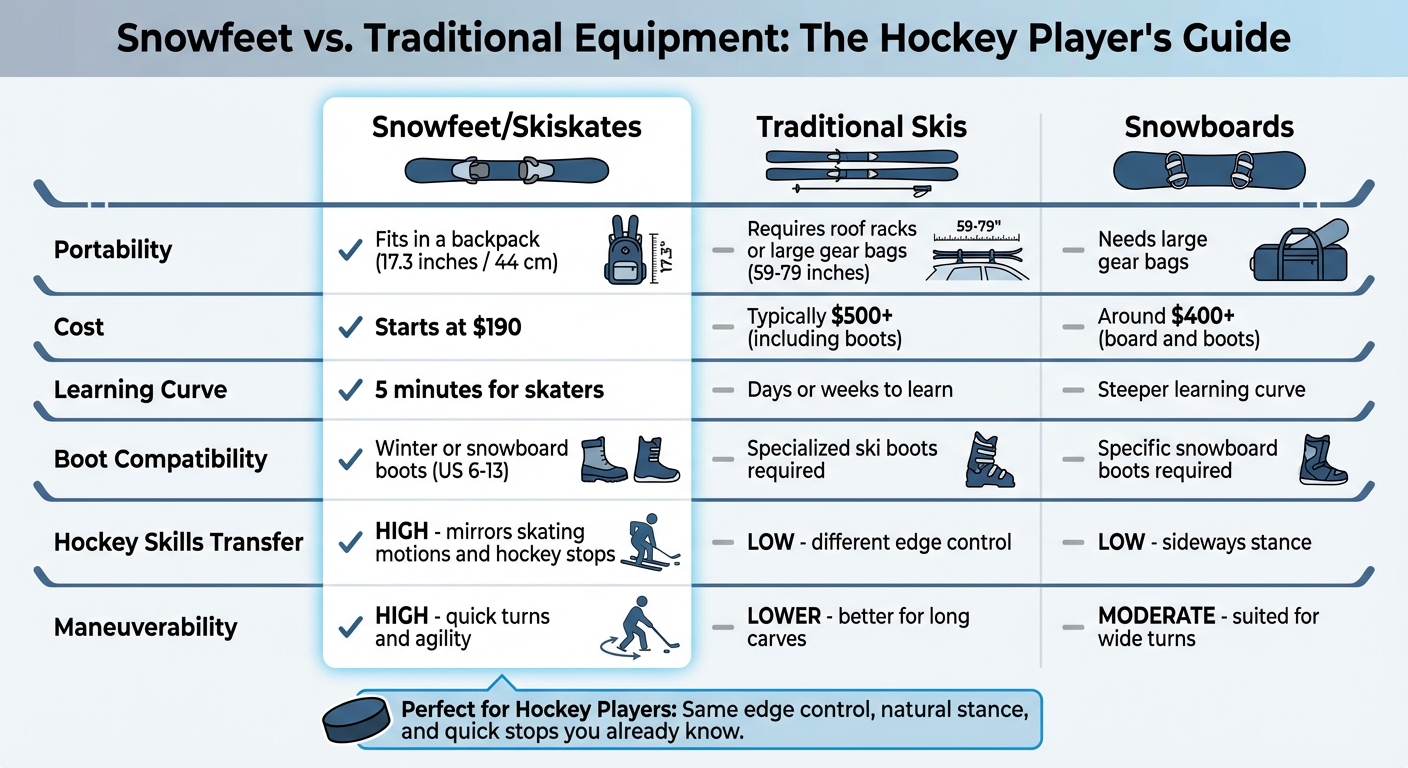
Snowfeet vs Traditional Skis and Snowboards Comparison Chart
Hockey players often lean toward traditional skis or snowboards for hitting the slopes. But here’s the thing: Snowfeet and Skiskates are a game-changer for anyone with hockey skating skills. They’re lighter, easier to carry, and let you use the same movements you’ve already mastered on the rink. Check out the comparison below to see how Snowfeet stack up against traditional gear.
Traditional skis are bulky, measuring 5–6 feet, and require stiff, specialized boots. Snowboards, on the other hand, force you into a sideways stance - something that doesn’t align with hockey techniques. Snowfeet, however, work seamlessly with your regular winter or snowboard boots. Plus, they’re compact. The 44 cm Skiskates? They fit in a backpack, so you can ditch the oversized gear.
Comparison Table: Snowfeet vs. Traditional Equipment
| Feature | Snowfeet/Skiskates | Traditional Skis | Snowboards |
|---|---|---|---|
| Portability | Fits in a backpack | Requires roof racks or large gear bags | Needs large gear bags |
| Cost | Starts as low as $190 | Typically $500+ (including boots) | Around $400+ for board and boots |
| Learning Curve | Super short – about 5 minutes for skaters | Can take days or weeks to learn | Steeper learning curve |
| Boot Compatibility | Works with winter or snowboard boots (sizes US 6–13) | Needs specialized ski boots | Requires specific snowboard boots |
| Hockey Skills | High – mirrors skating motions and hockey stops | Low – uses different edge control | Low – involves a sideways stance |
| Maneuverability | High – great for quick turns and agility | Lower – better for long carves | Moderate – suited for wide turns |
Why Short Skis Are Perfect for Hockey Players
The compact design of Snowfeet gives hockey players a serious edge. While longer skis might seem better for stability and speed, shorter skis like Snowfeet offer unmatched control and agility - qualities hockey players already excel at. Ranging from about 17 inches (44 cm) to 39 inches (99 cm), these mini skis let you make fast directional changes, just like you would on the ice. No need to wrestle with long equipment when you’re pivoting or stopping. Plus, their natural front-to-back balance makes the transition from rink to slope feel effortless.
As Andrew B., a happy user, put it:
"These skiblades are so much fun and easy to control. Never going back to regular skis."
Getting Started with Snowfeet: Models, Boots, and Maintenance
Which Snowfeet Model to Choose
If you're a hockey player looking to bring your ice-skating skills to the slopes, picking the right Snowfeet model is crucial. There are three options to consider: 38 cm Mini Ski Skates ($190), 44 cm Skiskates ($575), and 50 cm Snowfeet PRO ($275).
- The 38 cm Mini Ski Skates are a versatile choice for trails, hills, and casual slope runs. They’re lightweight and made with a reinforced fiberglass design, perfect for all-around use.
- The 44 cm Skiskates are built for speed and precision, featuring a wood core that makes them ideal for ski slopes. Hockey players will love this model since its movement closely mimics the feel of skating on ice.
- The 50 cm Snowfeet PRO offers a balanced mix of stability and portability. Its fiberglass core makes it a solid choice for those who want a bit of everything.
What Boots Work with Snowfeet
One of the best things about Snowfeet is that you don’t need specialized ski boots - they work with the shoes you already own.
- The 38 cm Mini Ski Skates are compatible with standard waterproof winter shoes, hiking boots, or snowboard boots, fitting US sizes 6–13 (EU 38–47).
- The 44 cm Skiskates offer two binding options: one for traditional ski boots and another for snowboard boots. For downhill skiing, snowboard boots provide better ankle support and control. If you’re sticking to trails, standard winter shoes work just fine. Just make sure to adjust the bindings at home with a screwdriver to avoid any hassle on the slopes.
How to Maintain Your Snowfeet
Keeping your Snowfeet in top shape is simple and doesn’t take much time. Here’s what you need to do:
- Wax the base daily when you’re using them. This helps maintain speed and prevents snow from sticking.
- After each session, dry the metal edges completely to avoid rust. For long-term storage, wipe the edges with a bit of oil.
- You can sharpen the metal edges yourself with a sharpening stone, or you can take them to a ski service shop for a professional tune-up. Don’t stress if a little plastic comes off during sharpening - it won’t affect performance.
- Lastly, ensure the bindings are properly adjusted for your boots, and trim any extra strap material if needed.
With these tips, your Snowfeet will always be ready to hit the slopes. So, go ahead and explore the trails, hills, or slopes that suit your style and make the most of your winter adventures!
sbb-itb-17ade95
Where and How to Use Snowfeet
Best Terrains for Snowfeet
Snowfeet and skiskates are perfect for groomed slopes, snow parks, hiking trails, and other packed snow surfaces. Measuring just 44 cm (17.3 inches), these skiskates mimic the motion of ice skating, unlike traditional skis, which range from 150 to 200 cm (about 59–79 inches). This compact size lets you transfer your hockey skills - like sharp turns and quick stops - right onto the snow.
Thanks to their small size, you can easily pull off spins, jumps, and fast turns that are much harder with regular skis. As Snowfeet Store puts it:
"Their compact size makes spins, jumps, and quick turns easier compared to regular skis".
If you're used to the agility and speed of skating, you'll feel right at home zipping through a snow park or weaving around skiers on a busy slope.
Another bonus? These are super lightweight and portable, making them great for winter hikes. You can seamlessly switch from hiking trails to slopes without lugging around bulky gear. This versatility lets you adjust your technique as snow conditions change.
When Snowfeet Don't Work Well
Snowfeet aren’t ideal for deep powder - anything over 4 inches of snow can be a challenge. Their smaller surface area tends to sink in loose, fluffy snow, so they’re best suited for groomed runs.
If you do find yourself in softer snow, try pointing the tips upward to improve flotation. For slushy or wet conditions, applying a slush-specific wax can make a big difference. And if you’re a hockey player or adventurer who often deals with deeper powder, you might want to check out the 99 cm Snowfeet POWDER model. It’s designed to handle variable conditions with better flotation.
Why Snowfeet Are Easy to Travel With
Snowfeet Fit in a Backpack
If you've ever lugged around hockey gear, you know how annoying bulky equipment can be. That’s where Snowfeet come in - they’re compact enough to fit right into a standard backpack.
The Skiskates are just 17.3 inches (44 cm) long, while the Mini Ski Skates measure 15 inches (38 cm). To put that in perspective, traditional skis are usually between 59 and 79 inches long. That makes Snowfeet about one-fourth or even one-fifth the size of regular skis, easily small enough to tuck into your backpack . As Snowfeet Store explains:
"Skiskates are 44 cm (17.3 in) long. It makes them short and light, so you can easily carry them in a backpack and take them anywhere."
This compact design doesn’t just save space; it also saves you from paying those hefty extra baggage fees airlines love to charge. Plus, they’re made from lightweight plastic, so they’re easier to carry compared to heavier wood-core skis.
And the best part? Their portability pairs perfectly with how quick and easy they are to set up.
Fast Setup and Simple Use
Beyond being easy to carry, Snowfeet are designed for quick, hassle-free setup. Think of it like hockey: you’re ready to jump into action without wasting time. With Snowfeet, there’s no need for complicated boot fittings or endless adjustments. Just strap them onto your winter or snowboard boots, and you’re good to go .
Heather Ogilvie, a user, sums it up perfectly:
"It's light and tough, easy to carry. Find a hill and just sit down to launch yourself!"
This simplicity is a game-changer. You don’t have to spend ages prepping your gear. Instead, you can pull them out of your bag, strap them on, and hit the slopes right away. And because they work with the boots you already own, you’re spared the hassle of lugging around heavy, rigid ski boots.
| Feature | Snowfeet | Traditional Skis |
|---|---|---|
| Storage | Fits in a backpack or car trunk | Requires a roof rack or large ski bag |
| Weight | Ultra-lightweight | Heavy and cumbersome |
| Setup Time | Quick - just strap on and go | Time-consuming adjustments |
| Boot Requirements | Works with winter or snowboard boots | Requires specialized ski boots |
| Baggage Fees | Minimal risk on flights | High risk and extra costs |
Conclusion
If you’re a hockey player eager to bring your skating skills to the slopes, Snowfeet and Skiskates make that transition easy. These nifty little gadgets are designed with skaters in mind, letting you rely on your familiar front-back balance and even pull off hockey stops in the snow. It’s like taking what you already know and giving it a snowy twist.
But it’s not just about performance - these things are ridiculously convenient. Their lightweight, compact design means no lugging around bulky gear or stressing over baggage fees. Even better, you can use your regular boots - no need for any fancy, specialized equipment.
And let’s talk about the fun. Snowfeet are light, quick to respond, and give you that same skating vibe you love, whether you’re cruising down groomed slopes, trekking on snowy trails, or just zipping down a sledding hill. They bring the thrill of skating to the snow without the hassle of traditional gear.
Why not give them a shot? If you can skate, you can Snowfeet. Check out the 44 cm Skiskates or the 38 cm Snowfeet Mini Ski Skates and see why so many have already swapped their skates for these compact snow companions.
FAQs
How are Snowfeet different from traditional skis and snowboards?
Snowfeet Skiskates and mini skis bring a fresh twist to winter sports. They’re compact, lightweight, and super easy to use, making them a great alternative to traditional skis and snowboards. Here’s the kicker: you can wear them with your regular winter boots! No need for clunky, specialized gear. Plus, they’re so small they fit right into a backpack - perfect for travel or spontaneous snow adventures. Compare that to traditional equipment, which demands bulky boots and a ton of storage space, and you can see why Snowfeet are turning heads.
Another big win? They’re budget-friendly and beginner-friendly. With prices ranging from $150 to $490, they’re a far cry from the hefty $1,500+ price tag of traditional skiing or snowboarding gear. And if you’re new to snow sports, don’t sweat it - Snowfeet have a shorter learning curve, making them ideal for casual users or even hockey players who want to take their skating skills to the slopes. While traditional skis and snowboards are all about high-speed runs and advanced tricks, Snowfeet focus on fun, portability, and ease. It’s a whole new way to enjoy the snow without the hassle of bulky gear or a steep learning curve.
What kind of boots work with Snowfeet?
Snowfeet can be used with most waterproof winter shoes and snowboard boots, as long as they fit snugly into the bindings. They’re designed to work best with shoe sizes 6 to 13 (US) or 38 to 47 (EU). For a safer and more comfortable ride, make sure your boots offer solid ankle support.
Can I use Snowfeet in all types of snow conditions?
Snowfeet are built to handle pretty much any snow condition you throw at them. From smooth, groomed slopes to untouched snowy trails, they’ve got you covered. Thanks to their lightweight design and compact size, they’re super easy to control, giving you the agility you need on different terrains. Whether you’re zipping through tight turns or cruising on fresh powder, Snowfeet offer a fun and flexible way to enjoy your time in the snow.













Leave a comment
This site is protected by hCaptcha and the hCaptcha Privacy Policy and Terms of Service apply.