



















When purchasing skis, you must decide what length works best for you. However, getting the correct ski length can be complicated, especially if you are new to skiing or have experience. Let's dive into this topic and find out how to choose the perfect length.
Height and weight are only two elements in ski selection. Yes, water ski sizing or a downhill ski size guide can help, but the most important factor is what makes you comfortable and excited to ski!
Your stability, control, and overall skiing performance depend on selecting the proper ski length. The selection of an inappropriate size will result in an experience that is either unmanageable or restricted in capability.
Before deciding, you should learn about significant factors determining your best ski length.
What Affects Ski Length?
The essential factors matter during ski length selection:
Your height
Your weight
Your skill level
Your skiing activities and capabilities are two of the most important considerations when selecting ski length.
But hold up! Several other elements need consideration, even though these factors do not always lead to perfect outcomes. Many distinct individual preferences and personal styles matter in the selection process.
How To Select Ski Length
The starting point begins with a fundamental table demonstrating approximately the length you should choose. Use this guideline only as a starting point. You can modify from this point according to your individual preferences.
Ski Length by Height and Weight
Beginners should choose skis of shorter length, which extend from the chin up to no more than the height of the face. The shorter ski length lets beginners experience easier control for an enjoyable learning experience.
Short Skis (beginner): If you're just starting, your skis should be about chin height or shorter. Short skis are easy to control and will make learning fun.
Medium Skis (intermediate): For those with some experience, go for skis that come up to your nose or around eye level.
Long Skis: People of different weights must modify ski length since being below or above average weight might affect performance.
Quick Tip: For water ski sizing, consider your water skiing technique and whether you’re skiing on a lake or in more challenging conditions. The exact ski length determines your gliding ability while affecting your ability to control your movements.
How to Measure Ski Length?
Measuring accurately remains the most dependable way to get suitable skis. Here’s how to measure ski length:
Position the ski with flat contact on the surface.
The first step requires measuring your height while you stand. Compare this to the length of the ski.
Beginners should aim for their ski to end at chin height, while intermediate skiers should go for nose or eye level, l, and advanced skiers must have it rest above their head.
The shape variations between different ski models influence their handling characteristics, so equivalent-length skis can be handled differently despite sharing the exact measurement.
Why Ski Length Isn’t Everything
While having a water ski size chart or a downhill ski size guide is cool, ski length based purely on your height and weight isn't the magic formula.
Comfortable use of the skis always takes precedence as your essential concern. Your comfort and enjoyment while skiing define your ski length choice.
The length of your skis represents only a fundamental element for your skiing success. Skiing ability alongside personal style surpasses any standard chart dimensions.
Here’s why:
Skill Level: Beginner skiers should avoid longer skis since they provide challenges to control their movements. Short ski lengths make controlling them significantly simpler compared to longer sizes. Experienced skiers usually choose longer skis because they provide better slope speed and stability.
Terrain: Practicing tricks on the snow demands the proper use of shorter skiing products. With powder snow, you should choose longer skis to achieve better-floating ability.
Personal Style: Several skiers base their choice solely on the sensation they obtain from specific skin types, even though charts do not support these preferences. Comfort stands as the most important factor in any situation.
What Makes a Ski Feel Right for You?
Experts say that ski size impacts performance, but the shape remains key. It is time to discuss the experience with skis.
Your decision for skis requires an assessment of several important factors.
-
Flex: Flex describes the stiffness level of a ski between soft and stiff. The tunability of softer skis matches their stability performance at higher speeds compared to the stiffness of skis.
-
Rocker Profile: A rocker profile consists of slight board curvature at the skis' tip or tail area to provide ease during soft snow conditions.
-
Ski Width: A wider ski design enables better powder snow floatation, making it harder to respond on surfaces with packed snow.
When visiting the Snowfeet Store, customers can choose from various skis optimized for snow conditions, terrain difficulty, and ability. Your preferences should guide your ski choice because the charts alone fail to work.
What Happens if Your Skis Are Too Short or Too Long?
We must address what happens when your skis fail to reach your ankles or extend past your nose.
Too Short:
-
Pros: The short size offers better control, while the small platform makes turning easier, so it suits beginners exceptionally well.
-
Cons: Less stable at high speeds. Since your balance is affected, you might struggle to handle powder snow and rough terrain.
Too Long:
-
Pros: The longer ski size provides better speed stability during aggressive skiing or races.
-
Cons: Harder to control. The turns feel unnatural while you lose response and possibly control through the motion.
Skiing is meant to bring joy without fighting to keep your grip on the equipment. A ski length that feels too difficult will not be an issue. Go with what feels good.
Adjusting Ski Length for Different Snow Conditions
Under normal conditions, height weighting expertise and body weight determine ski size, yet snow conditions may contribute to your final selection.
The snowy terrain you plan to ski determines how skis function, which relates to what size would work best.

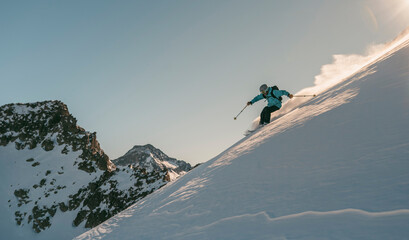
Source: Adobe Stock
https://t4.ftcdn.net/jpg/04/93/34/77/240_F_493347788_nRoaVyF4D7iFvJJ0d8RRN0JykwPohBR5.jpg
Alt Text: Backcountry skier on a sunny day.
Powder Snow
Your approach to skiing powder snow needs specific adjustments because it differs from skiing-packed and groomed snow conditions. Lengthy skis work best in deep powder because they enable floatation above the snow while reducing your likelihood of sinking. Longer skis aid weight distribution by spreading your weight across the snow below you. A longer ski choice makes it possible to glide through fresh snow because it helps maintain floatation smoothly. People who ski in backcountry and deep snow conditions prefer longer skis that extend beyond their height because longer skis enhance their flotation.
Groomed Trails or Hardpack Snow
The quick turning capabilities of shorter skis on groomed and packed trails especially benefit intermediate and advanced skiers due to their superior maneuverability. Quick handling on compacted snow becomes possible because short skis weigh less and respond promptly to commands. People who primarily ski on groomed slopes or hardpack can achieve good speed stability and movement ease with ski lengths that match their nose-to-forehead distances.
Variable Conditions and Mixed Terrain
A medium-length ski is suitable for people who need stability during shifts between powder and groomed trails because these skis balance control and stability. These skis excel for people exploring areas containing soft snow and maintained slopes in their skiing adventures.
Whether skiing on powder snow, groomed trails, or mixed terrain, Snowfeet Store offers skis designed for every condition, ensuring the best experience on the slopes.
Binding and Ski Flex
Skillful buyers need to consider the flexibility of their skis because it is known as "flex." Soft flex skis offer light users a simple glide and enhanced control, representing good choices for beginners and smaller skiers.
A stiff ski option works best for expert skiers who want precise turn control at various speeds.
Adjusting ski length and flex will lead to a better ski experience and optimized performance across all your runs. Ski choice based on outdoor conditions is essential for maximum slope enjoyment.
Choose What Feels Best for You
The most crucial thing when choosing which ski length to use is personal enjoyment on snow slopes. There is no strict requirement to follow any recorded charts or guidelines about your ski length selection.
Select skis that create a natural extension from your body because you plan to ride both powder and groomed terrain. The enjoyment of skiing should surpass any mental pressure or stress.
Your instincts should guide your decisions while you try different lengths until you discover the most comfortable option. Your perfect ski match will allow you to make confident turns as you exceed expectations in your skiing journey.
Ultimately, the perfect ski length is about what feels right for you. Explore the wide range of skis at Snowfeet Store to find your ideal match and make the most of your skiing adventures.
Key Takeaways:
Water ski sizing and downhill ski size guides can help, but comfort and style matter most.
-
Your height does not matter as much as your skill level and where you ski to determine the right ski length.
-
Leave concerns about size when selecting skis that match your skiing abilities.
Meta Title
How Long Should Your Skis Be? Easy Guide!
Meta Description
Find out the right ski length for your skill level and style. Ski sizing tips & charts to help you choose the best skis. Get ready to hit the slopes!
)











Leave a comment
This site is protected by hCaptcha and the hCaptcha Privacy Policy and Terms of Service apply.