



















Quick Summary:
Shredding the slopes on worn-out gear isn't just killing your performance—it’s a serious safety hazard. While structural damage like delamination or lost camber can sneak up on you, outdated bindings over ten years old are a ticking time bomb. This comprehensive 2026 guide breaks down the critical warning signs that mean your traditional skis are ready for retirement, reveals the best times of the year to score massive discounts on upgrades, and introduces ultra-portable, budget-friendly alternatives like Snowfeet* that are completely changing the winter sports game. Read on to find out if your gear is truly safe for the season and how you can elevate your next mountain adventure without breaking the bank!
Signs Your Skis Are Too Old
Knowing when your skis are too old can be difficult, especially if you don't know the key signs of wear and tear. Unlike a busted boot or a ripped jacket, ski wear and tear creeps up on you. Whether you’re shredding with classic Rossignol all-mountain skis or zipping around with compact Snowfeet* ski skates, there are some clear signs it might be time for an upgrade.
Physical Damage
The first signs that your skis need replacing are usually visible physical damage. Start with the base - check for deep scratches, gouges, or core shots (those nasty gashes exposing the ski’s inner core). A core shot is one of the most serious types of damage to a ski and usually indicates that it's time to repair or replace it.
Next up: edges. Dull edges can usually be fixed with a tune-up, but if you’ve got cracked or detached edges, it’s game over. If the edges are too damaged to sharpen, your skis have reached the end of their useful life.
The biggest deal-breaker? Delamination. That’s when the layers of your skis start peeling apart, usually around the edges, tips, or tails. Unlike minor topsheet chips (which are just cosmetic), delamination is one of the clearest signs that your skis are too old and need to be replaced.
Snowfeet* products, with their compact build and durable metal edges, make inspections easier. Plus, they’re designed to hold up better than many traditional skis.
 Product Link: Snowfeet* 44 CM | Skiskates | Snowblades Skiboards Mini Skis
Performance Problems
Even if your skis appear to be in good condition, loss of camber or stiffness can seriously affect control. Over time, they can lose their camber (the slight arch underfoot) and torsional rigidity (their ability to twist and grip). These issues dull your skis’ rebound, responsiveness, and edge hold, especially on hard snow.
"After a period in time skis can lose some camber and some life. They don't have the same rebound and tenacity that they did when new." – Tricia, Admin & SkiTalk Tester
The decline is so gradual you might not even notice - until you try a new pair.
"Skis are like shock absorbers. You may not realize how worn they are until you get new ones. The change is so slow that you don't notice it day to day but if you could feel the first time compared to the last you'd notice!" – Andy Mink, Moderator & SkiTalk Tester
For reference, race skis typically last about 50 days of intense use, while all-mountain skis might stretch to 80 days. Snowfeet* products, with their versatile design, let you explore more than just groomed runs, giving you more bang for your buck.
Old Bindings
Even if your skis are holding up, outdated bindings can be a deal-breaker. Fixings that are more than 10 years old are usually unsafe and do not meet modern safety standards. Plastics degrade over time, especially in all-plastic toe pieces, making them unreliable.
"Bindings have improved in the last 25 years, and the old bindings may no longer operate safely." – Sibylle Hechtel, ski instructor
Watch out for non-indemnified bindings - these aren’t covered by manufacturer liability insurance, so most shops won’t touch them. Also, keep an eye out for rust, cracked plastic, loose screws, or bindings that don’t release properly during a fall.
Snowfeet* products come with modern bindings that meet today’s safety standards. Their compact design puts less strain on the bindings compared to the forces generated by longer, traditional skis.
These signs don’t just show when your skis are past their prime - they also highlight the perks of upgrading to modern options like Snowfeet*.
 Product Link: Snowfeet* 50 CM | Ski Skates
Wear Signs for Snowfeet* and Short Skis
Thanks to their compact design, Snowfeet* show wear more clearly, making them easier to maintain when it comes to wear and tear. Unlike traditional skis, their shorter length makes them more sensitive to damage, and their ability to handle varied terrains can lead to specific types of wear.
Small Surface Area Effects
With Snowfeet* and other short skis, every inch of the ski matters. Traditional skis, like those from brands such as Atomic or Head, can range from 65 to 70 inches in length. In contrast, Snowfeet* are only about 17–48 inches long, which means even a small nick or edge damage can have a big impact on your control and grip - especially on icy or hard-packed snow.
For example, a 2-inch gouge might be a minor issue on a 65-inch ski, but on a 17-inch Snowfeet*, it takes up a significant portion of the base, potentially affecting glide and stability. The bindings also play a role here. Since they cover a larger proportion of the ski’s surface, stress is more concentrated around the mounting points. That's why it's important to check for cracks or damage near the bindings, as it could signal early structural problems. Especially on short skis.
These smaller skis are built for versatility, but that same compactness means their wear patterns can show up faster, especially when tackling different terrains.
Portability and Use
One of the perks of Snowfeet* is how portable and versatile they are. You can use them just about anywhere - on hiking trails, in your backyard, or on groomed slopes. But this flexibility can also lead to unique wear patterns. Unlike traditional skis that mostly stick to maintained runs, Snowfeet* often face rougher conditions, like rocks, sticks, or other debris, which can cause scratches or even core damage.
Transporting these skis is another factor. Their portability makes Snowfeet* easy to transport, although this can lead to minor bumps or scratches. Plus, different types of winter footwear can create uneven pressure on the bindings, so it’s worth checking for irregular wear around those points.
Frequent assembly and disassembly can also take a toll. Keep an eye on binding mechanisms and straps to ensure they’re not fraying or loosening.
Maintenance Made Easy
The good news? Snowfeet* are designed with durable materials to withstand varied terrain and heavy use. With prices starting at around $299 for 50 cm Ski Skates, they’re far more affordable than premium traditional skis, which can range from $400 to $800 or more. That makes repairs or replacements easier on your wallet.
To keep your Snowfeet* in top shape, regular inspections are a must. After a few uses, take a close look at the edges, base, and bindings. Their small size makes it easy to spot issues early, and addressing them quickly will help you stay sharp on the snow. By staying on top of maintenance, you’ll not only extend their lifespan but also be ready to upgrade to the latest model when the time comes.
Why Choose Snowfeet* Over Traditional Skis
If your skis have seen better days, it might be time to rethink your winter gear. Instead of sticking with bulky, traditional skis, why not try something that’s lighter, more versatile, and just plain easier to use? That’s where Snowfeet* come in. They’re not just an upgrade - they’re a whole new way to enjoy the snow.
For decades, big-name brands have dominated the ski market with long, heavy skis that require special boots, lift tickets, and plenty of storage space. But let’s face it - winter sports are changing. Switching to short skis like Snowfeet* transforms your experience on the snow, making it more agile and accessible. More and more experienced skiers are realizing that shorter skis can deliver a smoother, more fun experience on the slopes. This isn’t just about changing gear; it’s about changing the way you enjoy winter.
 Product Link: Snowfeet* 99 CM | Skiblades | Snowblades Skiboards Short Skis
Snowfeet* vs. Traditional Skis: A Side-by-Side Look
Here’s how Snowfeet* stack up against traditional skis from brands like Rossignol, Atomic, and Head:
| Feature | Snowfeet* | Traditional Skis |
|---|---|---|
| Length | 17–48 inches | 63–75 inches |
| Weight | Lightweight; fits in a backpack | Heavy; needs roof racks or ski bags |
| Footwear | Works with any winter boots | Requires pricey ski boots |
| Learning Curve | Beginner-friendly | Steeper learning curve; intimidating for newbies |
| Terrain Versatility | Handles slopes, hiking trails, backyards, and sledding hills | Mostly limited to groomed slopes |
| Storage | Fits in a closet or backpack | Needs garage space or specialized storage |
| Transportation | Easy to carry anywhere | Requires roof racks, ski bags, or rentals |
| Cost | $299–$950 | $400–$1,200+ (plus boots, bindings, and maintenance) |
| Maintenance | Minimal upkeep; super durable | Needs regular tuning, sharpening, and repairs |
| Speed Control | Easy to stop and steer | Harder to manage at low speeds |
What Makes Snowfeet* Stand Out?
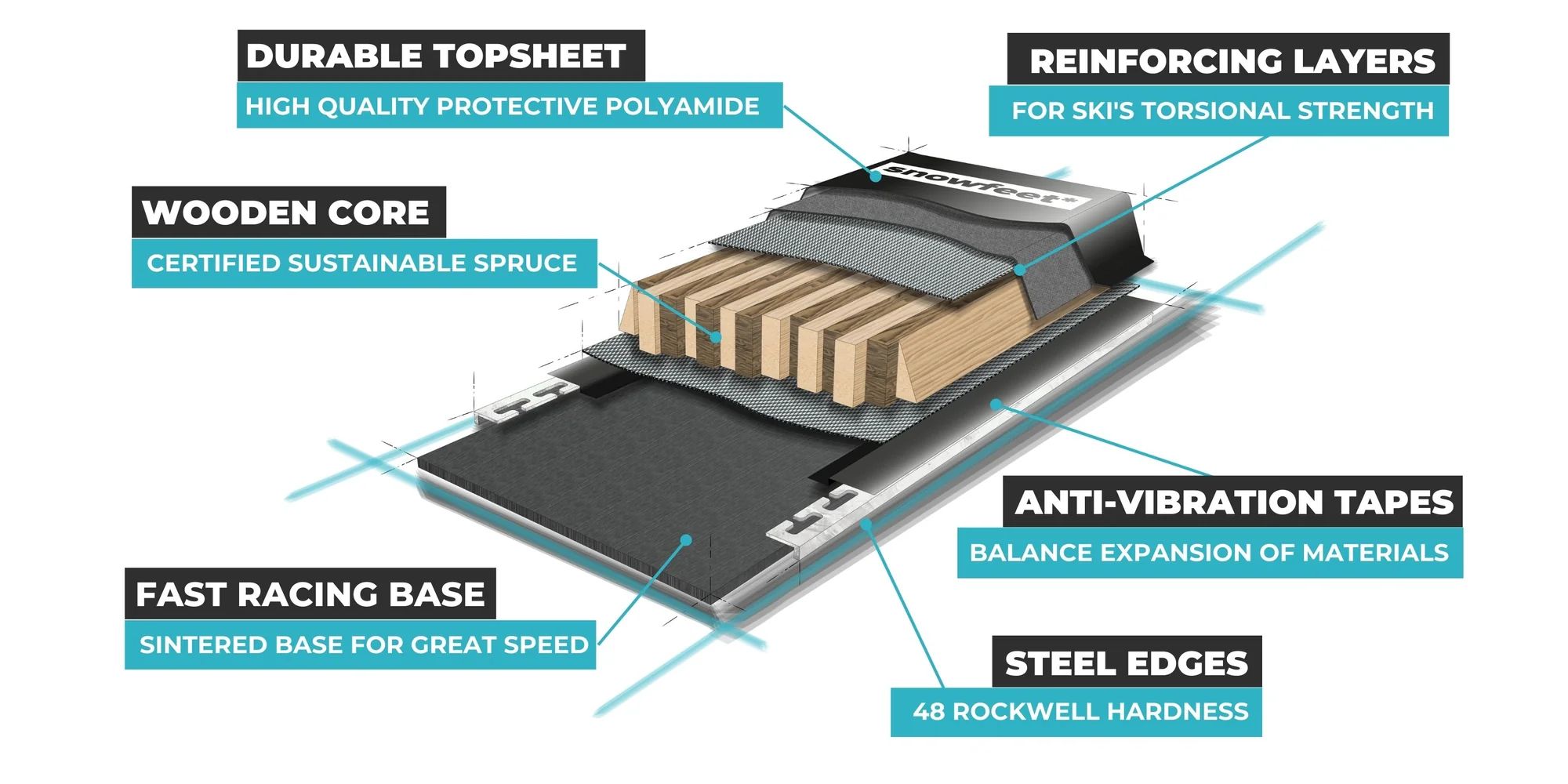
Snowfeet* are built with cutting-edge materials and smart engineering that you just don’t get with traditional skis. Their fiberglass-reinforced construction and metal edges make them incredibly durable, so you don’t have to stress about constant repairs or maintenance. Forget about delamination or core damage - these things are made to last.
Another game-changer? Adjustable bindings that work with pretty much any winter boots. That means no need for expensive, clunky ski boots. This not only saves you money but also keeps your feet comfortable all day long.
What really sets Snowfeet* apart, though, is their versatility. Unlike traditional skis that keep you tied to resort slopes, Snowfeet* let you explore so much more. Think narrow hiking trails, sledding hills, or even your snowy backyard. And because they’re so portable, you can throw them in your backpack and head out for a spontaneous snow adventure - no roof racks, no hassle.
For older skiers or anyone looking for a more laid-back day on the slopes, Snowfeet* are a dream. They’re stable, easy to control, and perfect for cruising at lower speeds. Plus, their simple, intuitive design makes them ideal for beginners and families. Whether you’re new to winter sports or just want to enjoy the snow without all the fuss, Snowfeet* make it easy to dive right in.
sbb-itb-17ade95
Tips for Ski Replacement
Keeping your ski gear in top shape is key to a great time on the slopes. Whether you're using traditional skis or compact Snowfeet* products, regular inspections can save you from unexpected issues and help you decide when it's time for an upgrade. Here’s a guide to help you stay ahead of the game.
Inspection Checklist
Before each ski season, take a few minutes to check your gear. A little effort now can prevent big headaches later.
Check Your Edges
Run your fingers along the metal edges of your skis. Feel for rough patches or burrs - these can signal damage. To test sharpness, gently scrape the edge with your fingernail; if it shaves off a bit of nail, you're good to go. Dull edges or noticeable chips mean it’s time for professional servicing or even replacement.
"Edges that don't have enough mm to tune or are pulling out show signs that the life of the ski is over. This ski can no longer be tuned." - Renoun.com
Also, check the seam where the edge meets the sidewall. If you spot any gaps or separation, it could point to structural problems that are tough to fix.
Inspect the Base
Flip your skis over and examine the base. A well-maintained base should be smooth and shiny. If you see gray patches or a chalky surface, it’s a sign your skis need waxing. Minor scrapes can often be repaired, but deep gouges exposing the core mean it’s time for new skis.
Test Flex and Structure
Give your skis a flex test. They should bend evenly without stiffness, soft spots, or creaking sounds. Keep an eye out for delamination - this happens when the layers of the ski start peeling apart or bubbling.
Check Your Bindings
Bindings are critical for safety and performance. Make sure all hardware is secure and that the bindings move smoothly. Regular maintenance, like waxing every 10–15 days and thoroughly drying them after each use, will keep them in good shape.
Best Time to Upgrade
Timing is everything when it comes to upgrading your gear. Knowing when to shop can help you snag great deals and find the best options.
End-of-Season Sales (February–March)
Retailers often clear out inventory in February and March, offering discounts of 20% to 60% on last season’s equipment. While popular sizes and colors might sell out quickly, this is a great time to score high-quality gear at a lower price.
Off-Season Deals (Late Summer/Early Fall)
Late summer and early fall bring Labor Day sales and other promotions, giving you time to research and compare options without the pressure of an upcoming ski trip. It’s a quieter shopping period, so you can take your time.
Black Friday and Holiday Sales
Black Friday is another chance to save, though the selection may be limited to models retailers want to clear out. If you're thinking of switching to Snowfeet* products, this could be the perfect opportunity.
Early Season Shopping
If you’re after the latest gear and don’t mind paying full price, shop at the start of the ski season. You’ll have access to the newest technology and a full range of sizes. For Snowfeet* enthusiasts, this is the best time to explore their full lineup, from the compact 20-inch Ski Skates ($299) to the 48-inch Short Skis ($950).
Consider Demo Equipment
Many ski shops sell demo gear at a discount before the season wraps up. These skis have been lightly used in controlled conditions and can be a budget-friendly way to upgrade without sacrificing quality.
Conclusion: Upgrade for a Safer and Smoother Winter Adventure
Hitting the slopes with worn-out skis can seriously impact your performance and, more importantly, your safety. If your skis are showing signs like heavy base wear, damaged edges, or delamination, it’s time to consider an upgrade. Old, tired equipment doesn’t just perform poorly - it also reduces your control and increases the risk of accidents. On the flip side, upgrading your gear enhances control, boosts confidence, and takes your skiing experience to the next level.
That’s where modern options like Snowfeet* come into play. Their products, such as 50 cm Ski Skates starting at $299 or 44 cm Skiskates from $550, offer a lightweight and compact alternative to traditional skis. This design not only makes them easier to carry but also reduces wear and tear on bindings and edges. Less maintenance, fewer worries about damage, and a longer-lasting performance are all part of the package. Plus, their portable design means fewer safety concerns compared to bulkier traditional skis.
As mentioned earlier, issues like damaged edges and delamination can pose serious risks. Whether you stick with traditional skis or opt for Snowfeet*’s innovative designs, upgrading your gear ensures you’re meeting today’s safety standards and getting reliable performance. Don’t let outdated equipment hold you back - make the switch and enjoy every run with confidence. With Snowfeet*, you’re set to elevate your winter adventures in every way.
FAQs
How can I tell if my ski bindings are too old and unsafe to use?
To figure out if your ski bindings are too old or unsafe, start by checking their age. If they’re 10–15 years old or more, they’re likely outdated and might not meet today’s safety standards. Take a close look for any signs of damage - things like rust, cracks, or loose screws - as these can seriously affect how well they perform and how safe they are. Another red flag? If the manufacturer no longer supports or indemnifies your bindings, it’s definitely time for a replacement.
Most ski shops won’t even service bindings that are over 10 years old because the risk of failure is just too high. Upgrading to newer gear doesn’t just boost safety - it can also take your skiing to the next level with modern designs and technology.
What makes Snowfeet a better choice than traditional skis?
Mini skis are lighter, more portable, and easier to control than traditional long skis. They work with regular winter boots and are ideal for beginners, casual skiers, and anyone who wants a fun, agile experience without heavy gear.
What is delamination and is it dangerous?
Delamination is when the layers of the ski separate, usually at the tips, tails, or edges. It’s dangerous because it weakens the ski’s structure and can cause unpredictable behavior on snow. Delaminated skis should be repaired immediately or replaced.
When is the best time of year to buy new skis?
The best deals appear during February–March (end‑of‑season sales) and late summer/early fall (pre‑season discounts). Black Friday also offers good prices, but stock is limited. If you want the newest models, shop early in the season.
Are Snowfeet safe for beginners or older skiers?
Yes. Snowfeet* are beginner‑friendly, easy to balance on, and perfect for lower‑speed skiing. Their short length makes turning and stopping easier, which helps beginners and older skiers feel more confident and in control.
Editor: Karolina R.
Last Update: July 13, 2026













Leave a comment
This site is protected by hCaptcha and the hCaptcha Privacy Policy and Terms of Service apply.