



















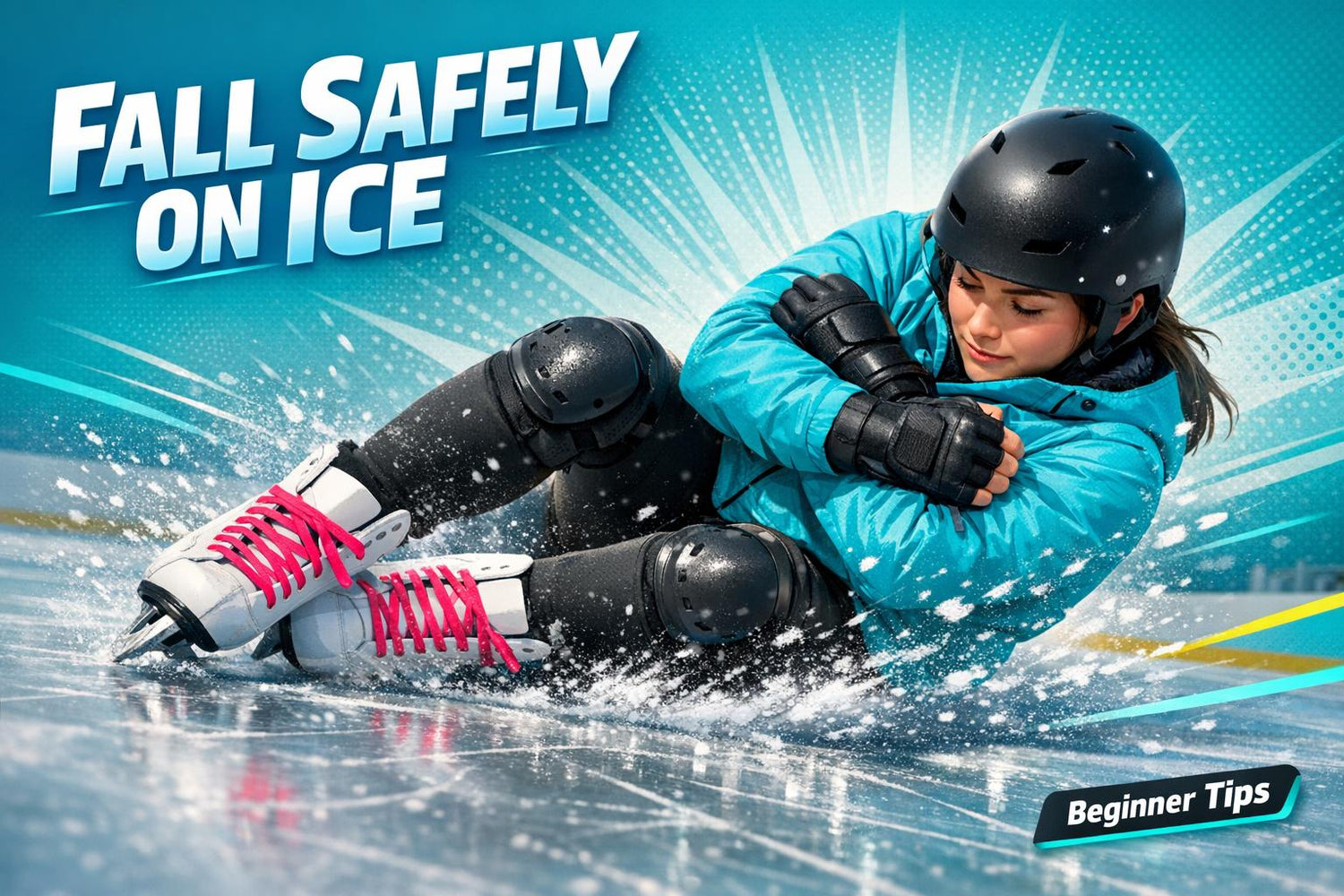
Falling is part of learning to ice skate, but the way you fall matters. Knowing how to fall safely can reduce injuries and boost your confidence on the ice. The key? Stay calm, bend your knees, and aim to land on your hip or side - not your wrists or tailbone. Tuck your chin to protect your head, and let yourself slide to spread out the impact. Proper technique makes falling less scary and helps you get back up quickly.
Here’s the gist of what you need to know:
- Stay relaxed: Tensing up increases injury risk.
- Lower your center of gravity: Bend your knees to reduce fall impact.
- Land smart: Fall on your hip or side, not your hands or tailbone.
- Protect your head and hands: Tuck your chin and avoid stiff arms.
- Slide it out: Let your body slide to distribute the impact.
Practice these steps on soft surfaces first, like carpet or grass, to build muscle memory. And don’t forget protective gear - helmets, knee pads, and wrist guards can make a big difference. Falling isn’t failure; it’s part of the process. With the right approach, you’ll skate with more confidence in no time!
Learn How to Ice Skate: How to Fall on Ice & Get Up Lesson 8
How to Fall Safely on Ice: Step-by-Step
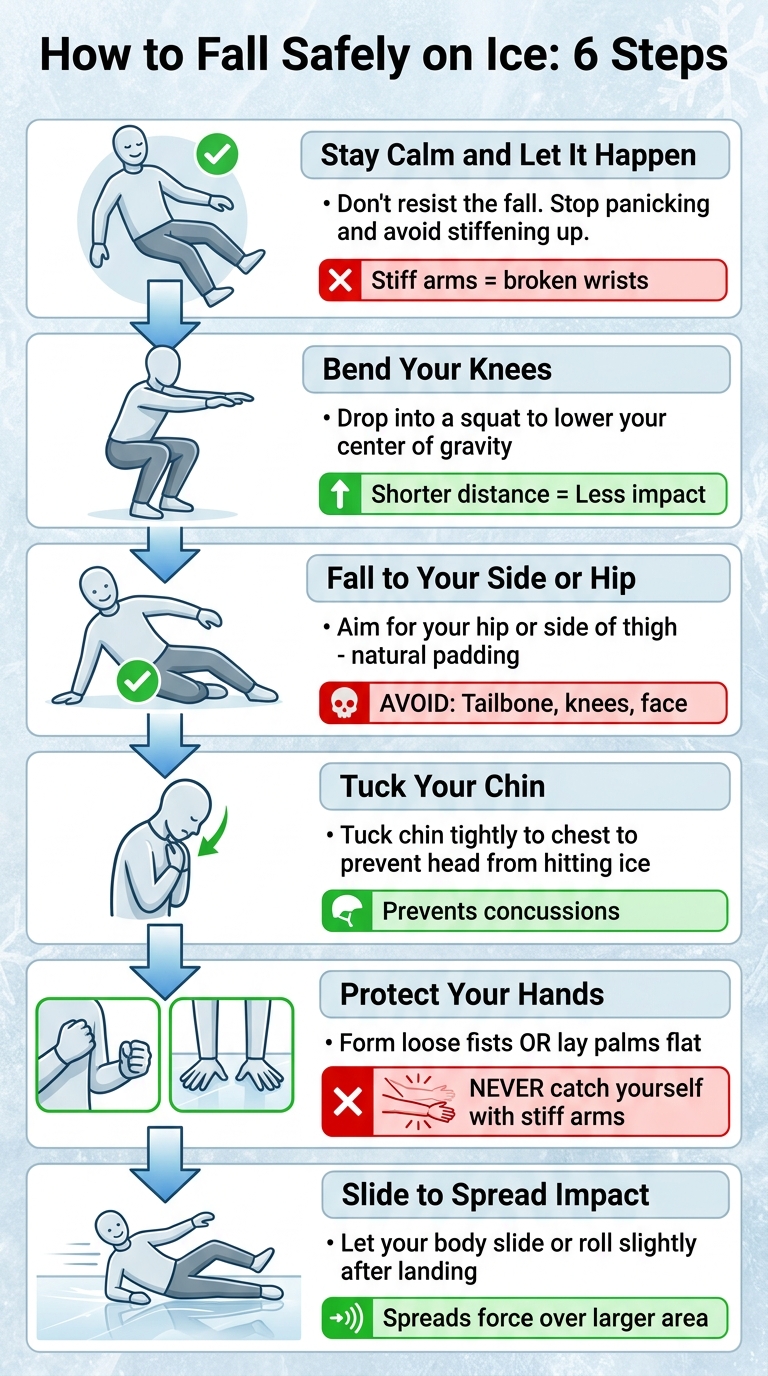
Safe Ice Skating Fall Technique: 6-Step Visual Guide
When you feel yourself slipping on ice, your natural instinct might be to stiffen up and try to stop the fall. But here's the thing: resisting a fall often does more harm than good. Tensing up locks your muscles, making you land awkwardly and hit the ice harder. Instead, staying relaxed helps your body absorb the impact more naturally and gives you some control over how and where you land.
"The moment you feel yourself losing balance, accept that you're going down. Fighting a fall causes you to tense up and land awkwardly, increasing injury risk." - Adults Skate Too LLC
Here's a breakdown of how to fall safely while minimizing injury.
Stay Calm and Let It Happen
The first step is to stop resisting. The moment you realize you're falling, don't panic. Panic makes you stiffen up, and stiff arms or outstretched hands are a recipe for sprained wrists or broken fingers. Instead, focus on staying calm and preparing for a controlled fall.
Start by lowering your stance - bend your knees to get closer to the ground.
Bend Your Knees to Lower Your Center of Gravity
Drop into a squat as soon as you feel unsteady. Bending your knees lowers your center of gravity, shortening the distance to the ice and reducing the impact. Think of it this way: falling from a standing position is like dropping from a chair, while falling from a squat is more like plopping down on a low bench. It's a big difference in how much force your body absorbs.
"The closer you are to the ice when you fall, the less impact you'll experience." - Adults Skate Too LLC
Once you're low, aim to fall onto a safer part of your body.
Fall to Your Side or Hip
Aim for your hip or the side of your thigh. These areas have natural padding, making them better equipped to absorb the fall. Avoid landing on your tailbone, knees, or face - those spots are more vulnerable to serious injuries. Falling sideways also keeps your head farther from the ice, protecting your spine and reducing the risk of concussions. A relaxed posture naturally helps guide your fall toward your hip.
As you fall, make sure to protect your head and hands.
Tuck Your Chin and Protect Your Hands
Your head and fingers need extra protection. Tuck your chin tightly to your chest to prevent your head from snapping back and hitting the ice. This simple move can help you avoid a concussion. For your hands, either form loose fists or lay your palms flat on the ice. Never try to catch yourself with stiff arms or spread fingers - that's how wrists break and fingers get jammed. Gloves are helpful, but proper hand placement is key.
Once you've landed, let the ice do some of the work.
Slide to Spread Out the Impact
Don't stop yourself abruptly. After you hit the ice, let your body slide or roll slightly. This spreads the impact over a larger area, reducing the force on any one part of your body. The ice is slippery, so use that to your advantage. A controlled slide is much safer than a sudden, jarring stop.
By practicing these steps, you can reduce your risk of injury and feel more confident navigating icy surfaces.
| Action | Recommended Technique | Why It's Safer |
|---|---|---|
| Initial Reaction | Relax and accept the fall | Prevents stiff, awkward landings |
| Body Position | Bend knees | Lowers center of gravity and reduces fall distance |
| Landing Zone | Hip or side | Uses natural padding; protects tailbone and knees |
| Head Control | Tuck chin to chest | Prevents head from snapping back onto the ice |
| Hand Placement | Fists or flat palms | Protects fingers from being jammed or broken |
| Post-Impact | Roll or slide | Spreads impact force and dissipates energy |
How to Get Back Up After Falling
First, take a moment to pause. After hitting the ice, stop for 2–3 seconds. Use this time to catch your breath, check yourself for injuries, and look around for other skaters. Trying to rush back up can lead to another tumble, so give yourself a second to regroup.
Next, roll onto your stomach and get onto all fours. This position gives you a stable base to work from on the slippery surface. From here, bring your stronger leg forward and plant your skate blade flat on the ice. Make sure your knee is bent at about a 90-degree angle, directly above your ankle.
Use your hands for support and shift your weight forward. Press your hands firmly on the ice, lean into your front foot, and slide your back foot forward to meet it. This movement helps you transfer your weight safely and get back on your feet.
Once you’re standing, keep your stance low and steady. Bend your knees slightly, keep your arms out for balance, and take a few glides forward to regain confidence.
If you’re new to skating, it’s worth noting that most adult beginners fall much less often after 4–6 weeks of skating 1–3 times a week. To prepare, practice this "down and up" routine 5–10 times at home on a carpeted floor or yoga mat. This builds muscle memory, so when you do fall on the ice, your body knows how to recover quickly and safely. Plus, it’s a great way to reinforce good habits for future skating adventures!
Protective Gear You Need for Ice Skating
Once you’ve learned how to fall properly, the next step is gearing up with the right protective equipment. Quality gear doesn’t just shield you from injuries; it also boosts your confidence on the ice.
Wearing well-fitted protective gear is key to skating safely and confidently. As Nathan Anthony from Racine Ice Center says: "Investing in the right safety gear not only protects your body, it boosts your confidence. You skate harder, safer, and smarter".
Before stepping onto the ice, make sure your gear fits snugly and meets safety standards like CE or ASTM certifications. Loose equipment can shift during a fall, and overly tight gear can limit your movement and cause discomfort. Below are some essential items to keep you protected whether you're gliding smoothly or taking a tumble.
Helmets for Head Protection
A helmet is the most important piece of safety gear for ice skating. Falls, especially backward ones, can lead to serious head injuries if left unprotected. A good helmet reduces the risk of concussions and skull fractures.
When picking a helmet, ensure it sits level on your head and doesn’t wobble when you shake your head. The chin strap should be snug but not too tight. Also, helmets need to be replaced every five years - or sooner if they’ve taken a hard hit - to maintain their protective quality.
Knee and Elbow Pads for Joint Safety
Your knees and elbows take the brunt of many falls, so protecting them is essential. Knee pads, in particular, help absorb impact and prevent bruises or joint injuries. Look for pads with high-density foam or gel layers for maximum cushioning.
Elbow pads are equally important, especially when practicing moves like edges or turns, where sideways falls are common. These pads help protect against injuries like fractures or olecranon bursitis. Many skaters opt for slim-fitting pads that can be worn under their clothing, offering protection without adding bulk.
Wrist Guards to Avoid Fractures
Wrist injuries are among the most frequent ice skating mishaps. It’s natural to extend your arms when falling, which puts your wrists at risk. Wrist guards are designed to redirect impact away from your wrist bones, reducing the chances of sprains, fractures, or hyperextension.
While wrist guards protect your bones, gloves are great for shielding your hands from cold and accidental cuts. For full protection, wear both.
Extra Protection: Padded Shorts
For added safety, consider padded shorts - often called crash pants. These are designed with EVA foam or impact-resistant inserts to protect your tailbone and hips during falls. They’re especially helpful for beginners and kids who are more prone to landing on their hips. Dr. Melanie L. Pitone from Nemours Children's Health advises: "New skaters and young kids, especially, should wear helmets, wrist pads, knee pads, and elbow pads".
sbb-itb-17ade95
Practice Drills for Falling and Getting Back Up
Once you’ve got the basics of safe falling down, practicing regularly can make these techniques second nature. Interestingly, most adult beginners notice a big improvement in how often they fall after just 4–6 weeks of consistent practice, skating 1–3 times a week. The key? Practice deliberately - both on and off the ice - to tackle that fear of falling head-on.
Start with off-ice drills on soft surfaces like carpet, grass, or even a yoga mat. Before hitting the rink, practice the falling technique 10 times on these cushioned surfaces. Focus on the essentials: bend your knees deeply, tuck your chin, and keep your hands relaxed. This helps train your body to react the right way without worrying about a hard landing.
Once you’re comfortable off the ice, move on to controlled on-ice falls. Begin from a stationary standing position, then slowly bend your knees to lower your center of gravity. When you’re ready, let yourself gently tip onto your side or hip. Aim to repeat this 5–10 times to build muscle memory. Remember what Adults Skate Too LLC says: "Falling is not failure - it's part of learning".
For standing back up, try the "all fours" recovery drill. After a fall, roll onto your side and get onto your hands and knees. Then, plant one skate blade firmly on the ice with your knee bent at 90 degrees. Use both hands to push your weight onto that foot and stand up. Don’t rush - take 2–3 seconds to check for injuries and your surroundings before getting back on your feet.
To build even more confidence, add mental rehearsal to your routine. Spend a few minutes visualizing yourself falling safely: knees bent, landing on your hip, chin tucked. This kind of mental prep can lower anxiety and help you react faster during actual falls.
Ice Skating vs Snowfeet*: Safer Falling on Snow

Falling on ice can be a harsh reality of ice skating. But with Snowfeet* Mini Ski Skates, you’ve got a softer, snow-covered alternative. Snow naturally cushions falls, making it a much gentler surface to land on. Unlike ice, which demands precise techniques to avoid injury, Snowfeet* lets you enjoy winter sports with fewer worries about hard landings. It’s a great complement to the safe falling techniques you might already know.
How Snowfeet* Mini Ski Skates Make Falling Safer
The key difference lies in the surface and the gear. Ice is unforgiving - falls can lead to bruises or worse. Snow, on the other hand, absorbs impact, making falls far less painful and lowering the risk of serious injury.
Another advantage? Snowfeet* reduces trip hazards that are common in ice skating. Ice skates rely on thin blades for balance, and figure skates even have toe picks that can cause sudden, face-first falls if you’re not careful. Snowfeet* Mini Ski Skates are compact - just 15 inches (38 cm) long - so they’re easier to manage and less likely to cause tangles or awkward trips. Plus, unlike traditional skis or snowboards that can feel bulky and require precision, Snowfeet* are designed for simplicity. They’re easier to maneuver, and getting back up after a fall is much less of a hassle compared to dealing with long skis or narrow blades.
Comparison Table: Ice Skating vs Snowfeet*
Here’s a quick breakdown of how Snowfeet* stacks up against traditional ice skating gear:
| Feature | Ice Skating | Snowfeet* Mini Ski Skates |
|---|---|---|
| Learning Curve | Moderate to steep | Quick learning curve |
| Safety When Falling | Risk of wrist and head injury on hard ice | Reduced risk due to softer snow and shorter size |
| Protective Gear Needed | Helmet, pads, and wrist guards strongly recommended | Minimal protective gear required |
| Versatility | Limited to ice rinks | Usable on slopes, trails, backyards, and snowparks |
Snowfeet* offers a safer, more versatile way to enjoy winter sports, especially for those concerned about the risks of falling on ice. It’s a win-win for fun and safety!
Conclusion
Learning how to fall safely is key to becoming more confident on the ice. As Adults Skate Too LLC wisely points out, falling is just part of the process when you're learning something new. By mastering a few simple techniques - like staying calm, bending your knees, falling to your side, tucking your chin, and keeping your hands out of harm's way - you can reduce your risk of injury and feel more secure.
Don’t forget to gear up properly. Helmets, knee pads, wrist guards, and padded shorts can make a huge difference. Many adult skaters rely on padding when trying new moves, and it’s a smart choice - no need to feel self-conscious about staying safe.
Before stepping onto the rink, practice falling and getting back up on a soft surface like carpet, grass, or a yoga mat. This helps you build muscle memory and reduces hesitation when you're actually on the ice. Visualizing the steps of a safe fall can also help you stay calm and react quicker when the moment comes.
Falling safely and using the right gear go hand in hand to boost your confidence. If you're looking for a gentler way to enjoy winter sports, you might want to check out Snowfeet* Mini Ski Skates. Snow tends to be softer than ice, and the compact 15-inch design of Snowfeet* helps cut down on tripping hazards that traditional skate blades can cause. It’s a fun, forgiving way to work on your balance and coordination while staying safe.
FAQs
What should I do if I start falling backward?
If you feel yourself losing balance and falling backward while ice skating, try to stay calm and relaxed. Bend your knees and lower your body to get closer to the ice. Aim to land on your side or hip instead of your tailbone, wrists, or head, as this can help minimize the risk of injury. Also, tuck your chin toward your chest to protect your head during the fall. These simple steps can make a big difference in absorbing impact safely.
How can I practice safe falling at home?
To practice falling safely at home, keep these techniques in mind: relax your body to prevent stiff muscles, bend your knees to lower your center of gravity, and aim to fall on your side to avoid putting stress on vulnerable areas like your wrists or tailbone. Don't forget to tuck your chin to protect your head. Repeating these steps and using protective gear can boost your confidence and help minimize the chance of injuries.
Do I really need a helmet and wrist guards?
Wearing a helmet and wrist guards is a smart move for anyone new to ice skating. Let’s face it - falls happen, especially when you're just starting out. While not required, this gear can make a big difference in keeping you safe. Helmets help protect against head injuries, and wrist guards can lower the chances of fractures. Sure, learning how to fall safely - like bending your knees and aiming to land on your side - can help, but having that extra layer of protection for your head and wrists is always a good idea. Safety first!











Leave a comment
This site is protected by hCaptcha and the hCaptcha Privacy Policy and Terms of Service apply.