



















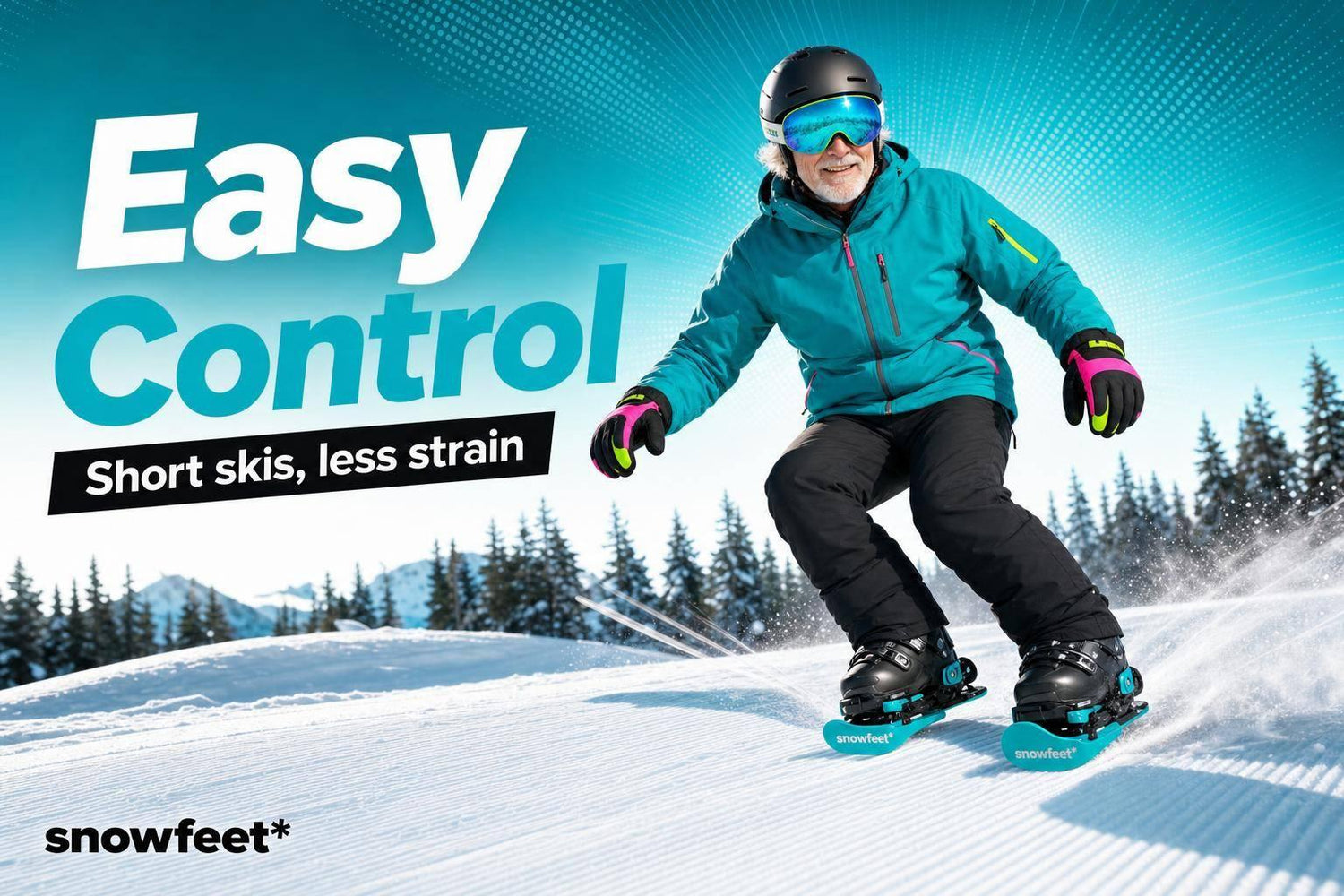
If you want less work and more control on groomed runs, shorter skis usually win. From 17 in (44 cm) up to 47 in (120 cm), these options are lighter, easier to turn, and less tiring than full-length skis in the 63–71+ in (160–180+ cm) range.
Here’s the short version:
- 44 cm Skiskates: best for super short turns and easy carrying
- 65 cm Skiblades: best for low-effort skiing on greens and easy blues
- 99 cm Skiblades: best middle ground for control and a calmer feel
- 120 cm Short Skis: best if you want a more familiar ski feel without full-length bulk
- Standard long skis: best for higher speed and deeper snow, but they take more work
A few numbers jump out fast. The lightest short option listed weighs as little as 3.79 lbs per pair with bindings, while many full-length skis land around 8–17 lbs. And that matters. Less weight often means less strain on your knees, hips, shoulders, and back. For many seniors, that’s the whole game.
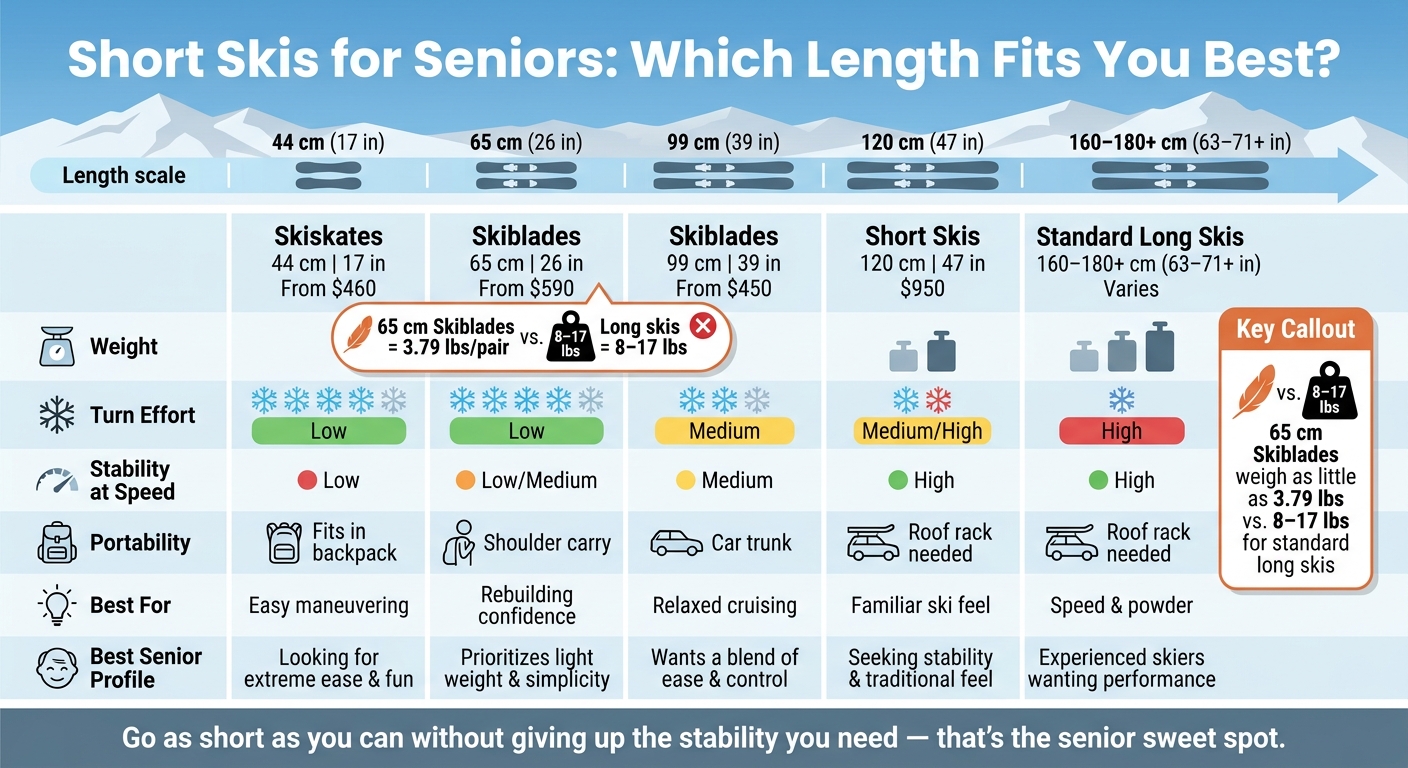
Short Skis for Seniors: Length vs. Control Comparison Chart
Best Skis for the Elderly? | Are Short Skis Better for Older Skiers?
Quick Comparison
| Option | Length | Starting Price | Best For | Main Trade-Off |
|---|---|---|---|---|
| Snowfeet* Skiskates | 17 in (44 cm) | From $460 | Tiny size, very short turns | Needs more balance |
| Snowfeet* Skiblades | 26 in (65 cm) | From $590 | Easy groomer skiing | Can feel nervous at higher speed |
| Snowfeet* Skiblades | 39 in (99 cm) | From $450 | Mix of control and a calmer ride | Still not as planted as longer skis |
| Snowfeet* Short Skis | 47 in (120 cm) | $950 | More familiar ski feel | More bulk than shorter models |
| Standard Long Skis | 63–71+ in (160–180+ cm) | Varies | Speed, chopped snow, powder | More effort, more weight |
So, if I had to boil it down to one line: go as short as you can without giving up the stability you need. That’s often the sweet spot for seniors who want calm, fun ski days instead of fighting their gear :)
If you want a visual feel for short skis before you buy, these videos can help:
- Short skis / skiblades overview on YouTube
- Skiblades for beginners and older skiers on YouTube
- Snowfeet skiskates and skiblades on YouTube
1. Snowfeet* Skiskates 44 cm
Starting price: $460 | Length: 17.3 in (44 cm)
The 44 cm Skiskates are snow skates, not standard skis. That changes the feel in a big way. You get fast turns and a light, nimble ride, but you also need a bit more balance under you.
Turn Control
At 17.3 in, they turn almost right away and take very little effort. That makes them a good pick for seniors who want easy maneuvering on groomed snow.
Stability at Moderate Speed
These need more front-to-back balance than longer skis. The feel is closer to skating than skiing. So, if you want calm control at slower speeds, they can be a fun fit. If you want the planted feel of longer skis, that’s a different story. Seniors with a skating or hockey background often adapt quickly.
Weight and Portability
They’re small enough to fit in a backpack, which makes them easy to carry. That’s one of their biggest perks. No wrestling with long skis in the parking lot. Always nice :)
Effort on Groomed Runs
On groomed runs at a relaxed pace, the 44 cm Skiskates are easy on the knees and hips. Beginners can stop with a heel brake or hockey stop.
They work best on groomed snow and shallow powder up to about 4 in (10 cm).
If you want a bit more stability but still want easy turning, the 65 cm Skiblades are the next step up.
2. Snowfeet* Skiblades 65 cm
Starting price: $590 | Length: 25.6 in (65 cm)
If the 44 cm Skiskates feel a bit too quick, the 65 cm Skiblades are the calmer pick. They give seniors easy control, but with a more planted feel underfoot. You still get simple handling. You just get it in a smoother, more settled package.
Turn Control
On green and easy blue groomers, these turn with light input. In plain English, a small weight shift is often enough to get things going.
Compared with the 44 cm Skiskates, they feel less twitchy and more deliberate. That’s a nice match for older skiers who want smooth, predictable turns without having to react every second.
Stability at Moderate Speed
The wider platform feels steadier and is less likely to catch an edge. That can be a big relief if your balance isn’t perfect every moment - because, hey, nobody skis like a robot :)
They won’t give you the straight-line feel of longer skis. But at moderate speeds on groomed snow, most seniors should feel secure on them.
Weight and Portability
At 65 cm, they’re still easy to carry on one shoulder and fit into shorter bags. On snow, they also feel lighter on your feet during lift lines and flat traverses, which is always nice when you’d rather save energy for the fun part.
Effort on Groomed Runs
Because these skis pivot with little effort, seniors don’t need to twist as hard to start or finish each turn. That helps keep groomed runs relaxed and less tiring.
A simple tip helps here: keep your knees soft and your hands forward. That small stance cue can make short skis feel much easier to control.
If you want more straight-line stability and a bit more confidence at speed, the 99 cm Skiblades come next.
3. Snowfeet* Skiblades 99 cm
Starting price: From $450 | Length: 39 in (99 cm)
The 99 cm Skiblades hit a nice middle ground between the 65 cm blades and the 120 cm short skis. They keep that quick, easy feel, but add more calm. For many seniors, that means more control than the 65 cm version without the extra work that comes with long skis. If 65 cm feels a bit twitchy, 99 cm smooths things out without going all the way to full ski length.
Turn Control
At 99 cm, you get more edge on the snow than with the 65 cm blades. That makes turns feel more planted and easier to predict. You don’t need big movements either. A light leg turn and a relaxed stance usually do the job.
On the same groomed runs, these feel steadier than the 65 cm version. That lighter steering effort can be a big help for seniors who have less flexibility or deal with knee pain. It’s one of those small things that can make a ski day feel a lot less like a wrestling match :)
That extra length changes the feel on firmer snow too.
Stability at Moderate Speed
The added length helps a lot on firm morning corduroy and late-day chopped-up snow. Compared with the 65 cm blades, the 99 cm model is less likely to get bumped off line by rough spots or icy patches. That can feel like a nice little sigh of relief.
The shape also helps the ski turn in a smooth way instead of hooking all at once. For older skiers, that often feels easier to trust. That said, once speed climbs, they still won’t feel as settled as the 120 cm version or full-length skis.
Weight and Portability
At 99 cm, these skis still fit in most vehicles without a roof rack. That’s a win right there. They’re a bit less handy to carry than the 65 cm blades, but they’re still easy enough for most people to manage.
For seniors with shoulder or back issues, the shorter size versus standard skis can cut down the strain when carrying gear from the parking lot to the lift. Less awkward. Less hassle. More energy left for the fun part.
Effort on Groomed Runs
Shorter skis put less stress on your knees and hips during each turn. They also help cut fatigue compared with long skis because they take less force to steer. That’s a pretty big deal if you want to ski longer without feeling cooked by lunch.
These skis respond best to smooth, steady edging. Gentle input works better than sharp, jerky moves. Keep your knees soft and your stance centered, and turns stay easy while fatigue stays lower.
If you want even more calm and support, the 120 cm option comes next.
sbb-itb-17ade95
4. Snowfeet* Short Skis 120 cm
Price: $950 | Length: 47 in (120 cm)
The 120 cm Short Skis are Snowfeet*’s longest model. They also feel the most like a standard ski out of the short-ski lineup. For seniors, that makes them a nice middle ground: more stable than the 99 cm blades, but without going all the way back to full-length skis.
Turn Control
At 120 cm, turns feel smooth and easy to read. The ski holds its line well through each arc, which makes it a solid pick for seniors who want simpler parallel turns without the extra bulk of long skis. The slightly rockered tip helps the edges come into the snow in a smoother, more forgiving way.
On icy steeps, though, let’s be honest: a longer performance ski will still grip better. These are made for comfortable cruising, not hard-charging carving.
Stability at Moderate Speed
This length feels calmer than the 65 cm and 99 cm blades, especially on groomed green and blue runs and in that choppy snow you get later in the day. Compared with the 99 cm version, the 120 cm gives up some snap and quickness for a steadier ride.
If a senior skier wants more stability but doesn’t want to return to long skis, this is Snowfeet*’s best option.
Weight and Portability
The 120 cm skis are much lighter and more compact than standard full-length skis. That matters a lot in day-to-day use. They’re easier to carry, easier to store, and they put less strain on the body than standard gear.
They also fit into car trunks and closets with less hassle. They’re not as tiny as the 65 cm or 99 cm blades, of course, but they’re still far easier to manage than full-length skis.
Effort on Groomed Runs
At 120 cm, the ski stays easy to handle without that classic thigh burn long skis can bring on. Many seniors with moderate fitness find they can stay out longer before fatigue kicks in. That’s a big deal. More runs, less grumbling from your legs :)
The 120 cm works best with a relaxed stance. It’s built for comfort and ease, not high-speed skiing. If you want tighter, faster turns on short groomed slopes, the 99 cm version may be a better match. If you want more speed and better float in deep snow, standard long skis are still the next step. They still do better in deep snow and at higher speeds.
5. Standard Long Skis
Standard long skis - usually 160–180+ cm (about 63–71+ in) for adult men and 150–170+ cm (about 59–67+ in) for adult women - are made more for speed and deep snow than for easy handling on groomed runs. Put them next to Snowfeet*'s 120 cm option, and the trade-off is pretty clear: long skis give you more stability, but they’re harder to control.
Turn Control
Long skis have a longer turn radius. So they make wider turns and take more work to redirect at slow speeds. On tighter groomed runs, especially if you like a relaxed pace, that can mean using more leg strength and balance just to stay on top of the ski.
Stability at Moderate Speed
Long skis tend to feel most stable when you’re moving fast. At the slower speeds many seniors prefer on groomed slopes, that edge gets smaller. You still have the extra length, but now you also need more steering effort to manage it.
Weight and Portability
This is one of the biggest downsides for older skiers. A typical pair of full-length skis can weigh 8–17 lbs and brings a lot more bulk when you’re walking through parking lots, going up stairs, or trying to stuff them into a ski locker. Snowfeet* 65 cm Skiblades, on the other hand, weigh as little as 3.79 lbs per pair with bindings.
Effort on Groomed Runs
Long skis need more force to turn, mostly at slower speeds. That extra effort can lead to more fatigue and more stress on the joints for many seniors. Ski sizing guides often suggest that skiers 60+ go about 10 cm shorter than the usual length because reaction time slows and joints become more vulnerable with age. When comfort and confidence matter most, those trade-offs are hard to ignore.
Pros, Cons, and Comfort Differences Seniors Should Know
Each length changes the ride in a different way. You’re trading speed, stability, and effort every time you go shorter or longer. For most seniors skiing groomed runs, the best pick comes down to one thing: how much control and comfort you want.
Long skis still do best at speed and in powder. But on groomers, many seniors get easier control and less fatigue from shorter Snowfeet options. That’s the big reason the shorter Snowfeet models stand out for older skiers who care more about control than going fast.
The 65 cm Skiblades are the lightest option that still feels like a ski. The 44 cm Skiskates go even shorter, which makes them the easiest to carry around. If you want more stability and a feel that’s closer to normal skis, the 99 cm Skiblades and 120 cm Short Skis step in. They still stay lighter and easier to handle than standard gear.
| Option | Strengths | Limitations | Best-Fit Senior Profile |
|---|---|---|---|
| Skiskates 44 cm | Most portable, low intimidation | Least stable at speed; needs good balance | Cautious seniors wanting short, easy sessions |
| Skiblades 65 cm | Lightest, easiest on knees, quick turns | Can feel twitchy at speed; not for powder | Seniors rebuilding confidence on groomers |
| Skiblades 99 cm | Better stability than 65 cm, forgiving carving | Less stable than long skis at speed | Returning skiers wanting a relaxed, familiar ride |
| Short Skis 120 cm | Closest to traditional ski feel, smooth edge grip | Less portable; more effort than 65/99 cm | Athletic seniors who want friendlier gear |
| Standard Long Skis | Best high-speed stability, powder, all-mountain | Heaviest; highest turning effort and joint stress | Experienced seniors with solid technique who still want speed |
So, if you want the easiest turning and the least strain, shorter models usually make more sense. If you still like a calmer, more familiar ride, the 99 cm or 120 cm options may hit the sweet spot.
Next, match these differences to your balance, comfort level, and terrain.
Which Length Is Right for You?
Pick your length based on terrain and stability. Your usual runs, your pace, and how tired you get by the end of the day will tell you a lot more than a spec sheet ever will.
Use the chart below to line up ski length with how you ski and where you ski.
| Senior Skier Type | Confidence Level | Preferred Terrain | Best Length |
|---|---|---|---|
| Nervous beginner or returning after many years | Low | Short green slopes, bunny hills | Snowfeet* Skiskates 44 cm |
| Cautious senior rebuilding skills | Low–Medium | Greens and easy blues on small hills | Snowfeet* Skiblades 65 cm |
| Intermediate who cruises blues at a relaxed pace | Medium | Blue groomers at a resort | Snowfeet* Skiblades 99 cm |
| Fit senior who skis longer runs or mixed snow | High | Longer blue groomers, varied conditions | Snowfeet* Short Skis 120 cm |
| Strong, experienced senior who skis fast | High | Fast groomers, variable snow, steeper runs | Standard long skis |
Here’s the simple version: 44 cm and 65 cm are best if you want the easiest turns. They feel light, quick, and less demanding. If you want more calm underfoot and better tracking, step up to 99 cm or 120 cm.
The shorter options work well for quick, easy sessions. The 99 cm and 120 cm lengths make more sense for longer resort days, when you want a bit more support as the hours stack up.
If you’re stuck between two sizes, go with the shortest length that still feels stable on the runs you ski most often. That’s usually the sweet spot :)
FAQs
Are short skis harder to learn on than regular skis?
No. Short skis are not harder to learn on than long skis. In fact, Snowfeet short skis are made to help beginners learn faster. A lot of new riders can get the basics down in just a few hours.
Why? They’re shorter, lighter, and far less clunky than bulky long skis. That makes turning and stopping feel more natural and easier to figure out. They also put less strain on your joints, which is a nice little bonus when you’re still getting your legs under you.
For beginners, that usually means one thing: more confidence, faster.
Which short ski length is best if I have knee pain or limited mobility?
If you have knee pain or limited mobility, the 65 cm Snowfeet Skiblades are your best bet. Their short length puts less leverage on your knees and hips than long skis, which can mean less joint strain and easier turns.
If you want that same easy control but with a bit more surface area for longer runs, the 99 cm model is also a knee-friendly pick that may help cut down on fatigue.
Can I use short skis all day at a resort, or are they better for short runs?
Yes - Snowfeet skiblades can work all day at a resort.
The short version is simple: the 65 cm model is best for quick, playful laps on groomed runs, while the 99 cm and 120 cm options are a better fit for all-day comfort and stability.
They also handle mixed terrain and steeper trails with less hassle than bulky skis. That means they’re easier to control, simpler to carry around, and less tiring over a full day. On top of that, they work with comfortable boots, which makes walking through the resort a lot easier. :)











Leave a comment
This site is protected by hCaptcha and the hCaptcha Privacy Policy and Terms of Service apply.