



















If you want skis that feel lighter, turn with less effort, and are less annoying to carry, short skis make a lot of sense. In this lineup, the shortest option is 44 cm (17 in.), the longest is 120 cm (47 in.), and the best pick depends on three things: stability, terrain, and boot type.
Here’s the short version:
- 44 cm Skiskates: best for travel, park laps, and skate-like feel
- 50 cm PRO: lowest price at $299
- 65 cm Skiblades: best starting point for many new or cautious riders
- 99 cm Skiblades: best all-around pick for mixed resort use
- 99 cm POWDER: best for soft snow
- 120 cm Short Skis: best if you want the most stable ride in this group
I’d sum it up like this: go shorter for fun and easy packing; go longer for more grip and a calmer ride. The jump from 44–50 cm to 99–120 cm changes how the ski feels more than anything else. And yes, that matters a lot when your legs are toast at 2:30 p.m. :)
Snowboarder tries Snowfeet* | Which Snowfeet* Short Ski is the Best? | Snowblades 44, 65, 99 Review
Quick Comparison
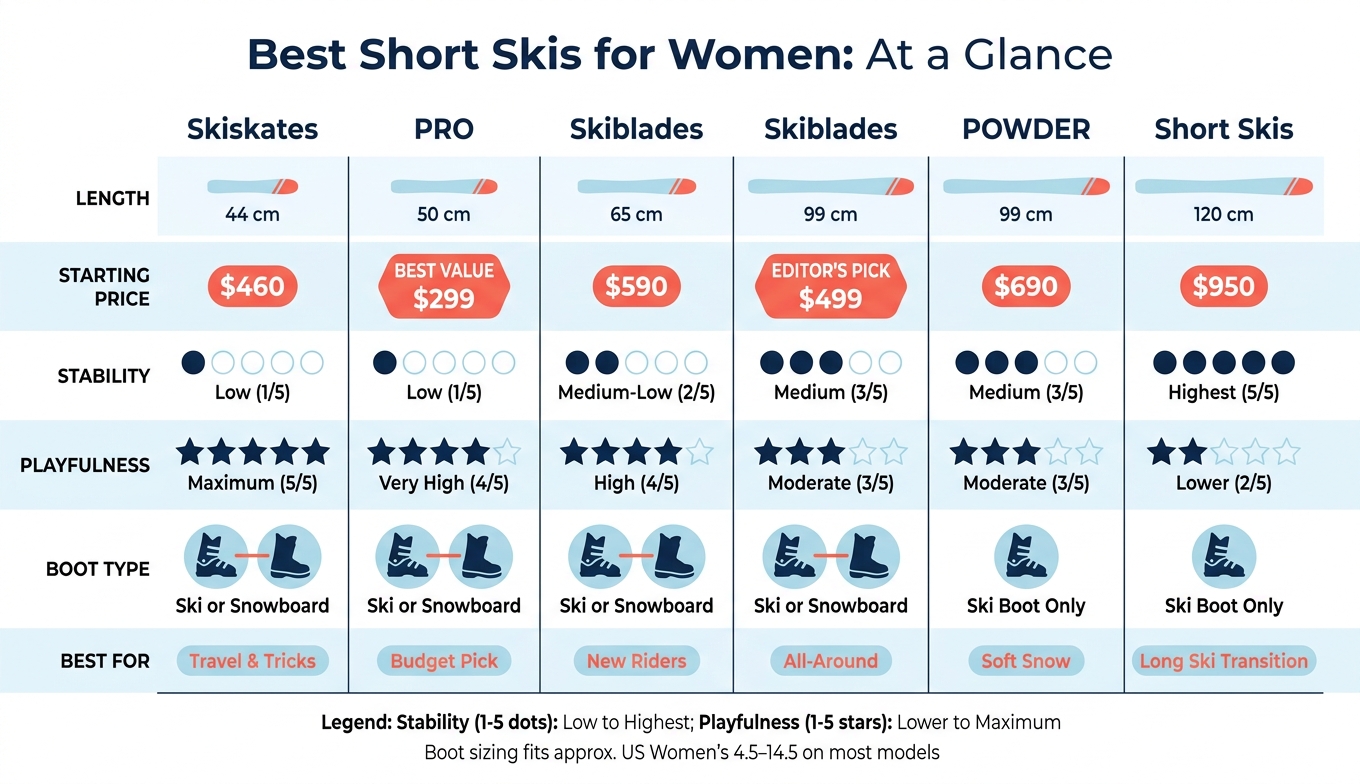
Best Short Skis for Women: Side-by-Side Comparison Chart
| Model | Best For | Boot Type | Snow Feel | Starting Price |
|---|---|---|---|---|
| Skiskates 44 cm | Travel, tricks, groomers | Ski or snowboard boots | Very playful, least stable | $460 |
| PRO 50 cm | Budget pick, casual resort use | Ski or snowboard boots | Playful with a bit more support | $299 |
| Skiblades 65 cm | New riders, small riders, easy resort days | Ski or snowboard boots | Better balance of control and fun | $590 |
| Skiblades 99 cm | Mixed resort skiing, carving, all-around use | Ski or snowboard boots | More planted and smooth | $499–$690 |
| POWDER 99 cm | Soft snow, chopped snow | Ski boots | Better float, less hardpack bite | $690 |
| Short Skis 120 cm | Riders moving from long skis | Ski boots only | Most stable, most ski-like | $950 |
A few numbers stand out fast:
- 44 cm to 50 cm = smallest and easiest to pack
- 65 cm = middle ground for many women
- 99 cm = stronger edge hold and smoother speed control
- 120 cm = the most settled ride in the group
- Boot sizing runs up to about US Women’s 14.5 on most models
So, if I had to make this simple:
- Pick 44–50 cm for packability and park fun
- Pick 65 cm for learning and easy resort laps
- Pick 99 cm for the best one-ski answer
- Pick 120 cm if long skis still feel familiar and you want more support
That’s the whole story in plain English. Now let’s get into which model fits your style on snow.
1. Snowfeet* Skiskates 44 cm
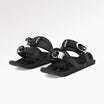
At just 17 inches (44 cm) long, the Skiskates are the shortest skis in the Snowfeet lineup. They feel the most like skates, and they’re the easiest pair to toss in a bag and take anywhere. This is the pick for riders who want fun, quick control, and a light feel more than top-end speed. If you want a bit more length and a steadier ride without giving up that light setup, the PRO 50 cm is the next move.
Who They're Best For
These ride more like skates than standard skis, so they’re a nice fit for beginners, smaller riders, and women who want a playful option for groomed runs. Most people get the hang of them fast. Snowfeet* says it takes about 5 minutes to feel okay with the basics.
If you’ve ice skated, rollerbladed, or played hockey, the movement will click fast. That’s part of the appeal here - it feels familiar, not like you’re learning from scratch.
Boot Setup and Comfort
You can get the Skiskates with either ski boot bindings or snowboard boot bindings, based on the version.
- Ski boot bindings fit about US 4.5–14.5
- Snowboard boot bindings fit about US 6–14.5
Snowboard boots feel softer and more relaxed. Ski boots feel firmer and more locked in. It’s kind of like the difference between sneakers and a stiff race boot - same goal, very different feel.
Terrain and Speed
Stick to groomed slopes, moguls, and snow parks. That’s where these things come alive. They’re not made for deep powder, where a longer ski will float and track better.
They work best at controlled speeds. The metal edges and shape still let you carve clean turns, and the short length makes tricks, spins, and riding backward feel natural. If your idea of a good day is lapping the park, slashing side hits, and making tight turns with almost no effort, this setup makes a lot of sense.
Choose Skiskates for groomed runs, park laps, and easy turning. Skip them for powder and fast, straight-line skiing.
Price
Snowfeet's store lists Skiskates 44 cm starting at $460, and the final price depends on the binding package. At that price, they fit riders who care most about playfulness and portability, not speed. If you want a little more stability, the PRO 50 cm gives you that next step in control.
2. Snowfeet* PRO 50 cm
At 20 inches (50 cm), the PRO lands right between the 44 cm Skiskates and the longer Skiblades. It’s the lowest-priced adult model in the lineup, starting at $299. So if the 44 cm Skiskates feel a bit too twitchy, this is the next move. You get a bit more steadiness, but it still stays small, light, and easy to carry.
Who They're Best For
The PRO is a good fit for beginners, laid-back resort riders, and women who want a light setup that doesn’t cost a ton. It’s more stable than the 44 cm Skiskates but still easy to turn. That’s the big draw here: more control than the shorter model, without a jump in price.
Boot Setup and Comfort
The PRO works with ski boots (US 4.5–14.5) and snowboard boots (US 6–14.5), and the bindings are tool-free. That makes setup pretty simple. No messing around in the parking lot with gear when your hands are freezing.
Terrain and Speed
Like the 44 cm version, the PRO does best on groomed runs and in the park, just with a bit more stability. It can handle light powder up to about 4 inches (10 cm), but Snowfeet says you should move to a longer model if you ride deeper snow on a regular basis. At higher speeds or on firm snow, it’s less forgiving than longer skis.
Price
At $299, the PRO is the most affordable adult model in the Snowfeet* lineup. If you want more stability and a feel that’s closer to skiing, the next step up is the 65 cm Skiblades.
3. Snowfeet* Skiblades 65 cm
At 65 cm, these Skiblades sit right in the middle of the lineup. They’re longer than the super-short 44 cm and 50 cm models, but still far from full-length skis. That means you get a fun, quick feel with a bit more calm underfoot on groomed runs. Starting at $590, they cost more than the shortest models, but that extra control is the whole draw.
Who They're Best For
These are a nice step up for riders who want more confidence than the 44 cm and 50 cm versions give, without jumping straight to long skis. They work well for beginners, smaller riders, lighter adults, and casual resort skiers who want a bit more control than the shortest models can offer. On groomed runs and easy resort days, they feel simple and relaxed.
Boot Setup and Comfort
They fit ski boots in US 4.5–14.5 and snowboard boots in US 6–14.5.
Terrain and Speed
The 65 cm length does its best work on groomed slopes, resort cruising, light freestyle play, and short-radius carving on moderate terrain. With a turn radius of about 4 meters, quick turns come easy. That’s the fun part.
There is a trade-off, though. Compared with longer skis, the shorter platform won’t feel as planted on steep or firm terrain. That’s the price you pay for easy, snappy control. If you want more stability and speed, the 99 cm Skiblades are the next move.
Price and Ratings
At $590, they sit on the higher end, but the 4.96/5 rating from 77 reviews backs that up.
4. Snowfeet* Skiblades 99 cm
The 99 cm Skiblades give you more grip and more stability without giving up much of that quick, short-ski feel. At about 39 inches long, they hold an edge better, scrub speed more smoothly, and feel more planted in carved turns than the 65 cm model. If you want the sweet spot between easy handling and ski-like control, this is it. The fiberglass flex core starts at $499, and the wood core starts at $690.
Who They're Best For
These are built for intermediate to advanced women, plus beginners who are still learning and want more stability than the 65 cm version.
Stability, Portability, Boot Setup, and Terrain
If you want one pair for resort laps, carving groomers, and the occasional park run, this is the strongest all-around option. Compared with the 65 cm model, the 99 cm Skiblades feel calmer when tipped on edge and steadier as your speed picks up.
The 99 cm length comes with a 6-meter sidecut radius and a tip/waist/tail width of 11.5 / 8.5 / 11 cm. In plain English: they’re shaped to make clean carved turns and feel more supportive underfoot than the 65 cm model. On groomed blue runs and easier black-diamond terrain, that extra edge length gives you better grip and smoother speed control.
They’re still easy to live with, too. At 99 cm, they fit across a back seat or inside a compact ski bag, and they’re simple to carry from the parking lot to the lift. Boot setup is broad:
- Ski boots: US 4.5–14.5
- Snowboard boots: US 6–14.5
If comfort matters most, the snowboard-boot setup is a nice bonus. Your feet will thank you :)
In the park, the twin-tip shape helps with switch riding, 180s, and small rail features. The lighter swing weight also makes spins and quick line changes feel easier. They carry a 5.0/5 rating from 49 reviews.
If you want the most stability in the Snowfeet* lineup, plus better float for powder days, the next step up is the 120 cm Short Skis.
sbb-itb-17ade95
5. Snowfeet* POWDER 99 cm
The POWDER 99 cm is the soft-snow version of Snowfeet’s 99 cm platform. Unlike the standard 99 cm Skiblades, this model is made for softer snow. It has a wider shape, which helps it float better and turn with less effort when the snow gets deep or chopped up. Simple job, simple result: more float and more control in soft snow. It’s listed at around $690 in the Snowfeet store.
Who They're Best For
This model works best for women who ski soft snow, mixed resort conditions, or mellow glades and want something easier to handle than a full powder ski.
Stability, Portability, Boot Setup, and Terrain
At 99 cm, it still feels nimble and easy to carry. That shorter length is a big part of the appeal. But there’s a trade-off, and it’s pretty straightforward: the wider shape gives you better flotation in powder, chopped snow, and soft resort conditions, while giving up some hard-snow precision.
On firm groomers or at steady high speeds, longer skis will hold an edge with more confidence. That’s the main give-and-take here. If your days are more about soft snow and easy turns than laying trenches on hardpack, that trade can make a lot of sense.
Standard ski boot bindings fit US sizes 4.5–14.5.
If you want more edge hold and a more ski-like feel on mixed terrain, move up to the 120 cm Short Skis. They’re also the next step for riders who want more stability and a feel that’s closer to standard skis.
6. Snowfeet* Short Skis 120 cm
If the 99 cm model feels a bit too small, the 120 cm Short Skis are the next move. This is the most ski-like option in the Snowfeet* lineup. It’s a good pick for riders who want the smoothest, most settled ride Snowfeet* offers. At $950, they feel closer to a standard ski, but they’re still easy to steer, stable underfoot, and short enough to keep things fun.
Who They're Best For
This model works well for women who want more control than full-length skis can give, but more stability than the shorter Snowfeet* models.
A few people fit this sweet spot:
- A confident beginner who’s spent a few days on rental gear and is ready for her first pair
- A low-intermediate skier who finds full-length skis tiring or a pain to turn
If regular skis feel like too much board to boss around, this size can feel like a nice middle ground.
Stability, Portability, Boot Setup, and Terrain
The 120 cm model uses a parabolic sidecut with a narrow ~7.8 cm waist, so it moves edge to edge fast and feels responsive without asking for a ton of effort. The camber with tip and tail rocker shape helps start turns more easily and keeps the ride smoother on mixed or slightly ungroomed snow.
On groomers, it does the job well. It also handles light powder better than the shorter Snowfeet* options. That said, longer skis still do better at high speed and in deep snow.
These skis come with release ski bindings only, which Snowfeet* recommends for this length. They fit most adult women’s ski boots in roughly US sizes 4.5–14.5. No, they won’t fit in a backpack like the tiny models. But they’re still much shorter and lighter than standard women’s skis.
That mix of control and added length sets up the side-by-side comparison below.
Stability, Portability, Boot Setup, and Terrain: How the Models Compare
Now that each model is on the table, here’s what matters most: how they feel on snow, what boots they work with, and where they make the most sense.
Length changes the ride more than anything else. 44–50 cm feels the most playful and turns fast. 65 cm adds more control. 99 cm sits in the middle, with a nice mix of agility and stability. 120 cm feels the closest to a standard ski.
Boot choice also splits the lineup. 44 cm and PRO 50 cm give you the most casual setup options. They work with regular winter boots or snowboard boots. The 65–120 cm models use ski boots, which give you more control and a safer release.
That same trade-off shows up across the full range. Shorter models lean into easy turning and quick moves. Longer models feel calmer as speed picks up.
The chart below makes that easy to scan.
| Skiskates 44 cm | PRO 50 cm | Skiblades 65 cm | Skiblades 99 cm | POWDER 99 cm | Short Skis 120 cm | |
|---|---|---|---|---|---|---|
| Speed stability | Low | Low | Medium-low | Medium | Medium in soft snow | Highest |
| Playfulness | Maximum | Very high | High | Moderate | Moderate | Lower |
| Portability | Fits in a backpack | Very portable | Compact, needs a bag | Needs a ski bag | Needs a ski bag | Least portable |
| Boot compatibility | Regular winter or snowboard boots | Regular winter or snowboard boots | Ski boots | Ski boots | Ski boots | Ski boots |
| Best terrain | Groomed, resort paths | Green runs, small hills | Groomers, park | All-mountain groomers | Mixed snow, powder | All-mountain, varied |
Use the chart above to match ski length, boot setup, and terrain with your riding style. The next section gets into the pros and cons of each model.
Pros and Cons of Each Model
Each Snowfeet* model has a clear sweet spot, plus a few trade-offs. The table below gives you the quick read.
| Model | Main Pros | Main Cons | Best Match for Women Riders |
|---|---|---|---|
| Skiskates 44 cm | Fits in a backpack; ultra-agile; skating feel | Less stable at speed; not for powder; steeper learning curve on steeper runs | Travelers, former inline or ice skaters, trick-focused riders |
| PRO 50 cm | More stable than 44 cm; easier setup; works with winter or snowboard boots | Still reactive for cautious beginners; less precise energy transfer than ski boots | Women who want skiskating with more support |
| Skiblades 65 cm | Ski-boot compatible; approachable on green and blue runs; great for terrain park | Can feel twitchy at higher speeds; less planted than 99 cm options | Intermediates, park riders, women teaching kids on the hill |
| Skiblades 99 cm | Best stability-to-agility balance; reliable carving; forgiving on mixed resort terrain | Less nimble for tight freestyle moves; needs a ski bag for travel | Riders who want stability in a compact length |
| POWDER 99 cm | Wider profile; better float in soft snow; surfy, playful feel in powder | Less precise on firm or icy groomers; overkill for hardpack-only resorts | Women who ski soft snow often |
| Short Skis 120 cm | Highest stability; most traditional ski feel; confident at moderate speeds | Least portable; slower to pivot; less casual boot experience | Cautious intermediates, women transitioning from full-length skis |
A few patterns stand out fast.
The 44 cm and PRO 50 cm feel the most playful, but they ask more from your balance once speed builds. They’re fun, quick, and light on your feet, though they don’t give you as much margin for error.
The 65 cm leans more toward park laps and playful resort riding. The 99 cm leans more toward all-day control, smoother carving, and a calmer ride when conditions change.
So, once you see the trade-offs, the last step is simple: pick the model that matches your confidence level and the terrain you ride most.
Which Short Ski Should You Choose?
Pick based on confidence, terrain, and pack size. That’s the quickest way to land on the right Snowfeet* model for how you ride.
If you're new to skiing or just like a calmer, more controlled feel, start with the 65 cm Skiblades. They hit the sweet spot between stability and easy turns. Want the lowest price? The PRO 50 cm is the budget choice, but fair warning: it’s tougher to learn on.
If you’re a smaller-framed rider, the 65 cm Skiblades give you the best control. If you want a more planted feel underfoot, step up to the 99 cm Skiblades.
For a resort cruiser riding mixed resort snow, the 99 cm Skiblades are the best all-around fit. On softer snow or powder days, go with the POWDER 99 cm instead.
If you travel a lot and want the smallest setup in your bag, the Skiskates 44 cm or PRO 50 cm make the most sense. Tiny gear is hard to beat when you’re sprinting through an airport with one glove in your teeth :)
Coming from long skis? The 120 cm Short Skis will feel the most familiar.
Match your top priority here:
| Your Situation | Best Pick | Starting Price |
|---|---|---|
| New or cautious rider | 65 cm Skiblades | from $590 |
| Lowest-cost option | PRO 50 cm | from $299 |
| Smaller-framed rider, wants more control | 65 cm Skiblades | from $590 |
| Resort cruiser, mixed resort snow | 99 cm Skiblades | from $690 |
| Soft snow, powder days | POWDER 99 cm | from $690 |
| Frequent traveler, smallest packed size | Skiskates 44 cm | from $460 |
| Moving from long skis | Short Skis 120 cm | $950 |
FAQs
How do I choose between 65 cm, 99 cm, and 120 cm short skis?
Choose the length that fits your skill level, body size, and how you like to ride.
- 65 cm: best for beginners, park laps, and the most nimble feel
- 99 cm: the best mix of quick handling and stability
- 120 cm: best for taller or heavier riders who want the most stable, more classic feel for carving and steeper terrain
All three still feel more playful and are easier to carry than standard long skis.
Are short skis good for beginners, or harder to learn on?
Short skis are a great pick for beginners. They’re usually easier to learn on than long skis because they’re shorter, lighter, and less of a handful.
That matters a lot on day one. Short skis are easier to turn, steer, and stop, so new skiers can get the hang of the basics without feeling like the skis are fighting back. And yeah, that can build confidence fast.
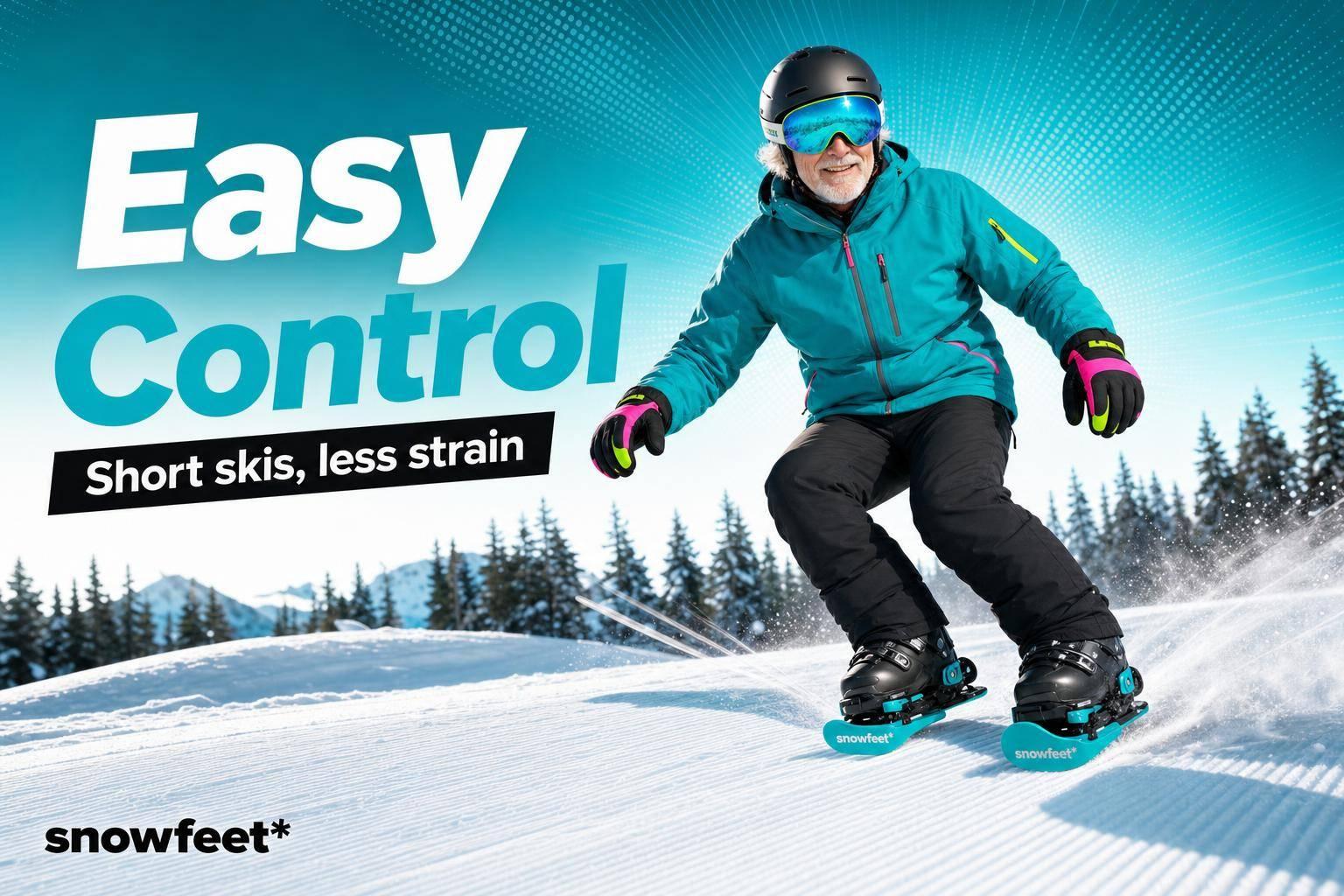
Compared with long skis, Snowfeet short skis tend to feel more forgiving and less intimidating. They also put less strain on your body, which means you can spend more energy learning the basics instead of wrestling with your gear.
The end result? A shorter learning curve and a much friendlier start on the snow :)
Can I use snowboard boots with all Snowfeet* short skis?
No. Snowboard boots work with some Snowfeet* models, including Mini Ski Skates, Skiskates, and Snowfeet PRO.
Longer models like the 65 cm, 99 cm, and 120 cm Skiblades and Short Skis usually need standard alpine ski boots. Always check the binding type, since some models come with a choice between ski boot and snowboard boot bindings.











Leave a comment
This site is protected by hCaptcha and the hCaptcha Privacy Policy and Terms of Service apply.