



















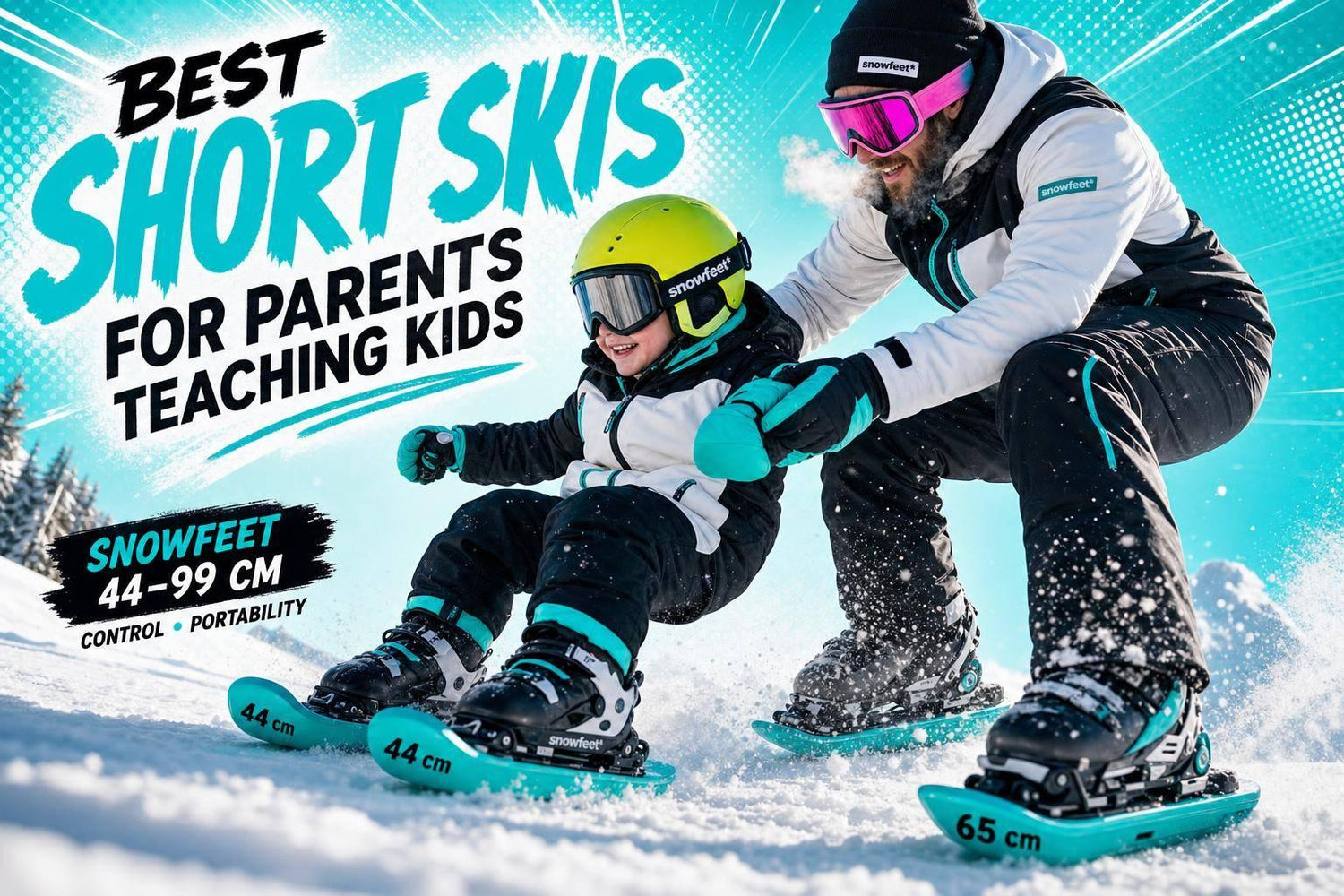
If I were teaching my own kid, I’d start shorter than most rental-shop skis. Short skis are easier to steer at slow speed, easier to stop, and less likely to cross when a child is still learning balance.
Here’s the short version:
- Ages 3–7: Snowfeet* MINI KIDS for first slides on flat snow and tiny hills
- Ages 8–12+ with skating skills: Skiskates 44 cm for tight turns and close parent support
- Ages 6–10 on beginner runs: Skiblades 65 cm for a bit more balance with easy turning
- Older, more confident kids: Skiblades 99 cm for longer green runs and easy blue trails
Why this matters: junior skis often reach a kid’s chest or nose. That’s a lot of ski to control when you’re moving at walking pace and trying to learn how to stand, turn, and stop. A shorter setup cuts down on tangles, helps kids recover faster, and makes it easier for me to stay right next to them.
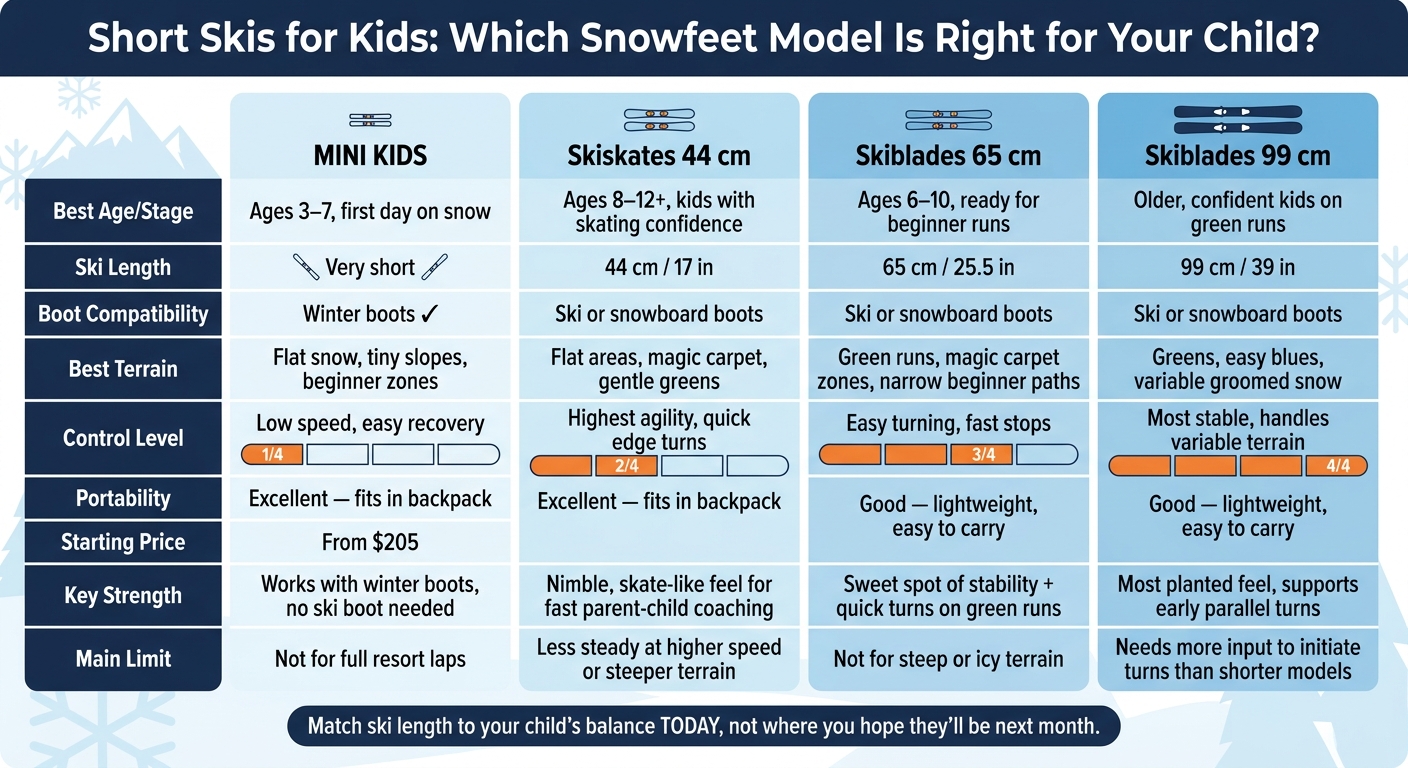
Short Skis for Kids: Which Snowfeet Model Is Right for Your Child?
How to Choose the Best Skis for Kids
Quick Comparison
| Model | Best Age/Stage | Main Use | Strong Point | Limit |
|---|---|---|---|---|
| MINI KIDS | 3–7, first day on snow | Flat snow, tiny slopes | Works with winter boots | Not for full resort laps |
| Skiskates 44 cm | 8–12+ with good balance | Gentle slopes, turning drills | Very nimble feel | Less steady at higher speed |
| Skiblades 65 cm | 6–10, beginner runs | Green runs, magic carpet zones | Nice mix of balance and easy turns | Not for steep or icy terrain |
| Skiblades 99 cm | Older kids with more control | Longer green runs, easy blues | More planted feel | Needs more input than shorter models |
A few fast takeaways:
- Shortest isn’t always best. I’d match ski length to the child’s balance today, not where I want them to be next month.
- Boot setup matters. MINI KIDS use winter boots. The other three can use ski boots or snowboard boots.
- Price starts at $205 for MINI KIDS.
- Portability is a big plus. These short skis are much easier to carry than full kids’ skis.
If you want a simple rule, here it is: pick the shortest ski your child can control without panic or constant tangles :). That usually makes parent-led lessons calmer, safer, and a lot more fun.
For a quick visual on short skis and skiblades, these videos can help:
- Snowfeet official YouTube channel
- Skiblades overview on YouTube
- Skiskates overview on YouTube
So, if I had to boil the whole article down to one line, it’d be this: short skis make first lessons less about fighting gear and more about helping your kid learn.
Why Short Skis Work Better for Parent-Led Lessons
When you're teaching a kid at walking speed, long skis can feel like too much gear for the job. Short skis make it easier for parents to stay close, move with the child, and fix little wobbles without wrestling extra length. At that pace, control matters more than speed.
They’re also easier on your legs, which helps a lot during short, repeat practice sessions. For parent-led lessons, Snowfeet says the 65 cm Skiblades hit the sweet spot between stability and quick turns.
Portability is another big plus. Snowfeet’s short skis fit in a backpack, so hauling gear to and from the hill, trail, or backyard is a lot less of a chore.
Here’s a side-by-side look at the main options:
| Option | Best For | Low-Speed Control | Parent Mobility | Best Terrain | Portability |
|---|---|---|---|---|---|
| Snowfeet short skis (44–50 cm) | Young beginners; best for kids with skating confidence | Extremely easy; hockey stop or heel brake | Highest: skate-like agility to stay close | Slopes, hiking trails, sledding hills, backyards | Excellent: fits in a backpack |
| Snowfeet Skiblades (65–99 cm) | Ages 5 and up; very intuitive for beginners | Effortless turning thanks to the parabolic shape and short length | High: stable yet light and easy to maneuver | Groomed slopes, snow parks, moguls, tight spaces | Good: lightweight and easy to carry by hand or in a bag |
| Regular Kids' Skis | Standard for traditional lessons; can be cumbersome for very young kids | Harder at low speeds because of length and weight | Low: long tips and tails make it harder to move nimbly around a child | Primarily groomed resort slopes | Poor: requires dedicated roof racks or large vehicle space |
| Kids' Snowboard | Requires significant balance; steeper learning curve | Harder to stay balanced at near-zero speeds while assisting | Moderate: hands are free, but stationary balance is harder than on skis | Groomed slopes and snow parks | Moderate: bulky but shorter than adult skis |
Next, each Snowfeet model is matched to a different age, skill level, and teaching style.
1. Snowfeet* MINI KIDS
Snowfeet* MINI KIDS are the best place to start for a child's first time sliding on snow. They fit kids around 3–7 years old and strap onto regular winter boots, so parents can teach without dealing with bulky ski boots. That makes them a nice fit for first lessons on flat snow, not a full resort run.
Child Age and Confidence Match
If a child feels nervous, the short platform helps keep speed low and makes it easier to get back in balance. If a preschooler is more bold, it still gives them enough of a challenge without feeling too big or awkward.
Low-Speed Turning and Stopping
Turning is simple. Kids can step into a wide arc and look where they want to go. Stopping is simple too: they can step across the hill or just stand still. The double-blade platform adds stability without adding length. And if they get a little wobbly, recovery tends to be faster on such a short platform.
Parent Teaching Support
The small size makes hands-on teaching much easier. Parents can guide a child’s hands or feet without long skis getting in the way. Simple drills work well here too.
- Red light, green light
- Short glide-and-stop practice
- Small turning games on flat snow
Terrain and Progression Range
MINI KIDS work best on:
- Flat snow
- Very gentle slopes
- Beginner zones
- Low-angle hills
When a child can recover alone, steer without help, and starts wanting more speed or more control, it’s time to move up to the Skiskates 44 cm or Skiblades 65 cm.
Once a child can steer and stop on gentle terrain without help, the next step is the 44 cm Skiskates.
2. Snowfeet* Skiskates 44 cm
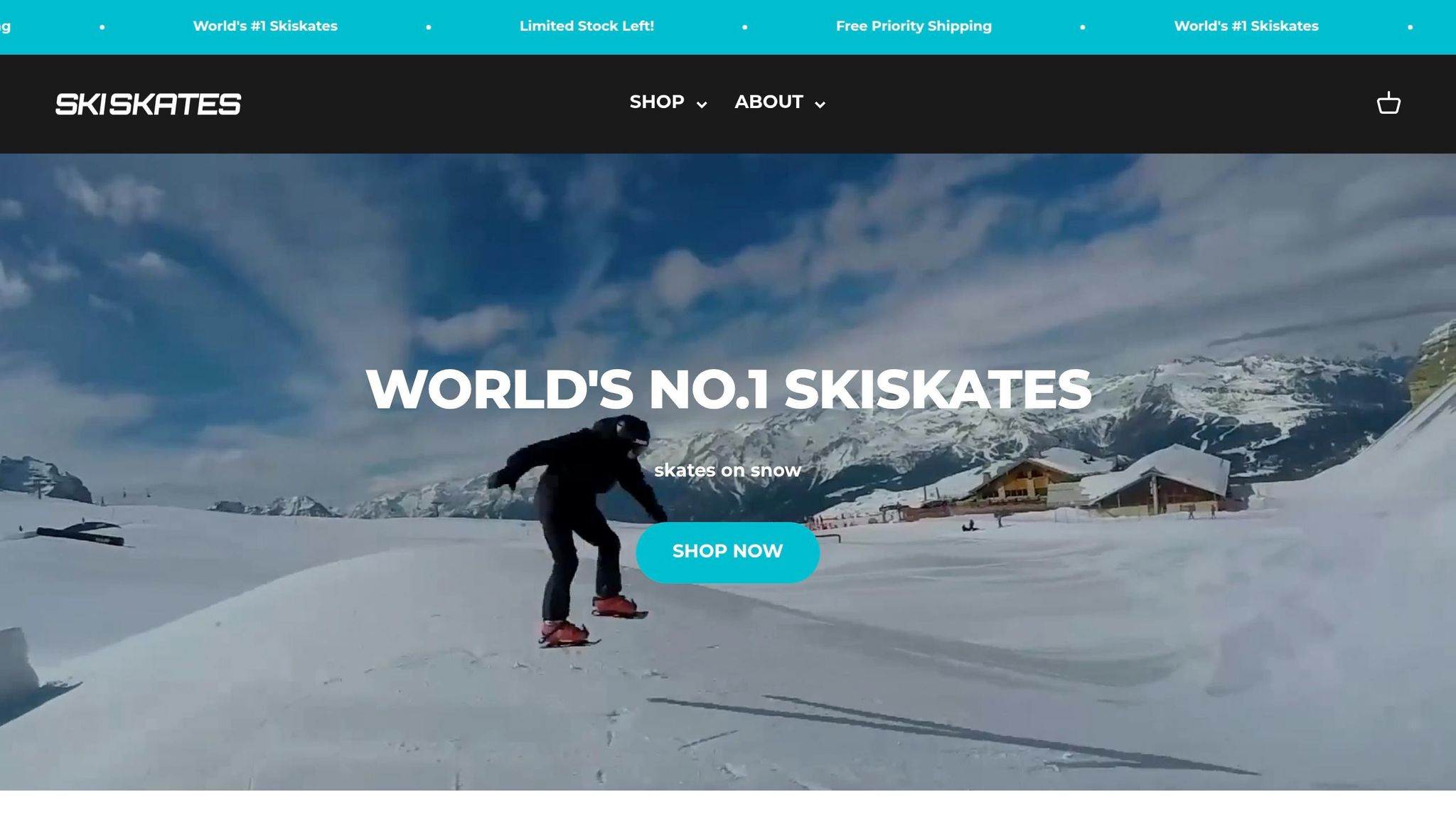
If MINI KIDS are the first slide, the 44 cm Skiskates are the first real move into steering. At 17 inches (44 cm), they feel more like skates than skis. That’s the sweet spot for kids who can already balance and want snappier turns without making the big leap to full-length skis.
Child Age and Confidence Match
These are a good fit for older, coordinated kids who already skate or rollerblade - about ages 8 to 12 and up. For kids in that group, the learning curve is short. If a child already stands well on their feet and likes quick direction changes, this setup makes a lot of sense.
Low-Speed Turning and Stopping
The parabolic shape and metal edges help kids change direction with very little effort. The feel is simple: steer with the feet and hips, kind of like on ice skates. It’s more about quick edge control than long-ski carving.
At low speeds, kids can stop with a slight outward wedge. Keep things slow. That’s the big idea here. The 44 cm length is easy to turn on gentle terrain, but it gets less steady if a child starts going faster on steeper ground.
Parent Teaching Support
This size makes life easier for parents too :) You can move fast, stay close, and react right away. It’s much easier to pivot next to your child, guide them, catch them, or show a turn when you’re not dealing with extra ski length.
That’s why these work well for parents who teach by moving with the child instead of standing off to the side. The upside is pretty clear:
- Easier guidance at slow speed
- Faster correction when balance gets shaky
Keep the teaching simple. Start with balance, then move to steering, then stopping.
Terrain and Progression Range
Use them on flat areas, magic carpets, and gentle green slopes. The 44 cm format isn’t made for powder, moguls, or steeper terrain. Once a child starts wanting more stability and longer runs, it’s time to move up to the 65 cm Skiblades.
sbb-itb-17ade95
3. Snowfeet* Skiblades 65 cm
If 44 cm Skiskates feel a bit too tiny, 65 cm Skiblades are a smart next move. You get more stability, but you don’t lose that quick, easy steering. For kids who are ready to move from flat practice areas to actual beginner runs, this size hits a sweet spot. It feels steady on green slopes, yet still short enough for fast, simple turns.
Child Age and Confidence Match
These tend to work best for kids around ages 6–10, depending on height, strength, and coordination. At 25.5 inches (65 cm), they give kids more balance than the shorter 44 cm models while still being easy to handle.
Low-Speed Turning and Stopping
This is where the 65 cm length feels friendly. Small movements can shift direction fast, and the short shape makes it easier to push the tails out and scrub speed on mellow slopes.
Parent Teaching Support
For parents teaching on green runs, this length gives a bit more room for error than shorter models. That matters a lot when you’re helping a kid who’s still figuring things out. It also works well for harness support and for skiing backward while facing the child, which is a pretty common setup in hands-on beginner lessons.
"ideal for adults teaching kids because they allow very agile movements"
Terrain and Progression Range
These do best on groomed green runs and easy blue trails, especially on narrow beginner paths and near magic carpets where kids need to turn often and check speed a lot. Powder and icy steeps? Skip those. When a child starts wanting more stability and longer turns, 99 cm Skiblades are the next stop.
4. Snowfeet* Skiblades 99 cm
At 99 cm (39 inches), these are the most ski-like Snowfeet* model in this range. That gives kids more stability without giving up easy steering. They’re a strong fit for kids who are a bit stronger, more confident, and ready for full green-run lessons.
They’re still short enough to pivot fast, but long enough to feel planted while you ski next to them. For parents, that usually means less wobble, less stress, and more time teaching instead of fixing gear issues. That’s a nice trade, honestly :)
Child Age and Confidence Match
These work best for older, confident kids who can already balance and stop with control. If a child still looks unsure or stiff on snow, it makes sense to start with a shorter length and move up later.
Low-Speed Turning and Stopping
Compared with the 65 cm version, the 99 cm length needs a bit more input to start a turn. But it gives better grip and a steadier feel once the ski is moving. That can help a lot when a parent is showing turns and fixing mistakes on the fly.
For stopping, a standard snowplow wedge still works well. The extra length also gives kids more control when they push the tails out.
Parent Teaching Support
For parents, 99 cm is the sweet spot. It’s short enough to pivot in place and ski backward while facing the child. At the same time, it’s long enough to stay stable when you’re holding hands or guiding turns through a full arc.
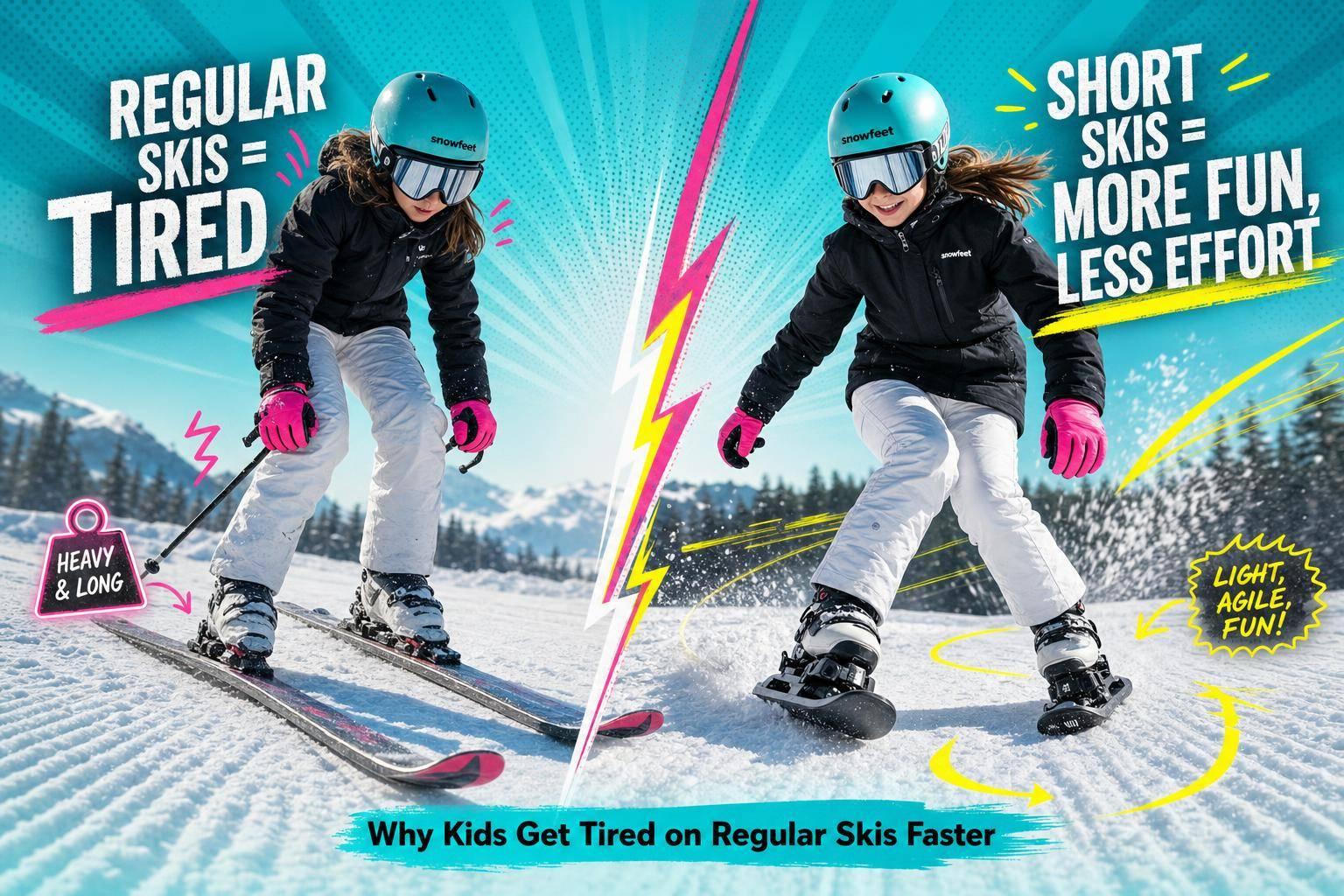
Compared with full-length skis, they’re also much less tiring for a full day of teaching on green runs. Your legs will thank you.
Terrain and Progression Range
The 99 cm length stands out on groomed family terrain. It handles firm groomed snow better than the shorter models, with more grip and a steadier feel for both parent and child.
This length can take families from first green runs into early parallel turns on the same setup. That’s a big plus if you want one short-ski option that can keep working as the child improves.
That balance of stability and control is what makes 99 cm a practical family choice. It’s not just a longer version of the shorter models. It fills a different role.
| Feature | Skiblades 65 cm | Skiblades 99 cm |
|---|---|---|
| Best fit | Smaller, more hesitant beginners | Older, confident kids ready for more traditional ski progression |
| Turn feel | Extremely quick and pivoty | More grip, steadier feel |
| Terrain range | Magic carpet, bunny slope, gentle greens | Greens, easy blues, variable snow |
Pros, Cons, and Best Family Setups
This quick comparison helps you line up the right model with your kid’s age, the amount of control you want, and how easy the gear is to carry.
The main idea is simple: some models are better for a first lesson, some work best when you’re moving with your child, and some make more sense for a steadier family setup.
One nice thing across all four models: they’re light enough to fit in a backpack.
Boot fit is simple too. MINI KIDS works with regular winter boots, which is a big win for younger kids. No ski boots, no extra fuss, no tiny boot battle in the parking lot :). The 44 cm, 65 cm, and 99 cm models all work with either ski boots or snowboard boots. If you want the most control, go with ski boots. If comfort matters more for longer sessions, snowboard boots can feel nicer.
So, the best pick comes down to how much control, speed, and stability you want while teaching.
| Model | Age Fit | Control Level | Best Parent-Child Setup |
|---|---|---|---|
| MINI KIDS | 3–7; first time on snow | Low speed, easy recovery | Child on MINI KIDS + parent on Skiskates for close, nimble supervision |
| Skiskates 44 cm | 8–12+; kids with skating confidence | Highest agility; quick edge-to-edge turns | Best for parents who need to move fast and stay right beside a young child |
| Skiblades 65 cm | 6–10; ready for beginner runs | Easy turning, fast stops on gentle slopes | Best for parents teaching kids who want quick turns and a playful feel on green runs |
| Skiblades 99 cm | Older, confident kids on green runs | Most stable; handles variable terrain | Best for parents of kids ready for longer runs and early parallel turns |
A quick way to think about it:
- MINI KIDS is best for very young kids and first snow days.
- 44 cm is for fast movement and tight parent-child coaching.
- 65 cm gives a fun, easy-turning ride on green runs.
- 99 cm gives more stability for older kids who are ready for longer laps.
MINI KIDS is also the lowest-cost way in at $205, down from $308. From there, your call is mostly about this tradeoff: snappy steering or more stability.
Conclusion
Short skis make first lessons easier for both you and your child.
At this point, the main thing to figure out is simple: how much control does your child have right now?
Pick ski length based on skill, not where you hope they’ll be in a few weeks. Go by your child’s balance today:
- Snowfeet* MINI KIDS for first slides
- Snowfeet* Skiskates 44 cm for turning practice
- Snowfeet* Skiblades 65 cm for green runs
- Snowfeet* Skiblades 99 cm for more stability on longer green runs and easy blues
Short skis make teaching smoother, too. Parents can ski backward while facing their child, pivot fast, and fix mistakes without wrestling with extra ski length. That makes lessons calmer, faster, and a lot more fun as your child gets better.
In most cases, the shortest ski your child can control today is the best pick. Start there, then size up as confidence grows.
FAQs
How do I know if my child should start with 44 cm, 65 cm, or 99 cm skis?
Choosing the right size with Snowfeet* is pretty simple. You don’t have to deal with the strict height-to-ski-length rules that come with regular skis, which is a nice little relief :)
Here’s the quick breakdown:
- 44 cm Skiskates: best for athletic kids ages 6–12 who weigh 44–110 lbs and want fast, skate-like turns
- 65 cm Skiblades: the most flexible choice for younger beginners, with a nice mix of easy control and stability
- 99 cm Skiblades: best for kids who are ready for groomed runs, light powder, or steadier carving
Are short skis safer than traditional kids’ skis for beginners?
Yes. Short skis are usually safer and easier for beginners than long, standard skis. Their shorter length helps cut down on tip crossing, which is a common reason new skiers fall. They’re also light, so it’s easier to stay balanced and get back in control if things start to go sideways.
Snowfeet short skis are easier to control too. They come with metal edges and built-in heel brakes, which make stopping feel more natural than the classic “pizza wedge” that beginners have to learn on regular skis.
Can my child use regular winter boots, or do they need ski boots?
Yes - many Snowfeet* models work with regular winter boots, and that’s a huge plus over standard skis, which need stiff, pricey ski boots.
MINI KIDS, Skiskates, and Snowfeet PRO come with adjustable bindings that fit sturdy, waterproof winter boots or snowboard boots. Some models, like longer Skiblades or POWDER skis, may need ski boots instead.











Leave a comment
This site is protected by hCaptcha and the hCaptcha Privacy Policy and Terms of Service apply.