



















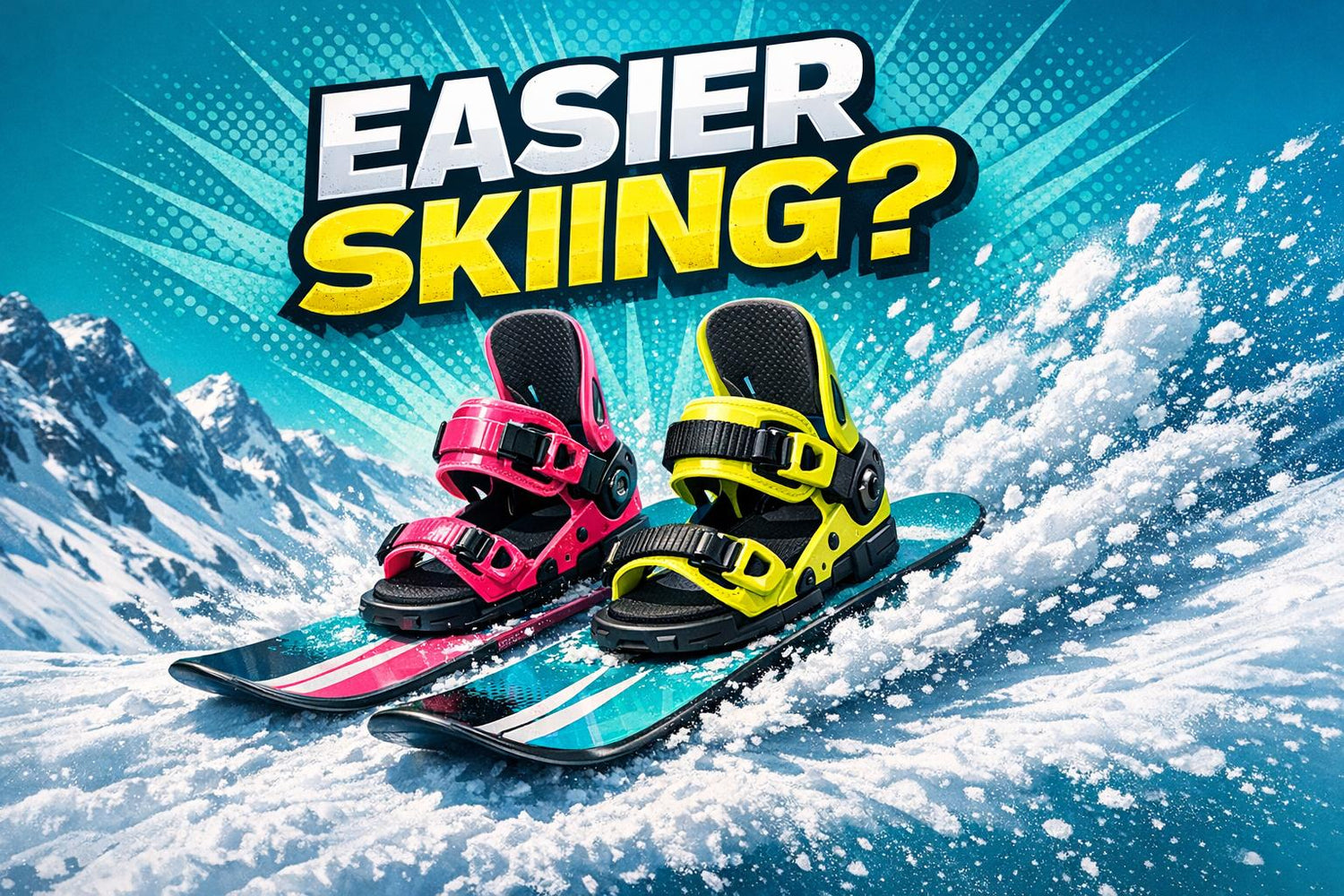
If you’re wondering whether skis with snowboard bindings are easier to use than regular skis, the answer is a resounding yes - for most people. Here’s why:
- Ease of Learning: Snowfeet* Skiblades, which use snowboard bindings, take just minutes to learn. They’re intuitive and feel like ice skating, making them beginner-friendly.
- Comfort: You can wear soft, flexible snowboard boots instead of stiff ski boots. That’s a game-changer for comfort on and off the slopes.
- Portability: These skiblades are so compact they fit in a backpack. No more lugging around bulky gear!
- Fun Factor: They’re lightweight, easy to control, and perfect for quick turns, jumps, and playful riding.
In comparison, traditional skis are heavier, harder to learn, and require rigid boots. While they excel in deep powder and high-speed runs, they’re not as user-friendly or versatile for most resort-goers.
Here’s the bottom line: If you want a hassle-free, fun experience, Snowfeet* Skiblades with snowboard bindings are the way to go. They’re perfect for beginners, casual riders, and anyone who values comfort and convenience.
1. Snowfeet* Skiblades with Snowboard Bindings
Learning Curve
Snowfeet* Skiblades are so intuitive that most people pick them up in just five minutes. Their movement feels similar to ice skating, which means you can skip those expensive lessons. Rebecca, a parent of a 12-year-old user, shared her experience:
"He zipped down the hill and landed jumps within 30 minutes - proof of their ease of use."
Thanks to their lightweight, compact design, they’re easy to control. Turning and stopping feel almost automatic, and the best part? You get to wear snowboard boots, which are way more comfortable and flexible than traditional ski boots.
This simplicity doesn’t stop at learning. Snowfeet* also shine when it comes to control and versatility.
Control and Versatility
Once you’ve got the basics down, Snowfeet* open up a whole new world of control. On groomed slopes or in snow parks, the snowboard bindings keep your feet secure while allowing natural ankle movement. This makes quick turns, spins, jumps, and even riding backward feel smooth and effortless.
But these skiblades aren’t just limited to the slopes. You can use them on hiking trails, sledding hills, and even light powder. Shorter models (44 cm to 65 cm) are perfect for packed snow and up to 4 inches of powder, while the 99 cm and 120 cm versions are built for carving and deeper snow. Sophia Kane, a verified rider, put it best:
"I hate getting stuck on a hill in skis because they're so long and bulky. Since these are shorter, you can just skate right up."
Portability and Compatibility
One of the coolest things about Snowfeet* Skiblades is how portable they are. They’re small enough to fit in a standard backpack. The lineup includes options for every rider, from the 38 cm Mini Ski Skates (starting at $190) to the 65 cm Skiblades (starting at $550), and 99 cm models priced between $590 and $690.
The bindings are designed to fit US sizes 6 to 14.5 (38–49 EU), so they’re versatile enough to share. Plus, you can use your snowboard boots, which means you’ll stay comfy on the slopes and have no trouble walking around the lodge or parking lot.
Performance
On the mountain, Snowfeet* Skiblades deliver a ride that’s both responsive and fun. The snowboard bindings provide the flexibility you need for tricks while keeping your feet secure during sharp turns and carving. Fiberglass-reinforced models, when properly waxed, glide as smoothly as traditional skis - without all the bulk.
And yes, they’re resort-friendly! With standard metal edges, they meet the requirements of most ski resorts. With over 50,000 riders worldwide and more than 5,500 verified reviews averaging 4.9 out of 5 stars, the feedback speaks for itself. Andrew B., a verified rider, summed it up perfectly:
"These skiblades are so much fun and easy to control. Never going back to regular skis."
2. Traditional Long Skis with Alpine Bindings
Learning Curve
Getting the hang of traditional long skis can be a real challenge, especially for beginners. The stiff, uncomfortable ski boots that come with these setups can make movement feel clunky, and the skis themselves - usually 150–180 cm long - aren’t exactly easy to maneuver. Quick turns in tight spaces? Forget about it, at least until you’ve put in some serious practice. Skills like parallel turns, tackling moguls, and controlling steep terrains take time to master, making the learning process feel like an uphill climb. These hurdles highlight just how tricky traditional setups can be for newcomers.
Control and Versatility
Once you’ve put in the effort, though, traditional skis deliver impressive precision and stability, especially for fast, aggressive runs. Alpine bindings like the Marker Griffon 13 (DIN 4–13, roughly $270) or the Look Pivot 15 GW (DIN 6–15, around $430) are designed to transfer power effectively from your boots to the ski edges. This setup is great for carving on groomed trails and handling mixed snow conditions. For advanced terrain - think cliff drops or steep, high-stakes lines - the combination of ski length and strong bindings offers excellent support for landings. But here’s the trade-off: traditional skis can feel heavy and less playful, which might not appeal to those looking for a more relaxed, recreational experience. They’re built for speed and performance rather than casual fun, and their bulkiness can make them less adaptable for slower or more varied styles of riding.
Portability and Compatibility
Another downside? Traditional long skis are anything but portable. At 150–180 cm, they’re too big to toss in a backpack or easily carry around a crowded resort. You’ll likely need a roof rack to transport them, and navigating tight spaces with these bulky skis can be a hassle. Add in the fact that they require professional mounting, and it’s clear they’re not the most convenient option compared to more compact setups.
Performance
For experienced skiers, traditional setups shine in terms of power transfer, safety, and performance on different types of snow. But for the average recreational skier, they can feel like more trouble than they’re worth. They’re heavy, pricey, and not very beginner-friendly. Bindings alone can cost anywhere from $200 to $450, with hybrid models reaching $600–$650. Pair that with the discomfort of rigid boots and the hassle of transporting long skis, and it’s easy to see why many skiers in the U.S. are looking for alternatives. Unlike compact options like Snowfeet* Skiblades, traditional skis focus on technical precision rather than ease of use, making them a better fit for advanced riders than for those seeking a more versatile and user-friendly experience.
Snowboarder tries Snowfeet* | Which Snowfeet* Short Ski is the Best? | Snowblades 44, 65, 99 Review
sbb-itb-17ade95
Pros and Cons
Snowfeet Skiblades vs Traditional Skis Comparison 2026
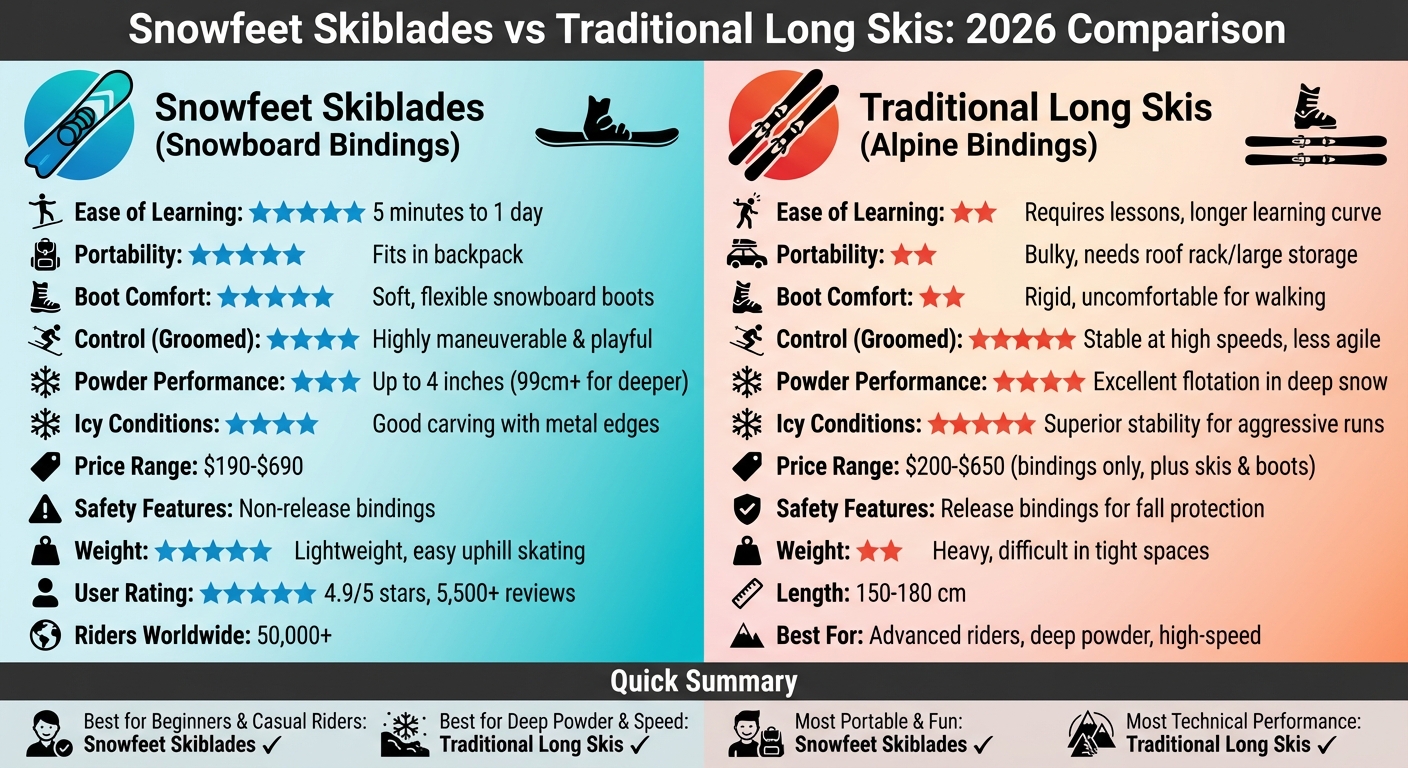
Choosing between Snowfeet* Skiblades with snowboard bindings and traditional long skis comes down to your priorities on the slopes. Here’s a breakdown of how they stack up across key features:
| Feature | Snowfeet* Skiblades (Snowboard Bindings) | Traditional Long Skis (Alpine Bindings) |
|---|---|---|
| Ease of Learning | Super simple - most people can pick it up in 5 minutes to a day | Takes more time and often requires lessons to master |
| Portability | Ultra portable - fits in a backpack or small car trunk | Bulky; needs larger storage or special carriers |
| Boot Comfort | High - uses soft, flexible snowboard boots that are easy to walk in | Low - rigid alpine ski boots aren’t made for comfort |
| Control on Groomed Slopes | Fantastic - super maneuverable and playful, making slopes feel like a "playground" | Great for stability at higher speeds but less agile for beginners |
| Powder Performance | Works in light powder (up to 4 inches); deeper snow needs 99 cm+ models | Excels in deep powder with better flotation from the longer surface area |
| Icy Conditions | Good carving ability thanks to metal edges | Offers solid stability for fast, aggressive downhill runs |
| Price Range | $190–$690, depending on the model | Higher total cost since skis, boots, and bindings are sold separately |
| Safety Features | Bindings don’t release during falls | Release bindings eject boots during falls for added safety |
| Weight & Maneuverability | Lightweight - makes skating uphill a breeze | Heavier and harder to handle in tight spots |
This side-by-side comparison shows why Snowfeet* Skiblades are a game-changer for modern skiers looking for fun and convenience. They’re easy to learn, portable, and comfortable - perfect for riders who want to enjoy the slopes without the hassle. While traditional long skis still shine for high-speed runs and deep powder, they come with drawbacks like bulkiness and a steeper learning curve. For most people, especially those focused on playful, all-around skiing, Snowfeet* Skiblades are the clear winner - unless you’re tackling very deep powder, where their longer models step in to save the day.
Conclusion
Are skis with snowboard bindings easier than regular skis in 2026? Absolutely - and Snowfeet* Skiblades prove it. If you’re looking to spend less time wrestling with gear and more time enjoying the slopes, Snowfeet* checks all the boxes. Plus, you can toss them into a backpack instead of dealing with bulky roof racks or oversized bags.
Sure, traditional long skis are great for high-speed runs and deep powder, but they can’t compete with the simplicity and flexibility of Snowfeet* for everyday resort use. Let’s face it - most visitors to U.S. resorts are after a fun day cruising groomed trails, hitting a few park features, and enjoying gear that’s easy to handle. That’s where Snowfeet* stands out, turning the mountain into your personal playground.
Here’s the deal for 2026: Beginners can build confidence quickly. Intermediate riders looking for something playful and easy to transport will love the 65 cm or 99 cm Skiblades, which perform well on groomed runs and light powder. Even advanced skiers are adding Snowfeet* to their gear lineup for quick resort trips or travel days. With prices ranging from $190 to $690, you’re getting a full setup for less than the cost of traditional alpine bindings alone, which typically run between $270 and $650.
Convenience and versatility are the name of the game in winter sports now, and Snowfeet* is leading the way. With over 50,000 riders worldwide and an impressive 4.9/5 rating from more than 5,500 verified reviews, the numbers speak for themselves. For most people heading to U.S. resorts in 2026, Snowfeet* Skiblades with snowboard bindings aren’t just easier - they’re the better choice.
FAQs
Are Snowfeet Skiblades safer than traditional skis?
Snowfeet Skiblades are a great option for anyone looking for a safer and more beginner-friendly alternative to traditional skis. Their compact size and light weight - ranging from just 15 to 47 inches - make them much easier to handle. This shorter length gives you better control and helps reduce the risk of falling. Compare that to traditional skis, which are usually over 60 inches long and can feel unwieldy, especially for beginners. Plus, the shorter length of Skiblades reduces the "lever-arm" effect during a fall, making it easier to stay balanced without as much effort.
Another big plus? Snowfeet Skiblades are made with less aggressive edges thanks to their plastic construction. This design choice lowers the chance of nasty cuts or accidents caused by catching an edge. Many models even include optional safety leashes, so if you lose control, your gear stays close by. On the flip side, traditional skis are often built with heavier wood cores and sharp metal edges, which can lead to more serious injuries and are tougher to manage for those just starting out.
In short, Snowfeet Skiblades offer a more forgiving and approachable way to enjoy winter sports, making them perfect for anyone who wants to have fun without the steep learning curve of traditional skiing.
Are Snowfeet Skiblades a good choice for advanced skiers?
Snowfeet Skiblades are a fantastic option for both beginners and seasoned skiers. If you’re an experienced rider, you’ll love the level of control and agility they offer. Their compact size and lightweight build make sharp turns and precise movements a breeze, giving you the chance to really test your limits on the slopes.
Whether you're tackling tough terrain or experimenting with new tricks, Snowfeet Skiblades bring a whole new energy to your skiing experience. They’re not just about having fun - they’re a legit piece of gear for winter sports fans who want to try something fresh and exciting.
Can Snowfeet Skiblades perform well in deep powder snow?
Snowfeet Skiblades are great for handling moderate powder - think up to around 4 inches deep. But when it comes to really deep powder, they can't quite match the performance of traditional wide powder skis, which are specifically designed for those conditions.
Where Snowfeet Skiblades truly shine is in their versatility and portability. They're perfect for groomed trails, packed snow, and light powder. For most casual winter sports lovers, they offer a fun and unique way to explore different terrains without the bulk of standard skis.












Leave a comment
This site is protected by hCaptcha and the hCaptcha Privacy Policy and Terms of Service apply.