



















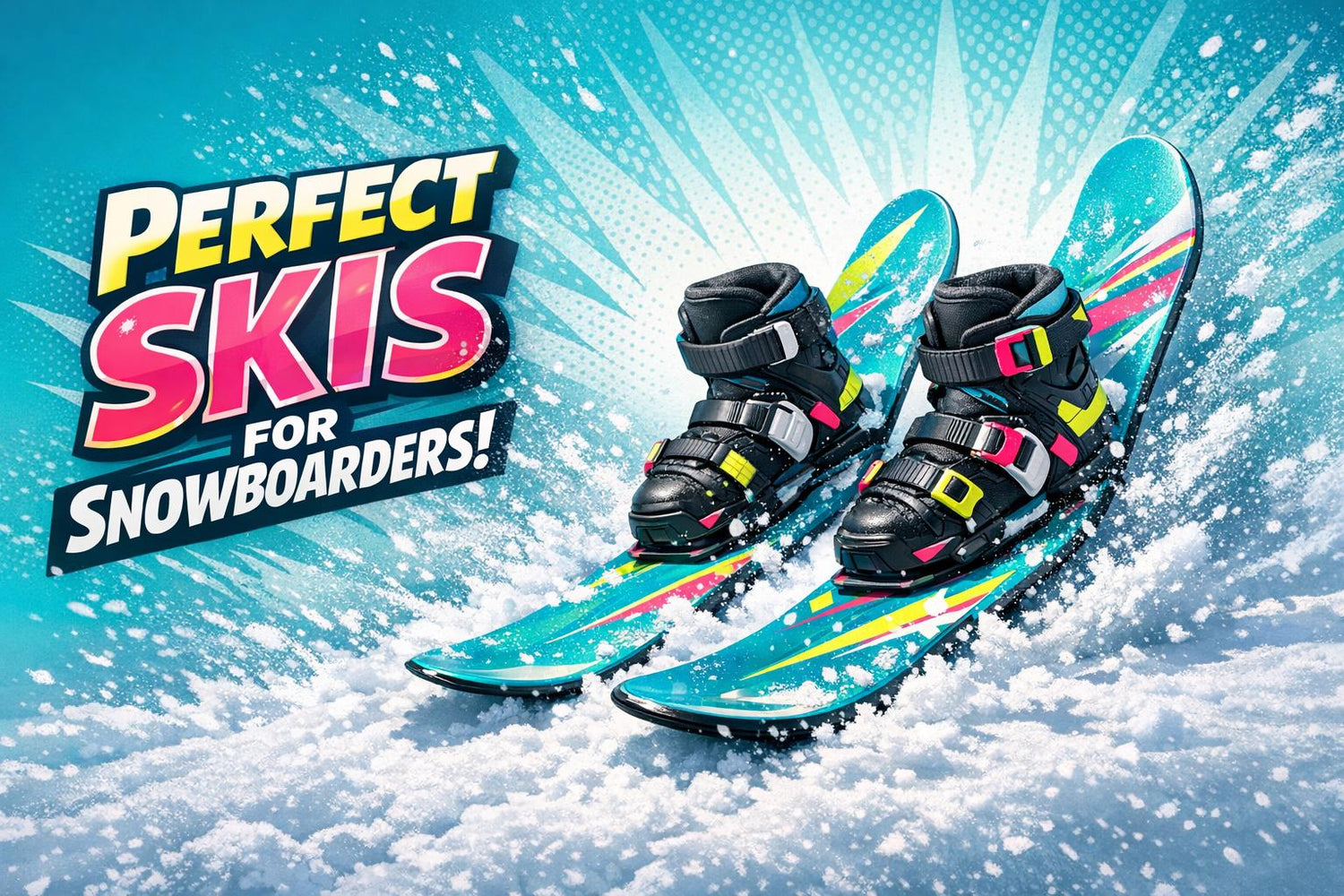
Switching from snowboarding to skiing can feel tricky, but short skis make it way easier. Snowfeet* short skis (65–120 cm) are lightweight, easy to control, and work with your snowboard boots. Whether you're cruising groomed runs or hitting the terrain park, these skis help you feel confident fast - some riders get the hang of it in just 5 minutes. Plus, they’re compact enough to fit in your backpack! Here's what you need to know:
- 65 cm: Playful and agile, great for tricks and short runs ($635).
- 99 cm: Balanced for carving, light powder, and versatile terrain ($675).
- 120 cm: Stable and fast, perfect for steeper slopes and speed lovers ($775).
Say goodbye to clunky gear and steep learning curves. Snowfeet* skis are the perfect way to explore skiing without ditching the comfort of your snowboard boots. Ready to hit the slopes?
5 Reasons I'm SWITCHING from Snowboarding to Skiing This Season
What You Need to Know About Snowfeet* Short Skis
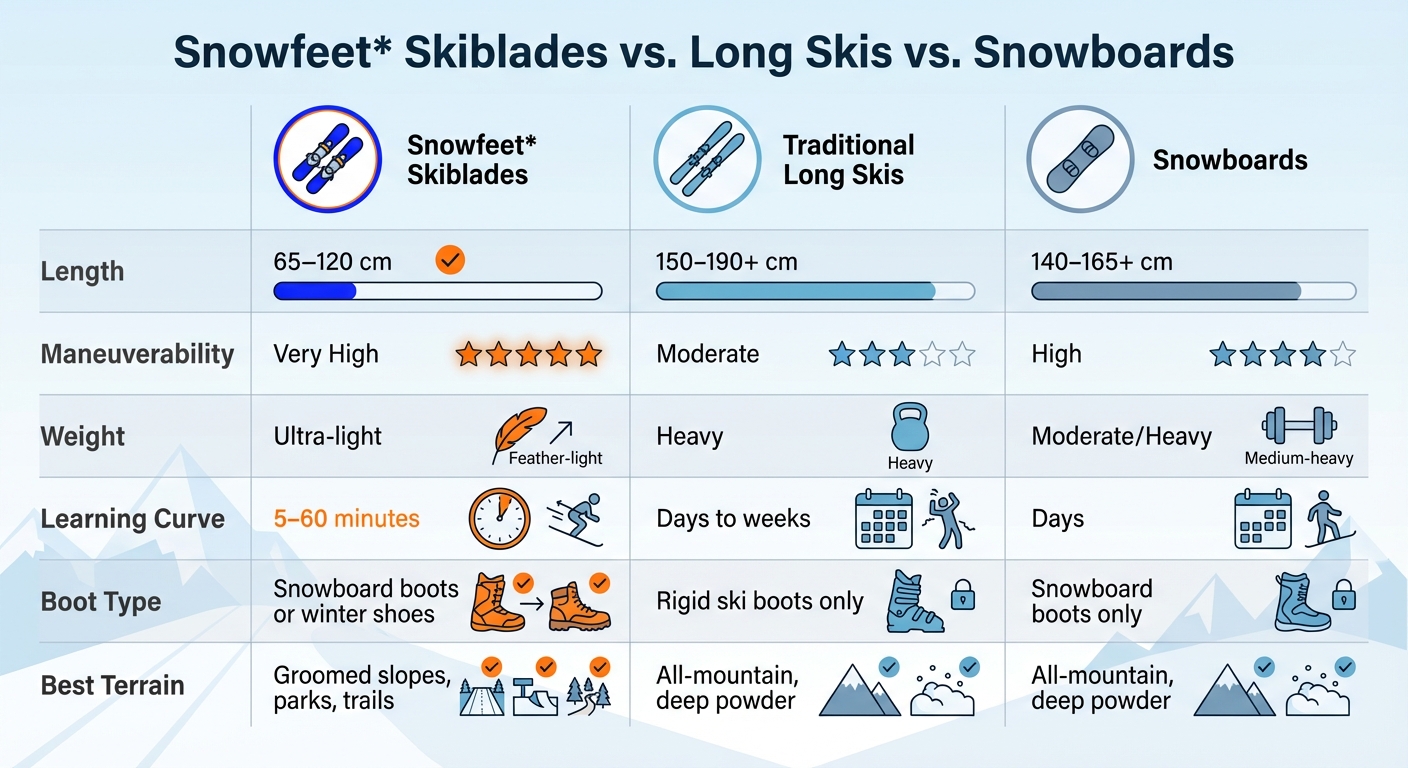
Snowfeet Skiblades vs Traditional Long Skis vs Snowboards Comparison Chart
What Are Short Skis?
Short skis are compact versions of traditional skis, measuring between 65 cm and 120 cm in length - about half the size of standard long skis, which typically range from 150 cm to over 190 cm. The smaller size lets you pivot and maneuver more like you would on skates, offering a quicker, more responsive feel compared to the wide turns required with long skis.
Think of it this way: using long skis is like cruising down the highway in a sedan - smooth and steady. Short skis, on the other hand, feel more like zipping through a skate park on a skateboard - agile and dynamic. This unique design is what makes Snowfeet* stand out as a leader in the short ski market.
Why Snowfeet* Stands Out Among Short Skis
Snowfeet* tackled one of the biggest challenges in the short ski world: bindings. While some brands tried adapting bulky snowboard bindings for short skis, Snowfeet* took a different approach. They created lightweight, custom bindings designed specifically for skiboards. These bindings are adjustable to fit any snowboard boot, provide a snug anti-slip grip, and allow you to keep wearing your comfy snowboard boots instead of switching to stiff ski boots.
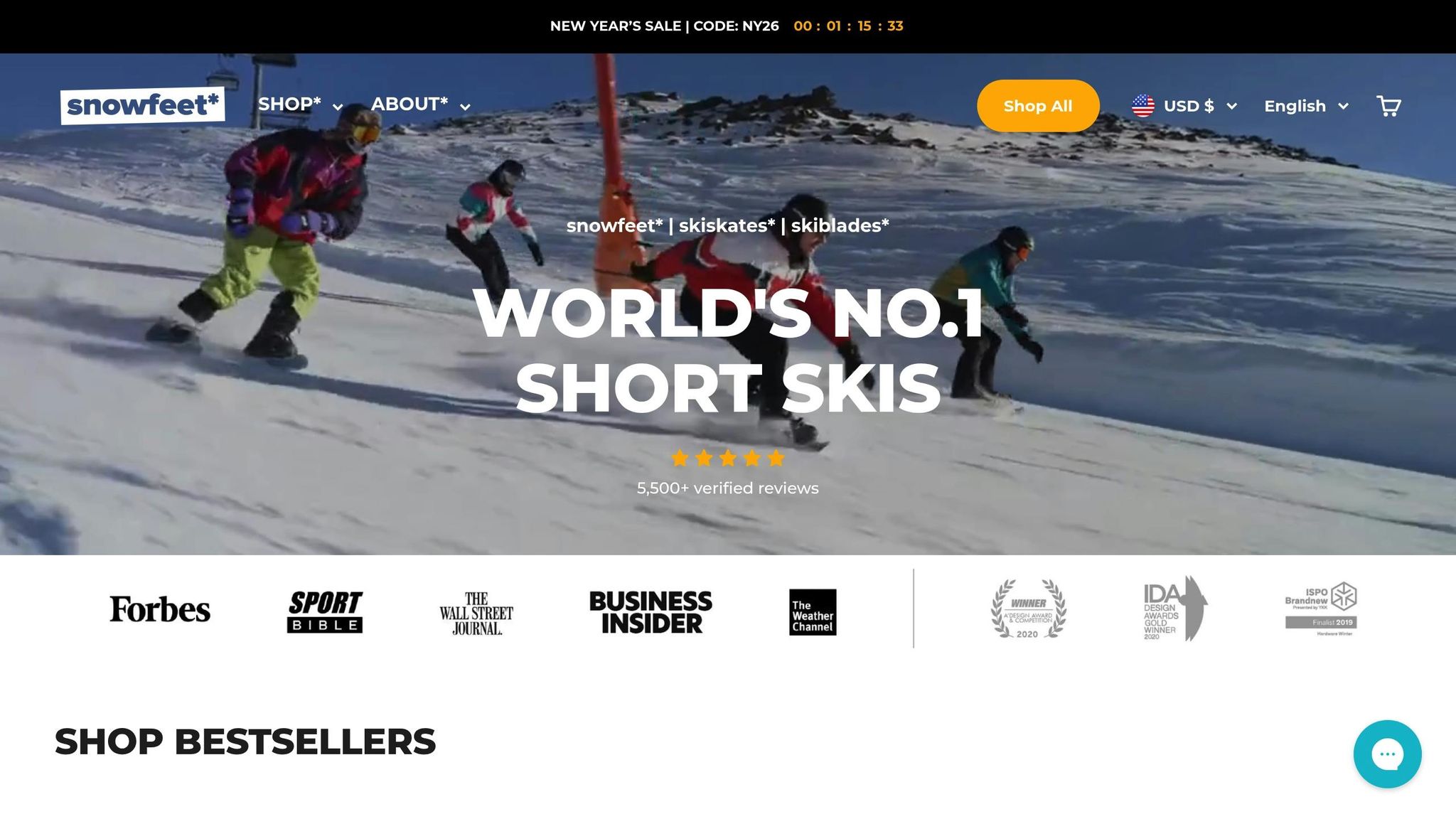
Another standout feature? Portability. Snowfeet* models are so compact they fit into a regular backpack. No need for roof racks or oversized bags - try doing that with traditional long skis or a Burton snowboard! With over 50,000 riders worldwide and more than 5,500 verified reviews averaging 4.9 out of 5 stars, it’s clear that Snowfeet* has struck a chord with skiers and snowboarders alike.
"At Snowfeet we developed a unique snowboard bindings specifically designed for skiboards. They are affordable, easily adjustable to snowboard boots of any size, with an anti-slippery surface for perfect shoe grip." - Snowfeet*
Snowfeet* Skiblades vs. Long Skis and Snowboards
Here’s a quick comparison of Snowfeet* Skiblades against traditional long skis and snowboards:
| Feature | Snowfeet* Skiblades | Traditional Long Skis | Snowboards |
|---|---|---|---|
| Length | 65–120 cm | 150–190+ cm | 140–165+ cm |
| Maneuverability | Very High | Moderate | High |
| Weight | Ultra-light | Heavy | Moderate/Heavy |
| Learning Curve | 5–60 minutes | Days to weeks | Days |
| Boot Type | Snowboard boots or winter shoes | Rigid ski boots only | Snowboard boots only |
| Best Terrain | Groomed slopes, parks, trails | All-mountain, deep powder | All-mountain, deep powder |
While long skis from brands like Salomon or K2 excel in deep powder and high-speed carving, they can feel excessive for most resort conditions. Similarly, snowboards from companies like Burton or Ride offer great versatility but require a sideways stance. Snowfeet* bridges the gap by delivering a forward-facing skiing experience with a short learning curve and the comfort snowboarders love. Their 99 cm model, priced at $590, is a popular choice for both snowboarders looking to try skiing and skiers seeking a fresh experience.
Picking the Right Snowfeet* Skis for Your Style
Choosing the right Snowfeet* short skis can make all the difference in matching your riding style and getting the most out of your time on the slopes.
Snowfeet* 65 cm: Fun and Playful
If you're all about agility and having fun, the 65 cm model is your go-to. At just 26 inches long and starting at $635, these skiblades are perfect for spins, jumps, and even riding backward. They're incredibly nimble - kind of like inline skates, but for snow. Falk, a user who gave these a try, said:
"I never skied before but I inline-skate my whole life. So I hoped for something similar in snow and this absolutely nailed it."
This model shines in snow parks and on groomed slopes, where quick turns and tricks are the name of the game. But keep in mind, the short length means you'll need to stay centered for balance, much like skating. If you're into playful, dynamic riding, you'll feel right at home. That said, for longer runs or exploring more varied terrain, you might find the 65 cm a bit limiting after a while.
Ready for something with a bit more versatility? Check out the 99 cm model.
Snowfeet* 99 cm: The All-Rounder
Looking for a balance between agility and stability? The 99 cm model is a solid choice. At 39 inches long and priced from $675, it's versatile enough for carving, handling light powder, and even hitting the park. It’s short enough to keep things playful but stable enough for more serious runs. With a perfect 5.0 rating from verified users, it's clear this model has a lot of fans.
Think of the 99 cm as your all-mountain option. Whether you're cruising groomed slopes, tackling bumpy terrain, or hitting park features, it adapts without missing a beat. Plus, you can use your snowboard boots with the compatible snowboard binding option, making it an easy switch if you're a snowboarder looking to try skiing. Whether you're at your local hill or a big-name resort like Vail, this model is ready for just about anything.
If speed and stability are more your thing, the 120 cm model might be what you’re looking for.
Snowfeet* 120 cm: Built for Speed
For those who love speed and control, the 120 cm model delivers. At about 47 inches long and priced at $775, this option is designed for advanced riders who want to carve hard and fast. It's perfect for steeper terrain and long, fast runs where stability is key.
The added length gives you the kind of control you won’t find in the shorter models, making it ideal for high-speed carving. However, this model typically requires pro ski bindings, so you'll need ski boots if you don’t already have them. It’s also a great pick for heavier riders who need that extra stability.
Whether you're looking to play, cruise, or carve, there's a Snowfeet* ski to match your style.
sbb-itb-17ade95
How to Set Up and Use Your Snowfeet* Skis
Now that you know why Snowfeet* are so easy to control, let’s dive into setting them up and getting on the slopes. Don’t worry - it’s a straightforward process. All you need to do is match the bindings to your boots and follow a few simple steps.
Gear Checklist for Snowboarders
Before you hit the snow, make sure you’ve got everything you need:
- Your Snowfeet* skiblades (available in 65 cm, 99 cm, or 120 cm lengths, depending on your preference)
- Snowboard boots (if you’re using the snowboard binding option, which fits US sizes 6–14.5)
- A helmet for safety
One of the best parts? You don’t need stiff, bulky ski boots. Your snowboard boots work perfectly with the Snowfeet* specialized bindings. If you’re using non-release bindings, most setups include a safety leash to keep the skis attached if you take a tumble.
How to Adjust Your Snowfeet* Skis
Snowfeet* bindings are designed to fit US sizes 6–13 (EU 38–47). If you’ve opted for the snowboard binding version, it features a two-strap system with a back strap for added stability. Some models even include a third strap for extra ankle support. To get started:
- Place your boot on the grippy surface of the binding.
- Tighten the straps until your boot feels snug and secure.
The Snowfeet* team explains it best:
"Snowboard bindings give you more flexibility while performing all kinds of tricks, they're super comfortable and you can walk with them anywhere without a problem, which makes the ski trip much more pleasant experience."
Once your bindings are adjusted, you’re ready to take on the slopes!
First Day Tips: Learning to Ski with Snowfeet*
When you’re trying out your Snowfeet* for the first time, stick to groomed slopes and avoid deep powder (anything over 4 inches) or steep hills until you get the hang of it. Stand with your legs shoulder-width apart, keeping your weight centered - or slightly back - to prevent the tips from dragging. Position one foot slightly ahead of the other for better balance, similar to how you’d stand when inline skating.
To stop, practice a “hockey stop” by turning both skis perpendicular to the slope and evenly distributing your weight. Alternatively, you can use the built-in heel brake. Good news: most people pick up the basics in about 5 minutes. The shorter ski length may require a bit more balance, but it also makes for an incredibly agile ride.
Improving Your Skills on Snowfeet* Skis
Different Terrains You Can Ride with Snowfeet*
Groomed runs are the perfect playground for sharpening your skills. Whether you're using the 65 cm, 99 cm, or 120 cm models, these short skis truly shine on packed snow. Start on gentle green runs to get comfortable with smooth, linked turns and work on your edge control. Once you've nailed the basics, move on to easy blue runs to practice more advanced techniques like the hockey stop and weight transfer.
For snowboarders making the leap to skiing, terrain parks offer a great next step. Your snowboarding background gives you a head start here. Begin small - side hits, little rollers, or flat boxes - and keep your stance low and relaxed. The 65 cm model is especially fun for playful park features, while the 99 cm model adds stability for tackling bigger challenges.
When it comes to light powder (up to about 4 inches), standard Snowfeet* skis handle it beautifully. For deeper snow, though, the 99 cm or 120 cm models are your best bet. To keep your tips from diving, maintain a centered or slightly forward stance. The 99 cm skis, in particular, offer better floatation, making them ideal for those slightly deeper powder days. Mastering these terrains will help you get the most out of your Snowfeet* experience across a variety of conditions.
How Short Skis Help Snowboarders
Snowfeet* short skis introduce a new challenge by requiring each leg to steer independently - something snowboarders aren’t used to. This shift helps you quickly build balance and coordination. A great exercise? Practice gliding on one ski at a time to strengthen leg independence.
Another bonus is how quickly these skis sharpen your edge awareness. Even the smallest movements of your ankles or knees translate into immediate direction changes, giving you precise control. This heightened awareness not only improves your skiing but also enhances your overall skills for other winter sports.
Should You Try Longer Skis or Stick with Snowfeet*?
Once you've gotten the hang of short skis, you might wonder if it's time to try longer ones. For most snowboarders, Snowfeet* skis deliver everything they need for resort riding. The 120 cm model is built for speed and stability on groomed runs, while the 99 cm model excels in terrain parks and light powder. Longer skis typically only become necessary if you’re planning to take on deep powder regularly or venture into steep, backcountry terrain where extra float and stability at high speeds are crucial.
If you're thinking about making the switch, ask yourself: Can you confidently link parallel turns on blue runs? Can you handle moderate bumps without frequent falls? Are you comfortable at higher speeds? If so, you might be ready to explore longer skis. That said, many riders stick with Snowfeet* season after season because they're just plain fun. They’re compact enough to fit in a backpack, pair perfectly with your snowboard boots, and thrive in resort conditions where agility beats length. For most riders, Snowfeet* offer the perfect balance of simplicity and performance.
Conclusion: Why Snowfeet* Skis Are the Best Choice for Snowboarders in 2026
Switching from snowboarding to skiing doesn’t have to feel like a battle with heavy, awkward gear. Snowfeet* short skis tackle the common pain points snowboarders face when making the leap - they’re lightweight, super easy to handle, and work perfectly with your snowboard boots. Whether you go for the playful 65 cm (about 26 in) model, the versatile 99 cm (around 39 in) option, or the stable 120 cm (nearly 47 in) version, you’re signing up for gear made to keep things fun and frustration-free.
What really sets these skis apart is how quickly they help you feel at home. Unlike traditional long skis, which often demand hours of lessons, these short skis let you build confidence in no time. Say goodbye to the chairlift struggles and flat-terrain woes that come with snowboarding, all while keeping the agility and edge control you already know and love.
Here’s what one happy rider had to say:
"These skiblades are so much fun and easy to control. Never going back to regular skis." - Andrew B.
And the best part? You don’t have to pick between skiing and snowboarding anymore. Snowfeet* are so compact you can toss them in your backpack alongside your snowboard, making it easy to switch sports whenever you feel like it. They’re perfect for groomed runs, terrain parks, and even light powder, giving you everything you need for an epic day at the resort - without the hassle of traditional gear.
FAQs
What makes Snowfeet short skis a better choice for beginners compared to traditional long skis?
Snowfeet short skis are a great choice for beginners because their compact size (15–47 inches) and lightweight design make skiing less intimidating. With these shorter skis, balancing, turning, and stopping become much simpler compared to traditional long skis. That means new skiers can skip the steep learning curve and start enjoying the slopes much sooner. In fact, many beginners feel comfortable after just a few hours, rather than spending weeks trying to get the hang of it.
Another big plus? Snowfeet short skis are all about convenience. Unlike traditional skis, which require clunky boots, bindings, and even transport racks, Snowfeet work with regular winter or snowboard boots. They’re small enough to fit in a backpack and come with a friendlier price tag - typically ranging from $150 to $690. Compare that to long skis, which are heavier, harder to handle, and come with extra costs and hassles.
In short, Snowfeet short skis make skiing more approachable and stress-free. They’re portable, easy to use, and perfect for beginners who want to build confidence and have fun on the slopes.
Can I use my snowboard boots with Snowfeet short skis?
Yes, Snowfeet short skis are made to pair perfectly with your snowboard boots. The bindings are compatible with both snowboard boots and regular ski boots, offering flexibility and convenience. This setup lets you enjoy the slopes without having to buy new boots, which is a win for both your wallet and your time.
Why are Snowfeet skis a great choice for snowboarders learning to ski?
Snowfeet skis are an awesome choice if you're a snowboarder looking to dip your toes - well, boots - into skiing. These skis make the learning process smoother and way more fun. Here's why:
First off, their shorter lengths (25 inches/65 cm, 39 inches/99 cm, and 47 inches/120 cm) let you keep a more upright stance, much like when you're snowboarding. This upright position makes it easier to balance and control your edges, cutting down the learning curve compared to traditional long skis.
Another big plus? They're lightweight and super portable. You can easily stash them in a backpack or carry them around without breaking a sweat. Plus, their compact size means less effort lugging them around and less fatigue when you're out on the slopes. That means more energy to focus on learning and having fun.
What really makes Snowfeet skis shine is their quick edge-to-edge response and forgiving turning radius. This setup feels similar to how snowboarders initiate turns, making the transition to skiing feel less intimidating. You'll build confidence faster and enjoy the ride without the hassle of managing long, bulky skis.
If you're looking for a fun, easy, and stress-free way to try skiing, Snowfeet skis are the way to go!













Leave a comment
This site is protected by hCaptcha and the hCaptcha Privacy Policy and Terms of Service apply.