



















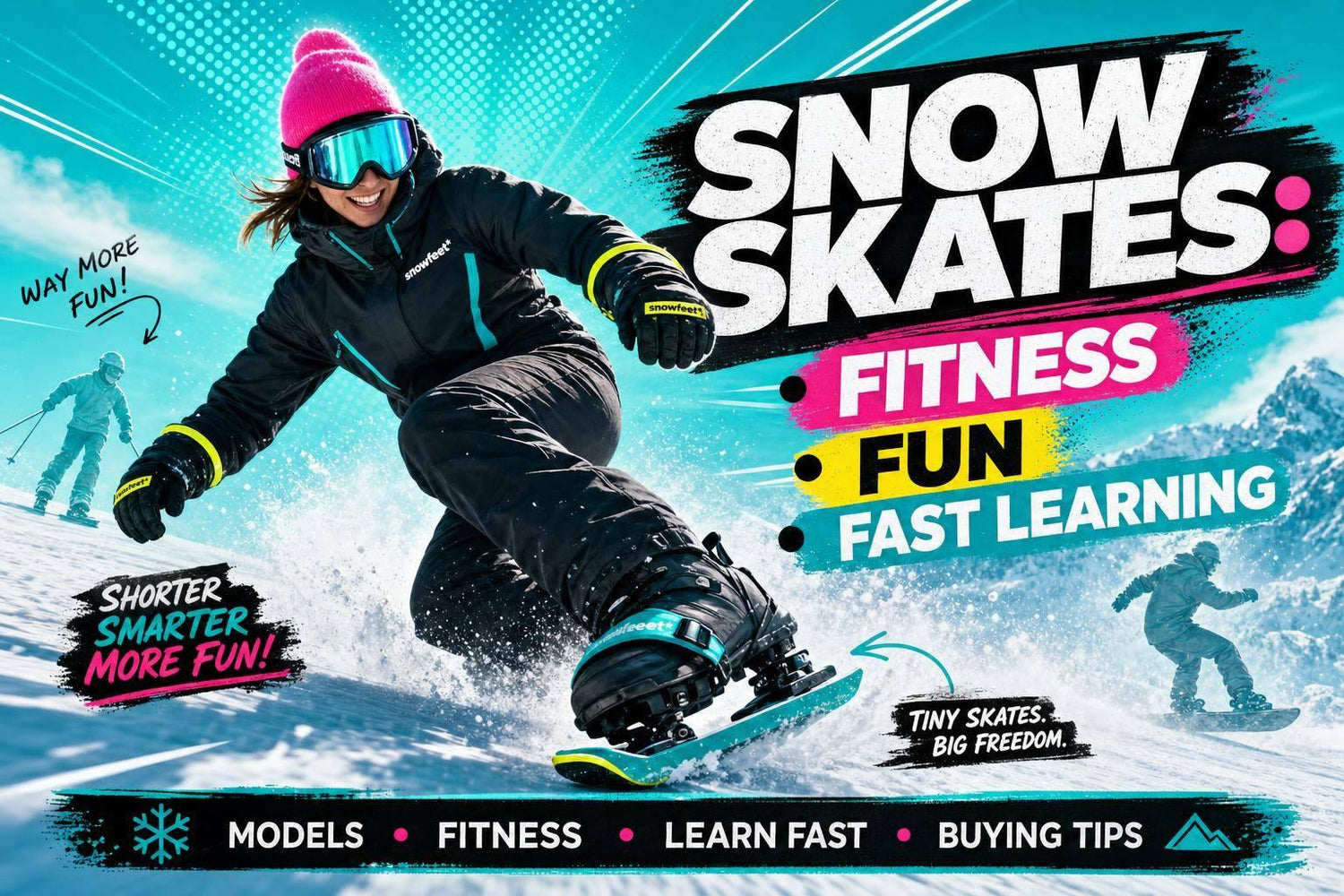
Want a winter workout without lugging 5-foot skis around? I’d sum it up like this: Snowfeet* gives you a lighter setup, a shorter learning curve, and a more playful ride than skis or a snowboard.
Here’s the short version:
- Size: Snowfeet* models run from 38 cm to 50 cm (15 to 20 in), while skis are often 4'7" to 5'11"+
- Use: Best for green runs, sledding hills, local slopes, and backyards
- Workout: Hits quads, glutes, calves, core, and stabilizer muscles
- Session length: Many riders do 30 to 45 minutes of laps for cardio
- Learning: Most people get the basics faster because the gear is short, light, and easier to control
- Price: About $250 to $575, depending on model and setup
If I were helping a friend pick, I’d say this:
- Choose 38 cm if you want the smallest, easiest-to-pack option
- Choose 44 cm if you want the most skate-like feel and resort laps
- Choose 50 cm if you want more stability and a simple starting point
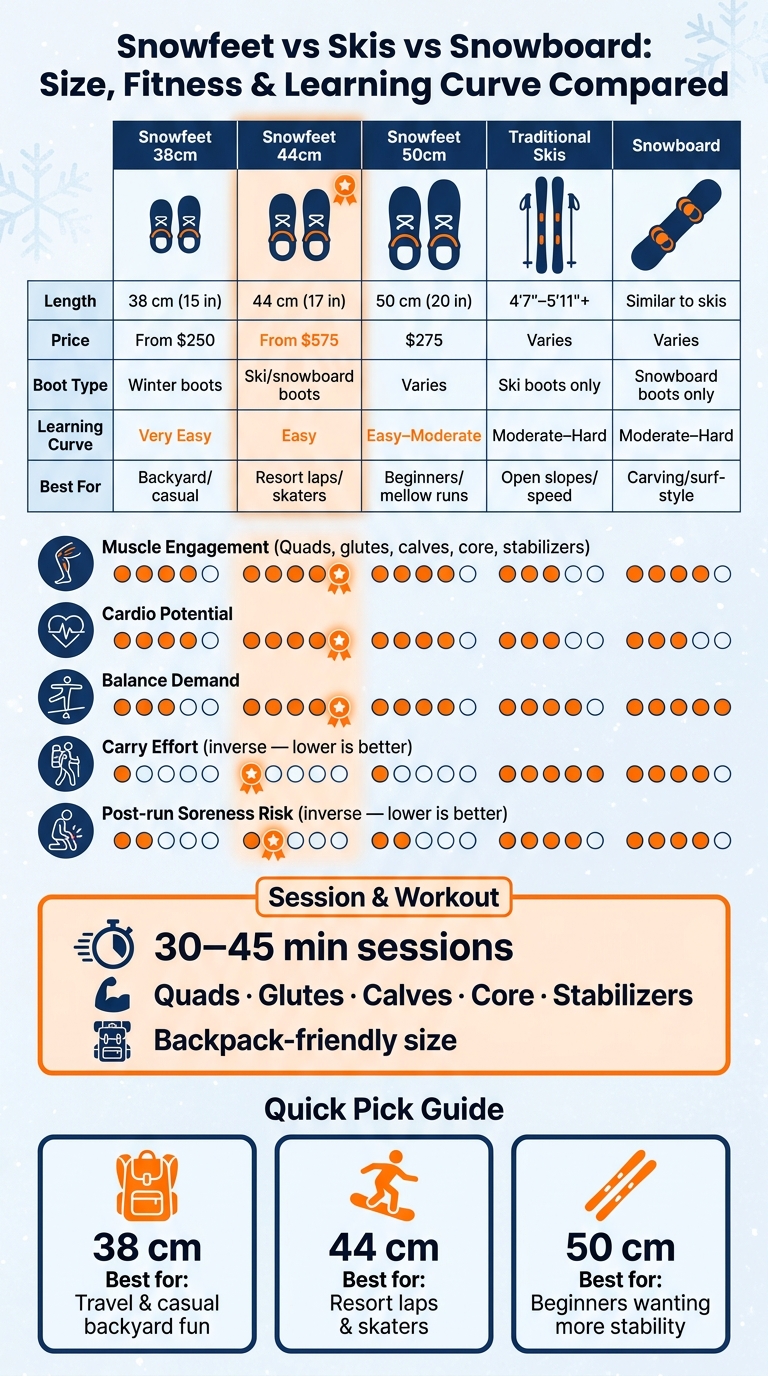
Snowfeet vs Skis vs Snowboard: Size, Fitness & Learning Curve Compared
Snowfeet* & Skiskates Tutorial - How to Become a PRO Skiskater
Quick Comparison
| Option | Best for | Main upside | Main tradeoff |
|---|---|---|---|
| Snowfeet* 38 cm | Casual riders, backyard hills, travel | Small and easy to carry | Less stable at speed |
| Snowfeet* 44 cm | Skaters, fitness laps, groomed slopes | Sharp turns and strong edge feel | Higher price |
| Snowfeet* 50 cm | Beginners, mellow runs, more support | Better stability | Less nimble than 44 cm |
| Skis | Open runs and higher speeds | Strong stability at speed | Bulk, gear, harder learning path |
| Snowboard | Open runs and surf-style riding | Fun carving feel | Fixed stance, harder first days |
So, if your goal is exercise, fun, and getting comfortable on snow fast, Snowfeet* makes a strong case. It won’t replace every ski day for every rider. But for short sessions, easy transport, and less hassle? Yeah, it makes a lot of sense :)
How Snowfeet* Works and Who It Is Best For
How Snowfeet* differs from skis and snowboards
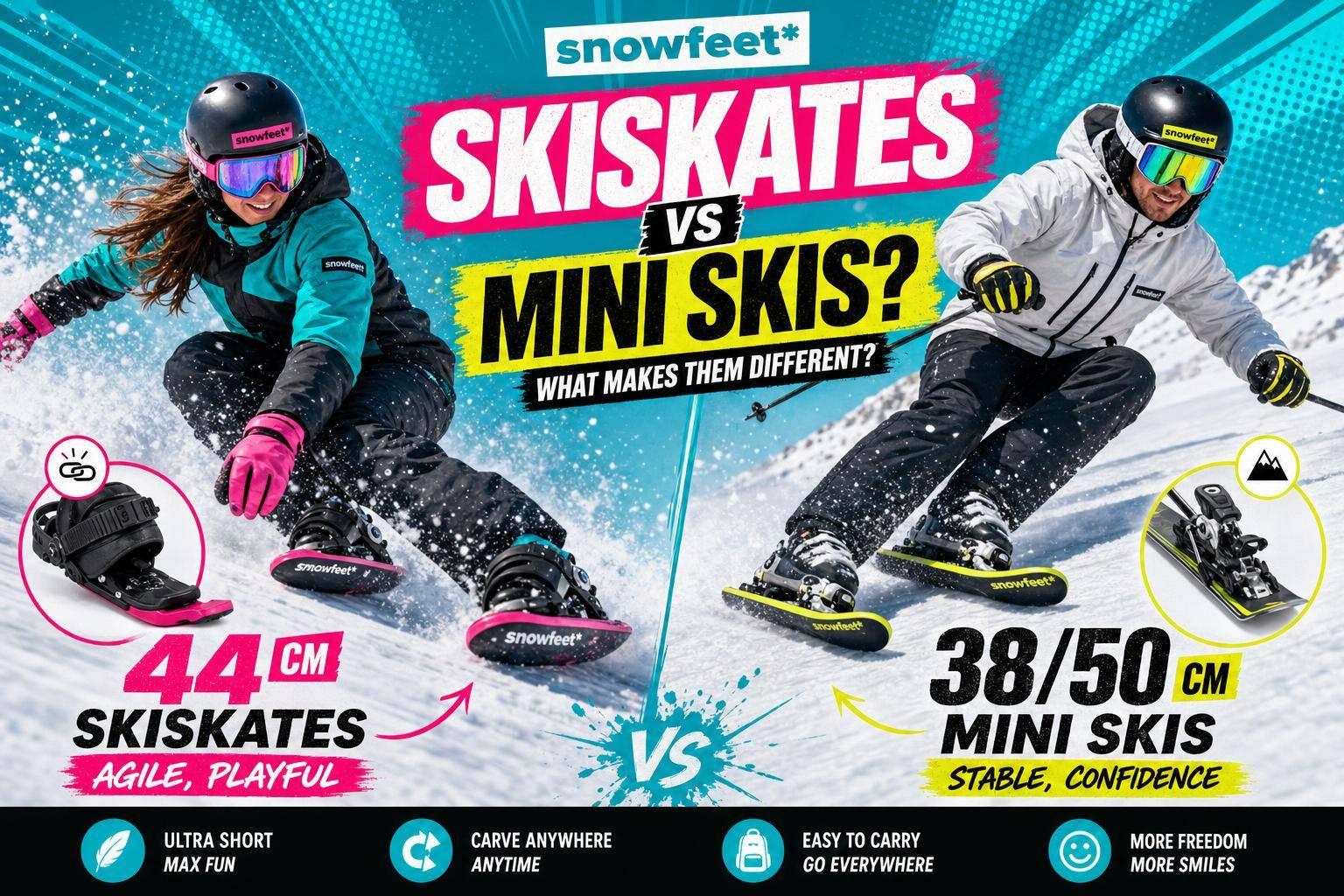
Snowfeet* is a compact, skate-like snow device that straps onto your boots and reacts to small weight shifts. So, turns, stops, and direction changes happen fast. Snowfeet* is built for faster learning, more playful movement, and more time on snow with less gear.
The short platform responds fast to small movements. That makes starting, stopping, and changing direction easier than with long skis and snowboards, which need wider turns and more control.
| Feature | Snowfeet* Mini Ski Skates (38 cm) | Snowfeet* Skiskates (44 cm) | Snowfeet* PRO (50 cm) | Traditional Skis | Snowboard |
|---|---|---|---|---|---|
| Length | 38 cm (15 in) | 44 cm (17 in) | 50 cm (20 in) | Much longer | Much longer |
| Boot compatibility | Regular winter boots | Ski or snowboard boots | Varies by model | Ski boots only | Snowboard boots only |
| Learning curve | Very easy | Easy | Easy-to-moderate | Moderate to hard | Moderate to hard |
| Beginner control | Very easy | Easy | Easy-to-moderate | Moderate to hard | Moderate to hard |
| Best use | Hills, parks, backyards | Slopes, parks, trails | Slopes and easy terrain | Open slopes | Open slopes |
Traditional skis and snowboards offer more top-end speed. But they also ask for more gear, more technique, and more time to learn. Snowfeet* leans the other way. It reacts fast, feels playful, and makes short sessions easier to enjoy.
Who benefits most and where they ride in the U.S.
Beginners, skaters, and former snow sports riders tend to adapt fastest. The feel is closer to natural foot movement, so it clicks sooner for a lot of people. Families and travelers also like the small size, easy storage, and low-fuss setup.
If you've ever tried stuffing skis into a packed car, you know the pain. Snowfeet* is a lot easier to keep in a trunk or closet, which means it often gets used more.
The freer stance can also help riders stay comfortable longer than fixed-position gear.
In the U.S., people use Snowfeet* on:
- Green resort runs
- Local sledding hills
- Neighborhood slopes
- Snowy backyards
It works best on modest slopes and in controlled spots, not extreme backcountry terrain.
Boot options and how simple the setup is
Snowfeet* keeps setup simple. The 38 cm model works with winter boots, which lowers the barrier right away. The 44 cm model uses tool-free adjustable bindings for ski or snowboard boots.
That ease of setup matters more than it sounds. Less hassle usually means more days out in the snow, even if it's just for a quick run or two.
sbb-itb-17ade95
Fitness Benefits: A Real Winter Workout Without Heavy Gear
Muscles, cardio, and coordination snow skating works
When the gear gets lighter, your body has to do more of the work. That’s a good thing here.
Snow skating gives you a full-body winter workout. The motion of pushing off, gliding, and edging works your quads, glutes, and calves in a way that feels closer to inline skating or ice skating than standard skiing. At the same time, your core stays on to help you stay steady through each turn, wobble, and small correction.
Snowfeet* also mixes skiing and skating into one movement pattern. That means you’re not just going downhill and hoping for the best. You’re reading the snow, adjusting fast, and training balance and coordination the whole time.
Why lighter Snowfeet* gear helps you stay active longer
Lighter gear means less energy spent hauling stuff around and more energy left for the ride.
At 44 cm, Snowfeet* stays light enough that you can put more effort into each run instead of feeling drained by the setup itself. Many riders use them for 30 to 45-minute sessions of hill repeats or carving laps, which can turn into a solid cardio workout.
There’s another small but useful perk too: Snowfeet* lets you shift your leg position often. Unlike a snowboard, where your stance stays fixed, you can move more freely here. Because of that, some riders say they feel less soreness in one overworked spot after riding.
Fitness comparison: Snowfeet* vs. skis and snowboards
Here’s the side-by-side view of how Snowfeet* stacks up against skis and snowboards on the fitness side.
| Fitness Factor | Snowfeet* (Skiskates 44 cm) | Traditional Skis | Snowboard |
|---|---|---|---|
| Muscle engagement | Quads, glutes, calves, core, stabilizers | Quads and glutes | Core and calves; fixed stance |
| Balance demand | High - short base requires constant adjustment | Moderate - long base adds stability | High - fixed stance |
| Leg position freedom | Full - change positions anytime | Full | None - feet are fixed |
| Cardio potential | High - active skating motion encourages effort | Moderate - gravity-assisted | Moderate - gravity-assisted |
| Carry effort | Very low - backpack-friendly | High - bulky and hard to carry | High - bulky and cumbersome |
| Post-run soreness | Lower - flexible positioning may reduce strain | Higher - high demand on knees and quads | Higher - fixed leg position can cause soreness |
Skis and snowboards can still give you a hard workout. No doubt about that. But they also bring more bulk and fewer movement choices. Snowfeet* feels lighter, more active, and less locked-in, which is a big part of why many riders find it easier to learn and more fun to ride.
Why Snowfeet* Is More Fun and Faster to Learn
More freedom, faster turns, and less intimidation
Once the workout side makes sense, the next thing people want to know is simple: how fast can you learn this stuff without eating snow all day?
That’s where Snowfeet* shines.
After the fitness perks, one of the biggest upsides is how fast Snowfeet* helps new riders feel in control. The platform is short and light, so it turns fast and doesn’t feel like a lot to manage. At just 44 cm (about 17 inches), the Skiskates encourage an upright stance that makes balance and turning feel more natural.
That changes the whole feel on snow.
Turns come around fast. Speed control feels intuitive. And because the base is shorter, it’s easier to fix small mistakes before they turn into big ones. You’re not fighting long gear. You’re just learning how to move.
That forgiving feel is a big reason beginners improve faster.
A step-by-step learning path from first glide to linked turns
Here’s the fastest path from your first glide to linking turns.
Start on flat, groomed snow. Stand with your feet shoulder-width apart, keep your knees slightly bent, and place one foot a bit ahead for balance. Then push off gently and glide. After that, practice stopping with the metal edges. Once that feels under control, head to a gentle slope and begin linking turns.
It’s pretty straightforward:
- Start flat and get used to the glide
- Practice stopping with the edges
- Move to a small slope
- Link easy turns
Skaters and hockey players tend to pick it up the fastest because the edge control and weight shift feel a lot like what they already know.
And that matters. Less frustration means more laps. More laps means more movement. And more movement means a better workout.
Which model to pick: 38 cm vs. 44 cm vs. 50 cm
Each Snowfeet* model suits a slightly different rider. Here’s how they stack up, with full-length skis and snowboards added as a baseline for context.
| Feature | 38 cm Mini Ski Skates | 44 cm Skiskates | 50 cm Ski Skates | Full-Length Skis / Snowboard |
|---|---|---|---|---|
| Learning speed | Very fast | Extremely fast | Very fast | Slow - steep learning curve |
| Stability | Moderate | Moderate (skate-like) | Good | Very high at speed |
| Maneuverability | Very high | Maximum | High | Low - bulky |
| Price (USD) | From $250 | From $575 | $275 | Varies |
| Best for | Casual fun, kids, beginners | Tricks, skaters, slope riders | Budget-conscious beginners | Riders who want full-length skis or a snowboard |
If you want the easiest all-around starting point, go with 50 cm. If you want the fastest direction changes and the most agility, pick 44 cm. If you want something playful and easy to pack, 38 cm is the move.
Next up, it makes sense to match the model to your budget, terrain, and riding goals.
How to Choose the Right Snowfeet* Setup
Picking the right model based on budget, terrain, and goals
If the 38 cm, 44 cm, and 50 cm options already narrowed things down, this is the part that makes the choice simple: pick by terrain first, then budget.
The 38 cm Mini Ski Skates work well for casual riders who stick to backyard hills, sledding slopes, and local snow spots. They’re small, simple, and a good fit if you want a fun session without turning it into a whole ski-day production.
The 50 cm PRO is a better match if you want more stability. It suits fitness laps, mellow resort runs, and riders who want a bit more support underfoot.
The 44 cm Skiskates are the top pick for regular resort riding and the strongest workout. They have a wood core, metal edges, and a graphite base, so they feel much closer to skis on groomed snow. If you plan to do repeated chairlift laps, this is the one that makes the most sense.
Budget helps narrow it even more:
- If you mostly ride local hills and free terrain, the $250–$275 range fits most casual users well.
- If you’re planning regular ski trips and want the strongest performance for resort use, the 44 cm Skiskates are worth the higher price.
Once you land on the right model, a little safety prep and basic care go a long way.
Safety basics, gear care, and when to move up in the lineup
Start with the simple stuff. Wear a certified helmet, gloves, and beginner pads. Before every run, check your straps and buckles. It takes a minute, and yeah, that minute matters.
On resort terrain, follow the NSAA Responsibility Code. Stay in control, yield to others, and respect closed areas. That’s just good mountain manners.
For gear care, keep it basic and consistent:
- Dry the bases after each session
- Wax them on a regular schedule
- Check the edges and bindings for wear
That kind of upkeep helps the gear glide better and keeps you on snow instead of dealing with preventable problems in the parking lot.
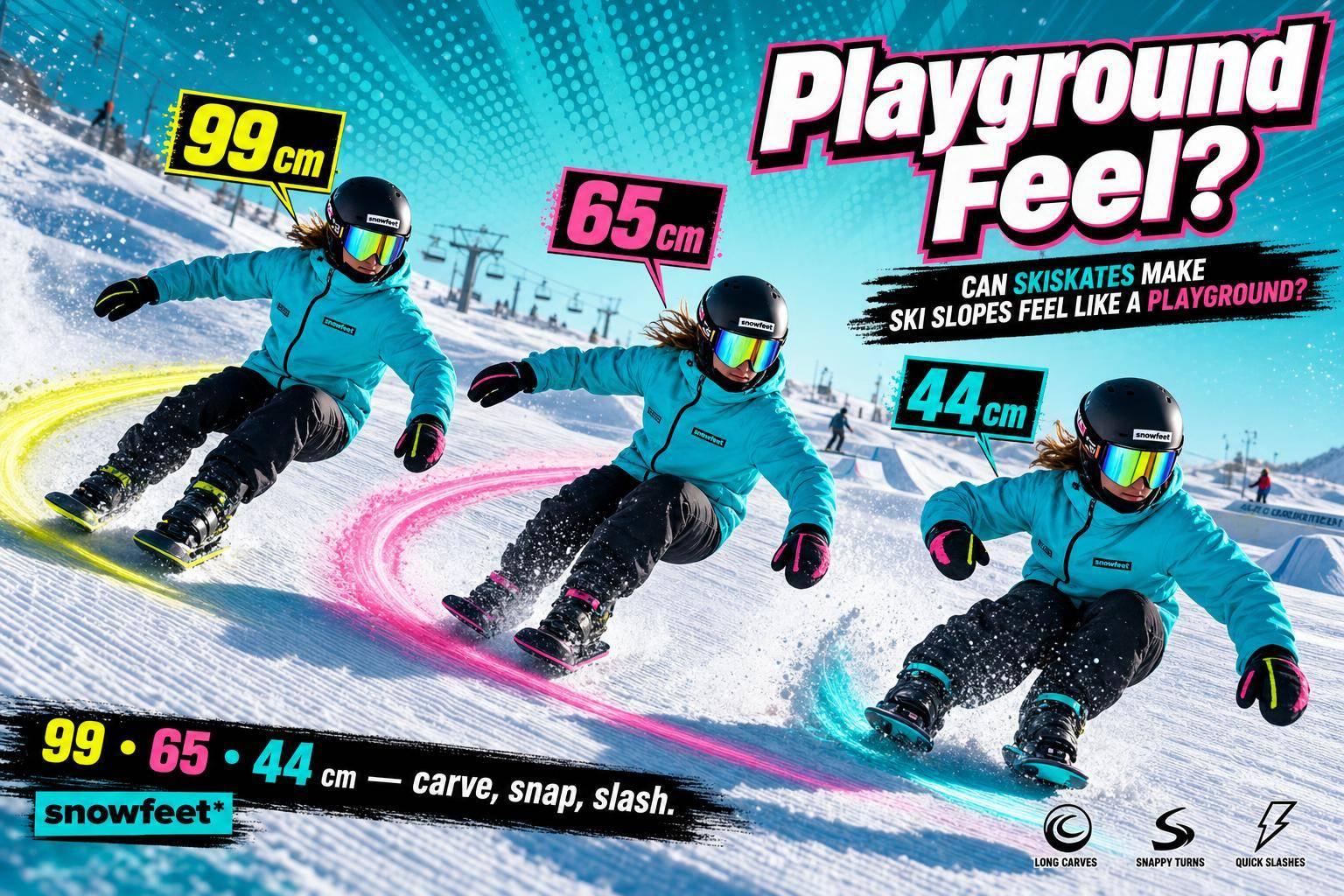
If you start wanting more speed and a steadier ride, move up through the lineup. A common next step is 65 cm or 99 cm Skiblades, then 120 cm Short Skis.
Conclusion: The shortest path to winter exercise and riding confidence
Snowfeet* checks the big boxes: it gives you a real workout, feels more playful than full-length skis or a snowboard, and gets most people comfortable on snow much faster. Research on short ski instruction points in the same direction: learners on shorter skis fall less often and report higher confidence than those starting on standard long skis.
Pick the setup that fits where you ride and what you want from it. Take care of the gear. Then get out there. You’ll build snow skills, stay active, and have more fun with less hassle than you would on long skis or a snowboard. Snowfeet* stays easy to learn, easy to carry, and easy to keep riding.
FAQs
Are Snowfeet* good for complete beginners?
Yes. Snowfeet* are a great pick for complete beginners.
Why? Their compact design and shorter length make them easier to control and less intimidating than regular skis or snowboards. For many first-timers, that means the basics click faster and the learning process feels a lot less clunky.
Compared with old-school skis or a snowboard, Snowfeet* often feel simpler to get used to. Those bigger setups can take more time to learn and come with a steeper learning curve.
What boots do I need for each Snowfeet* model?
Snowfeet* models with ski boot bindings fit ski boots in US sizes 4.5–14.5 (EU 36–49).
Snowfeet* models with snowboard boot bindings fit snowboard boots in US sizes 6–14.5 (EU 38–49).
Can I use Snowfeet* at ski resorts in the U.S.?
The available information doesn’t clearly say whether Snowfeet* can be used at ski resorts in the U.S.
So, based on the current data, this can’t be confirmed.











Hinterlassen Sie einen Kommentar
Diese Website ist durch hCaptcha geschützt und es gelten die allgemeinen Geschäftsbedingungen und Datenschutzbestimmungen von hCaptcha.