



















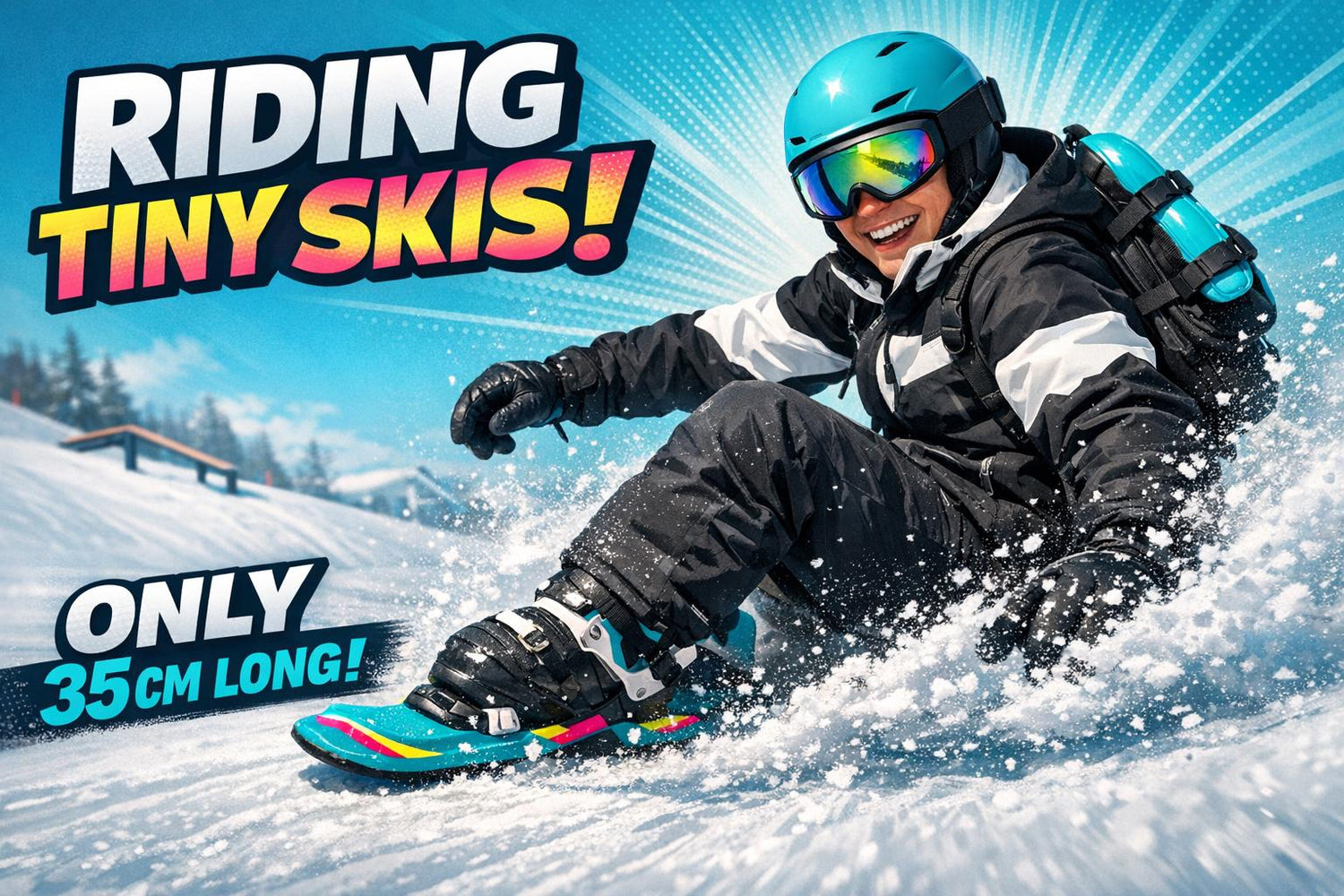
Ever seen someone zipping down the slopes on what looks like mini skis or even wearing a sled? Yep, they’re probably rocking Snowfeet*. This quirky gear may look odd, but it’s designed to make skiing and sledding easier, more fun, and way more portable. Whether it’s the ultra-compact Skiskates (just 17 inches long), the playful Skiblades, or the wearable Assled, Snowfeet* is shaking up winter sports in a big way. Here’s why:
- Skiskates: Tiny, lightweight, and perfect for quick turns on groomed runs. You can even fit them in a backpack.
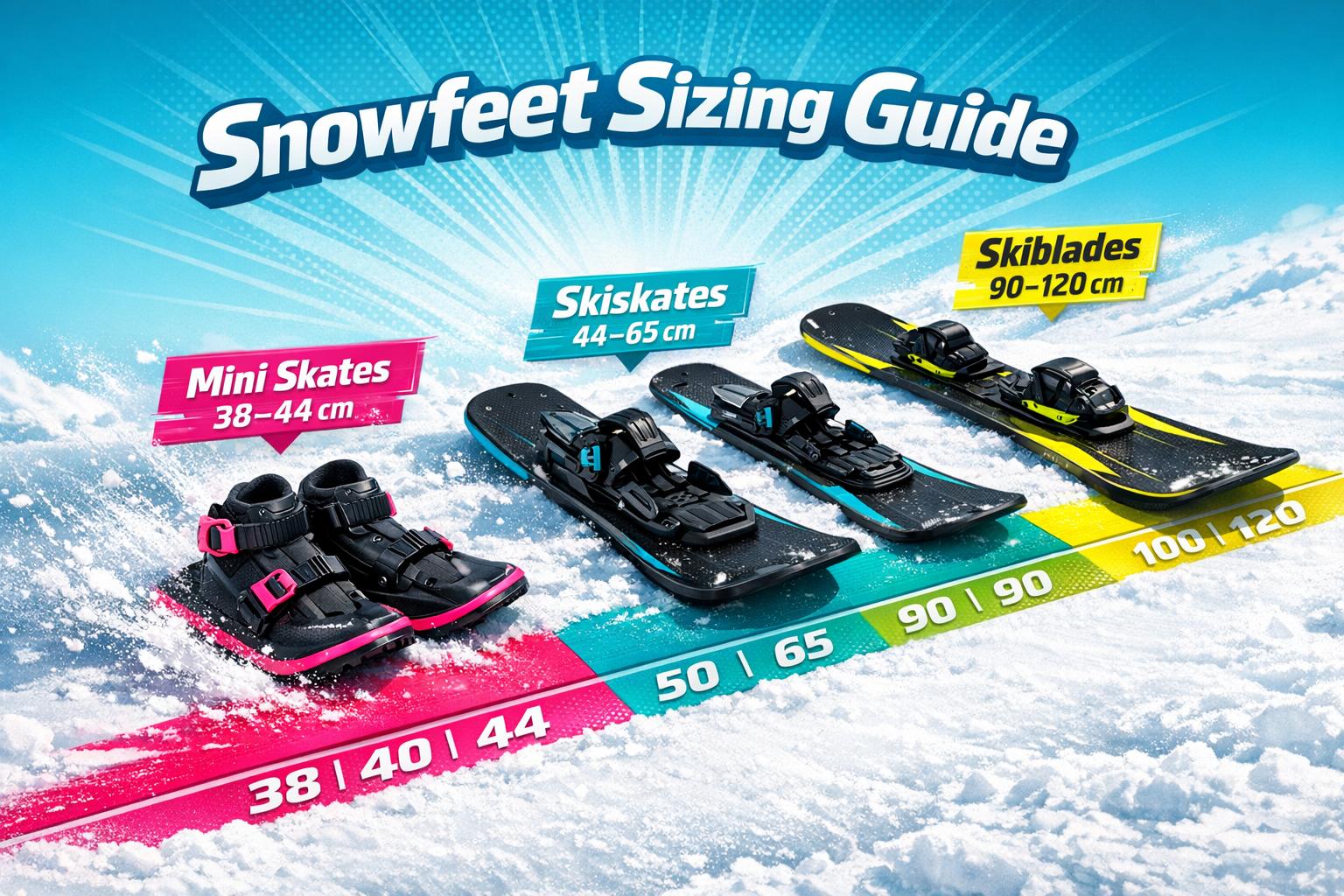
- Skiblades: Available in three lengths (65 cm, 99 cm, and 120 cm), they’re short skis that balance control and fun for all skill levels.
- Assled: A sled you wear. It’s compact, easy to carry, and lets you ride slopes in multiple positions.
These options aren’t just about looking different - they’re practical, easy to use, and great for beginners or anyone who wants to skip the hassle of traditional gear. Let’s dive into what makes each product stand out and how they compare to standard skis and sleds.
Why Short and Unconventional Gear Beats Standard Options
How Short Skis Improve Turning and Control
Short skis are all about agility. Their smaller turning radius means you can change direction with far less effort. On traditional skis (usually 150–180 cm or 59–71 inches), the length spreads your weight across a larger surface, making it harder to tip and carve. In contrast, something like Snowfeet* Skiskates, which are just 44 cm (17 inches) long, puts the edge directly under your foot. This design makes even small movements in your ankle or knee immediately translate into a change in direction.
This kind of responsiveness is a game-changer, especially on crowded groomed runs. You’re constantly navigating around other skiers, and the reduced swing weight at the tips and tails makes those edge-to-edge transitions feel almost effortless. Beginners, in particular, find this control incredibly welcoming, which is why so many quickly take to Snowfeet* gear.
Easier to Learn, Easier to Use
Traditional skis can be intimidating for beginners. Between the stiff boots and the long, unwieldy skis, just figuring out how to stop safely can feel like a challenge. Short gear eliminates most of those struggles. Sunshine Straiges, a Snowfeet* user, summed it up perfectly:
"I had no muscle soreness after using these because I can change my leg position, unlike the snowboard which is set. I'm 59 so if I love these, anyone will!"
The lightweight, compact design lets many users start feeling confident in just five minutes. Movements feel natural right from the beginning. Plus, Snowfeet* gear isn’t just about performance - it’s about portability and fun. That’s a combination you won’t often hear from traditional ski brands.
Where Short Gear Performs Best
Short gear isn’t just easier to use; it shines in specific settings. On groomed blue and green runs, the quick turning and easy speed control make carving through crowds almost second nature. In terrain parks, the compact size reduces the risk of catching edges on features or landings. This gives riders the freedom to experiment with small jumps and spins without committing to full park skis.
But the real magic happens off the resort. Whether it’s a backyard hill, a sledding spot, or a snow-covered local park, short gear like Skiskates is incredibly portable. Toss them in a regular backpack, hike up a hill, and you’re ready to go - no bulky setup required. Try doing that with a pair of 170 cm all-mountain skis!
| Terrain Type | Short Gear Advantage | Traditional Ski Advantage |
|---|---|---|
| Groomed runs (green/blue) | Easier turning, better crowd navigation | Higher top-end speed |
| Terrain parks | Compact size reduces catch risk | More edge grip at speed |
| Backyard/local hills | Highly portable - perfect for hills without lifts | N/A |
| Deep powder or steep blacks | - | Better flotation and stability |
Snowfeet* Skiskates: Small, Fun, and Built for the Slopes
What the Snowfeet* Skiskates Offer
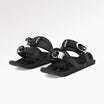
At just 44 cm (17 inches) long, Snowfeet* Skiskates are all about agility and fun on groomed snow. They’re built with a durable wood core, steel edges, and a sintered graphite base, which means they’re fast and tough enough to handle regular use on the slopes.
One of their standout features is the tool-free, fully adjustable bindings. These bindings fit U.S. men's sizes 6–13 (women's 7–14), so you can use them with your regular winter or snowboard boots - no special gear needed.
Snowfeet* founder Zbyněk shared his enthusiasm for the product:
"In my opinion, Skiskates is the best product for slopes we developed so far. I love how easy they are to ski and skate and how many different kinds of tricks I can perform without much effort and almost no restrictions."
This mix of clever design and user-friendly features makes Skiskates a standout choice for a variety of riders.
Who Are Skiskates Best For?
Skiskates are designed to appeal to a wide range of users, thanks to their compact size, ease of use, and playful nature.
- Travelers love their portability. At just 44 cm, they’re small enough to fit in a standard suitcase, making them a dream for anyone who wants to pack light.
- Beginners appreciate how forgiving they are. Many first-timers feel comfortable cruising gentle green slopes after just one session.
- Families and park riders benefit from their maneuverability. Parents can stay close to their kids on beginner slopes, while freestyle enthusiasts enjoy how easy it is to pull off tricks like small jumps, 180s, and nose pivots.
This versatility underscores Snowfeet*’s commitment to rethinking what winter sports gear can be.
Skiskates vs. Standard Skis: Side-by-Side
Here’s a quick breakdown of how Skiskates stack up against traditional skis:
| Feature | Snowfeet* Skiskates (44 cm) | Standard Skis (150–180 cm) |
|---|---|---|
| Length | 44 cm (17 in) | 150–180 cm (59–71 in) |
| Weight | ~4–5 lb per pair | 10–15 lb+ with bindings |
| Portability | Fits in a backpack | Requires a ski bag or roof rack |
| Boot Compatibility | Works with winter or snowboard boots | Requires alpine ski boots |
| Learning Curve | About 5 minutes | Several days for beginners |
| Maneuverability | Extremely high | Moderate |
| High-Speed Stability | Lower | High |
| Deep Powder | Not recommended (over 4 in/10 cm) | Better flotation |
| Fun Factor | Very high - great for tricks | High - built for performance |
While traditional skis shine on steep terrain, deep powder, and high-speed carving, Skiskates are perfect for groomed runs, terrain parks, and casual, playful days on the mountain.
Snowboarder tries Snowfeet* | Which Snowfeet* Short Ski is the Best? | Snowblades 44, 65, 99 Review
Snowfeet* Skiblades: Three Lengths, One Concept
If Skiskates are all about compact, skate-like fun, Snowfeet* Skiblades take things up a notch with a short-ski experience available in three lengths: 65 cm, 99 cm, and 120 cm. Each size caters to different riding styles, but they all share one core idea: shorter skis mean more fun. Snowfeet* continues to combine bold design with practical performance.
Which Skiblade Length Is Right for You?
The 65 cm Skiblades are the most playful option. With their tiny turning radius, they feel almost like ice skates on snow. These are perfect for riders who love terrain parks or groomed runs with tighter turns. If quick, sharp movements are your style, these are a great pick.
The 99 cm Skiblades are the go-to for versatility. They’re long enough to handle steeper groomed slopes and light moguls, yet short enough to stay nimble. Think of them as the all-mountain choice. As verified buyer Brad Tolin put it:
"These ski blades are a blast to use. Super easy to control, quick to turn, and way more forgiving than traditional skis."
For riders tackling mixed terrain, the 99 cm Skiblades are a solid all-around option.
The 120 cm Skiblades are built for speed and stability. They offer a carving experience that feels closer to traditional skis, with better edge hold on steep or variable snow. However, as Tolin also noted:
"The only trade-off is at higher speeds, where longer skis still feel more stable - but for overall fun and maneuverability, these are hard to beat."
Each length brings something different to the table, making it easy to match your skiblades to your riding style.
Build Quality and Boot Compatibility
Snowfeet* Skiblades are made with a certified sustainable wood core, steel edges, and a sintered or graphite base. This construction ensures they’re responsive and precise, especially on hard-packed snow. Plus, they’re designed to be lightweight and portable, just like the Snowfeet* Skiskates.
The adjustable bindings work with standard alpine ski boots (sizes 4.5–14.5 US) or snowboard boots (sizes 6–14.5 US). So, you can hit the slopes in gear you already own and trust.
Skiblades vs. Standard Skis: Side-by-Side
| Feature | Snowfeet* 65 cm | Snowfeet* 99 cm | Snowfeet* 120 cm | Standard Skis (150–180 cm) |
|---|---|---|---|---|
| Best Terrain | Parks, groomed runs | All-mountain, moguls | Steeper groomers, variable snow | Groomed slopes, deep powder |
| Stability at Speed | Lower | Moderate | High | Very high |
| Turning Radius | Very short, skate-like | Medium, carving-friendly | Longer, controlled arcs | Long, requires technique |
| Learning Curve | ~5 minutes | ~5 minutes | Short for intermediates | Days to weeks |
| Boot Compatibility | Ski or snowboard boots | Ski or snowboard boots | Ski or snowboard boots | Alpine ski boots only |
| Portability | Fits in a suitcase | Fits in most gear bags | Compact compared to standard skis | Requires ski bag or roof rack |
| Skill Level | Beginner to pro | Beginner to pro | Intermediate to pro | All levels |
This table highlights how Snowfeet* Skiblades stand out for their portability and versatility, offering a fun alternative to traditional skis. Whether you’re a beginner or a seasoned rider, there’s a pair of Skiblades for you.
sbb-itb-17ade95
The Assled Wearable Snow Sled: Sledding Without the Sled
Snowfeet* is back at it, shaking up winter sports gear yet again. If their Skiblades made you rethink skiing, wait until you hear about the Assled. This quirky invention ditches the traditional sled entirely and turns you into the sled. Yep, the Assled is a wearable sled that straps to your lower body, delivering a whole new way to enjoy the slopes.
How the Assled Works
The Assled is all about simplicity and fun. It straps onto your lower body using adjustable waist and leg straps, making it feel like an extension of you. To get started, just plop down on a gentle slope. Steering is as easy as shifting your body weight, and braking? Just dig your heels into the snow - Snowfeet* calls it "human-powered brakes."
The sled’s tarpaulin bottom keeps your ride fast and smooth, even in powder, while a thick foam pad absorbs impacts for a more comfortable descent. Ergonomic handles give you a solid grip, even with gloves on. Plus, you can ride in five different positions: sitting, lying on your back or stomach, and even kneeling. It’s sledding, but way more versatile.
Why the Assled Is Better Than a Standard Sled
One word: portability. The Assled folds up small enough to clip onto your backpack, leaving your hands free for other things - like wrangling kids or holding a much-needed cup of coffee. Snowfeet* has once again prioritized convenience and performance, making winter adventures a little easier.
Heather Ogilvie, a customer from Portland, summed it up perfectly:
"Wearable? Foldable? Snow Sled??? YES!!! Anywhere, anytime, find the snow and you can SLED... It's light and tough, easy to carry."
Unlike bulky plastic sleds that crack in the cold or take up too much storage space, the Assled is built for durability and ease. It’s designed for ages 5 to 105, can hold one or two riders, and costs $170 for the v2 version. Oh, and it’s pulling a 5.0 out of 5-star rating from 13 reviews on the Snowfeet* store.
Assled vs. Standard Sleds: A Quick Comparison
| Feature | Assled Wearable Sled | Standard Sled / Toboggan |
|---|---|---|
| Portability | Folds small; clips to a backpack | Bulky; must be carried or dragged |
| Control | Precise steering with body weight and heel braking | Limited control with leaning or ropes |
| Storage | Compact; fits in a closet or bag | Takes up significant space |
| Durability | Tough tarpaulin bottom with foam padding | Plastic models often crack in cold weather |
| Hands-Free Use | Stays strapped on for uphill and downhill | Needs to be held or towed |
| Riding Positions | Offers up to 5 positions | Usually limited to 1–2 positions |
| Rider Capacity | 1–2 riders | Varies, depending on the model |
The Assled’s portability and control make it a standout for anyone looking to upgrade their sledding game.
That said, it’s best suited for groomed, moderate slopes or small to medium hills. On steeper or icy terrain, the heel braking system might not be as effective. Also, check local rules before using it at resorts or parks, and always wear a helmet for safety.
How to Pick the Right Gear for Your Needs
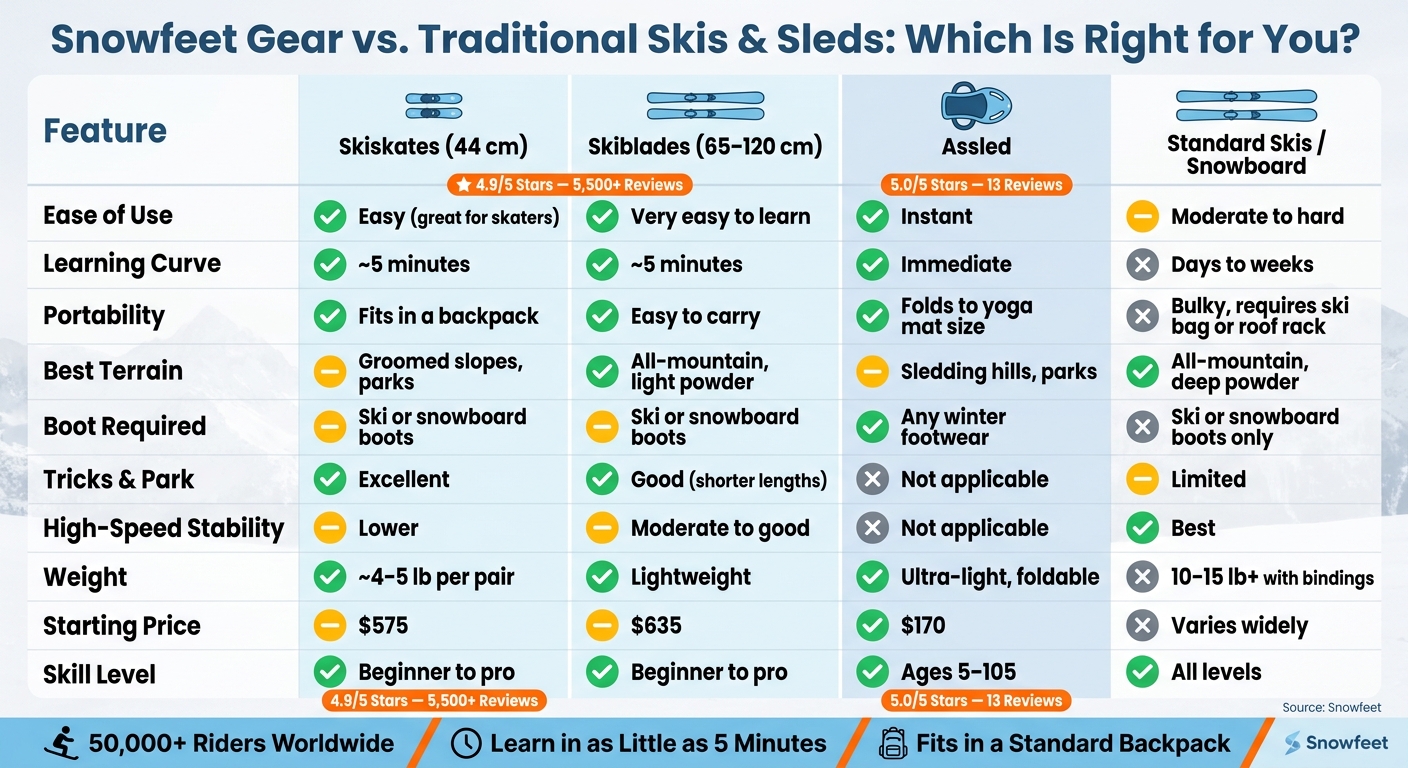
Snowfeet Gear vs. Traditional Skis: Full Comparison Guide
Snowfeet* offers four main products - Skiskates, Skiblades, and the Assled - designed to match various skiing styles. To choose the best option, think about your skill level, the terrain you’ll be on, and the gear you already have.
Key Factors to Consider Before Buying
Skill level is the first thing to think about. If you’re new to skiing, go for shorter, more forgiving gear. The Snowfeet* 99 cm Skiblades are a great starting point for beginners. They’re more stable than the shorter models but less intimidating than the usual 160–180 cm skis. Got an ice skating or hockey background? The 44 cm Skiskates will feel natural, with most users mastering them in about five minutes.
Boot compatibility matters, especially if you’re flying into ski destinations like Colorado or Utah. Snowfeet* products come with bindings that fit either ski boots or snowboard boots. If you don’t own ski boots or don’t want to rent them, snowboard boots are a great alternative - they’re warmer, easier to walk in, and work across multiple Snowfeet* setups. The Assled skips boots entirely, strapping over your winter clothing instead.
Portability is where Snowfeet* really shines. Unlike traditional skis, which are bulky and often require extra fees, the 44 cm Skiskates and the Assled fit inside a standard backpack or carry-on. This makes them perfect for weekend trips or for those with limited storage space.
These factors make it easier to decide which Snowfeet* product suits your needs compared to traditional ski gear.
Finding the Right Gear for the Right Rider
By applying these considerations, you can match each rider with their ideal Snowfeet* product. Here’s how they break down:
- Beginners to advanced skiers: The 99 cm or 120 cm Skiblades ($499–$675) are beginner-friendly and great for groomed runs. They’re also a fun second setup for experienced skiers who want something playful for the park or casual days.
- Frequent travelers or weekend skiers: The 44 cm Skiskates ($575) and the Assled ($170) are compact, easy to carry, and eliminate the hassle of renting or transporting bulky ski boots.
- Park and trick enthusiasts: The 44 cm or 65 cm models are ideal for spins, jumps, and riding backward on park features.
- Families with kids: The Assled is a crowd-pleaser. It’s one-size-fits-all, works for ages 5 to 105, and can even carry two riders.
Comparing Snowfeet* Gear to Traditional Skis and Snowboards
Here’s a quick look at how Snowfeet* gear stacks up against standard skis and snowboards:
| Feature | Skiskates (44 cm) | Skiblades (65–120 cm) | Assled | Standard Skis/Snowboard |
|---|---|---|---|---|
| Ease of Use | Easy (great for skaters) | Very easy to learn | Instant | Moderate to hard |
| Portability | Backpack-friendly | Easy to carry | Folds compactly | Bulky, requires extra gear |
| Best Terrain | Groomed slopes, parks | All-mountain, light powder | Sledding hills, parks | All-mountain, deep powder |
| Boot Required | Ski or snowboard boots | Ski or snowboard boots | Any winter footwear | Ski or snowboard boots |
| Tricks & Park | Excellent | Good (shorter lengths) | Not applicable | Limited |
| High-Speed Stability | Lower | Moderate to good | Not applicable | Best |
| Starting Price | $575 | $635 | $170 | Varies widely |
While traditional skis and snowboards excel in deep powder or high-speed carving, Snowfeet* gear shines in almost every other scenario. Whether you’re hitting groomed runs, exploring parks, sledding, or just learning, Snowfeet* offers a fun and practical alternative.
Conclusion: Why Odd-Looking Gear Is the Future of Winter Sports
What looks unusual often hides serious performance. Take Snowfeet* Skiskates and Skiblades, for example. These compact pieces of gear pack a punch with steel edges, tough materials, and real bindings. Their shorter length isn't just for show - it means quicker turns, faster transitions, and a learning curve that’s more like minutes than days. These practical perks hint at a bigger shift in how winter sports gear is being reimagined.
In the U.S., this isn’t about tossing out traditional skis entirely. Long skis still have their place - for deep powder, high-speed carving, and competitive racing. But for most other scenarios - like groomed runs, terrain parks, crowded slopes, weekend getaways, and family outings - compact gear like Snowfeet* makes more sense for more people. Feedback from riders consistently highlights how easy and comfortable Snowfeet* gear feels, with users of all skill levels reporting they felt confident almost immediately.
With over 50,000 riders worldwide and a stellar 4.9/5-star rating from more than 5,500 verified reviews, Snowfeet* has clearly moved beyond being just a quirky idea. Then there’s the Assled, which takes things up a notch. It offers a fun, wearable sledding experience that anyone - yes, anyone from ages 5 to 105 - can enjoy. Best of all, it folds down to the size of a yoga mat, making it ridiculously easy to carry.
This shift in design isn’t just about gear - it’s about embracing a lifestyle that values convenience and flexibility over sticking to old norms. The future of winter sports isn’t about one-size-fits-all solutions. It’s about gear that works with your life - whether that’s fitting in your car, your closet, or matching your skill level and idea of fun on the snow. Sure, these designs may look a little quirky, but the benefits they deliver? They’re hard to beat.
FAQs
Can I use Snowfeet* gear at U.S. ski resorts?
Yes, most ski resorts in the U.S. allow Snowfeet* gear. Thanks to features like full metal edges, heel brakes, and optional safety leashes, Snowfeet* meets the safety standards outlined by organizations such as the National Ski Areas Association. That said, resort policies can differ, so it’s a good idea to check their website or reach out to the ski patrol directly to make sure your gear is good to go.
Which Snowfeet* length should I choose for my terrain?
The right Snowfeet length depends on where and how you plan to use them. If you're into tricks, hiking trails, or sledding hills, shorter lengths like 44 cm or 50 cm are great for quick, agile moves. For groomed slopes, moguls, or park terrain, the 65 cm model is a solid choice.
Looking for more stability and speed? 99 cm or 100 cm works well on moderate powder or bumpy terrain. Advanced skiers chasing high-speed control in light powder should go for the 120 cm option.
What safety gear should I wear with Skiskates or Skiblades?
When using Snowfeet* Skiskates or Skiblades, make sure to attach the included safety leashes for added security. These skates are a safer alternative to traditional skis because their shorter length helps reduce leg strain and minimizes the chance of tip crossing.
Snowfeet* gear works with standard snowboard or winter boots, making them super convenient. However, before hitting the slopes, double-check your resort's equipment rules. Most resorts allow them since they feature metal edges and bindings, but it's always good to confirm.











Hinterlassen Sie einen Kommentar
Diese Website ist durch hCaptcha geschützt und es gelten die allgemeinen Geschäftsbedingungen und Datenschutzbestimmungen von hCaptcha.