



















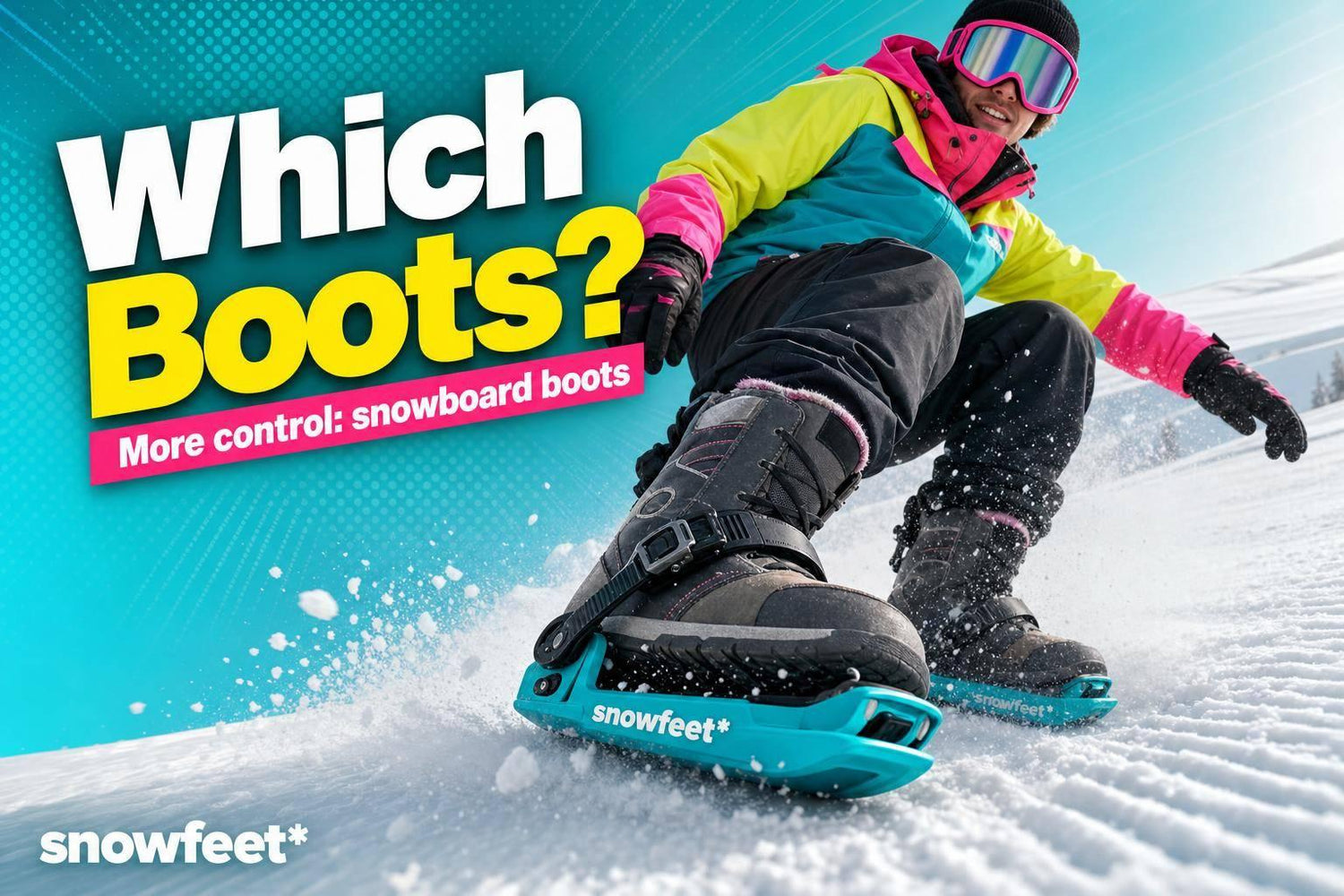
Yes - if the ski skates use strap-on bindings made for winter boots. That’s the whole answer in one line.
If I were helping you in the shop, I’d put it like this:
- Snowfeet* PRO 50 cm, Snowfeet* 38 cm, and Snowfeet* 50 cm work with regular winter boots
- Skiskates 44 cm do not work with regular winter boots
- The thing that matters is the binding, not the length
- Winter boots = more comfort and easier walking
- Snowboard boots = more support and better control on firm or icy snow
About 3 out of 4 casual riders I talk to want the same thing: a setup that’s easy to carry, easy to walk in, and easy to learn. For that, Snowfeet* with snug winter boots is often the simple pick. But if your boots are soft, puffy, or loose, the ride can feel sloppy fast.
Here’s the short version:
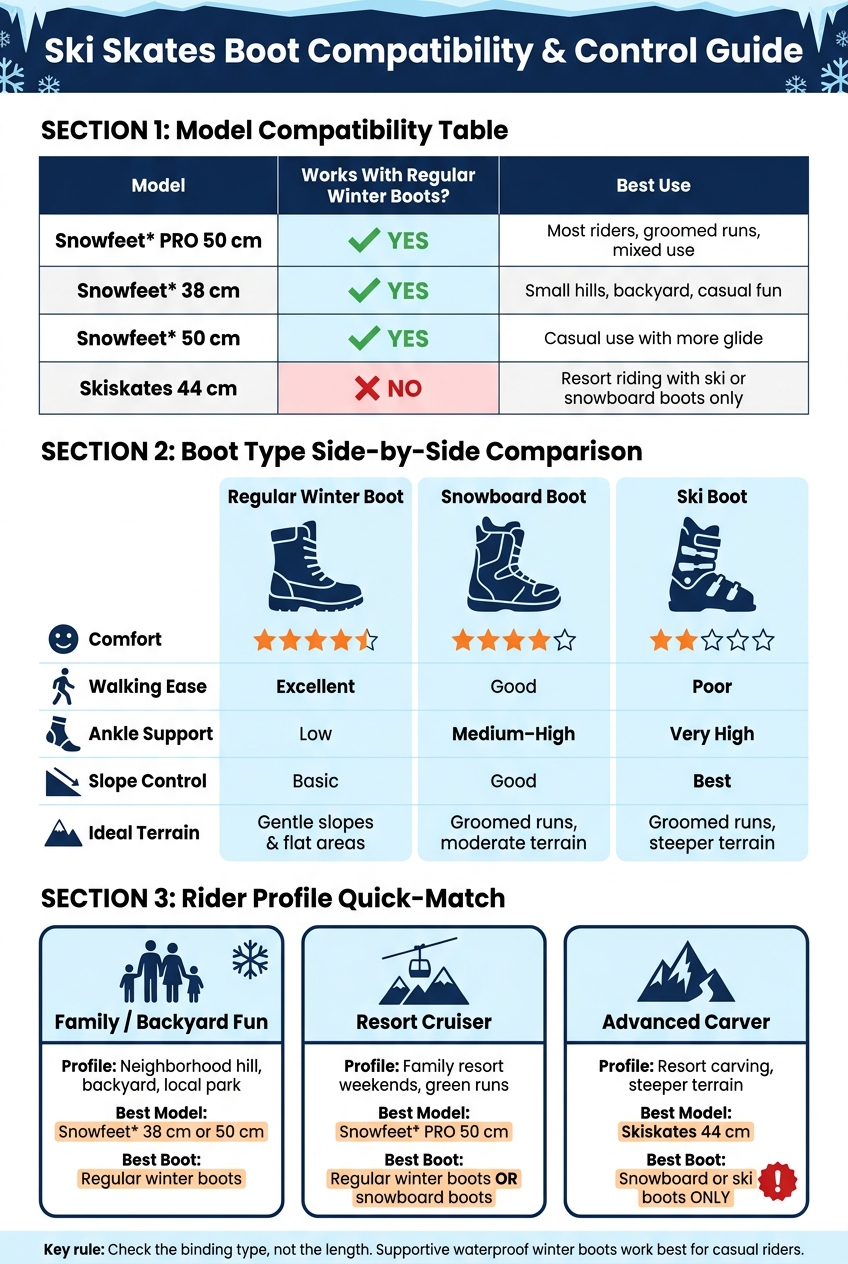
| Model | Regular Winter Boots? | Best Use |
|---|---|---|
| Snowfeet* PRO 50 cm | Yes | Most riders, groomed runs, mixed use |
| Snowfeet* 38 cm | Yes | Small hills, backyard, casual fun |
| Snowfeet* 50 cm | Yes | Casual use with more glide |
| Skiskates 44 cm | No | Resort riding with ski or snowboard boots |
So, if you want the no-fuss route, I’d stick with strap-binding Snowfeet* and a supportive waterproof winter boot. If you want more edge hold and plan to ride harder, move to snowboard boots. And if you’re eyeing Skiskates 44 cm, leave the soft winter boots at home :)
If you want a quick visual before you buy, this video helps explain the boot and binding fit:
Ski Skates Boot Compatibility & Control Guide
The Most Affordable Ski Skate Gear?
Snowfeet* Models That Work With Regular Winter Boots
Snowfeet* PRO 50 cm, 38 cm, and 50 cm work with regular winter boots. These three use adjustable strap-style bindings, so you can secure regular boots without needing a stiff ski-boot sole.
Snowfeet* PRO 50 cm: Best Overall Pick for Winter Boots
If you want the best all-around setup for riding in winter boots, Snowfeet* PRO 50 cm is the top pick. The adjustable bindings fit US sizes 6–13 (EU 38–47), which covers a pretty broad range.
That 50 cm length gives you more contact with the snow, which helps with balance and makes groomed runs feel steadier. It also uses a reinforced base and stronger straps, so the fit feels more locked in when you edge or brake. At $299, it’s the strongest choice for riders who want to stay in regular winter boots.
If that sounds a bit more than you need, the 38 cm and 50 cm standard models are easier, more stripped-back options.
Snowfeet* 38 cm and 50 cm: Easiest Options for Casual Use
The standard 38 cm and 50 cm models are made to keep things simple. Both are small enough to fit in a daypack, which is a nice little bonus if you don’t want to lug gear around all day.
The 38 cm is the better fit for backyard hills, sledding slopes, or days when you’ll be walking almost as much as gliding. It’s the easiest and most laid-back option of the bunch. The 50 cm gives you a smoother, steadier glide, which helps on slightly longer runs.
For families and first-timers, both models tend to feel easier since you can keep wearing familiar boots. That said, boot fit still matters a lot. Even a good model can feel loose if the boot shape isn’t a good match.
Skiskates 44 cm: Better Edge Control, but Not for Regular Winter Boots
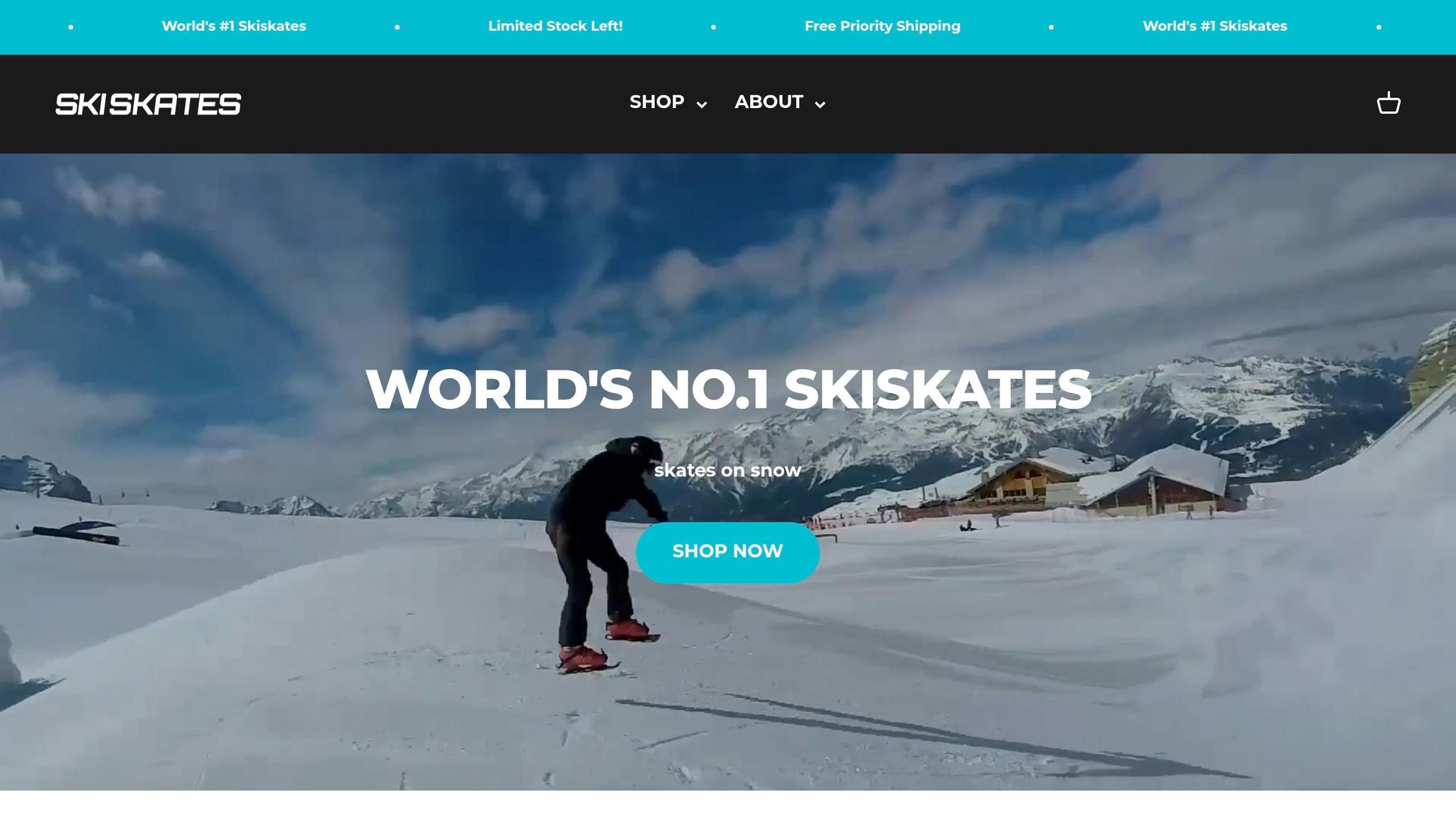
Skiskates 44 cm give you better edge control on groomed runs and feel more like skiing. But there’s a catch: they use bindings made for ski boots or snowboard boots, not regular winter boots.
So, a soft winter boot won’t lock in the way it should. That means the added control only shows up when you use the right kind of boot. If you already own snowboard boots and want a more performance-focused setup, Skiskates 44 cm are the better pick.
From there, boot shape and stiffness play a big part in how secure the setup feels.
What Kind of Winter Boots Actually Work
Snowfeet* strap bindings work with a lot of winter boots. But there’s a catch: the boot needs some structure. A regular winter boot can do the job if it stays locked down in the binding. That’s the whole game here. If the boot moves around, control drops fast.
Boot Types That Give a Secure Fit
The best picks are waterproof, lace-up winter boots with a medium-stiff shaft, solid ankle support, and enough insulation for cold snow. Snowfeet* recommend waterproof boots that keep the ankle locked in place. Supportive winter hiking boots are often a good bet too. Their stiffer midsoles and snug lacing help cut heel lift and give you better edge control.
How the Boot Should Fit Inside the Binding
Getting the right boot type is step one. After that, fit matters just as much.
The boot should sit flat in the binding, and the straps should tighten firmly over the instep. A couple of quick checks can tell you a lot:
- Your heel shouldn’t lift when you flex forward.
- You shouldn’t be able to twist the boot inside the binding.
Soft insulated boots, puffy quilted styles, and boots with a heavily rounded sole are usually a bad match. They tend to move inside the binding when pressure hits, which makes edge control worse and stopping less steady. If you have to crank the straps to the last notch just to make the boot feel snug, that boot isn’t a good fit for the binding.
When Snowboard Boots Are the Better Choice
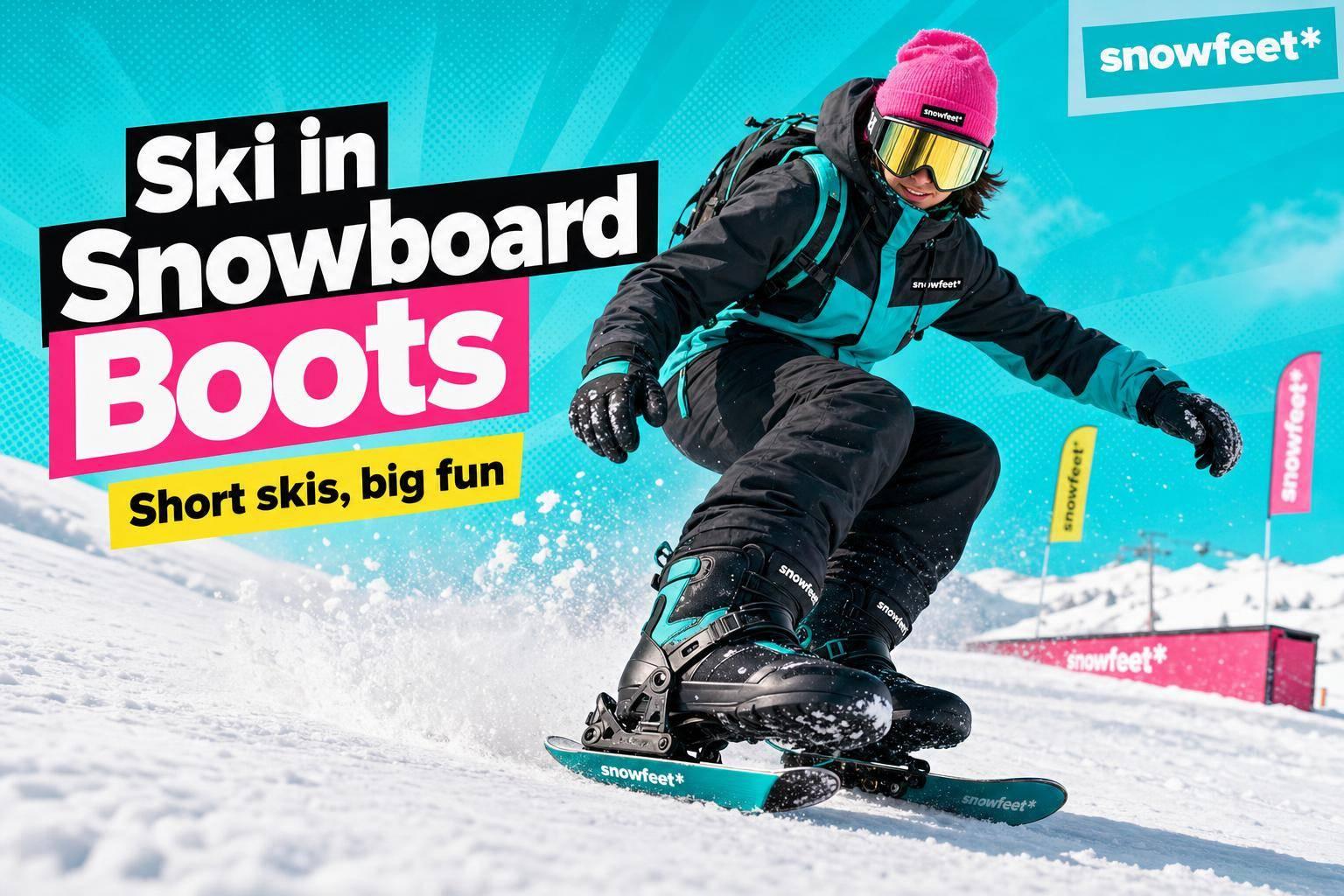
If you want more support or you plan to ride faster, snowboard boots are the next move. They have stiffer cuffs to limit ankle motion, structured liners that hold your foot in place, and flat soles that sit cleanly in the binding.
If you plan to ride Snowfeet* PRO 50 cm on groomed runs or at higher speeds, snowboard boots are usually the better pick. Regular winter boots do not work with Skiskates 44 cm, so use the ski-boot or snowboard-boot version instead.
That comfort-versus-control trade can make a big difference, so it’s worth sizing up before you choose your setup.
sbb-itb-17ade95
Comfort vs. Control: Main Trade-Offs by Boot Type
What Regular Winter Boots Give You
Yes - regular winter boots work. But you do give up some control.
For casual Snowfeet* use, regular winter boots are the easiest pick. They make a lot of sense for family outings, small local hills, backyard laps, or those mixed days when you're walking as much as you're riding. That’s where Snowfeet* feels extra simple and fun.
Compared with long skis and stiff ski boots, regular winter boots let you stick with one pair of footwear from the parking lot to the snow. No boot shuffle. No clunky walk. Just gear up and go.
That said, comfort and convenience come with a catch: less support and less precise handling.
What You Give Up in Support and Precision
Here’s the main trade-off. Softer boots move more inside the binding, which makes it harder to keep steady edge pressure through a turn. On short skates, that matters even more. Why? Because small shifts in body position affect steering much more directly than they do on longer skis.
So, even a little heel lift or side-to-side movement can change how the ride feels. Stopping may feel less sure, especially on hardpack or icy snow.
Softer boots flex more. Stiffer boots give better support and steadier ankle control. Fit matters too. If the boot feels loose, you lose stability and power transfer.
Regular winter boots are still a good match for gentle slopes and easy speeds. But once you move onto steeper runs or firmer snow, the lower ankle support and weaker power transfer can wear you out faster and leave you with less room for error.
Regular Winter Boots vs. Snowboard Boots vs. Ski Boots
Here’s the quick side-by-side:
| Factor | Regular Winter Boots | Snowboard Boots | Ski Boots |
|---|---|---|---|
| Comfort | ★★★★★ | ★★★★☆ | ★★☆☆☆ |
| Walking ease | Excellent | Good | Poor |
| Ankle support | Low | Medium–High | Very High |
| Slope control | Basic | Good | Best |
| Ideal terrain | Gentle slopes, flat areas | Groomed runs, moderate terrain | Groomed runs, steeper terrain |
Ski boots give you the most precision and the best downhill control. But, uh, they’re also the least fun to walk around in all day.
Snowboard boots sit in the sweet spot. They offer more support than regular winter boots and are still much easier to walk in than ski boots.
Regular winter boots work best for easy, casual riding. Snowboard boots make more sense when speed picks up or terrain gets tougher. So the best setup depends on where you ride, how hard you push, and how much comfort you want to keep :)
Best Setup for Most Riders
Match Your Model to Where and How You Ride
If you already know your boot type, terrain is the best way to pick the right Snowfeet* model.
| Rider Profile | Best Model | Best Boot |
|---|---|---|
| Neighborhood hill, backyard, local park | Snowfeet* 38 cm or 50 cm | Regular winter boots |
| Family resort weekends, green runs | Snowfeet* PRO 50 cm | Regular winter boots or snowboard boots |
| Resort carving, steeper terrain | Skiskates 44 cm | Snowboard or ski boots only |
That split makes things pretty easy: strap-on Snowfeet* models work with casual winter boots, while faster resort riding calls for stiffer boots.
For mellow slopes and casual days, Snowfeet* PRO 50 cm is the best all-around choice. The 50 cm platform feels steadier than the 38 cm, which helps newer riders feel less twitchy.
For the most laid-back use - small sledding hills, backyard laps, or days out with young kids - Snowfeet* 38 cm or 50 cm keep the setup simple. No extra fuss. Just clip in and go have some fun :)
Skiskates 44 cm are not compatible with regular winter boots. They’re made for snowboard or ski boots only. Don’t mix them with casual boots.
Key Points to Remember Before You Buy
Before you buy, check these points:
- Regular winter boots fit Snowfeet* 38 cm, 50 cm, and PRO 50 cm, not Skiskates 44 cm.
- Check the binding type, not the length. Always confirm the manufacturer’s size range in US sizing before ordering.
- Supportive, waterproof winter boots are the best starting point for casual riders. Skip soft fashion boots, low-cut sneakers, and loose "moon boots."
- Snowboard boots give better slope control and make more sense as terrain gets steeper or speed picks up.
- Skiskates 44 cm require snowboard or ski boots. Regular winter boots lead to less control and a poor fit.
FAQs
How tight should my boots fit in the bindings?
Your boots should fit snug and secure in the Snowfeet* bindings, with little to no extra movement. Tighten the adjustable straps for a closer fit and better control, especially if you want more stability.
If you’re wearing bulkier snowboard boots, loosen the straps or swap in the extra-long straps on Standard and Pro X models. Regular winter boots can work for casual use, but snowboard boots tend to give you a more secure fit and better ankle support.
Are regular winter boots safe on icy slopes?
Yes - if you’re using the right gear.
Regular skis need stiff, sport-specific boots. But Snowfeet models like the 38 cm Mini Ski Skates and 50 cm PRO are built to work with standard waterproof winter boots. That makes things a lot simpler. No need to hunt down a full ski setup just to get started.
If you’ll be riding on icy terrain, snowboard boots are often the better pick. They give you more ankle support, more flex, and a snugger fit. That extra hold can make a big difference when the surface feels slick.
Snowfeet Skiskates also use metal edges, which help with control and stopping on icy or groomed snow. In plain English: they give you more bite when the snow gets hard and slippery.
When should I switch to snowboard boots?
Switch to snowboard boots when you need more ankle support, more warmth, and better board control than regular winter boots can give you. That matters most on ski slopes and in the terrain park, where a loose fit can feel sketchy fast.
Regular waterproof winter boots are fine for casual fun. If you're sledding, messing around in the backyard, or walking light trails, they usually do the job.
But once you move onto groomed runs or start trying tricks, snowboard boots are the better call. They fit snugger, feel more stable, and give you better control over the board.











Hinterlassen Sie einen Kommentar
Diese Website ist durch hCaptcha geschützt und es gelten die allgemeinen Geschäftsbedingungen und Datenschutzbestimmungen von hCaptcha.