




















Short skis are changing how we enjoy the slopes. They're compact, lightweight, and perfect for handling crowded ski resorts, tight trails, and terrain parks. Unlike long skis, which can feel bulky and slow, short skis offer better control, sharper turns, and less fatigue. Plus, they’re easy to carry - many models fit in a backpack!
Key Takeaways:
- Short skis (38–120 cm) are ideal for modern resorts with crowded slopes and terrain parks.
- They’re lighter, easier to turn, and less tiring than long skis.
- Models like Snowfeet’s Skiblades (65 cm) and Skiskates (44 cm) work with regular boots and start at $575.
- Perfect for beginners and pros, they’re quick to learn and fun to use.
If you’re tired of lugging around heavy gear or struggling with wide turns, short skis might be your next favorite thing on the mountain. Let’s dive into why they’re becoming so popular.
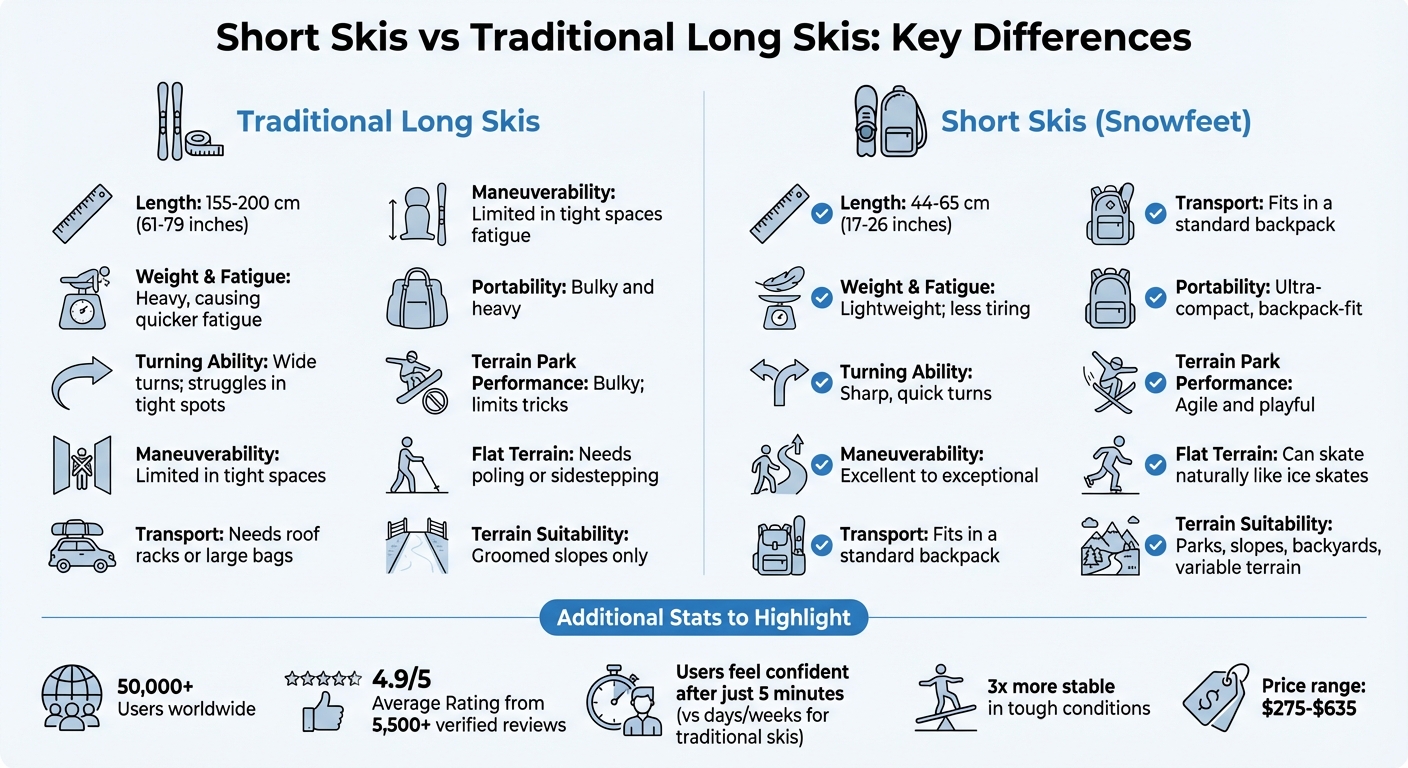
Short Skis vs Traditional Long Skis Comparison Chart
Problems with Traditional Long Skis at Modern Resorts
Crowded Slopes Are Tough with Long Skis
On busy slopes, long skis can feel like a liability. They force you into wide turns, making quick direction changes nearly impossible. Imagine trying to dodge another skier - those extra-wide turns mean you’re putting in more effort to carve, and it’s just not quick enough to avoid collisions or near-misses. Frustrating, right?
And let’s not forget the physical toll. Long skis are heavier, which means your legs and joints tire out faster. Plus, their turning limitations make them a poor choice for terrain parks, where agility is everything.
Long Skis Fall Short in Terrain Parks and Tight Spots
Terrain parks are where long skis really show their weaknesses. Their extra weight and length make the quick, precise movements needed for jumps and tricks a lot harder. The same goes for tight, tree-lined trails or mogul fields. Long skis just don’t give you the control you need for sharp, quick turns, leaving you struggling to navigate smoothly.
"I hate getting stuck on a hill in skis because they're so long and bulky. Since these are shorter, you can just skate right up." - Sophia Kane
The bulkiness becomes even more frustrating on flat sections or uphill transitions. Long skis make it tough to skate naturally, turning what should be a fun run into an exhausting shuffle. Short skis, on the other hand, solve this problem with their lightweight, compact design that feels more responsive.
Transporting and Storing Long Skis Is a Hassle
The challenges don’t end when you’re off the slopes. Transporting long skis is a headache. They don’t fit in a standard backpack, and good luck squeezing them into a car trunk without a roof rack. Families heading to ski resorts often find themselves wrestling with oversized gear bags and figuring out specialized storage solutions. It’s a hassle no one really wants.
Short skis, however, are a game-changer here. Their compact, lightweight build means they’re easy to carry and store, whether you’re navigating the resort or packing up for the trip.
| Aspect | Traditional Long Skis | Short Skis |
|---|---|---|
| Weight & Fatigue | Heavy, causing quicker fatigue | Lightweight; less tiring |
| Turning Ability | Wide turns; struggles in tight spots | Sharp, quick turns |
| Transport | Needs roof racks or large bags | Fits in a standard backpack |
| Terrain Park Performance | Bulky; limits tricks | Agile and playful |
Benefits of Short Skis for Modern Ski Resorts
Better Maneuverability: Quick Turns and Tight Control
Short skis have a big edge when it comes to navigating crowded slopes and tight spaces. Unlike traditional long skis, which need wide arcs for turning, short skis allow for sharp, quick movements with much less effort. This makes them perfect for terrain parks and mogul fields, where long skis can feel unwieldy and slow to respond. Plus, their lightweight design means your legs won’t tire out as quickly, letting you enjoy longer sessions on the slopes. And as an added bonus, their compact size makes them easier to transport - something we’ll dive into next.
"Going fast I was in complete control of every move, turns, and stops." - Daniel Siouffi
Easy to Carry: Compact and Lightweight
Hauling bulky gear? Not with short skis. Models like Snowfeet* Skiblades and Skiskates are so compact they can fit into a standard backpack. No need for roof racks or oversized bags - they’re that easy to manage. And since they’re so much lighter than traditional skis, even carrying them from your car to the lift won’t leave you feeling worn out.
Work Well on Different Terrain and Snow Conditions
Short skis aren’t just about agility and convenience - they’re also incredibly versatile. They shine on groomed runs and hard-packed snow, where their responsive design really stands out. But they’re not limited to the slopes. Whether you’re hitting terrain parks, hiking trails, backyard hills, or even sledding spots, short skis adapt easily. Unlike traditional skis, they let you skate naturally on flat terrain or small inclines without needing to pole, making them a great all-around option.
| Feature | Traditional Long Skis | Short Skis (Snowfeet*) |
|---|---|---|
| Maneuverability | Wide turns; struggles in tight spots | Sharp, quick turns with precise control |
| Weight & Fatigue | Heavy; tires you out faster | Lightweight; reduces fatigue |
| Portability | Requires roof racks or large bags | Fits in a backpack |
| Flat Terrain | Needs poling or sidestepping | Can skate naturally like ice skates |
Why Snowfeet* Beats Traditional Ski Gear
Snowfeet* Skiblades vs. Traditional Long Skis
Traditional skis are typically between 155 cm (about 61 inches) and 200 cm (roughly 79 inches) long. That’s quite a bit more than Snowfeet* products. Snowfeet* Skiblades measure just 65 cm (approximately 26 inches), and their Skiskates are even more compact at 44 cm (around 17 inches). This smaller size makes them easier to carry and far more maneuverable.
Unlike traditional skis, which require bulky bags and dedicated storage, Snowfeet* products fit neatly into a regular backpack. That means you can easily carry them through crowded ski lodges, onto shuttles, or even stash them in your car without hassle. On the slopes, their shorter length gives you quick, sharp control, especially in tight terrain parks or on busy runs. You don’t need the wide turns that long skis demand.
| Feature | Traditional Long Skis | Snowfeet* Skiblades (65 cm) | Snowfeet* Skiskates (44 cm) |
|---|---|---|---|
| Length | 155–200 cm (61–79 in) | 65 cm (26 in) | 44 cm (17 in) |
| Maneuverability | Limited in tight spaces | Excellent | Exceptional |
| Portability | Bulky and heavy | Backpack-fit | Ultra-compact, backpack-fit |
| Terrain Suitability | Groomed slopes only | Parks, slopes, backyards | Parks, tight slopes, variable terrain |
This compact design doesn’t just make Snowfeet* easier to handle - it also enhances performance and opens up a more dynamic skiing experience.
Snowfeet* Skiskates: A More Fun Option
Skiskates bring a whole new vibe to snow sports. At just 44 cm long, they feel more like skating than skiing. Plus, they’re compatible with your regular winter or snowboard boots, so there’s no need to invest in stiff, specialized ski boots. This makes them a fantastic pick for anyone curious about winter sports but hesitant to spend big on gear.
They really shine on flat areas or gentle slopes where traditional skis can feel awkward. Instead of struggling with poles or side-stepping, you can simply “skate” forward. This makes Skiskates a blast in terrain parks, where quick spins, tricks, and sharp turns are the name of the game. With over 50,000 users worldwide and an average rating of 4.9/5 from more than 5,500 verified reviews, it’s clear that people love the freedom and fun they bring. Their playful design also makes them a great way to ease into winter sports.
Short Skis Make Winter Sports Easier to Learn
Snowfeet* products are perfect for beginners, offering a much easier learning curve compared to traditional skis. While mastering long skis can take days or even weeks of lessons, Snowfeet* users often feel confident after just five minutes. The shorter design reduces the strain on your knees when carving or turning, making the experience less physically demanding. That’s a win for both first-timers and seasoned skiers looking to conserve energy during long days on the mountain.
Older skiers, in particular, benefit from the stability and control of shorter skis. At lower speeds, they help compensate for slower reaction times and reduce the risk of falls. Because they’re lightweight and responsive, Snowfeet* products let you stay in control without wearing out your legs. Designed for everyone from kids to seniors, Snowfeet* fills a gap that traditional ski companies have largely ignored.
"These skiblades are so much fun and easy to control. Never going back to regular skis." - Andrew B., Verified User
Next, let’s dive into how Snowfeet* has models to match every resort condition.
sbb-itb-17ade95
Short Skis vs. Long Skis
Snowfeet* Models for Different Resort Conditions
Snowfeet* has crafted three distinct models of short skis, each designed to tackle specific resort conditions. Whether you're into carving down groomed trails, weaving through crowded slopes, or looking for gear that can handle long days on the mountain, there's a Snowfeet* option for you.
Snowfeet* Skiblades (65 cm): Versatility and Precision
Measuring 65 cm (26 in) and built with a durable wood core and parabolic side cut, the Skiblades deliver exceptional control. They shine on groomed runs, moguls, and even terrain parks, offering precision without the bulk of traditional skis. These skis are also equipped to handle light powder up to 4 inches deep, making them great for varying conditions. Metal edges ensure a solid grip on icy patches, giving you confidence when the snow gets tricky.
With a 97% 5-star rating and over 66 verified reviews, these are a favorite among skiers. Starting at $635, they’re the premium choice in the Snowfeet* lineup for those who prioritize performance and reliability.
Snowfeet* Skiskates (44 cm): Compact and Fun
At just 44 cm (17 in), the Skiskates give you a unique snow experience that feels more like skating. Their compact size is perfect for tight spaces like crowded lift lines, narrow trails, or terrain parks. Thanks to their lightweight wood core, they’re easy to carry and durable enough for regular use.
Freestyle enthusiasts love these for pulling off tricks, catching air, and riding rails in terrain parks. Plus, their skating-style movement eliminates the need for poles, letting you glide effortlessly over flat areas without getting stuck. Starting at $575, these are a hit with beginners and casual skiers who want something portable and fun. Most users feel comfortable with them in no time.
Snowfeet* PRO (50 cm): Balanced Performance and Durability
The PRO model, at 50 cm (20 in), strikes a balance between agility and stability. Featuring a fiberglass core, it’s built to withstand frequent use while maintaining the maneuverability that short skis are known for. Whether you’re navigating varied terrain or sticking to groomed runs, the PRO model handles it all with ease.
Priced at $275, this model is a fantastic choice for intermediate skiers seeking stability or beginners looking for forgiving gear to help them improve. It’s durable, versatile, and perfect for modern resort skiing.
Each Snowfeet* model is thoughtfully designed to meet the demands of today’s ski resorts, proving why short skis are becoming the go-to choice for winter sports enthusiasts.
Conclusion: Short Skis Are Changing the Game in Winter Sports
Today's ski resorts are all about versatility and agility. With crowded slopes, terrain parks, and ever-changing snow conditions, skiers need gear that's easy to handle and adaptable - and that's exactly where short skis shine. Unlike traditional long skis, short skis like Snowfeet* offer quick turns, effortless transport, and impressive all-around performance.
Snowfeet* has already proven its worth, with more and more skiers embracing this modern approach to winter gear. Whether you're weaving through tight lift lines, grinding rails in the park, or just want gear that fits neatly into your backpack, short skis address challenges that older equipment just can’t.
With three Snowfeet* models designed for various resort conditions, there's something for everyone. Advanced design features make these skis up to three times more stable in tough conditions compared to traditional options. And don’t worry - choosing shorter skis doesn’t mean giving up performance. In fact, they enhance it. You’ll ski longer with less fatigue and reduced strain on your knees, especially in tricky spots like bumps or tree runs.
The trend is clear: skiers of all levels, from experts to intermediates, are moving toward mid-to-short lengths for better comfort and adaptability. Snowfeet* is leading this evolution, tackling the limits of traditional skis and turning every slope into a playground for precision and fun. Ready to upgrade your ride? Snowfeet* is redefining what winter sports can be, one agile turn at a time.
FAQs
Why are short skis better for modern ski resorts than traditional long skis?
Short skis, like Snowfeet's Skiblades and Skiskates, are shaking things up at ski resorts in the best way. Thanks to their compact and lightweight design, they’re super easy to carry around - yep, they’re small enough to slip into a backpack! And their shorter length? That means you can make sharper, quicker turns, which is a huge plus when you're weaving through busy slopes, pulling off tricks in terrain parks, or handling icy patches like a pro.
For beginners, short skis are a dream come true. They’re easier to control and make picking up the basics much faster compared to traditional long skis. Whether you’re cruising down groomed trails or testing your limits on tricky terrain, Snowfeet's short skis bring a whole new level of versatility and fun to the mountain. They're the perfect fit for the fast-paced vibe of today’s ski resorts.
Are short skis good for beginners, and how quickly can you learn to use them?
Short skis are a great option for beginners because they’re lightweight and compact, usually measuring between 15 and 47 inches. Their smaller size makes them easier to handle, so new skiers can focus on balance and steering without the added difficulty of managing long, heavy skis. Snowfeet’s 15-inch Skiskates and 26-inch Skiblades are especially beginner-friendly, helping most people pick up basic turns in just a few hours.
Compared to traditional skis or snowboards, which can take days to feel comfortable with, short skis let beginners build confidence much faster. Their shorter length means less effort when turning and better control overall, making the learning process smoother and more enjoyable. On top of that, Snowfeet’s lightweight designs - like the 5-pound Skiblades - are super easy to carry, saving you the hassle of lugging around heavy gear.
If you’re just starting out with winter sports, short skis can make your first day on the slopes both fun and rewarding, giving you a quicker and more forgiving way to learn.
How well do short skis like Snowfeet perform on different terrains and snow conditions?
Short skis, like Snowfeet’s 38–44 cm Skiskates and 65–99 cm Skiblades, are built to handle a mix of terrains and snow conditions with ease. Their small size and lightweight design make them super nimble, giving you sharp turns and precise control - even on those slick, icy groomers.
With a twin-tip design, these skis are ideal for weaving through busy slopes, hitting terrain parks, or cruising through softer snow. Whether you're carving down steep trails or exploring different areas of the resort, Snowfeet short skis bring a level of versatility and fun that long skis just can’t quite match.













Leave a comment
This site is protected by hCaptcha and the hCaptcha Privacy Policy and Terms of Service apply.