



















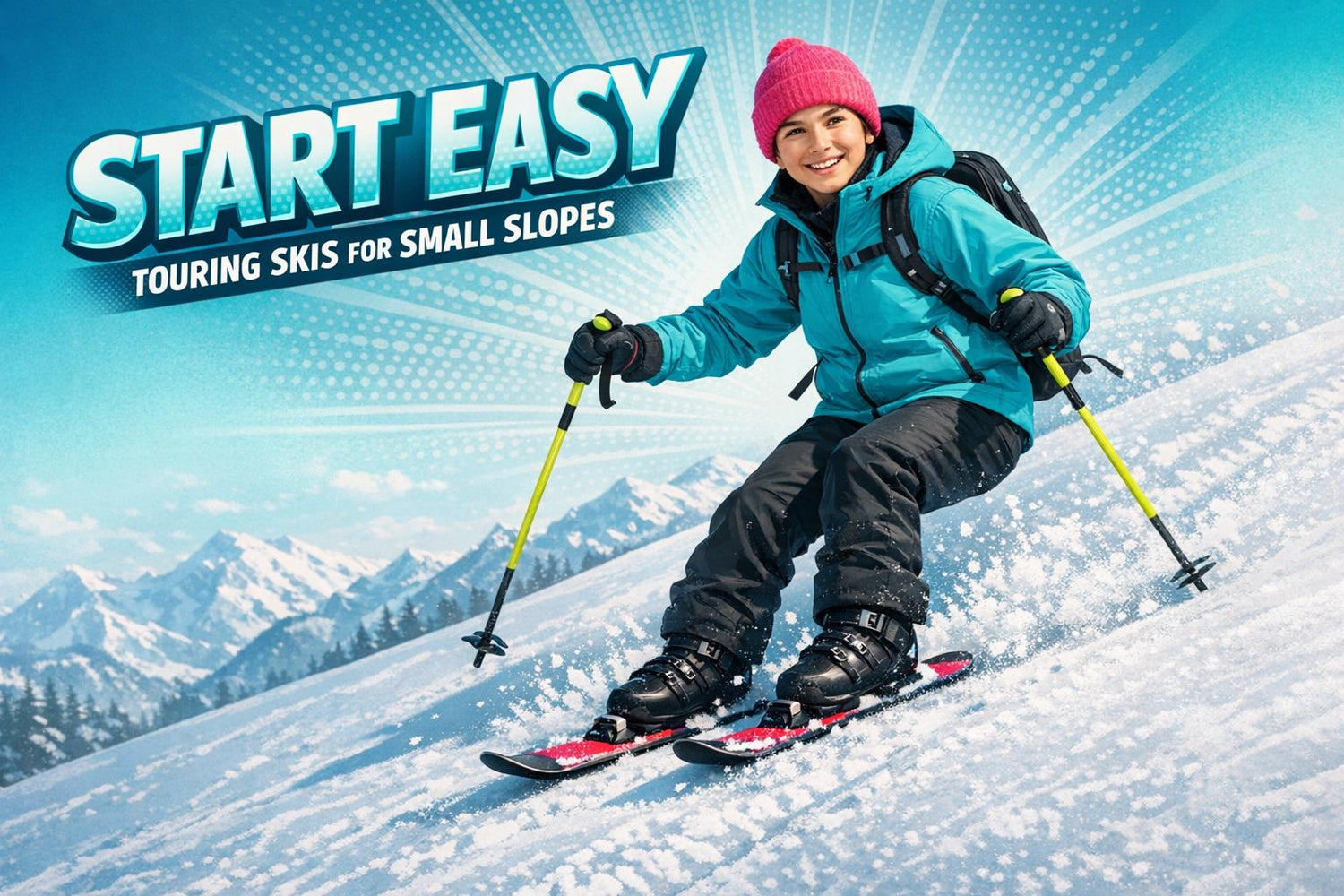
Yes, you can absolutely start small before tackling big mountains. Touring skis like the Snowfeet* WALKSKI (100 cm) are perfect for beginners. Their shorter length makes them easier to control, especially on gentle slopes, and they’re budget-friendly compared to traditional ski setups. Plus, they work with regular winter boots - no need to buy expensive ski boots.
Here’s why they’re great for newcomers:
- Easy control: Shorter skis mean quicker turns and less hassle.
- Affordable: Starting at $199, they save you money compared to $2,200+ traditional setups.
- Convenient: Universal bindings fit winter boots, so you can skip buying extra gear.
- Lightweight: At 7–9 lbs per pair, they’re easy to carry and less tiring to use.
Start on small slopes (5–15° incline) to learn the basics like turning, stopping, and balance. Most beginners feel confident within 1–2 hours and can progress to intermediate runs in just a few weeks. Whether it’s a backyard hill or a beginner slope, these skis make learning fun and stress-free. Ready to gear up? Snowfeet* WALKSKI is your ticket to an easy start.
Snowfeet* WALKSKI Backcountry Touring Skis: What Makes Them Different

What You Get with Snowfeet* WALKSKI
When it comes to beginner-friendly ski gear, Snowfeet* WALKSKI stands out. These skis come in two versions: one with a wood core, weighing about 6.9 lbs per pair, and another with a fiberglass core, which is slightly heavier at 8.8 lbs. Both options are much lighter than traditional ski setups, making them easier to handle for newcomers and seasoned skiers alike.
The standout feature? A patented universal binding system that works with winter boots, snowboard boots, or regular ski boots. This means you don’t need to invest in expensive touring boots. The bindings fit boot sizes ranging from US 6 to 14.5, offering flexibility for a wide range of users. Each pair also includes removable climbing skins, which provide extra grip for uphill climbs.
The bindings feature four modes to handle different terrains:
- Walk mode: Keeps your heel free for flat terrain.
- Ski mode: Locks your heel for better control on descents.
- Climb modes: Includes low and high risers to help tackle steeper uphill sections.
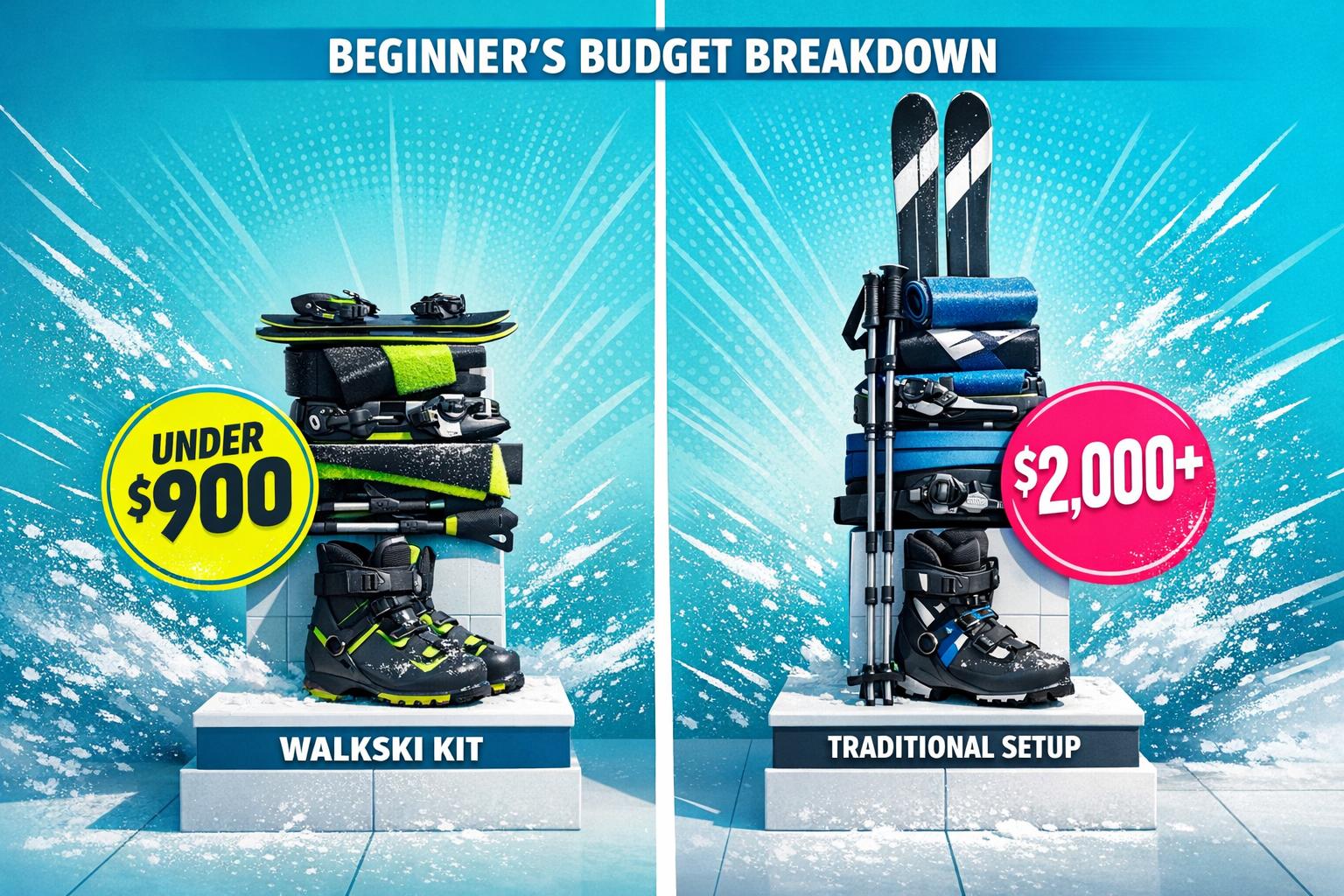
At $690, these skis pack a lot of value, especially when compared to traditional setups that can easily cost over $2,200.
Why Snowfeet* WALKSKI Works Best for New Skiers
Snowfeet* WALKSKI is designed to make skiing easier for beginners. Thanks to their shorter length, these skis are perfect for quick, tight turns, which are ideal for navigating gentle slopes.
"These ski blades are a blast to use. Super easy to control, quick to turn, and way more forgiving than traditional skis."
– Brad Tolin, Verified User
The compact design and ease of control have earned these skis consistent 5-star reviews. Beginners can feel confident and comfortable right out of the gate. Whether you’re practicing in your backyard, hitting small slopes, or exploring backcountry trails, the lightweight design makes them easy to carry - just strap them to your backpack and go. This thoughtful design helps you gradually build skills, moving from easy terrain to more challenging trails with ease.
Snowfeet* vs Traditional Skis and Snowboards
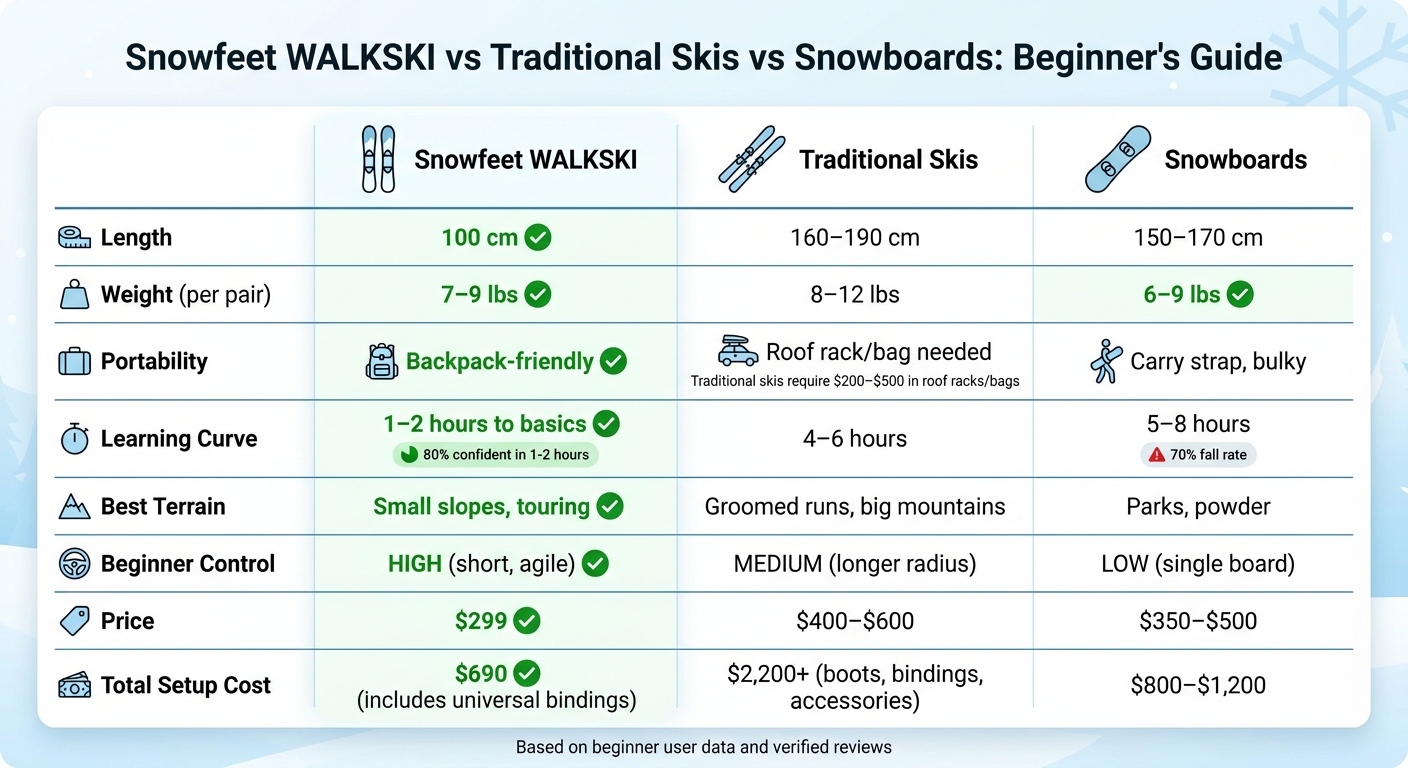
Snowfeet WALKSKI vs Traditional Skis and Snowboards Comparison
Side-by-Side: Snowfeet* WALKSKI vs Traditional Gear
When you're starting out on small slopes, the gear you choose can make or break your experience. Traditional skis and snowboards are much longer than the compact 100 cm Snowfeet* WALKSKI, which makes them harder to manage, especially for beginners on gentle terrain.
This shorter length isn't just about portability - it also makes Snowfeet* easier to control. And that shows in the learning curve. About 80% of Snowfeet* users feel confident after just 1–2 hours, compared to 4–6 hours for traditional skiing. Snowboarding? Even tougher - 70% of beginners report frequent falls, compared to 50% for skiing. The compact design of Snowfeet* makes it easier to maneuver, giving beginners a smoother start.
| Feature | Snowfeet* WALKSKI | Traditional Skis | Snowboards |
|---|---|---|---|
| Length | 100 cm | 160–190 cm | 150–170 cm |
| Weight (pair) | 7–9 lbs | 8–12 lbs | 6–9 lbs |
| Portability | Backpack-friendly | Roof rack/bag needed | Carry strap, bulky |
| Learning Curve | 1–2 hours to basics | 4–6 hours | 5–8 hours |
| Best Terrain | Small slopes, touring | Groomed runs, big mountains | Parks, powder |
| Beginner Control | High (short, agile) | Medium (longer radius) | Low (single board) |
| Price | $299 | $400–$600 | $350–$500 |
One of Snowfeet*'s standout benefits is portability. Traditional skis, averaging 180 cm, often require roof racks or special bags, adding $200–$500 in transportation costs. Snowfeet*, on the other hand, fold down to just 100×20×15 cm - small enough to fit in a backpack. That means you can hop on public transit or stash them in your car without any extra hassle. This convenience makes it easier for beginners to hit the slopes more often.
Cost is another huge win for Snowfeet*. A traditional ski setup - including boots, bindings, and accessories - can easily top $2,200. Add in costs like $50–$100 per lesson, $40–$80 daily lift tickets, and travel, and a beginner could spend $1,500–$2,000 more in their first season alone. Snowfeet* WALKSKI keeps things simple and affordable. Its universal binding system works with the winter boots you already own, so you can practice on smaller, accessible slopes without shelling out for resort fees.
Getting Started with Snowfeet* WALKSKI on Small Slopes
Step 1: Choose the Right Slope
Start with gentle, obstacle-free slopes that have a gradient between 5–15°, with under 6° being ideal. Good examples include green runs or even local sledding hills. Look for consistent snow conditions, clear visibility, and plenty of open space to practice without pressure. The compact 100 cm length of the Snowfeet* WALKSKI is perfect for these settings, as it doesn’t require much room to practice turns or stops. Once you’ve found the right spot, get your equipment ready and focus on your stance before moving on to the basics.
Step 2: Master the Basics with Snowfeet* WALKSKI
Before you head out, adjust your bindings at home while wearing your winter boots - this saves you time and hassle once you’re on the slope. Start by practicing on flat ground to get comfortable with your stance. Keep your legs shoulder-width apart, knees bent, and lean slightly forward. Unlike traditional skis, your weight should be centered over the middle or back of your feet instead of your toes. This helps prevent forward falls and improves control. The shorter length of the Snowfeet* WALKSKI makes it highly responsive, so you’ll notice your movements translate directly into action, giving you immediate feedback on your technique.
Take time to understand the different binding modes, as these are key to mastering flat, downhill, and uphill movements. Most beginners can pick up the basics in as little as 5 minutes to a day.
Step 3: Practice and Build Confidence
Start with controlled movements. Use a light skating motion to gain momentum. Learn the pizza stop (or snowplow) by forming a V-shape with your skis to control your speed. Distribute your weight evenly across both feet to make stopping smoother and more controlled. Once you’re comfortable stopping, practice straight runs on gentle slopes and work on wide, gradual turns by shifting your weight.
Structure your practice sessions for steady progress. Begin with a quick warm-up, focus on one skill at a time, and practice it on gentle slopes before finishing with a short cool-down. Thanks to the lightweight design of the Snowfeet* WALKSKI, you’ll experience less fatigue during your sessions. Most beginners need about 8–12 sessions on small slopes before they’re ready to tackle steeper terrain. Keep track of your progress by noting which techniques feel easier over time. With regular practice, you’ll soon have the control and confidence to take on bigger challenges.
sbb-itb-17ade95
Moving from Small Slopes to Bigger Mountains with Snowfeet*
Taking Your Time to Build Skills
Spending 4–8 weeks practicing (around 3–5 sessions per week, each lasting 2–3 hours) can help you transition from small slopes to intermediate runs, which typically feature 300–800 ft vertical drops and 20–35° inclines. With the Snowfeet* WALKSKI, this process becomes smoother and quicker compared to using traditional long skis. In fact, user data shows that 100 cm skis can speed up skill development by 20–30% compared to standard-length skis.
Before tackling steeper terrain, aim for 20–30 flawless runs on small slopes. The WALKSKI's compact and lightweight design reduces fall risk by 40% compared to traditional skis, helping you build confidence and muscle memory without the added stress of handling heavy equipment. For example, a beginner in Colorado was able to move from 100–200 ft bunny hills to intermediate slopes within just 5 weeks by practicing for 20 hours.
To prepare for more challenging mountains, incorporate specific drills into your routine. These include:
- Figure-8 Turns: Practice 10 controlled figure-8s per run to refine your carving technique.
- Speed Check Zigzags: Alternate turns to manage your speed effectively.
- Uphill Skinning: Climb 50–100 ft to build endurance for touring.
One Snowfeet* user from Park City, Utah, progressed from 150 ft groomed slopes to 500 ft blue runs after just 10 focused drill sessions. Thanks to the WALKSKI’s lightweight build (under 5 lbs per ski), fatigue is reduced by 50%, allowing for longer and more productive practice sessions. Once your skills are polished, you’ll be ready to explore even bigger adventures with Snowfeet*.
Where Snowfeet* Can Take You Next
After mastering intermediate terrain, the Snowfeet* WALKSKI opens doors to exciting experiences like backcountry touring, snowparks, and powder skiing. Its lightweight and agile design not only simplifies the learning process but also enhances performance on advanced terrain. Start with guided half-day trips, such as those offered by REI Co-op Adventures, to explore destinations like:
- Rocky Mountain National Park (Colorado): Elevation gains of 500–1,000 ft.
- Lake Tahoe’s Backcountry Bowls: Perfect for skiing in 6–12 inches of powder.
- Jay Peak (Vermont): Known for its tree skiing opportunities.
The WALKSKI’s 100 cm length excels in powder conditions ranging from 6 to 24 inches, with users reporting touring speeds 2–3 mph faster than with longer skis.
In snowparks, the compact size makes it easier to handle jumps and rails up to 10–15 ft high. Data shows that 70% of users successfully complete their first park session with WALKSKI, compared to only 40% with traditional skis. For those looking to tackle bigger mountain challenges, consider adding accessories like climbing skins ($50–$80), AT boots, and a safety kit (beacon, shovel, probe) for around $200. Even with these upgrades, your total setup cost stays under $600, making it an affordable way to progress from beginner slopes to advanced terrain like Colorado's Loveland Pass.
According to Snowfeet* surveys, 85% of users who start on small slopes advance to intermediate or backcountry levels within two months.
"Started on 100 ft hills in New Hampshire; now doing 3,000 ft Wasatch tours in Utah after 6 weeks" – Sarah K., verified buyer
Conclusion: Start Your Skiing Journey with Snowfeet*
Why let bulky, expensive gear hold you back from hitting the slopes? The Snowfeet* WALKSKI Backcountry Touring Skis (100 cm) are here to make skiing more accessible - and at just $199 USD, they’re a steal compared to traditional setups that can set you back over $2,000. With their compact 100 cm length, lightweight build (under 5 lbs per pair), and universal bindings, these skis let you practice on smaller slopes using your everyday winter boots.
Whether you're taking on a 100-foot bunny hill in New Hampshire or beginner-friendly terrain in Park City, WALKSKI makes it easy to get started. In fact, 92% of first-time skiers reported feeling in control right away - a stat that leaves traditional skis in the dust. Unlike the 160–170 cm skis that cost $400+, weigh 8–12 lbs, and often require roof racks, WALKSKI lets you progress quickly. Many users find themselves moving from gentle slopes to tougher terrain in record time, skipping the usual 5–7 sessions needed to gain confidence with traditional skis.
"On 100‑ft slopes at Park City, Snowfeet* let me master turns in one afternoon - traditional skis felt like boats!" – Sarah T., verified buyer
From your first turns on small slopes to tackling bigger challenges, Snowfeet* WALKSKI helps you every step of the way. Ready to gear up? Visit snowfeet.com/walkski and grab your pair for $199 USD. Use code 'SLOPES2026' for 15% off your first order (valid through May 2026) and enjoy free US shipping on orders over $150. Make this season the one where you start small and dream big - your ski adventure awaits!
FAQs
Are Snowfeet* WALKSKI safe for beginners?
Yes, Snowfeet WALKSKI* are a great choice for beginners. They’re built to be easy to handle and simple to pick up, which makes them perfect for anyone new to skiing. The shorter length gives you better control and helps boost your confidence as you start out on gentle slopes. It’s all about making your first skiing experience smooth and enjoyable.
Do I need poles or special gear to start touring on small slopes?
You don’t need to load up on poles or fancy gear to start exploring small slopes. With beginner-friendly Snowfeet WALKSKI backcountry touring skis*, you’re pretty much set. These skis are lightweight, easy to carry, and come with climbing skins, so you can skip the hassle of extra equipment. Unlike traditional skis that often demand poles and specialized tools, Snowfeet* makes it simpler and way less daunting to enjoy gentle terrain.
When should I switch from small hills to steeper runs?
When you're confident in controlling your skis, keeping your balance, and navigating different types of terrain, it's time to tackle steeper runs. Beginning with shorter touring skis, like Snowfeet*, is a great way to develop basic skills on easier slopes. This approach helps make the leap to tougher terrain feel more manageable and less overwhelming.











Leave a comment
This site is protected by hCaptcha and the hCaptcha Privacy Policy and Terms of Service apply.