



















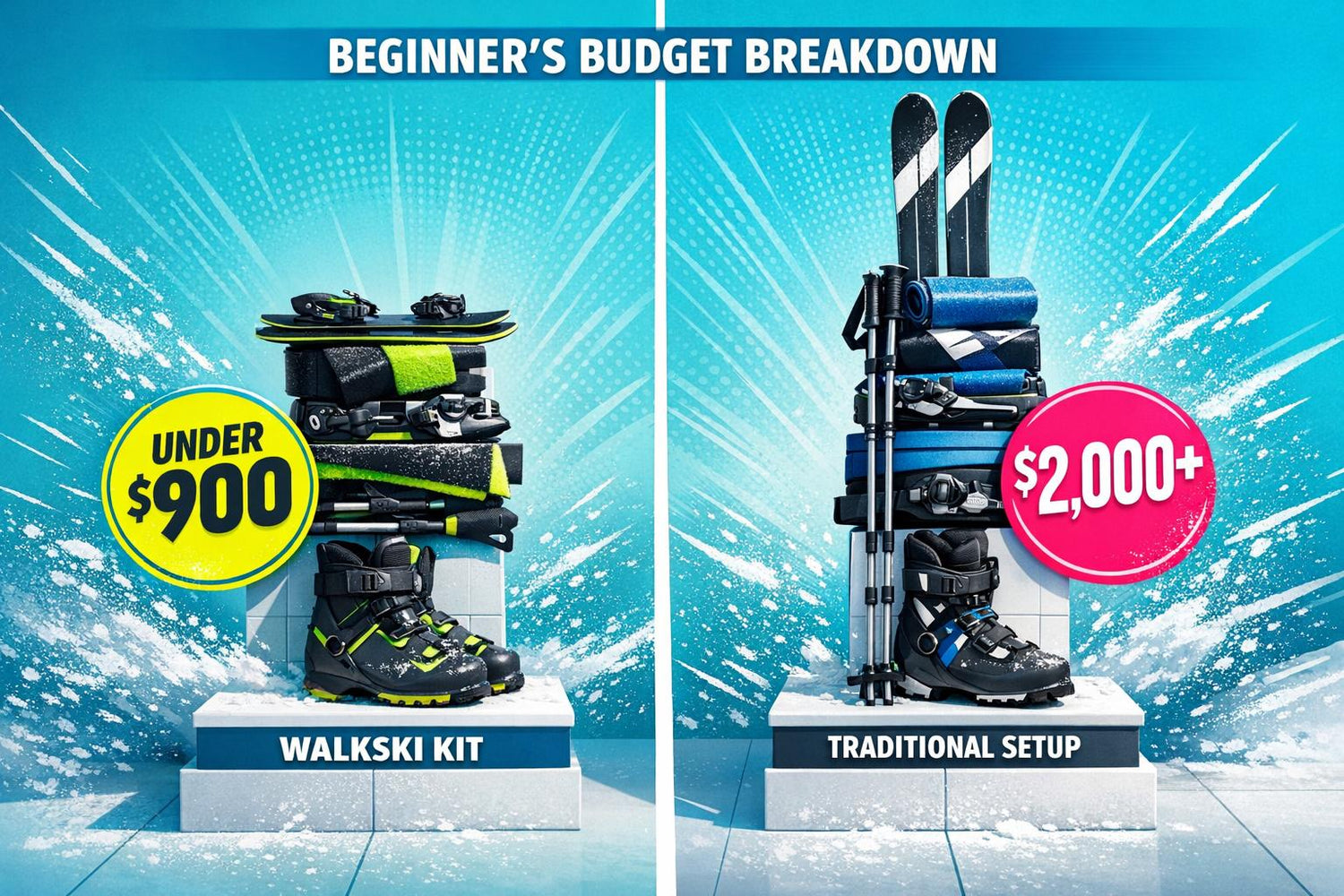
Looking to get into backcountry touring but worried about the cost? Here's the deal: a traditional touring setup can cost anywhere from $2,000 to $4,500, depending on the gear and safety equipment you choose. But if you're a beginner or on a budget, there's a clever alternative: the Snowfeet* WALKSKI, which gives you everything you need for $690 to $750 - a fraction of the cost.
Key Takeaways:
- Traditional Setups: Expect to pay $1,380–$1,900 for entry-level gear or $2,000–$2,700 for mid-range gear. Add $330–$560 for safety essentials like an avalanche beacon, probe, and shovel.
- Snowfeet* WALKSKI: Includes skis, universal bindings (work with boots you already own), and skins for $690–$750. Total cost with poles and safety gear? Under $900.
- Why Snowfeet* is Cheaper: No need for specialized boots ($500+), and the compact 100 cm skis are lighter, easier to transport, and beginner-friendly.
In short, if you're looking for a simple, budget-friendly way to hit the backcountry, Snowfeet* WALKSKI might be the way to go. Let’s break it all down.
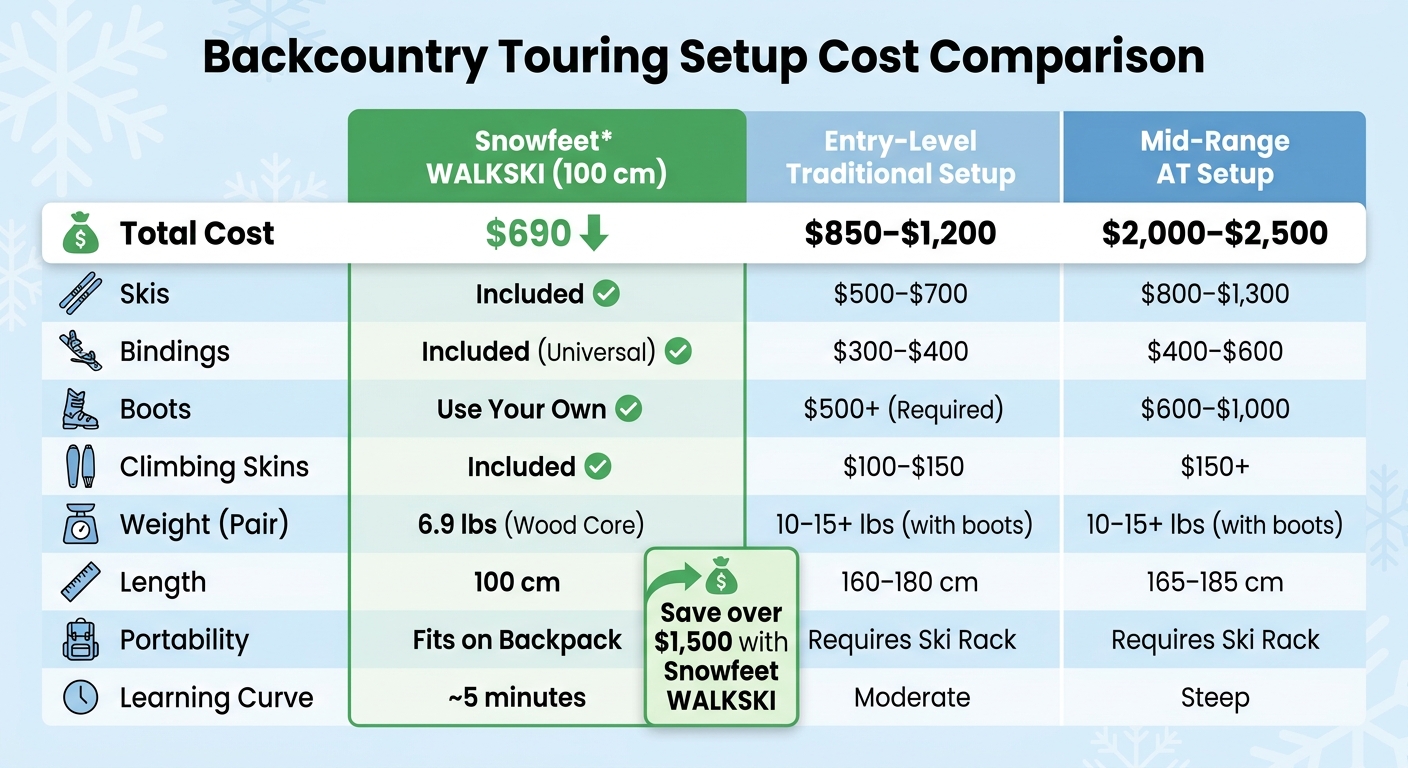
Backcountry Touring Setup Cost Comparison: Snowfeet WALKSKI vs Traditional Gear
Traditional Touring Setup Costs
Entry-Level Setup Costs
If you're just starting out, expect to spend on the basics like touring skis ($500–$600), touring boots ($400–$550), AT bindings ($300–$450), climbing skins ($120–$150), and adjustable poles ($60–$150). Altogether, you're looking at a total cost between $1,380 and $1,900.
Some retailers offer package deals that can knock off $200–$500, and they may throw in services like ski mounting or boot heat molding. This is a great way to get started without breaking the bank, though mid-range gear can quickly raise the stakes.
Mid-Range Setup Costs
For those wanting to upgrade, mid-range gear comes with a higher price tag. Here's the breakdown: touring skis will cost $700 to $900, boots range from $600 to $800, bindings are $500 to $700, climbing skins are $160 to $200, and poles hover around $100. That brings your total to anywhere between $2,060 and $2,700.
Mid-range gear isn't just about the price - it also delivers better performance. For example, boots in this range offer 40–70° of motion and are made from lighter materials like Grilamid or carbon fiber. Bindings often feature DIN-certified release systems, enhancing both safety and performance. As Cripple Creek Backcountry notes:
"To get into your perfect first ski touring setup, you should expect to pay $2000-$2500".
The Smarter Play Editorial Team adds:
"Weight is the currency of the backcountry, and every gram matters when you're climbing 4,000 vertical feet under your own power".
Additional Gear Expenses
Beyond the core setup, there's more to consider. Essential safety gear like an avalanche beacon ($250–$400), probe ($40–$80), and shovel ($40–$80) adds another $330 to $560 to your budget. For added safety, some skiers opt for airbag packs, which cost between $400 and $1,200 and have been shown to reduce burial rates by about 50%.
You'll also need a touring pack ($150–$300), and don't forget ongoing maintenance costs like ski tuning, replacing skin glue, and swapping out beacon batteries. When you add it all up, a fully equipped backcountry setup - including safety gear and apparel - can range from $2,000 to $4,500.
Compared to these figures, Snowfeet* stands out as a more budget-friendly option for those looking to save without sacrificing fun.
Snowfeet* WALKSKI Backcountry Touring Skis: Budget Option
Affordable and Simple Touring Setup
The Snowfeet* 100 cm WALKSKI makes backcountry touring way more budget-friendly. Priced between $690 and $750, this setup includes skis, a patented universal binding system, and removable climbing skins - all in one package. That means no need to spend extra on separate bindings or skins. Compare that to traditional touring setups, where you'd need skis, AT bindings (which can run $300 to $700), skins, and specialized boots - not to mention mounting fees. The WALKSKI’s integrated multi-mode binding takes care of all your touring needs and can save you over $1,500. Snowfeet* sums it up perfectly:
"Forget expensive, single-purpose ski boots. Our Universal Binding System is the ultimate game-changer for touring."
Use Your Own Boots
One of the best parts? You can use the boots you already own. The WALKSKI universal binding works with most winter boots and fits sizes ranging from US 6 to 14.5 (EU 38–49). This feature not only saves you money but also adds convenience, letting you skip the hassle of buying specialized ski boots. The flexible sole design pairs effortlessly with the free-heel binding, whether you're in Walk or Climb mode.
Full Setup for Less Than $900
Add adjustable poles ($60 to $150), and your complete WALKSKI touring kit will cost between $750 and $900. That’s a fraction of the $2,200 you might spend on a traditional touring setup. For beginners on a budget, this makes exploring the backcountry much more accessible - at nearly a third of the cost.
Snowfeet* also offers optional winter apparel starting at just $19, keeping your entire adventure wallet-friendly. Plus, the compact design of these skis (100 cm long and weighing 6.9 lb per pair for the wood core or 8.8 lb for the fiberglass core) makes them easy to carry and less tiring during long tours.
As one user, Lynn, shared:
"I found these so easy to turn and control... I was able to manage these great [on my first time downhill skiing]."
With a quick learning curve - just about 5 minutes - you can hit the snow without worrying about technical gear or steep costs. The WALKSKI setup is an approachable and affordable way to dive into backcountry touring, making it a top pick for budget-conscious adventurers.
Cost Comparison: Snowfeet* vs. Traditional Gear
Snowfeet* vs. Entry-Level Traditional Setups
Entry-level traditional ski setups can set you back around $850 at the low end - and that's just the starting point. On top of that, you'll need to buy multiple components separately, which quickly adds to the cost. Compare that to the Snowfeet* WALKSKI, which bundles everything you need for $690. The universal binding system works with the boots you already own - whether they're winter, snowboard, or hiking boots. This alone saves you anywhere from $200 to $500 since you won't need to invest in specialized touring boots.
Portability is another big win for the WALKSKI. These skis are just 100 cm long and weigh only 6.9 lbs per pair (wood core), making them easy to strap onto a backpack. Traditional touring skis, on the other hand, range from 160 to 185 cm in length and often require bulky ski racks or oversized backpacks for transport. When you factor in these practical advantages, the WALKSKI becomes an even more appealing option, especially when compared to mid-range setups.
Snowfeet* vs. Mid-Range AT Setups
Mid-range alpine touring setups don't just cost more - they also come with added complexity. A complete setup typically runs between $2,000 and $2,500. With the WALKSKI priced at $690, you're looking at savings of over $1,500. That's a game-changer for anyone hesitant to dive into backcountry skiing because of the high upfront costs.
But it's not just about money. Traditional setups often require technical adjustments and additional expenses to get everything dialed in. The WALKSKI simplifies things with its integrated four-mode binding system (Walk, Ski, Climb 1, and Climb 2). This system handles all the functionality you need without requiring extra gear or tinkering, making it a hassle-free alternative for those new to the sport.
Side-by-Side Comparison Table
Here's a quick breakdown of how Snowfeet* stacks up against traditional setups when it comes to cost, portability, and ease of use:
| Feature | Snowfeet* WALKSKI (100 cm) | Entry-Level Traditional Setup | Mid-Range AT Setup |
|---|---|---|---|
| Total Cost | $690 | $850–$1,200 | $2,000–$2,500 |
| Skis | Included | $500–$700 | $800–$1,300 |
| Bindings | Included (Universal) | $300–$400 | $400–$600 |
| Boots | Use Your Own | $500+ (Required) | $600–$1,000 |
| Climbing Skins | Included | $100–$150 | $150+ |
| Weight (Pair) | 6.9 lbs (Wood Core) | 10–15+ lbs (with boots) | 10–15+ lbs (with boots) |
| Length | 100 cm | 160–180 cm | 165–185 cm |
| Portability | Fits on Backpack | Requires Ski Rack | Requires Ski Rack |
| Learning Curve | ~5 minutes | Moderate | Steep |
Traditional touring setups often lock you into expensive, specialized gear that's harder to transport and more complicated to use. The WALKSKI, however, provides a budget-friendly, easy-to-use alternative that opens up backcountry skiing to beginners without breaking the bank.
sbb-itb-17ade95
Building Your Snowfeet* Touring Kit
Core Items You Need
Your Snowfeet* touring adventure kicks off with the WALKSKI Backcountry Touring Skis (100 cm) priced at $750. This bundle includes the skis, a universal binding system compatible with your existing boots, and removable climbing skins for uphill traction. The wood-core version weighs just 6.9 lbs per pair, making it light enough to carry on your backpack without feeling weighed down.
You'll also need a few other essentials: adjustable ski poles for balance and stability, and critical safety gear like an avalanche beacon, probe, and shovel. These items are non-negotiable for backcountry safety. With these basics paired with the WALKSKI setup, you can build a complete touring kit for under $800 - much less than what traditional setups typically cost. If you're looking for even more flexibility, there are optional upgrades to enhance your experience.
Optional Add-Ons
Once you’ve got the essentials, you can customize your kit with some extras to tackle different snow conditions. For deeper powder or more versatility, consider the Skiblades (99 cm) for $690. These are designed for powder days but also carve beautifully on groomed slopes. If you’re just starting out, the Ski Skates (50 cm) are a great entry-level option at $299, helping you get comfortable with shorter skis before moving on to more advanced gear.
You can also round out your kit with affordable clothing and accessories. Snowfeet* offers winter apparel starting at $19, and maintenance items like ski wax are available for as little as $6. While fiberglass-core skis require regular waxing to keep their glide, wood-core models come pre-waxed, so you’re ready to hit the snow right away.
Pricing Tiers
Here’s a quick breakdown of Snowfeet* products to help you decide what fits your needs and budget:
| Product | Price | Best For | Weight (per pair) |
|---|---|---|---|
| Ski Skates (50 cm) | $299 | Entry-level practice | N/A |
| Skiskates (44 cm) | $460 | Slope skating | N/A |
| Skiblades (65 cm) | $590 | Tricks and stability | N/A |
| Skiblades (99 cm) | $690 | Powder and carving | N/A |
| WALKSKI (100 cm) | $750 | Backcountry touring | 6.9 lbs (wood core) |
The great thing about Snowfeet* is that you can start small and upgrade as your skills and confidence grow. Many beginners opt for the $299 Ski Skates to get comfortable with shorter skis before taking on the WALKSKI for backcountry touring. This flexibility makes it easy to build a kit that works for you, no matter your experience level.
Alpine Touring Setup for Beginners. Intro to Backcountry Skiing + Gear 101
Conclusion: Affordable Touring for Beginners
Getting into backcountry touring doesn’t have to break the bank. While traditional setups for beginners usually run between $2,000 and $2,500 for a complete package, the Snowfeet* WALKSKI offers a budget-friendly alternative at around $750 - less than a third of that cost. Its universal binding system is a game-changer, allowing you to use your current winter, snowboard, or ski boots. That alone saves you the $500 to $1,000 you'd typically spend on specialized touring boots. Plus, the WALKSKI includes both the binding system and removable skins in its base price, cutting down on extra costs and simplifying the setup process.
The compact design is another win for beginners. At just 100 cm in length, these skis are easy to handle, making them ideal for new users. They’re also lightweight enough to strap onto your backpack without adding much bulk or causing fatigue - something traditional touring skis can’t always promise.
"Average Ski Touring Setup = $2,200 | Walkski = $690" – Snowfeet*
As we’ve highlighted, Snowfeet* doesn’t just make backcountry touring more affordable - it makes it easier to get started. For those just dipping their toes into backcountry adventures, the WALKSKI offers a straightforward, cost-effective way to explore. With a complete touring kit - including safety essentials - coming in under $800, this is an option that fits both a beginner’s budget and skill level.
FAQs
Is Snowfeet* WALKSKI safe for backcountry touring?
Snowfeet* WALKSKI backcountry touring skis can be a safe option for your adventures - if you take the right precautions. Safety starts with proper planning and preparation. This means having avalanche safety training under your belt and carrying essential gear like an avalanche beacon, probe, and shovel.
The backcountry can be unpredictable, so always prioritize safety and make sure you're fully equipped and informed before heading out.
What boots work with Snowfeet* WALKSKI bindings?
Snowfeet* WALKSKI bindings work with a variety of footwear, including winter boots, ski boots, and snowboard boots. They’re built to provide both flexibility and convenience, making them a handy option no matter what type of boots you prefer.
What extra gear do I need besides WALKSKI?
When picking up your WALKSKI gear, don’t forget about climbing skins and bindings. These are key components for your setup. While they’re often bundled with the skis, that’s not always the case. Double-check what’s included in your WALKSKI package to make sure you’ve got everything you need before hitting the slopes.











Leave a comment
This site is protected by hCaptcha and the hCaptcha Privacy Policy and Terms of Service apply.