



















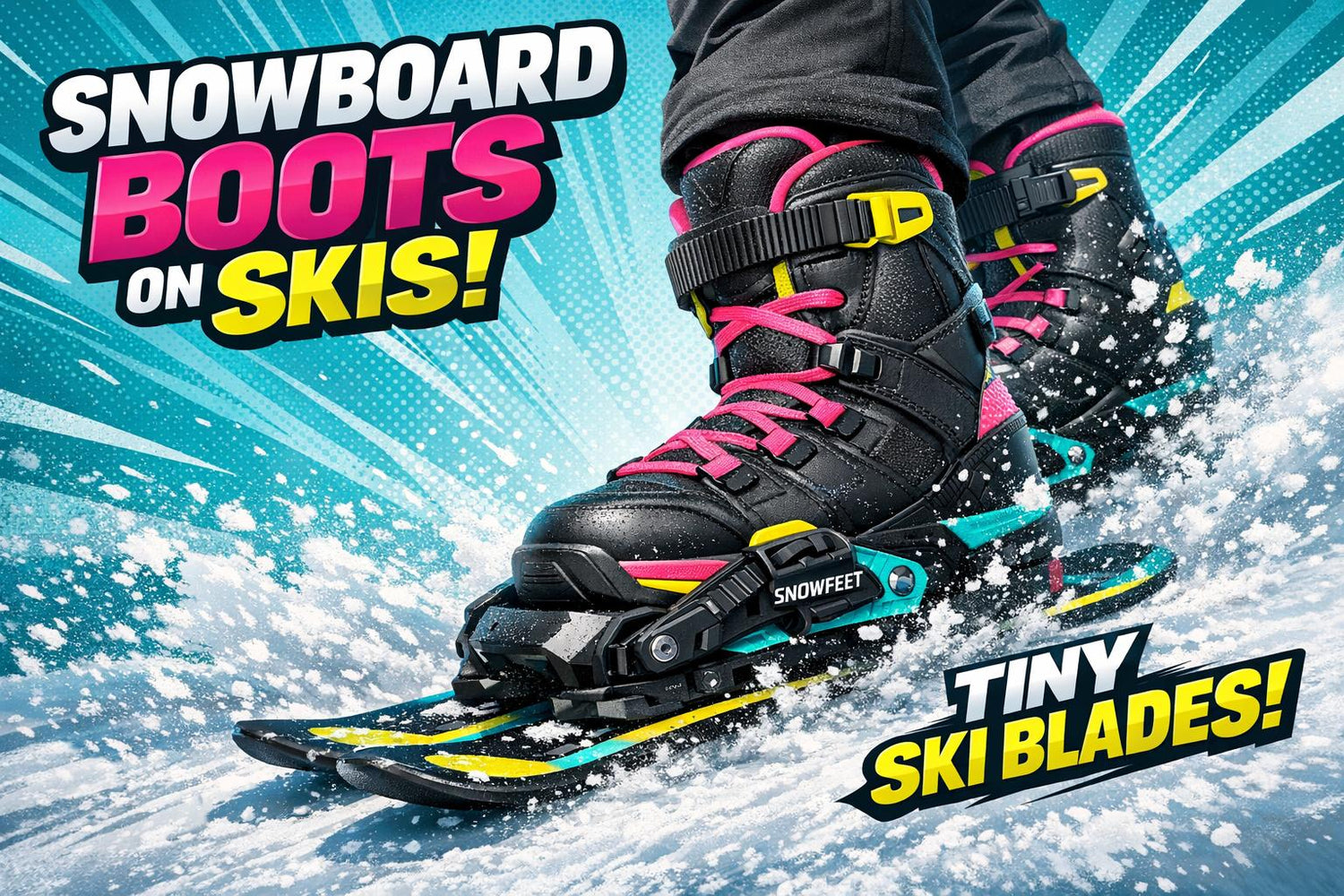
Ever wish skiing could be more comfortable and less hassle? In 2026, Snowfeet* is changing the game by letting you use snowboard boots with short skis. Say goodbye to stiff ski boots and hello to a setup that’s easier, more comfortable, and portable enough to fit in a backpack. Here’s why it works:
- Comfort: Snowboard boots are softer, flexible, and way easier to walk in than ski boots.
- Control: Short skis (44–99 cm) offer tight turns and better maneuverability.
- Convenience: No clunky gear - just toss them in a bag and go.
- Easy to Learn: Beginners can get the hang of it in just 5 minutes.
Snowfeet* has created bindings specifically for snowboard boots, making this combo secure and effective. Whether you're cruising groomed slopes, hitting snow parks, or exploring trails, this setup is simple, fun, and budget-friendly compared to traditional ski gear.
Want more details? Keep reading to see how this works, why it’s easier than old-school skiing, and which models fit your style.
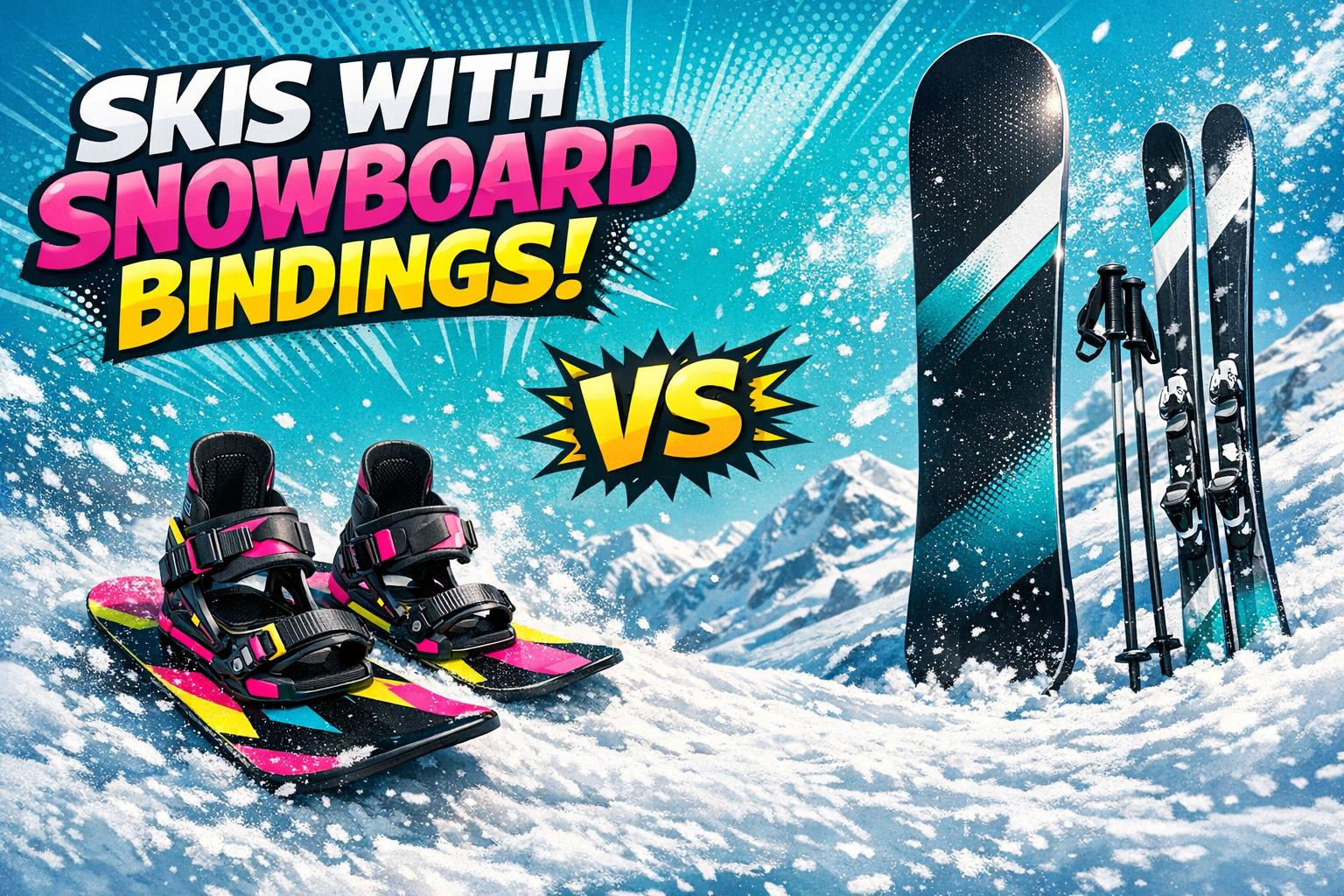
Short Skis with Snowboard Bindings | Must-Have of This Winter
How Snowboard Boots Work with Short Skis
Snowfeet* has created a specialized binding system that makes it possible to securely pair snowboard boots with short skis. Unlike traditional ski bindings - designed for rigid plastic ski boots - Snowfeet* bindings are non-release and tailored specifically for the slim design of skiboards and skiblades. The system includes a baseplate, highback, and two straps (ankle and toe) to lock snowboard boots in place snugly. This setup effectively solves the issues that arise when using standard bindings.
Regular snowboard bindings are too wide for short skis, which can affect both safety and stability. Snowfeet* addressed this by narrowing their bindings to fit perfectly on short skis, all while maintaining the comfort and flexibility snowboarders enjoy. The baseplate also features an anti-slip surface to keep the boot securely in place, preventing unwanted movement. For skis under 100 cm - like the Skiskates (44 cm) and Skiblades (65 cm and 99 cm) - this non-release design offers a safer alternative to bulky release mechanisms.
"At Snowfeet we developed a unique snowboard bindings specifically designed for skiboards. They are affordable, easily adjustable to snowboard boots of any size, with an anti-slippery surface for perfect shoe grip." – Snowfeet Team
Snowboard Boot Compatibility with Snowfeet* Skis
Snowfeet* bindings are designed to fit boot sizes ranging from 6–14.5 US (38–49 EU) and are compatible with their Skiskates (44 cm), Skiblades 65, and Skiblades 99 models. Most riders can use their current snowboard boots without needing to buy new ones. The bindings work with various boot types, including soft flex, stiff, and even Step-On designs. However, softer boots tend to provide the most comfort for extended use on the slopes.
If you’re considering the 120 cm Freedom Skis, keep in mind they use traditional release ski bindings. For a true snowboard boot experience, stick to the shorter models. Snowfeet* offers three binding options - Basic ($190), Standard, and Pro X ($290). The Pro X model stands out for its durability and easy adjustments, especially for larger or bulkier boots.
Adjusting Bindings for a Secure Fit
Adjusting Snowfeet* bindings is quick and tool-free, taking less than a minute. Start by placing your snowboard boot into the binding, ensuring the heel is firmly against the highback. Then, fasten the ankle strap over the vamp and secure the toe strap, positioning it either over the toes or around the boot tips. Tighten both straps by hand until the boot feels secure but not overly tight.
Before hitting the slopes, double-check that both straps are fastened properly and attach the included safety leashes. Unlike traditional ski bindings that often require tools and technical expertise, Snowfeet* bindings allow for easy, on-the-go adjustments right on the mountain. It’s this kind of convenience that highlights Snowfeet*'s dedication to reimagining winter sports gear for the future.
Benefits of Using Snowboard Boots on Snowfeet* Short Skis
Comfort and Control
Snowboard boots bring a whole new level of comfort compared to the stiff, traditional ski boots. They’re softer, more flexible, and let your ankles move naturally - an absolute game-changer when you’re spending hours on the slopes. Unlike ski boots, which follow the ISO 5355 standard with their flat, rigid soles designed for power transfer, snowboard boots prioritize comfort and walkability over that locked-in stiffness.
Most snowboard boots come with heat-moldable liners that shape perfectly to your feet, meaning no more painful pressure points that skiers often deal with. This added flexibility doesn’t just feel better - it also gives you more control when using Snowfeet* short skis. You can feel the terrain underfoot and make quick, precise movements without fighting against a rigid boot. Plus, the secure hold around your heel and ankle improves responsiveness, whether you’re carving down the mountain or trying tricks in the terrain park. Snowfeet* bindings are specifically designed to work with this natural flexibility, giving you a setup that’s built for both comfort and performance during long days outside.
Portability and Multi-Terrain Use
Another big perk? Portability. Snowfeet* systems, which range from 44 cm to 99 cm in length, are small enough to fit in a standard backpack - something you just can’t do with traditional skis that are 150 cm or longer. No need for a roof rack or extra storage space. You can toss them in your car, take them on public transit, or even pack them in a suitcase. This convenience opens up all kinds of terrain that bulky ski setups can’t handle, like narrow hiking trails, wooded areas, sledding hills, or even your own backyard.
Snowfeet* paired with snowboard boots work on almost any snowy surface. While standard ski gear limits you to groomed slopes, this combo thrives in snow parks, backcountry trails, and tight spots. Snowboard boots also make it easy to walk naturally between locations. Instead of lugging around separate boots for skiing and snowboarding, you’re using just one pair for multiple activities.
Easier to Learn
If you’re new to winter sports, Snowfeet* has you covered. Beginners can get the hang of these short skis in as little as 5 minutes - a far cry from the slower learning curve of traditional long skis. The shorter length, especially the 44 cm Skiskates, makes them less intimidating. You’re not struggling to control oversized equipment while trying to learn the basics. Plus, the two-strap snowboard binding system is simple and tool-free, so you can skip the complicated setup and hit the snow right away.
Snowboard boots also make balancing much easier for beginners. Their natural ankle flexibility helps you recover from missteps and experiment with movements without feeling locked in place. This beginner-friendly design is part of Snowfeet*’s mission to shake up winter sports gear. With over 50,000 riders worldwide and a perfect 5.0/5 rating from 109 reviews on the 44 cm model, it’s clear that Snowfeet* paired with snowboard boots offers one of the quickest ways to gain confidence on the snow.
sbb-itb-17ade95
Snowfeet* vs. Traditional Skis: Direct Comparison
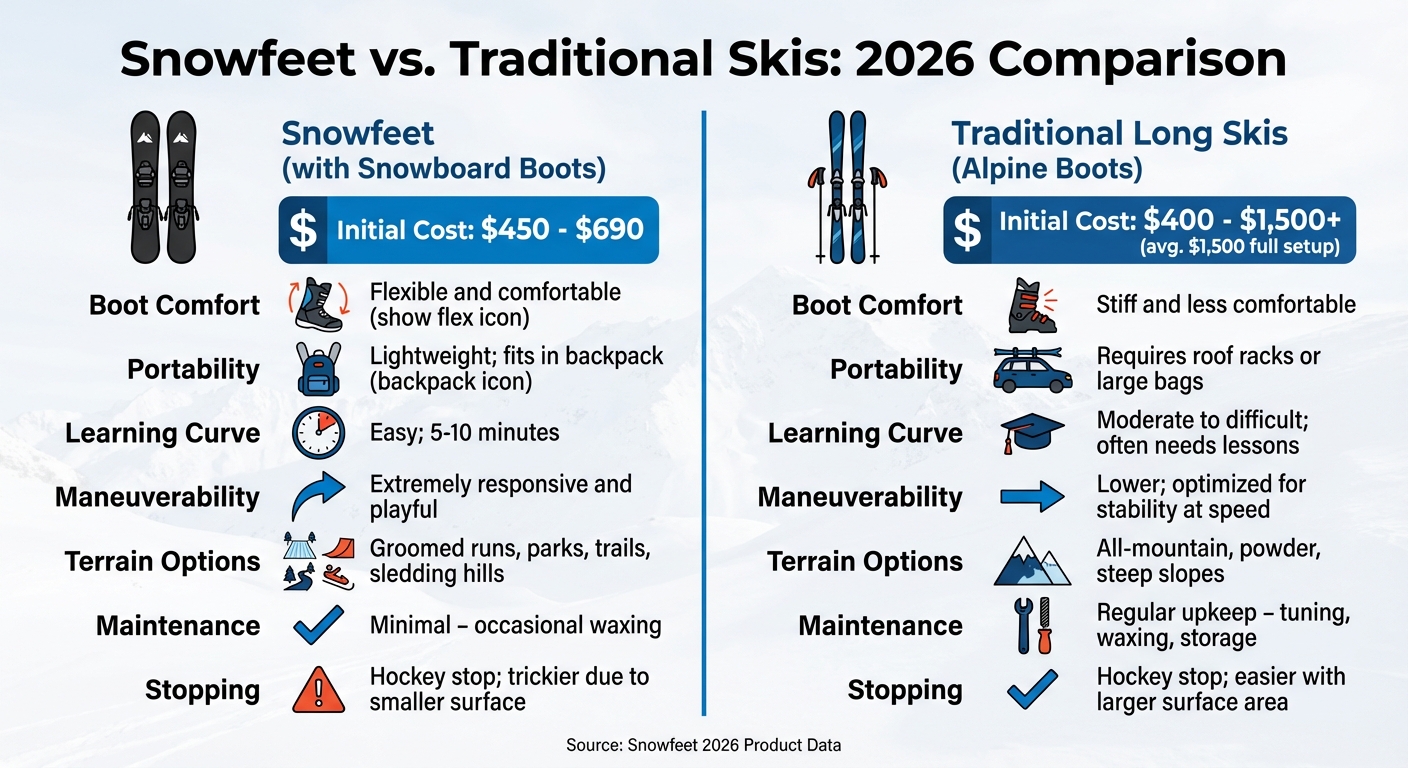
Snowfeet Short Skis vs Traditional Skis Comparison 2026
When you stack Snowfeet* short skis with snowboard boots against traditional long skis paired with alpine boots, the differences go far beyond just size. Traditional skis are designed for speed and precision, particularly for experts tearing down steep slopes. That kind of performance comes at a price - literally. A full traditional ski setup typically costs around $1,500, with high-performance racing skis alone running between $1,000 and $1,500. Plus, those stiff alpine boots? They’re not exactly known for comfort or mobility.
Snowfeet*, on the other hand, delivers a more playful and budget-friendly option. With a price range of $450–$690, they’re much easier on your wallet. Their shorter length (44 cm to 99 cm) makes them incredibly nimble, perfect for quick turns and tricks. That said, you’ll need to stay on top of your balance during deeper carves, as the smaller surface area demands more precision. While traditional skis offer a forgiving platform for weight shifts, they can feel bulky and less agile compared to Snowfeet*. These short skis thrive on groomed runs, snow parks, hiking trails, and even sledding hills - places where traditional skis might feel awkward and cumbersome.
"Far more portable and affordable than traditional skis or snowboards." – Uncrate
Practicality is another area where Snowfeet* shines. They’re low-maintenance - fiberglass models only need occasional waxing, unlike the regular tuning and upkeep required for traditional skis. Plus, renting traditional skis can set you back about $40 a day, which adds up fast if you’re a frequent skier. With Snowfeet*, you own your gear outright for less than the cost of a full traditional setup.
Comparison Table: Snowfeet* vs. Traditional Skis
| Feature | Snowfeet* (with Snowboard Boots) | Traditional Long Skis (Alpine Boots) |
|---|---|---|
| Initial Cost | $450 – $690 | $400 – $1,500+ (avg. $1,500 full setup) |
| Boot Comfort | Flexible and comfortable | Stiff and less comfortable |
| Portability | Lightweight; fits in a backpack | Requires roof racks or large bags |
| Learning Curve | Easy; basics learned in 5–10 minutes | Moderate to difficult; often needs lessons |
| Maneuverability | Extremely responsive and playful | Lower; optimized for stability at speed |
| Terrain Options | Groomed runs, parks, trails, sledding hills | All-mountain, powder, steep slopes |
| Maintenance | Minimal (occasional waxing) | Regular upkeep (tuning, waxing, storage) |
| Stopping | Hockey stop; trickier due to smaller surface | Hockey stop; easier with larger surface area |
While traditional skis are unbeatable for deep powder or steep mountain faces, Snowfeet* offers a fresh take on skiing. They’re comfortable, easy to use, and versatile, making them a fantastic choice for riders who want a fun, hassle-free experience without breaking the bank. Whether you’re cruising down groomed slopes or exploring snow parks, Snowfeet* keeps things simple, portable, and exciting.
2026 Updates and Recommended Snowfeet* Models
What's New in 2026 Snowfeet* Short Skis
Snowfeet* has stepped up its game for 2026, introducing updates aimed at making your experience on the slopes even better. The standout addition is the Pro X binding system. This new system is tough, easy to adjust, and fits any boot like a glove. It also features an anti-slip surface, giving you extra grip for carving and pulling off tricks. Plus, it’s compact and sleek, perfect for short skis.
Another big change? The entire lineup now comes with wood core construction. Whether you're using the Skiskates (44 cm), Skiblades (65 cm), or the 99 cm models, this upgrade boosts durability and reduces vibrations when you're speeding down the slopes. For beginners, the new Carbon Fiber Edition in mini models offers a slower, steadier ride, making it easier to build confidence. These updates ensure top-notch performance no matter where you're skiing.
"Snowboard bindings give you more flexibility while performing all kinds of tricks, they're super comfortable and you can walk with them anywhere without a problem." – Snowfeet Store
Best Snowfeet* Models for Different Uses
Snowfeet* has something for everyone, whether you're into tricks, carving, or exploring deep snow. Here’s a quick look at their top models:
- Skiskates (44 cm): Priced between $480 and $490, these are perfect for tricks and jumps, offering a feel similar to inline skates on snow.
- Skiblades (65 cm): With a price range of $550 to $650, they strike a great balance between agility and carving power, especially on groomed runs.
- 99 cm models: If you’re looking for a more traditional carving experience, these are your go-to. The standard version costs $590 to $690 and gets rave reviews, with a 5.0/5 user rating for carving.
- POWDER (99 cm): Built for deep snow adventures, this model is priced at $590.
All Snowfeet* models work seamlessly with snowboard boots, offering a level of comfort and flexibility that stiff ski boots just can’t match. Whether you're a seasoned pro or just starting out, there's a model here to suit your style and skill level.
Conclusion
Pairing snowboard boots with Snowfeet* short skis is shaking up the winter sports scene in 2026. This combo brings a level of comfort that traditional plastic ski boots just can’t compete with. Imagine walking naturally, skipping the usual foot pain, and still being ready to hit the slopes. Plus, everything fits neatly into a backpack, so you can ditch the bulky gear and embrace spontaneous mountain getaways.
But it’s not just about comfort and portability - ease of use is a big deal here. Traditional skiing often requires weeks of lessons, but with Snowfeet*, most people are gliding down the slopes within minutes. The skating-like motion feels intuitive, whether you’re brand-new to winter sports or a snowboarder looking to mix things up.
The 2026 updates make this setup even sweeter. Features like the wood core construction add durability, absorb vibrations, and ensure smooth compatibility with any snowboard boot. From groomed runs to snow parks or even hiking trails, Snowfeet* models - ranging from the compact 44 cm Skiskates to the versatile 99 cm Skiblades - offer a flexibility that long skis just can’t match.
"Absolute game-changer! They're light, fast, and incredibly fun to ride." – Nathan F.
FAQs
What makes Snowfeet bindings different from traditional ski bindings?
Snowfeet bindings stand out for their simplicity and flexibility. They’re built right into Snowfeet's short skis, letting you use snowboard boots, ski boots, or even regular winter boots - no extra hardware or complicated adjustments needed. This means you can gear up and get on the slopes in no time, skipping all the fuss of traditional setups.
In contrast, traditional ski bindings can be a bit of a headache. They need precise mounting, calibration to specific ski boots, and often require a professional to install them. Plus, they’re bulkier and less versatile, adding to the setup time. Snowfeet bindings cut through all that hassle, offering a lightweight, easy-to-use option that’s perfect for anyone who loves winter sports.
Can I use snowboard boots with Snowfeet short skis?
Yes, Snowfeet short skis are made to work seamlessly with snowboard boots. The bindings are designed to be fully compatible, so you can easily use your snowboard boots with Snowfeet products like Skiblades (65 cm, 99 cm, 120 cm) or Skiskates (44 cm). No extra adjustments or special gear needed - just strap in and go.
This setup gives you a great mix of comfort, control, and flexibility, making it an awesome option for anyone who loves winter sports and wants to try something new. With their easy-to-use design, Snowfeet offer a fun and exciting alternative to traditional skis or snowboards!
What makes Snowfeet better than traditional skis?
Snowfeet bring a whole new level of convenience to winter sports. Unlike traditional skis, which can be bulky and require roof racks or oversized bags, Snowfeet are compact and lightweight - measuring just 15 to 47 inches. You can easily toss them in a backpack and head out, no hassle. And let’s talk about cost: with prices ranging from $150 to $490, they’re a much more wallet-friendly option compared to a full ski setup, which can easily top $1,500.
Another bonus? Snowfeet come with integrated bindings that work with regular winter boots or snowboard boots. That means no need for pricey, specialized ski boots or complicated equipment. They’re perfect for beginners and versatile enough to handle different terrains, whether you’re gliding down groomed slopes or playing around on backyard hills. If you’re after a portable, budget-friendly, and straightforward alternative to traditional skis, Snowfeet might just be your new favorite winter gear.











Leave a comment
This site is protected by hCaptcha and the hCaptcha Privacy Policy and Terms of Service apply.