



















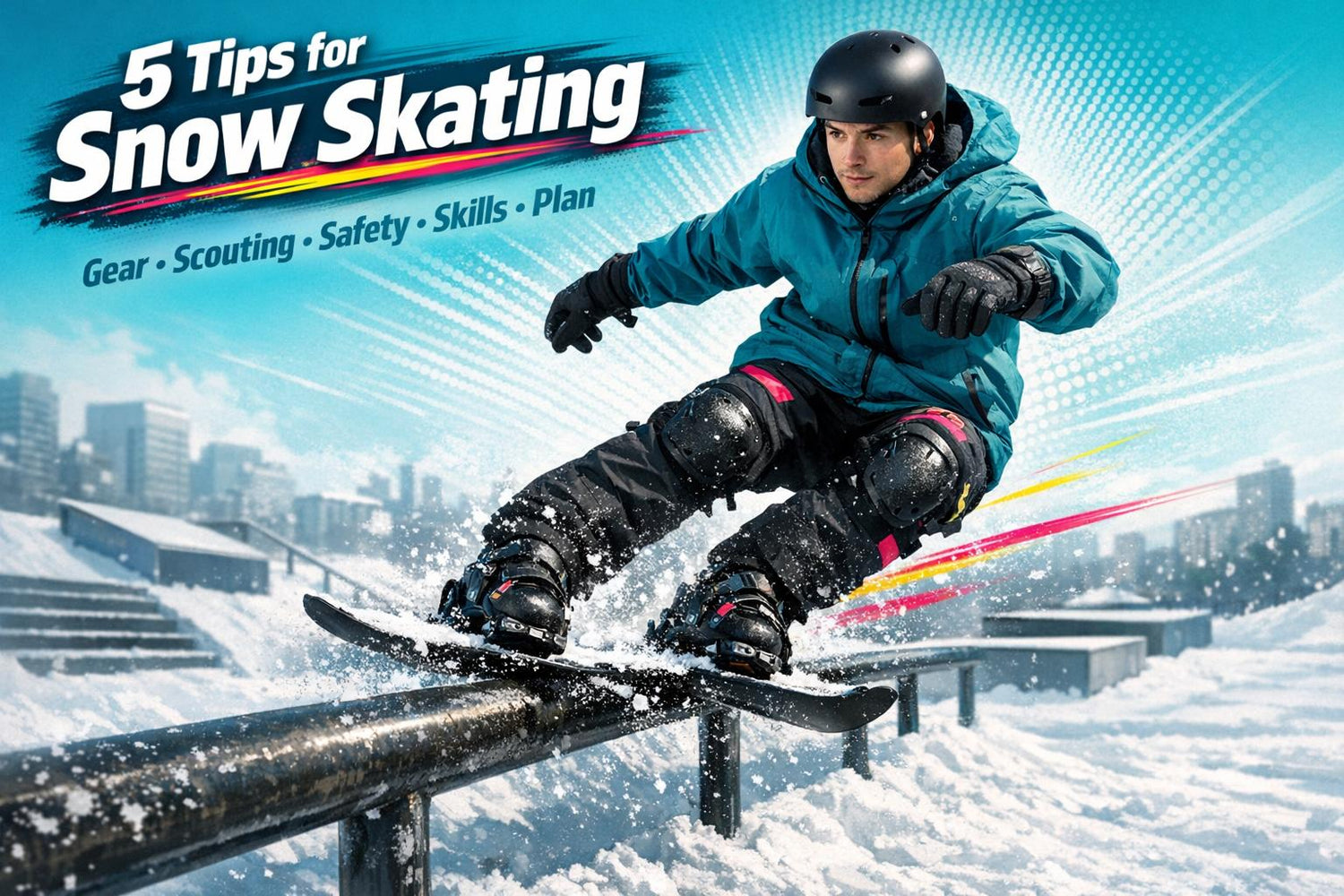
Snow skating in urban terrain parks is all about precision, agility, and having the right gear. Unlike wide-open slopes, these parks are packed with tight rails, jumps, and features that demand quick moves and control. Whether you're spinning, riding switch, or tackling rails, compact gear like Snowfeet* Skiskates (17 inches) or Skiblades (starting at 26 inches) can make all the difference. Here's a quick rundown of the top tips to get you started:
- Choose the Right Gear: Opt for shorter skis like Skiskates or Skiblades for better control and easier tricks.
- Know the Park Features: Scout the terrain, start small, and adjust for snow conditions throughout the day.
- Follow Safety Rules: Park SMART - start small, plan your line, and respect others.
- Master Basic Skills: Focus on edge control, balance, and stopping before hitting rails or jumps.
- Plan Your Sessions: Hit the park after grooming, prep your gear, and stick to light powder for the best experience.
Snow skating is all about fun, but preparation and the right approach can take your skills to the next level. Ready to dive in? Let’s break it down.
How to Use Snowfeet* Skiskates 44 CM | Skates for Snow | Mini Ski | Snowblades | Snowskates

1. Pick Compact Gear Made for Urban Parks
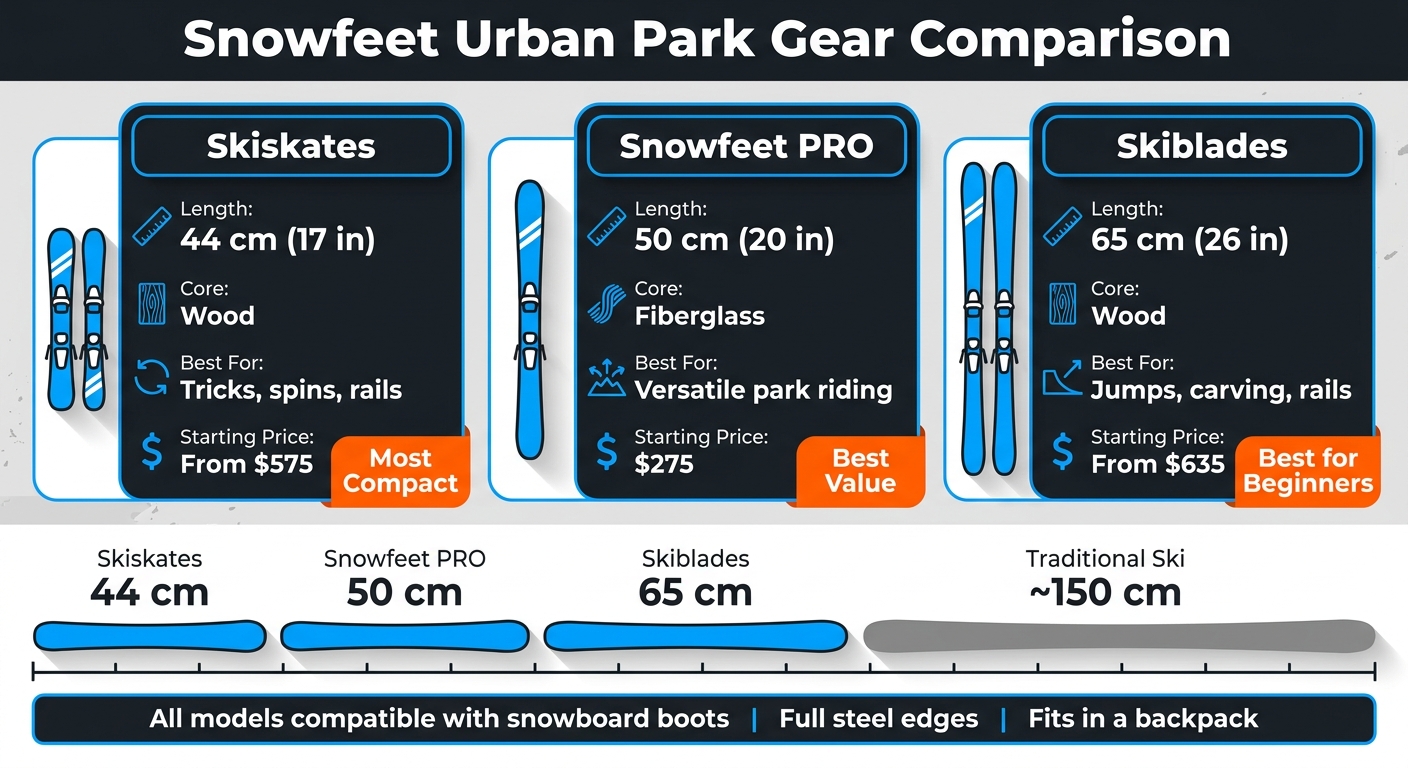
Snowfeet Skiskates vs Skiblades vs PRO: Urban Park Gear Comparison
Traditional skis, often around 5 feet long, can feel like a hassle when you're navigating tight urban spaces. Shorter gear gives you the edge for precise spins and quick maneuvers.
Take Snowfeet* Skiskates, for example. At just 44 cm, they’re the shortest skis available and are built for tricks, switch riding, and rail work. If you’re looking for a bit more edge control for carving, the Skiblades start at 65 cm. Both are compact enough to fit in a backpack, making them perfect for urban riders who don’t want to lug around extra gear.
When choosing your setup, think about your style. Wood core models provide more stability and can handle aggressive park riding, while fiberglass-reinforced options are lighter and easier to control, great for those still sharpening their skills. Whichever you go for, full steel edges are a must - they’ll give you better control when stopping or carving on icy or packed snow.
For bindings, snowboard boot compatibility is the way to go. It offers the flexibility you need for rails and jumps, and Snowfeet* Skiskates are designed to work seamlessly with them.
With these features, Snowfeet* gear stands out for its agility and control, offering a fresh alternative to traditional skis and snowboards.
"A lot easier to haul around the hills & on vacation than traditional skis!" - heyjerz, Verified Customer
Here’s a quick breakdown of Snowfeet* models for park performance:
| Model | Length | Core | Best Park Use | Starting Price |
|---|---|---|---|---|
| Skiskates | 44 cm (17 in) | Wood | Tricks, spins, rails | From $575 |
| Snowfeet PRO | 50 cm (20 in) | Fiberglass | Versatile park riding | $275 |
| Skiblades | 65 cm (26 in) | Wood | Jumps, carving, rails | From $635 |
2. Learn Your Urban Terrain Park Features and Conditions
Before diving in, take a moment to walk through the park. This quick "on-foot recon" helps you spot where each feature is, how the traffic moves, and any blind spots. Think of it as a quick warm-up for your brain - it helps you pick the right features and stay safe.
Pay attention to the features. If you're just starting out, forgiving boxes are your best bet. Rails, jumps, hips, and wallrides demand more precision, so save those for when you're feeling confident. Begin with boxes and rollers to build your skills before tackling the more technical stuff.
The park's conditions can change your approach, so keep an eye on the snow. Mornings might be firm or even icy, while mid-day often brings packed snow that gives you consistent speed and softer landings. By late afternoon, the snow can turn slushy, slowing you down - especially noticeable on short skis like Snowfeet* Skiskates or Skiblades. These compact skis react to surface changes faster than traditional long skis, so adjust your starting point and speed to match the conditions.
Most terrain parks in the U.S. use a Small/Medium/Large rating system. Stick to the smaller zones until you’re steady and balanced on your short skis. And before you drop in, visually trace your ride line to spot any hazards, like concrete blocks or fence posts. Just like Snowfeet* Skiskates are built for quick moves in tight spaces, your ability to adapt your line and speed to the park's ever-changing conditions is key. Getting to know the park is just as important as picking the right gear.
3. Follow Park Safety Rules and Urban Etiquette
Once you know your way around the park, it's time to focus on staying safe and being considerate of others while riding.
In the U.S., every terrain park follows the Park SMART rules: start small, make a plan, always look, respect others, and take it easy. These guidelines exist for a reason - terrain park injuries make up about 20–25% of all alpine skiing and snowboarding injuries at some resorts, with head and spine injuries being more common compared to groomed runs.
The golden rule? One rider per feature at a time. Wait until the person ahead of you clears the landing zone, then check uphill and downhill before signaling "Dropping!" Never stop in a landing zone or in spots that aren't visible from above. If you fall, move to the side as quickly as possible. Good communication and patience go a long way in keeping everyone safe.
When riding with Snowfeet* Skiskates or Skiblades, use their agility to exit landing zones quickly. However, avoid weaving unpredictably between jump lines. Riders on traditional skis or snowboards might not expect your movements, so keep your lines predictable and maintain extra space in crowded areas. Using Snowfeet* responsibly not only keeps you safe but also ensures smoother park runs for everyone.
"If you act like you're using regular skis, people usually won't bother you. If someone does, you can explain that Snowfeet have the same metal ski edges as other skis." - Snowfeet*
Make sure to gear up with a certified helmet, wrist guards, impact shorts, and knee pads. The freestyle stance on short skis makes falls near rails or hard surfaces more likely, so extra protection is key. Also, double-check that your bindings and safety leashes are secure to prevent any mid-air surprises.
Stick to designated snow areas and steer clear of pedestrian walkways. And of course, pack out any trash you bring - keeping the park clean helps everyone enjoy it longer.
sbb-itb-17ade95
4. Build Your Snow Skating Skills for Rails and Jumps
Before tackling rails or jumps, focus on three key skills: edge control, one-foot balance, and stopping with confidence. Start with the basics - practice making short, controlled turns on flat terrain, balance on one foot for a few seconds while riding straight, and perfect your hockey stops until they feel automatic. These fundamentals are non-negotiable. If you struggle to stop smoothly on a groomed slope, it'll only get harder when you're on a rail or hitting a jump.
Once you've nailed the basics, progress gradually: start on flat ground, move to low boxes, then narrow rails, and finally small jumps. On flat ground, practice popping both feet off the snow and landing with your knees bent. When that feels natural, try sliding on a wide, low ride-on box. Keep your feet hip-width apart and your approach slow and steady. From there, you can advance to narrower rails or small kickers. The trick is to introduce one new challenge at a time - this method helps you improve while minimizing the risk of injury.
With a solid foundation, your gear can take your skills even further. Snowfeet* Skiskates and Skiblades are specifically designed to help in the park. Their shorter length reduces tip-and-tail overhang on boxes, and their lighter swing weight makes rotations easier to manage. As Zbyněk, the founder of Snowfeet*, says:
"Skiskates are super fun for downhill skiing, riding backwards, spinning, jumping and all kinds of tricks in snow parks and on the slopes."
For beginners, Skiblades (65–99 cm) might be a better starting point since their longer surface area helps absorb impact on landings. Once you're comfortable, you can transition to Skiskates for more agility. When it comes to bindings, snowboard boots offer more ankle flexibility for tricks, while ski boots provide sharper edge control on icy features. Choose based on the typical conditions at your local park.
On rails, keep your shoulders and hips aligned with the rail, your eyes focused on the exit, and your knees soft for balance. For jumps, remember to pop vertically - don’t launch yourself forward. Land with your feet together, knees bent, and hips stacked to maintain control. Avoid leaning back on landings; it’s the most common rookie mistake and will send you sliding out, especially with shorter skis.
Take it step by step, build confidence, and let your gear enhance your snow skating adventure.
5. Plan Your Urban Snow Skating Sessions
If you’re ready to take your urban snow skating to the next level, planning ahead is essential. Timing matters - head to the park right after it’s been groomed. Freshly packed surfaces give you the control and precision you need to make the most of your skiskates or skiblades.
As Snowfeet* explains:
"Skiblades | Snowblades | Skiboards | Short skis are fun and easy to handle when groomed slopes turn into moguls in the afternoon."
Snowfeet* models work best in light powder up to 4 inches (10 cm). Before you hit the park, prep your gear at home. Make sure your bindings are adjusted to fit your riding boots perfectly, and give your equipment a fresh wax for a smooth glide. A little preparation goes a long way toward a better, safer session.
Once you’re ready to go, you’ll find that Snowfeet* skiskates are ideal for navigating busy urban environments. Thanks to their compact design, they’re perfect for carving through tight spaces and handling crowded areas with ease. As customer Brad Tolin points out:
"They're great for carving and navigating crowded slopes without feeling bulky."
With their short, agile profile, these small skis make it easy to weave through gaps and adjust quickly, even during peak hours.
Conclusion
Urban terrain parks reward skaters who come prepared. The five tips we’ve covered - picking compact gear, understanding the terrain, respecting park rules, building skills step-by-step, and planning your sessions - all work together to make your experience safer and way more fun. Together, they show why having the right gear matters so much in urban parks.
Gear choice can make or break your runs. Take Snowfeet*, for example. Their skiskates are designed specifically for the challenges of urban parks. Traditional skis, which are often 150 cm or longer, can feel clunky when navigating tight rails or quick transitions. Snowfeet* skiskates, on the other hand, give you the agility to spin, ride switch, and carve with ease - things that are much harder to pull off with long skis.
Another bonus? The learning curve with these compact designs is short. Most riders can pick up the basics in just a day, especially if they have some ice skating or inline skating experience. As Zbyněk, the founder of Snowfeet*, puts it:
"Skiskates is the best product for slopes we developed so far. I love how easy they are to ski and skate and how many different kinds of tricks I can perform without much effort and almost no restrictions."
Customer reviews back this up, with high ratings highlighting their performance in actual park conditions.
So, what are you waiting for? Your local urban terrain park is calling. Grab a pair of skiskates or skiblades, check the grooming schedule, and hit the park. Sometimes, smaller skis mean way bigger thrills.
FAQs
Should I start with Skiblades or Skiskates?
Choosing between Snowfeet Skiskates* and Skiblades comes down to what you're looking for and your skill set. If you want a quick, nimble experience that's great for tricks, spins, and skating-style moves, Skiskates are an awesome choice - especially if you’ve got a background in ice skating or rollerblading.
On the other hand, Skiblades balance agility with a bit more of a skiing-like feel. The 65 cm model is fantastic for tricks, while the 99 cm model provides added stability and speed, making it ideal for all-mountain adventures.
What boots and bindings work best with Snowfeet*?
Snowfeet* are designed to work with the footwear you already have, saving you from spending extra on the stiff, pricey boots often associated with skiing or snowboarding. Depending on the model, you can pair them with waterproof winter boots for easygoing rides, snowboard boots for better ankle support, or ski boots if you're aiming for sharp, aggressive turns. The adjustable bindings make it simple to get a snug fit for most adults and kids - no tools needed!
Are Snowfeet* allowed in U.S. terrain parks?
Most ski resorts in the U.S. permit Snowfeet* and similar short skis in their terrain parks because they come equipped with the necessary metal ski edges. These edges meet the standard requirements set by most resorts. Snowfeet* are built with terrain park use in mind, making them great for tricks like jumps and spins. They’re often easier to maneuver compared to traditional long skis or snowboards. If anyone questions their use, just point out the metal edges - they’re what make them compliant with resort rules.











Leave a comment
This site is protected by hCaptcha and the hCaptcha Privacy Policy and Terms of Service apply.