



















If you want the short answer: the 44 cm model is the most playful, the 65 cm model is the safest bet for most riders, the 99 cm model feels calmer at speed, and the 120 cm model gives the most stability.
I’d put it like this: fun on snow usually comes down to 4 things:
- how fast you can get the hang of it
- how easy it is to turn
- how much trick potential you get
- how stable it feels on groomers
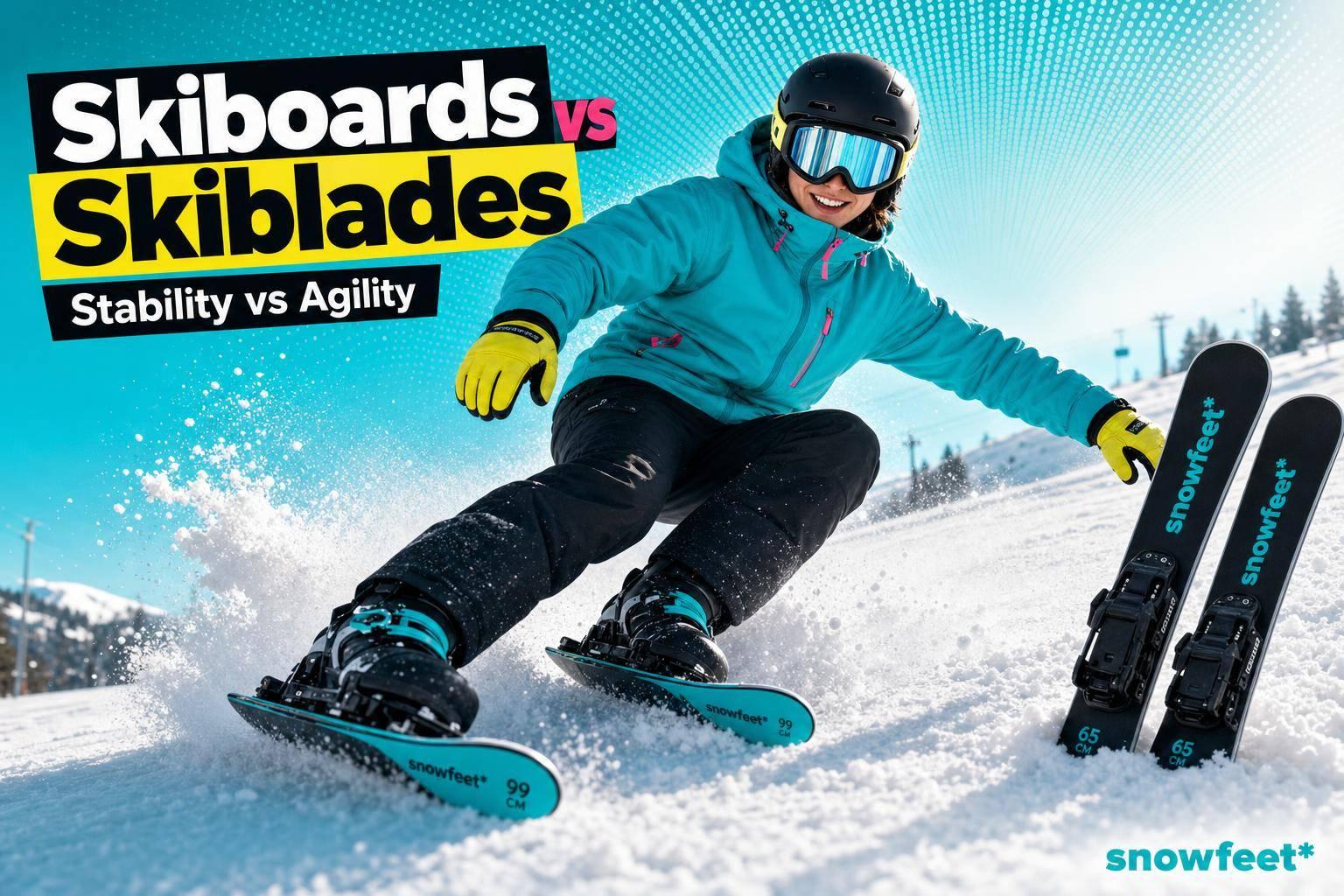
The range here runs from 44 cm (about 17 in) to 120 cm (about 47 in), so the feel changes a lot. As length goes up, you get more stability. As length goes down, you get more playful movement.
Snowboarder tries Snowfeet* | Which Snowfeet* Short Ski is the Best? | Snowblades 44, 65, 99 Review
Quick Comparison
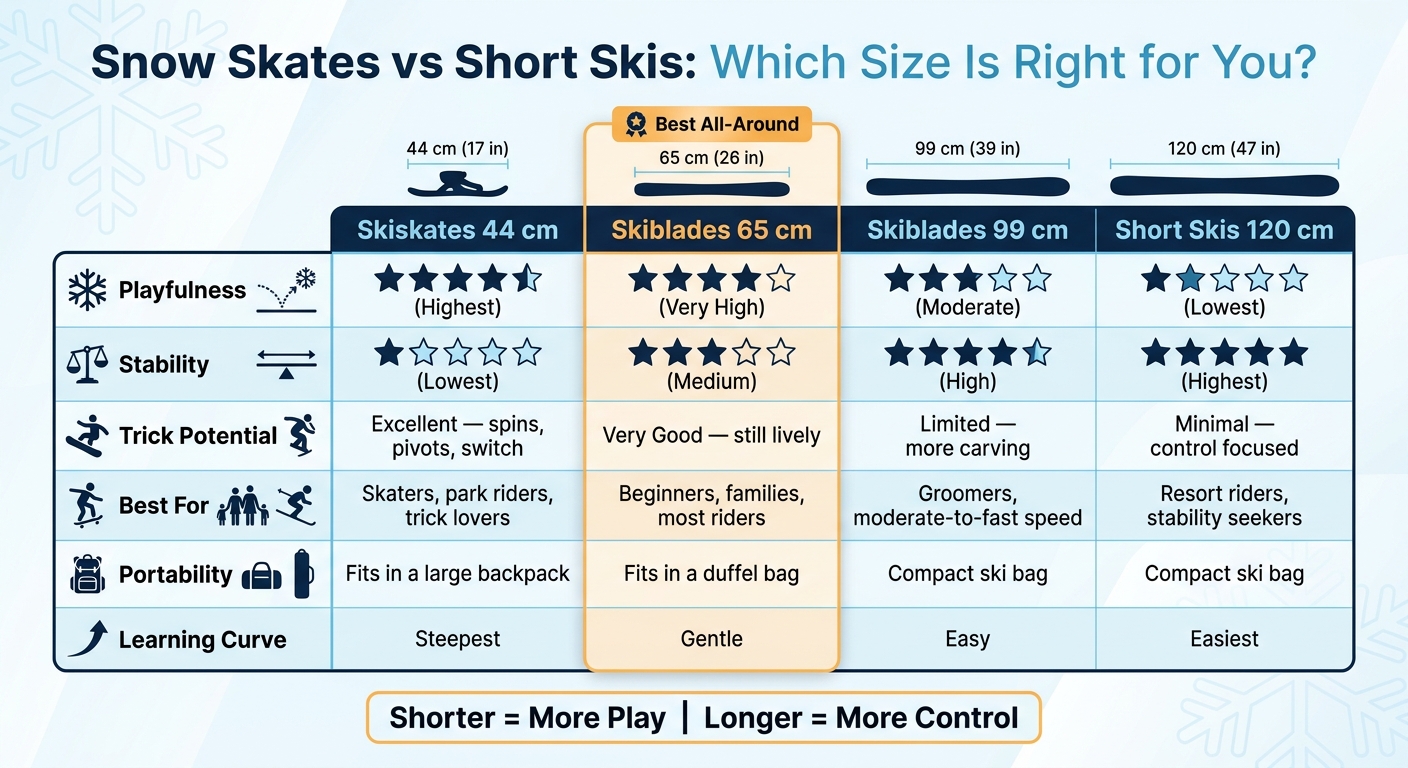
Snow Skates vs Short Skis: Size Comparison Guide (44cm–120cm)
| Model | Best Part | Main Tradeoff | Best For |
|---|---|---|---|
| Skiskates 44 cm | Most playful feel | Least stable at higher speed | Skaters, snowboarders, park laps |
| Skiblades 65 cm | Best mix of fun and control | Not as loose as 44 cm | Most riders, beginners, families |
| Skiblades 99 cm | Better carving and calmer ride | Less trick-friendly | Groomers, moderate speed, more control |
| Short Skis 120 cm | Most planted feel | Least playful of the group | Resort riders who want stability |
Here’s my take: if you want the most fun in a loose, skate-like way, go short. If you want fun with less sketchy moments, go a bit longer. That’s the whole game :)
A few fast facts from the comparison:
- 44 cm is the top pick for spins, pivots, and switch riding
- 65 cm is the best all-around size for most people
- 99 cm feels better when carving and cruising at moderate-to-fast speed
- 120 cm works best when you care more about control than tricks
- All four are easier to pack than full-length skis, with the 44 cm pair small enough for a large backpack
If I had to sum it up in one line: shorter wins for play, longer wins for calm. The best one is the one that matches how you like snow to feel.
How Each Model Feels on Snow
Snowfeet* Skiskates 44 cm: The Most Playful and Skate-Like
Now for the part that matters most: how these feel once you’re on snow.
At 44 cm, Snowfeet* Skiskates feel a lot like skating on snow. They turn fast. Spins feel natural. Riding switch comes easy. That short length makes them super lively, which is a blast if you like tricks and quick moves.
There’s a tradeoff, though. As speed picks up, fore-aft balance gets tougher. In plain English, you have less room for error if your weight drifts too far forward or back. So while they feel fun and loose on easy groomers, they don’t feel as calm once you start charging.
If you’ve skated before, the movement pattern clicks fast. That muscle memory carries over well. For riders who care more about tricks, pivots, and snappy direction changes than planted high-speed cruising, the 44 cm Skiskates are the most fun of the group.
Snowfeet* Skiblades 65 cm: The Best Balanced Option for Most Riders
The 65 cm Skiblades hit a sweet spot.
They’re still short enough to spin, slash, and feel playful. But they’re also long enough to help you stay centered with less effort. That makes them easier to handle for a lot of people, especially if you want the fun of short skis without the twitchy feel of something ultra-short.
Here’s the simple way to think about it:
- If you want short skis, go with Skiblades
- If you want skating on snow, go with Skiskates
For beginners, snowboarders, and casual resort riders, that balance often means more fun and less time fighting the gear. And honestly, that’s a big deal. Gear should feel like a partner, not a wrestling match :)
Snowfeet* Skiblades 99 cm and Short Skis 120 cm: More Stable, Less Skate-Like
If the 65 cm model sits in the middle, the 99 cm Skiblades and 120 cm Short Skis move more toward control and speed.
The 99 cm Skiblades still feel nimble, but they carve better and handle groomers, light chopped snow, and moderate speed with more ease. They keep some of that short-ski fun, but they don’t feel as skate-like.
The 120 cm Short Skis go even farther in that direction. They feel more planted, especially as speed climbs or the terrain gets rougher and less even. You give up some of the loose, playful feel, but in return you get more control. That can make longer resort laps feel smoother and less tiring.
This is where the differences start to stand out in a big way:
- 44 cm: best for tricks, spins, and quick moves
- 65 cm: best mix of playfulness and control
- 99 cm: better carving and more calm at moderate speed
- 120 cm: most planted for speed and uneven terrain
Those tradeoffs show up most clearly when you stack up tricks, speed, and portability side by side.
sbb-itb-17ade95
Side-by-Side Comparison: Which One Is More Fun
Now that each model’s feel is on the table, here’s the quick read.
Playfulness, Tricks, and Quick Turns
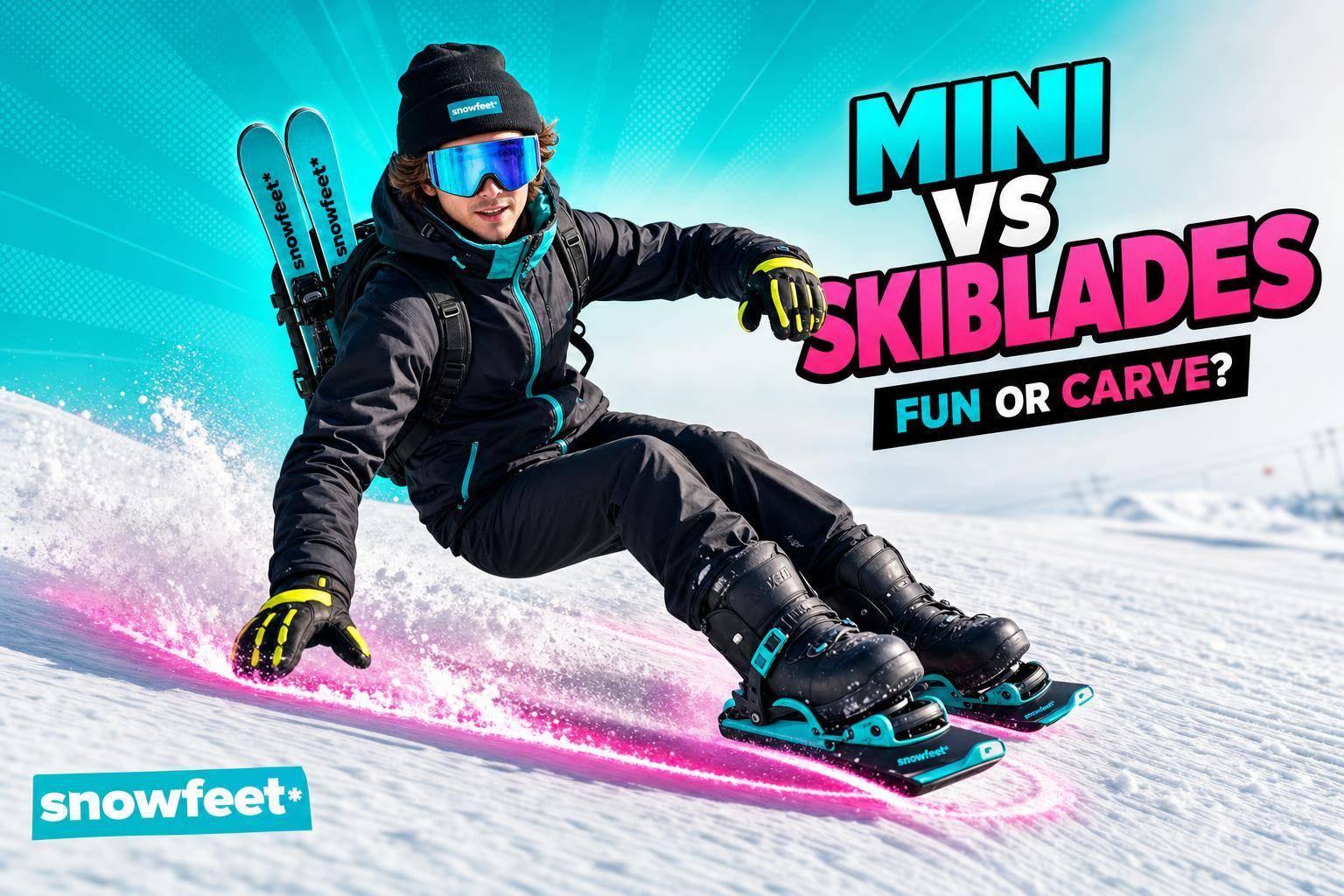
The 44 cm Skiskates feel the most like skating. They’re the most playful of the group, and they shine when you want to spin, slash, and make super tight turns.
| Model | Playfulness | Tricks & Spins | Quick Turns | Park Use |
|---|---|---|---|---|
| Skiskates 44 cm | Highest | Excellent | Fastest | Best for trick-focused riding |
| Skiblades 65 cm | Very high | Very good | Very fast | Great all-around choice |
| Skiblades 99 cm | Moderate | Limited | Fast, but more ski-like | Better for carving than tricks |
| Short Skis 120 cm | Lowest of the four | Minimal | Slower than the shorter models | Least trick-friendly |
If your idea of fun means messing around, popping small tricks, and changing direction in a split second, the 44 cm Skiskates are the clear winner. The 65 cm Skiblades are close behind. They still feel lively, but they give you a bit more breathing room.
The 99 cm Skiblades start to feel more like skis. They can still turn fast, but the vibe shifts more toward carving than trick riding. The 120 cm Short Skis are the least playful here. They’re more about control than goofing off.
Stability, Speed, and Resort Use
At slow speeds, all four work well. Once you start going faster, the differences get a lot more clear.
| Model | Stability | Speed Feel | Best For | Learning Curve |
|---|---|---|---|---|
| Skiskates 44 cm | Lowest to medium | Best at slow to moderate speeds | Riders who want maximum agility | Steepest |
| Skiblades 65 cm | Medium | Comfortable at moderate speeds | Casual resort laps and playful riding | Gentle |
| Skiblades 99 cm | High | Comfortable at moderate-to-fast speeds | Riders who want more carving and control | Easy |
| Short Skis 120 cm | Highest | Most planted at speed | Riders prioritizing stability | Easiest |
The 44 cm Skiskates need steady balance checks. That’s part of the fun, honestly, but it also means they’re less forgiving when speed picks up. The 65 cm Skiblades keep that playful feel while smoothing out the ride.
Step up to the 99 cm Skiblades, and things calm down. They feel more stable, more settled, and stronger in carved turns. The 120 cm Short Skis feel the most planted of the four. If you care most about stability and control, that’s where they win.
Portability, Travel, and Storage
This is where Snowfeet* gear pulls ahead in a big way. All four models are much easier to pack, store, and travel with than full-length skis.
The 44 cm Skiskates fit in a large backpack. The 65 cm and 99 cm Skiblades fit well in a duffel or compact ski bag. Even the 120 cm Short Skis are still far easier to deal with than standard skis. That makes a difference on road trips, flights, and in small apartments or packed garages. Simple transport means you’re more likely to grab them and go :)
| Model | Fits In | Travel Ease | Car Storage | Best For |
|---|---|---|---|---|
| Skiskates 44 cm | Large backpack | Easiest | Trunk or back seat | Frequent travelers |
| Skiblades 65 cm | Duffel bag | Very easy | Trunk | Weekend trips |
| Skiblades 99 cm | Compact ski bag | Easy | Trunk | Resort trips with more control |
| Short Skis 120 cm | Compact ski bag | Still convenient | Trunk | Riders who want stability without bulk |
That sets up the rider-type breakdown next.
Best Pick by Rider Type
Here’s the fast version: pick the model that matches how you ride, not just what looks cool on the rack.
Beginners, Casual Riders, and Families
The 65 cm Skiblades are the best place to start for most people. They feel playful and easy to turn, but they don’t punish small mistakes. That matters a lot when you’re still getting your feet under you.
If you want a bit more speed and a calmer feel on groomed runs, step up to the 99 cm Skiblades. They give you more steadiness without losing that fun, loose feel.
Snowboarders, Skaters, and Park Riders
If you already ride a skateboard, snowboard, or skates, the 44 cm Skiskates will likely feel the most natural. The short platform rewards the kind of quick balance and edge control you already use. It’s a bit like jumping onto a setup that speaks your language.
Not sure you want that steeper learning curve? Go with the 65 cm Skiblades. You’ll get a similar playful ride, just with a little more forgiveness.
Travelers and Riders Who Want More Control
If you want gear that’s easy to pack, carry, and stash in the car, the 44 cm and 65 cm models are the clear picks. They’re simple to travel with, which is nice when you don’t want your ski bag to feel like a wrestling match :)
If you want that easy-to-manage size plus more control, choose the 120 cm Short Skis. If travel ease is the main goal, stick with 44 cm or 65 cm.
Use the table below for a quick scan.
| Rider Type | Best Pick |
|---|---|
| Beginners & families | Skiblades 65 cm |
| Snowboarders & skaters | Skiskates 44 cm |
| Park & trick riders | Skiskates 44 cm |
| Frequent travelers | Skiskates 44 cm |
| Control-focused resort riders | Short Skis 120 cm |
Conclusion: The Most Fun Option Depends on How You Ride
There isn’t one single “most fun” setup. The best pick is the one that fits how you ride.
The 44 cm Skiskates feel the most playful. The 65 cm Skiblades are the best all-around choice. The 99 cm gives you more grip and more speed. And the 120 cm feels the most stable.
That said, longer skis still have their place. They make more sense in deep powder, high-speed carving, and expert terrain.
For most riders, though, the shorter Snowfeet* options get you to the fun part faster. For casual resort skiing in the U.S., Snowfeet* often feels like the better pick because it’s easier to learn, easier to turn, and easier to carry.
Pick the length that matches how you want snow to feel.
FAQs
Which size is best for complete beginners?
For complete beginners, a shorter model is usually the best pick. It gives you more control, makes turning feel easier, and helps you learn faster than long, bulky skis.
The Mini Ski Skates (38–50 cm) or 65 cm Skiblades are a great fit. They’re light, easy to move, and forgiving when you make those first shaky turns. That means new riders can build confidence fast without feeling spooked by standard long skis.
Are Snowfeet* better for tricks or cruising?
Both are great. It just depends on what you want to do.
For tricks, the 44 cm Skiskates and 65 cm Skiblades are the better pick. They’re short, light, and easy to whip around. That makes spins, jumps, and fast pivots feel more natural. The ride is also closer to ice skates or inline skates, which is a big plus if that’s your style.
For cruising, the 99 cm and 120 cm Skiblades make more sense. They give you more stability and better control, especially when you’re carving on groomed runs or moving through mixed terrain. You still get a playful ride, but with a bit more composure than the shorter options. And yes, they’re still a lot easier to carry around than long skis :)
Can I use Snowfeet* in powder or just on groomers?
It depends on the model.
The 44 cm Skiskates and 65 cm Skiblades are built mostly for groomed slopes, snow parks, and packed snow. They can handle up to 4 inches of light powder, but they’re not meant for deep, soft snow. Think of them as the fun, nimble option when the snow is firm and set up well.
For fresh, deeper powder, go with the 99 cm POWDER model or 120 cm Short Skis. That extra length gives you more float, which helps you stay on top of the snow instead of sinking into it.











Leave a comment
This site is protected by hCaptcha and the hCaptcha Privacy Policy and Terms of Service apply.