




















Ever feel like your legs give out halfway through your ski day? Heavy gear, poor technique, and stiff boots are often to blame. But there’s a solution: lighter, shorter equipment like Snowfeet*. These compact ski alternatives reduce strain, save energy, and make skiing easier on your legs.
Here’s why they work:
- Lightweight Design: Snowfeet* gear weighs 30–50% less than regular skis (as little as 2 lbs per pair).
- Compact Size: Ranging from 38–99 cm, they’re small enough to fit in a backpack, making transport a breeze.
- Effortless Control: A tighter turning radius (1–3 meters) means less quad strain and smoother movement.
- No Stiff Boots Needed: Strap them onto regular winter shoes or snowboard boots for more comfort.
Pair these with proper skiing techniques, like engaging your core and making quick, efficient turns, and you can ski for hours without burning out. Add some simple stretches before and after skiing, and you’re good to go.
Want to enjoy longer, easier days on the slopes? Snowfeet* might be the perfect fit.
HOW TO Improve Your Skiing With 3 SIMPLE TIPS
Why Snowfeet* Beats Traditional Skis
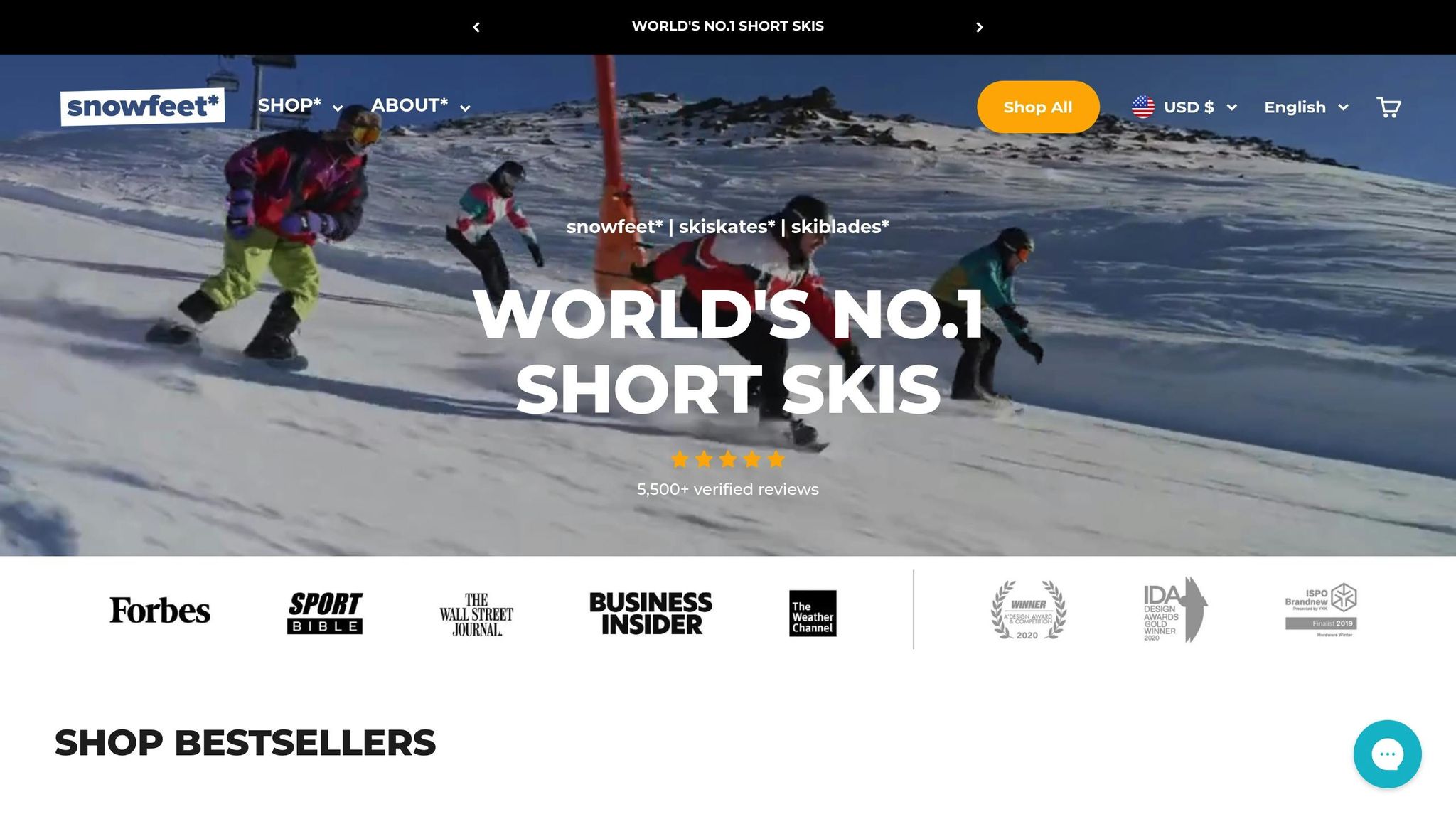
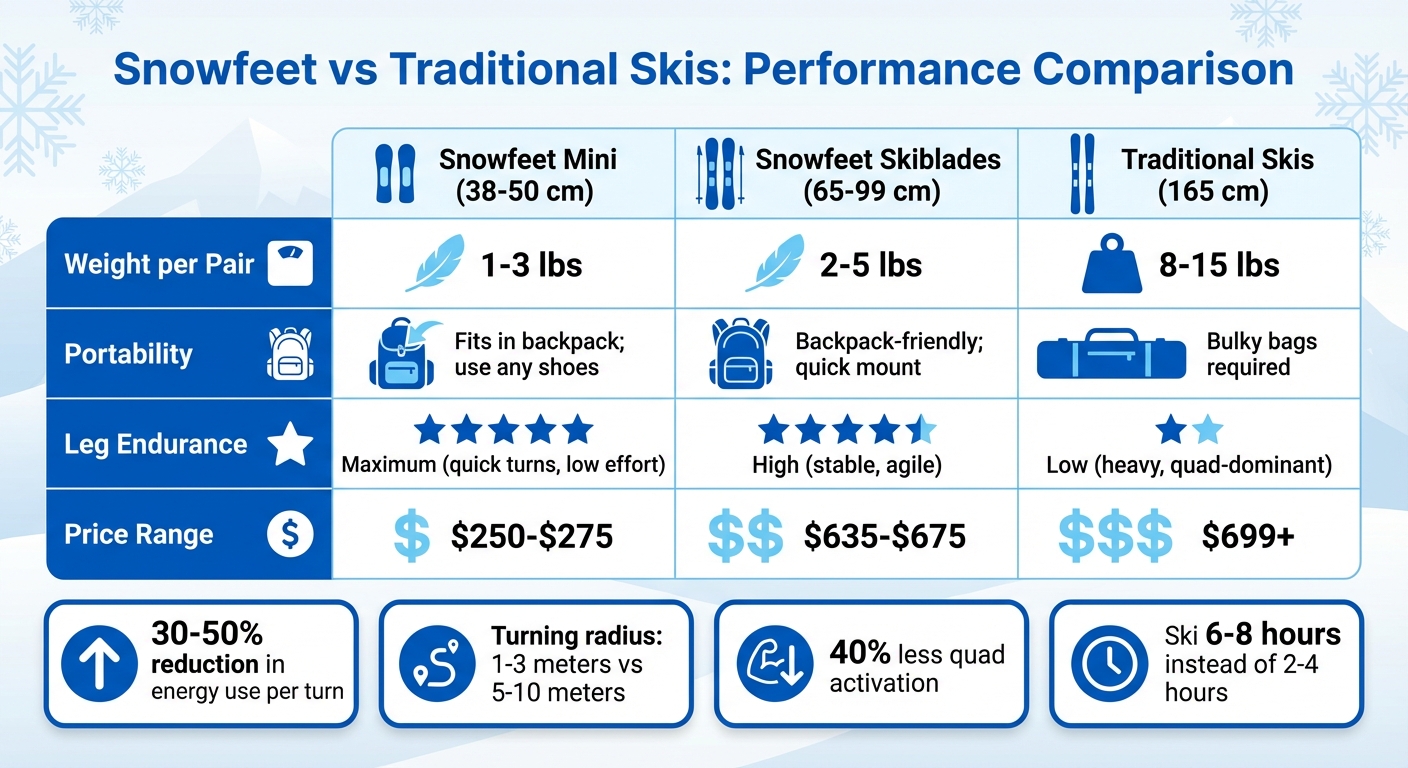
Snowfeet vs Traditional Skis Weight and Performance Comparison
Lighter Weight Means Less Tired Legs
Traditional skis can weigh anywhere from 15–20 lbs per pair, which can quickly wear out your legs. Snowfeet*, however, is all about keeping things lightweight. For example, the Mini Ski Skates (38 cm) weigh just 2–3 lbs per pair, the PRO (50 cm) comes in at 3–4 lbs, the Skiblades (65 cm) are about 4 lbs, and even the largest 99 cm models stay under 5 lbs total.
This lighter design translates to a 30–50% reduction in energy use per turn. That means less strain on your quads and hamstrings, so you can stay out on the slopes for 6–8 hours instead of calling it quits after 2–4 hours. Pro skier Marcus Caston has pointed out how legs often "burn" in tough terrain, but Snowfeet* helps delay that fatigue. And saving energy here sets you up for even better control on the slopes.
Small Size Makes Transport Easy
Traditional skis, with their 160–180 cm length, often require roof racks or extra storage. Snowfeet*, on the other hand, measures between 38–99 cm and can fit into a standard 30L backpack (roughly 20×12×8 inches).
For skiers in the U.S. heading to spots like Breckenridge or Tahoe, this compact size is a game-changer. It’s small enough to fit in TSA-approved carry-ons (22×14×9 inches), making air travel a breeze. Plus, you can easily hop on public transit or hike to the slopes without the hassle of lugging around bulky gear. One satisfied user, Def Acres, summed it up perfectly:
"Super easy, super light; don't need to lug my skis around and you can wear them pretty much all day"
Better Control with Less Effort
Snowfeet* shines when it comes to control. With a turning radius of just 1–3 meters compared to the 5–10 meters typical of traditional skis, they reduce quad activation by roughly 40%. This tighter radius allows you to pivot more with your upper body, cutting down on the effort needed from your legs.
Cameron Asbell, who tried out Snowfeet* Ski Skates at Cataloochee in North Carolina, shared his experience:
"It doesn't put stress on your knees as much also making it easier to control and regain balance when falling"
The combination of precise control and reduced physical strain means your legs stay fresher, letting you enjoy the slopes for hours. Plus, that extra maneuverability makes it easier to master efficient skiing techniques while conserving your energy.
Best Snowfeet* Products for All-Day Skiing
Snowfeet* Mini Ski Skates (38 cm and PRO 50 cm)
If you're looking for something lightweight and easy for all-day skiing, the Mini Ski Skates are a great pick. The 38 cm model weighs just 1–2 lbs per pair, while the PRO 50 cm version is slightly heavier at 2–3 lbs per pair. The best part? You don’t need bulky ski boots. These strap right onto your regular waterproof winter shoes or snowboard boots, saving you from the discomfort of stiff ski boots digging into your shins after hours on the slopes.
The 38 cm option is perfect for beginners. Its design feels natural, almost like skating, and it’s even earned recognition as an ISPO finalist and A'design award winner. Plus, users have mentioned it reduces knee strain. On the other hand, the PRO 50 cm model is built with reinforced edges, giving you better grip on groomed runs. It’s a great choice for casual skiers who want to explore more of the mountain. Prices start at $250 for the 38 cm and $275 for the PRO 50 cm, which is a steal compared to traditional ski setups that often run $699 or more.
If you're after more stability while keeping things nimble, check out the Skiblades.
Snowfeet* Skiblades (65 cm and 99 cm)
For those who want a balance of stability and agility, the Skiblades are a solid option. The 65 cm model weighs about 2–4 lbs per pair, making it great for snowparks and groomed runs. Its shorter length lets you make quick edge changes and try out tricks, while still offering enough stability for moderate speeds. If you’re planning a full day of carving or venturing into light powder (up to 4 inches), the 99 cm model is your go-to. It provides extra float and better front-to-back support, all while being much lighter than traditional skis.
Both models feature handmade wood cores from Europe and metal edges for precise control. The 99 cm version is especially popular with intermediate skiers who want to extend their time on the slopes. Its design spreads the effort across your body instead of just your legs, reducing strain so you can ski longer. Pricing starts at $635 for the 65 cm and $675 for the 99 cm models.
Here’s a quick breakdown to show how Snowfeet* products stack up against traditional skis.
Snowfeet* vs. Traditional Skis: Quick Comparison
| Feature | Snowfeet* Mini (38–50 cm) | Snowfeet* Skiblades (65–99 cm) | Traditional Skis (165 cm) |
|---|---|---|---|
| Weight (per pair) | 1–3 lbs | 2–5 lbs | 8–15 lbs |
| Portability | Fits in a backpack; use any shoes | Backpack-friendly; quick mount | Bulky bags required |
| Leg Endurance | Maximum (quick turns, low effort) | High (stable, agile) | Low (heavy, quad-dominant) |
| Price Range | $250–$275 | $635–$675 | $699+ |
This table highlights how Snowfeet* models are lighter and more convenient than traditional skis. Their ultra-lightweight design significantly reduces leg fatigue, giving you the freedom to ski longer and have more fun on the slopes.
sbb-itb-17ade95
Skiing Techniques That Save Your Legs
Snowfeet* gear not only lightens your load but also introduces techniques that help conserve leg strength throughout the day.
Use Your Whole Body, Not Just Your Legs
Relying only on your legs is a recipe for fatigue. With Snowfeet*, the key is to stand upright and keep your weight balanced over the middle and back of your feet. Unlike traditional skis that encourage a forward-leaning stance, Snowfeet* promote a more upright posture, engaging your entire body.
To ease the burden on your quads, use your core to initiate turns. As Grant Krieg from Ski the Northeast puts it:
"I suspect that many people who find that they can't ski as much or as long as they get older are actually just suffering from poor form... my form has improved a lot in that time, and I find skiing mostly effortless"
A staggered stance - one foot slightly ahead of the other - adds stability and reduces the need for constant adjustments. Keeping your legs shoulder-width apart enhances control, while evenly distributing your weight prevents overloading one side. This balanced posture is the foundation for energy-efficient skiing.
Make Quick Turns Without Wasting Energy
Once you’ve nailed proper weight distribution, focus on quick, efficient turns to keep your momentum going. Snowfeet* excel here, offering a skating-style pivot that’s far less taxing than maneuvering traditional skis. Their compact design makes direction changes a breeze. For example, the 99 cm Skiblades feature a parabolic shape that almost carves turns for you, while the 38 cm Mini Ski Skates let you pivot sharply with a simple skating motion.
Stay centered over your feet and let the metal edges do the work during turns, sparing your legs unnecessary effort. On flat terrain, glide using a hockey-style skating motion for smooth, energy-efficient movement. Regular waxing helps reduce resistance, and the integrated heel brake makes stopping easier, so you conserve energy for the slopes ahead.
Stretching Before and After Skiing
Skiing can burn around 3,000 calories a day, which puts a lot of demand on your muscles. Taking a few minutes to stretch before and after skiing helps keep your muscles working well. And since Snowfeet* rely on quick, skating-like movements, a dynamic warm-up is particularly helpful.
Warm-Up Exercises Before You Start
Before you strap on your Snowfeet*, spend about five minutes doing some dynamic stretches. Start with leg swings - both front-to-back and side-to-side - to loosen up your hips and thighs. Then, add walking lunges and torso twists to wake up your glutes, quads, and core.
Stick to movement-based stretches rather than holding static positions. This keeps your muscles warm and flexible, which is key for the balance and quick turns Snowfeet* require. Static stretching before activity can sometimes reduce muscle elasticity, so save those for later. Once you’ve warmed up, keep moving until you hit the slopes.
Cool-Down Stretches After Skiing
After a full day on the slopes, cooling down is just as important. Start with foam rolling - spend about two minutes on each leg to ease muscle tension. Then, move on to static stretches, holding each one for 30–60 seconds to target your calves, quads, hamstrings, glutes, and lower back.
Don’t forget your feet and shins. After being in boots all day, they’ll need some love too. Spend five minutes stretching by dropping your heel off a curb and giving your toes a wiggle. Physical therapist Nicole Haas emphasizes:
"It's really important for people to undo the tightness they build up during activity, so they have the mobility to use proper movement patterns and avoid injury".
Conclusion
Skiing all day doesn’t have to leave you completely wiped out. Snowfeet* products are designed to be lighter, easier to handle, and offer better control, making them a smart alternative to traditional skis. They let you enjoy more time on the slopes without wearing out your legs.
Whether you go for the 38 cm Mini Ski Skates or the 99 cm Skiblades, Snowfeet* has something for every skiing style. That lightweight edge makes a big difference when you’re carving turn after turn or hopping on and off the lift. As user Def Acres shared:
"Super easy, super light; don't need to lug my skis around and you can wear them pretty much all day"
This compact, lightweight design doesn’t just make life easier - it saves energy. Less bulky gear means less strain on your muscles. Quick turns take less effort, and keeping your balance doesn’t require the knee-intensive movements you’d deal with using traditional skis. Plus, you can ditch those stiff ski boots and opt for comfy snowboard boots instead, creating a setup that’s perfect for long days on the mountain.
Pairing Snowfeet* gear with solid skiing techniques and proper stretches makes every run smoother and more enjoyable. With tips like dynamic warm-ups, full-body movement, and a good cool-down, you’ll feel the difference after hours on the slopes. Over 50,000 riders worldwide are already on board, and Snowfeet* has earned an impressive 4.9/5 rating from more than 5,500 verified reviews.
Want to ski longer and feel stronger? Try Snowfeet* and discover how all-day skiing can be fun, energizing, and surprisingly easy on your legs.
FAQs
How do Snowfeet help reduce leg fatigue compared to traditional skis?
Snowfeet products are built to help cut down on leg fatigue when compared to traditional skis. Thanks to their shorter and lighter design - similar to skiblades or mini skis - they’re easier to handle and take less effort to control. This makes them a great option for longer days on the slopes without wearing yourself out.
Traditional skis, on the other hand, tend to be heavier and require more strength for turning and maintaining control. Snowfeet gear, with its compact design, helps you glide more efficiently and encourages better technique with shorter, more controlled strides. The result? Less strain on your legs and more energy to enjoy the day. If comfort and endurance are high on your list, Snowfeet might just be the gear you’ve been looking for.
Can I wear any type of winter boots with Snowfeet?
Yes, you can pair Snowfeet with most winter boots. That said, for the best experience, go with sturdy, insulated boots that provide solid ankle support. This helps you stay in control and feel stable, making your time on the slopes safer and more enjoyable.
Steer clear of soft or overly flexible boots - they just don’t give the support you need for good performance. Choosing the right boots ensures a snug, comfy fit so you can make the most of your day out in the snow!
What are the best skiing techniques to stay comfortable and conserve energy with Snowfeet?
To get the most out of your time with Snowfeet, focus on a smooth gliding motion instead of lifting your feet too much. Shorter strides are your friend here - they help you stay in control and avoid unnecessary strain. Keep your posture balanced and upright to maintain stability and reduce fatigue.
Thanks to their lightweight design, Snowfeet make it easier to keep proper form all day long. Plus, their compact size gives you better control than traditional skis, especially when navigating turns and transitions. Pair these techniques with the ergonomic design of Snowfeet, and you’ll be set for longer, more enjoyable runs without tiring out your legs.













Leave a comment
This site is protected by hCaptcha and the hCaptcha Privacy Policy and Terms of Service apply.