



















Yes - short skis can be worth it for older skiers if you want easier turns, less leg strain, and more confidence at slow to moderate speed. But there’s a catch: as ski length drops from 120 cm to 99 cm, 65 cm, and 44 cm, you give up calm, planted feel in rough snow and at higher speed.
If I had to sum it up fast, here’s my take:
- 65 cm: best for cautious returners and easy groomer days
- 99 cm: best middle pick for many intermediate older skiers
- 120 cm: best if you still want more support on longer runs
- 44 cm: fun, but only if your balance is already strong
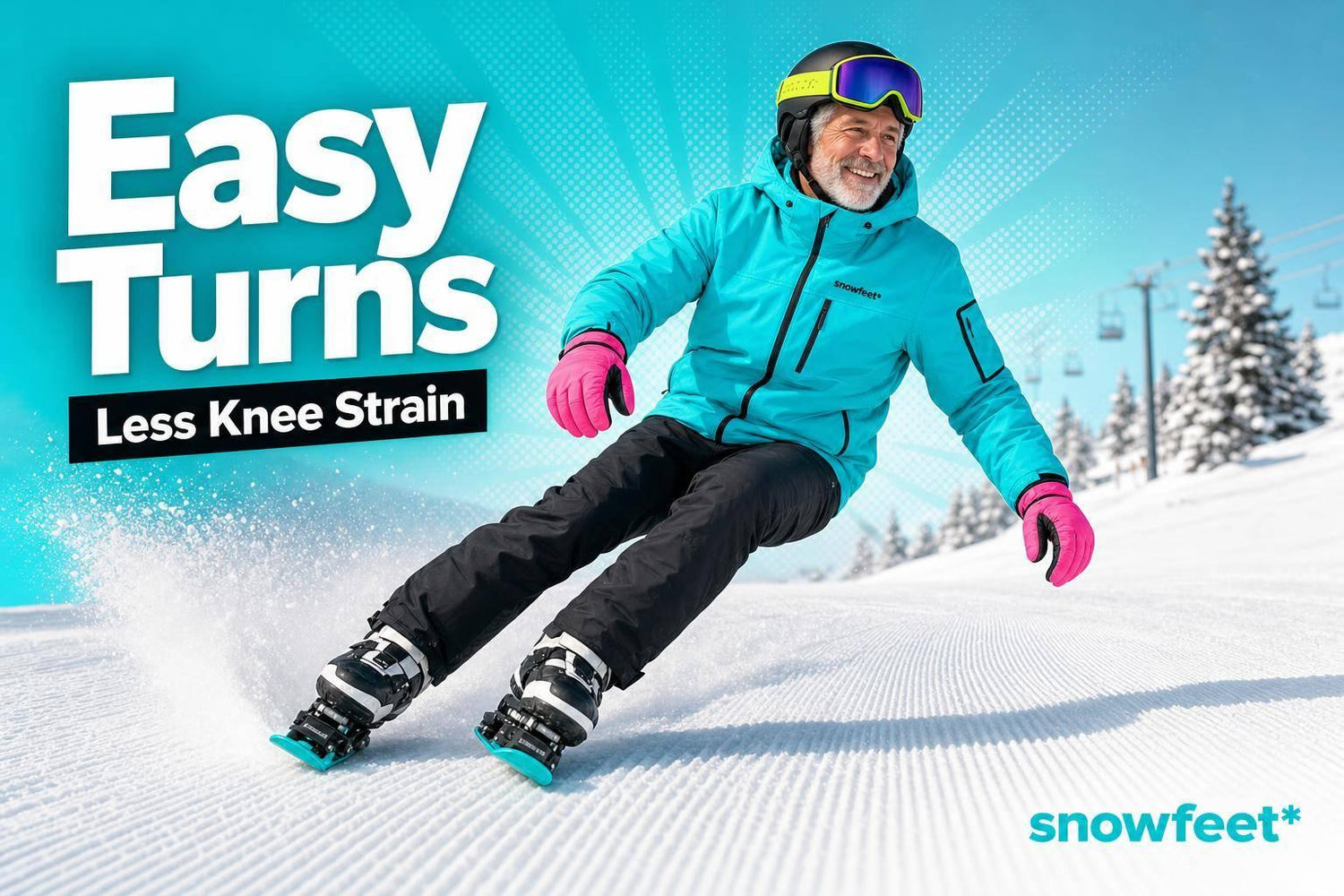
One key point stood out to me: shorter skis can cut some turning effort and may lower knee torque on groomers at moderate speeds, but they’re not a fix for bad snow, joint pain, or going too fast. That tradeoff matters.
My short answer: if your goal is lower-stress resort skiing, short skis make sense. If you still like fast, hard-charging laps, longer skis still win.
Short Skis vs Long Skis for Older Skiers: Which Length Is Right for You?
Best Skis for the Elderly? | Are Short Skis Better for Older Skiers?
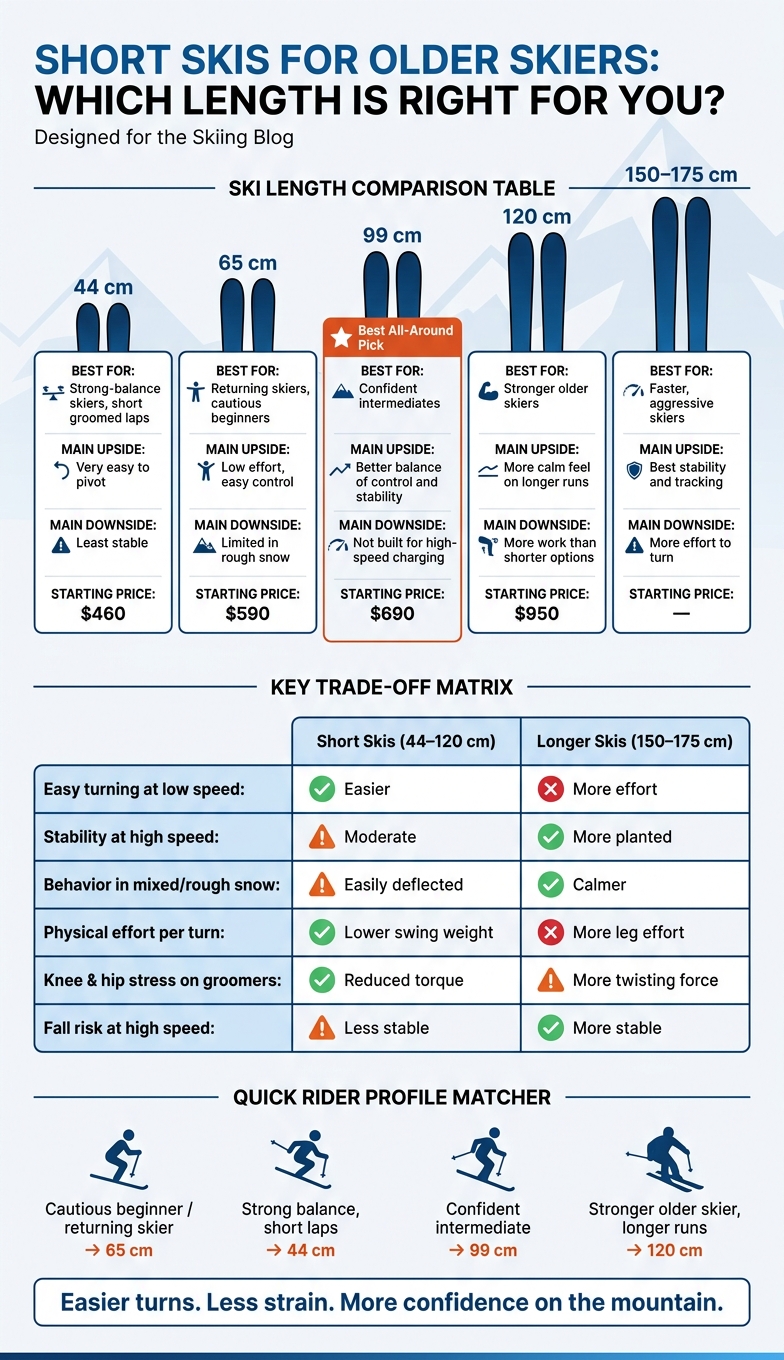
Quick Comparison
| Length | Best for | Main upside | Main downside |
|---|---|---|---|
| 44 cm | Strong-balance skiers, short groomed laps | Very easy to pivot | Least stable |
| 65 cm | Returning skiers, cautious beginners | Low effort, easy control | Limited in rough snow |
| 99 cm | Confident intermediates | Better balance of control and stability | Still not built for high-speed charging |
| 120 cm | Stronger older skiers | More calm feel on longer runs | More work than shorter options |
| 150–175 cm | Faster, aggressive skiers | Best stability and tracking | More effort to turn |
So, if you’re picking gear for comfort, control, and confidence - not ego - short skis deserve a hard look :)
Short Skis vs. Long Skis: Control, Stability, and Confidence
For older skiers, the main difference is pretty simple: short skis are easier to turn, while long skis feel calmer as speed builds. And for many older skiers, easy steering matters more than top speed. That’s most true if you want smoother days on groomers, not all-out speed.
| Factor | Short Skis | Long Skis |
|---|---|---|
| Easy turning at low speed | ✅ Easier to initiate and finish turns | ❌ Takes more room and effort |
| Stability at high speed | ⚠️ Stable at moderate speeds, less calm as speed rises | ✅ More planted and calmer at speed |
| Behavior in mixed snow | ⚠️ More easily knocked around on uneven or chopped snow | ✅ Calmer through irregular snow |
Where short skis feel easier right away
Short skis react almost as soon as you shift your weight or tip your ankle. There’s just less ski to handle, so turns begin and end faster. You don’t need a lot of speed or a big arc to get them moving across the hill. That can make tight, controlled skiing feel a lot less intimidating.
That fast response is a big reason compact Snowfeet* models often feel more confidence-building than full-length skis. If you’ve ever felt like longer skis were doing their own thing, short skis can feel like a nice reset :) More direct. Less work. Less “okay, now turn... now turn...”
Where longer skis still perform better
Longer skis do a better job holding their line as speed goes up. They also stay more settled in chopped-up snow, uneven patches, and mixed conditions. So if an older skier still likes to ski fast and carve hard, longer skis will usually feel better.
That’s the trade-off when picking the right Snowfeet* length for your skill level and the terrain you ski most.
sbb-itb-17ade95
Effort, Joint Comfort, and Safety Trade-Offs
How shorter skis can reduce strain on your body
Short skis are lighter and have less swing weight. In plain English, that means they’re easier to lift, move, and snap through turns. They’re also less of a hassle in crowded lift lines, where you’re shuffling, pivoting, and trying not to poke the person in front of you. For casual resort days, that easy handling can matter more than top-end speed.
On groomers at moderate speed, shorter skis can also cut down on knee torque because they take less leverage to turn. Research on alpine skiing shows that skiers depend a lot on knee movement to change direction, and that adds to lower-body wear over time. That can mean less strain, but it won’t solve joint pain on its own. Boot fit, bindings, terrain, and technique still play a big part.
Safety trade-offs older skiers should know before buying
Short skis tend to work best for slower, more controlled skiing. They’re often easier to recover on after small mistakes, which is a big plus if you want a setup that feels less demanding.
The catch? They’re less stable in rough snow. Chopped-up conditions can knock them around more, and their fast edge engagement can surprise skiers who push too hard or get a bit abrupt. So, yeah, they’re fun - but they’re not magic. You still want the right length for your skill level and the terrain you ski most.
If you’re not sure where to start, 99 cm and 120 cm Snowfeet* skiblades are the safer bets than the 65 cm version.
| Aspect | Short Skis (44–120 cm) | Longer Skis (about 150–175 cm) |
|---|---|---|
| Physical effort per turn | ✅ Lower - less swing weight, easier to redirect | ❌ More leg effort, especially at slower speeds |
| Carrying and lift-line handling | ✅ Easier to manage in tight spaces | ❌ Awkward in crowds, heavier to carry |
| Knee and hip stress on groomers | ✅ Can reduce some knee torque at moderate speeds | ⚠️ More twisting force through turns over time |
| Stability in rough or chopped snow | ⚠️ Less stability in rough snow, easier to deflect | ✅ Calmer and more planted in variable snow |
| Edge-catch risk | ⚠️ Higher if you edge too hard or use on the wrong terrain | ✅ More forgiving with gradual edge engagement |
| Fall risk at high speed | ⚠️ Less stable and harder to control | ✅ More stable at speed and on long descents |
The next question is length: 65 cm for max nimbleness, 99 cm for a middle ground, or 120 cm for the easiest all-around pick.
Which Snowfeet* Model Fits Which Older Skier
Best picks for cautious beginners and returning skiers
If you want less work and more control, start with the 65 cm Snowfeet* Skiblades.
They’re the best entry point for cautious beginners and older skiers coming back after time away. They’re easy to pivot, easy to stop, and still stable enough for groomed green runs. That matters a lot when you want the day to feel smooth, not like a wrestling match with your gear.
Compared with older snowblade-style gear, the 65 cm Snowfeet* is built more for smooth resort carving and steady edging. So, you get that short-ski ease without the twitchy feel some older setups had.
If you want something even more playful, the 44 cm version is a different story.
Best picks for confident intermediates and stronger seniors
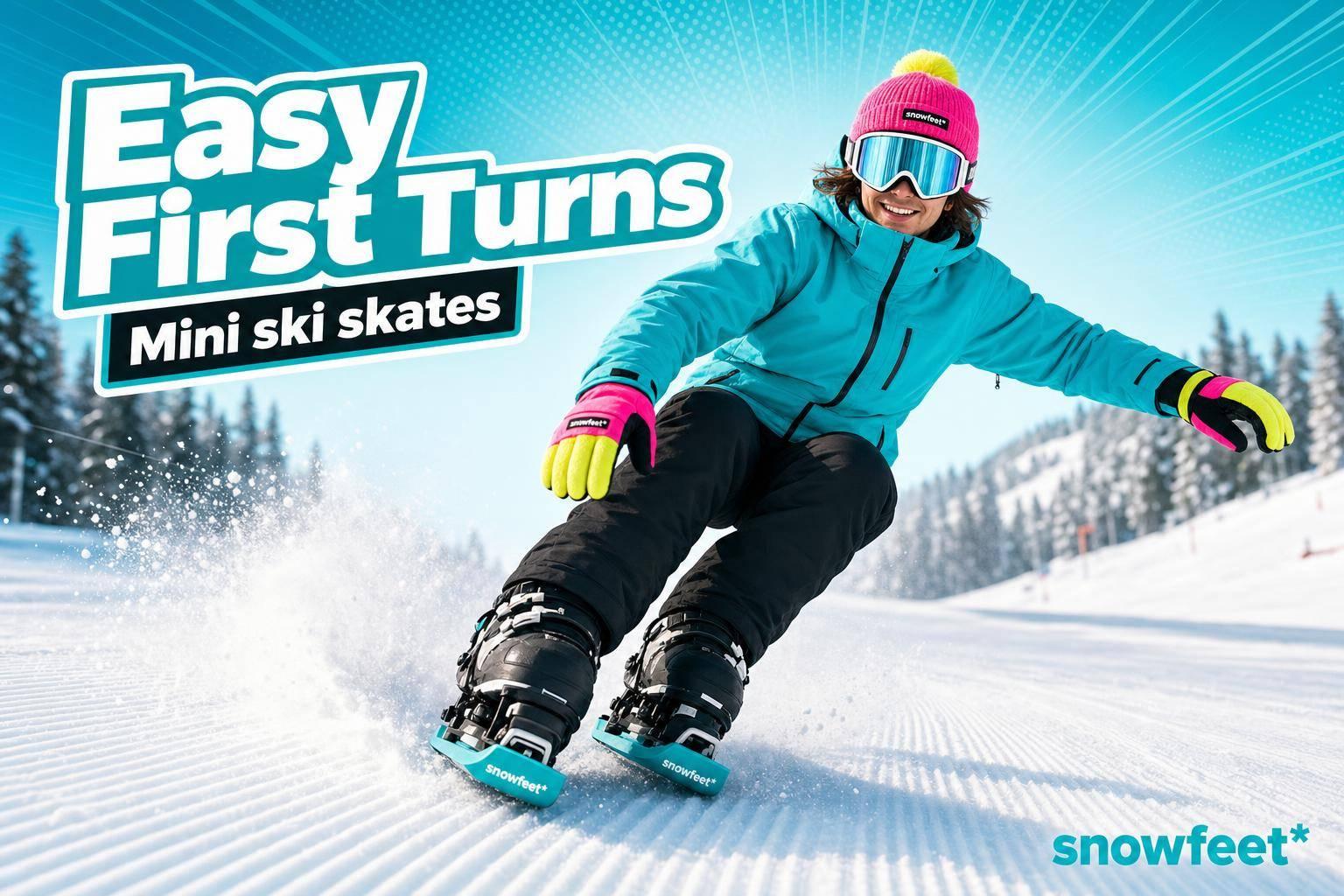
The 44 cm Skiskates aren’t the best match for nervous returners. They fit riders with strong balance who already feel at home on snow. The feel is closer to skating, and they work best on short, smooth groomers.
Once your balance is there, the next thing to sort out is simple: how much stability do you want at moderate speed?
For many confident intermediates, the sweet spot is the 99 cm Skiblades. They’re the best all-around pick if you want more confidence on chopped groomers. If you ski in softer or mixed snow, go with the 99 cm POWDER version.
If you’re a stronger, confident older skier and want the closest feel to a standard ski, choose the 120 cm Short Skis. They make more sense for longer descents and sustained runs, where a bit more length helps the ride feel calmer.
Why Snowfeet* works better for most casual riders
Use the chart below to line up your skill level and terrain with the right Snowfeet* length:
| Rider Profile | Terrain | Fit |
|---|---|---|
| Cautious beginner or returning skier | Groomed greens, slow speed | Skiblades 65 cm |
| Well-balanced older rider, strong balance | Short groomed greens, slow–moderate | Skiskates 44 cm |
| Confident intermediate | Blues with occasional blacks, moderate speed | Skiblades 99 cm or POWDER 99 cm |
| Stronger, confident older skier | Blues and groomed blacks, moderate to occasionally fast | Short Skis 120 cm |
The final verdict looks at those trade-offs head-on.
Final Verdict: When Short Skis Are Worth It and When They Are Not
It comes down to one simple trade-off: easy control and less effort versus more stability at speed.
Short skis are worth it if you want easier resort skiing
For most older skiers, short skis make more sense for relaxed resort days. If you care most about easier turns, less strain, and more confidence on the hill, a short Snowfeet* ski is a better fit than a long ski.
Here’s the fast match-up:
| Your Goal | Best Snowfeet* Pick | Starting Price |
|---|---|---|
| Easier resort fun, returning skier | Skiblades 65 cm | $590 |
| Short laps near the base area | Skiskates 44 cm | $460 |
| All-day comfort on groomed blues | Skiblades 99 cm | $690 |
| More stability, longer turns, some speed | Short Skis 120 cm | $950 |
A simple way to think about it:
- 65 cm works well for cautious skiers coming back to the sport
- 99 cm is the best fit for most intermediate skiers
- 44 cm is great for short laps near the base area
- 120 cm suits stronger skiers who want a bit more stability
Stick with longer skis if you still ski fast and aggressively
That said, if speed is your thing, longer skis still win. They’re a better match for skiers who want speed, hard carving, and steep terrain. More ski on the snow gives you better grip on hardpack or ice and a smoother feel in long, fast turns.
So, if you still ski fast, go with longer skis. If you want easier, lower-stress days, go with Snowfeet*.
FAQs
Are short skis easier on bad knees?
Yes. Short skis are usually easier on the knees than long, standard skis because they create less twisting force when you turn.
That matters on snow. Less twisting can mean less stress on your joints, especially if your knees already get cranky after a few runs.
Shorter gear like Snowfeet Skiblades* and Skiskates also takes less effort to control. You don’t have to fight the skis as much, which can help cut down on leg fatigue. And when your legs aren’t cooked by lunchtime, skiing tends to feel a lot more comfortable and easier on your joints.
Which short ski length should I start with?
For beginners, the best length comes down to two things: what feels comfortable and what kind of ride you want.
- 38 cm Mini Ski Skates: best for learning basic balance and weight transfer
- 44 cm Skiskates: close to that, but a bit more reactive, with more of an ice-skating feel
- 65 cm Skiblades: closer to a standard ski feel, with more control while learning turns and stops
As you get more confident, 99 cm or 120 cm models give you more stability and better performance across mixed terrain.
Can short skis handle icy or rough snow?
Yes - short skis can handle icy and rough snow, but they need more precise weight distribution than long skis. That’s the tradeoff. You get a nimble, quick feel, but you also need to stay a bit more centered and dialed in.
Snowfeet Skiblades use metal edges and a wood core, which helps them stay controlled on hard-packed snow. So while they’re short, they’re not just toy-like little boards. They’re built to give you a solid grip when the surface gets firm.
Long skis still have the edge when it comes to grip on pure ice. That extra length helps them hold a line with less effort. But within the Snowfeet lineup, the 99 cm model feels more stable and offers better grip in icy conditions than the 65 cm version.
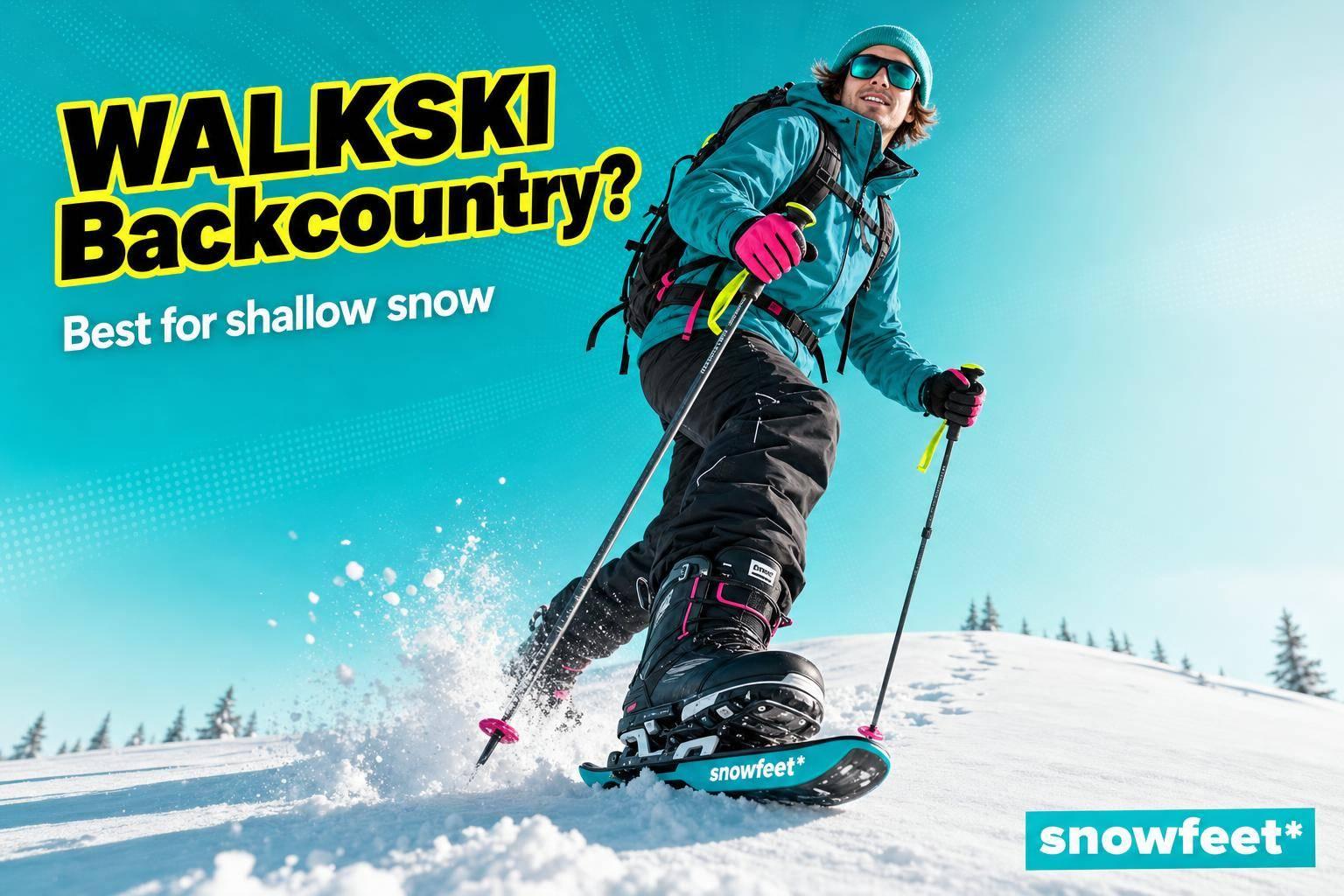
On rough snow or groomed runs, Snowfeet products shine with their fast response and agile feel. They’re quick to turn, easy to move around, and a lot of fun when the terrain gets choppy and you want gear that reacts right away.











Leave a comment
This site is protected by hCaptcha and the hCaptcha Privacy Policy and Terms of Service apply.