



















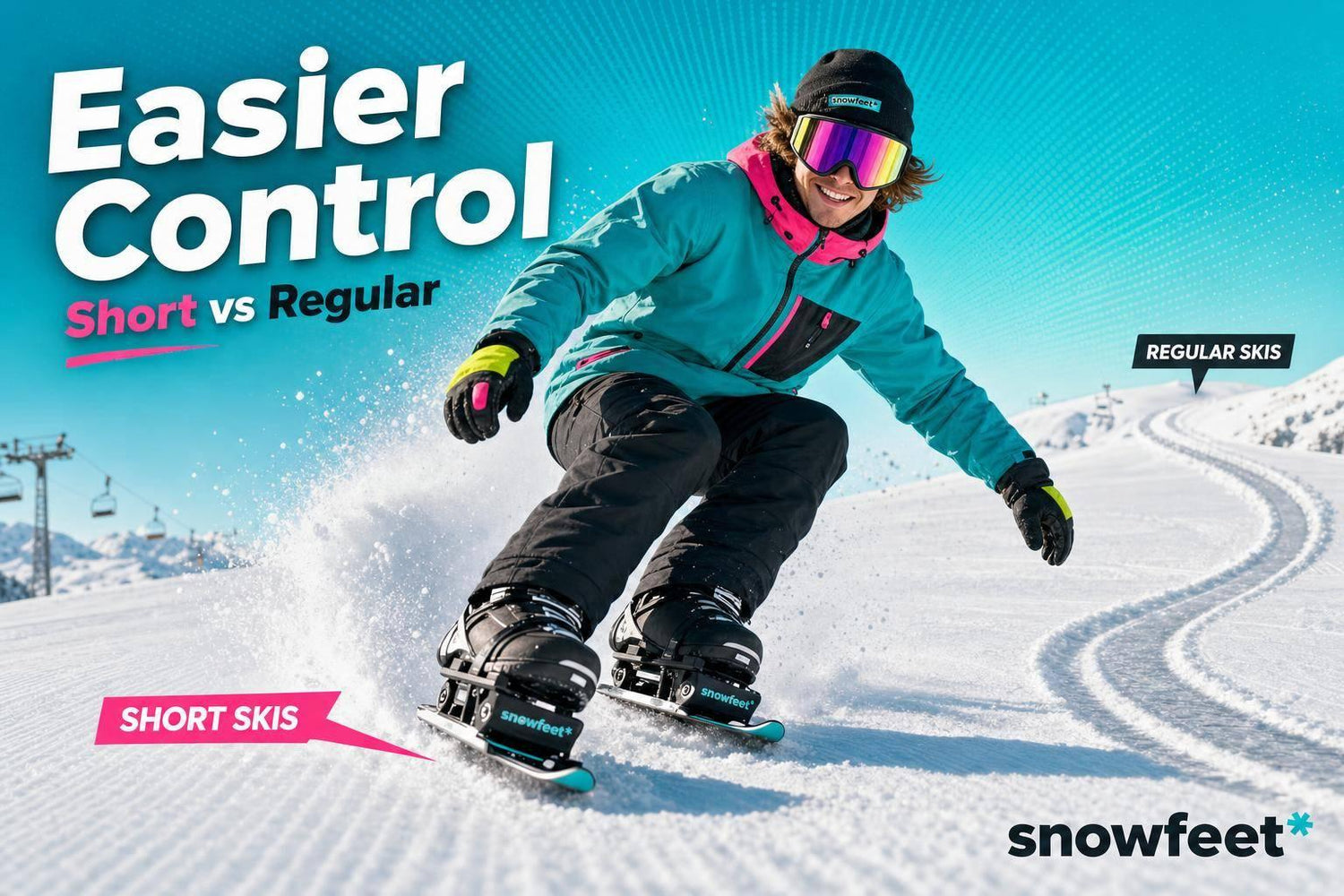
If you want the short answer: short skis are easier to control for most people. They turn with less effort, feel less awkward at slow speeds, and work well on green and blue runs, moguls, narrow trails, and busy resort days.
Here’s the simple split:
-
Short skis (about 15–47 in.) are easier for:
- beginners
- casual riders
- snowboarders switching to skis
- families
- tight spaces and slow-to-mid speed skiing
-
Regular skis (about 63–73 in.) are easier for:
- high-speed carving
- steep runs
- icy groomers
- long, open terrain
The main reason is simple. Shorter skis pivot faster. Longer skis track straighter. That means one feels easier in traffic, and the other feels calmer when you’re flying.
A few size points from the article make this easy to picture:
- 44 cm / 17 in.: almost skate-like, super easy to pivot
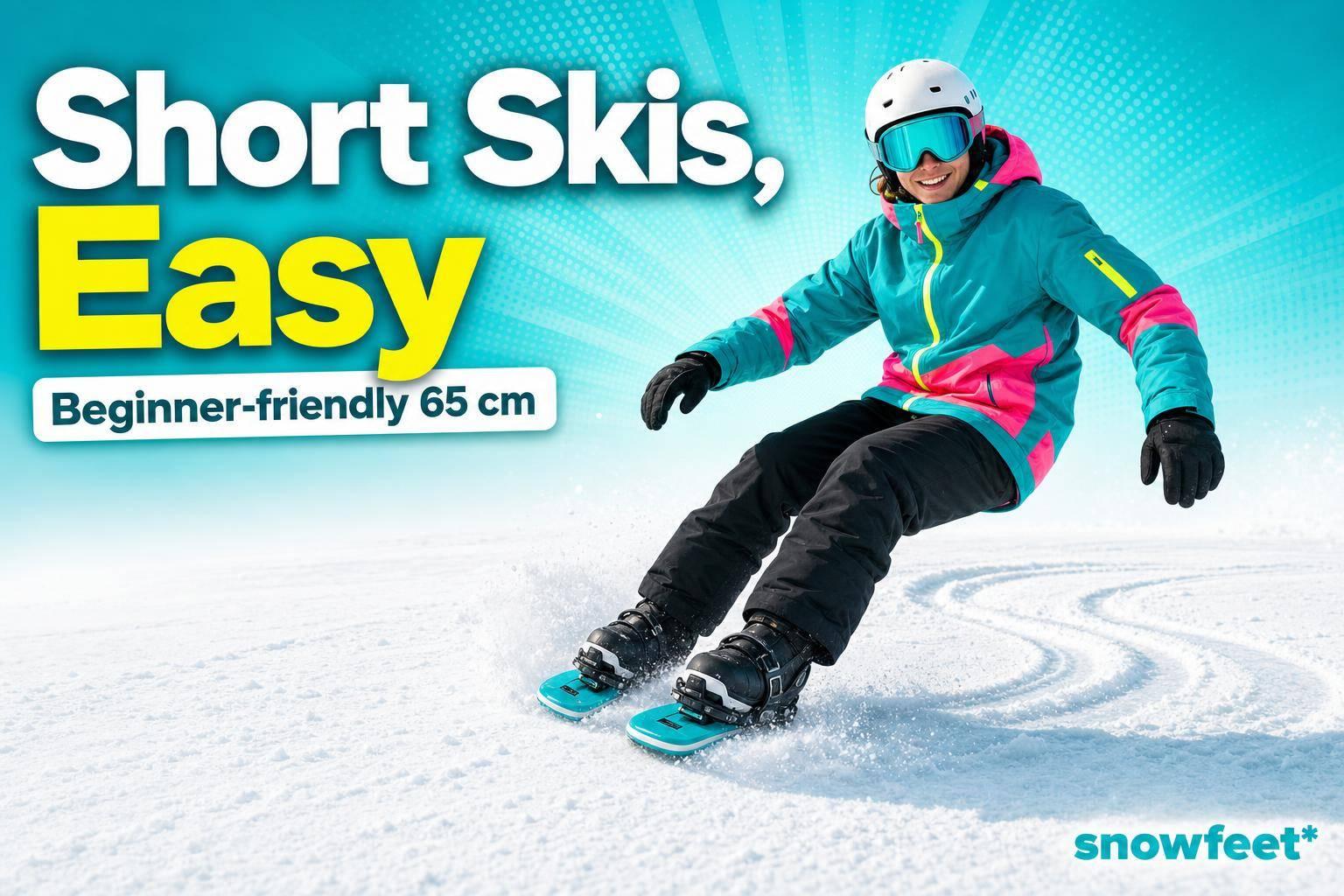
- 65 cm / 26 in.: friendly for new riders
- 99 cm / 39 in.: a nice middle ground
- 120 cm / 47 in.: closer to a full ski feel
- 160–185 cm / 63–73 in.: common adult regular ski range
Short Skis vs. Long Skis
Quick Comparison
| Point | Short Skis | Regular Skis |
|---|---|---|
| Low-speed control | Better | Good |
| Tight turns | Better | Needs more room |
| Beginner feel | Less intimidating | Can feel long at first |
| Moguls and narrow trails | Better | More work |
| High-speed stability | Limited | Better |
| Ice grip | Less secure | Better |
| Long carved turns | Short arcs | Better |
| Travel and storage | Much easier | Bulkier |
So, if you ski like most U.S. resort riders do - moderate speed, groomers, family laps, crowded weekends - short skis will usually feel easier to control. If your happy place is fast carving on wide-open hardpack, regular skis still win.
If you want a quick visual on short skis in action, these YouTube searches help:
How short skis and regular skis behave on the slope
Turning, stopping, and speed management
You feel the gap right away when you turn, stop, or try to control speed.
Short skis start turns fast and make much tighter arcs. The Snowfeet* Skiskates 44 cm (~17 in.) and Skiblades 65 cm (~26 in.) can pivot almost in place. That makes them a great fit for crowded runs, quick direction changes, and fast speed checks when traffic gets messy. They also scrub speed with a quick skid stop in a small space. Handy when the slope feels like rush hour on snow.
The Skiblades 99 cm (~39 in.) and 120 cm (~47 in.) land in a sweet spot. They still turn faster than full-length skis, but they feel calmer once you start moving faster on open groomers. You get some of that quick, playful feel without giving up as much control.
Regular skis, usually around 160–185 cm (63–73 in.) for adults, need more room and a bit more time to come around. But once they’re set on edge, they track through a longer, smoother carve. The ride feels steady, though not as quick to react.
Balance, moguls, narrow trails, and beginner slopes
For newer skiers, 65–99 cm Skiblades can feel less intimidating. You can practice turning and stopping at low speed without feeling like the ski is pulling you downhill. They’re lighter, easier to hold parallel, and less likely to catch an edge if your stance is a little off. And let’s be honest, at first, everyone’s stance is a little off.
That shorter size also helps in bumps and tight spots.
In moguls, shorter skis move through the bumps with less fuss. Their compact length fits more naturally into the troughs, and fast direction changes don’t ask for the same timing or leg power that long skis need. The same thing happens on narrow trails and in tree sections. The 44 cm Skiskates and 65 cm Skiblades can pivot on the spot and slide into tight gaps where long skis feel slower to redirect.
Where regular skis are easier to control
Short skis are all about quick movement, but regular skis still shine in a few spots.
They do better on icy groomers, steep pitches, and fast, wide-open runs. A longer edge grips hard snow with more hold when you tip the ski over. At higher speeds, that extra length also helps calm vibration and keeps the ski tracking straighter.
That matters most for strong skiers who like fast carved turns on hardpack or spend time on steep terrain. For that kind of skiing, full-length skis are the better tool. Long skis handle speed and carving better in open terrain, while Snowfeet* feels easier to control in places that are tight, slow, or crowded.
sbb-itb-17ade95
Short skis vs regular skis: direct comparison
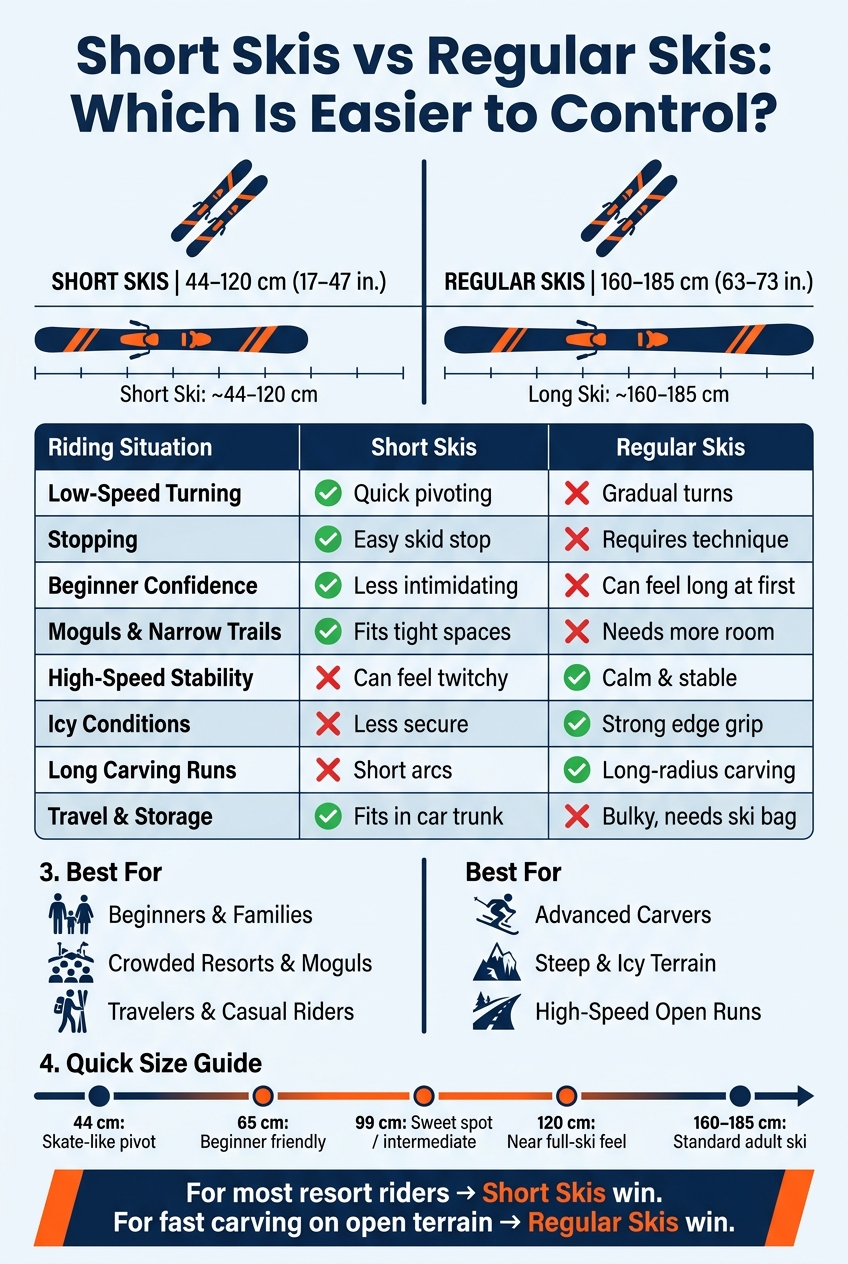
Short Skis vs Regular Skis: Control & Performance Comparison
Here’s the plain-English version: short skis are easier to control at slow speeds, while regular skis feel calmer and more planted once you pick up speed.
That split shows up fast when you look at terrain and riding style.
Comparison table: control by riding situation
| Riding Situation | Short Skis (Snowfeet*) | Regular Skis |
|---|---|---|
| Low-speed turning | Quick pivoting and tight turns | Smoother, more gradual turns |
| Stopping | Easy skid stop at slow to moderate speeds | Reliable stopping once technique is learned |
| Beginner confidence | Less intimidating; easier to recover from mistakes | More stable once moving, but can feel long and unwieldy at first |
| Moguls | Quick direction changes in tight spaces | Better when you plan your line ahead |
| Narrow trails | Pivots easily into tight gaps | Slower to redirect; needs more space |
| High-speed stability | Can feel twitchy at higher speeds | Stable tracking; stays calm at higher speeds |
| Icy conditions | Less secure on ice; best at cautious speeds | Strong edge grip on hardpack and ice |
| Long carving runs | Short, playful arcs; limited edge hold | Confident, long-radius carving with better support |
If you like tight turns, slower speeds, and a setup that doesn’t feel like wrestling two long planks, short skis make a lot of sense. If you want speed, edge grip, and smooth carving on open runs, regular skis still have the upper hand.
Pros and cons of short skis
Snowfeet* Skiskates (44 cm / about 17 in.) and Skiblades (65 cm / about 26 in., 99 cm / about 39 in., and 120 cm / about 47 in.) focus on ease of use. They’re lighter, easier to move around, and a lot more friendly when you’re still learning the ropes.
| Pros | Cons |
|---|---|
| Quick, easy turning at low speeds | Less stable above moderate speeds |
| Easy skid stops for beginners | Shorter effective edge means less grip on ice |
| Less intimidating | Not ideal for steep, icy terrain |
| Lighter and easier to carry | Not built for long carving arcs |
| Fits in a car trunk or standard luggage | Less stable on big landings |
| Some models work with winter shoes or snowboard boots | Can feel twitchy on long, fast groomer days |
A lot of beginners like short skis for one simple reason: they feel less awkward right away. You can turn them fast, stop with a skid, and recover from small mistakes without that “uh-oh” feeling.
Pros and cons of regular skis
Regular skis lean toward speed, carving, and open terrain. The flip side? They ask more from you at the start, both on the snow and in the parking lot.
| Pros | Cons |
|---|---|
| Stable and calm at higher speeds | Harder to pivot for beginners |
| Strong edge hold on hardpack and ice | Heavier and more tiring to carry |
| Better for long carving runs | Requires specialized ski bags for travel |
| More support on steep slopes and bigger jumps | Can feel awkward in tight or crowded spaces |
| Higher intimidation factor for new riders |
Regular skis tend to shine when the run opens up and the pace climbs. They hold a cleaner line, grip better on firm snow, and give you more support on steeper slopes or bigger jumps.
Those trade-offs matter most when you match the ski to your skill level and the terrain you ride.
Which ski is easier to control for your rider type
The best pick has less to do with ski culture and more to do with how you ride on snow.
Beginners, casual riders, snowboarders, and families
For beginners, casual riders, and most families, short skis are easier to control. They turn faster, feel lighter, and are more forgiving when you make a mistake.
Snowfeet* Skiskates (44 cm / about 17 in.) feel a lot like skates, so steering and stopping can click fast if you already know inline skating. The Skiblades 65 cm (about 26 in.) give you more support underfoot and work well for first-timers who want a bit more balance. The Skiblades 99 cm (about 39 in.) fit improving intermediates and snowboarders who are moving over to skis. They still turn with ease, but they feel closer to a full ski and give you a bit more edge hold.
Snowboarders tend to adjust fastest to the 65–99 cm range because it feels more familiar than full-length skis.
For families, shorter skis also win on the practical side:
- They’re lighter
- They’re easier to carry
- They’re easier for kids to move around in
One thing matters a lot here: make sure the bindings and boots fit right, especially for smaller riders.
Travelers and riders who want compact gear
Snowfeet* products are much easier to travel with than full-length skis. They fit in a car trunk, store without much fuss, and help you skip the oversized-bag headache that often comes with regular skis.
There’s also a nice side perk: if you bring the same compact setup on each trip, the control feel stays more familiar from one weekend to the next. That can make a bigger difference than people think.
Strong intermediate and advanced skiers
If you’re an advanced skier who spends most of the day on fast, open groomers, regular skis are still easier to control at high speed. On hard, icy mornings or steep frontside runs, that extra stability is no joke.
That said, the Snowfeet* 99 cm and POWDER 99 cm pivot fast, take less effort to move side to side, and cut down the chance of catching a tip in rough or uneven terrain. The 120 cm option gives you more edge length if you want more stability but still want that nimble short-ski feel.
For most other situations, especially mixed terrain, short skis usually feel easier to manage.
Here’s the fastest way to match ski length to rider type and terrain.
| Rider Type | Recommended Ski Type | Typical Length | Example Snowfeet* Model | When Regular Skis May Still Be Better |
|---|---|---|---|---|
| Nervous beginner / casual green-blue rider | Short skis | 44–65 cm | Skiskates 44 cm or Skiblades 65 cm | If you want more stability on fast, open groomers |
| Snowboarder crossing over | Short skis | 65–99 cm | Skiblades 99 cm | If your main goal is long, fast carved turns |
| Family / kids | Short skis | 44–65 cm | Skiskates 44 cm or Skiblades 65 cm | For very young kids, correct boot and binding sizing matters most |
| Frequent traveler / weekend warrior | Short skis | 65–99 cm | Skiblades 99 cm | For long high-speed groomer days |
| Playful all-mountain / tree skier | Short skis | 99–120 cm | POWDER 99 cm or Short Skis 120 cm | On hard icy mornings at high speed |
| Speed-focused skier | Regular skis | 160–180+ cm | Short Skis 120 cm as a compromise | For giant-slalom-style carving |
Use the table to line up ski length with your riding style.
Conclusion: choose the ski that fits how you actually ride
After looking at turning, stopping, balance, and speed control, the answer is pretty simple. For most casual U.S. resort riders, short skis are easier to control. They pivot faster and feel easier to handle on crowded weekend groomers, beginner slopes, and family ski days.
Regular skis still come out on top for high-speed carving, steep terrain, and long open runs.
Here’s the simple breakdown:
- Choose short skis if you mostly ski groomed green and blue runs at moderate speed.
- Choose short skis if you want gear that’s compact and easy to fit in your car trunk.
- Choose regular skis if you spend most of your time carving fast or skiing steep terrain hard.
If short skis sound like the better fit, pick the length based on how you ride, not on what looks the most aggressive. Snowfeet* keeps it simple: the Skiblades 65 cm work well for first-timers, the Skiblades 99 cm fit riders who are getting better and snowboarders making the switch, and the Short Skis 120 cm give you more stability without giving up that quick, nimble feel.
For most riders, short skis make the day easier and a lot more fun.
FAQs
How short should my skis be?
The right ski length depends on your skill level and where you ride. For most casual riders, Snowfeet* short skis are easier to handle than standard skis.
- 38–50 cm: best for beginners
- 44–65 cm: a good fit for intermediate riders
- 99–120 cm: better for advanced riders, mixed terrain, and powder
Are short skis safe for beginners?
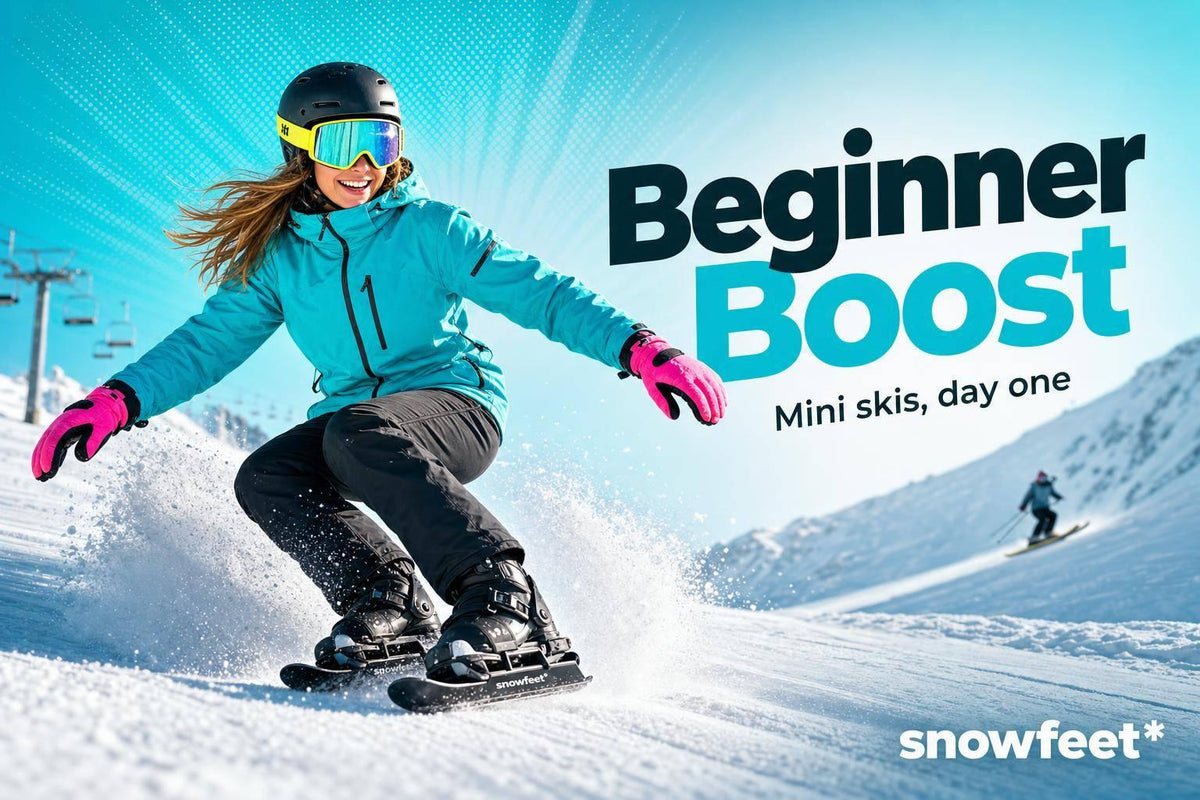
Yes. Short skis are generally very safe and work well for beginners. Compared with long, standard skis, Snowfeet short skis are easier to turn and easier to stop. That means many new riders can pick up the basics within a few hours, or even on day one.
Their compact, responsive shape also makes them easier to handle and less tiring than bulky ski gear. And that matters a lot when you’re starting out. You spend less time wrestling with your equipment and more time getting the feel for balance, turning, and stopping with confidence.
Can short skis handle all-mountain skiing?
Yes. Short skis can handle all-mountain skiing, but it depends on the terrain.
Snowfeet* 99 cm and 120 cm models work well on groomed trails, moguls, and terrain parks. They give you great agility and control. They also shine in tight spots like tree runs, where quick turns matter a lot.
Traditional long skis still have the edge in very deep powder, high-speed carving, and max stability.











Leave a comment
This site is protected by hCaptcha and the hCaptcha Privacy Policy and Terms of Service apply.