



















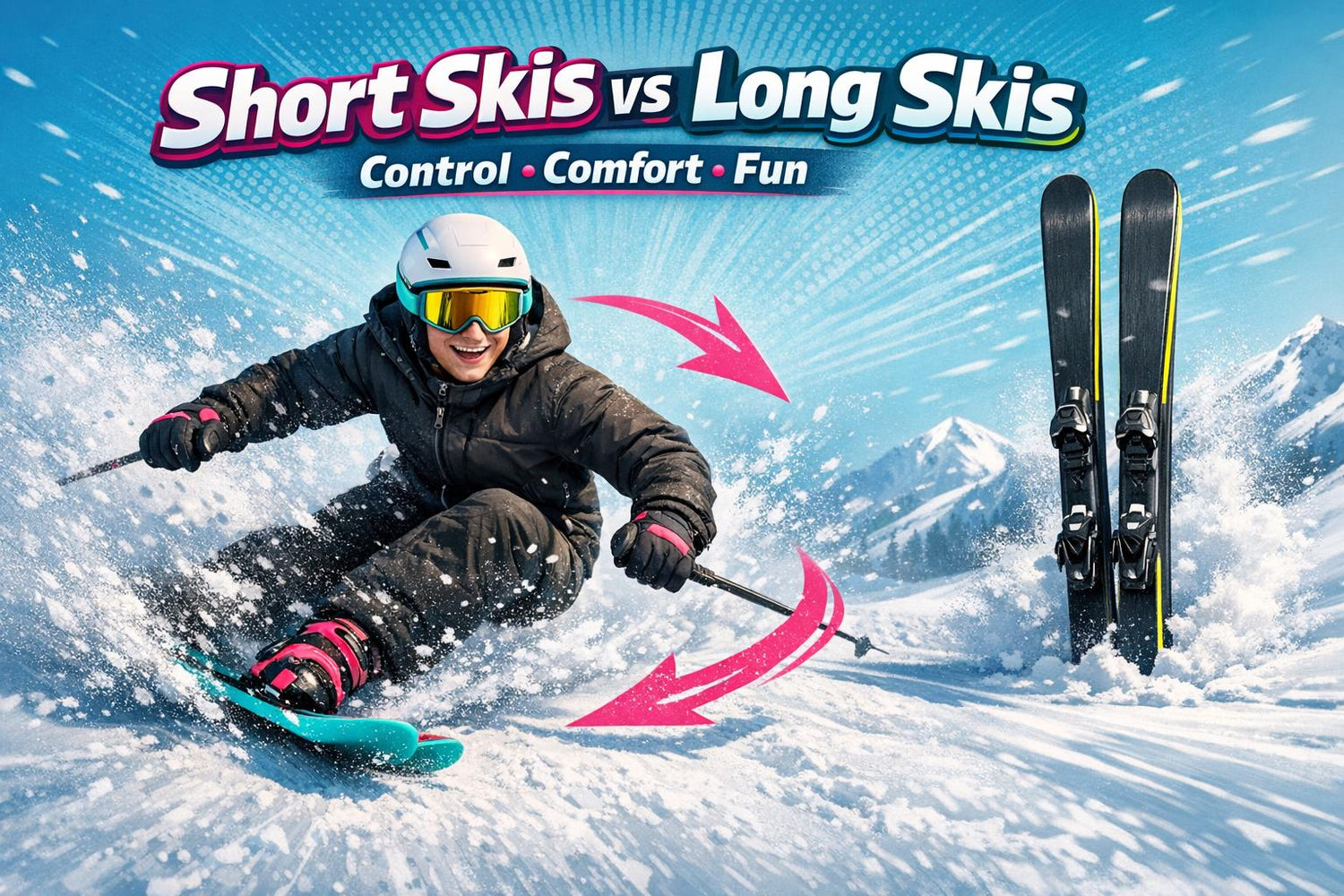
If you’re wondering whether short skis or long skis are better for your next trip to the slopes, here’s the quick answer:
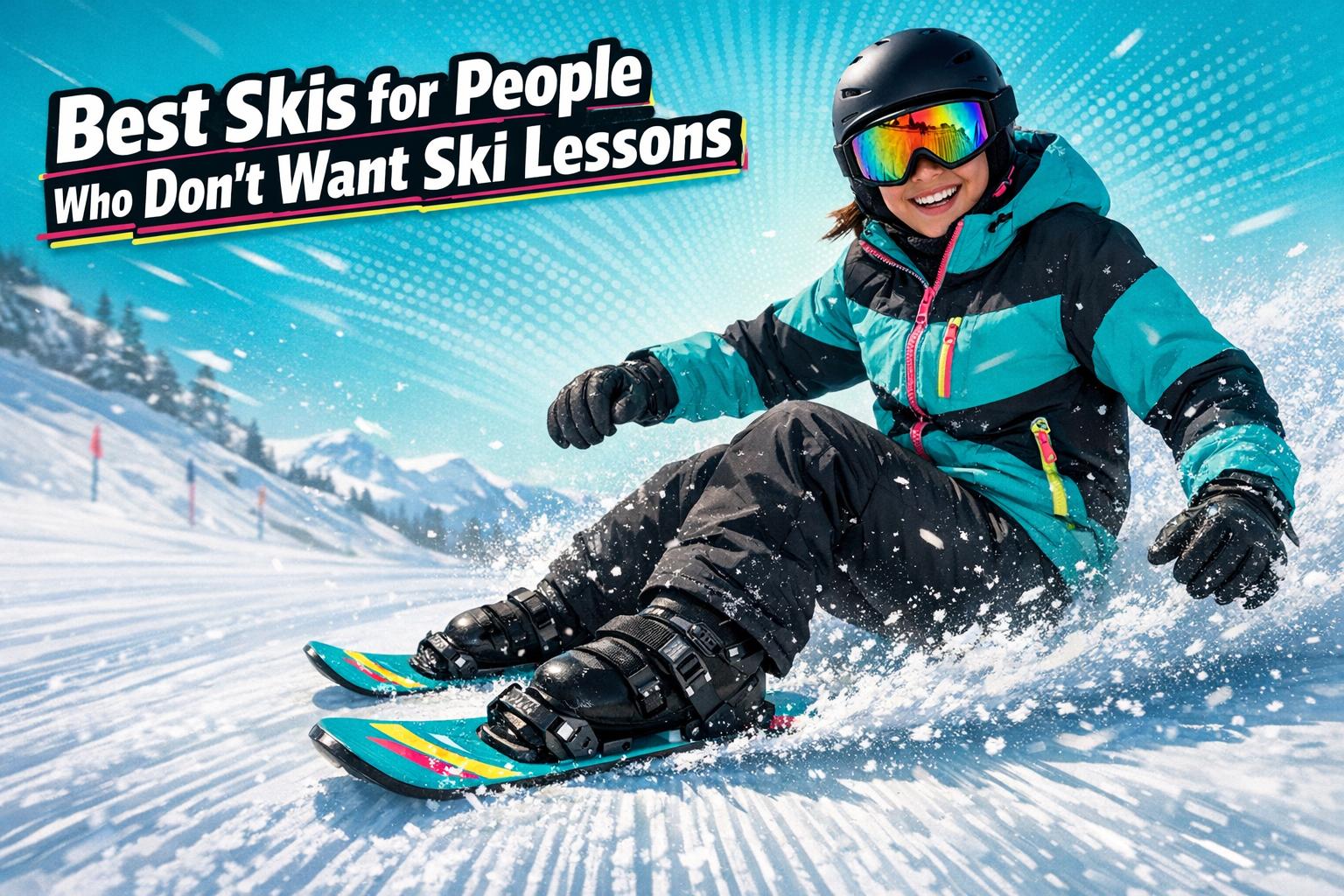
- Short skis, like Snowfeet models (65–99 cm), are easier to turn, less tiring, and great for beginners or casual skiers. They’re perfect for quick turns, terrain parks, and playful runs.
- Long skis (150–190 cm) offer better stability at high speeds, making them ideal for steep runs, deep powder, or experienced riders who love racing down the mountain.
Not sure which fits your style? Short skis are lighter, easier to control, and more forgiving, especially for resort skiing. Long skis shine in speed and stability but can be harder to handle for beginners.
Quick Comparison
| Feature | Short Skis (65–99 cm) | Long Skis (150–190 cm) |
|---|---|---|
| Ease of Turning | Excellent – tight, quick turns | Good – requires more effort |
| Weight | Light – ~3.8–5.9 lbs | Heavy – ~11–15+ lbs |
| Beginner-Friendly | High – easy to balance | Moderate – takes practice |
| Fatigue | Less tiring | More tiring |
| Speed Stability | Moderate | Excellent |
| Terrain Parks | Great for small to medium features | Best for big jumps and tricks |
If you’re all about fun, comfort, and all-day skiing without burning out, short skis might be your match. But if speed and powder are your thing, long skis are the way to go.
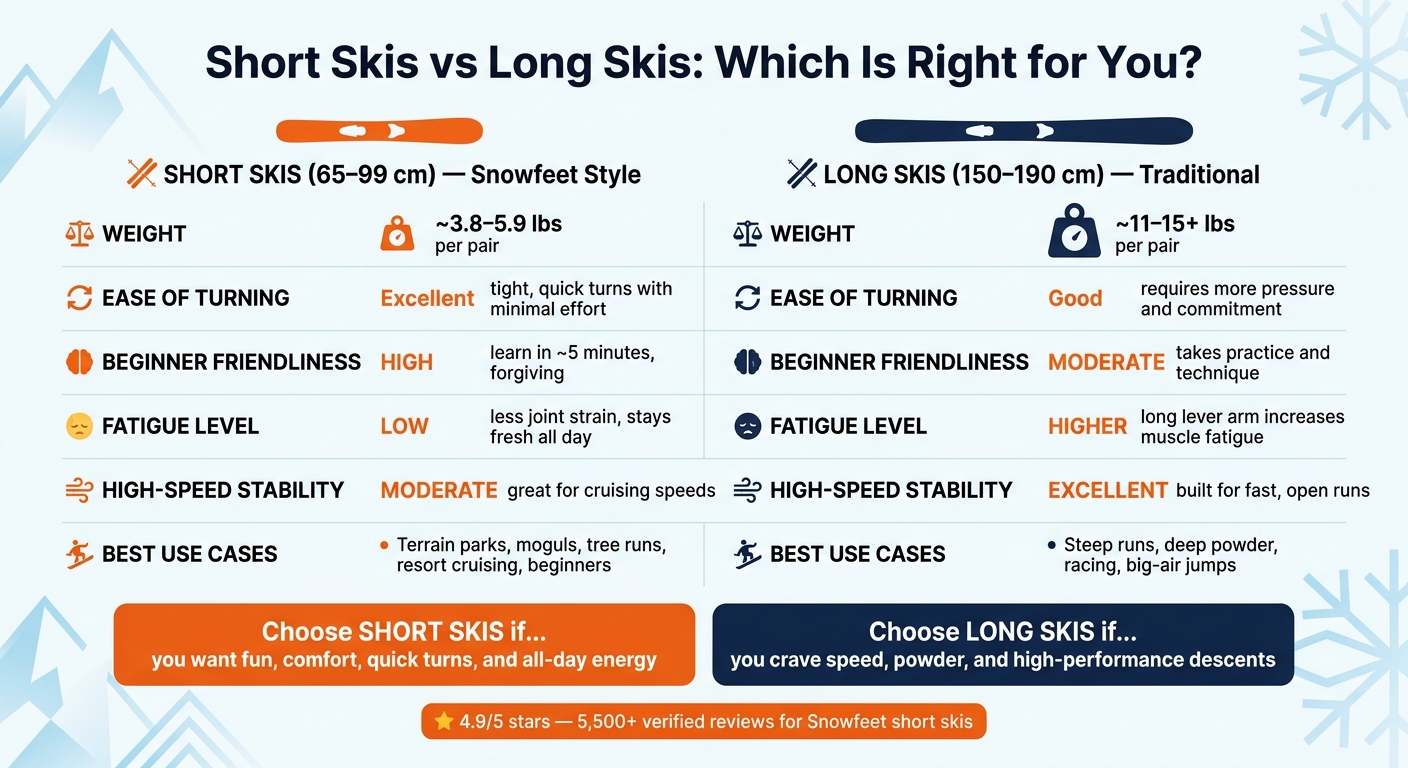
Short Skis vs Long Skis: Control, Comfort & Fun Compared
Control: Short Skis vs Long Skis
Turning and Precision
The length of your skis has a big impact on how quickly you can change direction. Traditional long skis - ranging from 150 to 190 cm for adults - are built for big, sweeping turns at higher speeds. They need more space, stronger edge pressure, and sharper technique to maneuver. On the flip side, Snowfeet* Skiblades, which come in shorter lengths of 65 cm and 99 cm, are designed for tight, quick turns. With less ski in front of and behind your boots, there’s not much inertia to fight against when initiating a turn. This makes it easier to carve tight, precise turns with minimal effort.
On groomed trails or in tight spaces - like busy resort runs at spots like Vail or Park City - these shorter skis shine. You can link quick, short-radius turns effortlessly, making them ideal for crowded or narrow areas.
"These mini-skis are light, stable and with excellent grip on every snow. Perfect for fast carving and fluid turns." - Nat, Verified Buyer
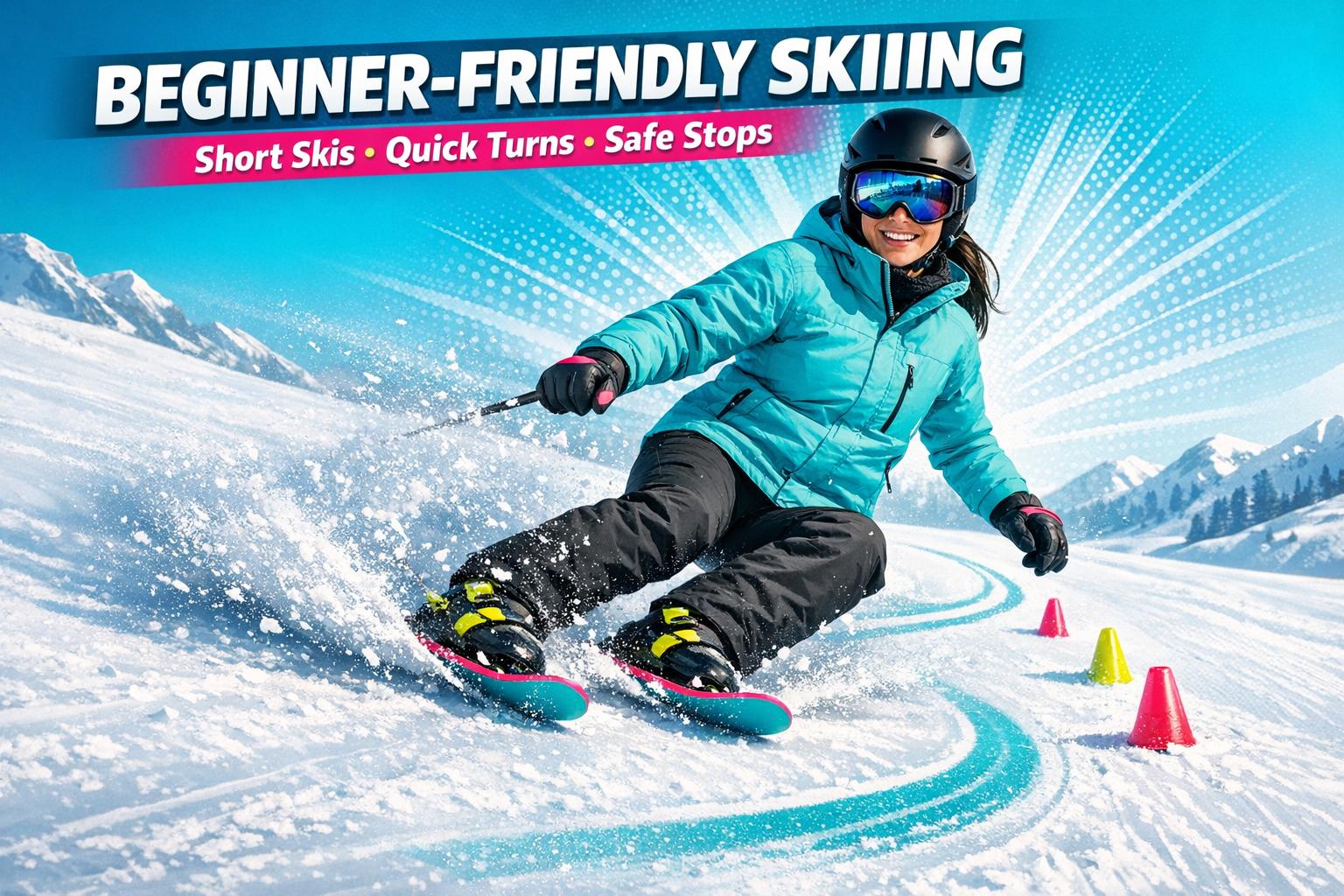
This ease of turning also makes them a fantastic choice for beginners.
Learning Curve for New Skiers
For those just starting out, longer skis can be intimidating. They often make balancing, turning, and stopping more challenging. Snowfeet* simplifies things right from the beginning. The company even claims that new riders can get the hang of it in about 5 minutes. Thanks to their shorter length and lighter weight, these skis respond quickly to basic foot and leg movements. Many first-timers compare the experience to inline skating or rollerblading, which feels more familiar and less daunting.
This quick adaptability makes Snowfeet* a game-changer for beginners and casual skiers alike.
Control Comparison
Here’s a breakdown of how Snowfeet* short skis stack up against traditional long skis when it comes to control:
| Control Aspect | Snowfeet* Short Skis (65–99 cm) | Traditional Long Skis (150–190 cm) |
|---|---|---|
| Turn initiation | Easy - quick pivots with minimal effort | Requires more pressure and commitment |
| Turning radius | Short - perfect for slalom-style turns in tight spots | Long - better for wide, sweeping arcs |
| Edge-to-edge response | Fast - super reactive on groomed runs | Slower - takes more effort to switch edges |
| Low-to-moderate speed control | Excellent - forgiving and easy to manage | Good, but can feel bulky for beginners |
| High-speed stability | Moderate - solid at cruising speeds | Excellent - designed for fast, open runs |
| Beginner friendliness | High - easy to balance and steer | Moderate - takes more skill to control |
These control benefits make Snowfeet* an appealing option for anyone looking to enjoy smooth, fatigue-free runs on U.S. slopes.
Comfort and Fatigue: Short Skis vs Long Skis
Lighter Skis, Less Fatigue
When it comes to comfort, ski weight is a big deal - though it’s often overlooked. A typical pair of adult long skis with bindings can weigh anywhere from 11 to over 15 pounds. Compare that to the Snowfeet* 65 cm Skiblades, which weigh just 3.79 pounds per pair with ski boot bindings. That’s a huge difference, especially after a full day on the slopes.
The lighter weight means your legs don’t have to work as hard during turns, on lifts, or when walking around. Your quads and hip flexors stay fresher longer, which can make the difference between feeling wiped out by lunch or skiing until the lifts close. For families at popular resorts like Breckenridge or Killington, this could mean squeezing in a few more memorable runs before calling it a day.
"Little skis are lighter on your knees, and easier to control for any older skier, whose strength, knees and reflex speed is not what it once was." - Snowfeet*
This is especially important for casual skiers who only hit the slopes a few days each season. Snowfeet* short skis are easier to control at lower speeds, which helps beginners avoid that tense, defensive stance that can quickly burn out your legs. The lighter design not only reduces fatigue but also works well with the flexible boot options Snowfeet* offers.
Boot and Binding Compatibility
Comfort isn’t just about weight - your boots play a big role too. Snowfeet* short skis are compatible with regular winter boots, snowboard boots, or traditional ski boots. Long skis, on the other hand, require rigid ski boots, which can cause shin pain, cold toes, and general discomfort.
The 65 cm Skiblades come with ski boot bindings that fit US sizes 4.5–14.5 and snowboard boot bindings for sizes 6–14.5. This versatility is a game-changer for resort days when you’re mixing skiing with other activities like grabbing lunch or walking around the village. Instead of clomping around in stiff plastic boots, you can move comfortably and enjoy your day.
For beginners, skipping the hassle of renting and wearing traditional ski boots eliminates a major source of frustration. It’s one less thing to worry about before tackling your first run. These comfort perks are clearly outlined in the comparison table below.
Comfort Features: Side-by-Side Comparison
Here’s how Snowfeet* short skis stack up against traditional long skis when it comes to comfort:
| Comfort Aspect | Snowfeet* Short Skis (65–99 cm) | Traditional Long Skis (150–190 cm) |
|---|---|---|
| Weight per pair | ~3.8–5.9 lbs | ~11–15+ lbs (skis + bindings) |
| Joint strain | Low - shorter length reduces knee and hip torque | Higher - long lever arm increases joint stress |
| Boot options | Winter boots, snowboard boots, or ski boots | Ski boots only |
| Walking at the resort | Easy to carry by hand; manageable in lift lines | Awkward and tiring to walk in for extended periods |
| Stance comfort | Natural, hip-width stance similar to walking or skating | Requires exaggerated fore-aft balance; less intuitive |
| Beginner fatigue | Low - intuitive control reduces muscle tension | Higher - fighting the ski leads to early burnout |
Fun Factor: Tricks, Terrain, and Use Cases
Freestyle Moves and Tricks
Short skis make pulling off tricks way easier. Take the Snowfeet* Mini Ski Skates (38 cm) and Skiskates (44 cm), for example. Their lighter swing weight compared to traditional long skis (usually 160–180 cm) allows for quicker, smoother spins without the same effort. You’re also less likely to catch an edge on a box or rail, which can be a major headache for beginners using longer skis. The result? A skate-like experience that makes flat-ground tricks, small jumps, and rail slides feel way more accessible - even if it’s your first time in the park.
"I love how easy they are to ski and skate and how many different kinds of tricks I can perform without much effort and almost no restrictions." - Zbyněk, Founder, Snowfeet*
Short skis are perfect for moderate park features, side hits, and playful rollers along groomed runs. While long skis still have the upper hand for high-speed stability and big-air jumps, short skis cater to a more relaxed, social style of park riding - a vibe that’s super popular at U.S. resorts.
Where You Can Ride Them
Thanks to their nimble design, short skis thrive in a variety of conditions. The 99 cm Skiblades from Snowfeet* are a prime example of their versatility. On groomed runs, they deliver tight, quick turns that feel more like skating than skiing - perfect for the speeds you’d find at resorts like Park City or Mammoth. Their shorter length also makes them a dream for navigating moguls and weaving through tight tree runs, avoiding the awkward "bridging" effect you get with longer skis.
On powder days, the Snowfeet* POWDER Skis are built with extra width underfoot to help you float through the snow, offsetting their shorter length. While they’re not designed for steep, deep, high-speed powder runs (that’s where long powder skis shine), they hold their own in moderate powder, tree skiing, and mixed snow conditions. Sure, there are a few scenarios where long skis have an edge, but for everyday resort fun, Snowfeet* short skis bring unmatched versatility.
"These ski blades are a blast to use. Super easy to control, quick to turn, and way more forgiving than traditional skis." - Brad Tolin, Verified User
Fun and Use Cases: Side-by-Side Comparison
Here’s a quick look at how Snowfeet* short skis stack up against traditional long skis across different scenarios:
| Use Case | Snowfeet* Short Skis | Traditional Long Skis |
|---|---|---|
| Terrain park (small–medium features) | Best – low swing weight makes spins and presses a breeze | Limited – harder for beginners due to longer length |
| Terrain park (big jumps, competition) | Limited – less stability for big-air tricks | Best – more stable for large features at high speeds |
| Moguls | Best – quick pivots and easy direction changes | Good – works but can "bridge" across bumps |
| Tree runs | Best – sharp, quick turns for dense trees | Good – better for open glades at speed |
| Resort powder (moderate depth) | Good – POWDER Skis provide float and agility | Good – long skis offer more float in deeper snow |
| High-speed groomer carving | Good – playful and great for short-radius turns | Best – stable and confident at higher speeds |
| Casual weekend riding / side hits | Best – playful, easy to pop off features with less fatigue | Good – works well but feels less lively |
sbb-itb-17ade95
Conclusion: Why Snowfeet* Short Skis Come Out Ahead
Key Takeaways
For skiers in the U.S. looking to level up their runs, Snowfeet* short skis bring a mix of control, comfort, and fun to the slopes:
- Control: At 65 cm and 99 cm, Snowfeet* short skis make turning easier and quicker, whether you're weaving through trees, tackling moguls, or cruising down resort slopes. Plus, they're more forgiving - catching an edge won't send you flying like it might with traditional long skis.
- Comfort: Thanks to their lightweight and compact design, these skis are easier on your legs, keeping fatigue at bay during long days on the mountain. One happy customer, Mike E., summed it up perfectly: "SUPER comfortable, easy to control, very agile, easy on the knees and ankles because they are so light, great for beginners."
- Fun: These skis turn the mountain into your personal playground. From terrain parks to side hits, moguls, and groomed trails, everything feels more approachable and entertaining.
Of course, there’s a trade-off: if you’re into steep, high-speed black diamonds or deep backcountry powder, traditional long skis still hold the advantage. But for everyday resort skiing, Snowfeet* offers a standout mix of performance and playfulness.
Which length should you choose? The 65 cm Skiblades are perfect for agility, terrain parks, and groomed runs, especially at East Coast or Midwest resorts. Meanwhile, the 99 cm Skiblades are better suited for larger Western resorts, longer runs, or skiers transitioning from traditional skis who want a playful yet familiar feel. Either way, both lengths are easier to handle than standard long skis.
Ready to upgrade your ride? Check out the Snowfeet* lineup and find the perfect fit for your style.
Browse Snowfeet* Products
Snowfeet* has something for every skier and budget. Here’s a quick look at their lineup:
- 44 cm Skiskates ($575+): A skate-on-snow experience for pure fun.
- 65 cm Skiblades ($635+): Great for tricks, terrain parks, and quick turns.
- 99 cm Skiblades ($675+): A versatile option for all-mountain skiing.
- Snowfeet* POWDER ($675+): Designed for softer snow and powder days.
With over 5,500 verified reviews and an average rating of 4.9 out of 5 stars, it’s clear these skis are making waves.
Explore the full range at snowfeetstore.com and find your perfect match.
I Tried The Shortest Vs Longest Skis (You Can Buy)
FAQs
What Snowfeet* length should I choose (65 cm vs 99 cm)?
The 65 cm Snowfeet Skiblades* are a great pick for beginners or freestyle enthusiasts. Their shorter length makes them easy to control, perfect for quick turns, and ideal for pulling off tricks in the park. Plus, they give you a skate-like experience on the slopes.
On the other hand, the 99 cm model caters to intermediate and advanced skiers. These offer a nice balance of stability and edge grip, making them excellent for carving on groomed trails. At the same time, they’re more agile than your typical long skis, giving you the best of both worlds.
Can I use Snowfeet* with my regular winter boots?
Yes, most Snowfeet* models work perfectly with your regular waterproof winter boots or snowboard boots, giving you a comfortable and hassle-free experience. Unlike traditional ski gear that forces you into rigid, specialized boots, Snowfeet* let you move naturally when you're off the slopes. While some models can also be used with traditional ski boots, the real perk is being able to stick with the footwear you already own.
Are short skis safe at higher speeds on steep runs?
Short skis, like Snowfeet Skiblades, are all about agility and control, especially at moderate speeds. On the flip side, traditional long skis are designed for high-speed stability, particularly on steep or icy slopes. While shorter skis might not offer the same grip and steadiness on steep black runs, they have their perks. Snowfeet’s quick responsiveness and lower center of gravity make them a blast to use, without the heavy, clunky feel that often comes with traditional skis.











Leave a comment
This site is protected by hCaptcha and the hCaptcha Privacy Policy and Terms of Service apply.