



















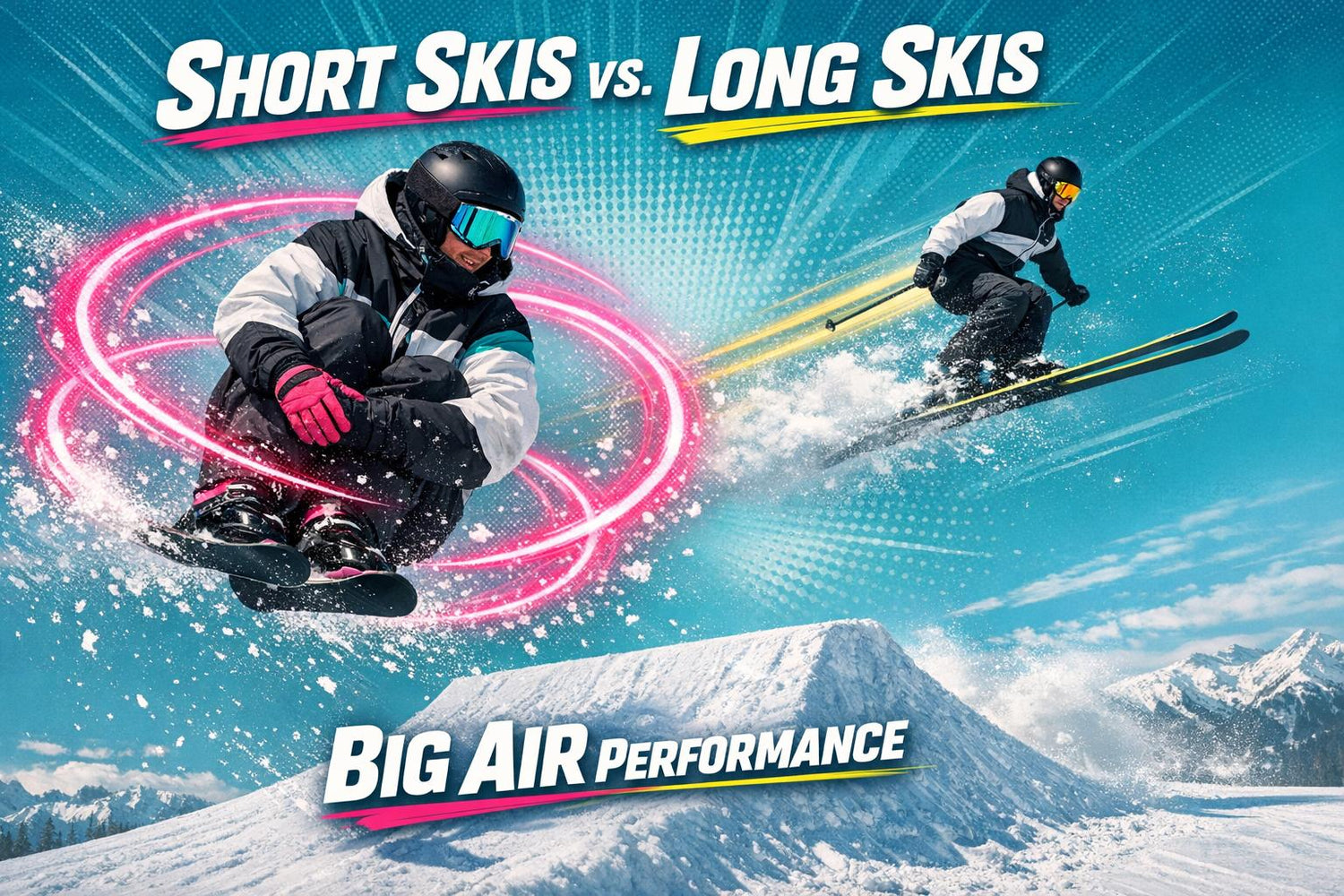
Short skis make Big Air tricks easier. They’re lighter, easier to spin, and more forgiving on landings. Long skis? Great for straight-line speed but clunky in the air. Here’s the breakdown:
- Short Skis: Quick spins, snappy flips, and smoother landings. Perfect for beginners learning tricks or seasoned riders looking for control mid-air.
- Long Skis: Stable at high speeds but harder to rotate and less forgiving on tricky landings.
Quick Comparison
| Feature | Short Skis (65–99 cm) | Long Skis (120+ cm) |
|---|---|---|
| Spin & Flip Ease | Easier, low swing weight | Harder, high swing weight |
| Landing Forgiveness | Higher, less edge-catching | Lower, tips/tails snag easily |
| Approach Stability | Good for quick adjustments | Better for straight runs |
| Skill Progression | Faster for park tricks | Slower, requires more time |
Short skis like the Snowfeet Skiblades are changing the game for Big Air enthusiasts. They’re compact, easy to carry, and even work with snowboard boots. Starting at $635, they’re a solid pick for anyone looking to progress faster and have more fun on the slopes.
Why Short Skis Work Better in Big Air
Spin, Flip, and Aerial Control
When it comes to aerial tricks, the real game-changer isn't brute strength or fearlessness - it's swing weight. This term refers to the resistance you feel when rotating your skis around your body. Long skis? They create more resistance. Short skis? They cut that down, making rotations quicker and easier.
Take the Snowfeet* 65 cm Skiblades, for example. With less mass extending away from your center of gravity, spins feel faster, flips are snappier, and you can even make mid-air corrections. On traditional long skis, if you're slightly off-axis in the air, you're stuck. With short skis, you’ve got room to adjust.
"Snowfeet skiblades naturally bring out your playful side. They're perfect for riding switch, spins, jumps, and creative tricks." - Snowfeet*
This ability to rotate with ease also improves your overall approach dynamics.
Approach and Takeoff Maneuverability
Nailing the in-run for a jump requires precise speed and angle adjustments. Short skis make these tweaks much easier.
The 65 cm Skiblades come with a turn radius as short as 13 feet (4 meters) - far tighter than any traditional ski. Thanks to their deep parabolic sidecut, edge-to-edge transitions happen almost instantly. That means you can fine-tune your line at the very last second without battling your gear.
"Quick edge-to-edge response makes turning effortless." - Snowfeet*
Landing Forgiveness and Skill Progression
Short skis also shine when it’s time to stick the landing. Catching a tip or tail is one of the most common ways riders get hurt while learning new Big Air tricks. Short skis help reduce this risk since they eliminate the long tips and tails that often get snagged.
For example, the 99 cm Skiblades feature asymmetric high twin tips, so you can land forward or switch with confidence. Riders agree: "These ski blades are a blast to use. Super easy to control, quick to turn, and way more forgiving than traditional skis." - Brad Tolin. This extra forgiveness not only keeps you safer but also helps you progress faster, giving you the confidence to push your limits in Big Air competitions.
Practical Benefits for Park Riders
Short skis aren’t just about performance - they’re also super practical. You can pack them into a backpack, skipping the hassle of roof racks or ski lockers. More convenience means more time riding and less time dealing with logistics.
Plus, Snowfeet* Skiblades are compatible with snowboard boots, offering both flexibility and comfort during long park sessions.
"Snowboard bindings give you more flexibility while performing all kinds of tricks, they're super comfortable and you can walk with them anywhere without a problem." - Snowfeet*
This added comfort keeps you on the snow longer, helping you squeeze in more practice and sharpen your skills faster. Traditional long skis just can’t compete with that kind of convenience and versatility.
Snowfeet* Snowblades | Skiboards | Skiblades | Short Skis - Complete Guide | All you need to know
Long Skis in Big Air: Where They Work and Where They Fall Short
Long skis shine at high speeds but struggle when it comes to aerial maneuvers and tricky landings.
Straight-Line Stability at High Speeds
One undeniable strength of long skis is their stability at high speeds. When you're tearing down a fast in-run, longer skis provide a steady and predictable ride. This consistency can be a game-changer in competition. As Brad Tolin put it:
"Only trade-off is at higher speeds, where longer skis still feel more stable."
But here's the catch: that stability only matters during the in-run. Once you’re airborne, those benefits disappear.
Difficulty with Spins and Style
The moment your skis leave the ground, the game changes. Long skis become a challenge in the air, thanks to their extra swing weight. This added weight slows down spins and makes mid-air adjustments more demanding. It’s harder to pull off quick rotations or add flair to your tricks.
"In general, short skis provide more fun and freedom of movement, they are playful, responsive, lightweight on your feet, easier to stop, and for many skiers easier to ride as opposed to cumbersome long skis." - Snowfeet*
Simply put, traditional long skis can’t compete with the agility and control offered by shorter skiblades when it comes to Big Air tricks.
Landing Characteristics
Landings are another area where long skis show their weaknesses. Sure, they provide a larger platform, which might seem helpful. But even a slight misstep - like a tip or tail catching on an off-axis landing - can lead to harsher consequences. It’s a lot less forgiving than what shorter skis offer. Mike E. summed it up well:
"If you like to bomb runs as fast as possible, you'll want longer skis. For everything else, these are absolutely incredible."
In Big Air, where smooth rotations, stylish tricks, and forgiving landings are critical, shorter skis clearly have the edge.
sbb-itb-17ade95
Short Skis vs. Long Skis: Big Air Performance Compared
Short Skis vs. Long Skis: Big Air Performance Breakdown
Side-by-Side Performance Breakdown
Both short skis and long skis bring their own strengths to Big Air, but how do they compare in key areas? Let’s break it down:
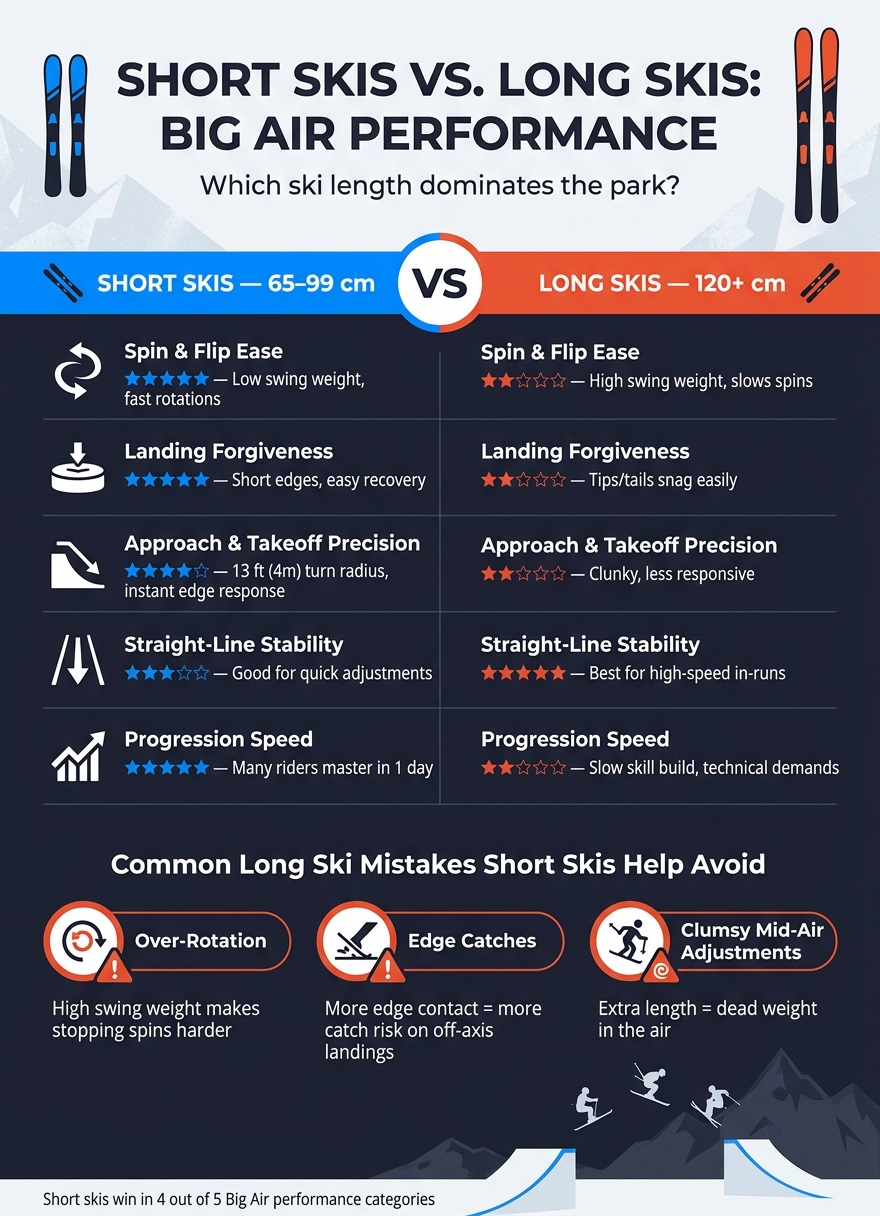
| Factor | Snowfeet* Short Skis | Traditional Long Skis |
|---|---|---|
| Approach Stability | Moderate: great for quick adjustments on the fly | High: ideal for straight-line speed |
| Takeoff Precision | High: lightweight and highly responsive | Lower: extra length and weight feel clunky |
| Spin & Flip Ease | Excellent: low swing weight makes rotations easier | Tough: high swing weight slows spins |
| Landing Forgiveness | High: easier to recover from imperfect landings | Low: long edges are less forgiving |
| Progression Speed | Very fast: many riders master them in just a day | Slow: takes time to build technical skills |
Snowfeet* Skiblades, available in 65 cm and 99 cm lengths, shine in four out of five categories. Long skis may have the edge with straight-line stability, but once you’re airborne, that advantage disappears. The table highlights how short skis naturally sidestep the challenges that come with longer skis.
Long Ski Mistakes That Short Skis Help Avoid
Short skis don’t just perform well - they help you avoid common issues that come with long skis. Here’s how:
- Over-rotation: Long skis have a high swing weight, making it harder to stop spins precisely. Short skis, being lighter, allow for quick, controlled spin adjustments.
- Edge Catches: Longer skis have more edge contact, which increases the chance of catching an edge during off-axis landings. Short skis, with their shorter edge, are much more forgiving when you don’t stick the landing perfectly.
- Clumsy Mid-Air Adjustments: The extra length of long skis can feel like dead weight in the air, making quick corrections tricky. Short skis, on the other hand, let you make fast, natural adjustments mid-trick - just what you need for Big Air.
In Big Air, precision and adaptability are everything. Short skis give you the tools to nail those tricks while avoiding the pitfalls that can trip up long ski riders.
Picking the Right Ski Length for Big Air
Matching Ski Length to Rider Level
When it comes to Big Air, picking the right ski length can make or break your performance. The length you choose should match both your skill level and the type of tricks you want to master.
| Ski Length | Best For | Skill Level |
|---|---|---|
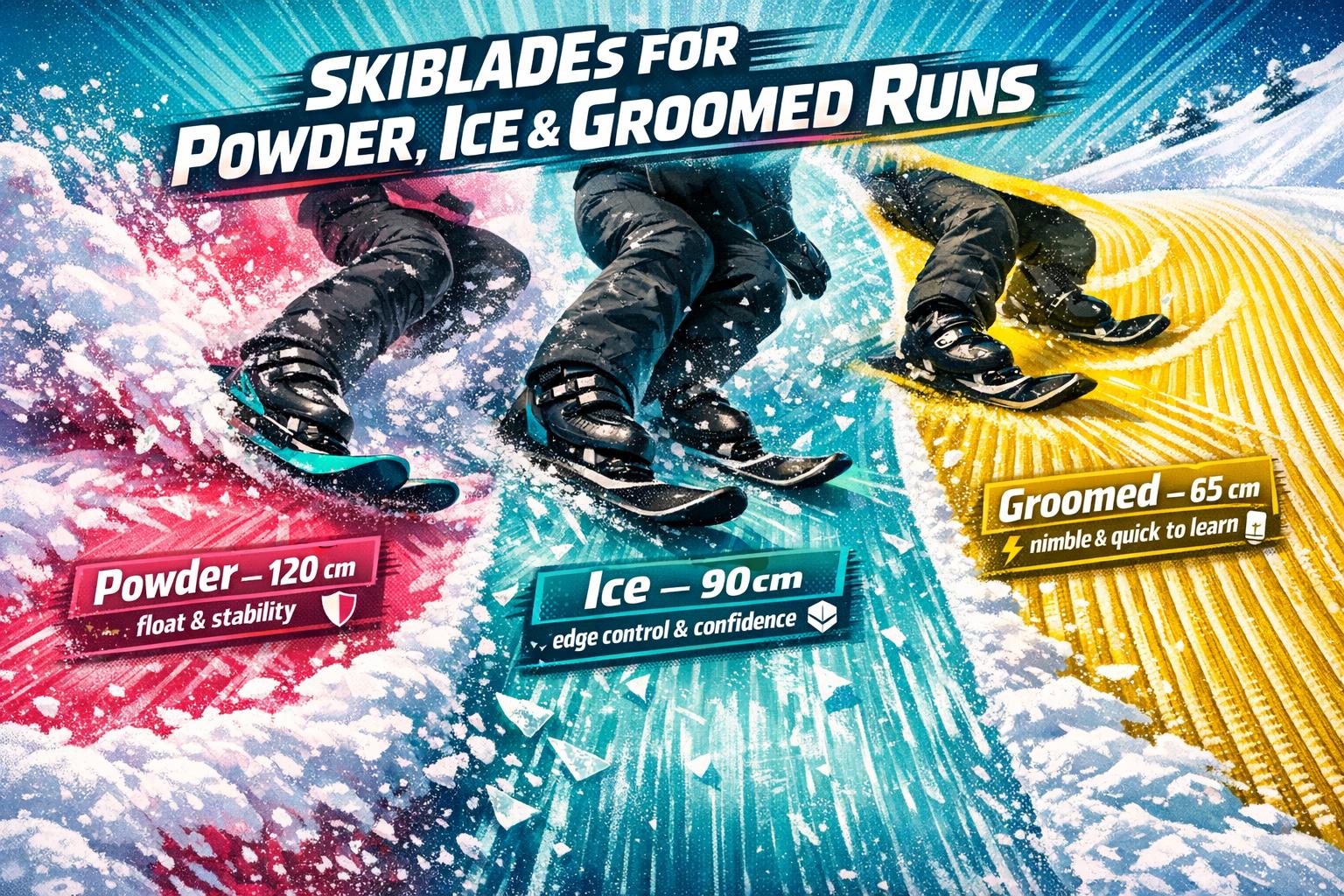
| 44–65 cm | Technical spins and quick tricks | Beginner to Intermediate |
| 65–99 cm | Park jumps, twists, and switch riding | Intermediate |
| 99–120 cm | Deep carving, larger jumps, high-speed stability | Advanced to Expert |
For beginners and intermediate riders, Snowfeet* Skiblades in the 65 cm range are a fantastic choice. They're lightweight and forgiving, which makes them perfect for learning quick tricks and building confidence. If you're just starting out and want to focus on spins and agility, the 44 cm Skiskates are a solid option. They offer a skate-like experience on snow, making spins and quick moves feel effortless and easy to learn.
Advanced riders, on the other hand, might prefer the 99 cm or 120 cm Snowfeet* Skiblades. These provide the stability needed for bigger jumps and deep carving while still being more maneuverable than traditional long skis. They’re perfect for riders looking to take on larger features with confidence.
Choosing the right ski length not only matches your current abilities but also helps you improve faster, especially when tackling Big Air challenges.
How Short Skis Speed Up Progression
Short skis are game-changers when it comes to learning new tricks. Their low swing weight makes spinning easier and allows riders to pack more tricks into each session. Models like the Snowfeet PRO, with their raised tips and tails, are designed to help with landings and switch riding - two areas where longer skis tend to be less forgiving.
"Snowfeet feel so natural, enabling instant pick-up of the sport." - Snowfeet Team
The Snowfeet PRO model is the result of three years of user feedback and refinement. The design strikes a perfect balance: "long enough to ski, yet short enough to skate". This unique combination of agility and stability gives riders the confidence to push their limits and try more technical tricks. Snowfeet* stands out by offering gear that’s built to help you progress faster than traditional ski or snowboard setups, making every session a step forward in your Big Air journey.
Conclusion: Why Short Skis Win in Big Air
Short skis bring some undeniable perks to Big Air: they’re lighter, easier to spin, more forgiving on landings, and quicker to learn on. In the park, the heft of traditional long skis can hold you back - and that’s where short skis shine.
Snowfeet* skiblades are designed specifically for this kind of performance, offering incredible responsiveness and precision. They’re built to handle switch landings smoothly and carve with accuracy during your approach.
"These ski blades are a blast to use. Super easy to control, quick to turn, and way more forgiving than traditional skis." - Brad Tolin
Snowfeet* doesn’t just deliver on performance - they offer a range of options to suit every style and skill level. From the 65 cm Skiblades (starting at $635) for beginners to the 120 cm Short Skis ($775) for those pushing their limits, there’s a perfect fit for everyone. This level of variety is rare in traditional ski brands.
For anyone looking to expand their bag of tricks, short skis remove the obstacles that come with longer skis. Less weight in the air means more confidence on landings. Snowfeet* makes it easier for riders to tackle Big Air challenges and progress faster. Short skis are changing the game for Big Air enthusiasts.
FAQs
Are short skis safe for Big Air landings?
Short skis are a solid choice for Big Air landings and come with some standout perks compared to traditional long skis. Thanks to their lightweight build and easy maneuverability, short skis like Snowfeet* Skiblades let you make quicker adjustments mid-air and stick smoother landings. Their compact size cuts down on leverage and bulk, giving you more control for spins and tricks. Plus, they reduce the chance of injuries that can happen with the heavier, more cumbersome nature of long skis.
What size Snowfeet* Skiblades should I choose for Big Air?
For Big Air enthusiasts, the 65 cm (26 in) Snowfeet Skiblades* are perfect for pulling off tricks, spins, and quick moves. Their compact size and skate-like feel make them super agile. If you’re looking for a mix of stability and agility for softer landings, the 99 cm (39 in) Skiblades are another solid option. Both models are lighter and more responsive than traditional long skis, making those aerial stunts feel almost effortless.
Do Snowfeet* Skiblades work with snowboard boots?
Yes, Snowfeet* offers models that work with snowboard boots. While some skiblades are designed for traditional ski boots, many come with bindings that fit snowboard boots, offering a more comfortable and familiar feel. Be sure to check the details of the specific model to confirm compatibility with your boots. Snowfeet* focuses on creating gear that's versatile and easy to use for all winter lovers.











Leave a comment
This site is protected by hCaptcha and the hCaptcha Privacy Policy and Terms of Service apply.