




















Short skis, like Snowfeet's skiblades and skiskates, are compact alternatives to long skis. They’re lightweight, easy to carry, and great for quick turns on groomed slopes, parks, and trails. While they’re not ideal for deep powder or high-speed carving, they’re perfect for tight spaces, freestyle tricks, and spontaneous ski trips.
Here’s the deal: short skis can either replace long skis for beginners and casual skiers or serve as a fun, portable second pair for experienced riders. They’re affordable (starting at $190), easy to learn, and compatible with regular winter boots. Whether you’re looking to simplify your ski setup or add a playful option to your gear, short skis are worth considering.
Quick Takeaways:
- Length: 44–120 cm vs. 150–200+ cm for long skis
- Portability: Fits in a backpack; no roof racks needed
- Best For: Groomed runs, parks, trails, and tight terrain
- Learning Curve: Easy to pick up, even for beginners
- Price Range: $190–$675
Ready to hit the slopes with less hassle? Short skis might just be your new favorite gear.
Short Skis vs. Long Skis
Short Skis vs. Traditional Long Skis: A Comparison
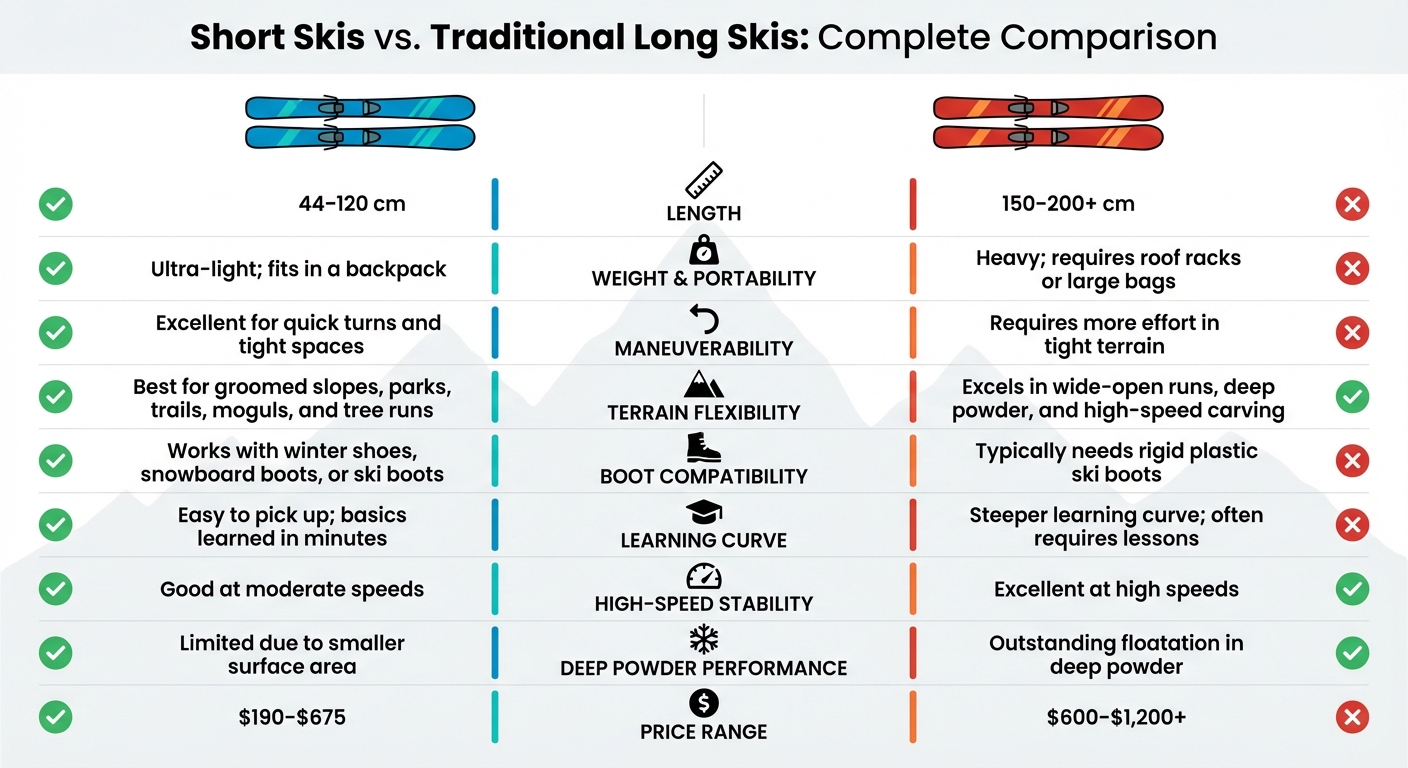
Short Skis vs Traditional Long Skis: Complete Comparison Guide
Agility, Weight, and Terrain Flexibility
Let’s dive into how Snowfeet* short skis stack up against traditional long skis when it comes to performance. Snowfeet* short skis, which range from 44–120 cm in length, are a stark contrast to the 150–200+ cm length of traditional skis. This size difference has a big impact on how they handle on the slopes.
The compact design of Snowfeet* makes them perfect for quick pivots and tight turns, which is a game-changer on crowded slopes or tricky mogul fields. On the other hand, traditional skis are better suited for wide-open runs and carving but can feel cumbersome when navigating tighter spaces.
Another key advantage of Snowfeet* is their ultra-lightweight build. They’re small enough to fit in a backpack, so you can forget about roof racks or bulky ski bags. This portability makes them ideal for public transport, hiking to remote spots, or even just walking from your car to the lift without breaking a sweat. Traditional skis, while excellent for performance, are heavier and usually require specialized gear for carrying and storage.
When it comes to terrain, Snowfeet* shine on groomed slopes, parks, narrow trails, and even tree runs. Traditional skis, however, dominate in wide-open spaces and deep powder, where their larger surface area provides better floatation and superior stability at high speeds. The table below sums up these differences nicely.
Comparison Table: Snowfeet* Short Skis vs. Traditional Long Skis
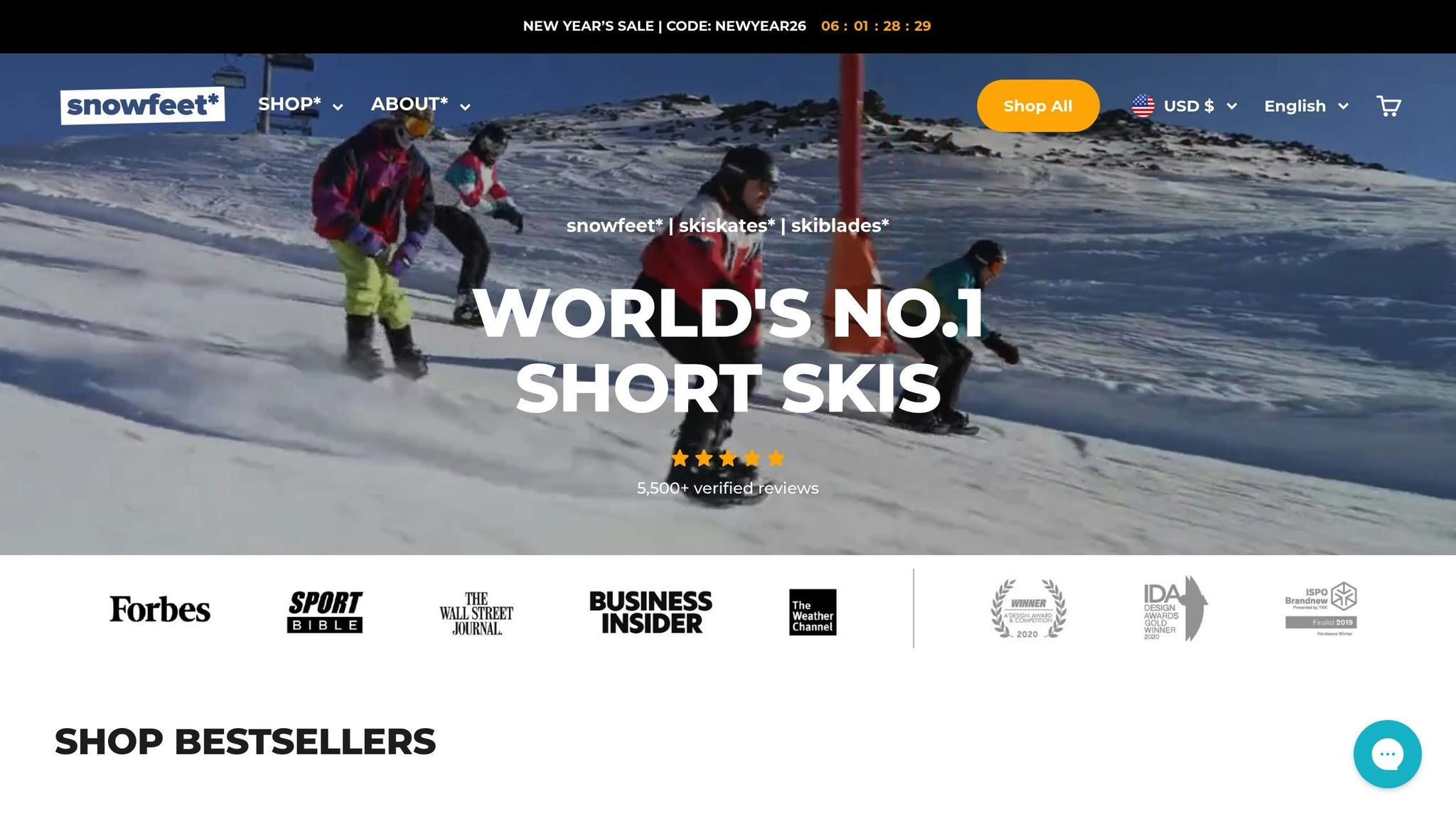
| Feature | Snowfeet* Short Skis | Traditional Long Skis |
|---|---|---|
| Length | 44–120 cm | 150–200+ cm |
| Weight | Ultra-light; fits in a backpack | Heavy; requires roof racks or large bags |
| Maneuverability | Excellent for quick turns and tight spaces | Requires more effort in tight terrain |
| Terrain Flexibility | Best for groomed slopes, parks, trails, moguls, and tree runs | Excels in wide-open runs, deep powder, and high-speed carving |
| Portability | Highly portable; easy to carry | Requires specialized carrying gear |
| Boot Compatibility | Works with winter shoes, snowboard boots, or ski boots | Typically needs rigid plastic ski boots |
| Learning Curve | Easy to pick up; basics learned in minutes | Steeper learning curve; often requires lessons |
| High-Speed Stability | Good at moderate speeds | Excellent at high speeds |
| Deep Powder Performance | Limited due to smaller surface area | Outstanding floatation in deep powder |
With these distinctions in mind, it’s worth considering whether Snowfeet* can replace traditional skis entirely or if they’re better suited as a versatile addition to your gear collection.
Can Short Skis Replace Traditional Long Skis?
When Short Skis Work as Your Only Pair
For many skiers, Snowfeet* short skis can absolutely function as their go-to pair for all their skiing adventures. Whether you're a beginner or a freestyle enthusiast, the compact design of models like the 99 cm, 65 cm, and 44 cm makes them a practical alternative to the bulkier traditional skis. For beginners, the 99 cm Skiblades are especially appealing - they're easier to control and make quick turns a breeze. As the Snowfeet Team explains:
"Snowfeet* reminds us: short skis are built to adapt to every skill level without the drawbacks of long skis."
Freestyle skiers, particularly those who love terrain parks, will find the 65 cm Skiblades and 44 cm Skiskates a dream for spins, jumps, and slides. Their twin-tip design is perfect for pulling off tricks without the extra weight holding you back.
And if you're someone who loves spontaneous ski trips or values portability, short skis are a game-changer. They're easy to carry, making them ideal for hikers heading to backcountry trails or anyone navigating public transportation to reach the slopes. The 44 cm Skiskates, one of the smallest ski options out there, are a favorite for hikers who ski. For resort skiing on groomed slopes, the 99 cm to 120 cm models perform exceptionally well. The 120 cm version even handles powder better than the shorter models, giving you more versatility.
With all these benefits, it’s worth tackling some common myths about short skis.
Common Myths About Short Skis Debunked
Despite their advantages, short skis often face skepticism. One popular myth is that they lack stability or struggle at high speeds. But here's the truth: speed depends more on the skier's skill, the terrain, and snow conditions than the length of the skis. On groomed runs, Snowfeet* short skis can match the speeds of traditional skis while offering better control. Plus, their wider waists - taking inspiration from snowboard design - provide a solid, stable base.
Another misconception is that short skis don’t float well in powder or deep snow. While it’s true that they have less surface area compared to long skis, Snowfeet* products are designed for groomed runs, parks, and resorts - places where deep powder isn’t usually the main focus. For recreational skiers sticking to maintained slopes, this isn’t a big deal, making Snowfeet* short skis a practical and fun alternative to traditional long skis.
sbb-itb-17ade95
Short Skis as a Second Pair
Why Snowfeet* Works Well as a Backup Option
Even if you're committed to your traditional long skis or snowboard, adding Snowfeet* short skis to your collection can be a game-changer. They’re not meant to replace your main gear but to complement it, offering a lightweight and portable option for those times when flexibility and convenience matter most.
The standout feature? Portability. Unlike bulky skis from brands like Rossignol or K2 that demand roof racks or oversized bags, Snowfeet* short skis are compact enough to fit in your backpack or trunk. For example, the 44-cm Skiskates weigh just a fraction of standard long skis, making them easy to pack for spontaneous runs. This portability means you can bring them along without hassle, ready to handle varied terrain whenever the mood strikes. As the Snowfeet Team puts it:
"Short skis provide you with an incredible amount of freedom. They are great for various types of terrain plus you can take them anywhere with you. Pack them up as the main skis, or a back up to your regular long skis."
Snowfeet* also shines in performance, especially in tight or technical areas. The 65-cm Skiblades, for instance, are perfect for terrain parks, moguls, or tree runs where your long skis or snowboard might feel clunky. For snowboarders, they’re a lifesaver on flat sections or narrow trails - no more awkward unstrapping and skating. Thanks to their twin-tip design and lightweight build, tricks and jumps feel effortless compared to heavier gear.
Another bonus? Cost savings. Snowfeet* short skis are a budget-friendly alternative to a second set of traditional skis. With prices ranging from $190 to $675, they’re much easier on the wallet compared to a second pair of long skis, which can run anywhere from $600 to $1,200. And with both the 44-cm Skiskates and 65-cm Skiblades boasting a 5.0/5 star rating, you're getting quality without breaking the bank.
Use Case Table: Primary Gear vs. Snowfeet*
Here’s a quick comparison of how Snowfeet* stacks up against traditional gear in different scenarios:
| Terrain / Situation | Primary Gear (Long Skis/Snowboards) | Snowfeet* Short Skis (Second Pair) |
|---|---|---|
| Groomed Slopes | Best for high-speed carving and long runs | Great for playful, agile turns and "skiskating" style |
| Snowparks | Standard for jumps; can feel heavy for tricks | Excellent for spins, twists, and technical maneuvers |
| Hiking Trails | Too heavy and awkward to carry | Lightweight and easy to handle in narrow spaces |
| Moguls & Trees | Requires effort to maneuver | Quick, responsive turns make navigation a breeze |
| Quick Local Runs | Time-consuming to transport and set up | Grab-and-go convenience - fits in a backpack |
| Flat Sections (snowboarders) | Awkward skating or unstrapping required | Smooth gliding without the hassle |
Whether you’re a snowboarder tired of struggling on flat terrain or a skier looking to add some fun and flexibility to your day, Snowfeet* short skis are a practical addition to your gear. They’re not here to replace your main setup - they’re here to expand what’s possible on the mountain.
Final Verdict: Why Snowfeet* Stands Out
Snowfeet*: A Fresh Take on Winter Fun
Snowfeet* has turned the skiing world on its head by swapping out those long, clunky skis for sleek, compact gear that fits easily in a backpack. Best part? You can use them with your regular winter boots or snowboard boots. The Skiskates, measuring 44 cm (about 17 inches), and the Skiblades, at 65 cm (roughly 25.6 inches), prove that shorter skis can still pack a punch. They're all about freedom, agility, and versatility - without sacrificing performance.
What makes Snowfeet* stand out is their portability and price. With a range from $190 to $675, they’re a wallet-friendly option compared to traditional skis, which often come with extra costs for boots, bindings, and other gear. Plus, the twin-tip design and metal edges mean you still get excellent control and stopping power. In fact, many users rave about how light and maneuverable they feel, making them perfect for tackling everything from groomed trails to terrain parks and even off-piste adventures. Snowfeet* isn’t just about convenience - it’s about delivering top-notch performance in a compact package.
Conclusion: Your Main Setup or a Fun Backup?
So, should Snowfeet* replace your traditional skis or just complement them? Here’s the breakdown.
If you’re all about simplicity and versatility, Snowfeet* could easily be your go-to gear. They’re great for groomed runs, moguls, tree skiing, and even terrain parks. Plus, they’re super easy to pick up - most people get the hang of them in just five minutes. If lugging heavy gear around isn’t your thing and you want to turn every snowy day into an adventure, Snowfeet* makes an excellent primary setup.
On the other hand, if you’re an experienced skier looking for a lightweight, easy-to-carry option for technical terrain - or just something playful to mix things up - Snowfeet* is a fantastic second pair. Whether they become your main ride or your backup, one thing’s for sure: Snowfeet* delivers a winter experience that’s anything but ordinary.
FAQs
Can short skis handle deep powder snow?
Short skis can handle powder, but their smaller size means they don’t float as well or feel as stable as traditional long powder skis. They’re a better fit for lighter powder or situations where you need quick, sharp turns. Snowfeet's short skis are built for agility and are super lightweight, making them a fun choice even when conditions get tricky. That said, they’re not the best pick for very deep or heavy powder.
Are short skis easier for beginners to learn on compared to traditional skis or snowboards?
Short skis, like Snowfeet’s Skiblades, Skiskates, and Mini Ski Skates, are a fantastic option for beginners. Why? They're lightweight, compact (measuring between 15 and 47 inches), and far less intimidating than traditional long skis or snowboards. Their manageable size makes them easier to control, so you can pick up basic turns in hours - no need to spend days or weeks figuring things out. And here’s a bonus: you can use them with your regular winter or snowboard boots, skipping the hassle of bulky, specialized gear.
On the other hand, longer skis and snowboards can feel like a workout just to maneuver. They often come with a steeper learning curve, which might leave beginners feeling frustrated. Snowfeet’s short skis, however, offer better balance and smoother turns, giving new riders the confidence boost they need. If you’re looking for a quicker, more approachable way to hit the slopes, these short skis are a game-changer.
Can short skis handle high-speed skiing?
Short skis, like Snowfeet Skiblades or Skiskates, can hit high speeds, but they’re not built for top-notch stability when flying down the slopes. Their small size makes them super nimble, perfect for sharp turns or pulling off tricks. But if you’re looking to cruise at high speeds with more control and balance, traditional long skis are the better option.
If you’re all about portability, versatility, and having a playful, energetic experience on the snow, short skis are a fantastic pick. They’re great for exploring different terrains and offer a lively ride that’s hard to replicate with traditional skis.












Leave a comment
This site is protected by hCaptcha and the hCaptcha Privacy Policy and Terms of Service apply.