



















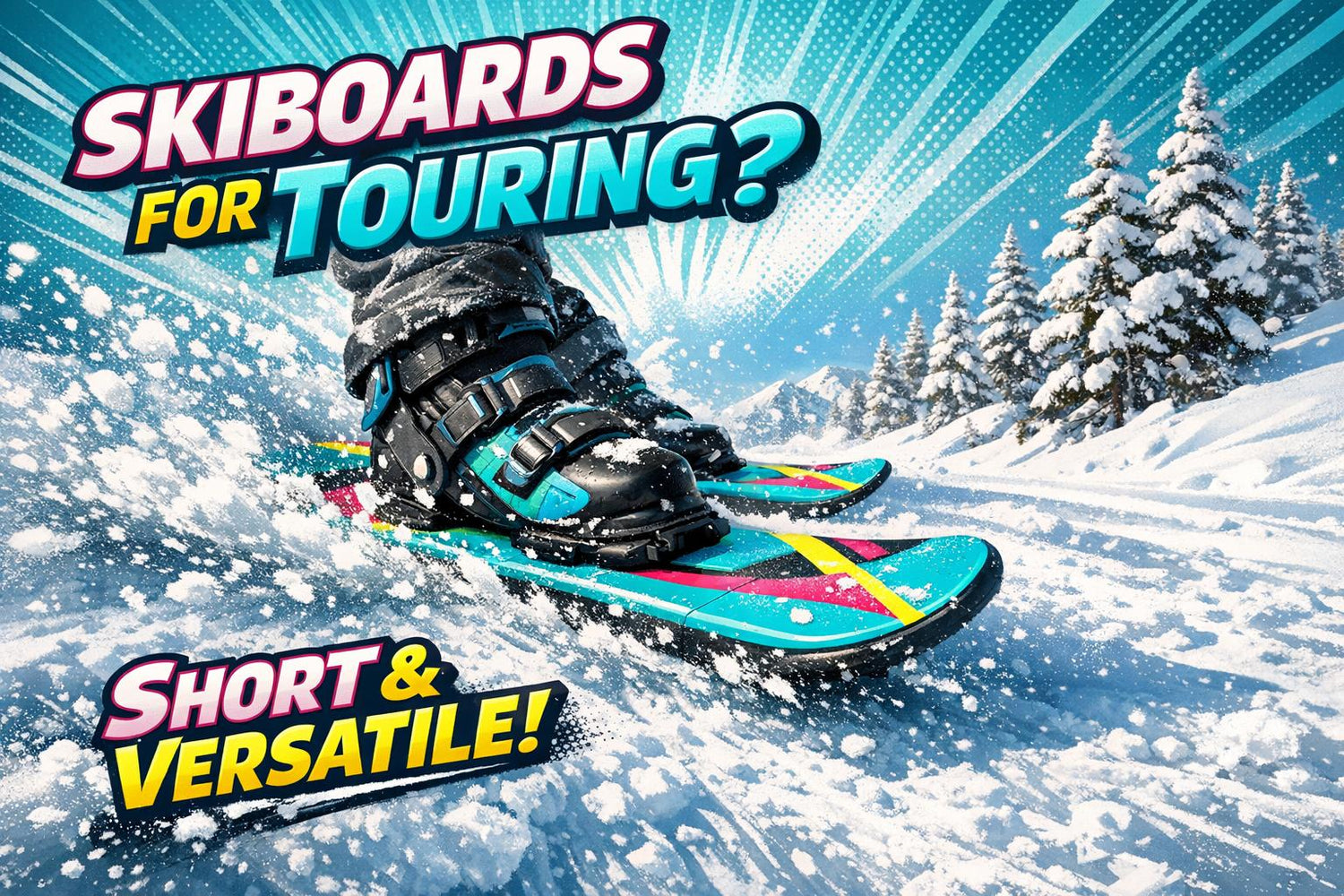
Looking to simplify your backcountry skiing setup? Short skis - like Snowfeet Walkski skiboards - might be the answer. These compact, 39-inch skis are lightweight, easy to carry, and cost just $690 for a full setup compared to the $2,200 price tag of traditional touring gear. They’re perfect for tight trails, mixed terrain, and quick turns, all while working with your regular winter boots.
Key Takeaways:
- Compact & Portable: At 100 cm (39 in) long, they’re easy to strap to a backpack.
- Lightweight: Weighing 6.9–8.8 lbs per pair, they reduce fatigue on climbs.
- Affordable: Save over $1,500 compared to traditional setups.
- Beginner-Friendly: Most users master them in minutes.
- Versatile Bindings: Work with winter boots, snowboard boots, or ski boots.
If you’re tired of heavy, bulky skis and want something that’s easier to handle on technical terrain, skiboards like Snowfeet Walkski are worth considering. They’re a game-changer for backcountry adventures.
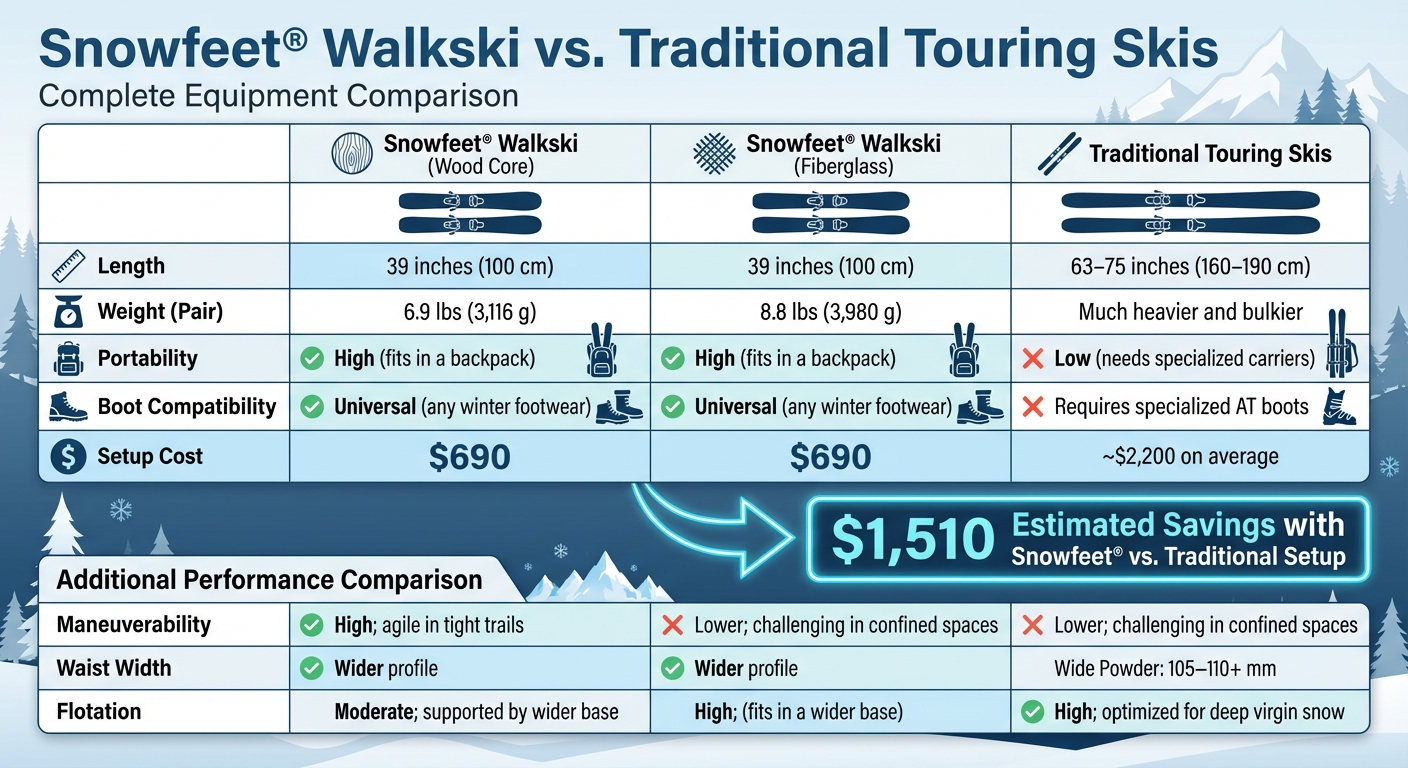
Snowfeet Walkski vs Traditional Touring Skis Comparison Chart
Snowfeet* Walkski Backcountry Touring Skis: Product Overview
Main Features of Snowfeet* Walkski Skis
The Snowfeet* Walkski is a standout in the short ski movement. Measuring just 100 cm (39 in) in length, it’s compact yet delivers impressive performance. You can choose between two versions: a wood-core model weighing 6.9 lbs per pair or a fiberglass-core option at 8.8 lbs per pair. Both are far lighter than traditional touring skis, helping reduce fatigue on uphill climbs.
The skis feature a patented binding system with four modes: Walk, Ski, Climb 1, and Climb 2. These modes are designed to handle steep ascents with ease. Plus, removable climbing skins provide excellent grip for uphill travel, keeping you steady and efficient.
Another highlight is the Walkski’s boot compatibility. The bindings work with standard winter boots, snowboard boots, and alpine boots (US sizes 6–14.5). They also adjust to accommodate boot sole lengths ranging from 9.5" to 15". This universal binding system eliminates the need for specialized touring boots, making these skis incredibly convenient.
Altogether, these features make the Walkski a reliable choice for tackling diverse backcountry terrain.
Why Snowfeet* Products Work Better for Touring
The Walkski’s lightweight, compact design gives it a major edge over traditional touring skis when it comes to backcountry adventures. Traditional skis, often over 160 cm long, can feel bulky and hard to manage in tight spaces. In contrast, the Walkski’s 100 cm length allows for quick, responsive turns, even on challenging trails.
Portability is another big win. These skis can be easily strapped to your backpack, leaving your hands free for hiking poles or climbing. This level of convenience is something full-length touring skis just can’t match.
And then there’s the cost. At $690 for a complete setup, the Walkski is a fraction of the price of traditional touring gear, which can run you about $2,200. On top of that, they’re incredibly beginner-friendly. Most users pick up the basics in just five minutes and are skiing confidently on their first run. With this combination of affordability, ease of use, and performance, the Walkski is perfect for anyone looking to explore the backcountry without breaking the bank.
Traditional Long Touring Skis: Problems in Backcountry Use
Why Traditional Touring Skis Fall Short
Traditional touring skis can make backcountry adventures unnecessarily challenging. Their length - often over 63 inches - makes navigating tight trails and dense woods a real hassle.
Even with lightweight materials, their added weight can drain your energy on steep climbs, turning what should be a fun ascent into a grueling workout. And when it comes to tricky terrain, long skis aren't exactly your best friend. They’re tough to maneuver on narrow forest paths and struggle on icy traverses where quick edge control is key. As the Snowfeet team puts it, "long skis are super clunky which can be a real pain in the leg when you are... skiing in a more demanding terrain". This is where shorter, more agile skiboards like Snowfeet* really shine.
Another big drawback? Their size makes it awkward to switch between hiking and skiing. Strapping 63-inch skis to your backpack isn’t just inconvenient - it limits your ability to tackle mixed terrain where you might need to carry your gear for a while.
And let’s not forget the boots. Traditional setups often require specialized, single-purpose boots, which makes the whole system less versatile for the varied demands of backcountry adventures.
Snowfeet* Skiboards vs. Traditional Skis: Direct Comparison
Weight and Packability: Snowfeet* vs. Traditional Skis
When it comes to weight and packability, the difference is striking. Snowfeet* Walkski skiboards, measuring just 39 inches (100 cm), are far easier to carry than traditional touring skis, which typically range from 63 to 75 inches in length. The wood-core Walkski weighs only 6.9 lbs per pair, while the fiberglass version is slightly heavier at 8.8 lbs. Compare that to the hefty setups from brands like Black Diamond or Dynafit, and it's easy to see why backcountry enthusiasts are opting for Walkski. They’re compact enough to strap onto your backpack, making them perfect for mixed-terrain adventures where you might be hiking one moment and skiing the next. On the other hand, lugging around 70-inch skis requires specialized racks or carriers, which can be cumbersome.
| Feature | Snowfeet* Walkski (Wood Core) | Snowfeet* Walkski (Fiberglass) | Traditional Touring Skis |
|---|---|---|---|
| Length | 39 inches (100 cm) | 39 inches (100 cm) | 63–75 inches (160–190 cm) |
| Weight (Pair) | 6.9 lbs (3,116 g) | 8.8 lbs (3,980 g) | Much heavier and bulkier |
| Portability | High (fits in a backpack) | High (fits in a backpack) | Low (needs specialized carriers) |
| Boot Compatibility | Universal (any winter footwear) | Universal (any winter footwear) | Requires specialized AT boots |
| Setup Cost | $690 | $690 | ~$2,200 on average |
Now that we’ve covered portability, let’s dive into how these options perform on the slopes.
Performance on Uphill and Downhill Terrain
Snowfeet* Walkski skiboards don’t just win on portability - they also shine on the trails. For uphill climbs, the compact design and four-mode binding system make a noticeable difference. The bindings include a Walk mode for flat terrain and two climbing riser positions (Climb 1 and Climb 2) to tackle moderate and steep ascents. On challenging uphill sections, the high riser reduces strain on your calves, while the shorter 100 cm length allows for smooth switchback navigation.
When it’s time to descend, the performance is equally impressive. Locking your heel into Ski mode gives you precise control and quick responsiveness, something traditional long skis often struggle to match. The shorter length means faster edge-to-edge transitions, which is a game-changer when weaving through tight trees or handling technical terrain.
"Going fast I was in complete control of every move, turns, and stops. Your product is indeed the best, and thank you for allowing me to rediscover the joy and happiness of skiing with such ease and with so much control." - Daniel Siouffi
From climbing efficiency to downhill agility, Snowfeet* Walkski skiboards offer a versatile and user-friendly experience that’s hard to beat.
sbb-itb-17ade95
Backcountry Performance: Snowfeet* vs. Major Ski Brands
Maneuverability in Tight Trails and Mixed Terrain
Snowfeet* Walkski skiboards aren't just great for uphill and downhill adventures - they shine in technical terrain too. Thanks to their compact 39-inch design, these skiboards offer a much shorter turning radius compared to traditional touring skis, which typically range from 63 to 75 inches. This shorter length means you can navigate tight forests and rugged trails with ease, making quick adjustments without wearing out your legs.
This agility becomes even more valuable when tackling mixed terrain that requires constant transitions. The Walkski's universal binding system accommodates all types of winter footwear, so you can move naturally while scrambling over rocks or weaving through narrow forest paths - up to altitudes of about 10,000 feet.
"Short length doesn't burden your legs, increases the maneuverability and allows you to move with greater agility." - Snowfeet Team
The reduced strain on your legs during technical descents is a game-changer. With their compact design, Snowfeet* skiboards deliver sharper, more responsive handling, especially in confined spaces. But how do they hold up in powder compared to traditional wide powder skis? Let’s dive in.
Flotation and Stability: Snowfeet* vs. Wide Powder Touring Skis
While agility is key in tight spaces, backcountry terrain also demands solid flotation and stability. Traditional freeride skis from major brands usually feature waist widths of 105–110 mm or more, ensuring they float effortlessly in deep powder. Snowfeet* skiboards, on the other hand, strike a balance. Their wider profile - compared to regular skis - provides impressive support and stability, making them a versatile option between long skis and mini skis.
Here’s a quick comparison of Snowfeet* skiboards and wide powder touring skis:
| Feature | Snowfeet* Skiboards | Wide Powder Touring Skis (Atomic/Salomon) |
|---|---|---|
| Length | 26–47 inches (65–120 cm) | 63+ inches (160+ cm) |
| Waist Width | Wider profile | 105–110+ mm for flotation |
| Maneuverability | High; agile in tight trails | Lower; challenging in confined spaces |
| Flotation | Moderate; supported by wider base | High; optimized for deep virgin snow |
| Stability | High support for various skill levels | High; designed for aggressive, high-speed riding |
| Boot Compatibility | Universal | Standard release ski bindings only |
In moderate powder conditions, Snowfeet* skiboards hold their own, thanks to their wider base. While they can’t match the deep snow flotation of a 110 mm ski, they perform exceptionally well on packed trails and the kind of moderate powder that most backcountry skiers encounter. Plus, they’re a budget-friendly choice - at $690, they’re a steal compared to the average $2,200 price tag of a traditional touring setup. And with their lightweight design, you can easily strap them to your backpack for those remote, untouched spots.
Conclusion: Why Snowfeet* Skiboards Are Better for Backcountry Touring
Main Benefits of Snowfeet* Skiboards
Snowfeet* Walkski skiboards bring a fresh approach to backcountry touring, making them a standout choice over traditional long skis. At just 39 inches in length and weighing only 6.9 lbs per pair, they’re incredibly lightweight and portable. Forget lugging around bulky gear - these skiboards can be easily strapped to your backpack, perfect for those remote adventures.
What really sets them apart is their versatility. The bindings work with any winter boots, and you get four modes - Walk, Ski, Climb 1, and Climb 2 - that let you adapt to different terrains with ease. Plus, the price is hard to beat: $690 for the complete setup compared to the $2,200 you'd typically spend on traditional gear. That’s over $1,500 saved! And with a learning curve of just about five minutes, you can hit the slopes almost immediately. By combining a lightweight design with practical features, Snowfeet* skiboards solve many of the challenges that backcountry skiers face.
Recommendation for Backcountry Skiers
If you’re tired of dealing with heavy, clunky skis, Snowfeet* Walkski skiboards are a game-changer. They shine on mixed terrain, moderate powder, and technical descents where agility and control matter most. Whether you’re weaving through tight tree lines or tackling gradual ascents, these skiboards give you the ease and precision you need to make backcountry touring fun again.
"Going fast I was in complete control of every move, turns, and stops. Your product is indeed the best, and thank you for allowing me to rediscover the joy and happiness of skiing with such ease and with so much control." - Daniel Siouffi
With better value, easier handling, and unmatched versatility for the terrain most backcountry skiers encounter, Snowfeet* skiboards are the clear choice for your next adventure. Why settle for outdated gear when you can explore the backcountry with confidence and ease?
Snowboarder tries Snowfeet* | Which Snowfeet* Short Ski is the Best? | Snowblades 44, 65, 99 Review
FAQs
How do Snowfeet Walkski skiboards perform in deep powder compared to traditional skis?
Snowfeet Walkski skiboards are a game-changer in deep powder. Thanks to their lightweight build and compact design, they’re incredibly easy to handle, offering agility that traditional skis just can’t match. This makes gliding through tricky terrain feel like a breeze rather than a battle.
Traditional skis do provide some float in deep snow, but their bulk and weight can turn backcountry touring into a real workout. Snowfeet Walkski skiboards, however, bring together portability and ease of use. They’re perfect for adventurous skiers who want a simpler, more fun way to explore the backcountry without lugging around heavy gear.
Are Snowfeet Walkski skiboards a good choice for beginners in backcountry skiing?
Yes, Snowfeet Walkski skiboards are a great option for beginners dipping their toes into backcountry skiing. At just about 39 inches long, their compact size and light weight make them super easy to handle - perfect for anyone new to the slopes. Unlike traditional skis that can feel unwieldy, these are much easier to maneuver, which helps build confidence, especially on uneven terrain.
One of their standout features? They work with regular winter boots. That means you don’t need to shell out for pricey, specialized gear. This combination of affordability and beginner-friendly design makes Snowfeet Walkski skiboards an awesome choice for anyone wanting to try backcountry skiing without the stress of a steep learning curve or a big upfront cost.
What kind of boots can I use with Snowfeet Walkski skiboards?
Snowfeet Walkski skiboards are made to be used with regular winter footwear - no special ski boots required. Whether you’ve got insulated winter boots, sturdy hiking boots, or even snowboard boots, you’re good to go. This makes them a super flexible option, especially for backcountry adventures, where traditional ski setups usually demand specific alpine or touring boots.
By skipping the need for heavy, pricey ski boots, Snowfeet Walkski skiboards provide a lightweight, easy-to-use solution for heading off the beaten path.











Leave a comment
This site is protected by hCaptcha and the hCaptcha Privacy Policy and Terms of Service apply.