



















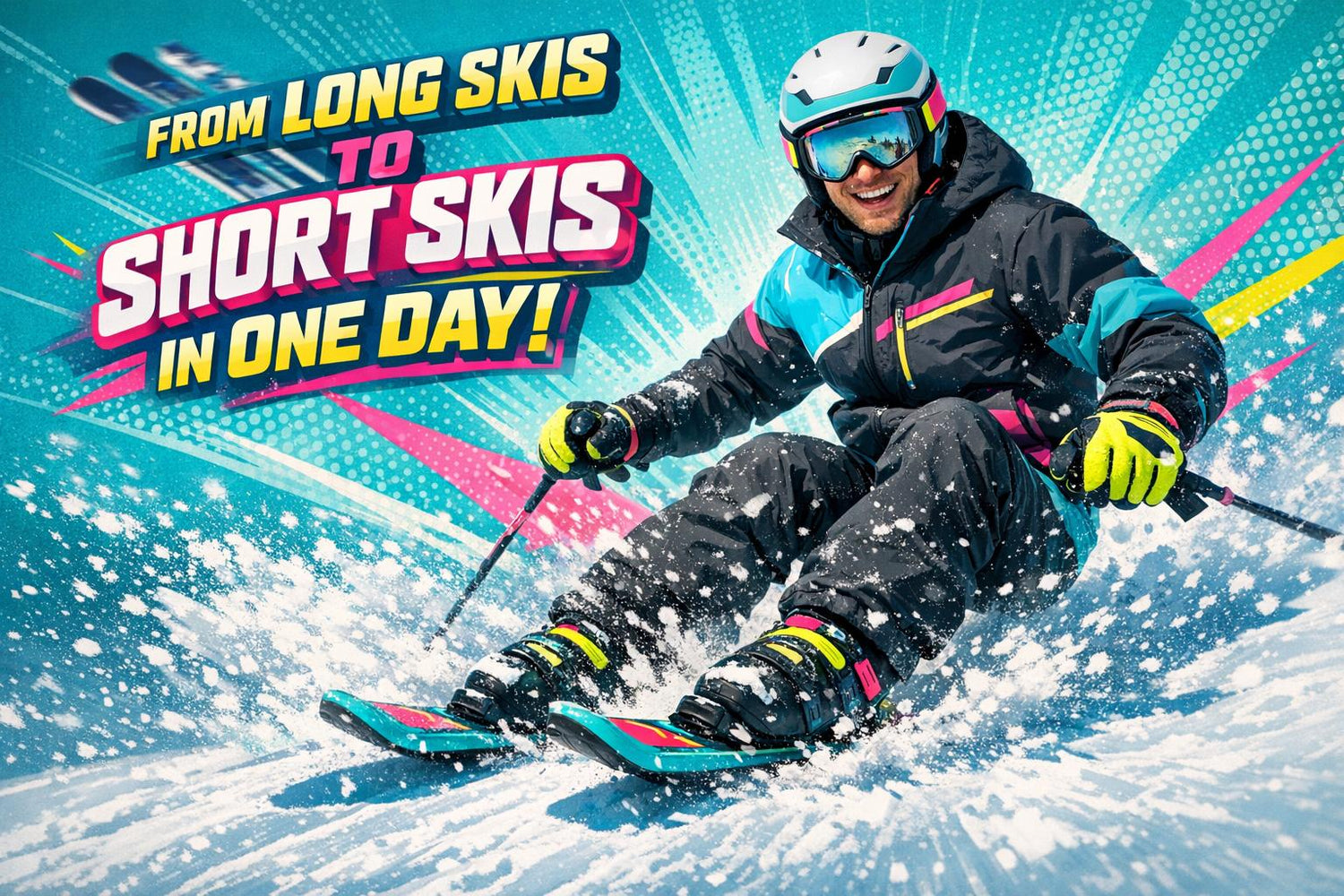
Switching from long skis to short skis like Snowfeet* is easier than you think. Short skis combine the fun of skiing with the agility of skating. They’re lightweight, fit in a backpack, and work with regular winter boots - no clunky gear required. Plus, you can learn the basics in just 5 minutes. Whether you’re navigating tight trails, hitting terrain parks, or even skiing in your backyard, short skis offer unmatched control and portability.
Here’s why they’re worth trying:
- Compact & Portable: Fits in a standard backpack; no bulky roof racks needed.
- Beginner-Friendly: Easy to learn; feels natural if you’ve skated before.
- Versatile: Use them on slopes, trails, or even sledding hills.
- Affordable: Models start at $190, with integrated bindings included.
Short skis let you move freely, make sharp turns, and enjoy a fresh take on skiing - all without the hassle of traditional long skis. Ready to give them a shot? Let’s dive into how to make the switch in just one day.
Why Snowfeet* Beats Traditional Long Skis and Snowboards

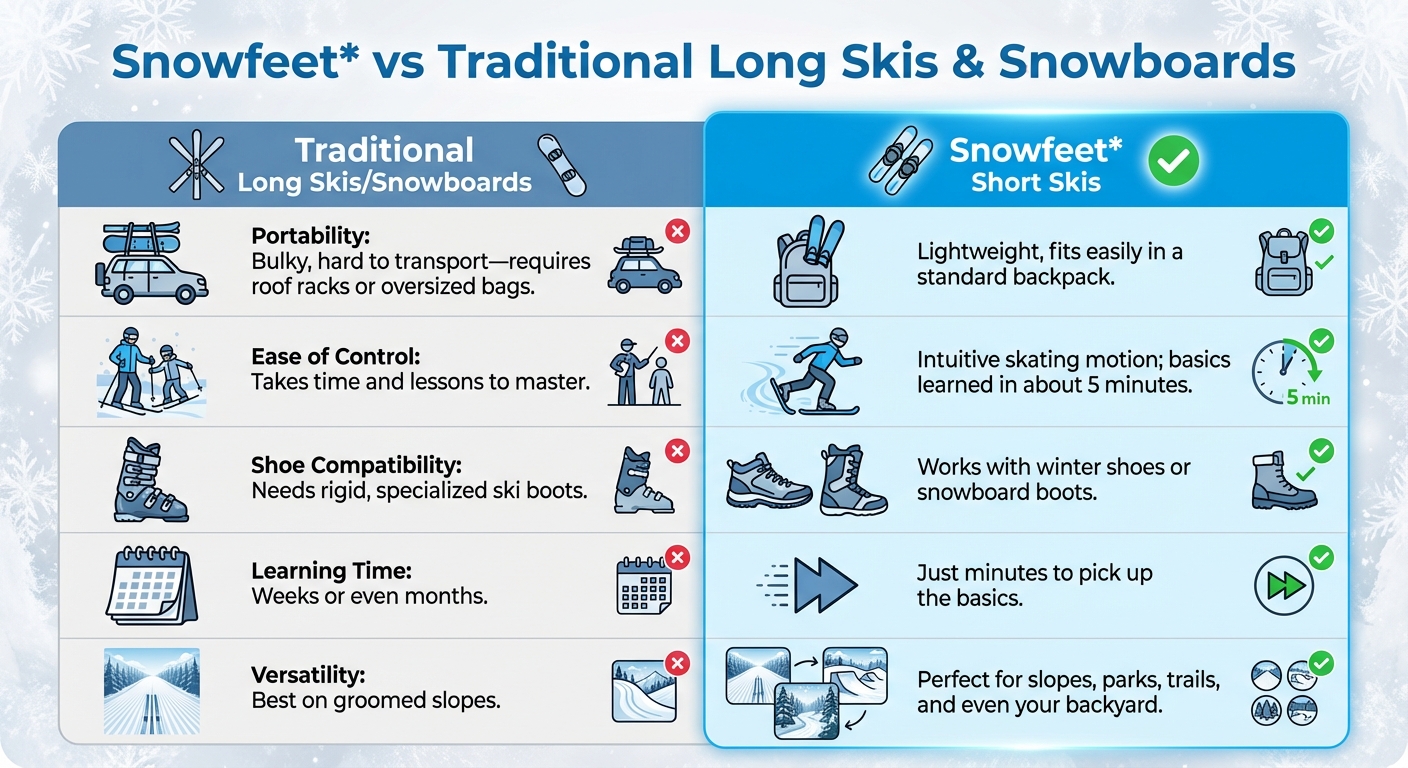
Snowfeet Short Skis vs Traditional Long Skis Comparison Chart
Snowfeet* takes winter sports gear in a whole new direction, offering a compact, user-friendly alternative to traditional long skis and snowboards. By addressing common challenges like portability and ease of use, Snowfeet* makes hitting the slopes more accessible than ever.
Feature Comparison: Snowfeet* vs. Long Skis and Snowboards
The differences between Snowfeet* and standard gear are striking. Here's a quick breakdown:
| Feature | Traditional Long Skis/Snowboards | Snowfeet* Short Skis |
|---|---|---|
| Portability | Bulky, hard to transport - requires roof racks or oversized bags | Lightweight, fits easily in a standard backpack |
| Ease of Control | Takes time and lessons to master | Intuitive skating motion; basics learned in about 5 minutes |
| Shoe Compatibility | Needs rigid, specialized ski boots | Works with winter shoes or snowboard boots |
| Learning Time | Weeks or even months | Just minutes to pick up the basics |
| Versatility | Best on groomed slopes | Perfect for slopes, parks, trails, and even your backyard |
This comparison highlights how Snowfeet* delivers a more flexible and beginner-friendly experience.
One of Snowfeet*'s standout features is its skating-inspired motion. If you’ve ever tried ice skating, inline skating, or hockey, the movement will feel second nature. Unlike traditional skis, which lock you into a forward-leaning stance and stiff boots, Snowfeet* keeps your weight centered - or even slightly back - so you can walk normally between runs. No clunky ski boots slowing you down.
And when you fall? Snowfeet* makes it easy to bounce back. You can get up quickly and keep riding without missing a beat. Verified rider Daniel Siouffi even praised the gear for its smooth control during turns and stops.
Why Longer Skis Aren’t Always Better
For years, longer skis have been marketed as the gold standard for performance. But here’s the thing: they’re not always the best choice. Long skis can be a hassle on narrow trails or in terrain parks, where quick, sharp movements are key. They’re also harder to manage in crowded areas.
Snowfeet* flips this idea on its head. With lengths ranging from 38 cm to 120 cm, Snowfeet* offers better maneuverability without giving up control. You’ll be able to carve tighter turns, dodge obstacles, and explore areas where long skis just can’t go. Simply put, smaller can mean more fun and freedom on the mountain.
This fresh approach to ski design sets the stage for a smooth transition to Snowfeet*, which we’ll dive into further in the next sections.
Getting Started: Choosing and Setting Up Snowfeet* Short Skis
Selecting the Right Snowfeet* Model
Choosing the right Snowfeet* model depends on the kind of adventure you're after. If you're aiming for that "skating on snow" vibe, the 38 cm Mini Ski Skates (priced between $190–$250) are a fantastic option. The Carbon Fiber edition, in particular, offers a slower, more controlled ride, making it beginner-friendly. These skates are compact enough to fit in a backpack and work with regular winter shoes, making them perfect for hiking trails, sledding hills, or even some fun in your backyard.
For those who crave speed and a more professional feel on groomed slopes, the 44 cm Skiskates ($490) are the way to go. Built with a wood core, they deliver performance that skiers will love. As pro skater Logan (@xskyskaterx) explains:
"If you are normally a skier get the SKISKATES. They have no ribs and feel more like skis... if you are a blader or rollerskater get [Snowfeet 38 cm], they have ribs in the middle that feel more like wheels".
If you’re looking for a middle ground, the 50 cm Ski Skates ($250) offer great value for slope riding, striking a nice balance between maneuverability and stability.
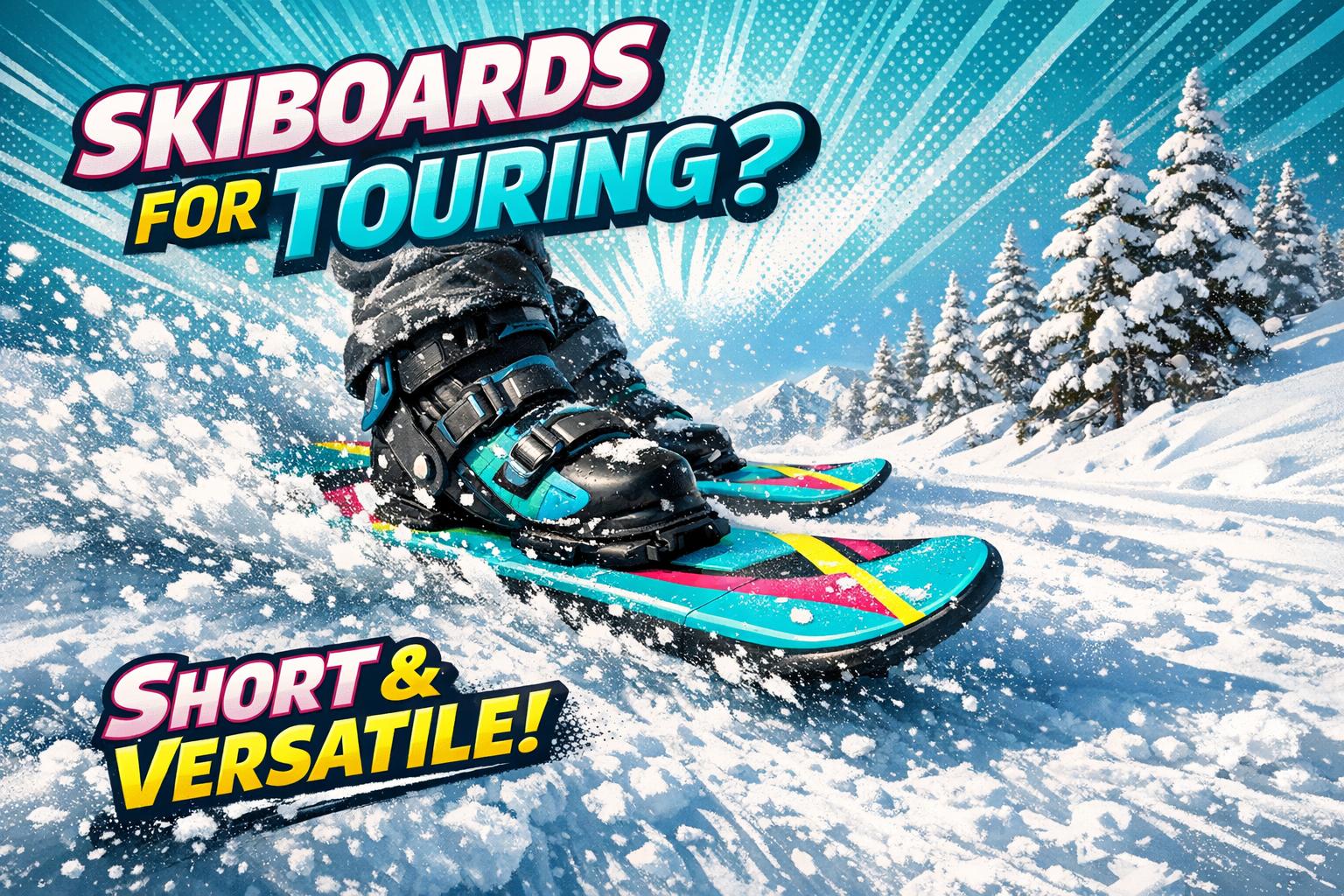
For a more classic short ski experience, the Skiblades (65 cm to 99 cm, priced between $550–$590) are a solid choice. These provide better balance and carving ability, with the 99 cm version capable of handling light powder up to 4 inches and excelling in snow parks. If backcountry adventures are your thing, the specialized 100 cm Walkski ($690) is designed for touring and tackling off-the-beaten-path terrain.
Once you've picked your model, it's time to set everything up so you’re ready to hit the slopes.
Gear Setup and Preparation
After selecting your Snowfeet*, proper setup is key to getting the most out of your gear. Start with boot compatibility: snowboard boots are great for slope riding, offering solid ankle support, while waterproof winter shoes work well for casual use. Snowfeet* bindings are adjustable and fit US sizes 6–13 (EU 38–47). To adjust, use a simple screwdriver to move the straps to the correct holes, then trim any extra strap length for a clean fit.
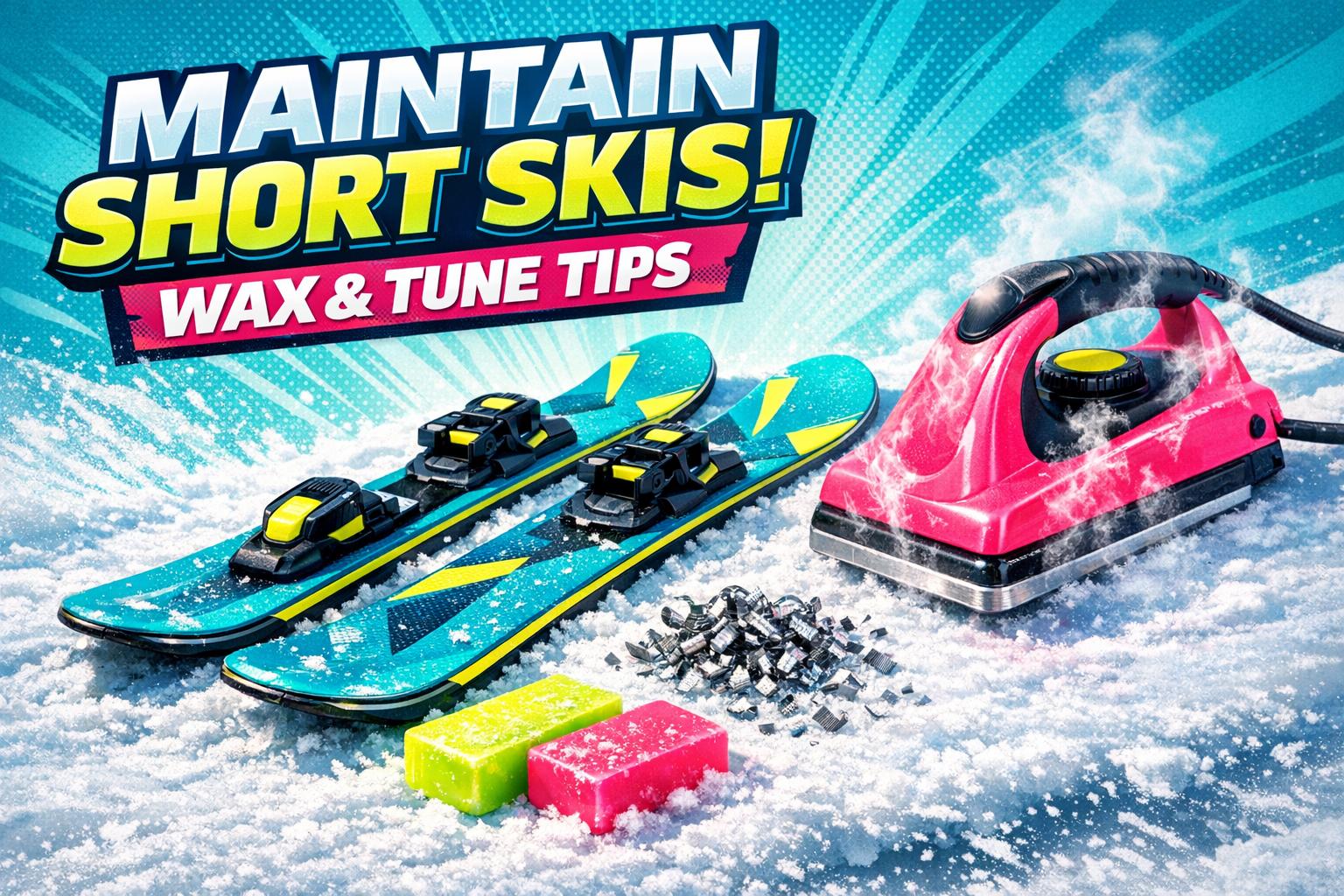
If you’ve chosen fiberglass models, make sure to wax them before your first ride. Wood-core models, on the other hand, come pre-waxed, so they’re ready to go. Keep a sharpening stone handy - sharp edges give you better control on the slopes. After each use, dry the edges thoroughly to prevent rust, and if you’re storing them for a while, a thin layer of oil can help protect them.
Don’t forget safety leashes, especially if your bindings don’t release. Most ski resorts allow Snowfeet* because they meet safety standards with their standard metal ski edges. With over 5,500 verified reviews and an average rating of 4.9/5 stars, it’s clear that riders love how quick and easy it is to set up and start enjoying the mountain.
How to Master Short Skis in One Day: Step-by-Step Techniques
Step 1: Adjust Your Stance and Balance
Keep your weight centered - don’t lean too far forward or backward. Stand tall with your feet shoulder-width apart to stay in control. For extra stability, you can try a staggered stance, placing one foot slightly ahead of the other. Bend your knees and stay flexible to keep a low center of gravity. If you feel yourself tipping forward, stretch out your arms and adjust your upper body to regain balance. On bumpy terrain, lean back slightly and lift your toes to avoid catching an edge. Once you’ve got your balance, focus on mastering the skating motion, which is key to using Snowfeet* effectively.
Step 2: Get Comfortable With the Skating Motion
Using Snowfeet* short skis feels more like skating than traditional skiing. Start on flat, snowy ground to get a sense of their movement. Push off diagonally, similar to how a hockey player skates (see). Keep your feet shoulder-width apart and avoid spreading your legs too wide. Once you’re comfortable with this motion on flat ground, move to a gentle, groomed slope to practice going downhill (see). After you’ve nailed the basics of skating, you can start working on turns and gaining speed.
Step 3: Turning, Carving, and Picking Up Speed
The responsive design of Snowfeet* makes turning and carving a breeze. To turn, shift your weight onto the metal edges. Models like the 99 cm Skiblades, with their parabolic shape, allow for quick, sharp turns without much effort. Unlike traditional long skis that require big, sweeping movements, short skis let you make tight, fast turns easily. To pick up speed, keep using the skating motion and distribute your weight evenly. If you’re using longer models like the 120 cm Short Skis and notice shaking at higher speeds, shifting your weight slightly forward can help stabilize them (see [6]). As Daniel Siouffi, a verified user, shared:
"My first run the skis did shake but soon there after by distributing better my weight on my toes - i was flying like never before. Going fast i was in complete control of every move turns and stops" [6].
Once you’re comfortable turning and speeding up, it’s time to learn how to stop safely.
Step 4: Practice Stopping and Braking Safely
To stop, make sure your weight is evenly distributed across both feet. A hockey stop works well - push both edges sideways to slow down. For extra safety, use the heel brake (see). Start practicing your stops on gentle slopes, letting the metal edges of the skis help you slow down. As the Snowfeet Team advises:
"Stopping is a little bit harder with Snowfeet* so distribute your weight evenly over both feet" (see).
Stick to groomed slopes and easy trails while you’re learning. Avoid steep hills or deep powder until you’ve mastered the basics (see). With practice, you’ll be stopping like a pro in no time!
sbb-itb-17ade95
Common Adjustments and Troubleshooting
Addressing Balance Issues
If you're just starting out, you might instinctively lean forward like you would on traditional skis. But here's the catch: Snowfeet don’t have those long tips to keep you steady, so leaning forward can send you tumbling. Instead, focus on keeping your weight centered over the middle and back of your feet. A shoulder-width stance will give you better control. As the Snowfeet Team puts it:
"Don't lean forward like you would do with skis, because you don't have the support of regular-length skis to hold you and with almost inevitable certainty, you would fall down."
Feeling a bit wobbly? Try a staggered stance - place one foot slightly ahead of the other for extra stability.
For bumpy terrain, lean back just a little and lift your toes to avoid catching the tips in the snow. If you’re skiing backward, do the opposite: shift your weight toward your toes and keep your heels slightly raised. Once you've nailed the basics, you'll be ready to smooth out your technique.
Fine-Tuning Your Technique
Once your balance feels solid, it’s time to tweak the details. If your Snowfeet start shaking when you pick up speed, shift your weight forward to steady things out. Stopping is another key skill - make sure your weight is evenly distributed across both feet. Unlike traditional skis, you won’t rely on favoring one side.
Stick to groomed slopes while you’re mastering these finer points. Avoid steep hills and deep powder until you’re confident with your balance and weight distribution. Snowfeet are best suited for groomed trails and snow parks, so once you’re comfortable on easier runs, you can gradually step up to more challenging terrain.
Snowfeet* Product Recommendations and Pricing
Top Snowfeet* Models for Every Skill Level
Making the switch to Snowfeet* isn’t just about learning a new technique - it starts with picking the right gear. Snowfeet* designs their products to make this transition as smooth as possible.
Snowfeet* short skis come in sizes ranging from 38 cm to 120 cm, catering to all skill levels. For beginners, the Mini Ski Skates (38 cm) are a solid choice. They’re compact enough to fit in a backpack and can be used with regular winter shoes or snowboard boots. These are priced between $190 and $250 and have earned an impressive 4.9-star rating from over 2,200 reviews. Logan, a seasoned rider, specifically recommends the 38 cm model for those familiar with inline skating or rollerblading.
For intermediate users, the PRO Ski Skates (50 cm) offer more stability and a skating-like feel at $250. If you’re looking for something more advanced, the Skiblades (65 cm) are priced at $550 and are perfect for balanced, agile movements - ideal for those transitioning from traditional skis. Advanced riders aiming for powder runs, jumps, or high-speed carving will love the 120 cm Skiblades, priced at $790. These have a flawless 5-star rating from 66 reviews.
Here’s a quick breakdown of the pricing to help you decide which model fits your needs.
Pricing Overview
Snowfeet* models range from $190 for the 38 cm Mini Ski Skates to $790 for the 120 cm Skiblades. If you’re looking for something in the middle, the 44 cm Skiskates are priced at $490, while the 99 cm Skiblades cost $590. Unlike traditional skis, which often require separate bindings, Snowfeet* products come equipped with integrated bindings, ready to ride. Models 44 cm and above feature a wood core and come pre-waxed for better performance, while the fiberglass options (38 cm and 50 cm) are built for durability and offer great value.
With over 50,000 users worldwide and recognition as an ISPO innovation finalist, Snowfeet* is redefining what’s possible in winter sports.
Conclusion: Experience the Fun and Freedom of Snowfeet* Short Skis
Switching from traditional long skis to Snowfeet* short skis isn’t just about trying something new - it’s about opening the door to a whole new way of enjoying winter. As you’ve learned, it takes just a day to get the hang of it. From adjusting your stance and nailing the skating motion to carving smooth turns and stopping with ease, the learning curve is quick and rewarding. Once you’ve mastered the basics, you’re set to experience the unique freedom that Snowfeet* brings to the slopes.
The perks speak for themselves. Unlike the bulk of traditional skis, Snowfeet* are compact enough to fit in a backpack, so you can take them anywhere - whether that’s a ski resort, a local sledding hill, or even a snowy hiking trail. And here’s the best part: they work with your regular winter boots or snowboard boots, making them incredibly convenient. Riders have been raving about them, and for good reason.
"These skiblades are so much fun and easy to control. Never going back to regular skis." - Andrew B.
Feedback like Andrew B.’s highlights how Snowfeet* bring both fun and control to the table. Whether you’re starting out with a beginner-friendly model or opting for an advanced version, you’re investing in gear that’s built for performance. Their portability, versatility, and sheer fun make them a must-try for anyone looking to break free from the limitations of traditional skiing.
Give Snowfeet* a shot, and you’ll see why so many are making the switch. The freedom to move, the ease of carrying them around, and the playful vibe they bring to winter sports will completely change how you hit the slopes.
FAQs
What makes Snowfeet short skis easier to use than traditional long skis?
Snowfeet short skis are a breeze to use compared to traditional long skis, all thanks to their compact size and lightweight build. Their shorter length makes turning quick and precise, giving you a skating-like feel on the slopes. This makes them a fantastic option whether you're a beginner trying to find your footing or a seasoned rider looking for something fun and agile. On the other hand, those long skis - usually 5 to 6 feet - can feel clunky and demand more strength and coordination to handle.
Another big win for Snowfeet is how versatile they are. Unlike traditional skis that need special boots and bindings, Snowfeet work with your regular winter shoes. That means no heavy, awkward gear to lug around. Plus, they’re super portable - just toss them in a backpack, and you’re ready to go. With Snowfeet, you’ll spend less time fussing over gear and more time carving up the slopes!
What kind of boots can I use with Snowfeet short skis?
Snowfeet short skis are made to pair with your regular winter boots - no need to splurge on pricey, clunky ski boots. Just ensure your boots offer solid ankle support and fit snugly to give you the best mix of comfort and control while you're out on the slopes. This setup makes Snowfeet short skis a more convenient and budget-friendly option compared to traditional skis.
Are Snowfeet short skis a good choice for beginners?
Snowfeet short skis are a fantastic choice for beginners! Their smaller size makes them much easier to handle compared to traditional long skis. This means you can gain confidence on the slopes faster without feeling overwhelmed. Plus, here’s a bonus: you can use them with your regular winter boots - no need to invest in pricey, specialized ski gear.
These short skis are all about making skiing more approachable and fun. Whether you’re gliding down groomed trails or trying out a few playful moves, they offer a smooth and enjoyable ride, perfect for anyone just starting out.











Leave a comment
This site is protected by hCaptcha and the hCaptcha Privacy Policy and Terms of Service apply.