



















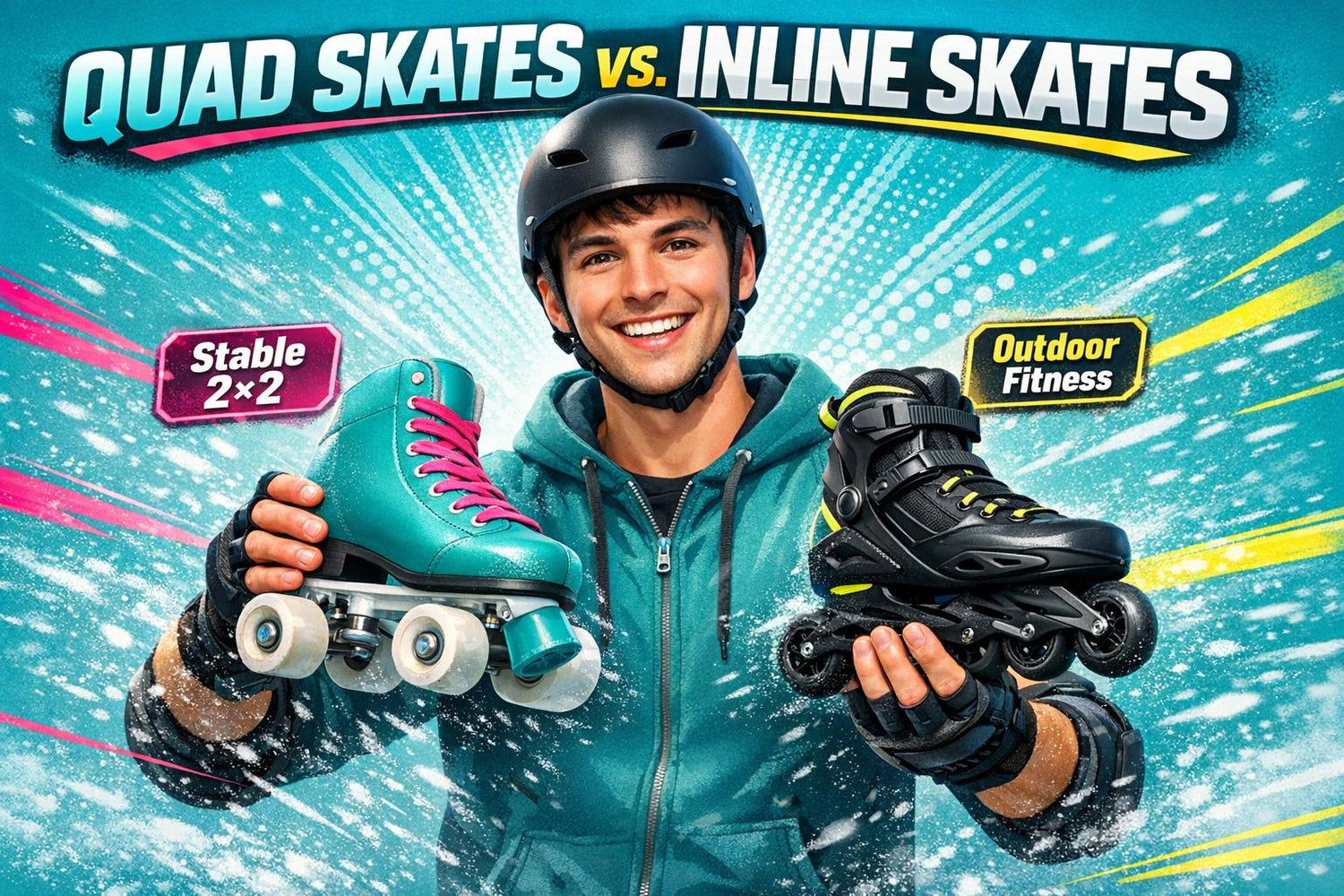
If you're new to skating and wondering what to start with, here's the quick answer: quad skates are easier for beginners. Their wider, stable 2x2 wheel setup makes balancing simpler, and the toe-stop brake is intuitive. On the other hand, inline skates are better for outdoor trails and fitness, but they require more ankle strength and have a steeper learning curve.
Key Points:
- Quad Skates: Easier to balance, great for smooth indoor surfaces like rinks. Perfect for building confidence.
- Inline Skates: Sleeker, faster, and ideal for outdoor paths. Better for fitness but harder to master at first.
- Cost: Both range from $80–$300, depending on the model.
Quick Comparison:
| Feature | Quad Skates | Inline Skates |
|---|---|---|
| Stability | Wider base, easier to balance | Narrow base, harder to balance |
| Braking | Front toe stop (easy) | Rear heel brake (needs practice) |
| Best Surface | Indoor rinks, smooth pavement | Outdoor trails, rough paths |
| Learning Curve | Beginner-friendly | Steeper, needs ankle strength |
| Speed | Slower, easier to control | Faster, harder to manage |
If you're aiming for smooth, casual rides or indoor skating, go with quad skates. For outdoor adventures or fitness, inline skates may be worth the extra effort. Whatever you choose, don’t forget safety gear - helmets, wrist guards, and pads are a must. 😊
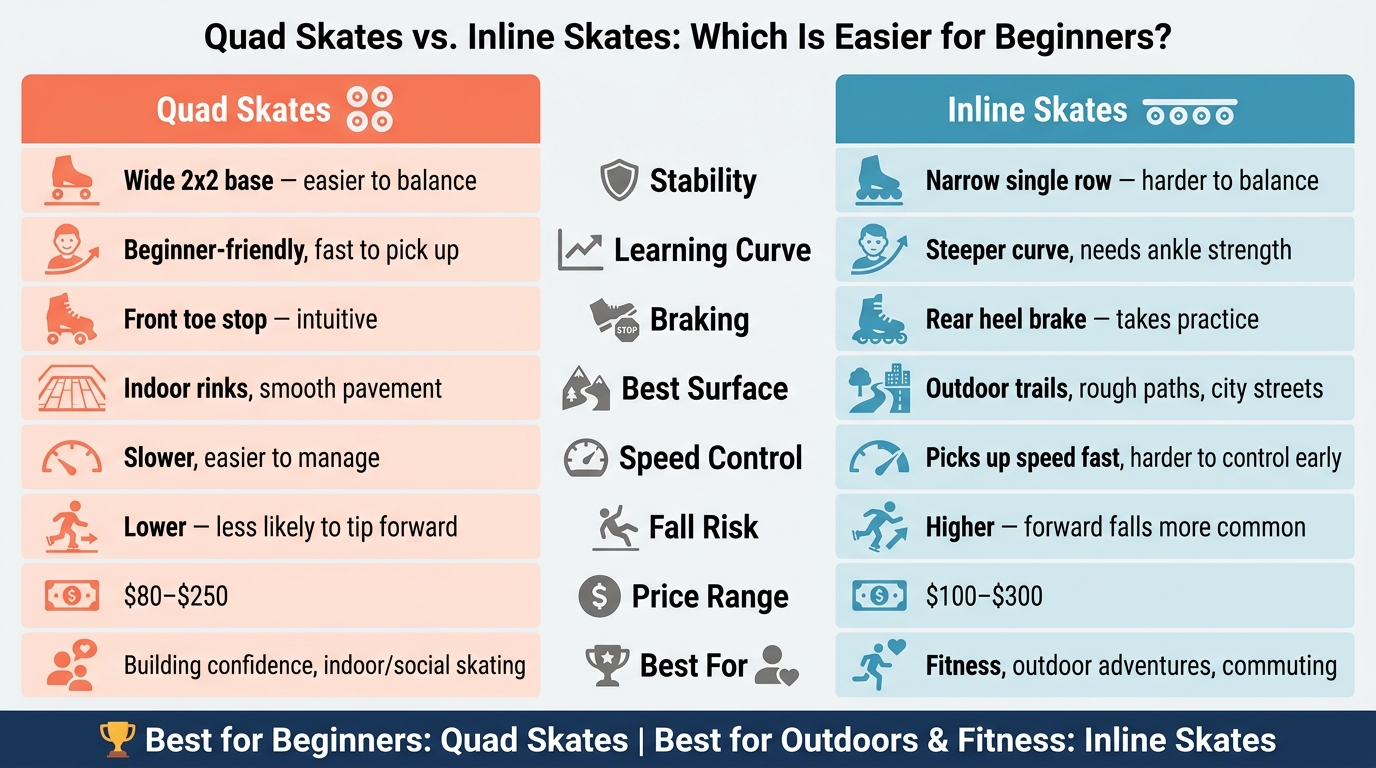
Quad Skates vs. Inline Skates: Beginner's Comparison Guide
Quad Skates: What Beginners Need to Know
Design and Stability
Quad skates are built with four wheels in a 2x2 square setup - two wheels at the front and two at the back. This layout creates a wider base, giving you more stability and making it easier to stay balanced without too much effort.
Most beginner models come with high-top boots that wrap around your ankles, offering extra support. This design is a lifesaver when you're just starting out, as your legs might not be used to the movements involved in skating.
"Quad skates come with four wheels in a 2x2 square formation, offering a wider stance that makes standing, stopping, and turning easier - crucial for new skaters." - C7Skates
Learning Curve and Braking
One of the best things about quad skates for beginners is the toe-stop braking system. Each skate has a rubber stopper at the front, and slowing down is as simple as dragging or pressing the stopper against the ground. Most beginners pick up this braking technique during their very first session.
To stay steady on quad skates, you’ll want to lean forward slightly and keep your knees bent. Falling backward is a common rookie mistake, but this forward-leaning posture helps prevent that. Basic moves like skating forward, making simple turns, and stopping tend to come together pretty quickly - most people feel fairly comfortable after just a few hours of practice.
Once you’ve nailed the basics, the next step is finding the right spot to practice.
Best Places to Use Quad Skates
Quad skates shine on smooth, flat surfaces. Indoor skating rinks are perfect because they offer consistent flooring with no cracks or bumps, plus plenty of space to practice. Outdoor options like paved paths or parking lots can also work well, as long as the surface is smooth.
However, quad skates aren’t great on rough or uneven terrain. Things like cracks in pavement, gravel, or grass can mess with the wider wheel setup and throw off your balance. If you’re planning to skate outside on mixed surfaces, keep that in mind before spending $80–$250 on a pair.
Inline Skates: What Beginners Need to Know
Design and Directional Stability
Inline skates are built with 3–5 wheels lined up in a single row, unlike the 2x2 wheel setup of quad skates. This design gives them a sleeker profile but also raises your balance point higher off the ground. As a result, staying upright takes more ankle strength. The longer wheelbase, though, works in your favor when it comes to keeping a straight, smooth glide once you get moving. Many beginner-friendly models include ankle-supportive shells to help you build that strength. However, this setup does mean you'll face a bit of a steeper learning curve compared to quad skates.
Learning Curve and Speed
Because of their higher center of gravity and narrow base, inline skates demand more time to master balance and control. Stopping can also feel a bit tricky at first. Most inline skates come with a heel brake on the right skate, which you use by extending your right foot forward and lowering your heel to slow down. It’s not as intuitive as the toe stops on quad skates, but with practice, it becomes second nature. Inline skates also tend to pick up speed faster, so protective gear like helmets, wrist guards, knee pads, and elbow pads isn’t just a good idea - it’s a must. If you’re just starting out, beginner models like the K2 F.I.T. 80 or Rollerblade Macroblade 90 are solid picks, typically priced between $100 and $150.
Best Places to Use Inline Skates
Inline skates shine on outdoor surfaces like bike paths, park trails, and city sidewalks. They handle small bumps, rough pavement, and minor debris better than quad skates, making them a great choice for urban and recreational skating. That said, outdoor use can wear down the wheels faster and require more frequent cleaning of the bearings. A little regular maintenance goes a long way in keeping your skates in good shape.
Quad Skates vs. Inline Skates: A Direct Comparison
Comparison Table
| Feature | Quad Skates | Inline Skates |
|---|---|---|
| Stability | High side-to-side; stable when standing still | Strong front-to-back; stable when moving |
| Learning Curve | Smooth and beginner-friendly | Steeper; requires more ankle strength |
| Stopping | Front toe stops (intuitive) | Rear heel brake (takes practice) |
| Surface Compatibility | Best for indoor rinks and smooth pavement | Better for outdoor trails, streets, and rough paths |
| Speed Control | Easier at low speeds | Picks up speed faster; harder to manage early on |
| Fall Risk | Lower; less likely to tip forward | Higher risk of forward falls for new skaters |
| Beginner Takeaway | Best for building initial confidence | Best for outdoor versatility and fitness over time |
This table highlights the key distinctions between quad and inline skates, setting the stage for a closer look at what these differences mean for beginners.
Key Differences and What They Mean for Beginners
Quad skates are all about stability and ease of use, making them a great choice for those just starting out. Thanks to their wide 2x2 wheel base and lower center of gravity, they feel more grounded and secure, especially when you're standing still or moving at slower speeds. This stability helps new skaters feel in control right away, which is crucial for building confidence and avoiding early frustration.
Inline skates, on the other hand, take a bit more practice to master. Their narrow wheel alignment and higher center of gravity can feel wobbly at first, especially if your ankle muscles aren't used to the motion. But once you get the hang of it - building up some ankle strength and learning how to use the heel brake - they become a fantastic option for outdoor adventures. Inline skates are better suited for rougher paths, longer trails, and even urban streets, giving them a versatility that quad skates can't quite match.
For beginners, quad skates are like training wheels - they make the learning process smoother and less intimidating. Inline skates, however, are better for those looking to take their skating to the next level, especially if you're aiming for outdoor fitness or commuting.
Think of quad skates as the skating equivalent of Snowfeet* short skis: easy to control and perfect for getting started. They’re an excellent stepping stone for beginners who want to build confidence before exploring more challenging terrain.
Up next, we’ll dive into how to choose the right pair of skates for your first season, keeping these differences in mind.
sbb-itb-17ade95
How to Pick the Right Skates for Your First Season
Matching Skates to Your Goals
Think about where and why you want to skate before picking your skates.
For indoor skating, social outings, or trying out some basic dance moves, quad skates are a solid choice. Their 2x2 wheel setup provides excellent stability at lower speeds, and the front toe stop makes braking feel natural and easy. They're a great way to build confidence as a beginner.
On the other hand, if you're drawn to outdoor trails, working on your fitness, or even commuting in the city, inline skates might be the better option. They can take a little more practice to master, but models like the Rollerblade Macroblade 90 are beginner-friendly and great for cardio and fitness. Keep in mind, inline skates usually cost a bit more than quad skates. Whatever you choose, make sure to wear safety gear - it’s a must for feeling secure as you learn.
This decision-making process is similar to how Snowfeet* approaches beginner-friendly winter sports gear.
How Snowfeet* Products Compare for Winter Beginners
Just like picking the right skates depends on your goals, finding the right winter gear should focus on what makes you feel comfortable and in control.
Traditional long skis can be intimidating for beginners. They’re heavy, hard to control, and come with a steep learning curve. That’s where Snowfeet* changes the game.
Snowfeet* offers short skis and ski skates that are designed to be lightweight and easy to maneuver. For example, the Snowfeet Mini Ski Skates (starting at $250) and the Snowfeet PRO ($275) are built with beginners in mind. They make winter sports more accessible and fun, much like how quad skates simplify summer skating. With Snowfeet*, you’ll find a smoother, more approachable way to enjoy the slopes compared to traditional skis or snowboards.
Which skates are easier Roller skates or Inline Rollerblades? Instructor compares the differences.
Conclusion: Which Skates Work Best for Beginners
For most beginners, quad skates are the way to go. Their 2x2 wheel setup gives you a wider base, making it easier to balance. Plus, the front toe stop makes braking feel more intuitive. As C7Skates explains:
"For absolute beginners, quad skates are the best place to start. They're easier to balance on, more forgiving, and designed for smooth, casual rides while you learn the ropes."
That doesn’t mean inline skates are out of the question. They’re a solid choice for those with decent balance who want to dive into fitness skating or hit outdoor trails right away. Just keep in mind - they come with a steeper learning curve and require more ankle strength from the start.
Here’s the main takeaway: using beginner-friendly gear makes all the difference. It’s the same idea in winter sports. Traditional long skis can overwhelm first-timers, much like inline skates. That’s where Snowfeet* short skis and ski skates shine. Take the Snowfeet Mini Ski Skates (starting at $250) - they’re lightweight, easy to control, and far less intimidating than traditional ski equipment.
Whether you’re gliding around a rink in quad skates or tackling your first snowy slope with Snowfeet*, starting with beginner-focused gear ensures a smoother, more enjoyable learning experience. It’s the difference between a frustrating first try and a new hobby you can’t wait to continue.
FAQs
Which skates are safer for first-time skaters?
Quad skates tend to be a better choice for beginners compared to inline skates. Their design provides greater stability with a lower center of gravity and a wider stance, which helps new skaters keep their balance and avoid falls. Inline skates, on the other hand, are built for speed and agility. While that makes them fun for experienced skaters, their narrow stance and faster pace can be tricky for those just learning the ropes.
What size wheels should beginners choose?
For those just starting out, smaller wheels - typically in the 54mm to 58mm range - are a great choice. They offer better balance and control, which makes learning a lot easier. These sizes help keep your center of gravity lower and are more forgiving when you're still figuring things out. On the other hand, larger wheels, like 100mm or more, are better suited for advanced skaters. However, they can be trickier to manage. Snowfeet products also focus on stability, which pairs nicely with smaller wheels to create a smoother learning experience.
Can I switch from quad skates to inline skates later?
Quad skates are a great starting point for beginners because of their stability. But don’t worry - switching to inline skates later is totally doable as your skills and confidence grow. Inline skates are faster and offer more agility, making them perfect for more advanced skating techniques. If you're looking for something versatile and beginner-friendly, Snowfeet could be a fun option to explore. They make it easier to transition between different skating styles.











Leave a comment
This site is protected by hCaptcha and the hCaptcha Privacy Policy and Terms of Service apply.