



















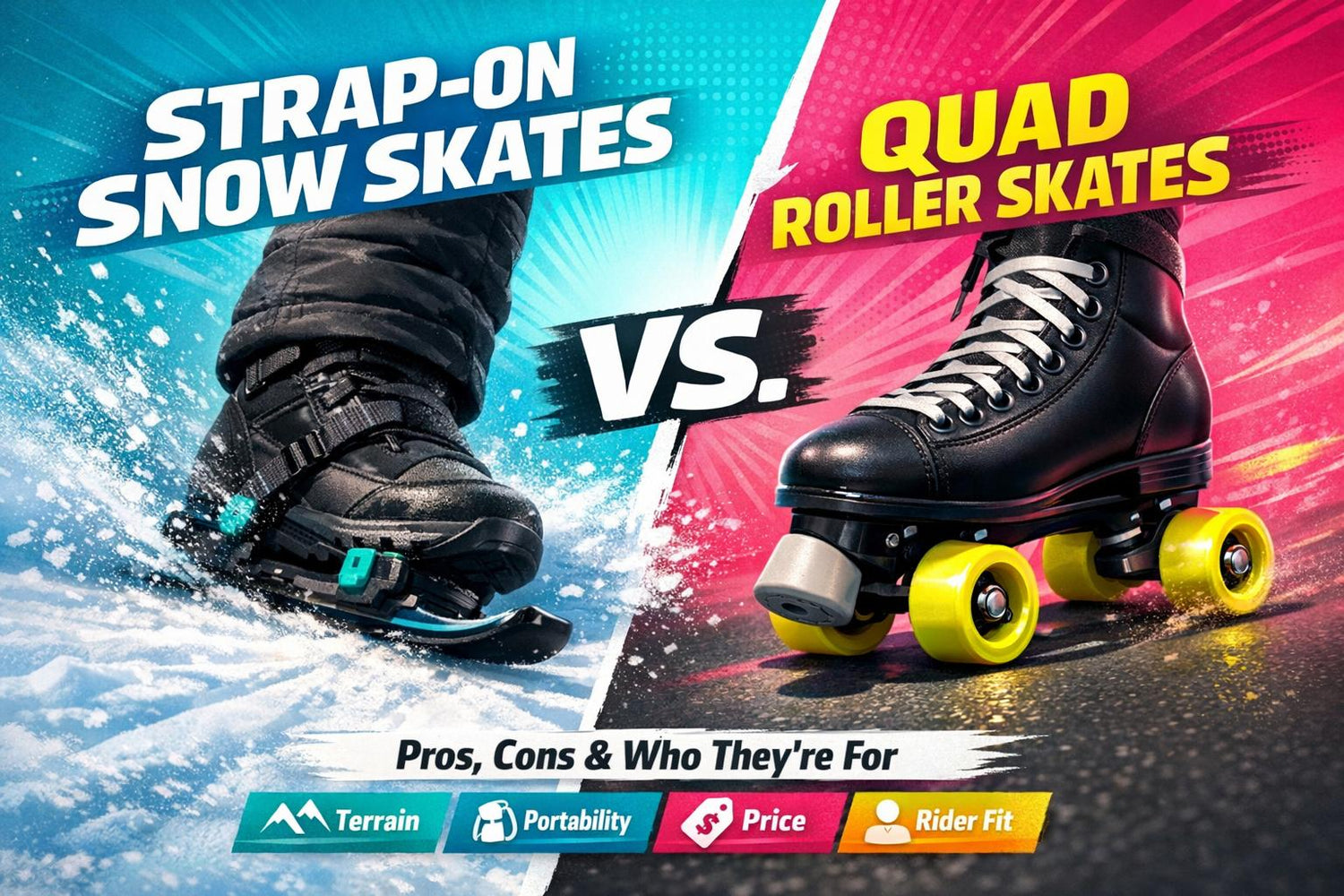
When it comes to skating, choosing the right gear depends on where you’ll use it. Strap-on snow skates are made for snowy slopes and winter trails, while quad roller skates are perfect for smooth indoor rinks or paved surfaces. Here’s the quick breakdown:
- Snow Skates (like Snowfeet): Attach to your winter boots, work on snow, fit in a backpack, and cost around $250. Great for casual riders or travelers who want snow fun without bulky ski gear.
- Quad Roller Skates: Built-in boots, designed for rinks or pavement, priced under $125. Ideal for social skating, dancing, or beginners learning balance.
Quick Comparison:
| Feature | Strap-On Snow Skates | Quad Roller Skates |
|---|---|---|
| Terrain | Snow slopes, trails | Indoor rinks, pavement |
| Portability | Lightweight, compact | Bulky with boot setup |
| Price | From $250 | Under $125 |
| Setup | Straps onto boots | Integrated boot |
| Best For | Winter sports | Year-round skating |
If you want to glide through snow without a full ski setup, go for strap-on snow skates. If smooth floors or pavement are your thing, quad skates are your best bet.
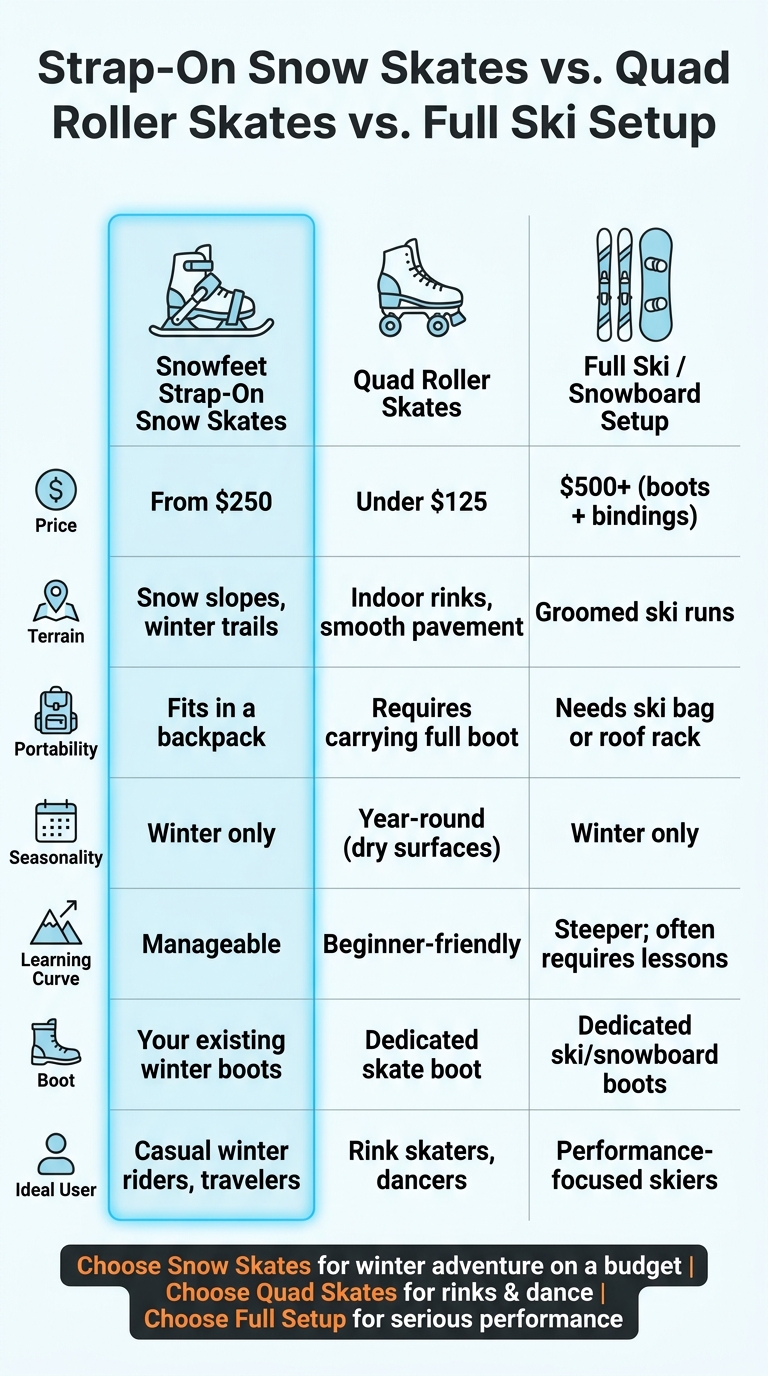
Strap-On Snow Skates vs. Quad Roller Skates vs. Full Ski Setup: Side-by-Side Comparison
How Each Skate Type Works
How Strap-On Snow Skates Work
Strap-on snow skates, like the Snowfeet Mini Ski Skates, are designed to attach directly to your winter boots using adjustable bindings - so there’s no need for special footwear. These compact skates are just 15 inches (38 cm) long, making them super easy to carry in a backpack. Whether you're heading to a snowy hill or a trail, they’re lightweight and convenient to bring along.
How Traditional Quad Roller Skates Work
Traditional quad roller skates are built differently than their snow-skating counterparts. They feature four wheels arranged in a square pattern and come with a rigid, integrated boot. This setup offers great side-to-side control, which is why they’re a favorite for activities like rink skating, roller derby, and artistic skating. The stiff boot also protects your foot and ankle during quick turns and complex moves.
High-performance quad skates often include extras like shock absorbers, reinforced straps, and wheels tailored for specific surfaces. But all this added tech makes them bulkier and harder to pack for a quick getaway. They work best on smooth, flat areas like indoor rinks or paved surfaces, but they’re not ideal for rough or uneven terrain.
Pros and Cons: Strap-On Skates vs. Roller Skates
Performance and Terrain
Strap-on snow skates, like Snowfeet Mini Ski Skates, are built for snowy landscapes - think slopes, backcountry trails, and even your snow-covered backyard. Their design allows you to carve into the snow with edges, giving you better control on descents. On the flip side, traditional quad roller skates are the go-to for smooth, flat surfaces like indoor rinks or polished concrete.
When it comes to roller skates, the type of wheels you use makes a big difference. Softer wheels (78A–85A durometer) are better for bumpy outdoor surfaces, while harder wheels (88A–103A) excel indoors but can make outdoor skating feel rough. Snowfeet skates don’t face these challenges - they’re made for snow and handle it effortlessly, whether it’s a groomed ski run or a backyard hill.
| Feature | Snowfeet Strap-On Skates | Traditional Quad Roller Skates |
|---|---|---|
| Best Terrain | Snow slopes, trails, backyards | Indoor rinks, smooth pavement |
| Speed Control | Edge carving on snow | Toe stop braking |
| Rough Surface Handling | Excellent (on snow) | Poor without soft wheels |
| Maneuverability | Carving turns | Tight spins, dance moves |
Performance aside, portability and ease of setup are other areas where these skates differ significantly.
Portability and Setup
This is where Snowfeet skates stand out. They’re compact and easy to carry, attaching to your winter boots in just a few minutes - no need for an extra bag or bulky gear.
Quad roller skates, however, are less convenient. Their built-in boot and sturdy frame mean you’re essentially carrying a second pair of shoes wherever you go. Plus, lacing up and adjusting the fit can take time, especially for beginners who are still figuring out how to get it just right.
These differences in portability and setup also tie into comfort and safety, which are crucial when choosing the right skates.
Comfort and Safety
Choosing the right skates isn’t just about performance - it’s about comfort and safety, too. With traditional quad skates, comfort hinges on getting the fit just right. A poor fit can lead to instability and discomfort. Quad skates often feature lower-cut boots, which are great for dance moves and spins. But there’s a downside: less ankle support, which increases the risk of sprains.
Snowfeet skates, on the other hand, let you use your own winter boots. This means you get warmth, solid ankle support, and a fit you’re already comfortable with. And if you take a tumble? Snow is a lot more forgiving than concrete. That said, whether you’re skating on snow or pavement, wearing a helmet and wrist guards is always a smart move.
Who Should Use Each Skate Type?
Best for Winter Sports Riders
If you're heading to snowy slopes, backcountry trails, or even your local hill, Snowfeet strap-on skates are a fantastic option. These are designed for easy snow fun without the hassle of lugging around heavy gear. They attach directly to your winter boots and are compact enough to fit into a backpack, making them a great choice for travelers or anyone avoiding bulky rentals. That portability is a big reason why Snowfeet stands out.
They're perfect for beginners or casual riders who aren't ready to invest in a full ski or snowboard setup. Plus, if you have some skating or skiing experience, you'll find the learning curve pretty manageable.
Best for Rink and Pavement Skaters
Traditional quad roller skates are a completely different beast, built for smooth surfaces like indoor rinks, roller discos, or paved outdoor paths. Their four-wheel square design gives excellent side-to-side stability, which is a huge plus for beginners trying to stand and balance.
These skates are also a favorite for dance and artistic skating. Thanks to their shorter wheelbase, they're super maneuverable - ideal for spins, sharp turns, and intricate footwork.
While quad skates thrive on polished surfaces, Snowfeet brings a new level of convenience to winter sports enthusiasts.
Snowfeet vs. Long Skis and Snowboards
Here’s where Snowfeet really shines. Unlike traditional ski setups from brands like Rossignol or Burton - which require specialized boots, bindings, and a lot of storage space (not to mention a price tag of $500–$800) - Snowfeet Mini Ski Skates start at $250. They work with your existing winter boots and can easily fit in your backpack. For casual riders who only hit the slopes a few times a season, this combination of affordability and convenience is a game-changer.
| Snowfeet Strap-On Skates | Traditional Skis/Snowboards | |
|---|---|---|
| Starting Price | From $250 | $500+ (boots + bindings) |
| Boot Compatibility | Your existing winter boots | Requires dedicated ski/snowboard boots |
| Portability | Fits in a backpack | Needs a ski bag or roof rack |
| Setup Time | A few minutes | 15–30 minutes (rental or gear room) |
| Best For | Casual riders, vacationers | Performance-focused skiers |
sbb-itb-17ade95
How to Pick the Right Skate for You
Factors to Consider
Deciding on the right skate depends on where and when you plan to use it. If your adventures take you to snowy slopes, hills, or winter trails, strap-on snow skates like Snowfeet are a natural choice. On the other hand, if you're skating indoors at a rink or rolling across smooth pavement throughout the year, traditional quad roller skates are a better fit.
Budget also plays a big role. Entry-level quad skates are typically priced under $125, while Snowfeet Mini Ski Skates start at $250. While Snowfeet costs more upfront, it’s still a more budget-friendly alternative to a full ski or snowboard setup, which can easily exceed $500. Portability is another factor: quad skates come with a full boot, which can be bulky for travel. Snowfeet, however, strap onto your existing winter boots and fit neatly into a backpack.
These factors - terrain, cost, and portability - tie into the broader considerations of performance, convenience, and safety. Now, let’s match these factors to your specific skating goals.
Matching Your Needs to the Right Gear
If your focus is social skating, dancing, or rink use, quad roller skates are your best bet. Their design makes them perfect for smooth surfaces and creative routines.
"Roller skates are the top choice for dancing, thanks to their short wheelbase and maneuverability." - Skates.co.uk
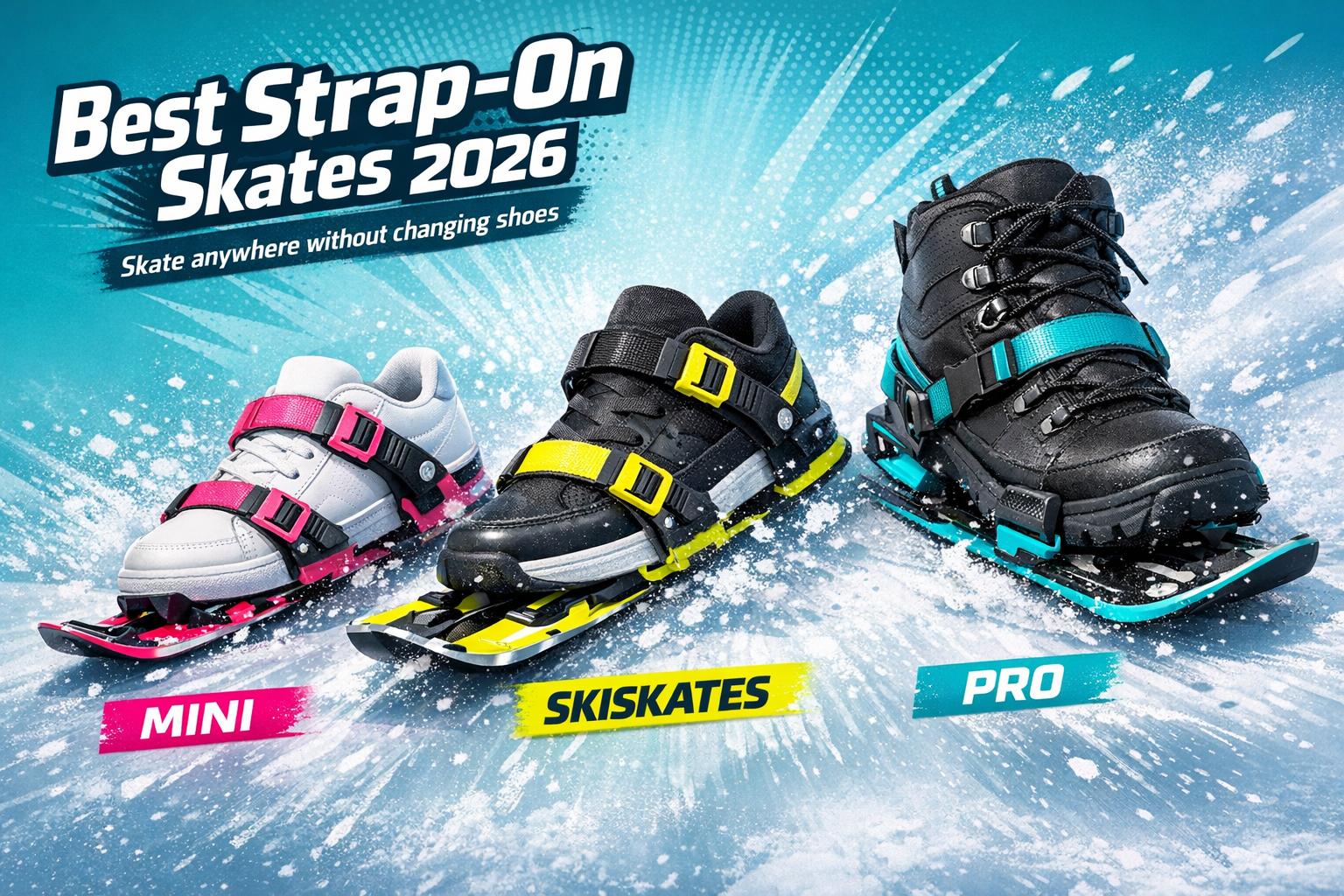
For those drawn to winter sports and snowy terrain, Snowfeet stands out. They’re easy to set up, work with the winter boots you already own, and are perfect for slopes and trails without requiring a full ski or snowboard setup. This makes them ideal for travelers and casual riders who want flexibility without sacrificing performance. Plus, using your own winter boots means more warmth, better ankle support, and a more familiar fit. If you’re looking for a step up, the Snowfeet PRO (50 cm) at $275 offers improved performance without the steep price of Skiblades, which often start at $635+.
Side-by-Side Comparison Table
Here’s a quick look at how these options stack up:
| Feature | Snowfeet Strap-On Skates | Quad Roller Skates | Full Ski/Snowboard Setup |
|---|---|---|---|
| Starting Price | From $250 | Under $125 | $500+ (boots + bindings) |
| Best Terrain | Snow slopes, winter trails | Rinks, smooth pavement | Groomed ski runs |
| Portability | Fits in a backpack | Requires carrying full boot | Needs a ski bag or roof rack |
| Seasonality | Winter only | Year-round (dry surfaces) | Winter only |
| Learning Curve | Manageable with skating/ski experience | Beginner-friendly | Steeper; often requires lessons |
| Boot Compatibility | Your existing winter boots | Dedicated skate boot | Dedicated ski/snowboard boots |
| Ideal User | Casual winter riders, travelers | Rink skaters, dancers | Performance-focused skiers |
Conclusion
To wrap it up, each type of skate has its own sweet spot. Quad roller skates are perfect for smooth indoor rinks or paved paths. They’re easy to use, budget-friendly (often under $125), and ideal for activities like dancing or social skating. But when it comes to snow? They’re out of their element.
That’s where Snowfeet strap-on skates step in. These compact skates attach right to your winter boots, are small enough to toss into a backpack, and let you glide down snowy slopes without the hassle or expense of a full ski setup. Plus, they’re much easier on the wallet compared to traditional skiing gear.
So, if you’re someone who loves skating on dry surfaces year-round, quads are a solid choice. But if you’re itching to explore snowy terrain without diving into full-on skiing, Snowfeet skates are your go-to.
FAQs
What kind of boots work best with Snowfeet strap-on skates?
The best boots to pair with Snowfeet strap-on skates are lightweight, flexible, and snug-fitting shoes that provide solid ankle support and comfort. Sneakers, hiking shoes, or athletic footwear are great options, as they make it easy to switch between activities like skating and snowboarding. Unlike stiff ski or snowboard boots, Snowfeet are designed to work with everyday footwear, giving you the convenience of skipping bulky, specialized gear while still enjoying flexibility and ease of movement.
Can beginners safely learn Snowfeet on small hills or trails?
Yes, beginners can absolutely learn to use Snowfeet on small hills or easy trails. These nifty gadgets are designed to be simple and versatile, making them a great starting point for anyone new to winter sports. You can practice balance and basic techniques on gentle slopes or smooth paths without the steep learning curve that comes with traditional ski or snowboard gear. Plus, Snowfeet are lightweight and portable, which makes them perfect for building confidence in a calm, controlled setting.
What protective gear should I wear for snow skates vs. quad skates?
The protective gear for snow skates and quad skates shares a lot of similarities, as both prioritize safeguarding key areas like the head, hands, knees, and elbows. The must-haves? A helmet, wrist guards, knee pads, and elbow pads.
When it comes to snow skates, such as Snowfeet, they’re often used on rougher, uneven terrains. That makes having full protective gear even more important. On the other hand, quad skates are usually enjoyed on smoother surfaces like indoor rinks, where the risk of injury might be slightly lower but still present. Either way, staying protected is the name of the game!
Related Blog Posts
- Best Strap-On Ice Skates for Adults and Kids (No Special Boots Needed)
- Strap-On Ice Skates vs. Traditional Ice Skates: Pros & Cons for Beginners
- Best Affordable Strap-On Skates: Skate on Any Shoes (2025 Guide) ← Snowfeet positioning
- Best Ice Skates for Family Fun (Affordable Strap-On Skates for Everyone)











Leave a comment
This site is protected by hCaptcha and the hCaptcha Privacy Policy and Terms of Service apply.