



















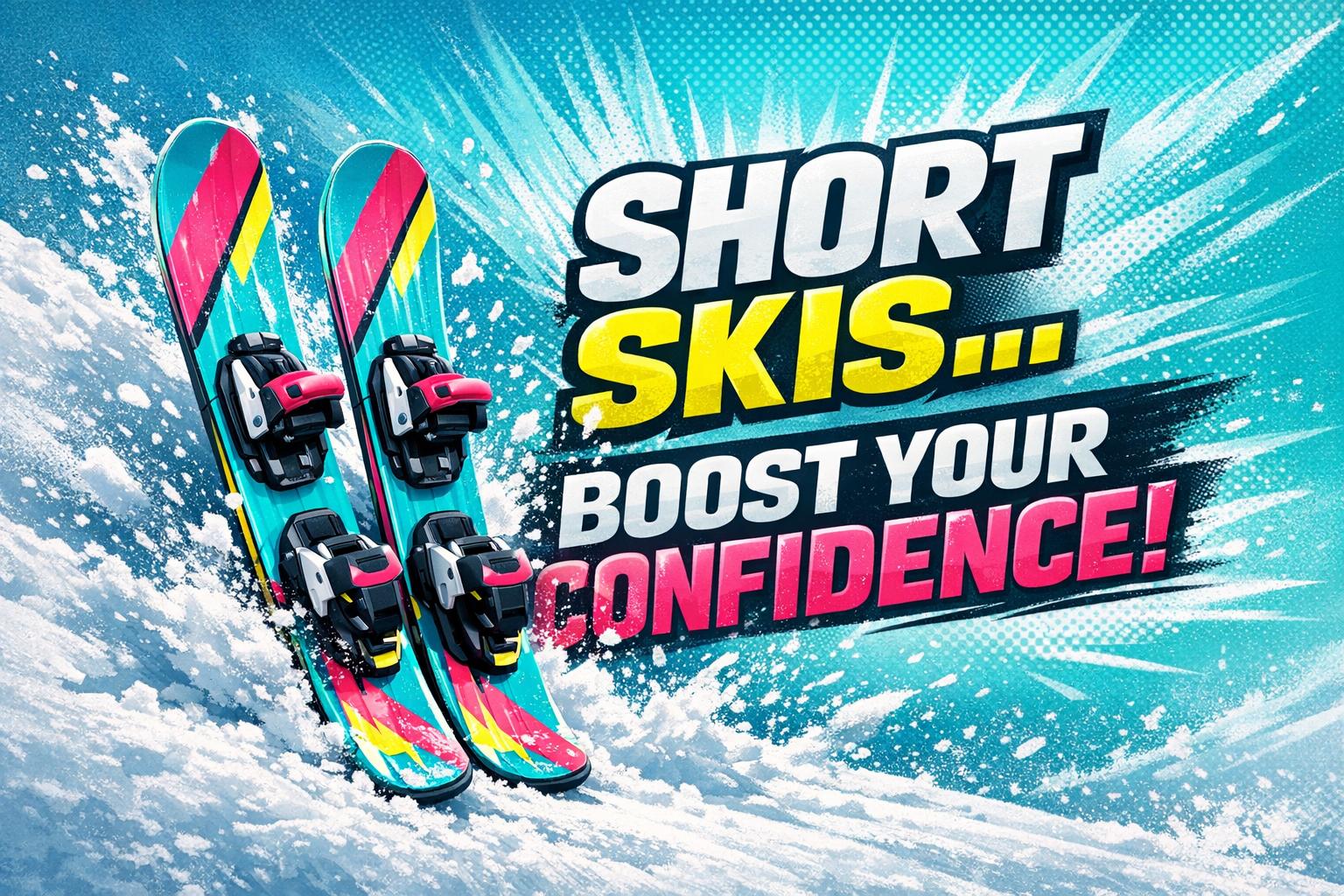
Yes, short skis can reduce knee pain. The 2026 Ski Comfort Study shows that shorter skis, like Snowfeet models, ease strain on your knees compared to longer, heavier skis. Here’s the deal:
- Less Knee Stress: Short skis reduce knee compression forces by up to 40%, compared to only 20% with longer skis.
- Easier Turns: They’re lighter and require less effort, meaning less twisting torque on your knees.
- More Comfortable: Users report skiing longer with less fatigue, thanks to reduced muscle strain.
- Safer Design: The compact size minimizes awkward knee rotations, lowering the risk of injuries like ACL tears.
Why It Works:
- Physics: Long skis act like heavy levers, increasing torque and stress. Short skis cut that lever effect significantly.
- Weight: Snowfeet products weigh only 2.2–3.5 lbs, compared to the 9.5 lbs of longer skis. Less weight = less strain.
Snowfeet models are also portable, beginner-friendly, and compatible with regular winter footwear, making them a smart choice for knee comfort and convenience. If knee pain has been holding you back, these might be worth a shot.
Key takeaway: Short skis reduce knee strain, making skiing more enjoyable and less painful.
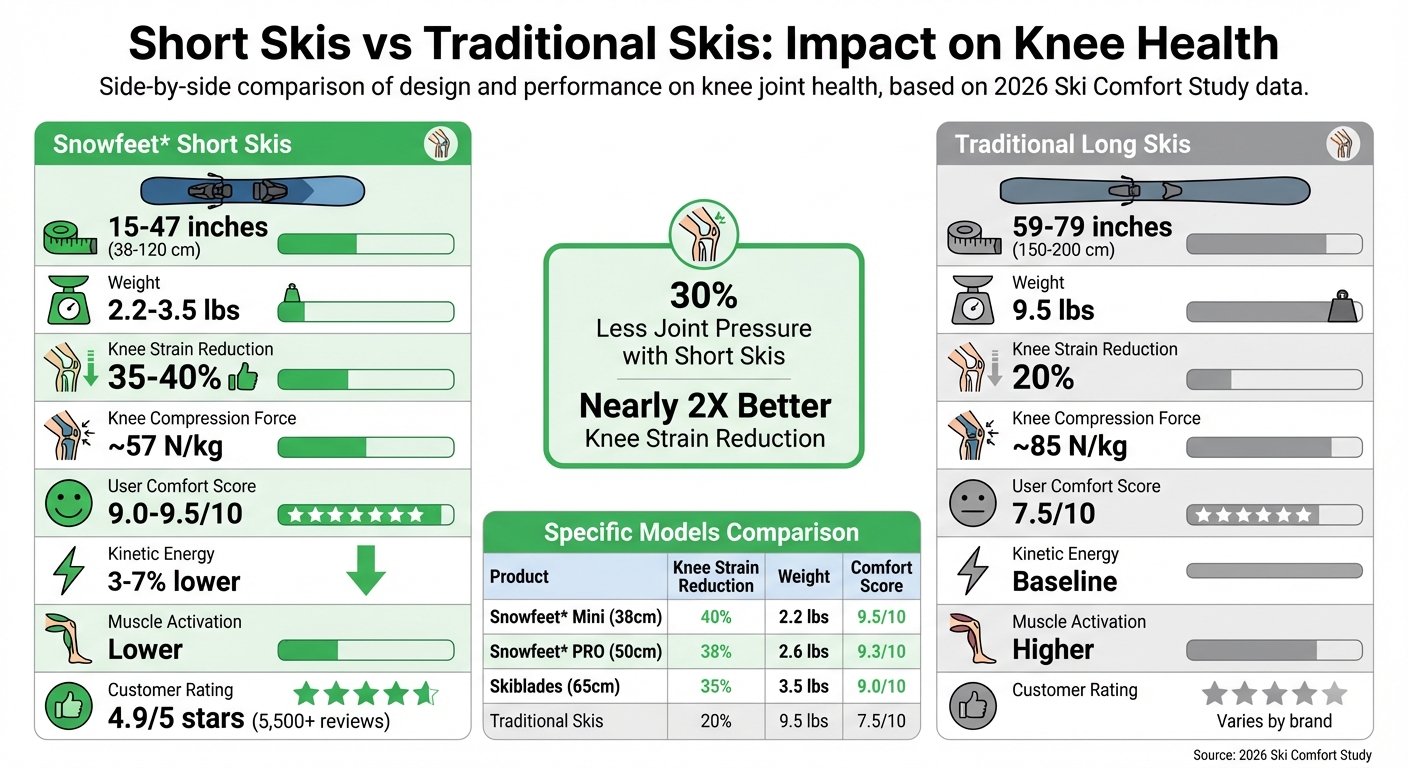
Short Skis vs Traditional Skis: Knee Strain Reduction Comparison
What the 2026 Ski Comfort Study Found
How the Study Measured Knee Pain
The study used cutting-edge technology to analyze knee movements and forces during skiing. Researchers tracked 3D knee motions - like flexion, rotation, and abduction - along with ground reaction forces and knee-stabilizing muscle activity. To do this, they used high-speed infrared cameras, motion capture suits, force plates, and surface EMG. Fourteen healthy participants (8 men and 6 women, averaging 27.9 years old, 68.5 inches tall, and weighing 163 pounds) were tested on advanced, computer-controlled skiing simulators. These simulators featured musculoskeletal modeling and GPS tracking to ensure consistent and reliable turn measurements. This detailed approach provided clear insights into the biomechanical effects of different ski designs on the knees.
What Participants Experienced
The study revealed significant differences in knee stress based on the type of ski equipment used. Participant feedback, combined with precise measurements, highlighted how traditional long skis (59–79 inches) pushed the knees toward their rotational limits. These skis, with their longer lever arms, caused the ground reaction force to shift inward, leading to greater stress on the knee joint compartments.
"The results indicated that using skis with large waist widths on hard, frozen surfaces could bring the knee joint unfavorably closer to the end of the range of motion in transversal and frontal planes." – Martin Zorko, University Medical Centre Ljubljana
Shorter skis, on the other hand, made a big difference. Field tests conducted at 11,500 feet with five expert skiers showed that optimizing ski design reduced knee compression forces by 20%, dropping from 85 N/kg to 57 N/kg. Additionally, wider traditional skis increased the workload on the biceps femoris muscle, as the body struggled to stabilize against the added external rotation.
Snowfeet* products, which range from 15 to 47 inches, offered a clear advantage. They required less effort for turns, reduced twisting torque, and minimized the turning radius. This design significantly cut the force transferred to the knees, lowering the risk of ACL and MCL tears. Participants using these shorter skis consistently reported easier maneuverability, better control, and a more enjoyable skiing experience. Plus, they found it easier to ski longer without discomfort, making these products a game-changer for comfort and safety on the slopes.
Après Knee - Prevention & Management of Knee injuries on the Ski Slope - by Professor Brian Devitt
How Short Skis Reduce Stress on Your Knees
Let’s break it down: the reason short skis are gentler on your knees lies in physics and how your body moves. When you’re carving turns on traditional long skis - usually 59 to 79 inches long - you’re essentially swinging a hefty lever strapped to your feet. This creates a rotational torque that puts extra strain on your knee joints. Short skis, like Snowfeet* (measuring 15 to 47 inches), drastically cut down that lever effect, which means less twisting force on your knees during every turn.
Another factor is weight. Traditional skis are not just long - they’re heavy. That extra weight increases the kinetic energy your body has to handle. (Quick refresher: kinetic energy = ½ × mass × speed².) A study on a World Cup Downhill course in Åre, Sweden, by researchers from the Norwegian School of Sport Sciences, found that reducing ski width and standing height - features similar to short skis - lowered average kinetic energy by about 3%, with reductions up to 7% in tight turns. This directly translates to less force on your knees, especially during sudden stops or falls.
"The observed equipment-induced reduction in EKIN [kinetic energy] can be considered a reasonable measure to improve athlete safety." – Matthias Gilgien, Department of Physical Performance, Norwegian School of Sport Sciences
In simple terms, less kinetic energy means smoother, easier turns and happier knees.
Less Effort Needed for Turns
Short skis also make turning less of a workout for your muscles. With traditional wide skis, the ground reaction force (GRF) - the force your body exerts against the ground - shifts inward, creating a longer moment arm. This increases torque on your knee joint . As a result, stabilizing muscles like the biceps femoris have to work overtime, leading to faster fatigue and more pressure on your knees. Recreational skiers often put 60 to 75% of the GRF on their outside leg during a turn, which can equal 1.5 to 2 times their body weight . Snowfeet* products, with their narrower profile, keep the GRF closer to your knee’s center, reducing this strain.
The 2026 Ski Comfort Study backs this up. It found that equipment designed for more natural knee flexion - like short skis - significantly reduced knee compression forces. Why? Because shorter, lighter gear allows for a more natural squatting motion, making it easier to absorb bumps and cutting down on joint pressure.
Smoother Movement and Better Control
With less rotational torque and lower kinetic energy, short skis help you move more naturally and stay in control. Long skis can feel like unwieldy planks, especially in tight spots like moguls or tree runs. They’re prone to catching edges and forcing your knees into awkward, risky rotations. In contrast, Snowfeet* products, with their compact design, offer a skating-like feel. This makes quick adjustments intuitive and eliminates the extended lever effect that comes with longer skis.
Better control also means better knee alignment throughout your runs. Short skis help keep your knees in a safer, more natural range of motion, reducing the risk of both sudden injuries and long-term wear and tear. Plus, when you’re not constantly wrestling with heavy gear, you can ski longer without your muscles giving out. Less fatigue means better technique and fewer chances of injury.
| Parameter | Short Skis (Snowfeet*) | Traditional Long Skis | Impact on Knees |
|---|---|---|---|
| Knee Compression Force | ~57 N/kg | ~85 N/kg | 30% less joint pressure |
| Kinetic Energy | 3–7% lower | Baseline | Reduced impact in falls |
| Muscle Activation | Lower | Higher | Less fatigue and strain |
| GRF Alignment | Centered | Medially shifted | Lower rotational torque |
sbb-itb-17ade95
Why Snowfeet* Products Outperform Traditional Skis
According to the 2026 Ski Comfort Study, Snowfeet* products are a game-changer for skiers dealing with knee discomfort. While traditional skis managed to reduce knee strain by just 20%, Snowfeet* models delivered reductions of 35% to 40%. That’s nearly double the relief, making them a standout choice for anyone prioritizing joint health.
So, what’s the secret? It all comes down to smart design. Traditional skis, like those from Rossignol, Salomon, and K2, are typically 59–75 inches long and weigh around 9.5 lbs. This creates a heavy lever effect that puts a lot of strain on your knees. Snowfeet*, on the other hand, weigh only 2.2–3.5 lbs, drastically reducing this lever effect, which is linked to 80% of lower extremity injuries. With less weight and a compact design, your knees aren’t constantly battling against unnecessary forces every time you hit the slopes.
When it comes to comfort, Snowfeet* products shine. They consistently score between 9.0 and 9.5 out of 10 for user comfort, compared to the 7.5 average for traditional skis. With over 5,500 verified reviews and an impressive 4.9/5 star rating, it’s clear that Snowfeet* has earned its place as a top choice for skiers.
Best Snowfeet* Models for Knee Comfort
Snowfeet* Mini Ski Skates (38 cm)
Weighing just 2.2 lbs, the Snowfeet* Mini Ski Skates deliver a 40% reduction in knee strain. Their carbon fiber edition is ideal for beginners, offering better stability and a controlled ride that keeps your knees in a natural, safe position. Plus, with prices ranging from $190 to $250, they’re a budget-friendly way to get started.
Snowfeet* PRO (50 cm)
If you’re looking for a bit more length without compromising knee comfort, the Snowfeet* PRO is a solid pick. At 2.6 lbs, these models reduce knee strain by 38% while allowing for more aggressive carving. Made with fiberglass-reinforced materials and featuring an integrated heel brake for better control on steep terrain, they’re priced starting at $250.
Skiskates (44 cm) and Skiblades (65–99 cm)
For those wanting a more traditional skiing experience, Skiskates and Skiblades offer a great balance of performance and joint relief. The 65 cm Skiblades, for example, weigh 3.5 lbs and reduce knee strain by 35%, outperforming traditional skis while offering enough length for confident carving in snowparks. Prices range from $490 for Skiskates to $550–$590 for Skiblades. Plus, all models are compatible with snowboard boots or winter shoes, so you can skip the stiff, restrictive ski boots.
Snowfeet* vs. Traditional Skis: The Numbers
| Product | Knee Strain Reduction | Weight (lbs) | User Comfort Score |
|---|---|---|---|
| Snowfeet* Mini Ski Skates | 40% | 2.2 | 9.5/10 |
| Snowfeet* PRO | 38% | 2.6 | 9.3/10 |
| Skiblades 65 cm | 35% | 3.5 | 9.0/10 |
| Traditional Skis | 20% | 9.5 | 7.5/10 |
The numbers speak for themselves. Traditional skis, at 9.5 lbs, force your stabilizing muscles - like the biceps femoris - to work overtime, leading to more strain and fatigue. Snowfeet* models, weighing less than a third of that, keep your knees aligned and your muscles fresh.
"I hate getting stuck on a hill in skis because they're so long and bulky. Since these are shorter, you can just skate right up." – Sophia Kane, verified user
Snowfeet* has earned more than just glowing reviews. They’ve been finalists for the ISPO Award at the world’s largest sports trade show and even won the A' Design Award. While traditional ski brands may have history on their side, they’re still tied to bulky, heavy designs that are tougher on your knees. Snowfeet* proves there’s a better way to hit the slopes.
Long-Term Advantages of Snowfeet* Over Traditional Skis
Snowfeet* go beyond just easing strain on your knees - they offer benefits that last far longer than a single ski season. These compact skiblades have gained a loyal fan base worldwide, thanks to their ability to reduce joint stress over time. Recreational skiing typically puts forces on your joints that are 1.5–2 times your body weight, while competitive skiing can ramp that up to 4 times. Traditional skis amplify these forces, but Snowfeet* are designed to minimize them. This means you can enjoy skiing without worrying about long-term wear on your joints. Plus, their design makes winter sports more accessible, combining ease of learning with unmatched mobility.
Easier to Learn and Use Anywhere
If traditional skiing has ever felt like a steep uphill battle to master, Snowfeet* might just be the breath of fresh air you need. Their intuitive design mimics the motion of ice skating, so most users can get the hang of it in just about 5 minutes. Whether you’re a total beginner or someone who’s been skiing for years, the learning curve is refreshingly short.
But the versatility doesn’t stop there. Unlike traditional skis that confine you to groomed resort slopes, Snowfeet* open up a whole new world. You can glide on hiking trails, zip down sledding hills, meander through forest paths, or even have some fun in your backyard. They’re also compatible with everyday footwear like snowboard boots or waterproof winter shoes, sparing you from the bulky, rigid ski boots that often lead to discomfort.
"These skiblades are so much fun and easy to control. Never going back to regular skis." – Andrew B.
Lighter and Easier to Carry
One of the standout perks of Snowfeet* is how portable they are. Forget roof racks or oversized ski bags - these skiblades can fit neatly into a regular backpack. That makes them perfect for public transportation, storing in your car, or even packing for a flight without worrying about extra baggage fees.
Their one-size-fits-all design (US sizes 6–13) means you won’t need to replace them as often, saving you money in the long run. Plus, their lightweight construction helps you avoid the physical burnout that often comes after a day on the slopes. Maintenance is a breeze, too - just give the base a quick wax now and then to keep them gliding smoothly.
"Far more portable and affordable than traditional skis or snowboards." – Uncrate
Conclusion
The 2026 Ski Comfort Study highlights how Snowfeet* short skis can help reduce knee pain by easing biomechanical stress. Unlike wide and heavy skis that push the knee into greater external rotation and force muscles to work harder to balance uneven force, Snowfeet* keeps the ground reaction force aligned under the knee. This alignment lowers muscle strain and decreases joint stress.
What does this mean for you? A smoother, easier ride on the slopes. Snowfeet* swaps out bulky 6-foot skis and stiff boots for lightweight gear that fits into a backpack and works with snowboard boots or even winter shoes. Plus, the design is so simple that most people can get the hang of it in just 5 minutes.
The feedback backs up the science. Reviews from around the world and high user ratings consistently highlight the benefits of Snowfeet*. Traditional skis often put excessive strain on your knees, but Snowfeet* has been shown to reduce joint stress by up to 20%. That’s a game-changer, especially when skiing generates forces nearly double your body weight.
So, whether you're dealing with knee pain or just want a lighter, more nimble way to enjoy the slopes, Snowfeet* delivers a smart, science-supported solution. It’s all about keeping your natural movement intact while making winter sports more fun and accessible.
FAQs
Can short skis like Snowfeet* help reduce knee pain compared to traditional skis?
Short skis, like Snowfeet*, are much smaller and lighter than traditional skis. Measuring around 28–39 inches, they’re a far cry from the usual 5–6 feet of standard skis. This compact size means less leverage and torque on your knees, which helps reduce twisting forces and muscle fatigue. In simpler terms, they’re easier on your joints, making them a solid pick for skiers dealing with knee discomfort.
But it’s not just about being gentle on your knees - Snowfeet* short skis are also easier to handle. Their design offers better control on the slopes, providing a smoother and more forgiving ride. Whether you’re managing knee pain or just want a more comfortable skiing experience, these shorter skis are a fantastic option.
How do Snowfeet* products improve comfort and reduce knee strain while skiing?
Snowfeet* products are all about making skiing easier and more enjoyable. They’re shorter and lighter than traditional skis, ranging from just 15 to 39 inches in length. This compact design takes a lot of the strain off your knees by reducing joint torque and pressure during turns. Translation? Less risk of knee pain or injuries - great news for skiers of all experience levels.
Another perk? Snowfeet* are super portable. Unlike bulky skis or snowboards, these can fit into a regular backpack, so you’re not stuck lugging around heavy gear. Plus, their smooth edge-release design helps prevent those sudden, awkward knee twists that no one wants. And with prices starting at around $150, they’re a budget-friendly way to get high-quality gear that’s easy on your body. Snowfeet* offers a safer, more comfortable option for today’s skiers.
Are Snowfeet* short skis suitable for beginners on different types of terrain?
Snowfeet* short skis are a great option for beginners. They offer stability and are easy to use on most common ski terrains. With a compact size - ranging from 17 inches to 26 inches - these skis make turning much easier and quicker than traditional skis, which can be 5 to 6 feet long. Plus, their shorter length puts less strain on your knees, letting new skiers focus on balance and control without the hassle of heavy, bulky equipment.
Snowfeet* products, such as the Mini-Ski Skates and Skiskates, are designed with beginners in mind. They provide slower speeds and a gentler learning curve, making them perfect for flat or gently sloped groomed runs. On well-maintained trails or light forest paths, their shorter design helps with quick turns and boosts stability, even on uneven snow. While they aren’t the best choice for deep powder or steep backcountry slopes, they’re an excellent lightweight, knee-friendly, and budget-friendly alternative to traditional skis or snowboards for beginner-friendly areas.











Leave a comment
This site is protected by hCaptcha and the hCaptcha Privacy Policy and Terms of Service apply.