



















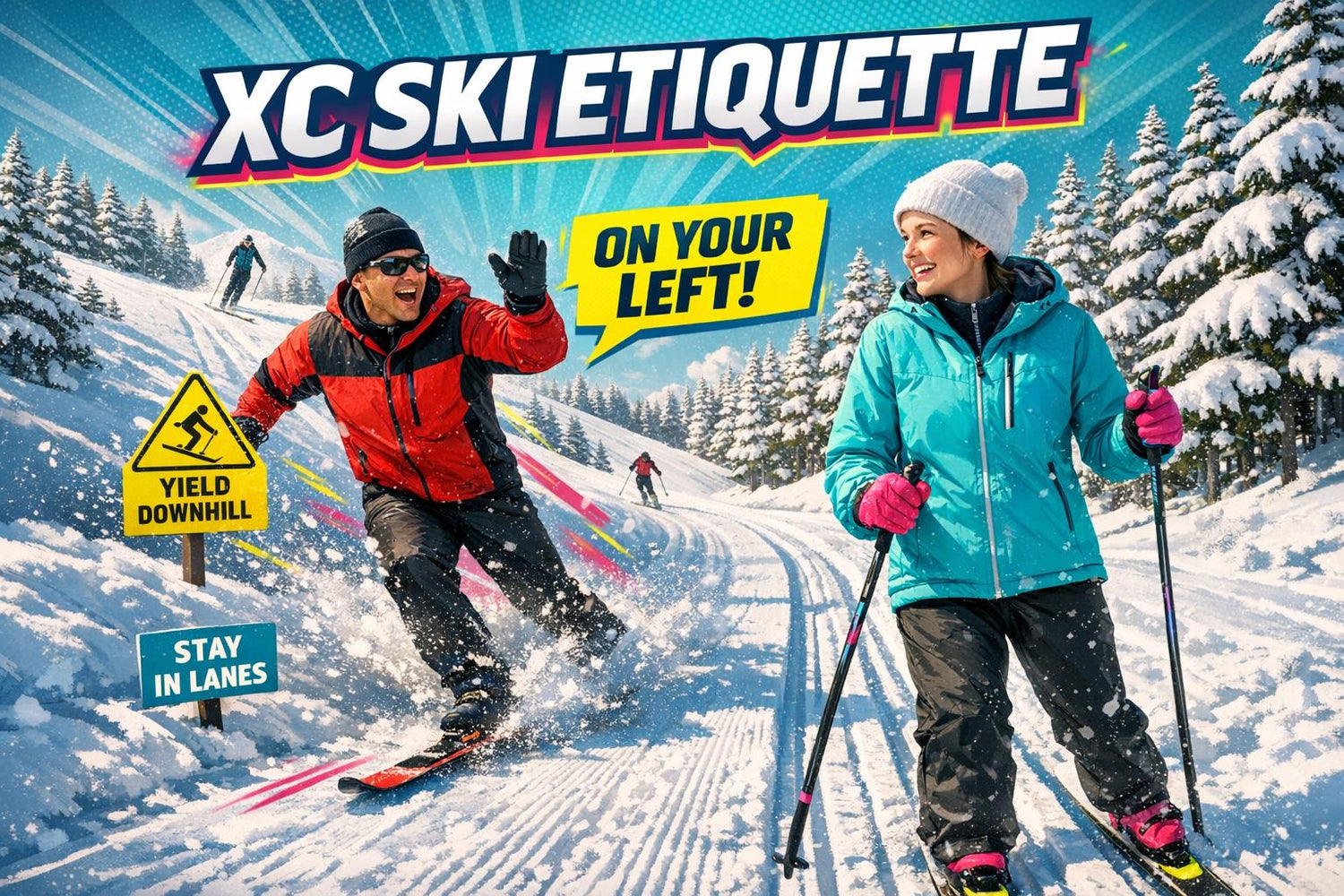
Cross-country skiing is awesome - until someone breaks the rules and things go sideways. Whether it’s stopping in a blind spot, skating across classic tracks, or heading the wrong way, bad trail manners can ruin the fun (and safety) for everyone. Here’s the deal: stick to the basics, respect the trail, and you’re golden.
Key Takeaways:
- Yield to downhill skiers: They have less control. Move aside if you’re going uphill.
- Stay in your lane: Classic tracks are for classic skiing. Use the skate lane if you’re skating.
- Announce passes: Say “track” before overtaking someone.
- Stop smart: Avoid blind spots, hill bottoms, and crowded areas.
For beginners, gear matters too. Long skis can be tricky, but shorter options like Snowfeet NORDIC 90 cm skis make it easier to stop, turn, and navigate shared trails. These compact skis are beginner-friendly and help you follow trail etiquette without breaking a sweat.
Ready to hit the trails? Follow these tips, respect others, and enjoy the ride. 😊
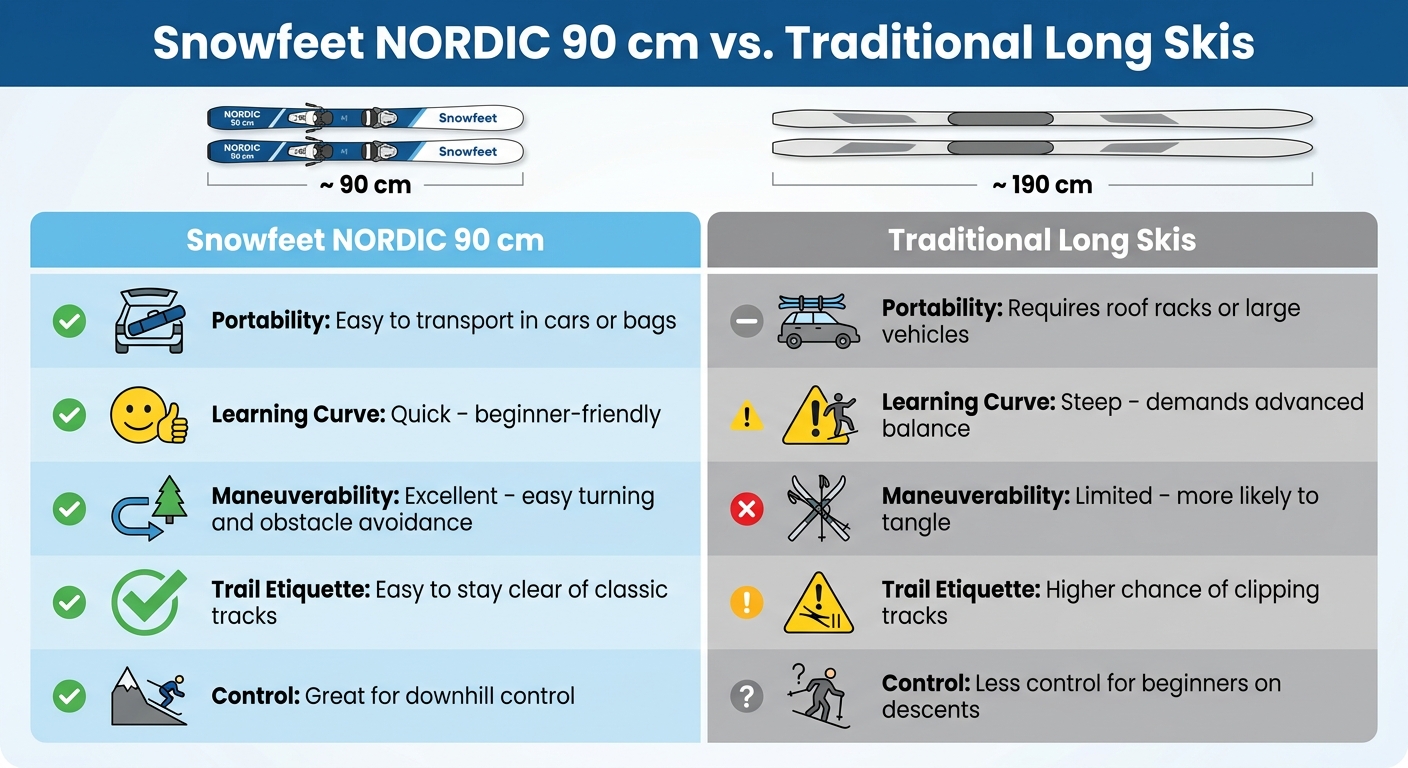
Snowfeet NORDIC 90cm vs Traditional Long Skis Comparison Chart
Trail Types and How to Navigate Them
Classic vs. Skate Ski Trails
Cross-country skiing trails generally fall into two categories, and knowing the difference can make or break the experience - not just for you but for everyone else on the trail. Classic ski trails have two parallel grooves in the snow, kind of like train tracks for your skis. When you're on these tracks, you glide straight ahead, keeping your skis snugly in the grooves. On the other hand, skate ski trails are groomed with a wide, flat surface featuring a corduroy-like texture. This setup is perfect for the side-to-side, V-shaped motion that defines skate skiing.
Some wider trails are groomed to accommodate both styles, with classic tracks on the sides and a skate lane down the middle. Narrower trails, however, may be limited to one style or even marked as one-way only. It's important to stay in the lane designated for your activity. As Nordic Ski Lab explains:
"Skating over classic tracks ruins the experience for classic skiers".
Maintaining these grooves takes a lot of effort, so respecting the designated lanes is key.
For beginners, Snowfeet* NORDIC 90 cm skis can be a game-changer. Unlike traditional skis, which can stretch to 6–7 feet, these compact 90 cm skis make quick lane changes and yielding easier. Their shorter length improves balance and maneuverability - a big plus when you're navigating shared trails. Once you're clear on the trail types, make sure you also know how to interpret trail signs and maps to keep your outing safe and enjoyable.
Reading Trail Signs and Maps
Understanding the trail layout goes beyond knowing the track styles. Trail signs are your best friend when it comes to staying safe and on course. Before heading out, take a moment at the trailhead to study the map and signage. These signs will tell you whether a trail is meant for classic skiing, skate skiing, or both. They also indicate one-way routes, difficulty levels, and even whether dogs or snowshoes are allowed. Ignoring these signs could leave you stuck on a trail that's too advanced or, worse, facing oncoming skiers.
"Groomed trails have designated lanes for snowshoeing and skiing. Please use the lane designated for your activity." - U.S. National Park Service
Pay attention to the grooming patterns as well. The smooth, textured area beside or between classic tracks is designed for skate skiing and, in some cases, snowshoeing. A quick tip: freshly groomed trails need about two hours to firm up before they're ready for skiing. If you head out too soon, you'll likely find yourself struggling through soft, unstable snow that won’t support your weight properly.
Cross-country Skiing Trail Etiquette
Basic Trail Etiquette Rules
Master these key guidelines to navigate trails safely and enjoy your cross-country skiing adventure to the fullest.
Giving Way to Downhill Skiers
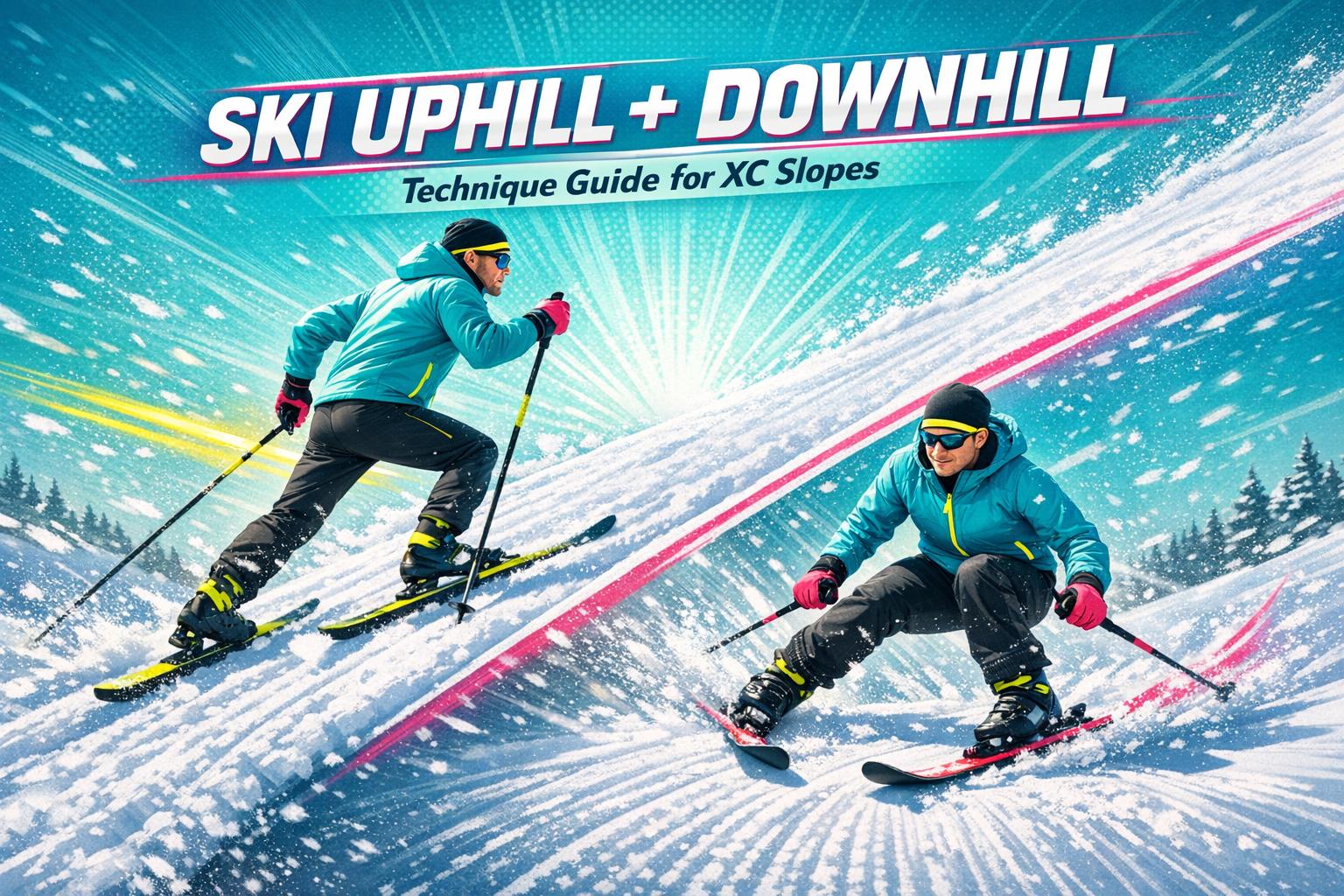
If you're heading uphill, it's your job to yield to downhill skiers. They’re moving faster and have less control over their speed and direction, while you can stop or step aside more easily. So, when you spot someone coming downhill, step to the right and clear the path.
"Uphill skiers yield to downhill skiers because it's easier to stop while going uphill!" - National Park Service
Shorter skis, like the Snowfeet NORDIC 90 cm skis, can make this easier for beginners. Their compact design helps with quick side-stepping and repositioning, unlike the longer 6–7 foot traditional skis. Just remember to check over your shoulder before moving sideways to avoid cutting off faster skiers approaching from behind.
How to Pass Other Skiers Safely
When passing another skier, always announce yourself first. A simple call like "track" lets them know you're coming. Step out of the classic track and use the skate lane to go around them, keeping your poles close to avoid getting tangled.
"Before passing another skier from behind, announce your presence and ski around them when safe to do so." - Cross Country Ski Areas Association
The Snowfeet NORDIC 90 cm skis shine here too. Their shorter length gives you better control and makes tight turns easier, which is super helpful when passing. If you're on a slope, always pass on the downhill side, and double-check both directions before rejoining the trail. Also, give extra space to sit skiers - they have limited maneuverability and need more effort to leave the track.
After passing, avoid sudden stops. Only stop in designated areas where you’re visible to other skiers.
Where and How to Stop
Stopping in the wrong spot can be risky. Avoid stopping at the bottom of hills or in blind corners - other skiers might not see you in time to avoid a collision.
"Do not stop at the bottoms of hills or in blind corners." - National Park Service
When you need a break, step completely off the groomed trail and out of the classic tracks. Move to the right side where you’ll be visible to skiers coming from both directions. Before stepping aside, check behind you to make sure you’re not cutting someone off. If you take a tumble, clear the area as quickly as possible to prevent accidents. And keep your ears open - skip the loud music so you can hear others approaching before you decide to move or stop.
sbb-itb-17ade95
Beginner Mistakes to Avoid
When you're just starting out, it's easy to make some rookie mistakes that can mess up the trails or even create safety issues for others. Here are a few things to watch out for.
Skating Over Classic Tracks
Those two parallel grooves you see on the trail? They're classic tracks, meant specifically for classic skiing. Skating across them damages the grooming, making it harder for classic skiers to enjoy their time on the trail.
"Skating over classic tracks ruins the experience for classic skiers." - Nordic Ski Lab
If you're skate skiing, snowshoeing, or hiking, stick to the wide, flat "corduroy" section in the middle of the trail. This keeps the classic tracks intact. The Snowfeet* NORDIC 90 cm skis can be a great option for beginners - they're shorter and easier to control, which helps keep you centered and away from the tracks. Also, avoid using the herringbone technique in the classic grooves, as it can mess them up. And if you happen to fall, try to move off the track quickly so others can pass.
Another mistake to steer clear of? Entering trails from the wrong direction.
Going the Wrong Way on Trails
Heading into a trail the wrong way can lead to some awkward - and potentially dangerous - head-on collisions, especially on narrow, one-way loops. Many Nordic ski areas have one-way trails to keep traffic flowing smoothly and to avoid accidents. Before starting, take a moment to check out the trail map and make sure you're going the right direction. On trails that allow two-way traffic, stay alert and follow the signs.
The Snowfeet* NORDIC 90 cm skis can help you navigate tight spots more easily than traditional long skis, which have a wider turning radius. This makes it simpler to correct your direction if you make a wrong turn.
But even if you're heading the right way, poor passing or stopping habits can still cause problems.
Passing Too Fast and Stopping in Bad Spots
Zooming past other skiers or stopping where visibility is limited can lead to accidents. Beginners often misjudge how much space they need to pass safely, which can result in close calls - or worse.
When passing, let others know you're coming by announcing yourself. The Snowfeet* NORDIC 90 cm skis are handy here, too - they make tighter turns and quicker stops easier, so you can pass safely without losing control. If you need a break, move completely off the trail and out of the classic tracks. Choose a spot where you're visible from both directions to avoid surprising other skiers. And if you fall, get up as quickly as you can and fill in any holes you might have left behind to keep the trail safe for everyone.
Why Snowfeet* Works Better for Cross-Country Skiing
Traditional long skis can be a real challenge for beginners. Their length makes quick stops, sharp turns, and adhering to trail etiquette tricky. For those just starting out, managing these longer skis often feels like a juggling act.
Snowfeet* NORDIC 90 cm vs. Traditional Long Skis
Most cross-country skis range between 170 cm and 210 cm in length. Compare that to the Snowfeet* NORDIC 90 cm skis, which are nearly half the size. That extra length on traditional skis adds leverage, making it harder to turn, stop, or navigate tight spaces. Whether you're stepping aside for a downhill skier or taking a break off the trail, those extra centimeters can make things awkward.
The compact size of the Snowfeet* NORDIC 90 cm skis offers plenty of perks. They fit easily in the trunk or backseat of most cars - no need for a roof rack. Plus, their shorter length makes quick lane changes and safe descents a breeze, especially important when downhill skiers, who often have less control, are sharing the trail. A simple shoulder check becomes much easier without a long ski to manage.
Here’s a quick comparison to highlight the differences:
| Feature | Snowfeet* NORDIC 90 cm | Traditional Long Skis |
|---|---|---|
| Length | 90 cm | 170–210 cm |
| Portability | Easy to transport in cars or bags | Requires roof racks or large vehicles |
| Learning Curve | Quick – beginner-friendly | Steep – demands advanced balance |
| Maneuverability | Excellent – easy turning and obstacle avoidance | Limited – more likely to tangle |
| Trail Etiquette | Easy to stay clear of classic tracks | Higher chance of clipping tracks |
| Control | Great for downhill control | Less control for beginners on descents |
Design Features That Help Beginners
Snowfeet* NORDIC 90 cm skis are designed with beginners in mind. Their skating motion feels similar to ice skating or inline skating - movements many people already know. This familiarity makes it easier to pick up compared to the specialized glide needed for traditional long skis. Less time fumbling with balance means more time enjoying the trails.
The shorter skis also make it easier to stay within the skate lane and avoid the classic tracks, which is a big win for trail etiquette. Their compact design doesn’t just make transportation simpler - it also enhances control. Whether you’re passing someone or making a quick stop, these skis are up to the task. At $675, they offer a professional-quality experience geared toward beginners, combining safety and fun in one neat package.
Conclusion
Cross-country skiing works best when everyone respects and shares the trails. The rules are simple: yield to skiers coming downhill - they have less control, avoid skating in the classic tracks, and don’t stop in the middle of the trail or at the bottom of a hill. If you happen to fall, be sure to smooth out any holes you’ve created. As the Cross Country Ski Areas Association reminds us:
"Always stay in control. You must be able to stop or avoid people or objects".
Having the right gear can make following these guidelines much easier, especially for beginners. Traditional long skis can make quick stops and precise moves tricky. On the other hand, Snowfeet* NORDIC 90 cm skis offer greater maneuverability, making it simpler to yield, stay in your lane, and navigate the trails. Their compact size allows for quick checks over your shoulder without getting tangled, and they give you better control on descents. Plus, when you need to step off the trail for a safe stop, these shorter skis respond quickly to keep you steady and safe.
With gear that’s easy to handle, respecting trail etiquette becomes second nature. Ultimately, it all comes down to common sense and mutual respect. When your equipment works with you - not against you - you’ll spend less time struggling and more time enjoying the trails as a courteous member of the cross-country skiing community.
FAQs
What should I do if I fall in the classic tracks?
When you're skiing in the classic tracks, always take a quick glance over your shoulder before stepping out or crossing the trail. This simple habit helps you steer clear of cutting off or colliding with skiers coming up behind you. Staying aware of others not only keeps everyone safe but also makes the trail more enjoyable for everyone out there.
How do I know if a trail is one-way or two-way?
Trail signs and maps are your best friends when figuring out if a trail is one-way or two-way. This usually depends on how the trail is laid out and groomed. For example, narrow trails or those designed for specific skiing styles - like classic or skate skiing - are often one-way.
Make it a habit to study the maps and pay attention to posted signs. They’ll help you stick to the intended flow and follow proper trail etiquette. This is especially important if you’re using versatile gear like Snowfeet*, which works for both skiing styles. Staying aware keeps everyone safe and the experience enjoyable!
Do Snowfeet* NORDIC 90 cm skis work on groomed XC trails?
Snowfeet* NORDIC 90 cm skis are a great fit for groomed cross-country trails. Specifically made for cross-country skate skiing, they handle groomed trails with ease, work well on ski slopes, and can even be used during hikes. Their adaptability makes them a solid option for both beginners and experienced skiers, all while keeping proper trail etiquette in mind.











Leave a comment
This site is protected by hCaptcha and the hCaptcha Privacy Policy and Terms of Service apply.