



















Looking to hit the slopes for the first time? Picking the right ski gear can make all the difference. Beginners often struggle with long, heavy skis that are hard to control. That’s where shorter, lightweight options like Snowfeet* gear shine. They’re easier to handle, help you learn faster, and even fit in a backpack. Here’s the quick rundown:
- Shorter skis = easier turns and stops: Snowfeet* offers sizes from 15 to 47 inches, perfect for beginners.
- No special boots needed: Many models work with regular winter boots.
- Budget-friendly options: Prices range from $250 to $775.
If you’re just starting out, shorter skis like the 38 cm Mini Ski Skates ($250) or 50 cm Snowfeet PRO ($275) are solid choices. Want to try something a bit more advanced? Check out the 44 cm Skiskates ($575) or the 99 cm Skiblades ($675) for more versatility. Whatever you pick, Snowfeet* makes learning fun and hassle-free. Let’s dive into the details!
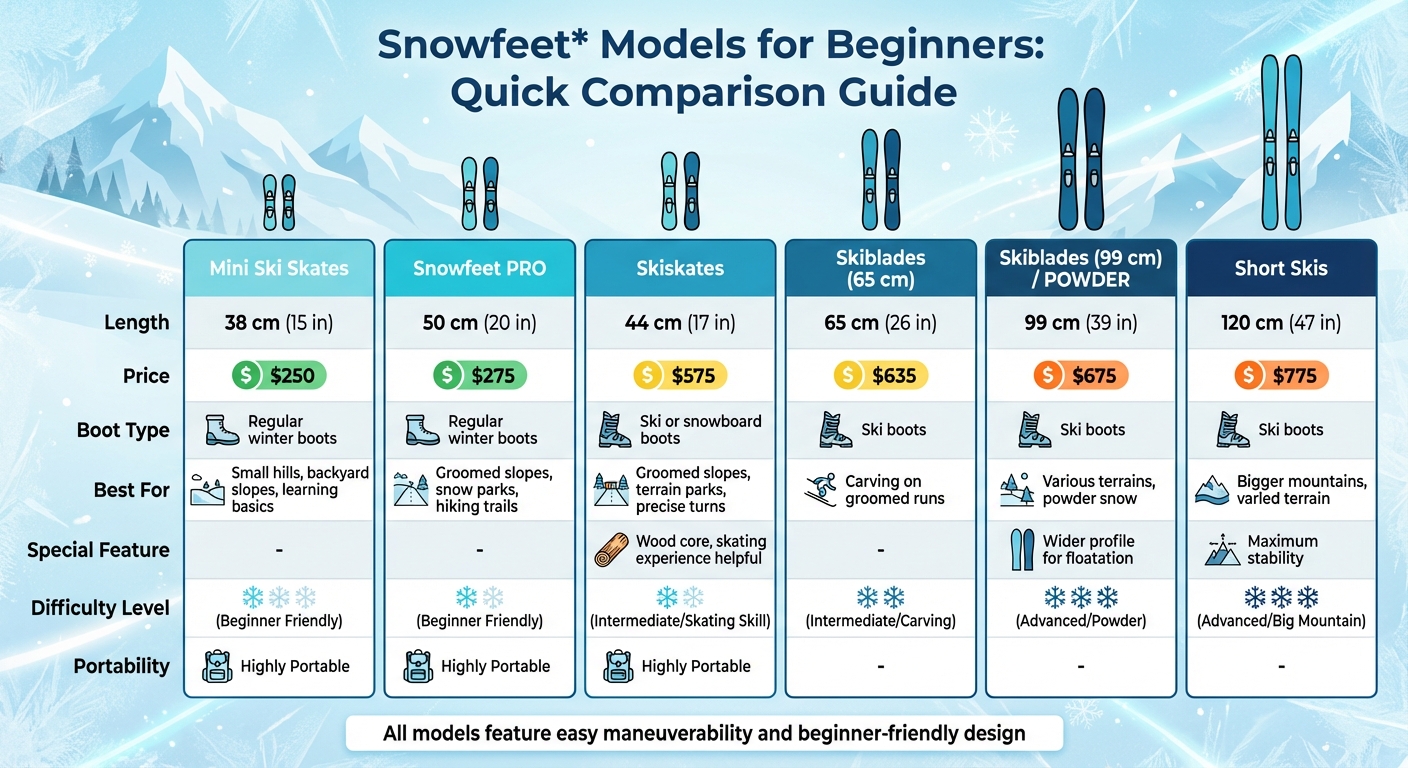
Snowfeet Ski Gear Comparison Chart for Beginners
What You NEED to Go Skiing - A Beginners Gear Guide
Types of Beginner Ski Gear
When you're just starting out, having the right gear can make all the difference in how comfortable and confident you feel on the slopes. Traditional skis can be heavy and tricky for beginners to handle. That’s where Snowfeet* comes in with their shorter, beginner-friendly designs that make learning both fun and less overwhelming. Here’s a breakdown of their models, categorized by length, to help you find the perfect match for your needs.
Mini Ski Skates and Snowfeet PRO (38–50 cm)
These compact models, ranging from 38 to 50 cm, are ideal for beginners. They’re designed to work with regular winter boots, so no need for specialized footwear. The Snowfeet Mini Ski Skates (38 cm) and Snowfeet PRO (50 cm) offer a slower, more stable ride, making it easier to master basic balance and movements. Plus, their small size means you can toss them in a backpack for easy transport.
Skiskates (44 cm)
Skiskates (44 cm) are a hybrid of skating and skiing, giving you the best of both worlds. They’re compatible with ski or snowboard boots, offering extra ankle support to help you make sharper, more precise turns. Built with a durable wood core, these are perfect for tackling a variety of slopes while maintaining control.
Skiblades and Short Skis (65–120 cm)
If you’re ready to explore more challenging terrain, Skiblades (65 cm and 99 cm) and Short Skis (120 cm) are great choices. These models feature a wider waist design, which adds stability and helps with balance on different types of snow. They’re an excellent option for beginners who want to venture beyond the easiest runs without giving up the agility that builds confidence.
What to Consider When Choosing Ski Gear
Getting the right ski gear as a beginner doesn’t have to be overwhelming. Focus on three key things: ski length, boot compatibility, and the type of terrain you’ll be tackling. Keeping these in mind will help make your learning experience smoother and more enjoyable. Let’s break it down.
Choosing the Right Length
Short skis are your best friend when starting out. While longer skis are known for stability, they’re harder to control for beginners. Shorter skis make it easier to turn, stop, and balance - key skills when you’re just finding your footing. Snowfeet* offers models ranging from 15 to 47 inches (38 to 120 cm), perfect for learners looking for something manageable compared to traditional 5–6 ft skis.
Here’s a simple tip: when standing upright, your skis should reach somewhere between your chin and forehead. Once you’re more comfortable, you can try longer models like the 65 cm or 99 cm Skiblades, which offer more versatility on varied terrain.
Boot Compatibility and Comfort
One of the perks of Snowfeet* gear is that you don’t need to invest in expensive ski boots. The Mini Ski Skates (38 cm) and Snowfeet PRO (50 cm) work with standard winter boots - just make sure they’re sturdy and waterproof.
If you’re after more ankle support for tighter turns, the Skiskates (44 cm) are compatible with both ski boots and snowboard boots. Larger models like the 65 cm, 99 cm, and 120 cm options also give you flexibility with multiple binding setups. Whatever you pick, it’s crucial to have your bindings professionally adjusted to match your skill level. This keeps things safe and comfortable while you’re on the slopes.
Terrain and Snow Conditions
Snowfeet* gear is built to handle a variety of conditions you’ll find at most U.S. resorts. For beginners, they’re ideal on groomed resort trails, where the smooth, packed snow makes it easier to focus on learning technique.
Shorter skis also shine in snow parks and can handle moguls and bumpy terrain better than long skis, which can feel clunky. On light powder days, wider models like the 99 cm POWDER or 120 cm Short Skis provide better floatation. Plus, their compact size makes them perfect for exploring narrow trails that are off-limits to traditional skis.
sbb-itb-17ade95
Snowfeet* Models for Beginners
If you’re just getting started with snow sports, Snowfeet* has a range of models tailored to beginners. Each option offers a unique experience, making it easier to find the right fit for your first season on the slopes.
Snowfeet Mini Ski Skates (38 cm / 15 in)
These mini ski skates, measuring 38 cm (about 15 in), are a fantastic introduction to winter sports. Priced at $250, they’re designed to be stable and easy to control, which is perfect when you’re learning the basics like balancing and turning. They work great on small hills, backyard slopes, or packed snow. Plus, they’re compatible with your regular winter boots, making them super portable. If you’re looking for a fun, no-fuss way to dip your toes into snow sports, this is a great choice.
Snowfeet PRO (50 cm / 20 in)
For a bit more versatility, the Snowfeet PRO is a solid option. At 50 cm (just under 20 in) and priced at $275, this model offers a balance of stability and maneuverability. It’s slightly longer than the Mini Ski Skates, which helps build confidence on different terrains while still being easier to handle than traditional skis. Whether you’re exploring groomed slopes, snow parks, or hiking trails, the adjustable bindings fit standard winter boots, making them convenient and beginner-friendly.
Skiskates (44 cm / 17 in)
If you’ve got experience with ice skating or rollerblading, Skiskates might be your ideal match. At 44 cm (about 17 in) and priced at $575, these deliver precise edge control and mimic the movements you’re already familiar with. They’re compatible with both ski and snowboard boots, offering added ankle support for sharper turns. With a wood core for quick responsiveness, they’re perfect for groomed slopes and terrain parks. While they’re a bit of an investment, they’re worth it if you’re transitioning from skating and want gear that feels intuitive.
Skiblades (65 cm and 99 cm)
Ready to move beyond the basics? Snowfeet* offers two Skiblade sizes to help you step it up:
- 65 cm: Priced at $635, these are great for carving on groomed runs.
- 99 cm: At $675, these provide extra stability for a variety of terrains.
Both sizes are made with high-quality materials, giving you the confidence to tackle steeper slopes and more challenging conditions.
Snowfeet POWDER (99 cm / 39 in) and Short Skis (120 cm / 47 in)
For beginners looking to explore more demanding terrains, these models offer the versatility to match your growing skills:
- Snowfeet POWDER: At 99 cm (about 39 in) and $675, this model is designed specifically for soft, powdery snow. Its wider profile keeps you afloat in fluffy conditions.
- Short Skis: Measuring 120 cm (roughly 47 in) and priced at $775, these provide exceptional stability for bigger mountains and varied terrain.
Both models maintain the easy-to-use feel that Snowfeet* is known for, while giving you room to grow. Whether you’re planning trips to major resorts or just want gear that evolves with you, these options set you up for long-term adventures.
Snowfeet* vs. Traditional Skis and Snowboards
When you're new to winter sports, finding gear that's easy to use, portable, and versatile can make all the difference. If you're weighing Snowfeet* products against traditional skis or snowboards, there are some key differences worth considering. Let’s break it down.
Learning Curve and Control
Traditional skis are long - usually between 63–79 inches (160–200 cm) - which makes them heavy and a bit tricky for beginners. They demand strength and solid technique to handle properly. Snowfeet*, on the other hand, are much shorter, ranging from just 15–47 inches (38–120 cm). This compact size makes them lightweight and super easy to maneuver, perfect for quick, smooth turns.
Snowfeet* also feature a soft, forgiving flex, which helps reduce the risk of catching an edge and taking a tumble. Many models come with a wider waist for added stability, making it easier to learn the basics like turning, balancing, and managing your speed. For beginners, this means less frustration and more confidence on the slopes.
Transport and Storage
Traditional skis are, well, big. At over 5 feet long, they require bulky storage solutions like roof racks or oversized ski bags. Snowfeet* gear, by contrast, is small enough to fit in a backpack. No roof racks, no hassle - just grab and go.
Range of Use
Another big win for Snowfeet* is their versatility. Traditional skis and snowboards are often designed for specific conditions or terrains, but Snowfeet* gear adapts to a variety of environments. Thanks to their compact design, they can handle narrow trails and mixed terrain with ease. While standard models work best on packed snow, options like the Snowfeet* PRO and POWDER are built for softer, deeper snow. With Snowfeet*, you can explore a range of terrains without needing multiple sets of gear.
Conclusion
Getting started with the right ski gear as a beginner doesn’t have to be complicated. Snowfeet* offers lightweight, easy-to-use options that help you hit the slopes with confidence. Whether you’re eyeing the ultra-compact 38 cm Mini Ski Skates or the versatile 99 cm Skiblades, Snowfeet* gear is all about making your first steps into winter sports both fun and approachable.
What makes Snowfeet* stand out? Their gear is simple to turn, stop, and store. It works just as well on groomed trails and snow parks as it does on backyard hills. Plus, you can forget about roof racks and oversized equipment - these compact designs are made for grab-and-go adventures. They’re perfect for narrow trails and mixed terrain, offering flexibility that traditional skis and snowboards can’t match without requiring multiple setups.
When choosing, think about what matters most to you. If portability is key, the shorter models like the 38 cm or 50 cm options are perfect. Want to try some tricks and jumps? The 65 cm Skiblades provide that skate-like agility. For deeper carving and added versatility, the 99 cm models are a great fit while still being beginner-friendly. No matter your style, there’s a Snowfeet* model to match.
The learning curve is refreshingly quick with Snowfeet*. Beginners rave about how easy and fun they are to use. Danielle D called them "Easy and fun", while the gilvargs described them as an "Amazing product." With ratings consistently between 4.9 and 5.0 stars, it’s clear that Snowfeet* delivers on its promise of making winter sports accessible.
Ready to start your winter adventure? Choose the model that fits your style and budget, and let Snowfeet* make your first run effortless, portable, and packed with fun. It’s a smooth and exciting way to dive into winter sports.
FAQs
Why are Snowfeet a better choice for beginners compared to traditional skis?
Snowfeet are perfect for beginners who want to ease into skiing without all the hassle. Their shorter, lighter design makes it much simpler to turn, stop, and keep your balance - helping you feel confident on the slopes right away. Plus, you don’t need those heavy, specialized ski boots. Snowfeet work with your regular winter boots, making them way more convenient and less intimidating for newcomers.
Another bonus? They’re super compact. That means they’re easy to carry around and store, so you can focus on having fun instead of wrestling with bulky gear. If you’re new to skiing and want a fun, no-fuss alternative to traditional long skis, Snowfeet might just be your new favorite winter gear.
Which Snowfeet model is best for my skill level and the type of terrain I’ll be skiing on?
Choosing the right Snowfeet model boils down to your skill level and the type of terrain you enjoy. If you're a beginner or someone who prioritizes control, the Snowfeet PRO Ski Skates (50 cm) or Skiskates (44 cm) are solid picks. Their lightweight build and easy handling make them ideal for learning and gaining confidence.
If you're after a balance of stability and agility, the Skiblades (65 cm) hit the sweet spot. On the other hand, seasoned skiers or those tackling more demanding slopes might prefer the Skiblades (99 cm) or Short Skis (120 cm). These models offer better performance and control for advanced use.
What sets Snowfeet apart? Their compact size! Unlike traditional skis, they’re shorter, easy to carry, and simple to use, making them a fun and flexible option for skiers at any level.
Can I wear regular winter boots with Snowfeet products?
Yes, you can wear your regular winter boots with any Snowfeet model. There's no need to shell out money for ski boots, which makes Snowfeet an easy and budget-friendly choice, especially for beginners. Just make sure your boots fit snugly and feel comfortable - that way, you'll have a smoother ride on the slopes.












Leave a comment
This site is protected by hCaptcha and the hCaptcha Privacy Policy and Terms of Service apply.